REVIEW · AOMORI PREFECTURE, JAPAN
Culinary Home Cooking with Grandmothers – Vegan Friendly
Cook with Aomori grandmothers. This three-hour home meal offers something rare: a shared table where vegan, vegetarian, and gluten-free diners can eat the same food. I especially like the hands-on cooking and the chance to hear family wisdom from local women. The main drawback is the setting: you must reach Mutsu-Tsuruta Station on your own, and the rural location may take planning.
I also like the clear connection between food and place. A short introduction explains how Aomori’s snowy winters and lush summers shape its cooking. With only your private group taking part, you get a more personal visit, though anyone hoping for a restaurant-style tasting menu should expect simple home cooking instead.
Key points to know before booking
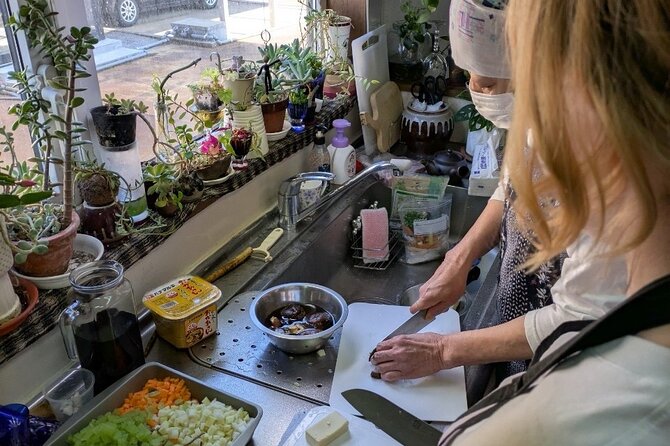
- Cook beside local grandmothers: Learn practical Japanese home-cooking methods from women who have prepared seasonal dishes for decades.
- Naturally plant-based menu: Keno-jiru, onigiri, and seasonal sides are suitable for vegan, vegetarian, Oriental Vegetarian, and gluten-free diners.
- A private three-hour visit: Only your group participates, making this a relaxed choice for families, couples, and small groups.
- Aomori food explained through nature: Snowy winters, warm summers, and local ingredients help explain the dishes on your table.
- English support is available: English-speaking assistance helps international visitors follow the cooking and conversation.
- Plan the arrival carefully: The meeting point is in Maeda Tsuruta, and transportation to Mutsu-Tsuruta Station is not included.
A warm kitchen in rural Aomori
Aomori is known for strong seasons, and this experience puts those seasons on your plate. Instead of touring a formal cooking school, you enter a cozy home and spend time with local grandmothers who share recipes, stories, and everyday cooking habits.
That setting matters. Japanese food culture is often easiest to understand through ordinary meals, not polished restaurant dishes. Here, you are learning how people prepare comforting food at home, using straightforward methods that you can repeat in your own kitchen.
The tone is friendly and personal. The strongest praise for this experience centers on the grandmothers’ kindness. One visitor described feeling treated like family, while another praised the patient, careful instruction and the warmth of the conversation. That gives you a good idea of the visit’s main appeal: the food is important, but the human connection is just as valuable.
The activity begins at 11:00 am and lasts about three hours. That timing works well for a late-morning cooking session followed by lunch. You are not rushing through several attractions. Instead, you spend a good block of time in one place, learning at a comfortable pace.
More Home Cooking Classes in Japan
- Private Home Cooking in Yanaka – Local Flavors in a Warm Setting
★ 5.0 · 173 reviews - Near Fushimiinari: Kyoto Home Cooking Class & Supermarket tour
★ 5.0 · 100 reviews - Japanese Home Cooking Class & Walk in Todoroki Temple Tokyo
★ 5.0 · 88 reviews
Before the knives come out

The cooking does not begin without context. First, you receive a short introduction to Aomori’s geography, climate, and traditions. This helps explain why seasonal cooking matters so much in the region.
Aomori’s winters are snowy, while its summers support abundant produce. That contrast shapes the kind of food people prepare and preserve. The introduction gives you a useful frame for the meal, so ingredients do not feel random or disconnected from the area.
I like this part because it keeps the class from becoming only a recipe lesson. You learn not just how to prepare a dish, but why certain foods fit the local climate and household routine. The explanation is short, so it should not take over the visit, but it gives the rest of the class more meaning.
This is also a helpful moment to explain dietary needs. The menu is designed to be naturally plant-based and free from common restrictions. Vegetarian, vegan, Oriental Vegetarian, and gluten-free diners can share the same meal rather than receiving a separate plate.
Still, you should tell the provider about your needs when booking. The menu changes with the season and available ingredients, so the exact dishes are not fixed. The experience is designed to accommodate these diets, but clear communication is always wise.
Preparing keno-jiru, onigiri, and seasonal sides
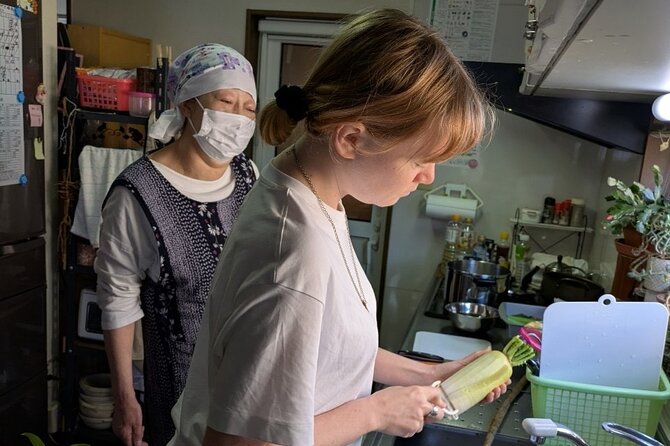
The cooking portion is hands-on. You wash, cut, and season ingredients while working alongside the grandmothers. The techniques are simple enough to use at home, which is a major advantage over a demonstration where you only watch someone else work.
Keno-jiru, a vegetable miso soup, is one of the featured dishes. It is a comforting choice for a plant-based meal and a good example of how vegetables, broth, and seasoning can create a satisfying dish without meat.
You also prepare onigiri, the familiar Japanese rice balls. Making them yourself gives you a better sense of the texture and handling required. These are not complicated foods, but that is part of their charm. The class shows how ordinary ingredients can become a complete meal with a few careful steps.
Seasonal side dishes round out the table. Since the menu changes according to the time of year and what is available, you should treat the sample menu as a guide rather than a promise. The changing dishes are a strength for repeat visits, but they may disappoint anyone hoping to order a specific recipe.
The grandmothers’ role is central here. They do not simply hand you instructions and step away. They teach you one step at a time and share the habits behind the recipes. Based on the feedback, the careful instruction is one of the best parts of the class, particularly if you feel uncertain about Japanese cooking terms or methods.
The pace should suit beginners. You do not need advanced kitchen skills to take part. The focus is on basic preparation, seasoning, and cooperation, not on producing restaurant-level presentation.
What the shared lunch adds
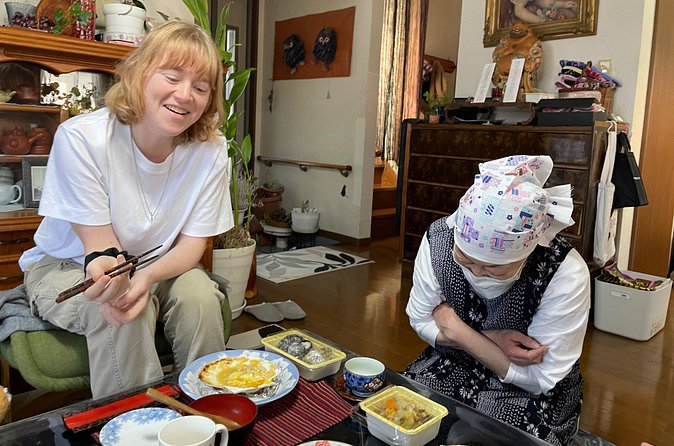
After cooking, everyone sits down to eat the meal together. This is more than a convenient ending to the class. It is the point where the food, stories, and conversation come together.
A shared meal can reveal more about daily life than a quick restaurant stop. You see how the dishes work as a group, taste the results of your own work, and have time to continue talking with the hosts. The meal also supports the experience’s central idea: everyone can eat from the same plant-based menu.
That inclusiveness is especially useful for mixed groups. If one person is vegan, another is vegetarian, and others simply want to try local food, nobody needs to manage separate meals. The table remains unified.
A welcome drink is served on arrival, and lunch is included. All ingredients and utensils are also provided. The package is simple, but it covers the parts that matter for a cooking activity.
The food is homemade rather than elaborate. If you are looking for rare ingredients, advanced knife work, or a long list of small courses, this may feel modest. If you want to understand how comforting Japanese dishes are prepared and shared at home, the simplicity is exactly the point.
More Vegetarian Cooking Classes in Japan
- Ramen & Dumpling Cooking in Tokyo with Chef/Vegan possible
★ 5.0 · 107 reviews - Vegan/Vegetarian Ramen and Gyoza by Bentoya cooking
★ 5.0 · 59 reviews - Private Plant-Based Japanese Cooking Class – Kyoto Edition
★ 5.0 · 15 reviews - Zen Buddhist Vegetarian(Shojin Ryori): Cooking Experience
★ 5.0 · 9 reviews
The human side of BASAMA’s Kitchen
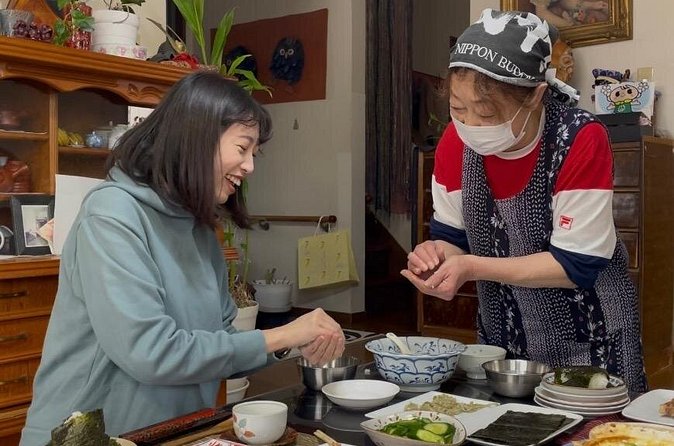
BASAMA’s Kitchen appears to build the visit around hospitality rather than performance. The grandmothers are described as gentle, patient, and family-like, and the warm reactions to their welcome are consistent.
That warmth can make a difference in a cooking class. A formal instructor may explain a technique clearly, but a local host can also show you the small habits and personal touches that make a dish feel like home food. You may hear stories while you work, though the exact conversation will depend on the people present and the language being used.
English-speaking support is available. This is important because the experience depends on conversation as much as instruction. You do not need to be fluent in Japanese to take part, and English assistance helps make the cooking steps easier to follow.
The class is private, with only your group participating. That gives you more room to ask questions and work at your own pace than a large class would. It also makes the visit a good fit for people who prefer a quiet setting or want to share the experience with close companions.
A private activity can have one tradeoff: you may not meet other international visitors. If you enjoy large group energy and lots of social mixing, this format may feel more intimate than expected. For most people seeking a personal cultural exchange, that is a benefit.
Is $78.04 a fair price?
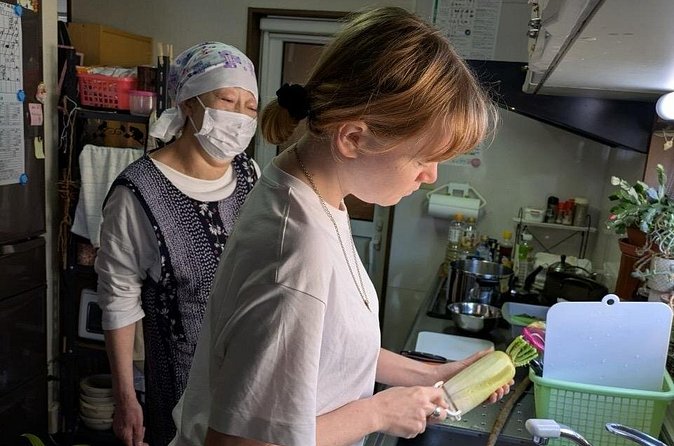
The price is $78.04 per person. For roughly three hours, that includes a welcome drink, a guided cooking session, all ingredients, utensils, English-speaking support, and the homemade lunch you prepare.
I consider that fair value if you place a high value on personal contact and dietary flexibility. You are paying for more than the food itself. The price covers time in a local home, instruction from experienced cooks, a private group format, and an opportunity to talk across cultures.
It is less compelling if your only goal is to eat cheaply. A casual lunch in Japan can cost much less. This activity makes sense when you want the social and educational parts, not simply a meal.
The plant-based format adds value for people who often struggle to find a shared menu while traveling. Vegan and gluten-free diners can take part without needing to bring their own food or watch others eat something different.
Transportation is the main extra cost and planning issue. You must make your own way to Mutsu-Tsuruta Station on the JR Gono Line, and transport is not included. Check your route before booking, allow enough time to reach the station, and confirm how you will continue afterward. The meeting point is in Maeda Tsuruta, Kitatsugaru District, Aomori.
Who will enjoy this experience most?
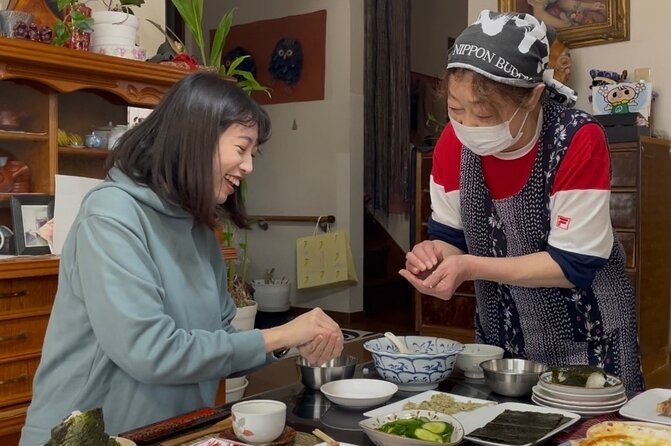
I would recommend this activity to you if you want a slower, more personal side of Japan. It suits people who like cooking, home food, local conversation, and small-scale cultural experiences.
It is particularly good for:
- Vegans, vegetarians, Oriental Vegetarians, and gluten-free diners
- Couples or families who want a private activity
- First-time cooks who prefer patient guidance
- Visitors interested in seasonal Japanese food
- Anyone who values personal contact over sightseeing by checklist
- People staying near the JR Gono Line who can reach the meeting point easily
Families should find the shared cooking format appealing, though the supplied information does not specify a minimum age. If you are booking for young children, ask the provider about age suitability before confirming.
This is not the best choice for someone with a tight schedule or a long list of Aomori sights to cover. The three-hour visit requires time at the meeting point, plus the journey to and from Mutsu-Tsuruta Station. It works best when you build your day around it rather than squeeze it into a packed itinerary.
Practical details for a smooth visit
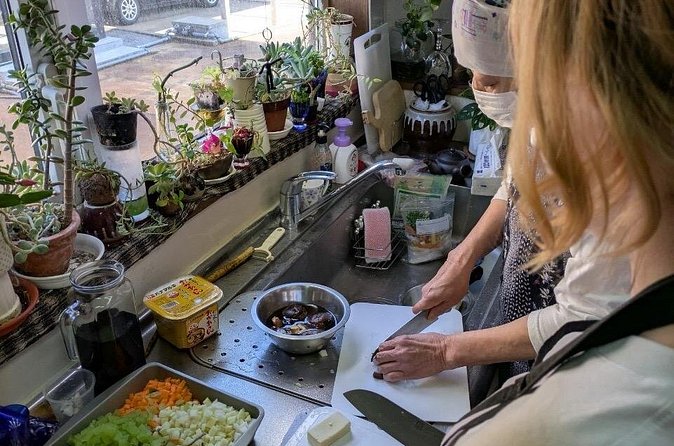
The experience starts at 11:00 am and returns to the same meeting point. A mobile ticket is provided, and booking confirmation arrives at the time of booking.
Wear something comfortable for kitchen work. The supplied details do not list a dress code, but you will be washing, cutting, seasoning, and handling food, so practical clothing is sensible.
The menu varies by season and available ingredients. This is good news if you enjoy local food as it changes through the year, but it means you should not expect an identical menu on every date.
Free cancellation is available when you cancel at least 24 hours before the local start time. Cancellations made less than 24 hours before the experience are not refunded, and late changes are not accepted. Keep that deadline in mind when planning rail connections and other Aomori activities.
The activity ends back at the starting point. Because transportation is not included, make sure your return plans are clear before the class begins.
Should you book BASAMA’s Kitchen?
Book it if you want to cook, eat, and talk with local people in a genuinely home-based setting. The strongest reasons to go are the patient grandmothers, the private format, and the shared plant-based meal. Those features make the experience welcoming for international visitors and mixed-diet groups.
Think twice if you want a polished culinary workshop, a fixed menu, or an easy city-center meeting point. The rural location requires transport planning, and the food is home cooking rather than fine dining.
For the right visitor, this is a very good use of three hours in Aomori. You leave with more than a full stomach. You gain a better sense of seasonal Japanese food and the everyday kindness that turns a meal into a memorable cultural exchange.
FAQ
Where does the cooking experience take place?
It takes place at a home in Maeda Tsuruta, Kitatsugaru District, Aomori 038-3503, Japan.
What time does the experience start?
The activity starts at 11:00 am and lasts approximately three hours.
Is transportation included?
No. You must make your own way to Mutsu-Tsuruta Station on the JR Gono Line. Transportation to the station is not included.
Is the meal suitable for vegans and vegetarians?
Yes. The menu is naturally plant-based and is suitable for vegan, vegetarian, Oriental Vegetarian, and gluten-free diners.
What dishes might I prepare?
The cooking may include keno-jiru vegetable miso soup, onigiri rice balls, and seasonal side dishes. The menu can change with the season and available ingredients.
Can I cancel for a full refund?
Yes, if you cancel at least 24 hours before the local start time. Cancellations made less than 24 hours in advance are not refunded.
More Food Trips in Japan
- Nishiki Market Food Tour with Cooking Class
★ 4.9 · 42 reviews - Okonomiyaki&Takoyaki for Families:Osaka Street Food Festival
★ 5.0 · 4 reviews - Small Group Cooking Class & Market Food Tour in Florence
★ 5.0 · 1,574 reviews - Athens: Food Market Visit and Cooking Class with Wine
★ 4.9 · 1,087 reviews
Just added around Japan
- Cooking Class: Make a Local Delicacy in a Japanese House★ 5.0 · 7 reviews
- Nagoya Super Market Tour & Home Cooking Class with a Local, Akiko★ 5.0 · 10 reviews
- Tokyo: Sushi Cooking Class with Sake Tasting★ 4.8 · 55 reviews
- Tokyo: Sushi roll and side dish cooking experience★ 5.0 · 2 reviews
- Tokyo: Sushi Making Experience & Japanese Cooking Class★ 5.0 · 2 reviews
- Tokyo: Gyoza Making from Scratch – Ultimate Cooking Class★ 5.0 · 2 reviews
- Tokyo: Night Cooking Class: 5 Home-Cooked Japanese Dishes★ 4.9 · 13 reviews
- Tokyo: Real Ramen & Dumpling Cooking with Master Chef★ 5.0 · 10 reviews
Home Cooking Classes, compared.
Khmer Cooking Class at a Local’s Home in Krong Siem Reap
Read our review →
Local Home Korean Cooking Class & Market Adventure in Seoul
Read our review →
Mexican Cooking from Scratch in a Local Home in Tulum
Read our review →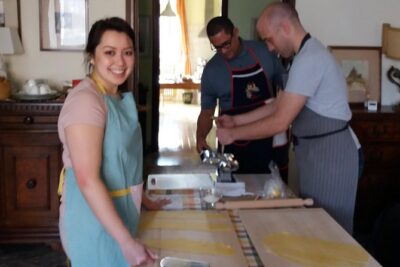
Pastamama, Home Cooking Classes at Grace’s Home
Read our review →
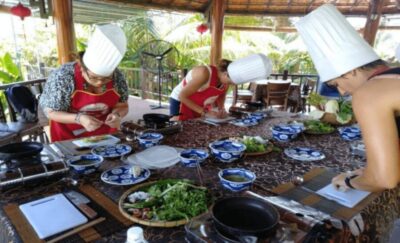
Traditional Cooking Class & meal with Local Family
Read our review →