
REVIEW · SIEM REAP, CAMBODIA
Khmer Cooking Class at a Local’s Home in Krong Siem Reap
Food opens doors fast. This three-hour Siem Reap cooking class pairs a local market visit with hands-on Khmer cooking, and I like the freedom to choose four dishes instead of following one fixed menu. I also like the small maximum of six people, plus tuk-tuk pickup and return to your hotel.
One detail needs explaining: the experience is advertised as taking place at a local’s home, but some sessions happen in an open-air cooking area in a residential neighborhood, with several small groups working nearby. That setting still feels local, but it is not quite the private home kitchen you may picture.
Key points before you book
- Choose four Khmer dishes: Depending on the available menu, you may cook Fish Amok, Tom Yum or Tom Yam soup, steak salad, tempura, and banana tapioca dessert.
- Visit a local market: The morning class includes the most useful market visit, with time to see ingredients being selected for the meal.
- Cook in a small group: The class has a maximum of six people, with instructors providing hands-on help.
- Expect a generous meal: You eat the four-course food you prepare, and several people found there was more than they could finish.
- Tuk-tuk transfers are included: Hotel pickup and drop-off make this easy to fit into a Siem Reap day.
- Ask about dietary needs early: Vegetarian adjustments and some allergy accommodations may be possible if you provide notice.
Why Khmer food makes a good Siem Reap activity
Temples show you Cambodia’s past. A cooking class gives you a practical look at daily life now.
Khmer cooking uses fresh herbs, vegetables, coconut, fish, meat, and balanced sour, sweet, salty, and spicy flavors. You are not only eating a finished dish. You are seeing ingredients before they reach the pan, learning how they are handled, and then making the meal yourself.
I like this format because it gives you a break from restaurant dining. By the end, you understand more about what appears on Cambodian menus. You may also leave with recipes and enough confidence to try the dishes at home.
This is not a formal culinary school with a long lecture. The appeal is its friendly, practical style. Instructors such as Sorya, Sivorn, Kong, and Sky are repeatedly praised for clear demonstrations, patience, humor, and personal help. Kong, also called King Kong by some participants, is known for keeping the class lively while still moving everyone through four recipes.
More Home Cooking Classes in Siem Reap:
- Local Home Korean Cooking Class & Market Adventure in Seoul
★ 5.0 · 1,024 reviews - Marrakech: Moroccan Cooking Class with a Local Family
★ 4.9 · 668 reviews - Mexican Cooking from Scratch in a Local Home in Tulum
★ 5.0 · 585 reviews
The tuk-tuk ride sets the tone
Pickup and drop-off by traditional tuk-tuk are included in the $27 price. That matters in Siem Reap, where a class outside the central hotel area can otherwise require extra planning and bargaining.
The ride takes you away from the main tourist streets toward a more local area. The exact pickup point is arranged after booking, and confirmation is provided at booking time. One useful practical point from the class experience is that the driver may contact you through WhatsApp to confirm the location.
The tuk-tuk is part of the experience, not just a taxi substitute. You get an open-air ride through Siem Reap, though you should keep your belongings secure and expect the usual road noise and dust. The return ride is included, so you do not need to arrange transport after eating a substantial meal.
The local market visit: best in the morning
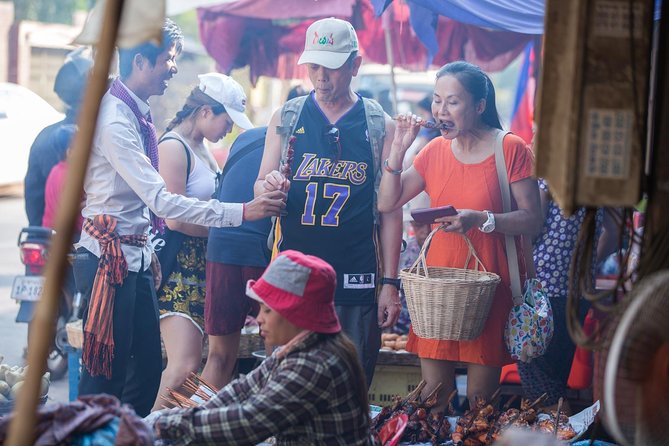
The market visit is one of the most valuable parts of the class, especially for your first morning session at 9:30.
A guide such as Sorya may walk you through the stalls and explain local ingredients, buying habits, and how foods are used in Khmer cooking. You might see fresh produce, herbs, meat, fish, and other everyday goods. The visit is not simply a photo stop. It helps you connect the ingredients on the market tables with the dishes you will prepare later.
The morning schedule appears to offer the fullest market experience. For the 12:30 afternoon class, the market may be quiet, and the visit can happen afterward rather than before the cooking. Some stalls may not be fully active until around 5 p.m. That does not ruin the class, but it matters if the market is your main reason for booking.
If the market is a priority, choose the morning time. If you mainly want to cook and eat, the afternoon or evening option may suit you just as well.
A garden stop adds useful context
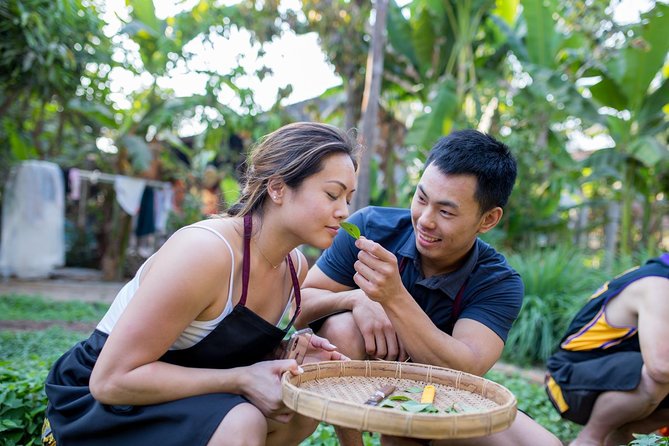
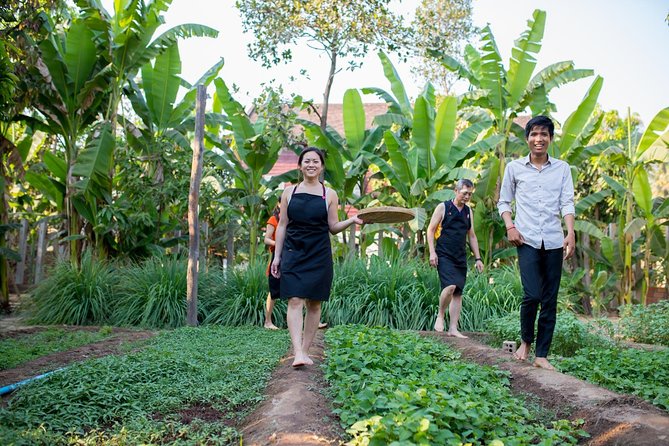
After the market, you may see the garden where herbs and vegetables are grown. Fresh ingredients from the garden are used in the cooking, which gives the class a stronger connection to local food production.
The garden is not presented as a major farm tour. Think of it as a short, useful introduction to the plants behind the recipes. You may be able to smell herbs and see vegetables growing before using similar ingredients at the cooking station.
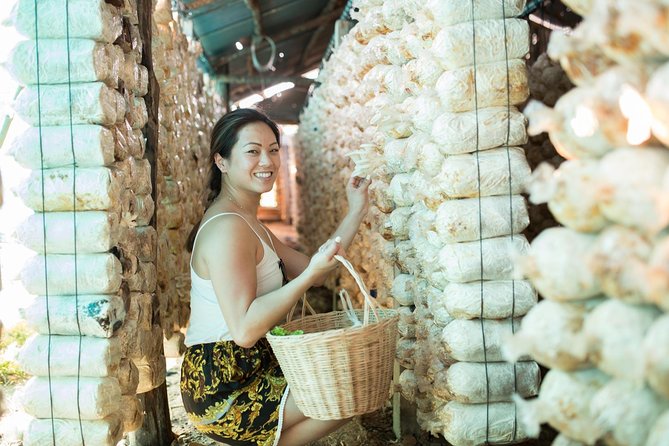
A mushroom farm and crocodile farm visit is also included in the experience description as an extra stop with a local guide. The exact timing and format are not explained, so I would treat this as an additional possibility rather than the main reason to book.
A few more cooking classes around Siem Reap worth a look
- Siem Reap: Khmer Cooking Class at a Local’s Home
★ 5.0 · 1,108 reviews - Award-Winning Cooking Class Experience with Professional Teacher
★ 5.0 · 745 reviews - Cambodian Village Cooking Class
★ 5.0 · 265 reviews - Cambodian Cooking Class from Siem Reap
★ 4.9 · 190 reviews
What the cooking area is really like
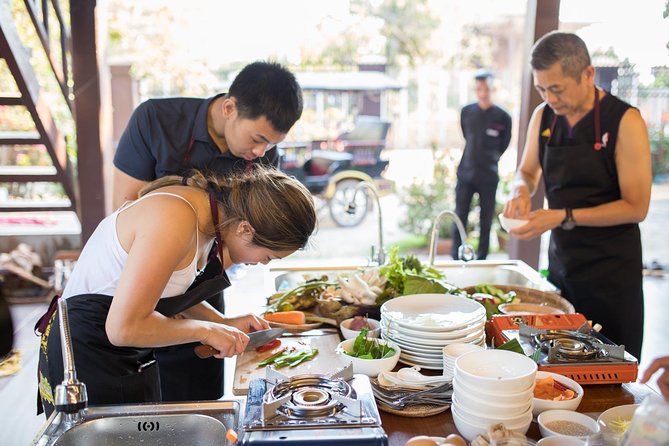
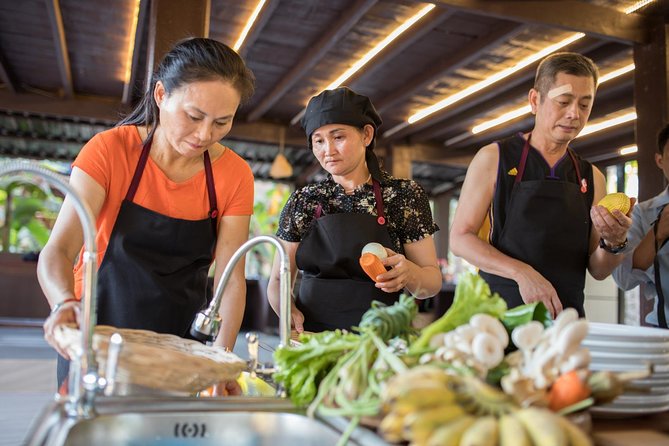
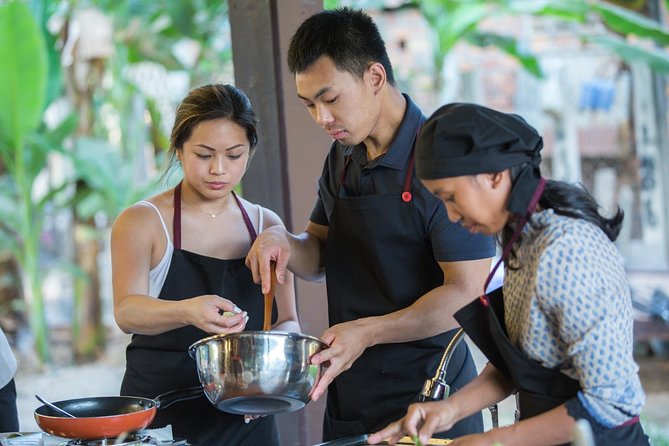
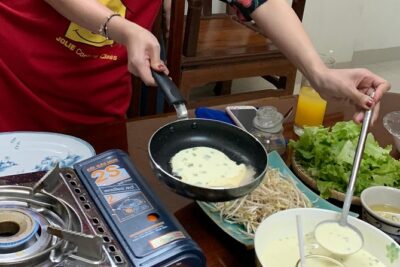
The name suggests that you will cook inside a local family home. In practice, some sessions take place in an open tiled outdoor cooking area in a residential neighborhood. It is locally owned and may feel more like a small cooking school than a private household kitchen.
Several groups may cook at the same time, with roughly three groups of up to six people in the open-air setup. That means the atmosphere can be social rather than private. You still get direct help, but you should not expect an intimate one-family meal in someone’s personal kitchen.
I see this as a fair trade for the practical layout. The open kitchen allows everyone to work at a proper station, and instructors can move around to help. It also handles groups more efficiently than a cramped home kitchen might.
The class is capped at six people per group. That is small enough for questions and individual assistance, while still giving you the chance to compare dishes with other people at the table.
Choosing four dishes keeps the class personal
A major strength is menu choice. You may select four dishes rather than cook exactly the same meal as everyone else.
Possible choices include:
- Fish Amok, one of Cambodia’s best-known dishes
- Hot and sour Tom Yum or Tom Yam soup
- Steak salad
- Tempura
- Banana tapioca dessert
The exact selection may vary, but the range gives you a good mix of savory food, soup, and dessert. If each person chooses different dishes, a couple or family can taste eight or more recipes between them. That turns the final meal into a small sampling menu.
This choice also helps people with different tastes. You can avoid a dish you do not eat and select vegetarian recipes when available. If you have allergies or follow a special diet, contact the operator before the class. Adjustments may be possible, but they should not be assumed at the last minute.
How hands-on is the instruction?
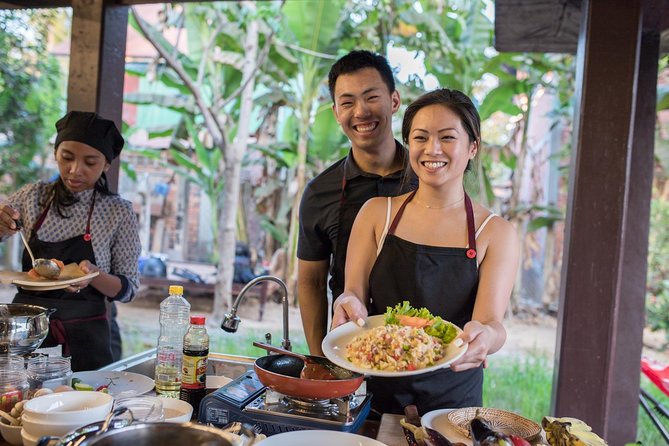
The class is designed for beginners. You do not need prior cooking experience, and the instructors guide you step by step.
You should expect to wash and prepare ingredients yourself, then follow demonstrations and cook with direct support. The instructors may provide shortcuts that make the recipes easier to repeat at home. That may disappoint someone looking for advanced chef training, but I think it is useful for a holiday class.
Sorya and Sivorn are praised for clear explanations and patient teaching. Kong is often described as funny and encouraging, while Sky is noted for helping with each stage and taking photos during the session. The friendly approach seems to be one of the class’s strongest features.
The pace is organized. Cooking four dishes could become chaotic, but the staff arrange the process so the class keeps moving. You are not left to guess what comes next, yet you still do enough of the work to feel that you made the meal.
The four-course meal is the payoff
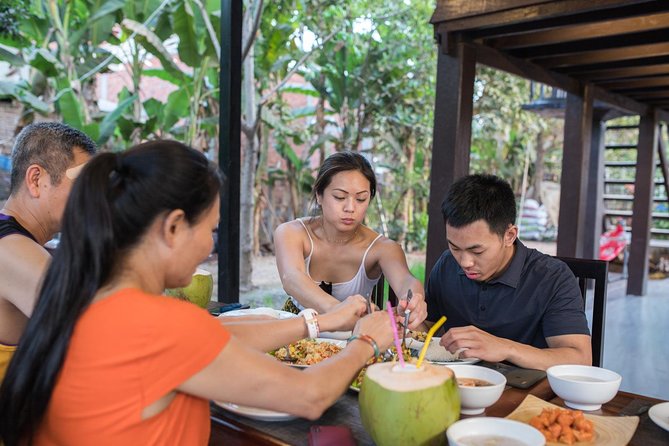
At the end, you sit down and eat what you prepared. This is a simple idea, but it makes the class feel complete. You see the ingredients, handle them, cook them, and then taste the result.
The portions are generous. Several people found there was more food than they could finish, especially when everyone prepared different recipes. Plan your appetite accordingly, and do not make a heavy lunch reservation immediately afterward.
The meal is also a chance to compare results. One person may cook Amok while another makes salad or dessert. That variety gives you a better sense of Khmer food than preparing one dish alone.
Beer and wine are not included. Water is available, and one practical tip is to bring your own preferred drink if you want something beyond water. Alcohol is an extra cost rather than part of the $27 package.
Is $27 good value?
At $27 per person, this is strong value for a three-hour activity. The price includes hotel tuk-tuk transfers, an experienced local host or guide, ingredients, instruction, and the four-course meal you prepare.
The market and garden visits add context without requiring a separate tour. The small group is especially important to the value. A cheaper class with a large crowd may give you less time at the cooking station, while this format allows more direct help.
You are paying for an activity as well as food. If you only want a cheap Cambodian lunch, a local restaurant will cost less. If you want to learn dishes, meet local instructors, see ingredients before cooking, and have transportation included, the price is reasonable.
The food itself can also serve as your main meal. Since the portions are large, the class may replace a separate lunch or dinner rather than add another full restaurant bill.
Timing, group size, and comfort
Three class times are offered, including lunch and dinner options. The morning session is the best choice for a lively market visit. Afternoon and evening times may work better around temple visits, but the market portion can be shorter or shifted depending on the schedule.
The maximum group size is six, though several groups may cook in the same open area. You get a small working group without necessarily having the whole venue to yourself.
Children must be accompanied by an adult. The activity is near public transportation, but the included tuk-tuk pickup makes that less important for most people staying in Siem Reap.
The class is likely most comfortable for people who enjoy active participation. You will wash, prepare, cook, and eat. It is not a good fit if you want to sit back while a chef does everything.
Dietary needs and menu choices
Vegetarian options are available, and the operator asks people with allergies or dietary restrictions to give notice. That is encouraging, but I would still provide clear details when booking and confirm them again before the class begins.
Do not assume every recipe can be changed without planning. Fish Amok and soup may depend on specific ingredients, and sauces can contain fish-based products. A clear request gives the staff a better chance to prepare suitable alternatives.
The freedom to select four dishes is a major help. You can usually build a menu around your needs instead of taking whatever is placed in front of you.
Who should book this class?
I would recommend it for first-time visitors to Siem Reap who want more than temple sightseeing. It suits couples, families with older children, solo participants, and small groups who enjoy food and conversation.
It is also useful for people who want practical recipes. The cooking methods are described as simple enough to repeat at home, and recipes may be sent afterward. You may not become a Khmer chef in three hours, but you can return with a few dishes you understand rather than a vague memory of a restaurant meal.
The class is less suitable if you expect a private family kitchen, a luxury dining setting, or advanced culinary training. The open-air venue and several-group format should be clear before you book.
Should you book it?
Yes, if you want a friendly, hands-on look at Cambodian food and value included transport. The strongest reasons are the four-dish choice, generous meal, small working group, and instructors such as Sorya, Sivorn, Kong, and Sky who make the process easy for beginners.
Choose the 9:30 session if the local market matters most. Pick a later class if cooking is your priority and your schedule is tight. Just adjust your expectations about the venue: this is a local-style open cooking area, not always a private home.
At $27, it offers a lot for one half-day activity. I would book it as a relaxed break from the temples, especially if you want to bring a few Cambodian flavors home with you.
FAQ
How long does the Khmer cooking class last?
The experience lasts approximately three hours.
How much does the class cost?
The listed price is $27 per person.
Is hotel pickup included?
Yes. Hotel pickup and drop-off by tuk-tuk are included.
How many people can join the class?
The class has a maximum of six people per group.
What dishes can I cook?
Possible dishes include Fish Amok, Tom Yum or Tom Yam soup, steak salad, tempura, and banana tapioca dessert. You can choose four dishes from the available menu.
Is a market visit included?
Yes. The experience includes a visit to a local market. The morning 9:30 session generally offers the fullest market visit, while afternoon timing may provide a shorter or later visit.
Are vegetarian or allergy-friendly options available?
Vegetarian options and some allergy adjustments may be possible. You should notify the operator before the class.
Are drinks included?
Beer and wine are not included. Water is provided, and you may bring another drink if you prefer.
Just added around Siem Reap
- Siem Reap: Morning Cooking Class & Market Tour★ 5.0 · 7 reviews
- Siem Reap: Khmer Cooking Class at a Local’s Home★ 5.0 · 2 reviews
- Siem Reap: Guided Day Trip to Local Village & Cooking Class★ 5.0 · 3 reviews
- Siem Reap: Cambodian Desserts Cooking Lesson with Tastings★ 4.8 · 9 reviews
- Siem Reap: Half-Day Cambodian Cooking Class★ 4.9 · 6 reviews
- Cambodian Cooking Class★ 4.9 · 25 reviews
- Siem Reap: Afternoon Cooking Class & Village Tour★ 5.0 · 5 reviews
- Afternoon Cooking Class & Village Tour in Siem Reap★ 5.0 · 12 reviews
Home Cooking Classes, compared.
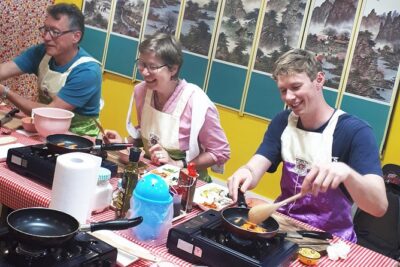
Local Home Korean Cooking Class & Market Adventure in Seoul
Read our review →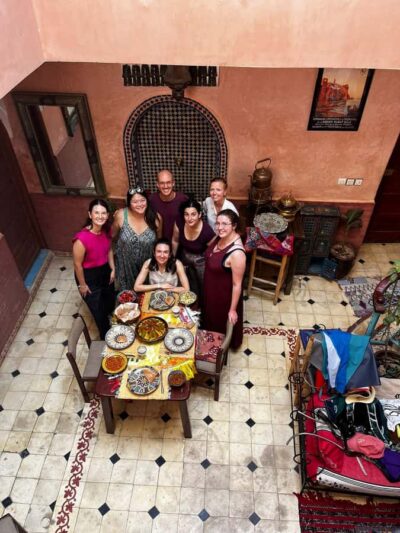
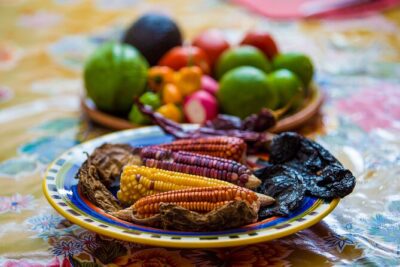
Mexican Cooking from Scratch in a Local Home in Tulum
Read our review →
Pastamama, Home Cooking Classes at Grace’s Home
Read our review →
Traditional Cooking Class & meal with Local Family
Read our review →
Lists this class appears in