
REVIEW · HONSHU, JAPAN
Nishiki Market Food Tour with Cooking Class
Fresh food, local stories, then lunch. This 150-minute Kyoto experience pairs a guided walk through Nishiki Market with a private cooking class, giving you more than a quick look at food stalls. I especially like the English-speaking guide who can explain unfamiliar foods and translate with shop staff, plus the choice of seafood, tempura, or chicken and egg donburi. The main consideration is pace: one hour in the market is useful, but you may want extra time later for serious shopping.
The experience costs $109 per person, including cooking ingredients, tastings, a recipe, and the taxi from the market to the cooking studio. I like that the class uses ingredients chosen during the market visit, so lunch feels tied to Kyoto rather than being a separate cooking demonstration. Still, the market portion may feel brief if you hoped for extensive sampling or a long shopping stop.
Key points at a glance
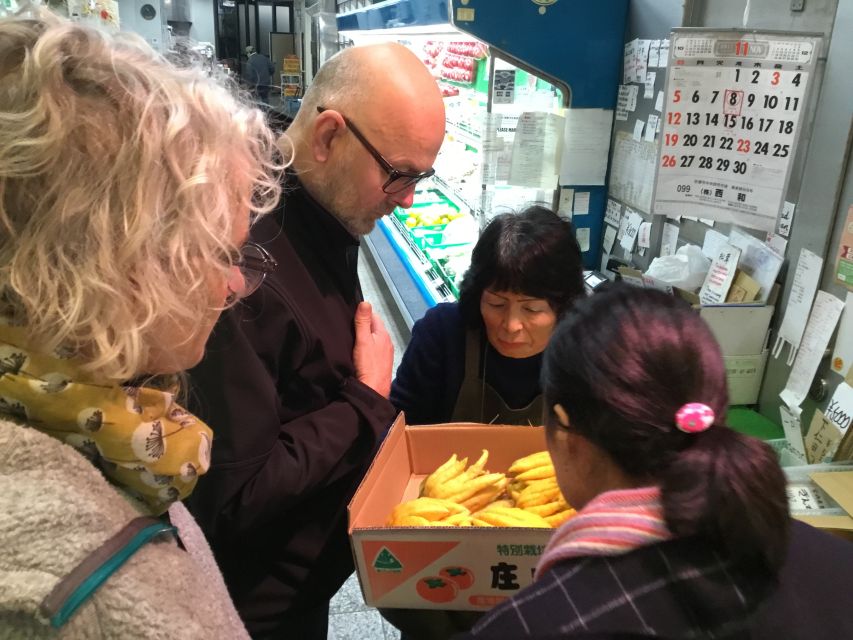
- Nishiki Market with translation help: Ask about unfamiliar foods, shop traditions, etiquette, and famous stalls while your English-speaking guide explains what you are seeing.
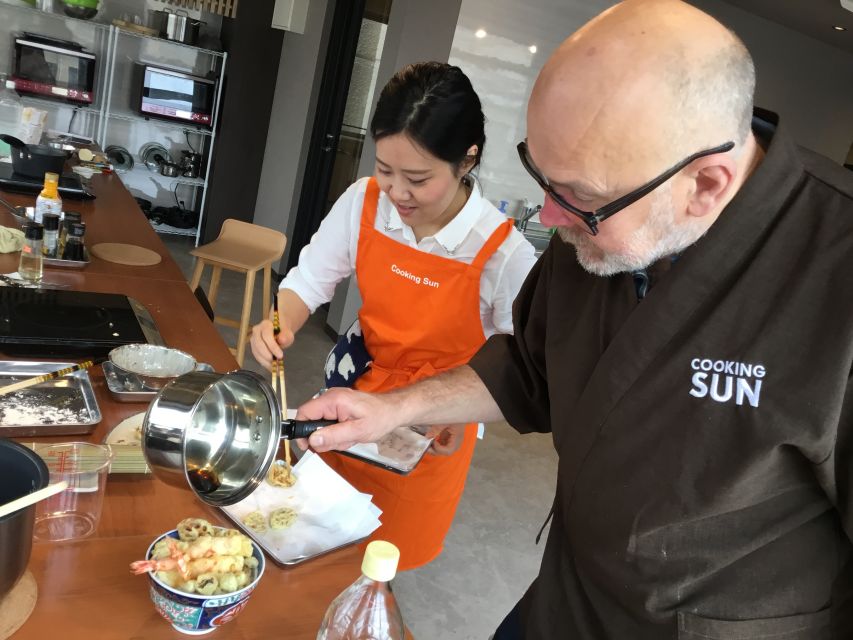
- Three donburi choices: Cook kaisen-don with seafood, ten-don with tempura, or oyako-don with chicken and egg.
- A private kitchen class: Your group cooks together at its own pace, with room for questions and some special requests.
- Useful market etiquette: You learn that eating while walking is not allowed, an easy rule to miss on your own.
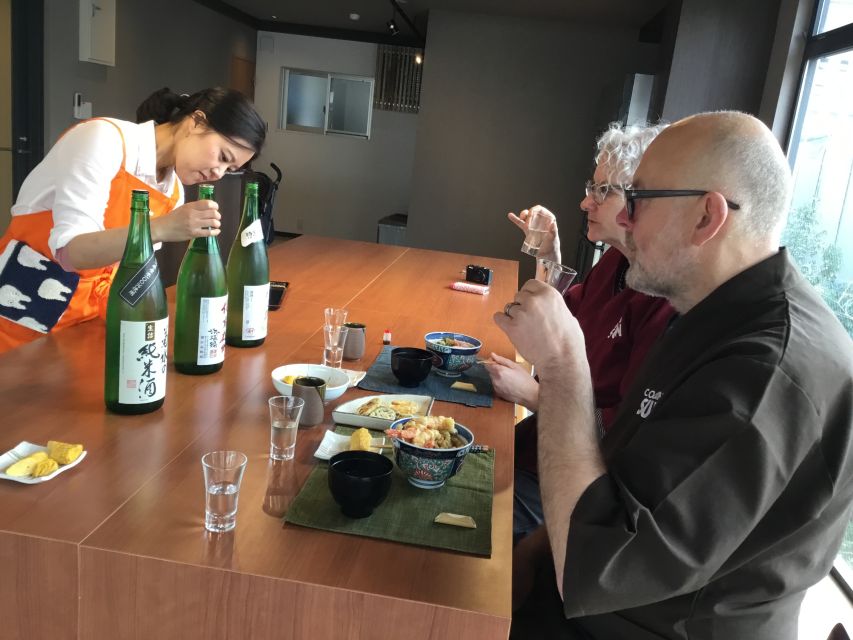
- Small tastings along the way: Sample Japanese pickles and other market foods, with three types of sake available as an optional tasting.
- Good for families and cooks: Children can take part, while keen home cooks can ask about dashi, sauces, brands, and presentation.
Why Nishiki Market Works Better With a Guide
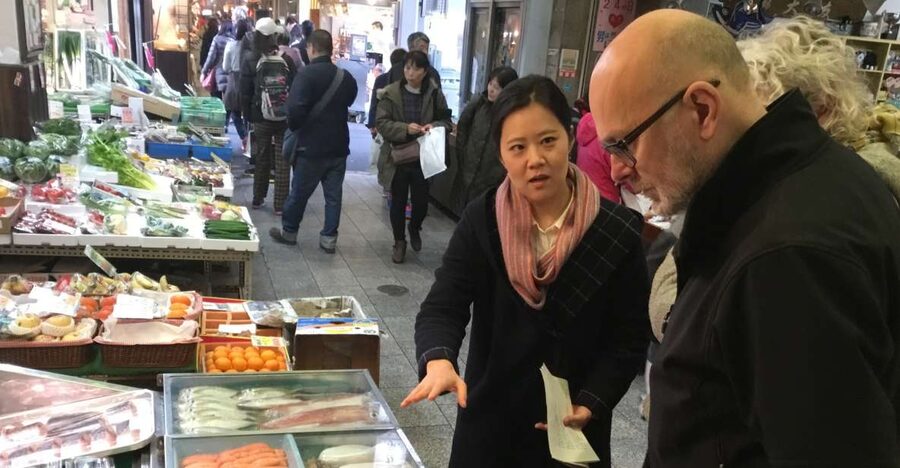
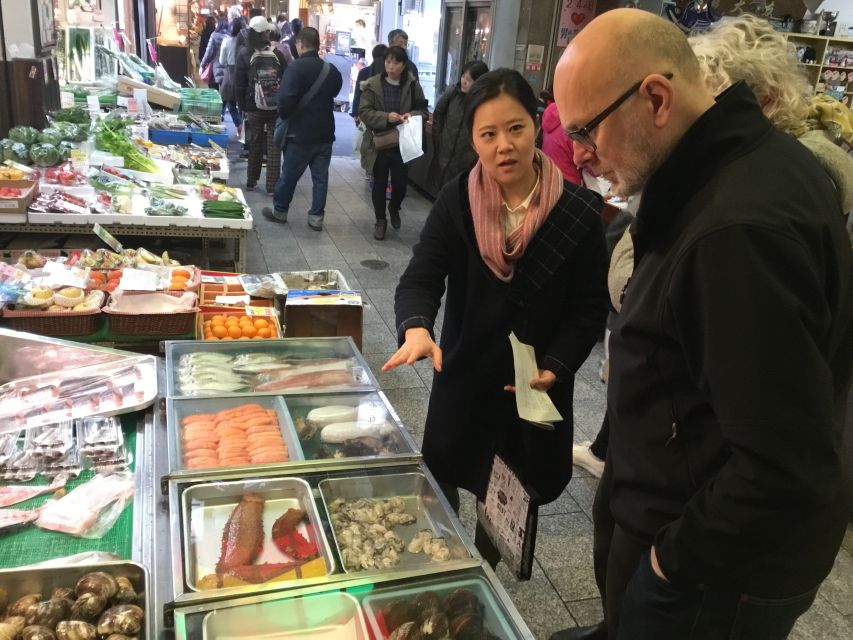
Nishiki Market can look simple at first: a long covered shopping street filled with seafood, pickles, spices, sweets, meat, and prepared foods. On your own, you can walk through it in about 15 minutes. The trouble is that a quick walk tells you almost nothing about what you are seeing.
With a guide, the market becomes a food lesson. You can ask about ingredients you have never encountered, learn why certain shops are known for particular products, and get help speaking with shop staff. That translation help matters when you want to ask a precise question rather than simply point at something and hope for the best.
The guide also helps separate old market businesses from newer stalls aimed mainly at visitors. One recent experience specifically praised the explanation of original shops and which stalls were worth returning to later. That is practical advice in a market where you can easily fill your stomach before finding the food you actually wanted to try.
I also appreciate the etiquette briefing. You learn that eating and walking through the market is not permitted. That small rule can save you an awkward moment, especially when many foods are served in a way that seems designed for instant eating.
The market walk usually lasts about an hour. That gives you enough time to ask questions and sample selected foods, but not enough time for a slow, stall-by-stall survey. If you see something you want to buy, ask your guide how much time is available. One past participant wanted clearer advice on shopping during the tour, so it is wise to treat the guided hour as an introduction and return later for purchases.
More Cooking Classes with a Market Tour in Japan
- Tokyo Tsukiji Fish Market Tour and Sushi Making Lesson
★ 5.0 · 390 reviews - Tokyo Washoku 4-hour Cooking Class: From Market to Table
★ 5.0 · 253 reviews - Tokyo: Tsukiji Market Walking Tour & Sushi Cooking Class
★ 4.6 · 122 reviews
Pickles, Dashi, Sake, and Other Small Discoveries
The included tastings add flavor to the walk without turning it into a full grazing tour. Japanese pickles are a useful example. You may know pickled cucumber or cabbage, but Nishiki offers a wider range of vegetables, seasonings, and textures. Your guide can explain how these foods fit into a Japanese meal rather than presenting them as random bites.
The tour also includes sample foods from the market. The exact selection can vary, since the guide chooses ingredients and tastings around the day’s market offerings and your group’s interests. That flexibility is more useful than a fixed list if you have dietary preferences or want to ask for a substitution.
Three types of sake are available as an optional tasting. The supplied details do not specify an additional price, so confirm that point when booking if it affects your budget. If sake is not your thing, the food discussion and cooking class remain the main event.
One of the best parts of this format is the chance to connect the market ingredients with the meal you later prepare. You are not simply tasting a pickle and moving on. You are learning how Japanese cooks use seasonings, soup stock, sauces, and side dishes together.
Choosing Your Donburi: Seafood, Tempura, or Chicken and Egg
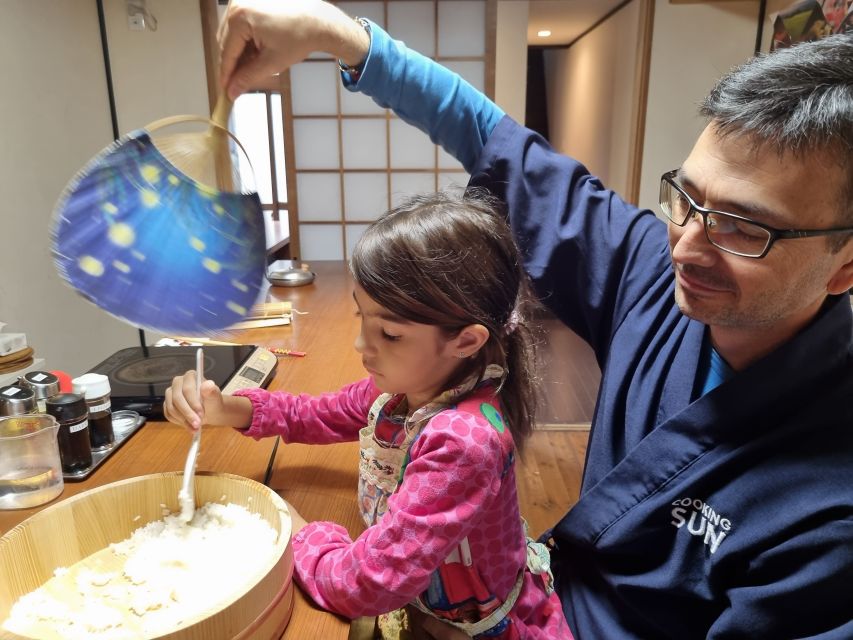
The cooking class centers on donburi, a Japanese bowl meal served over rice. You choose one of three versions:
- Kaisen-don, a seafood bowl
- Ten-don, a tempura bowl
- Oyako-don, a chicken and egg bowl
Each option gives you a different lesson. Kaisen-don focuses on seafood and presentation. Ten-don involves tempura, with its crisp coating and careful cooking. Oyako-don is likely the most approachable choice for a home kitchen, since chicken, egg, rice, and a savory sauce are easier for many cooks to find after returning home.
The best arrangement for a group is for each person to choose a different dish, if the class allows it. One family group prepared all three options, which gave everyone a chance to compare techniques and flavors. If you are cooking with children, this variety can keep the class interesting because not every person is doing the same task.
You can also ask about substitutions. A recent group requested tofu instead of chicken and received help with that change. Do not assume every request can be met, but it is worth raising dietary preferences before or during the tour. The ingredients are included, so you are not left paying extra for the basic meal.
The cooking school provides a recipe, which is one of the strongest practical features. A good meal enjoyed once is pleasant. A recipe you can recreate at home gives the $109 price more staying power.
From Market Stall to Cooking Studio
After about an hour at Nishiki Market, a taxi takes you to the cooking studio. That transfer is included, which keeps the short schedule from being eaten up by figuring out local transportation. You should still allow time to meet at the western entrance of Nishiki Market and get oriented before the walk begins.
The studio is described as clean, cozy, and set up specifically for cooking classes. That matters because a cramped demonstration kitchen can leave you watching from the side. Here, the format is hands-on. You prepare and eat your own bowl, with the instructor explaining each step as you go.
The class usually takes about an hour. Expect instruction on cooking methods, sauces, brands, dashi, and presentation. The teaching is not limited to making food taste good. One participant who already cooked often appreciated the advice on making dishes look attractive, along with explanations of how different sauces are used.
The English instruction has been a consistent strength. Guides and instructors including Chie, Momo, Mae, and Mio have been praised for clear explanations, warmth, and attention to questions. Chie in particular has been described as both a friendly market guide and an excellent cooking teacher. The exact instructor depends on the date, but the activity is conducted in English.
More Cooking Classes with a Market Tour in Kyoto:
- Hanoi Cooking Class: Culture, Local Market & Meaning CSR Impact
★ 5.0 · 5,147 reviews - 5 Traditional Dishes Hanoi Cooking Class with Market Trip
★ 5.0 · 4,890 reviews - Cooking Class and Lunch at a Tuscan Farmhouse with Local Market Tour from Florence
★ 5.0 · 4,831 reviews - Chiang Mai: Cooking Class, Market & Thai Herbs Garden Tour
★ 4.9 · 4,824 reviews
What the $109 Price Really Buys
At $109 per person, this is not the cheapest way to eat at Nishiki Market. You could buy several snacks for less, walk through the market without a guide, and find a casual lunch nearby. The value comes from combining several services in a private format.
The price includes:
- A private English-language guide
- The Nishiki Market tour
- Market tastings
- Ingredients for your donburi
- A cooking recipe
- Taxi transportation from the market to the studio
It does not include food you decide to buy independently. That distinction is important. The included ingredients cover the cooking class, not a personal shopping spree or every snack that catches your eye.
I think the price works best for people who want context and participation, not just a meal. A private tour lets you ask as many questions as you like and move at a pace that suits your group. It also gives you a better chance to request a substitution or explain your cooking interests.
For a solo visitor, $109 may feel steep for a 150-minute activity. For a family or small group, the private format becomes easier to justify because everyone shares the guide’s attention and the class remains personal. The value also improves if you use the recipe at home and return to the market later with a better idea of what to buy.
The Main Limits of the Experience
The first limitation is time. Nishiki Market has enough food and history to fill several hours, but this tour gives you roughly one hour there before the cooking class. That is enough for orientation, samples, and questions. It is not enough for leisurely shopping, long conversations at every stall, and a full meal before class.
The market can also be crowded. A guide helps you understand where to look, but crowds still affect how quickly you move and how much time you have to stop. One participant found the market walk less detailed and less generous with tasting time than expected. If the market itself is your top priority, plan to return independently.
The second limitation is that ingredient quality can vary. One person enjoyed the class but felt the fatty tuna was disappointing. Seafood is especially dependent on the day’s selection, so kaisen-don is not automatically the best choice for every group.
Finally, the optional sake tasting may not be central enough for serious sake fans. You taste three types, but the supplied details do not promise an extended lesson about producers or brewing. Choose this tour for food and cooking first, with sake as an extra.
Who Should Book This Kyoto Food Class?
I would recommend it to first-time visitors who want help understanding Japanese food customs without spending half a day in a formal class. It is also a good fit for families. Children can take part in the cooking, and preparing several types of donburi gives the group something active to do.
Home cooks will get more from the class than people who only want lunch. You can ask about dashi, sauces, brands, preparation, and presentation. If you are already comfortable in the kitchen, the market explanations may be the most useful part.
The private format suits couples, families, and small groups with different interests. One person can ask about pickles while another asks about seafood or cooking substitutions. You are not tied to the questions of a large mixed group.
I would be more cautious if your main goal is extensive market grazing. The class takes up a substantial part of the 150 minutes, and the tour does not include unlimited food. In that case, visit Nishiki Market separately and treat this experience as a cooking lesson rather than a full food crawl.
Booking is flexible, with free cancellation up to 24 hours before the start time and a reserve-now, pay-later option. Starting times vary, so check availability for your date.
Should You Book the Nishiki Market Food Tour?
Book it if you want a personal introduction to Kyoto food, a practical market walk, and a meal you prepare yourself. The strongest parts are the guide’s translation help, the private questions, the market etiquette, and the recipe you take home.
Skip it if you want to spend hours shopping, eat your way through every stall, or keep the budget as low as possible. For everyone else, $109 is a reasonable price for a private market guide, included ingredients, a taxi transfer, and a hands-on class. Ask about shopping time and any food substitutions early, then return to Nishiki Market later with your new list of must-try foods.
FAQ
Where does the Nishiki Market food tour begin?
The meeting point is at the western entrance of Nishiki Market.
How long does the experience last?
The total duration is 150 minutes. You typically spend about one hour in Nishiki Market and about one hour cooking and eating at the studio, with the taxi transfer between locations included in the schedule.
Is the tour private?
Yes. It is offered as a private group experience, so you can ask questions and move at your group’s pace.
Is the tour conducted in English?
Yes. The guide and cooking instruction are provided in English.
Which donburi dishes can I cook?
You can choose kaisen-don with seafood, ten-don with tempura, or oyako-don with chicken and egg.
Are the cooking ingredients included?
Yes. The ingredients used for the donburi cooking class are included in the tour price.
Are market tastings included?
Yes. Sample food tastings are included, and Japanese pickle tastings are available during the market visit. Three types of sake are offered as an optional tasting.
Is transportation to the cooking studio included?
Yes. The taxi cost from Nishiki Market to the cooking studio is included.
Can I cancel the booking for a refund?
You can cancel up to 24 hours in advance for a full refund. A reserve-now, pay-later option is also available.
More Food Trips in Kyoto
- Undiscovered Charleston: Half Day Food, Wine & History Tour with Cooking Class
★ 5.0 · 948 reviews - Vietnamese Food Cooking Class in Hanoi with Market Experience
★ 5.0 · 778 reviews - Milan: Italian Cooking Class with Food and Wine
★ 4.7 · 509 reviews - Mexican Cooking Class with Food Market Visit in Mexico City
★ 5.0 · 506 reviews
More Food and Drink Trips in Kyoto
- Small Group Cooking Class & Market Food Tour in Florence
★ 5.0 · 1,574 reviews - Pasta Making & Wine Tasting with Dinner in Frascati from Rome
★ 5.0 · 1,326 reviews - Paella Cooking Class, Wine Tasting & Central Market in Valencia
★ 5.0 · 1,150 reviews - Athens: Food Market Visit and Cooking Class with Wine
★ 4.9 · 1,087 reviews
Just added around Kyoto
- Kyoto Udon & Tempura Cooking Class with Professional Chefs★ 3.8 · 3 reviews
- Kyoto: Wagashi (Japanese sweets) Cooking near Fushimiinari★ 5.0 · 40 reviews
- Kyoto: Morning Japanese Bento Cooking Class★ 5.0 · 149 reviews
- Kyoto Home Cooking Class &Supermarket tour near Fushimiinari★ 5.0 · 31 reviews
- Kyoto: Cooking class, learning how to make authentic sushi★ 4.2 · 9 reviews
- Kyoto: Authentic Sushi Making Cooking Lesson★ 5.0 · 103 reviews
- Authentic Japanese Cooking Experience at Izakaya restaurant★ 4.2 · 5 reviews
- Gyoza Cooking Class in Kyoto: Traditional Japanese Dumplings★ 5.0 · 12 reviews
Cooking Classes with a Market Tour, compared.
Hanoi Cooking Class: Culture, Local Market & Meaning CSR Impact
Read our review →
5 Traditional Dishes Hanoi Cooking Class with Market Trip
Read our review →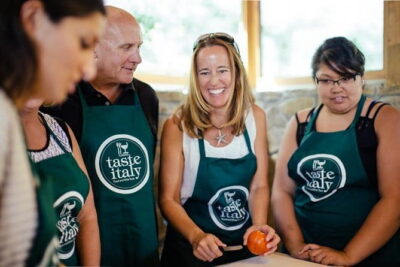
Cooking Class and Lunch at a Tuscan Farmhouse with Local Market Tour from Florence
Read our review →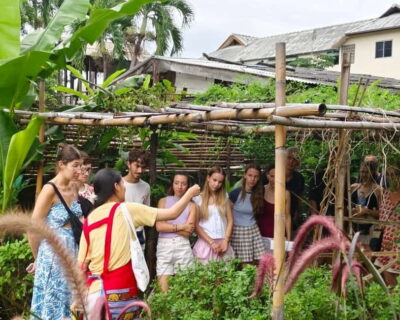
Cooking Class, Market & Thai Herbs Garden Tour
Read our review →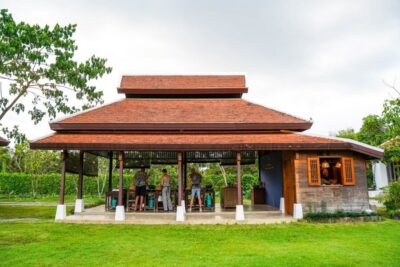
Authentic Cooking Class with Market & Farm Visit
Read our review →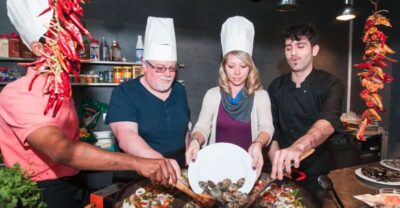
Paella Cooking Experience & Boqueria Market Tour
Read our review →
Cooking Class Hoi An:Local Market, Basket Boat, Fishing & Cooking
Read our review →
Hoi An Cooking Class(Market,BasketBoat Crabfishing&Cooking Class)
Read our review →Lists this class appears in