REVIEW · TOKYO, JAPAN
Tokyo Washoku 4-hour Cooking Class: From Market to Table
Tokyo tastes better when you cook it. This four-hour class combines a supermarket visit with hands-on Japanese cooking, so you learn what to buy as well as what to do with it. I especially like the market lesson and the chance to make makisushi, miso soup, dashimaki tamago, and nasu dengaku from scratch. The main thing to watch is the strict start time, since arriving more than five minutes late without contact can mean losing the class and your payment.
I also like the small maximum of seven people. That gives you room to ask questions, practice knife work, and get help from the instructor instead of standing behind a cooking demonstration. Beer and sake tasting add a pleasant social touch, though dietary needs must be arranged at least one day ahead and allergy-free cooking cannot be guaranteed.
Key points to know before you book
- The supermarket comes first: You learn how to choose Japanese ingredients before entering the cooking studio.
- Four dishes give you real practice: The menu includes rolled sushi, miso soup, rolled omelet, and grilled eggplant.
- The class is genuinely hands-on: You practice cutting, mixing, rolling, and cooking rather than simply watching.
- A small group keeps instruction personal: The maximum is seven people, with guides such as April, Yuri, Alice, Mihori, Suzy, and Taka leading past sessions.
- Recipes go home with you: You can repeat the dishes after your Tokyo visit.
- The price covers more than lunch: At $79.59 per person, you get about four hours of instruction, shopping guidance, a cooked meal, and drink pairings.
Starting near Iriya Station at 10 a.m.
The class begins at the FamilyMart at 2-chōme-1-10 Shitaya in Taito City. The start time is 10 a.m., and punctuality matters here. The group leaves together, so this is not an activity where you can wander in late and catch up at the next stop.
The meeting point near Iriya Station makes practical sense. You begin in an ordinary Tokyo neighborhood rather than at a polished tourist attraction. That helps set the tone: this is about everyday food shopping, home cooking, and the small decisions that shape a Japanese meal.
I recommend allowing extra time to find the FamilyMart. Tokyo addresses can be confusing, especially if you are still adjusting to Japanese station exits and side streets. The operator says that arriving more than five minutes late without contacting them counts as a cancellation, with no refund or rescheduling.
The activity lasts about four hours and finishes back at the cooking studio, which is also the meeting point for the tour. Afterward, you may visit Kappabashi Dougu Street on your own. That is a useful pairing if you like kitchen tools, knives, tableware, or food-related souvenirs, but the street visit is not part of the guided class.
More Cooking Classes with a Market Tour in Japan
- Tokyo Tsukiji Fish Market Tour and Sushi Making Lesson
★ 5.0 · 390 reviews - Tokyo: Tsukiji Market Walking Tour & Sushi Cooking Class
★ 4.6 · 122 reviews - Nishiki Market Food Tour with Cooking Class
★ 4.9 · 42 reviews
Shopping for ingredients like a local cook
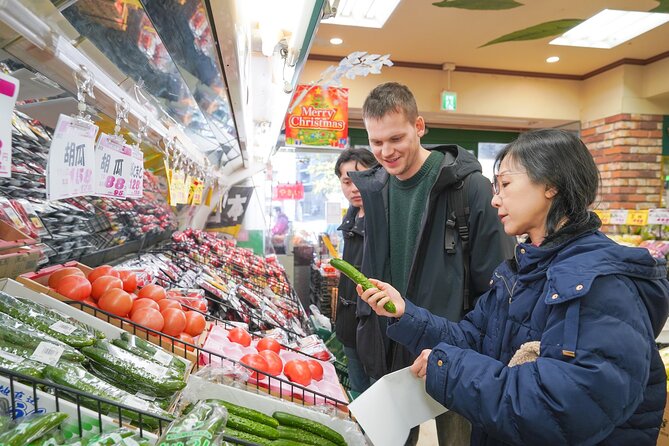
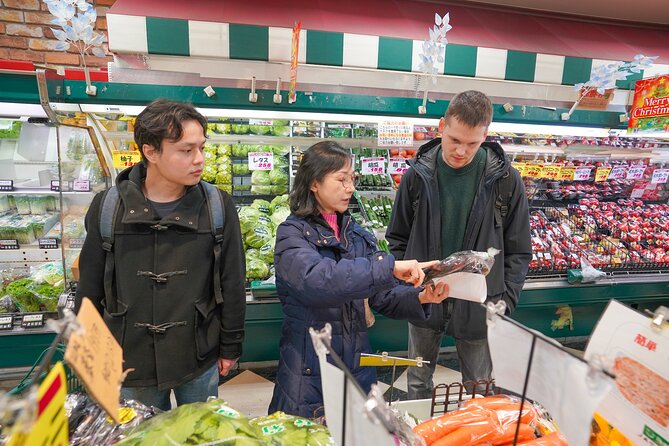
The supermarket stop is the part that gives this class its practical edge. Instead of presenting Japanese food as a finished plate, the guide shows you how to recognize and select the ingredients behind it.
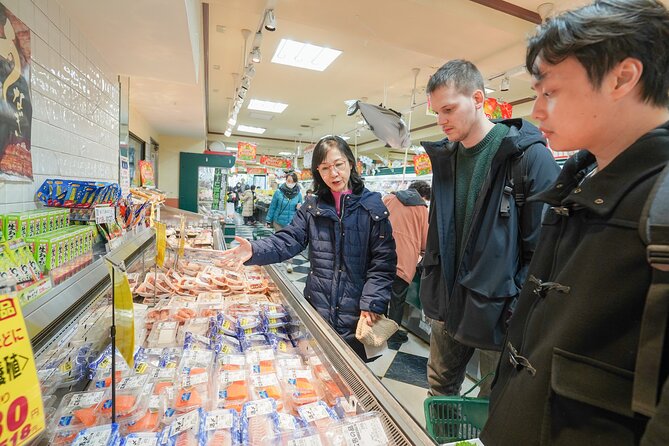
You can ask about Japanese vegetables, meat, seasonings, seafood, and other products while standing in the place where local shoppers buy them. The exact products may vary, but the lesson is useful because Japanese supermarkets can feel confusing at first. Labels, cuts of meat, unfamiliar vegetables, and different types of miso are easier to understand when someone explains them beside the shelf.
Past instructors have included April, Yuri, Masai, Alice, Minnie, Mihori, Taka, Suzy, and a guide named Nigiri. The strongest praise has focused on patient explanations, cheerful conversation, and clear help with ingredients. Mihori, for example, has been appreciated for making the supermarket walk educational without turning it into a dry lecture. Suzy has been praised for her patience and strong English.
This section also gives you a chance to ask about daily life in Tokyo. One session included questions about life in the city, while another guide used comparisons with Western cooking to make unfamiliar techniques easier to understand.
The limitation is that supermarket shopping takes time away from cooking. If you want a class devoted entirely to advanced knife skills or restaurant-style plating, this may feel broad rather than specialized. I see that as a fair trade. You get a better sense of how Japanese food works at home, not just how it looks on a finished plate.
Preparing four Japanese dishes from scratch
After shopping, you walk to a dedicated cooking studio. The space has been described as spacious and well set up, which matters when several people are chopping, rolling, and moving around the work areas.
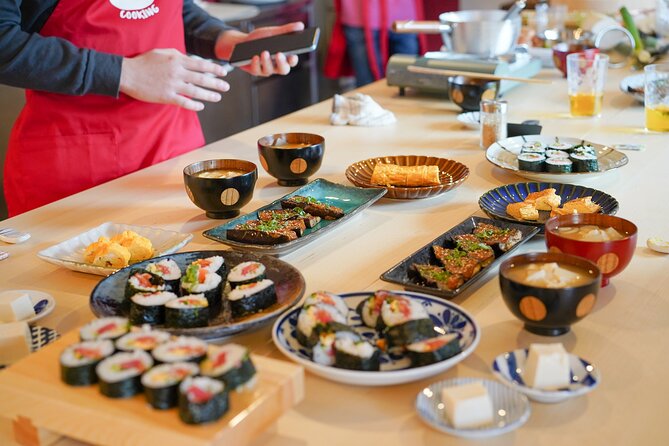
The menu includes four traditional dishes:
- Makisushi, or rolled sushi
- Miso soup
- Dashimaki tamago, a Japanese rolled omelet
- Nasu dengaku, grilled eggplant with a savory miso topping
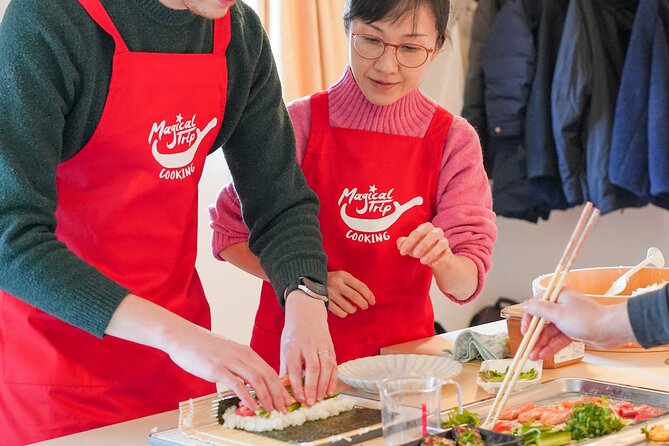
The class teaches the process from the beginning. Your guide demonstrates cutting methods, cooking techniques, and the order in which the food comes together. You then do the work yourself, with help when needed.
Maki sushi is a good teaching dish because it rewards careful preparation. You learn how ingredients are arranged and rolled, rather than simply picking up a finished piece from a shop. Dashimaki tamago is also a useful challenge. A neatly rolled omelet takes practice, and the guide can correct your technique while you are still holding the pan and chopsticks.
Miso soup looks simple, but the flavor depends on the stock and the balance of miso. One class participant called the finished soup the best miso soup they had eaten. The lesson gives you a chance to see why a short ingredient list can still require attention.
Nasu dengaku introduces a different side of Japanese cooking. Eggplant becomes soft and savory under a miso-based topping, offering a dish that is easy to understand but still distinctly Japanese.
You should expect plenty of participation. The class is not designed for you to sit and watch while the instructor does everything. Past sessions have included substantial chopping and cooking, and the recipes are described as tasty without being too complicated to repeat at home.
A cooking lesson shaped by the instructor
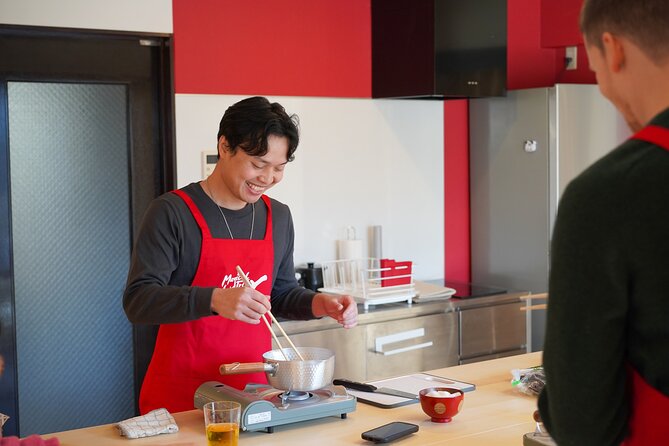
The guide makes a major difference here. The class is built around conversation and questions, so a warm instructor can turn a basic recipe into a memorable part of your Tokyo visit.
April has been praised for encouraging people at every stage of the cooking process. Yuri has been appreciated for explaining each dish in detail and providing recipes for home use. Alice has been noted for cheerful conversation and stories shared while cooking and eating. Minnie has received praise for clear directions, while Taka has been appreciated for making both the market visit and meal preparation enjoyable.
The names may change on your date, but the format is designed to let you ask questions as you work. You can ask about substitutions, cooking methods, Japanese ingredients, or ways to recreate the food at home.
The international group setting adds another layer. One session brought together people from several countries, with plenty of shared laughter around the cooking table. That can be a plus if you enjoy meeting people during a class. It can also mean the pace is not tailored entirely to you, since other participants may have different cooking experience and dietary needs.
With a maximum of seven people, the group remains small enough for personal help. It is not a private class, though, so book with the expectation that other participants may join you.
More Sushi and Japanese Classes in Tokyo:
- Ramen & Gyoza Cooking Class in Tokyo with Local Supermarket Visit
★ 5.0 · 823 reviews - Tokyo: Easy Ramen Cooking Experience in Kabukicho, Shinjuku
★ 4.6 · 321 reviews - Ramen and Sushi Cooking Class with Sake Pairing Set in Tokyo
★ 5.0 · 291 reviews - Tokyo: Wagyu and 7 Japanese Dishes Cooking Class
★ 4.9 · 273 reviews
Sake, beer, and a proper meal at the end
Once the cooking is done, you sit down and eat what you prepared. This is more satisfying than a quick tasting because you have handled the ingredients and watched the dishes develop.
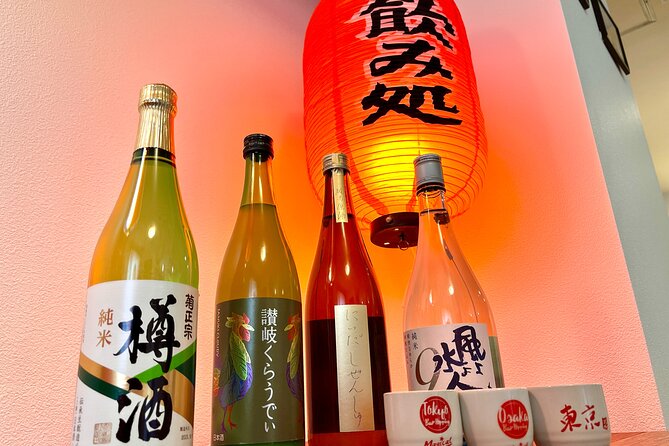
Beer and sake tasting may be included during the lesson, and you can experiment with drink pairings alongside the meal. That adds a relaxed social element without turning the activity into a separate bar visit.
The four-course meal gives the class good value. At $79.59, you are not paying only for a plate of food. The price includes the supermarket walk, instruction, ingredient selection, kitchen time, the meal, and recipes to take home. For someone who wants a practical food experience rather than a standard restaurant meal, that is a reasonable package for four hours in Tokyo.
Still, the value depends on your interests. If you are mainly looking for a cheap lunch, the class costs more than eating at a casual restaurant. If you want to understand Japanese home cooking and leave with skills you can repeat, the added cost makes more sense.
The meal also gives you a chance to compare flavors with the guide. You can ask why one miso tastes stronger, how the omelet texture was achieved, or what changes might work in your own kitchen.
Dietary needs and allergy limits
Vegetarian and vegan participants are welcome, but you must tell the operator about your needs at least one day before the class. The ingredients and cooking process can then be arranged ahead of time.
Requests made on the day cannot be accommodated. If you cannot eat eggs, your selection is reduced from four dishes to three. The information provided does not specify which dish will be removed, so ask in advance if that matters to you.
There is also an important allergy warning. The food is prepared in kitchens that do not belong to MagicalTrip, and the operator cannot guarantee an allergy-free environment. Substitutions may not always be possible.
For a mild preference, advance notice should help. For a serious allergy, you need to weigh the risk carefully before booking. Bring clear information about what you cannot eat, and do not assume that a last-minute request can be handled.
Weather, clothing, and the four-hour pace
Tokyo weather can be demanding. Summer temperatures may reach 40°C, while winter temperatures can fall to -5°C. The supermarket visit and walk to the studio mean you should dress for the forecast, even though much of the class takes place indoors.
Comfortable shoes are sensible because the experience includes shopping and walking before cooking. You will also want enough energy for a four-hour activity that combines standing, food preparation, eating, and conversation.
The class requires good weather. If poor weather causes a cancellation, you are offered another date or a full refund. The operator also allows free date and time changes up to 24 hours before the start.
For a full refund, cancel at least 24 hours ahead. Late cancellations and no-shows are not eligible for a refund or date change. These rules are strict, so avoid scheduling the class immediately after a long-distance arrival or another activity that could make you late.
Who will get the most from this cooking class?
I would choose this class if you want to connect food shopping with food preparation. The supermarket stop answers questions that a restaurant meal cannot: what ingredients look like before cooking, how Japanese shoppers select them, and how several everyday dishes fit together.
It also suits families and older children who enjoy doing things with their hands. Two teenagers were able to take part in the shopping and cooking, which suggests the format can work well for a family group, provided everyone can follow the timing and kitchen instructions.
First-time visitors may find it especially useful. The activity offers an easy introduction to Japanese food without requiring advanced cooking skills. You also get a local setting, a guide who can explain customs and ingredients, and recipes that give the experience a life beyond the day itself.
You may want something else if you prefer a private lesson, a highly specialized sushi workshop, or a class focused on one dish. The group is small but shared, and the menu covers several home-style foods rather than one narrow technique.
Should you book the Tokyo Washoku cooking class?
I would book this class if you want a friendly, practical introduction to Japanese cuisine. The supermarket visit is the strongest feature because it teaches you how to think about ingredients, while the cooking session gives you enough hands-on work to make the meal feel earned.
The price is fair for four hours, a meal, recipes, drink tasting, and a group capped at seven people. Book it early in your Tokyo schedule if you want time to use the recipes or return to Kappabashi Dougu Street afterward.
Take the strict timing, allergy limits, and shared-group format seriously. If those points work for you, this is a useful and good-natured way to turn Japanese food from something you order into something you understand.
FAQ
Where does the Tokyo Washoku cooking class begin?
It begins at the FamilyMart at 2-chōme-1-10 Shitaya, Taito City, Tokyo 110-0004, Japan.
What time does the class start?
The class starts at 10 a.m.
How long does the experience last?
The activity lasts approximately four hours.
Where does the class finish?
The activity ends back at the cooking studio, which is also the meeting point for the tour.
How many people can join the class?
The maximum group size is seven people.
What dishes are prepared?
The class includes makisushi, miso soup, dashimaki tamago, and nasu dengaku.
Are vegan and vegetarian participants welcome?
Yes. Vegan and vegetarian options can be arranged if you provide the request at least one day before the class.
Can the class accommodate food allergies?
The operator cannot guarantee an allergy-free environment. The food is prepared in kitchens that do not belong to MagicalTrip, and substitutions may not always be possible.
What happens if I cannot eat eggs?
Your food selection is reduced from four types to three.
Can I cancel for a full refund?
Yes, if you cancel at least 24 hours before the experience start time. Cancellations made less than 24 hours ahead are not eligible for a refund.
More Cooking Classes with a Market Tour in Tokyo
- Hanoi Cooking Class: Culture, Local Market & Meaning CSR Impact
★ 5.0 · 5,147 reviews - 5 Traditional Dishes Hanoi Cooking Class with Market Trip
★ 5.0 · 4,890 reviews - Cooking Class and Lunch at a Tuscan Farmhouse with Local Market Tour from Florence
★ 5.0 · 4,831 reviews - Chiang Mai: Cooking Class, Market & Thai Herbs Garden Tour
★ 4.9 · 4,824 reviews
Just added around Tokyo
- Tokyo: Sushi Making Experience & Japanese Cooking Class★ 5.0 · 2 reviews
- Tokyo: Sushi Cooking Class with Sake Tasting★ 4.8 · 55 reviews
- Tokyo: Sushi roll and side dish cooking experience★ 5.0 · 2 reviews
- Tokyo: Gyoza Making from Scratch – Ultimate Cooking Class★ 5.0 · 2 reviews
- Tokyo: Night Cooking Class: 5 Home-Cooked Japanese Dishes★ 4.9 · 13 reviews
- Tokyo: Real Ramen & Dumpling Cooking with Master Chef★ 5.0 · 10 reviews
- Tokyo: Kawaii Bento Cooking Class – Cute Character Lunchbox★ 4.9 · 55 reviews
- Tokyo: Sushi and Ramen Cooking Class with Sake Pairing Set★ 5.0 · 81 reviews
Cooking Classes with a Market Tour, compared.
Hanoi Cooking Class: Culture, Local Market & Meaning CSR Impact
Read our review →
5 Traditional Dishes Hanoi Cooking Class with Market Trip
Read our review →
Cooking Class and Lunch at a Tuscan Farmhouse with Local Market Tour from Florence
Read our review →
Cooking Class, Market & Thai Herbs Garden Tour
Read our review →
Authentic Cooking Class with Market & Farm Visit
Read our review →
Paella Cooking Experience & Boqueria Market Tour
Read our review →
Cooking Class Hoi An:Local Market, Basket Boat, Fishing & Cooking
Read our review →