REVIEW · HANOI, VIETNAM
5 Traditional Dishes Hanoi Cooking Class with Market Trip
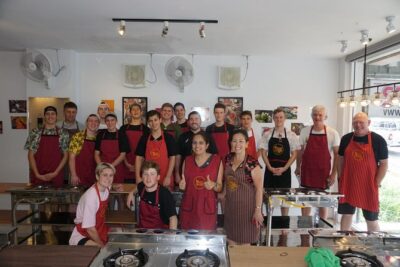
Good food starts with a market walk. This Hanoi cooking class pairs a visit to the city’s largest market with a hands-on lesson in five Vietnamese dishes, making it a useful way to understand the ingredients behind the food you eat in Vietnam. I especially like the small group size, capped at 10, and the chance to cook and eat your own meal rather than simply watch a chef work. The local market visit is another strong point, since you learn about herbs, spices, produce, and shopping habits before entering the kitchen.
The price is about $35.07 per person, which is fair for a 3-hour-15-minute activity that includes food, an English-speaking chef, coffee or tea, rice vodka, a recipe book, and a certificate. The main consideration is pace. Five dishes in one session means some preparation and cooking are shared or handled by staff, so this is a lively introduction to Vietnamese cooking, not a slow, highly technical culinary course.
Key points at a glance
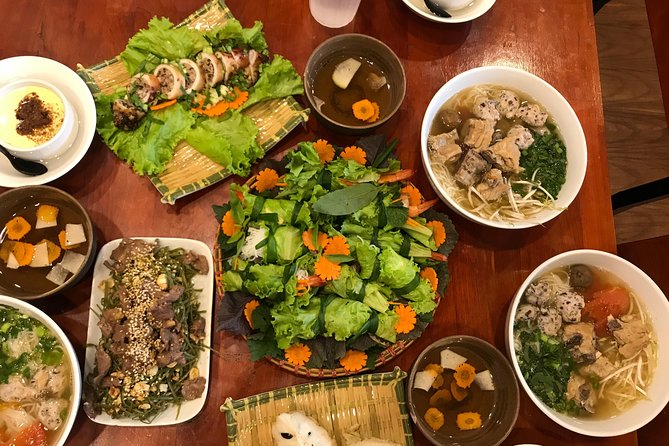
- Five Hanoi dishes in one class: Prepare pho bo, bun cha, fried spring rolls, papaya salad, and egg coffee or chocolate.
- Market shopping comes first: Visit a large local market with your chef and help choose ingredients.
- Small groups help: The maximum is 10 people, and the class often works especially well with a partner.
- Good value for the price: Food, drinks, recipes, and a certificate are included for about $35.07.
- Dietary changes are possible: Vegetarians and people who do not eat red meat can learn adapted versions.
- Friendly named instructors: Past sessions have been led by Perla, Vy, Emmy, Lynn, Bella, Coco, Sunny, Kim, and Winnie.
Starting in Hanoi’s Old Quarter
The meeting point is at 8 P. Gia Ngư, Hàng Bạc, Hoàn Kiếm, in Hanoi’s historic Old Quarter. You meet the English-speaking chef there, then set out on foot for the market portion of the class. Hotel pickup and drop-off are not included, so give yourself enough time to reach the address.
The central location is practical if you are staying in the Old Quarter. It also makes the class easy to fit into a morning or afternoon in Hanoi, though the exact start time should be checked when you book. The activity returns to the same meeting point at the end.
The class is listed as lasting about 3 hours and 15 minutes. Actual teaching can move faster or slower depending on the group, the number of dishes being prepared, and how much explanation each chef gives. One session moved through five dishes in about two and a half hours, so you should expect an energetic pace rather than a leisurely afternoon.
More Cooking Classes with a Market Tour in Hanoi
- Hanoi Cooking Class: Culture, Local Market & Meaning CSR Impact
★ 5.0 · 5,147 reviews - Vietnamese Food Cooking Class in Hanoi with Market Experience
★ 5.0 · 778 reviews - Hanoi: 5 Local Dishes Cooking Class with Meal & Market Visit
★ 5.0 · 420 reviews
Shopping for herbs, spices, and fresh ingredients
The market visit gives this experience more local character than a cooking lesson held entirely indoors. Your chef explains the food on sale and helps select the produce, herbs, and spices needed for the recipes. This is a chance to see ingredients in their everyday setting before they are measured and arranged at the cooking facility.
That step matters because Vietnamese food depends heavily on freshness and balance. Herbs, noodles, vegetables, sauces, and seasonings do not feel like abstract recipe items when you have just seen them sold at the market. You get a better sense of how a meal begins in Hanoi.
The market is not presented as a separate sightseeing tour. It is part of the cooking lesson, and the focus stays on buying ingredients. If you want a long guided market history talk or a full food tour with many tastings, this may feel brief. If you want to learn what goes into your lunch, it works well.
A small group is useful here. With no more than 10 participants, it is easier to stay near the chef and ask about unfamiliar items. The group may include people from several countries, which adds a social side without turning the activity into a large coach tour.
Five dishes that explain Hanoi food
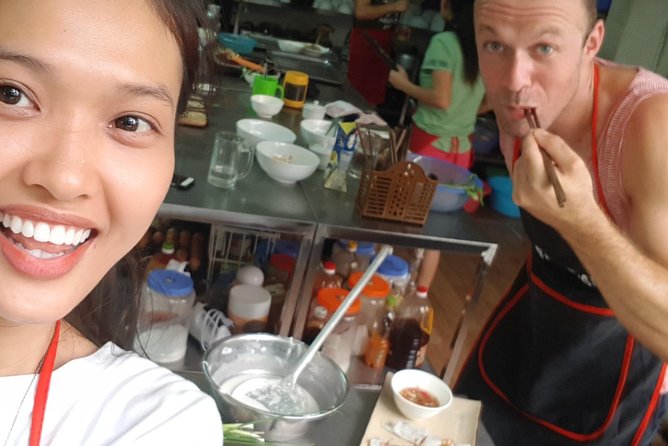
The menu covers several important parts of Vietnamese cooking. You prepare:
- Pho bo, beef noodle soup
- Bun cha, Hanoi-style grilled pork with noodles
- Nem ran, fried spring rolls
- Papaya salad
- Egg coffee or chocolate
This is an ambitious menu for a single class. Pho introduces broth, noodles, herbs, and seasoning. Bun cha brings in Hanoi’s famous combination of grilled pork, noodles, fresh greens, and dipping sauce. Spring rolls teach rolling and frying, while papaya salad adds a crisp, fresh contrast to the cooked dishes.
Egg coffee gives the class a distinctly Hanoi finish. It is a sweet coffee preparation topped with a creamy egg mixture, and it feels very different from the savory dishes that come before it. Chocolate may be offered as the alternative version listed on the menu.
The menu also gives you a full meal. You are not preparing one small sample and then leaving hungry. The food is served after the cooking, and rice vodka is included with the meal. Coffee or tea is included as well.
How hands-on is the cooking?
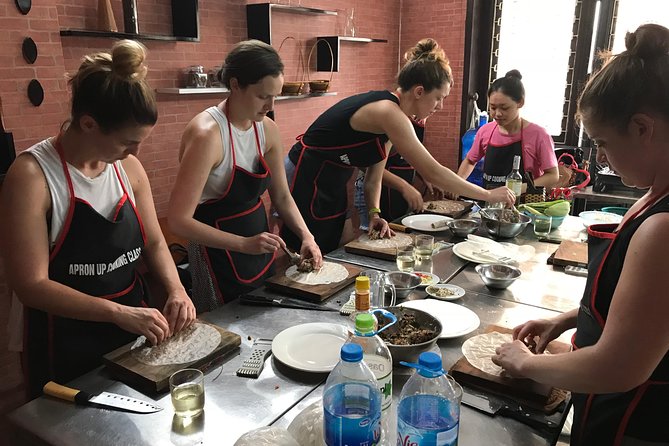
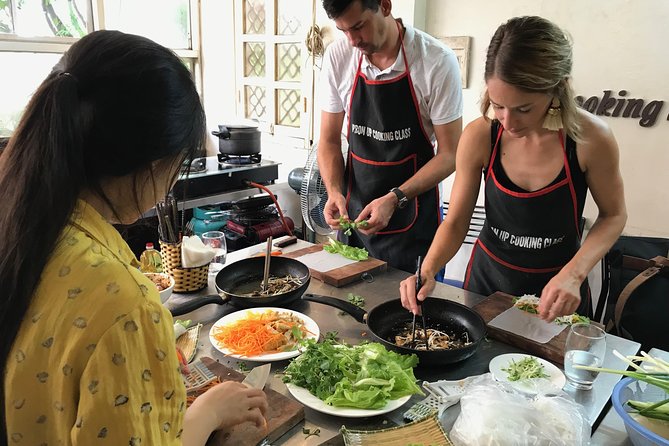
The class is genuinely participatory, but you should keep your expectations sensible. You take part in preparation and cooking, and the structure is designed so everyone can contribute. In a small group, the chef can give clear instructions and show each stage.
At the same time, five dishes create a lot of work in a short period. Some ingredients may be prepared in advance, and certain cooking tasks may be completed by staff to keep the class on schedule. One participant noted that the barbecue pork was cooked by the staff, even though the rest of the group remained involved.
That is not necessarily a weakness. It means you can learn the method without spending the whole session waiting for one item to finish. Still, if you want to prepare every ingredient from the first cut to the final plate, this class may feel less detailed than a specialist course focused on one dish.
The best approach is to treat it as a practical introduction. Pay close attention to the order of steps, ask questions when the chef moves quickly, and use the recipe book later to repeat the dishes at home.
More Cooking Classes with a Market Tour in Vietnam
- Hanoi Cooking Class and Market Tour in Ancient House
★ 5.0 · 379 reviews - Rose Kitchen Hanoi: Market, Cooking & Culture Tour + Free PickUp
★ 5.0 · 342 reviews - Hanoi: Cooking Class in a Local Villa with Market Tour
★ 4.9 · 320 reviews - Hanoi Maya Kitchen: Traditional Cooking Class & Market Tour
★ 5.0 · 287 reviews
The instructors make a real difference
The teaching style seems to be one of the strongest parts of the experience. Perla is praised for clear English, good humor, and careful explanations. Vy is described as friendly, energetic, and good at keeping the class involved. Emmy is noted for being patient and helpful, while Lynn explains the market ingredients and cooking process clearly.
Other sessions have been led by Bella, Coco, Sunny, Kim, and Winnie. Coco is especially good at bringing every member of a family into the cooking, including children. Sunny has been praised for adapting the class to an allergy and for teaching with enthusiasm. Winnie is described as helping first-time cooking-class participants feel at ease.
Because several chefs lead different sessions, your exact experience will depend partly on who teaches that day. The consistent pattern is a friendly, social lesson with clear English and plenty of encouragement. A few participants wanted more step-by-step guidance, which is understandable when several dishes are being prepared at once.
If you are nervous about cooking, the tone should help. The class is not presented as a test, and the instructors make an effort to keep it light. If you already cook often, you may want to ask for extra detail about broth, sauces, spice balance, or substitutions.
Dietary needs and food choices
The class offers a vegetarian version and an option for people who do not eat red meat. You should communicate your needs when booking or before the class begins so the chef has time to adjust the menu.
Allergy awareness has also been handled well in at least some sessions, but the available information does not promise every possible substitution or a separate allergen-free kitchen. Be direct about your restrictions. Ask what will be changed and whether shared ingredients or cooking surfaces are involved.
The standard menu includes beef and pork, so people avoiding meat should not assume the regular dishes will automatically be suitable. The good news is that vegetarian and non-red-meat versions are specifically offered.
Eating the meal you helped prepare
The final meal is more than a reward. It lets you test the balance of flavors while the instructions are still fresh. You can see how the crisp spring rolls compare with the fresh papaya salad, and how the noodles, herbs, meat, and dipping sauces work together in Hanoi-style dishes.
Portions appear to be generous. Come with an appetite, especially if you enjoy trying every dish. Rice vodka is included, but you do not need to drink it if you prefer not to. Coffee or tea is also part of the package.
The meal creates a friendly end to the class. You sit down with the people you cooked alongside and share food from several stages of the lesson. This suits couples, families, solo participants, and small groups who enjoy meeting people through food.
Recipe book and certificate
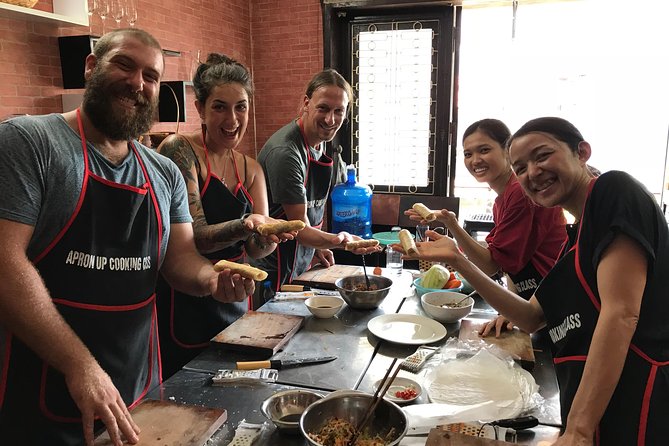
A recipe book is provided after the class. This is one of the most useful inclusions because it gives you a chance to recreate the pho, spring rolls, egg coffee, and other dishes after returning home. The recipes may not replace a full culinary textbook, but they help turn a pleasant activity into a skill you can use again.
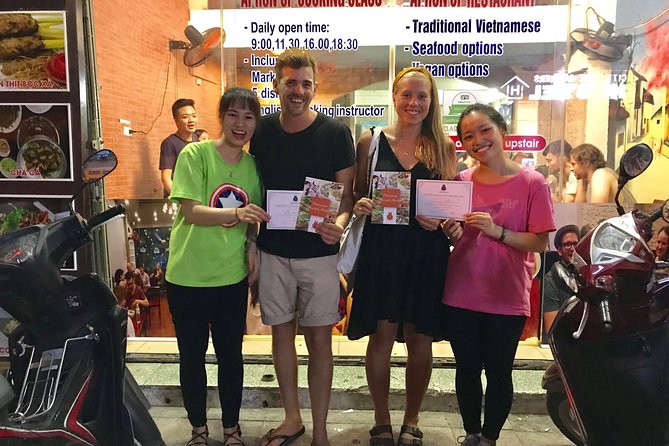
The certificate is a small extra rather than a major reason to book. It can be a fun souvenir, especially for children or anyone collecting cooking experiences. The recipe book has more practical value.
Value at about $35.07
At roughly $35.07, the class offers good value if you want both a meal and an activity. The fee covers the market visit, instruction, ingredients, five dishes, coffee or tea, rice vodka, the meal, a recipe book, and a certificate.
The price looks even better for anyone who would otherwise pay separately for lunch and a food tour. You are also paying for an English-speaking chef and a small group rather than a large demonstration.
The value is less clear if your main goal is advanced instruction. Some of the work is shared, and the quick schedule limits how long the chef can spend on each technique. You are paying for variety and a local food experience, not a professional kitchen apprenticeship.
With a maximum of 10 people, the class avoids the biggest weakness of many low-cost group activities. You may still cook with a partner, and one four-star assessment specifically noted that the format works best for two people. Solo participants can join, but couples and friends may find it easier to share tasks.
Timing, booking, and practical details
The activity uses a mobile ticket, and confirmation is provided at booking. It ends back at the same meeting point, which makes it simple to plan your next Old Quarter activity.
Free cancellation is available if you cancel at least 24 hours before the start time. Cancellations or changes made inside that window are not refunded or accepted, so check your plans before booking.
The class is best placed on a day when you do not need to rush to a train, airport, or evening reservation. Although the listed duration is about 3 hours and 15 minutes, the pace can vary. Leave some breathing room afterward.
The market and cooking room may involve ordinary food preparation conditions rather than the polished setting of a hotel kitchen. One participant raised a hygiene concern, though the overall response to cleanliness was strongly positive. If you are sensitive to shared cooking spaces, bring that expectation with you and ask the chef about any concern.
Who should book this Hanoi cooking class?
I would choose this experience if you want a social activity that teaches you the basics of Vietnamese food while giving you a full meal. It suits first-time visitors, food lovers, couples, families, and solo participants who do not mind working with others.
It is also a smart choice near the end of a Vietnam trip. You can recognize ingredients and dishes you have eaten elsewhere, then learn how they are put together. The class gives you something to do with all those new food memories.
You may want a different class if you prefer quiet, highly detailed instruction or want to focus on one recipe. Five dishes is the attraction, but it also creates the main limitation. Some stages move quickly, and staff may handle part of the cooking.
Should you book it?
For most visitors, yes. The combination of a local market, five classic dishes, a small group, friendly English-speaking chefs, and a meal for about $35.07 is a strong deal.
Book it for variety, conversation, and a useful introduction to Vietnamese cooking. Go in knowing that the class is fast and collaborative, not an intensive chef course. Tell the organizers about dietary needs early, arrive at the Old Quarter meeting point on time, and leave enough space in your schedule to enjoy the meal without watching the clock.
FAQ
Where does the Hanoi cooking class begin?
It begins at 8 P. Gia Ngư, Hàng Bạc, Hoàn Kiếm, Hà Nội 08404, Vietnam.
Where does the activity end?
The class ends back at the meeting point.
How long does the cooking class last?
The listed duration is approximately 3 hours and 15 minutes.
How many people can join the class?
The maximum group size is 10 people.
Which dishes will I learn to cook?
The menu includes pho bo, bun cha, fried spring rolls, papaya salad, and egg coffee or chocolate.
Are vegetarian options available?
Yes. Vegetarian versions are offered, as are options for people who do not eat red meat.
Are drinks and a recipe book included?
Coffee or tea and rice vodka are included. A recipe book and certificate are also provided after the class.
Just added around Hanoi
- Hanoi: Vietnamese Cooking Class- Market Tour with Local Chef★ 5.0 · 2 reviews
- Hanoi: Vegan Vietnamese Cooking Class in a Local Villa★ 5.0 · 42 reviews
- Hanoi Vegan Cooking Class: A Vietnamese Culinary Adventure★ 4.8 · 5 reviews
- Hanoi Food Adventure: Vietnamese Market Tour & Cooking Class★ 4.8 · 5 reviews
- Hanoi: Village Farm Tour and Cooking Class with Lunch★ 5.0 · 7 reviews
- Hanoi’s Culinary: Authentic Cooking Class and Local Market★ 4.8 · 5 reviews
- Hanoi Farm Tour and Cooking Class with Local Family★ 4.9 · 14 reviews
- Hanoi Cooking Class in Haven of Tranquility – Thom culinary★ 5.0 · 3 reviews
Cooking Classes with a Market Tour, compared.
Hanoi Cooking Class: Culture, Local Market & Meaning CSR Impact
Read our review →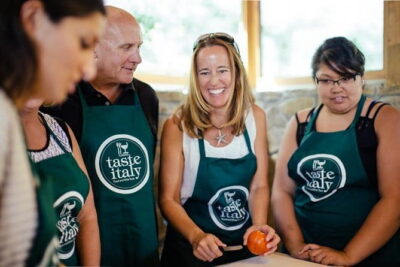
Cooking Class and Lunch at a Tuscan Farmhouse with Local Market Tour from Florence
Read our review →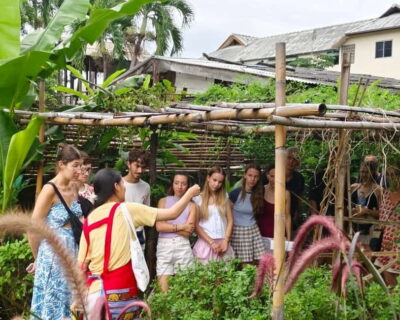
Cooking Class, Market & Thai Herbs Garden Tour
Read our review →
Authentic Cooking Class with Market & Farm Visit
Read our review →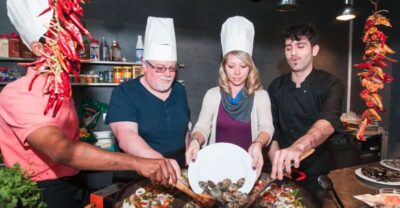
Paella Cooking Experience & Boqueria Market Tour
Read our review →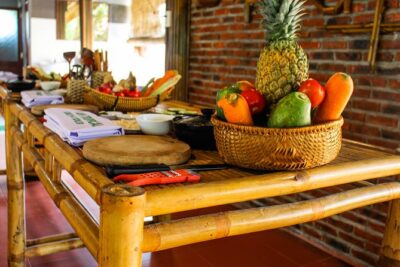
Cooking Class Hoi An:Local Market, Basket Boat, Fishing & Cooking
Read our review →
Hoi An Cooking Class(Market,BasketBoat Crabfishing&Cooking Class)
Read our review →