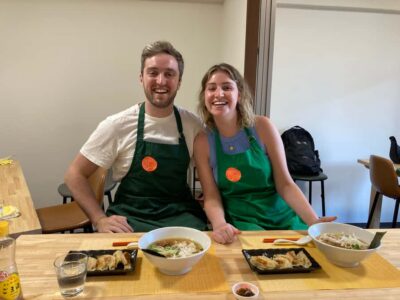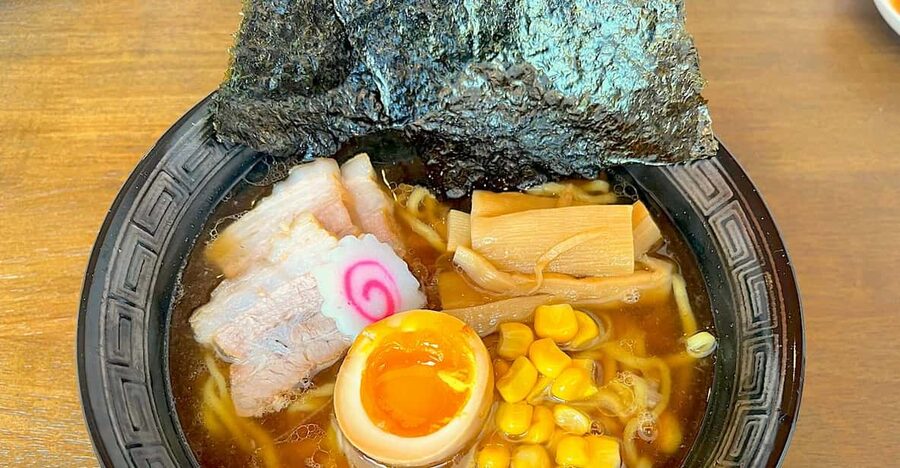
REVIEW · HONSHU, JAPAN
Tokyo: Sushi and Ramen Cooking Class with Sake Pairing Set
Sushi skills begin with your hands. This three-hour Tokyo class brings together two Japanese favorites, nigiri sushi and ramen, in a friendly kitchen near Tsukishima Station. You learn by doing, not by watching from the back of a crowded room.
I like the small-group setup, which allows the English-speaking instructors to give real help at the cutting board and stove. I also like the practical focus: you learn ramen broth, chashu pork, and sushi shaping, then sit down to eat what you made with three Japanese sake selections. The main drawback is simple: this is not a suitable class for vegans or vegetarians.
The class costs $129 per person and lasts three hours. That is not a bargain-basement cooking lesson, but the price includes the food, instruction, sake tasting, recipe booklet, and souvenir chopsticks. For anyone who wants more than another restaurant meal in Tokyo, it offers a useful hands-on look at Japanese food culture.
Key points to know before booking
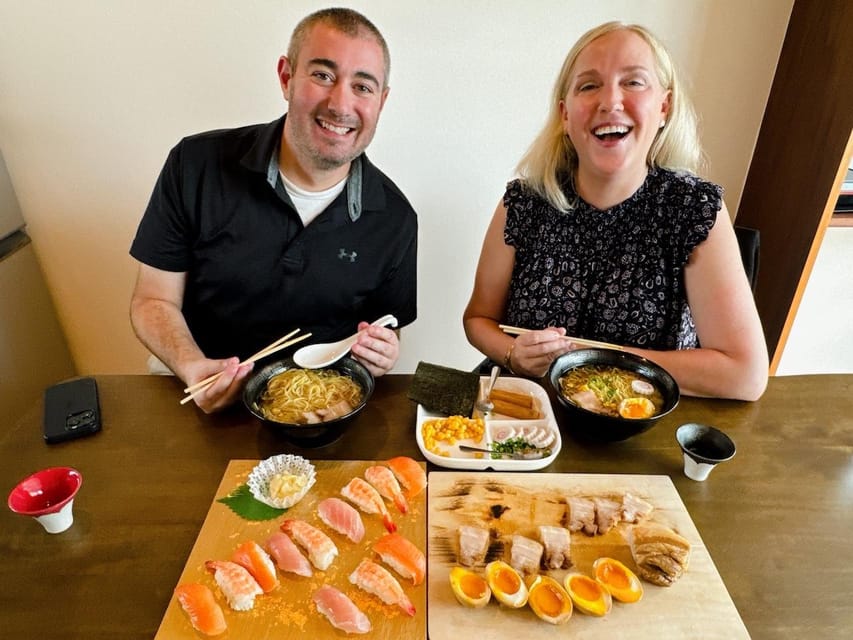
- Two major Japanese dishes in one class: You prepare ramen and chashu pork, then learn to hand-form nigiri sushi.
- A genuinely small setting: The group is limited to eight, and some sessions may be much smaller, allowing plenty of personal instruction.
- Three sake pairings: A certified sake sommelier selects three premium Japanese sakes for tasting with the meal.
- Useful take-home material: You receive recipes for ramen, gyoza, and sushi, plus tips for ingredient substitutions outside Japan.
- Tsukishima location: The class is a five-minute walk from Exit 4 of Tsukishima Station, with easy taxi access from Ginza, Tsukiji, and Tokyo Station.
- Friendly, beginner-ready teaching: The instructors explain techniques and cultural background in English, making the class suitable even if you have never made sushi.
Arriving at HAUS Tsukishima
The class takes place on the second floor of HAUS Tsukishima, at 2-13-5 Tsukuda in Chuo-ku. From Tsukishima Station, use Exit 4 and allow about five minutes on foot. You should arrive five minutes before the scheduled start, since the class has a set three-hour rhythm.
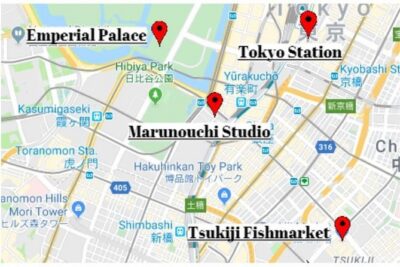
Tsukishima is a useful base for this activity. It is close to central Tokyo without being right in the middle of Ginza’s department stores or Tokyo Station’s busy concourse. By taxi, the venue is about six minutes from Tsukiji Fish Market, nine minutes from Ginza, and ten minutes from Tokyo Station. It is also about eleven minutes from teamLab Planets and roughly thirty minutes from Shinjuku.
For a taxi, show the driver this address:
東京都中央区佃2-13-5 HAUS Tsukishima 2階
The room is described as cozy and clean rather than large. That matters here. You are handling rice, fish, broth, and cooking tools, so a compact space can make instruction easier to follow. The tradeoff is that you should not expect the scale or polished showmanship of a major culinary school.
Wear comfortable clothes that you do not mind getting a little dirty. Cooking is hands-on, and spills are always possible when ramen broth and sushi rice are involved.
More Sushi and Japanese Classes in Tokyo:
- Ramen & Gyoza Cooking Class in Tokyo with Local Supermarket Visit
★ 5.0 · 823 reviews - Tokyo Tsukiji Fish Market Tour and Sushi Making Lesson
★ 5.0 · 390 reviews - Tokyo: Easy Ramen Cooking Experience in Kabukicho, Shinjuku
★ 4.6 · 321 reviews
The three-hour plan: from preparation to dinner
The class is designed to coordinate several dishes at once. Some ingredients or steps may be prepared ahead of time so the group can complete ramen, chashu, and sushi within three hours. That does not mean you simply watch a demonstration. You take part in the key techniques, then have time to sit down and eat.
The order can vary, but the experience centers on three clear stages:
- Learning about Japanese food traditions and ingredients
- Preparing ramen, broth, and chashu pork
- Making nigiri sushi, tasting sake, and eating the finished meal
This combination gives the class a good pace. Ramen teaches you about soup, seasoning, and slow-cooked pork. Sushi teaches you about rice, proportion, and careful handwork. You get two very different sides of Japanese cooking without spending a full day in a kitchen.
The instructors also share ingredient tips and substitutions for cooking at home overseas. That is especially useful if you live somewhere without a Japanese supermarket nearby. The goal is not just to make lunch in Tokyo. You leave with a clearer idea of how to repeat the dishes in your own kitchen.
Making ramen, broth, and melt-in-your-mouth chashu
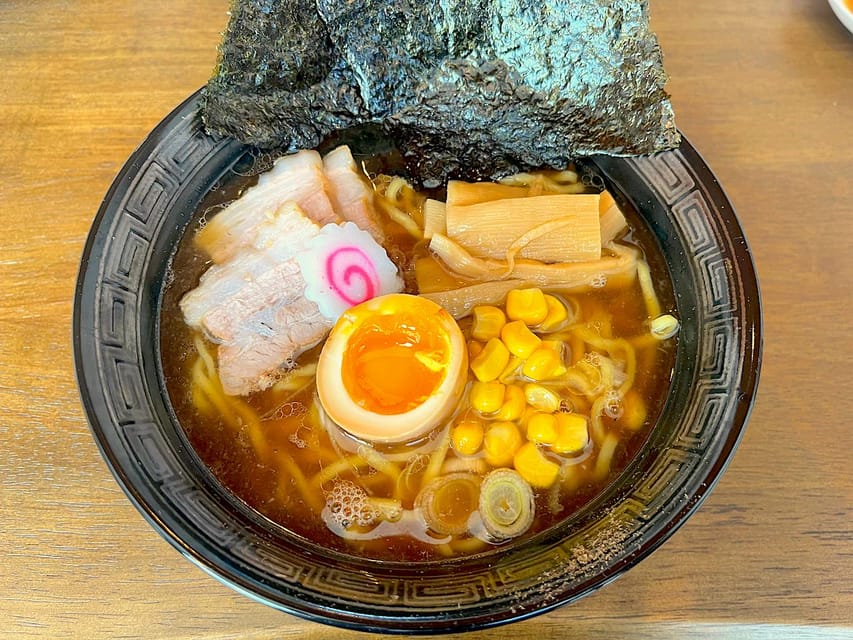
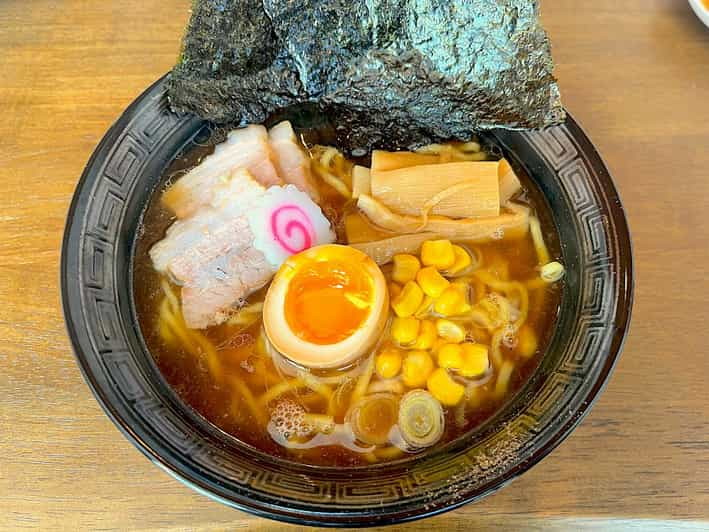
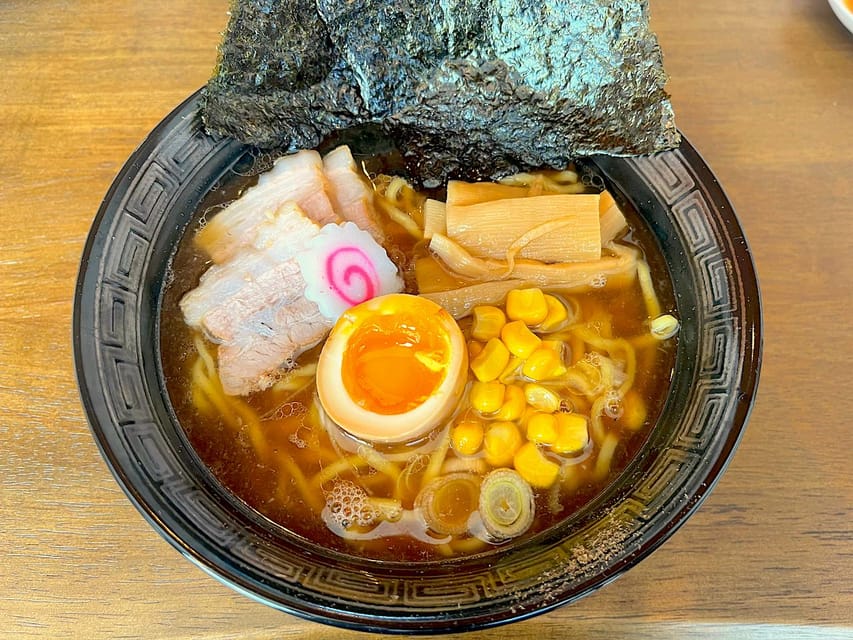
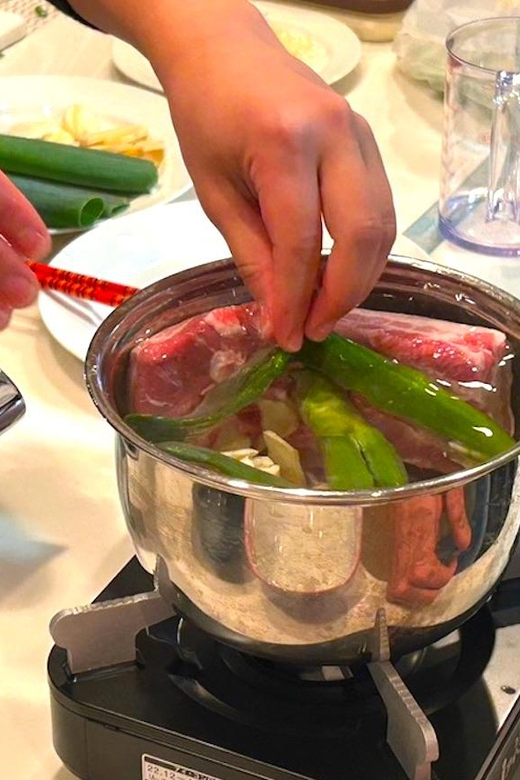
The ramen portion is the heartier half of the lesson. You learn how to build flavorful soup and prepare chashu, the tender pork belly often found on top of ramen. The class emphasizes the process behind the bowl rather than treating ramen as a packet of noodles and toppings.
Ramen looks simple when it arrives at a restaurant. The finished bowl may contain noodles, broth, pork, and a few garnishes, but each part affects the final result. Here, you get a chance to understand how the soup is seasoned and how chashu becomes soft and rich.
Several people who took the class singled out the ramen as especially good. One described it as among the best they had eaten, while another praised the quality of ingredients brought in from Toyosu Market. The information provided does not promise that every ingredient comes directly from Toyosu on every date, so consider that detail a feature of the food preparation rather than a guarantee for each class.
The teaching is aimed at beginners. You do not need prior kitchen experience, and the instructors break the work into manageable parts. If you already cook Japanese food, the value is less about mastering an advanced chef technique and more about picking up local context, timing advice, and ideas for making the dishes at home.
One practical point: some work is completed in advance to fit the class into three hours. That is sensible, but it means the experience is not a full, start-to-finish study of every stock or preparation method. You get the important working steps without spending half a day waiting for a broth to develop.
Hand-forming nigiri sushi
The sushi section focuses on nigiri, the small pieces of fish or other toppings placed over shaped rice. You use provided ingredients and tools to form the sushi by hand. For many people, this is the most memorable part because sushi shaping looks easy until you try to make each piece hold together neatly.
The instructors guide you through the technique and help correct your hand position. That personal attention is one of the strongest reasons to choose this class over a large demonstration. With a maximum of eight participants, you have a fair chance to ask questions instead of trying to copy someone several places away.
The class also covers the origins and food traditions connected with sushi. That background gives the activity more meaning. You are not simply assembling attractive bites. You learn why rice is central, how sushi developed, and how the dish fits into Japanese dining culture.
The finished sushi becomes part of your meal, along with the ramen. This makes the lesson satisfying even if your shapes are not perfect. Your first nigiri may look more handmade than restaurant-ready, but it is yours, and the instructors keep the mood relaxed.
The food is plentiful enough that some participants have found it difficult to finish everything. That is good news if you arrive hungry, though you may want to avoid planning another large meal immediately afterward.
More Drinks Tours in Tokyo:
- Ramen and Sushi Cooking Class with Sake Pairing Set in Tokyo
★ 5.0 · 291 reviews - Tokyo: Sushi Cooking Class with Sake Tasting
★ 4.8 · 55 reviews - Kyoto: Afternoon Japanese Izakaya Cooking Class
★ 4.9 · 241 reviews - Izakaya Style Cooking Class
★ 5.0 · 219 reviews
Sake tasting with a certified sommelier
The sake pairing adds a useful cultural layer to the meal. You taste three premium Japanese sakes selected by a certified sake sommelier, rather than being handed one random bottle and told to enjoy it.
The tasting is not presented as a separate lecture that takes over the cooking class. It fits around the meal and gives you a chance to compare different styles alongside sushi and ramen. Sake can seem mysterious when you see a long menu in a Tokyo restaurant, so a guided introduction helps you notice differences in flavor and pairing.
One instructor comes from a sake brewing family, which adds a personal connection to the subject. The exact sake selections can change, so the class does not promise particular brands. Some sessions have also offered beer alongside the sake, but beer is not listed as a formal inclusion, so treat that as an occasional extra rather than part of the guaranteed package.
Drink responsibly. Three tastings can add up, especially after a filling meal, and the class is in central Tokyo rather than at your hotel. The station is nearby, which makes the trip home simple, but you should still plan your afternoon sensibly.
A small group with unusually warm teaching
The teaching team is a major part of the appeal. Named instructors connected with the experience include Sato, Haruko, Risa, Alisa, Alex, Misa, and Luna. The exact lineup may vary, but the consistent pattern is friendly English instruction and an easygoing tone.
The atmosphere is warm without requiring you to be an expert. Families, couples, solo participants, and first-time cooks can all take part. In particularly small sessions, a pair or even one solo participant may receive an almost private lesson, though you should not book expecting that outcome.
The instructors do more than give recipes. They share personal stories, cultural background, and small tips that are hard to pick up from a cookbook. There may even be light quizzes or group activities to help people talk with one another. That social element is useful if you are traveling alone or want an activity that does not feel like another passive sightseeing stop.
The limit is eight participants, but smaller groups are possible. A full class will naturally feel less private than a two-person session. Still, the maximum is modest enough to keep the cooking interactive.
The recipe booklet and souvenir chopsticks
You receive a professionally prepared recipe booklet covering ramen, gyoza, and sushi. Gyoza is not the main dish described for the class, so you should not assume you will cook a full gyoza recipe during this session. Instead, think of it as an extra recipe to take home.
The booklet is valuable because Japanese ingredients can be difficult to match outside Japan. The instructors explain substitutions for overseas kitchens, which may help you find workable alternatives without chasing every exact brand.
The souvenir chopsticks are a small but pleasant extra. They are useful rather than purely decorative, and they give you something connected to the class that you can use at home. The more important keepsake, though, is the ability to make a simple version of the meal again.
Is $129 a fair price?
At $129 per person, this class sits in the mid-to-upper range for a three-hour food activity. You are paying more than you would for a casual ramen lunch, but the comparison is not quite fair. The price includes instruction, ingredients, two substantial dishes, three sake tastings, recipes, and chopsticks.
I think the value is strongest if you want an activity as well as a meal. You receive three hours of guided time, cultural explanation, and hands-on practice. For a couple or family, the class also creates a shared memory that a restaurant meal cannot quite match.
The value is weaker if your only goal is to eat excellent ramen and sushi. Tokyo has no shortage of restaurants, and a meal will cost less. You also need to account for the fact that some preparation happens ahead of time, so this is not an intensive professional cooking course.
Free cancellation is available up to 24 hours before the class for a full refund. You can also reserve and pay later, which helps if your Tokyo schedule is still changing.
Who should book this Tokyo class?
I would choose this experience if you:
- Love sushi or ramen and want to understand how they are made
- Prefer small, social activities to large group tours
- Want an English-language class with plenty of guidance
- Are visiting Tokyo with family, a partner, or on your own
- Enjoy sake and want a simple introduction to different selections
- Plan to recreate Japanese dishes after returning home
- Want cultural background along with practical cooking skills
The class is particularly well suited to first-time visitors. It gives you a relaxed way to connect food with Japanese customs, and the meal comes at the end as a reward for your work.
You should skip it if you are vegan or vegetarian, since the class is specifically built around fish, pork, and sake. It may also be a poor fit if you want a highly advanced culinary course or a completely private session guaranteed in advance.
Final verdict: book it if food is part of your Tokyo story
I would book this class for a balanced mix of cooking, culture, and eating. The best features are the small group, patient English-speaking instructors, fresh ingredients, useful recipes, and the chance to make both ramen and nigiri sushi in one visit.
The class is not designed to reveal every secret of professional ramen or sushi preparation. Some steps are prepared ahead, and the price is higher than a normal meal. But those limits make sense for a three-hour activity, and the format keeps the lesson lively rather than turning it into a long wait beside a stockpot.
Book it if you want to return home with more than food photos. You will leave with new kitchen skills, a better sense of Japanese food traditions, and, quite possibly, a very full stomach.
FAQ
How long does the sushi and ramen class last?
The class lasts three hours.
Where does the class take place?
It takes place on the second floor of HAUS Tsukishima, at 2-13-5 Tsukuda, Chuo-ku, Tokyo 104-0051.
How far is the venue from Tsukishima Station?
The venue is a five-minute walk from Exit 4 of Tsukishima Station, also identified as Exit Y21.
What dishes will I learn to make?
You will learn to make ramen, chashu pork, and nigiri sushi. The take-home recipe booklet also includes recipes for gyoza, ramen, and sushi.
Is the class taught in English?
Yes. The instructors teach in English.
How many people can join the class?
The class is limited to eight participants.
Is sake included?
Yes. The experience includes a tasting of three premium Japanese sakes selected by a certified sake sommelier.
Is the class suitable for vegetarians or vegans?
No. The experience is not suitable for vegans or vegetarians.
What should I wear and when should I arrive?
Wear comfortable clothing that you do not mind getting a little dirty, and arrive five minutes before the class begins.
More Sake Tastings in Tokyo
- Osaka Sake Tasting with Takoyaki Cooking
★ 5.0 · 156 reviews - Osaka: Cooking Class & Sake Tasting with Local Market Visit
★ 4.8 · 31 reviews
More Food and Drink Trips in Tokyo
- Small Group Cooking Class & Market Food Tour in Florence
★ 5.0 · 1,574 reviews - Pasta Making & Wine Tasting with Dinner in Frascati from Rome
★ 5.0 · 1,326 reviews - Paella Cooking Class, Wine Tasting & Central Market in Valencia
★ 5.0 · 1,150 reviews - Athens: Food Market Visit and Cooking Class with Wine
★ 4.9 · 1,087 reviews
Just added around Tokyo
- Tokyo: Sushi Cooking Class with Sake Tasting★ 4.8 · 55 reviews
- Tokyo: Sushi roll and side dish cooking experience★ 5.0 · 2 reviews
- Tokyo: Sushi Making Experience & Japanese Cooking Class★ 5.0 · 2 reviews
- Tokyo: Gyoza Making from Scratch – Ultimate Cooking Class★ 5.0 · 2 reviews
- Tokyo: Night Cooking Class: 5 Home-Cooked Japanese Dishes★ 4.9 · 13 reviews
- Tokyo: Real Ramen & Dumpling Cooking with Master Chef★ 5.0 · 10 reviews
- Tokyo: Kawaii Bento Cooking Class – Cute Character Lunchbox★ 4.9 · 55 reviews
- Tokyo: Japanese Home-style Cooking Class with Meal★ 4.5 · 3 reviews
Japanese & Sushi Cooking Classes, compared.
Ramen Cooking Class at Ramen Factory in Kyoto
Read our review →
Ramen & Gyoza Cooking Class in Tokyo with Local Supermarket Visit
Read our review →
Ramen Cooking Class at a Ramen Factory with Souvenir
Read our review →
Sushi Making Osaka! Popular Sushi Class in Japan!
Read our review →
Tokyo Tsukiji Fish Market Tour and Sushi Making Lesson
Read our review →
Japanese Washoku Bento Small Group Cooking Class
Read our review →