
REVIEW · HONSHU, JAPAN
Osaka: Ramen and Gyoza Cooking Class in Dotonbori
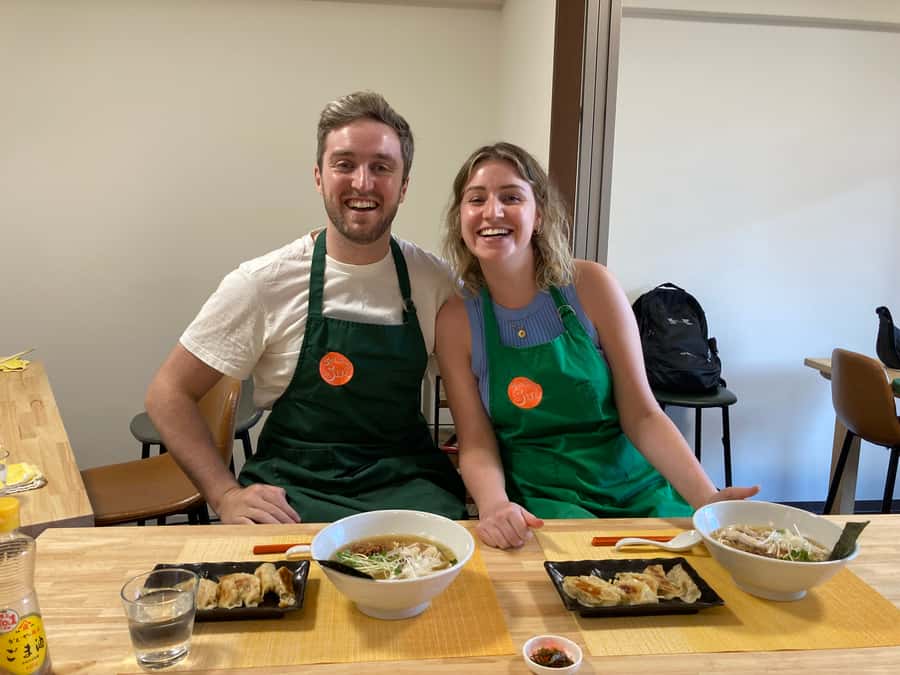
Good food starts with your hands. This small-group Osaka cooking class takes you beyond eating ramen in Dotonbori and shows you how wheat becomes noodles, how gyoza filling comes together, and how Japanese soup gets its flavor. I especially like the genuine hands-on work and the patient English-speaking instruction. The main drawback is practical: Cooking Sun Osaka can be tricky to find, and there is no hotel pickup.
The class is also a good choice if you want a break from sightseeing. June and Miki have been praised for keeping everyone on schedule while helping anyone who falls behind, and other instructors, including Yoshi and Kasa, have earned similar praise. You should allow roughly two to three hours, arrive hungry, and remember that the activity ends where it starts.
What makes this class worth your time
- You knead the ramen dough yourself, rather than simply watching a demonstration.
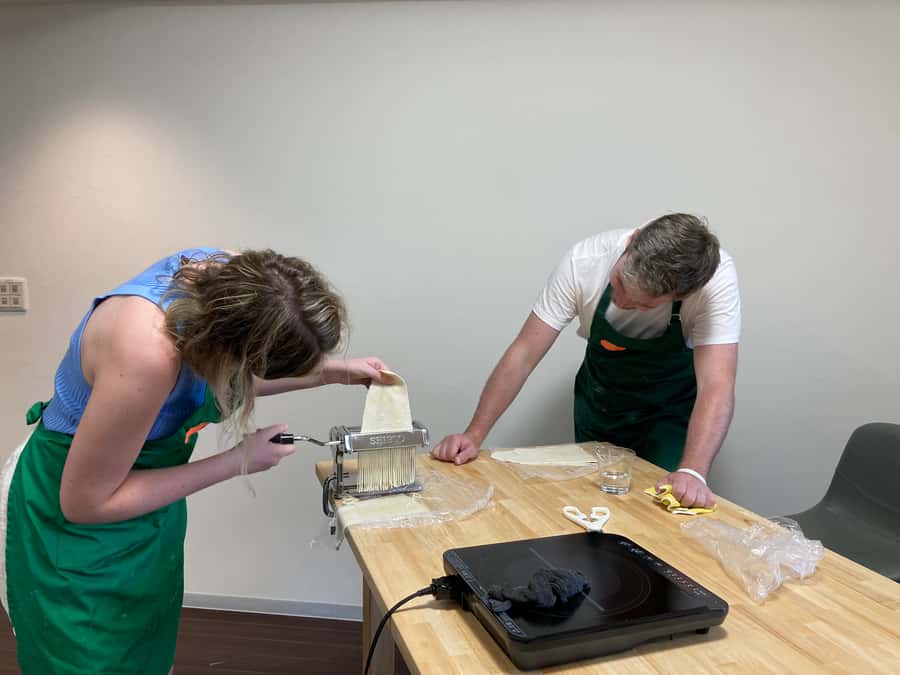
- A noodle machine cuts your dough, giving you a close look at one of the most satisfying steps in ramen-making.
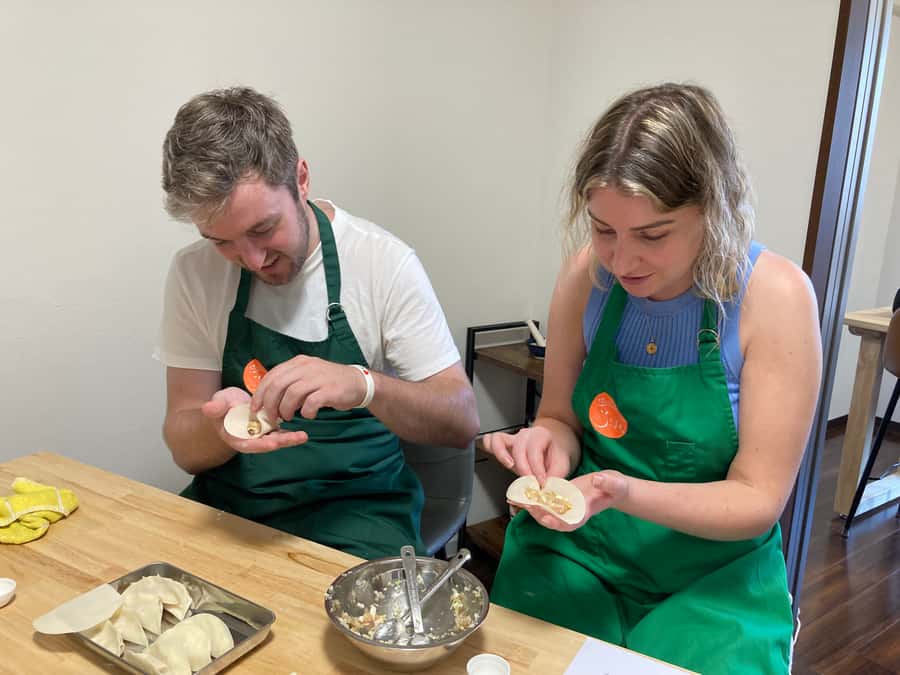
- Your gyoza uses minced chicken, with the filling and folding done by hand.
- The soup begins with chicken bones and dried sardines, then becomes a standard soy sauce ramen.
- Small groups receive close help, with two instructors for classes that have been limited to about eight people.
- Dietary adjustments are possible, including plant-based options and a substitute for fish broth when needed.
Getting to Cooking Sun Osaka in Dotonbori
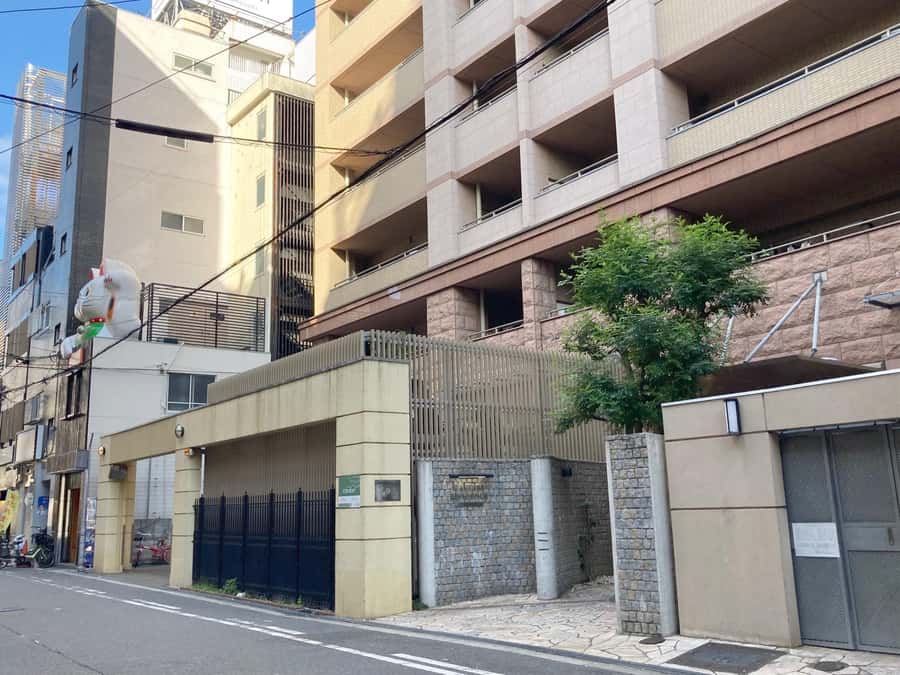
The meeting point is Cooking Sun Osaka, room 807. At the entrance, press 807 and then press the button marked 呼出, which means call. This detail matters because the building is not always easy to identify from the street.
Give yourself extra time to locate the entrance. This is not the sort of activity where you want to arrive breathless, flour-covered, and already behind before the dough hits the table. The class does not include hotel pickup or drop-off, so you make your own way there.
Once inside, the setting is practical rather than theatrical. The kitchen has enough room for everyone to work without feeling packed in, and the small class size means you are not left trying to see a demonstration from the back row.
More Sushi and Japanese Classes in Osaka:
- Sushi Making Osaka! Popular Sushi Class in Japan!
★ 5.0 · 500 reviews - Osaka Cooking Class: Okonomiyaki &Japanese cuisines experience
★ 5.0 · 261 reviews - Osaka: Roll and Authentic Sushi Making Class in Dotonbori
★ 4.9 · 239 reviews
The opening lesson: ramen begins with dough
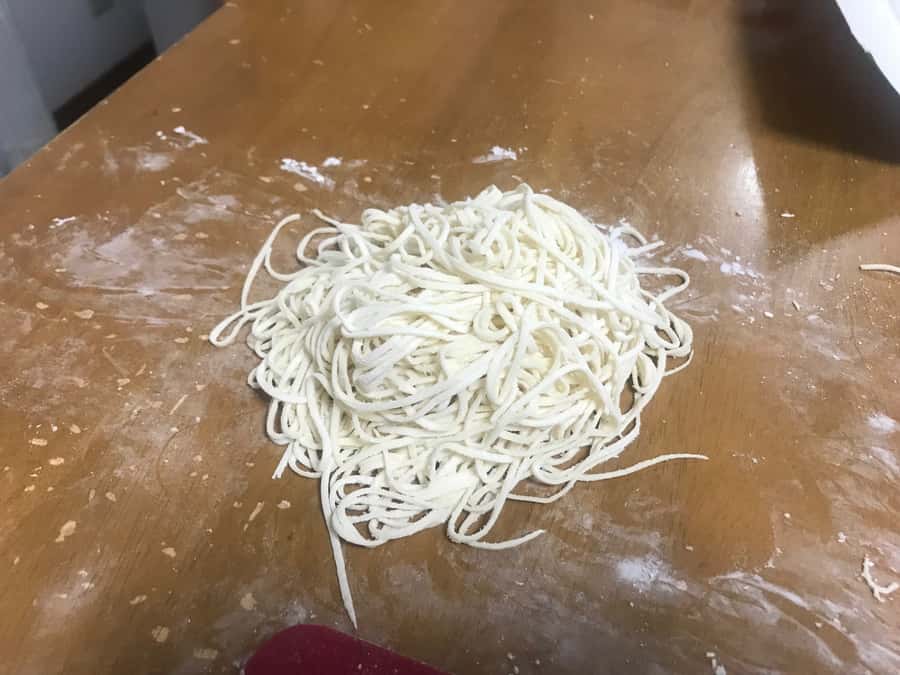
The class starts with the part most people do not expect to make from scratch: the noodles. You work with wheat flour and knead the dough by hand. This is not difficult in a technical sense, but it gives you a better feel for ramen than simply dropping dried noodles into boiling water.
The texture changes as you work it. That physical process helps you understand why fresh ramen noodles have a different bite from packaged noodles. The instructors guide you through each stage and step in when someone falls behind, so you do not need previous cooking experience.
I like this section because it turns ramen from a restaurant dish into a chain of small decisions. The flour, the mixing, the resting, and the cutting all matter. You see that the noodle is not a minor part of the bowl. It is one of the main ingredients.
After the dough has been prepared, you use a noodle machine to cut it. This is one of the class highlights, and it also keeps the process moving while the dough rests. The machine creates the long, even strands that would be difficult to cut by hand.
Several people who took the class found the instructions easy to follow, even when they arrived nervous. That is useful to know if you are not comfortable in a kitchen. You are not expected to perform like a chef. The instructors break the work into clear steps and offer help without making you feel clumsy.
Building the broth with chicken and dried sardines
The ramen broth uses chicken bones and dried sardines, with soy sauce as the standard base. This gives you a simple introduction to the flavor-building behind a traditional bowl. The aroma begins early, and the soup continues developing while you work on the other dishes.
The class also introduces ingredients such as different kinds of miso and explains when each one is useful. You can add miso to the soup if you prefer a miso ramen style, or keep the standard soy sauce version.
That choice gives the class a little room for personal taste. You are not just copying one fixed bowl. You learn the basic version, then get a chance to adjust it with toppings or miso.
The fish element is worth noting before you reserve. One participant needed a substitution for fish broth and received one, and a vegan participant was given a plant-based version. The instructors appear willing to adapt, but you should explain your needs as soon as you arrive rather than waiting until the soup is already prepared.
Making chicken gyoza from the filling up
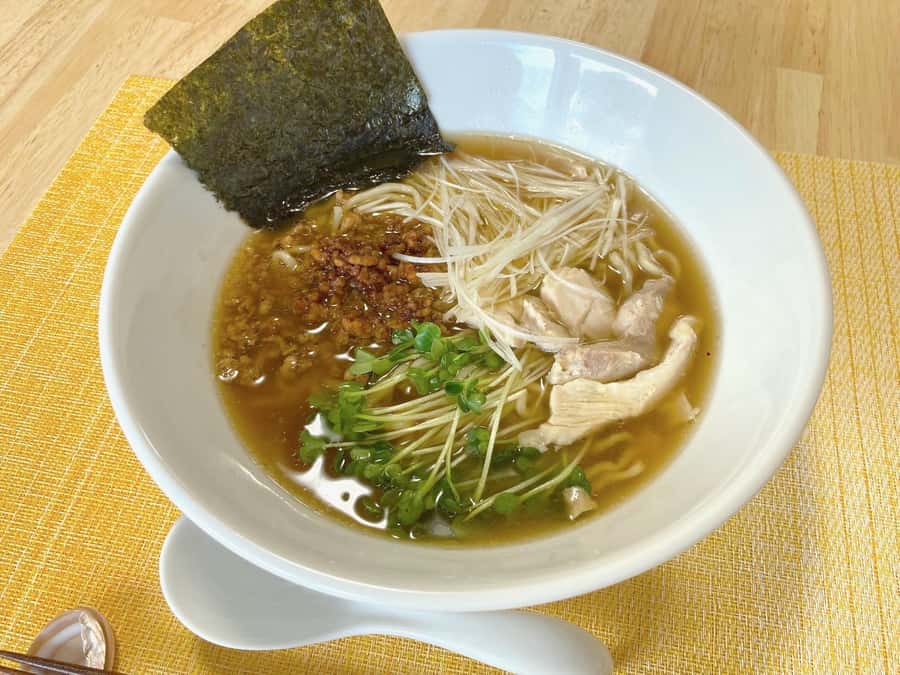
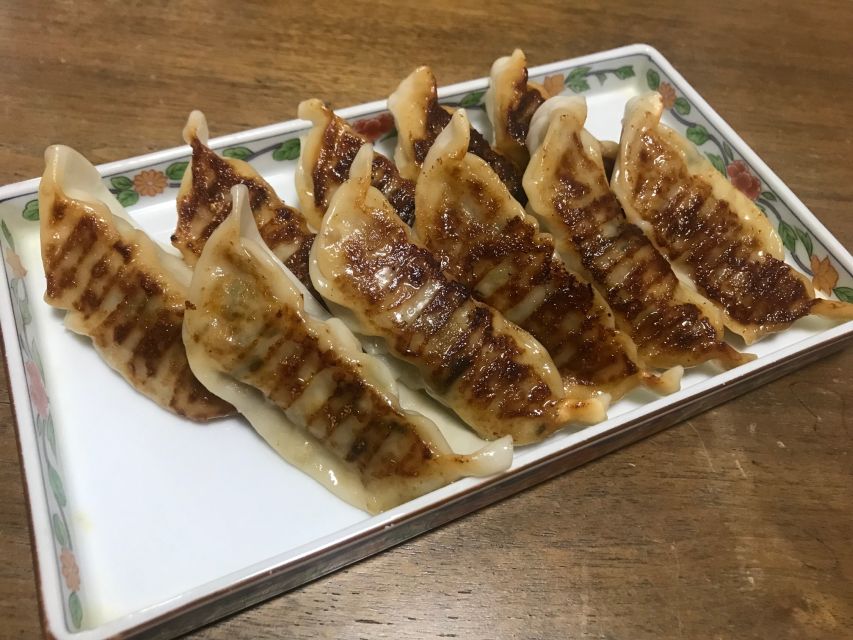
While the noodle dough rests, you prepare the gyoza. The filling uses minced chicken, and you assemble the dumplings yourself. This is a clever use of the waiting time, since you keep working instead of standing around watching a pot.
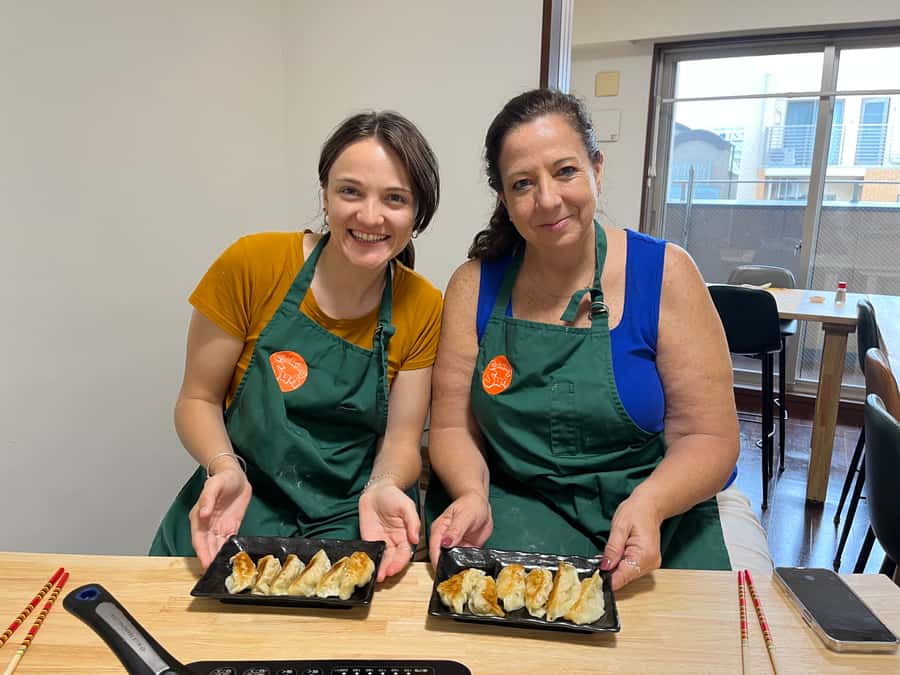
Gyoza folding looks simple until you try to make several pieces that all hold together. The instructors show you the process and help with the small details. You do not need perfect pleats for a tasty result, but the hands-on practice gives you a useful skill to repeat at home.
This part works especially well for families and couples because everyone can take part. An 11-year-old enjoyed the class, and a family of three found the pace comfortable. You can work at your own speed, but the instructors keep the group moving so the meal is ready at roughly the same time.
The gyoza also gives the class a nice contrast. Ramen involves dough, broth, and timing. Gyoza adds shaping, filling, and careful sealing. By the end, you have made two dishes that appear in many Japanese ramen shops as a set.
A few more cooking classes around Osaka worth a look
- Ramen and Gyoza Cooking Class in Osaka
★ 5.0 · 202 reviews - Osaka Sake Tasting with Takoyaki Cooking
★ 5.0 · 156 reviews - Osaka: Cooking Class Ramen & Gyoza Course in Nanba
★ 4.9 · 86 reviews - Osaka: Gluten-Free Ramen and Gyoza Cooking Class
★ 5.0 · 42 reviews
Cooking, toppings, and the meal at the end
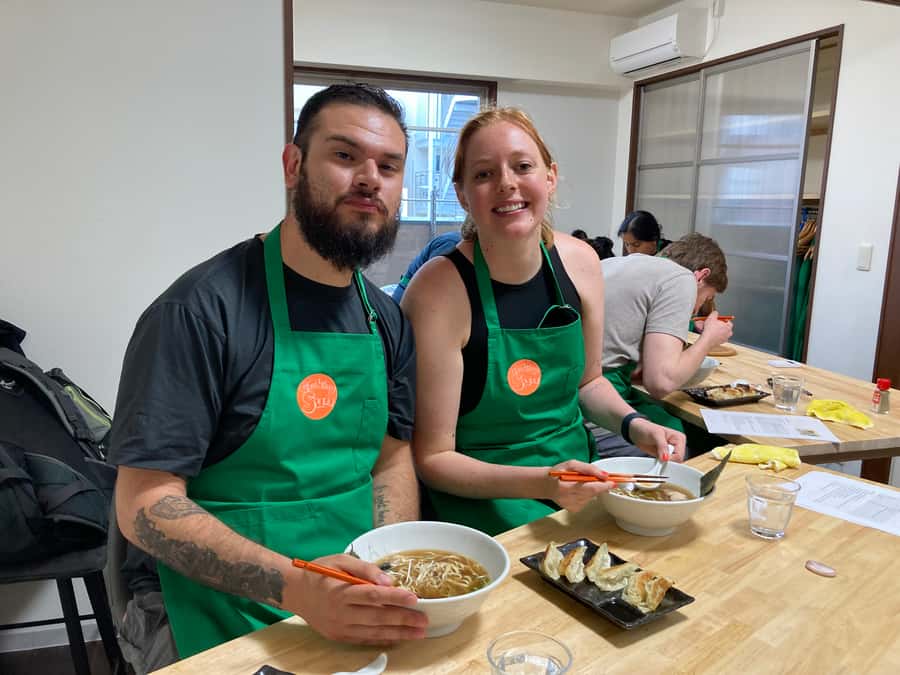
Once the noodles, broth, and gyoza are ready, the final cooking steps come together quickly. You assemble your own ramen, add toppings as you like, and cook the dumplings. Then you sit down and eat what you made.
This is not a tiny tasting portion. Several people specifically advised arriving with an empty stomach, and that is sensible. You have spent a long time preparing the food, so the final meal feels like a proper reward rather than an afterthought.
The best part is the comparison between expectation and result. Homemade ramen can seem intimidating, but the class is organized so that beginners produce a satisfying bowl. The gyoza tends to be just as rewarding because you can see the direct result of your folding and filling.
You also get the satisfaction of eating a dish that cannot be duplicated exactly anywhere else. Your dough thickness, toppings, soup adjustment, and gyoza shapes make the meal your own.
The teaching style and group size
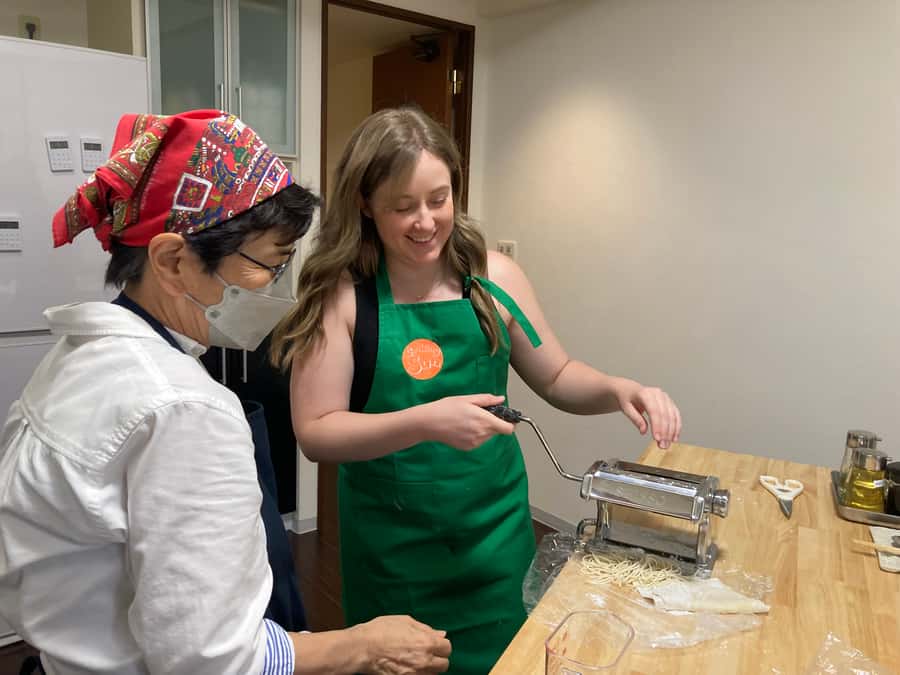
The instruction is in English, and the teaching style has received especially strong praise. June and Miki have been noted for giving clear explanations, helping people who fall behind, and keeping the class on schedule. Other instructors have also been described as friendly, patient, and easy to understand.
The class size is a major part of the value. The group may have as many as eight people, with two instructors. That is small enough for someone to check your dough, show you how to fold a dumpling again, or answer a question about an ingredient.
The pace is another strength. You are busy for most of the session, but the class does not rush from one task to another. The timing allows the noodle dough to rest and gives you room to work through the gyoza.
A cooking class can fail if the teacher talks too much or leaves you guessing. This one appears to get the balance right. You receive cultural background and cooking advice, but you also spend a good part of the time actually making food.
What you learn about Japanese food
The class gives you more than recipes. You learn why ramen and gyoza are commonly ordered together in Japan, how broth ingredients affect flavor, and where miso fits into the meal.
The information is practical. You hear about ingredients, Japanese eating culture, and tips for finding good, fresh products. That makes the lesson more useful after you leave Osaka. You are not just taking a photograph of a finished bowl. You are learning enough to try it again at home.
Recipes are provided to take home, which adds real value to the $70 price. A recipe sheet cannot reproduce every detail of a cooking lesson, but it gives you a starting point when you want to make the dishes again.
The class also helps explain why restaurant ramen can taste so different from ramen prepared abroad. The broth, fresh noodles, toppings, and timing all contribute. You gain a better sense of what to look for when ordering a bowl elsewhere in Japan.
Is $70 a fair price?
At $70 per person, this is not the cheapest meal in Osaka. You can buy ramen and gyoza for much less. But this price includes all cooking ingredients, instruction, a full meal, and a hands-on lesson that lasts around two to three hours.
I think the value is good if you want an activity, not simply lunch. You are paying for the food, but also for the teaching, the small group, the use of the kitchen, and the chance to repeat the recipes at home.
The price makes less sense if you only want to eat ramen or if your schedule is packed with sightseeing. A restaurant will be faster and cheaper. This class earns its cost through participation.
For families, couples, and visitors who enjoy food-focused activities, $70 is easier to justify. You leave with a meal, recipes, and a better understanding of two dishes that are central to casual Japanese dining.
Who will enjoy this Osaka class most?
I would choose this experience for:
- First-time cooks, because the instructors explain each step clearly.
- Families with older children, since an 11-year-old enjoyed the class and everyone has a task.
- Couples, especially if you want a shared activity beyond shopping and sightseeing.
- Ramen fans, who want to understand fresh noodles and broth rather than only eat the finished dish.
- Vegetarian or vegan diners, provided you explain your needs at the start.
- Visitors with a free half-day, since the class takes much longer than an ordinary meal.
You might skip it if you dislike group activities, have very little time in Osaka, or mainly want a quick restaurant meal. It is also not the best choice if you expect a formal chef demonstration where you simply watch. The point is to get your hands into the dough and filling.
Practical tips before you reserve
Arrive hungry. You will make a substantial meal, and the final ramen and gyoza are one of the main rewards.
Allow extra time to find the building. The room number is 807, and you need to press 807 followed by the 呼出 call button at the entrance.
Wear something comfortable for kitchen work. You will be kneading dough, cutting noodles, filling dumplings, and moving through several stages of preparation.
If you have dietary restrictions, speak up immediately. Plant-based substitutions and an alternative to fish broth have been provided, but the class needs to know before those ingredients shape the meal.
The activity ends back at the meeting point. You can book now and pay later, and cancellation is allowed up to 24 hours in advance for a full refund. Those terms are helpful if your Osaka schedule is still shifting.
Should you book the ramen and gyoza class?
Book it if you want to cook, not just eat. The strongest reasons are the small group, the careful English instruction, the fresh noodles made by hand, and the generous final meal.
I would especially recommend it for a family, a couple, or anyone who wants a practical food memory from Osaka. The hard part is finding the building, and the price is higher than a restaurant meal. But if you have the time and arrive hungry, the class gives you something a bowl of ramen alone cannot: the ability to make it again.
FAQ
Where does the cooking class start?
It starts at Cooking Sun Osaka, room 807. At the entrance, press 807 and then press the 呼出 call button.
Where does the activity end?
The class ends back at the meeting point.
How long does the class take?
The class takes approximately two to three hours, based on the stated class duration and timing described by participants.
What dishes will I make?
You will make ramen noodles from wheat and prepare ramen with a soy sauce broth. You will also make gyoza with minced chicken filling.
Are ingredients included?
Yes. All ingredients used during the cooking class are included.
Is the class taught in English?
Yes. The listed language for the class is English.
Can the class accommodate vegan or fish-free preferences?
Plant-based adjustments and a substitute for fish broth have been provided. Explain your dietary needs when you arrive so the instructors can adjust the preparation.
Just added around Osaka
- Osaka Sake Tasting with Takoyaki Cooking★ 5.0 · 156 reviews
- Okonomiyaki&Takoyaki for Families:Osaka Street Food Festival★ 5.0 · 4 reviews
- Osaka: Sashiko Japanese Craftsmanship Workshop★ 5.0 · 31 reviews
- Osaka Okonomiyaki Cooking Experience for Families & Groups★ 4.9 · 8 reviews
- Osaka : Exclusive Tea Ceremony & Wagashi Cooking★ 5.0 · 2 reviews
- Osaka: Okonomiyaki Cooking Class with Beer or Soft Drink★ 4.9 · 9 reviews
- Osaka: Cooking Class & Sake Tasting with Local Market Visit★ 4.8 · 31 reviews
- Osaka: Gluten-Free Ramen and Gyoza Cooking Class★ 5.0 · 42 reviews
Japanese & Sushi Cooking Classes, compared.
Ramen Cooking Class at Ramen Factory in Kyoto
Read our review →
Ramen & Gyoza Cooking Class in Tokyo with Local Supermarket Visit
Read our review →
Ramen Cooking Class at a Ramen Factory with Souvenir
Read our review →
Sushi Making Osaka! Popular Sushi Class in Japan!
Read our review →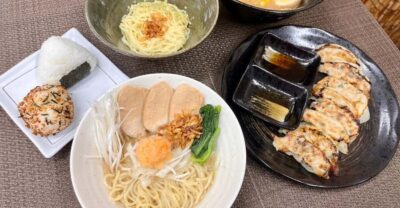
Tokyo Tsukiji Fish Market Tour and Sushi Making Lesson
Read our review →
Japanese Washoku Bento Small Group Cooking Class
Read our review →
Easy Ramen Cooking Experience in Kabukicho, Shinjuku
Read our review →Lists this class appears in