
REVIEW · HONSHU, JAPAN
Kyoto: Ramen Cooking Class at a Ramen Factory with Souvenir
Ramen tastes better when you make it. At Kyoto’s Ramen Factory, you turn flour into noodles, season chicken, choose your broth and sauce, then sit down to eat the bowl you built. I like the hands-on noodle work and the freedom to mix miso, salt, or soy flavors to suit your taste. I also like that you receive the full recipe for cooking ramen at home. The main consideration is the price: at $127 per person, this costs far more than a bowl of ramen at a restaurant.
The class lasts 90 minutes, so it fits neatly into a Kyoto sightseeing day. It is close to Demachiyanagi Station and works well as a break from nearby attractions. The energetic teaching style is a real strength, with instructors such as Sakura, Fuku, Moeka, Akemi, and Kazuma praised for making the lesson clear and funny. Still, this is a lively group activity, not a quiet culinary lesson. If you want a slow, highly technical study of ramen, the pace may feel brisk.
What makes this Kyoto ramen class worth your time
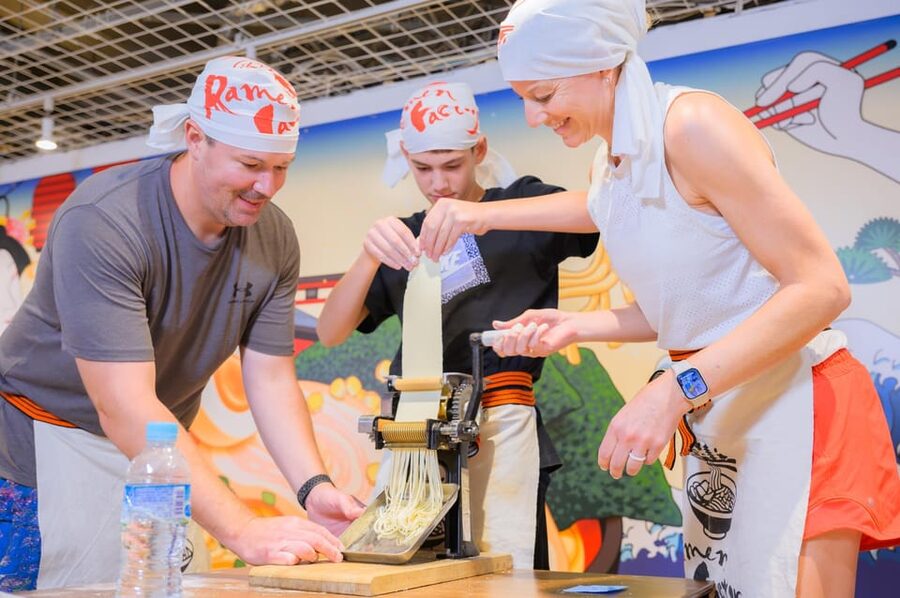
- You make noodles from flour: Mix, punch, knead, fold, shake, and drain the dough until it becomes ramen noodles.
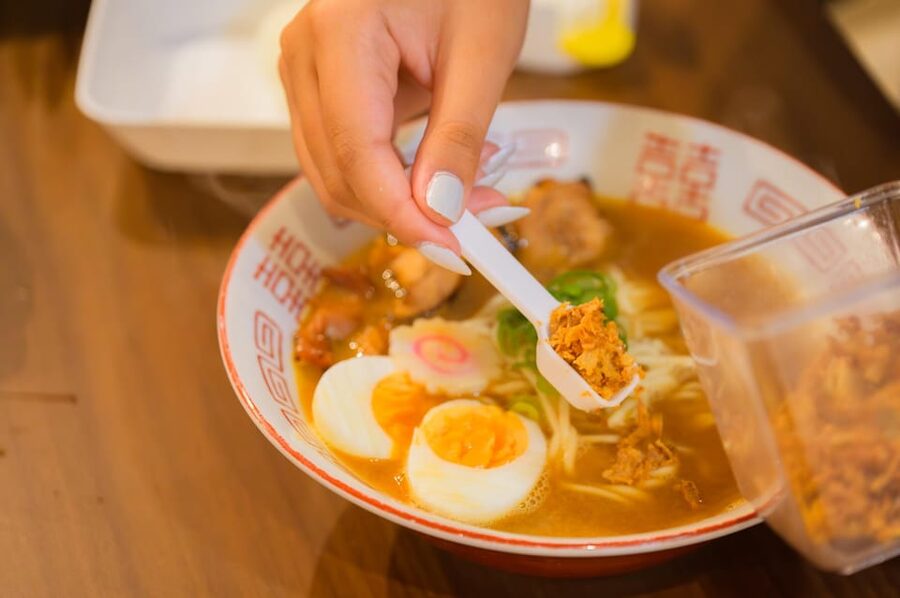
- You customize the finished bowl: Pick a broth and sauce combination, then add toppings, egg, and condiments according to your taste.
- You cook more than noodles: The class includes seasoning chicken and learning how the different parts of a ramen bowl come together.
- You get a recipe for home cooking: The complete instructions are sent by email, with access also provided through a QR code.
- You leave with a souvenir: The class includes a selected souvenir, and past participants have received items such as a ramen bowl, bandana, photo, gift, or certificate.
- You can ask about dietary needs: Vegetarian, pescatarian, and vegan options have been accommodated, but you should contact the local provider after booking.
Finding the Ramen Factory near Demachiyanagi
The Ramen Factory is about a five-minute walk from Demachiyanagi Station on the Keihan Line. That makes it a useful stop if you are exploring the northern side of central Kyoto or visiting places nearby.
The entrance can cause a little confusion. The activity is on the basement floor, and you need to take the staircase to the right of the supermarket. One participant also pointed out that the entrance does not match the location shown on Google Maps, with the stairs found on the street side behind the bus stop. I would allow a few extra minutes so you are not hunting for the door just before the class begins.
Transportation is not included, so you make your own way there. The short walk from the station is the practical advantage. You do not need to set aside half a day or travel to a distant cooking school.
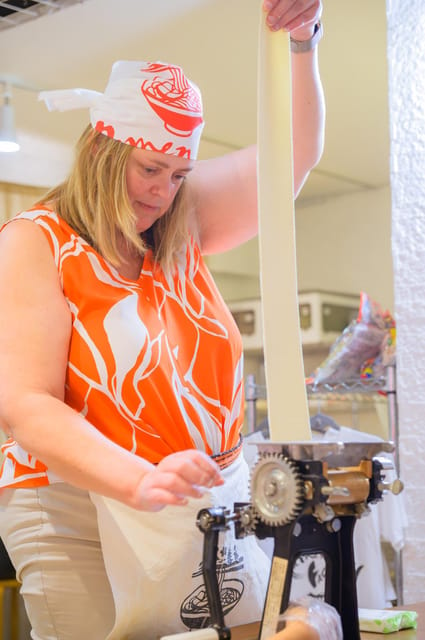
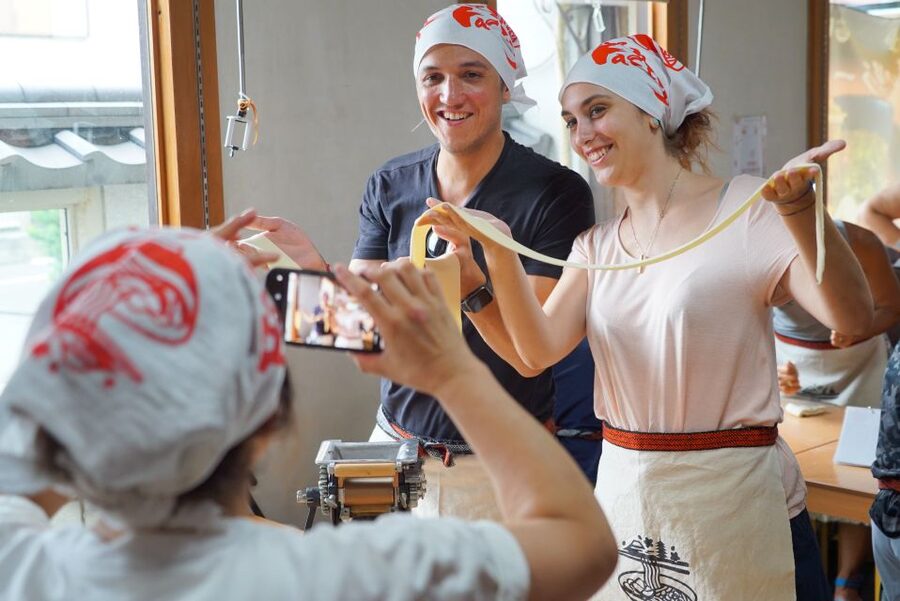
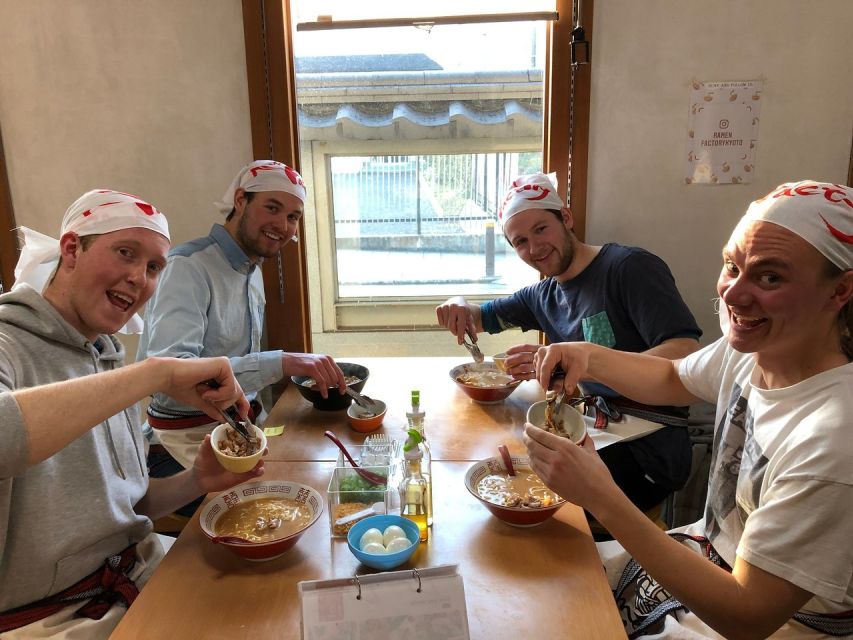
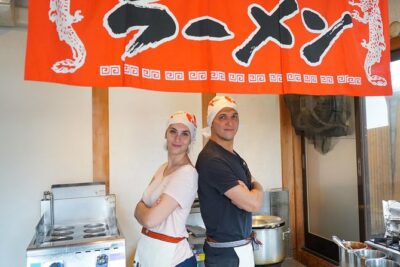
Once inside, you put on a ramen apron and headscarf. The atmosphere is designed to be friendly and active rather than formal. Staff members often help take photos and videos, which is useful because your hands will be covered in dough for much of the class.
Be aware that professional filming, photography, or 360-degree camera recording may take place during your visit. The resulting material can be used for media coverage, websites, advertising, and promotion around the world.
More Sushi and Japanese Classes in Kyoto:
- Ramen Cooking Class at Ramen Factory in Kyoto
★ 5.0 · 1,937 reviews - Kyoto: Ramen, Gyoza, and Onigiri Cooking Class
★ 5.0 · 445 reviews - Kyoto: Japanese Washoku Bento Small Group Cooking Class
★ 5.0 · 380 reviews
The 90-minute class, step by step
The class begins with an overview video. This gives you a quick picture of the process before you handle the ingredients. It is a sensible start because ramen has several parts, and the lesson moves from dough to toppings to soup in a fairly short time.
Next, you prepare the chicken with seasonings. The chicken chasui is a practical choice for a short class because it can be prepared and served within 90 minutes. It also gives you a chance to work with part of the dish before turning your attention to the noodles.
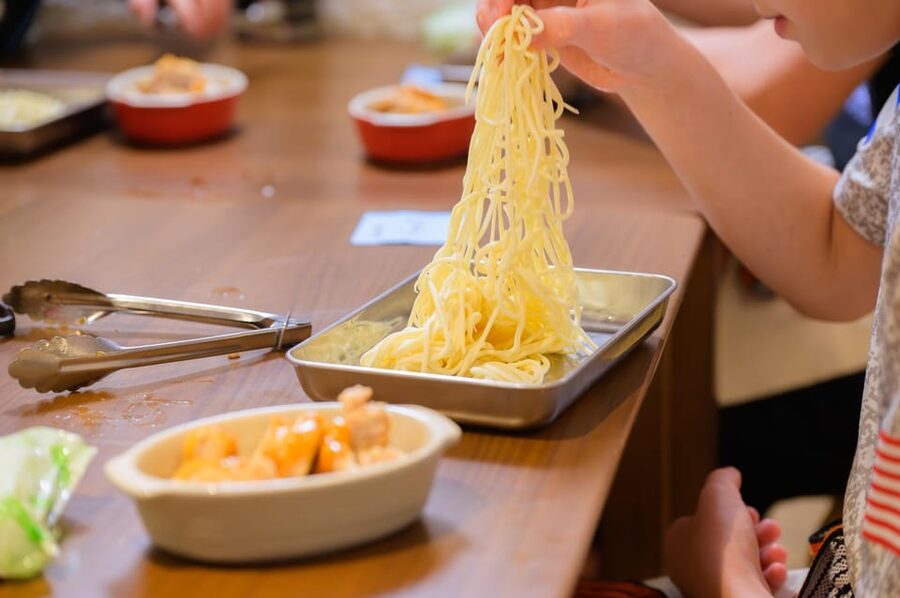
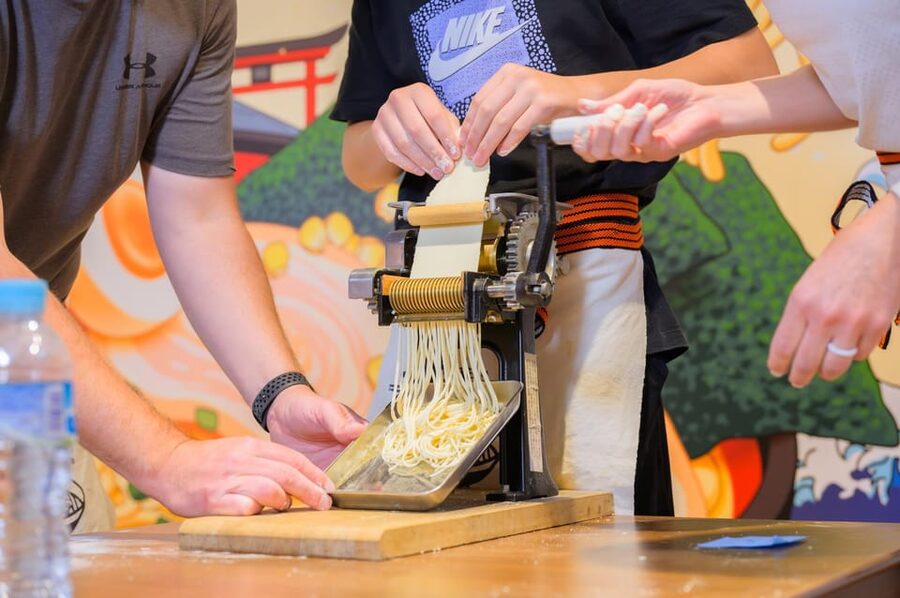
The noodle-making section is the physical heart of the experience. You start with flour and work the dough through several stages: mixing, punching, kneading, folding, shaking, and draining. You are asked to fold the dough more than 100 times, which gives you a better sense of the effort behind fresh noodles than simply watching someone work behind a counter.
This is not difficult in the way professional pasta making can be difficult, but it is active. You will use your hands and follow directions closely. The instructors guide you through each step, so you do not need prior cooking skill. Several participants described the class as beginner-friendly, with clear instructions even for children and first-time cooks.
The noodle stage is also where the class feels most different from an ordinary food tour. You are not merely tasting Kyoto specialties. You are changing a basic mixture of flour and water into the main ingredient of your meal. The result may not look perfectly uniform, but that is part of the fun.
After the noodles are ready, you choose the flavor direction for your bowl. The featured sauces are miso, salt, and soy. You can taste and mix them, then pair your choice with a soup base and oils. This lets you make a ramen bowl that is lighter, saltier, richer, or more deeply seasoned according to your preference.
The class also offers a chance to accommodate different diets. Pescatarian participants have been offered tofu and fish broth, and vegan options have been handled individually. Since the standard ingredients include chicken, you should contact the provider after booking if you need a dietary adjustment. Do not wait until the day of the class.
Building and eating your own ramen bowl
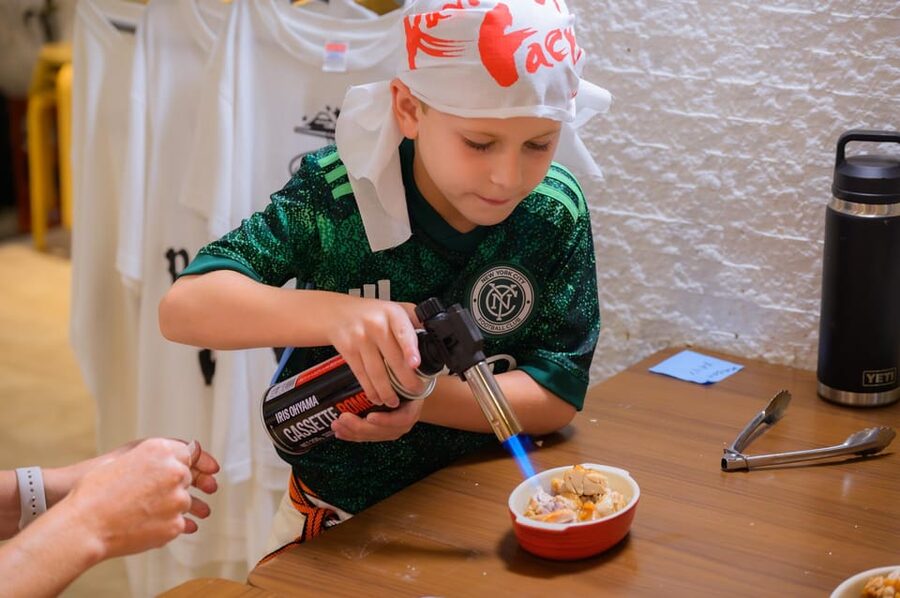
Once the noodles, chicken, broth, and sauces are ready, you assemble the bowl. You choose toppings, an egg, and condiments, then arrange the finished ramen for presentation.
This part may sound simple, but it gives the class a satisfying payoff. You have made decisions at every stage, so the final bowl feels personal. You also get to see how broth, sauce, noodles, protein, and toppings need to work together rather than treating ramen as one single ingredient.
Then you eat. The meal is served during the class, so the activity doubles as a filling lunch or early dinner. Drinks are not included, which is worth remembering when you consider the total cost.
The quality of the final dish receives unusually strong praise. The class is entertaining, but the food is not treated as an afterthought. People who expected a basic demonstration were surprised by how good the ramen tasted, including one self-described picky eater who finished the entire bowl.
I would not expect every bowl to taste identical. Your sauce combination, broth choice, toppings, and seasoning decisions affect the result. That is part of the point. You are not being served the restaurant’s signature bowl; you are creating your own version with guidance.
The teaching style: lively, clear, and personal
The instructors are a major part of the experience. Sakura is repeatedly described as upbeat and helpful, while Fuku is praised for humor and an easy manner with families. Moeka, Akemi, Kazuma, Maya, Haruka, Mahiro, and other staff members have also been singled out for clear teaching and warm service.
That consistency matters. A cooking class can become stressful if the teacher rushes through the instructions or leaves you unsure about what to do next. Here, the teaching is broken into manageable tasks, with staff working behind the scenes to prepare ingredients and equipment for each stage.
The class also includes some background about ramen and its ingredients. It is not a long lecture on Japanese food culture, but you get useful context while you cook. One guide even helped a participant understand which miso to buy at a supermarket afterward, a nice practical extension of the lesson.
Families seem to fit this format particularly well. Children can take part in kneading, shaking, choosing flavors, and assembling the bowl, while older children and adults can appreciate the food technique. The activity has also worked well for couples, solo visitors, and people traveling with teenagers.
If you prefer a quiet room and detailed culinary theory, the energetic style may not suit you. The tone is closer to a well-run activity with jokes, photos, and encouragement than to a serious chef-training course.
A few more cooking classes around Kyoto worth a look
- Kyoto Ramen and Gyoza Cooking Class with Professional Chefs
★ 5.0 · 282 reviews - Kyoto: Afternoon Japanese Izakaya Cooking Class
★ 4.9 · 241 reviews - Izakaya Style Cooking Class
★ 5.0 · 219 reviews - Gyoza Cooking Class in Kyoto: Traditional Japanese Dumplings
★ 5.0 · 210 reviews
Souvenirs and the recipe for home
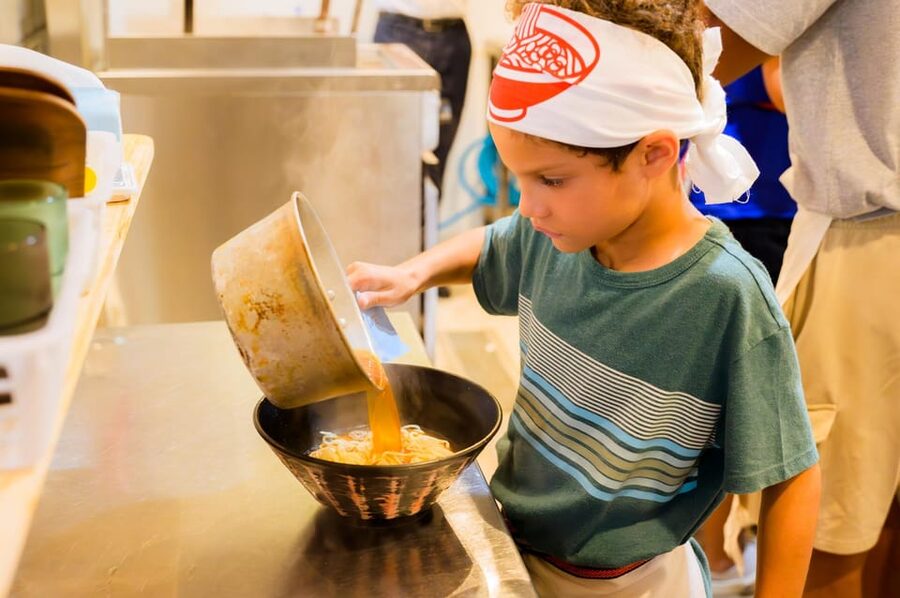
The selected souvenir adds value, especially because it helps you remember the class after the meal is gone. The exact item can vary, but past participants have mentioned a ramen bowl, bandana, printed photo, gift, and certificate.
The bandana is practical and connected to the class itself. A ramen bowl is more useful at home, particularly if you plan to repeat the recipe. The printed photo and staff-taken images add a personal record of the activity, which is helpful for families and couples who want pictures of the cooking process.
The recipe is the more important takeaway for anyone interested in food. You receive the full ramen recipe by email, with one participant noting that it was also available through a QR code. That gives you a way to recreate the meal rather than leaving with only a souvenir.
Be realistic about the home version. The class teaches you the process and provides the recipe, but ramen at home can involve preparation time and ingredients that are not always standard in an ordinary kitchen. Still, the lesson gives you a much better starting point than a recipe found without any hands-on practice.
Is $127 a fair price?
The $127 price is high if you judge the activity only by the meal. You could buy several bowls of ramen in Kyoto for that amount, and drinks are not included.
The value comes from the full package: 90 minutes of instruction, hands-on preparation, your meal, staff support, photos or videos, a recipe for home cooking, and a selected souvenir. You are paying for an activity as well as food.
I think the price makes the most sense for visitors who want a memorable break from temples and streetside sightseeing. It also works well for families, since several people can cook together and share the same experience. For a solo visitor, the value depends on how much you enjoy food activities and whether you appreciate the help with photos and personalized instruction.
The recipe and souvenir improve the long-term value, but they do not turn this into a bargain. I would book it for the experience, not because it is an economical meal.
Who should book this class?
You should consider the Ramen Factory if you want:
- A short activity that fits into a busy Kyoto itinerary
- A hands-on food experience instead of a restaurant meal
- An activity suitable for adults, children, couples, or solo visitors
- Fresh noodle making without needing previous cooking experience
- A customizable meal with miso, salt, and soy options
- A recipe and souvenir to take home
- English-language instruction
It is especially useful on a rainy day or when you need a structured activity between sightseeing stops. The 90-minute length keeps the commitment manageable, and the meal means you do not need to plan a separate lunch immediately afterward.
You may want to skip it if your main goal is a low-cost ramen meal, a private chef lesson, or a deep technical study of broth making. Much of the broth preparation is handled in advance because a proper broth can take days, so this is a practical introduction rather than a complete restaurant kitchen apprenticeship.
Practical details before you book
The activity costs $127 per person and lasts 90 minutes. Starting times vary, so check availability when booking.
Instruction is available in English and Japanese. The class includes the Chef Course ramen-making session and a selected souvenir. Transportation and drinks are not included.
You can cancel up to 24 hours before the activity for a full refund. The reserve-now, pay-later option allows you to hold a place without paying immediately, which is useful while arranging a Kyoto itinerary.
For dietary needs, contact the local provider after booking. The class has accommodated pescatarian, vegetarian, and vegan requirements, but options are handled individually rather than promised automatically for every participant.
FAQ
How long does the Kyoto ramen cooking class last?
The class lasts 90 minutes, including preparation, noodle making, bowl assembly, and eating the ramen you create.
Where is the Ramen Factory located?
It is about a five-minute walk from Demachiyanagi Station on the Keihan Line. The venue is on the basement floor.
How do I find the entrance?
Take the staircase to the right of the supermarket and go down to the basement. The stairs are on the street side behind the bus stop, and the entrance may not match the position shown on Google Maps.
Is transportation included?
No. You are responsible for reaching the Ramen Factory.
Are drinks included?
No. Drinks are not included in the activity price.
Which ramen sauces can I choose?
You can taste and mix three featured sauces: miso, salt, and soy. You also choose a soup and sauce combination for your bowl.
Can dietary requirements be accommodated?
Dietary options may be available, including tofu and fish broth for a pescatarian choice. Contact the local supplier after booking to discuss your needs.
Is the class taught in English?
Yes. Instruction is available in English and Japanese.
Should you book the Kyoto Ramen Factory class?
I would book this class if you want a fun, filling Kyoto activity with a clear result at the end. The noodle-making is genuinely hands-on, the staff keep the pace friendly, and the final bowl gives you an immediate reward for your work.
The $127 price is the big question. It is not cheap, but the cost covers instruction, food, a recipe, and a souvenir rather than just lunch. Book it for the shared experience, especially with children, a partner, or friends. If you only want inexpensive ramen, spend the money at a restaurant instead.
Just added around Kyoto
- Kyoto Udon & Tempura Cooking Class with Professional Chefs★ 3.8 · 3 reviews
- Kyoto: Morning Japanese Bento Cooking Class★ 5.0 · 149 reviews
- Kyoto: Wagashi (Japanese sweets) Cooking near Fushimiinari★ 5.0 · 40 reviews
- Kyoto Home Cooking Class &Supermarket tour near Fushimiinari★ 5.0 · 31 reviews
- Kyoto: Cooking class, learning how to make authentic sushi★ 4.2 · 9 reviews
- Kyoto: Authentic Sushi Making Cooking Lesson★ 5.0 · 103 reviews
- Authentic Japanese Cooking Experience at Izakaya restaurant★ 4.2 · 5 reviews
- Gyoza Cooking Class in Kyoto: Traditional Japanese Dumplings★ 5.0 · 12 reviews
Japanese & Sushi Cooking Classes, compared.
Ramen Cooking Class at Ramen Factory in Kyoto
Read our review →
Ramen & Gyoza Cooking Class in Tokyo with Local Supermarket Visit
Read our review →
Sushi Making Osaka! Popular Sushi Class in Japan!
Read our review →
Tokyo Tsukiji Fish Market Tour and Sushi Making Lesson
Read our review →
Japanese Washoku Bento Small Group Cooking Class
Read our review →
Easy Ramen Cooking Experience in Kabukicho, Shinjuku
Read our review →Lists this class appears in