
REVIEW · TOKYO, JAPAN
Small-Group Wagyu Beef and 7 Japanese Dishes Tokyo Cooking Class
Tokyo tastes better when you cook it yourself. This three-hour class gives you a practical introduction to Japanese home cooking, from making dashi to preparing tender Wagyu beef and arranging a full meal. I like the maximum group size of eight, since you get actual time at the worktable instead of watching from the back. I also like the friendly English-speaking instructors, including Aya, Hidemi, Kaori, Megumi, and Yoko, who explain both technique and food culture.
The class offers strong value at $72.96 per person, especially since ingredients, recipes, an apron, and a towel are included. The main consideration is the pace: seven or eight dishes in about three hours means some tasks are prepared ahead or shared among the group. The studio can also be tricky to locate, so allow extra time before the 9:30 a.m. start.
What makes this Tokyo cooking class worth considering
- Dashi comes first: Learn the basic stock that supports much of Japanese cooking, then use it in several dishes.
- Wagyu is the main event: Prepare a tender beef dish, with sukiyaki receiving especially strong praise.
- Eight-person limit: The small class size keeps you involved and gives you access to instructor feedback.
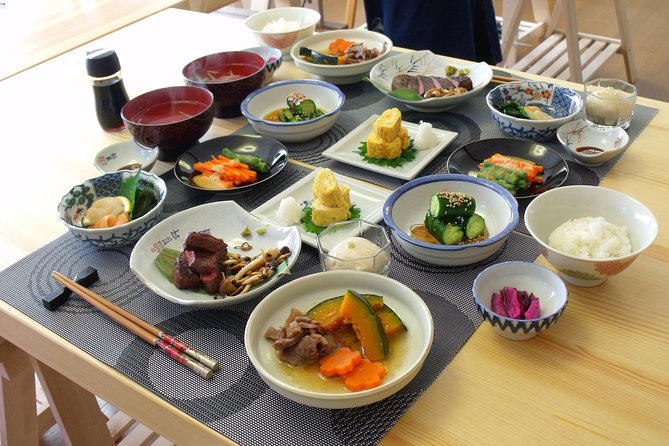
- Seven to eight dishes: You work through appetizers, vegetables, soup, rice, a main course, and dessert-style elements.
- Recipes go home with you: The class is designed to help you repeat the dishes in your own kitchen.
- A residential Tokyo setting: Cooking Sun Tokyo is at 18-39 Shinanomachi in Shinjuku City, near public transportation and a quiet, tree-lined area.
Cooking Sun Tokyo begins with dashi
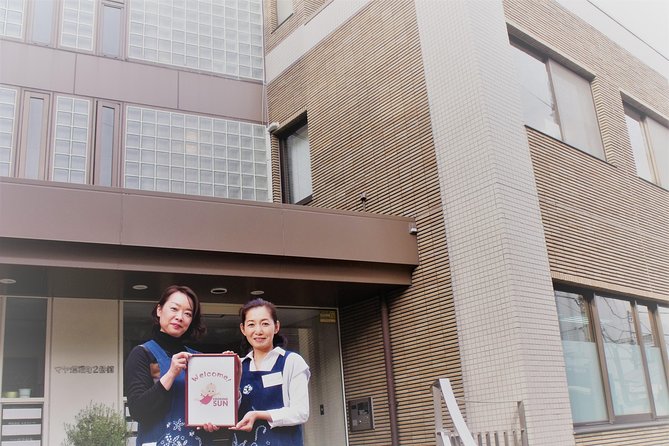
The class starts at Cooking Sun Tokyo, at 18-39 Shinanomachi in Shinjuku City. The address is in a residential setting rather than beside a major tourist sight, which gives the experience a calm, local feel. It also creates the one practical nuisance that comes up repeatedly: the building can be hard to spot.
I would use a phone map and leave a few extra minutes. One useful landmark is the nearby park, and the surrounding area has trees and a quieter feel than many central Tokyo streets. A taxi has also been reported to reach the location without trouble, but the experience itself does not include hotel pickup or drop-off.
Once the class begins, you start with dashi, the basic Japanese soup stock. This is more useful than a quick explanation of seasonings because you see how one foundation can support several dishes. The instructor explains common Japanese ingredients and seasonings, along with the role they play in the finished food.
This opening gives the class a clear purpose. You are not just following isolated recipes. You are learning how Japanese cooking builds flavor through stock, seasoning, careful cutting, and presentation.
More Sushi and Japanese Classes in Tokyo:
- Ramen & Gyoza Cooking Class in Tokyo with Local Supermarket Visit
★ 5.0 · 823 reviews - Tokyo Tsukiji Fish Market Tour and Sushi Making Lesson
★ 5.0 · 390 reviews - Tokyo: Easy Ramen Cooking Experience in Kabukicho, Shinjuku
★ 4.6 · 321 reviews
Seven dishes in three hours
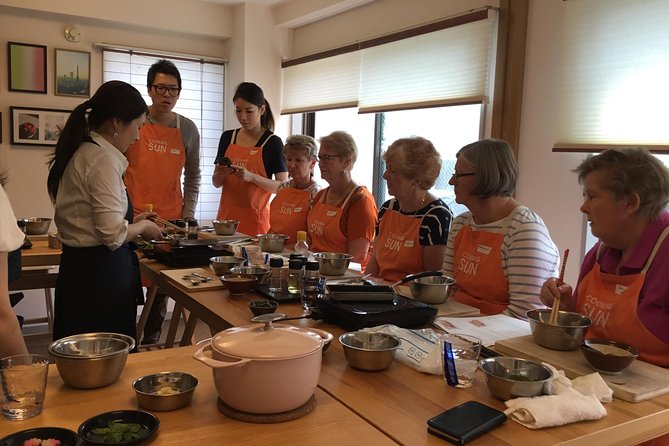
The exact menu can vary, but the class covers seven dishes and may reach eight, using Wagyu beef, Japanese vegetables, traditional seasonings, and other staple ingredients. The cooking moves from appetizers toward a full-course meal, with the instructors explaining recipes, preparation methods, and presentation as you go.
You may prepare items such as miso soup, rice, vegetables, salads, and the Wagyu main course. Sukiyaki receives particular praise, as does a cucumber salad that one participant planned to make again at home. Another class description highlights ramen, so the menu may not be identical every day or for every session.
That variation matters. If you want one tightly fixed menu, ask about the planned dishes before booking. If you prefer a broader look at Japanese cooking, the range is a benefit.
You also learn decorative cutting and ways to arrange the food. Japanese cooking often pays close attention to shape, color, and portion size, so these details are not just decoration. They show you how a simple home meal can look considered without requiring restaurant equipment.
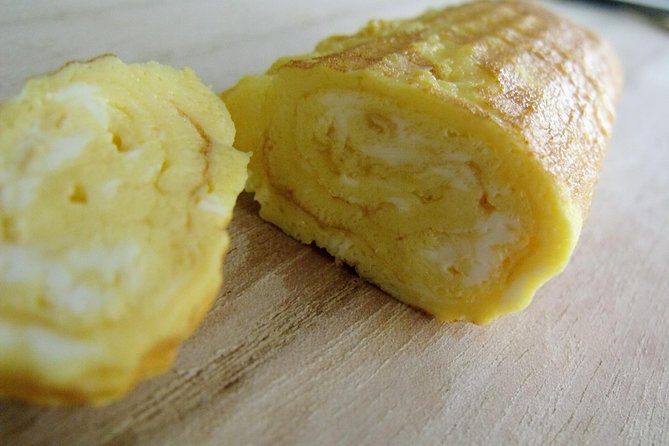
The class is designed to include hands-on work, but it is important to set realistic expectations. You will chop ingredients, mix dressings, cook an egg, and sear a prepared lotus root stuffed with minced chicken. Some foods, including items such as miso soup, rice, and potatoes, may be handled partly by the staff so the full menu can be completed within the time.
That means this is not a professional kitchen apprenticeship. It is a guided introduction with plenty to do, but not every component is made from start to finish by each person. I see that as a fair trade for tasting so many dishes in one morning.
Wagyu sukiyaki gives the class its headline dish
Wagyu means Japanese beef, with Wa referring to Japan or Japanese and Gyu meaning beef. The class uses Wagyu as its main dish, giving you a chance to handle a premium ingredient in a setting that is less formal than a high-end restaurant.
Sukiyaki is repeatedly singled out as one of the best parts of the meal. It is also a useful dish to learn because it brings together beef, Japanese seasonings, vegetables, and careful timing in one pan. You get more from it than simply sampling Wagyu at a restaurant. You see how the beef fits into a larger meal and how Japanese flavors are balanced.
The class does not promise a particular Wagyu grade or cut, so you should not book it expecting a luxury beef tasting. The value is in learning how the ingredient is used, then sitting down to eat what you helped prepare.
The instructors also share cooking tips and occasional less obvious techniques. Their guidance seems particularly helpful for beginners, since the explanations are intended to be approachable even if you rarely cook Japanese food. More experienced home cooks can still pick up ideas about dashi, knife work, seasoning, and presentation.
English-speaking instructors keep the class relaxed
Communication is one of the strongest reasons to choose this experience. The local instructors teach in English and explain each step clearly, with short lessons about ingredients, food culture, and the background of each dish.
Aya and Hidemi are praised for being excellent instructors, while Kaori, Megumi, and Yoko are also named as patient, kind, and helpful teachers. The important point is not any one guide, since staffing can change. It is the teaching style: friendly, casual, and willing to assist at the worktable.
That matters in a small kitchen. A class can become frustrating when instructions are rushed or when you are afraid to ask a basic question. Here, the format is meant to make Japanese cooking approachable for all skill levels, including people who do not cook much at home.
I also like the balance between instruction and conversation. The atmosphere is homey rather than stiff, and the class leaves room to talk about cooking, culture, and travel while the food comes together.
A few more cooking classes around Tokyo worth a look
- Ramen and Sushi Cooking Class with Sake Pairing Set in Tokyo
★ 5.0 · 291 reviews - Tokyo: Wagyu and 7 Japanese Dishes Cooking Class
★ 4.9 · 273 reviews - Tokyo Washoku 4-hour Cooking Class: From Market to Table
★ 5.0 · 253 reviews - Private Home Cooking in Yanaka – Local Flavors in a Warm Setting
★ 5.0 · 173 reviews
The final meal is part of the lesson
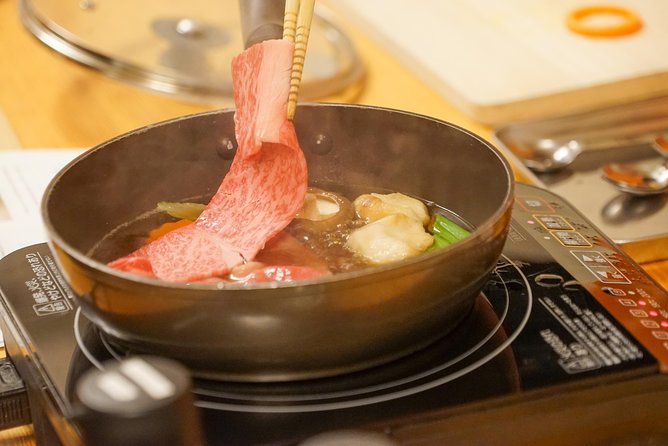
After the cooking ends, everyone sits down to eat the finished dishes. This is the satisfying part of the format: you can connect each bite with the technique used to make it.
The meal is described as a full course, from appetizers through dessert, with green tea and sake included in the experience description. One account hoped for a small cup of sake with lunch, so beverage service may vary by session. If sake is important to you, confirm the details when booking rather than assuming it will be served in a particular amount.
The meal can be surprisingly generous for a three-hour class. You may leave having made seven or eight dishes, rather than one recipe and a small taste. That makes the experience feel closer to a Japanese cooking lesson followed by lunch than to a short demonstration.
It is also a social experience without being a large-group event. With no more than eight people, you have a better chance to talk with the instructors and meet the others at the table. At the same time, the class is not private unless you arrange that separately.
The $72.96 price and what you receive
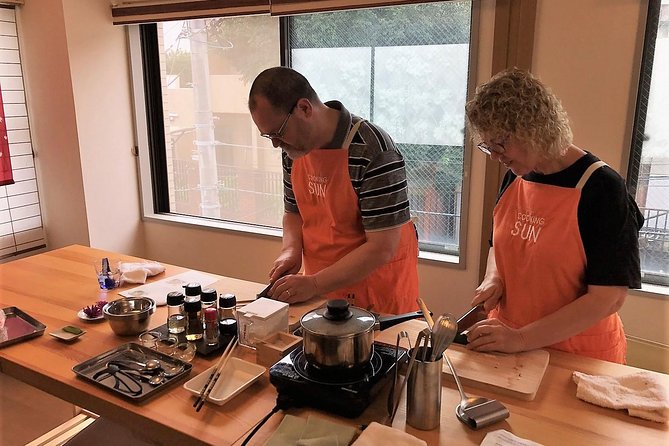
At $72.96 per person, the price is reasonable for a three-hour activity that includes a local cooking instructor, recipes, ingredients, an apron, and a towel rental. You also receive a substantial meal, which improves the value compared with a class that offers only samples.
The small group is the key financial advantage. You are paying for access to instruction and participation, not just for a seat in a demonstration. The value is strongest if you care about learning dishes you can repeat at home.
The price is less compelling if you only want to eat Wagyu. A restaurant meal may suit that goal better, while this class asks you to spend time chopping, mixing, cooking, listening, and cleaning as part of the experience. You are paying for skills and context as much as for lunch.
Recipes are included, which is important. You can use the class as a starting point for Japanese meals at home, although the availability of certain ingredients may depend on where you live.
Who should book this class
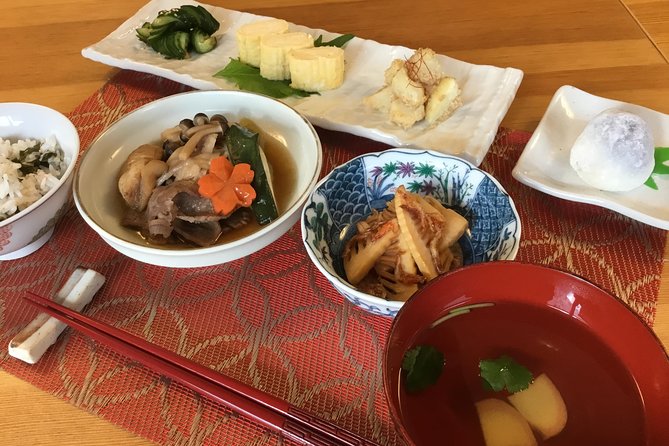
I would recommend it to first-time visitors who want more than a photograph of Japanese food. It gives you useful context for ingredients you will see throughout Tokyo, including dashi, miso, Japanese vegetables, rice, and traditional seasonings.
It also suits families and mixed-skill groups. Children or beginners can take part without needing advanced kitchen experience, while confident cooks can focus on knife work, seasoning, and presentation.
Food-focused visitors will get the most from the class, especially if they want to recreate dishes after returning home. It is also a smart choice for a rainy morning, a slower day in Tokyo, or anyone who likes meeting local people through food.
I would hesitate only if you need a fully fixed menu, want every dish prepared entirely by you, or dislike group cooking. The pace is efficient, and some items may be prepared ahead so the group can complete the large menu on time.
Vegetarian cooking is available if you request it when booking. You should also provide any allergies or dietary requirements in advance. The supplied information does not promise every dietary request can be handled, so early notice is important.
Timing, transport, and useful preparation
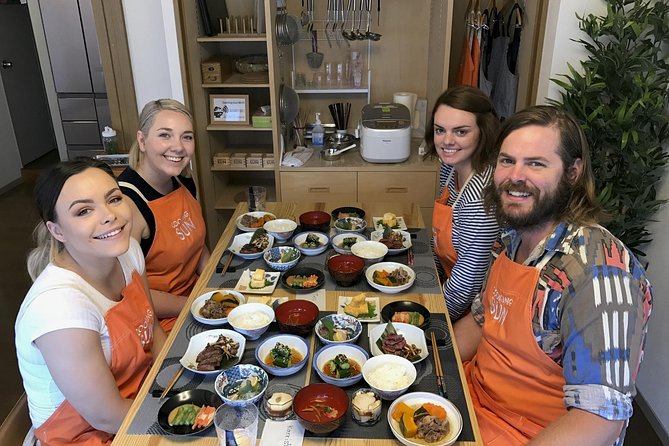
The class starts at 9:30 a.m. and lasts about three hours, ending back at the meeting point. Since hotel pickup is not included, you need to make your own way to Shinanomachi.
The location is near public transportation, but the entrance may not be obvious. I would check the route the night before, save the address, and avoid arriving at the last minute. The quiet neighborhood and nearby greenery can make the walk pleasant, but only after you have found the correct building.
An apron and towel are supplied, along with the ingredients and cooking equipment. You do not need to bring kitchen supplies. Wear clothes you are comfortable cooking in, and be ready to work rather than simply watch.
Free cancellation is available if you cancel at least 24 hours before the 9:30 a.m. start time. Changes or cancellations within 24 hours are not refunded, with the cutoff based on Tokyo local time.
Should you book the Wagyu cooking class?
Book it if you want a friendly, hands-on introduction to Japanese food at a fair price. The best features are the eight-person limit, English instruction, the dashi lesson, the Wagyu main course, and the chance to eat a large meal made during class.
Go in knowing that the menu can include staff-prepared components and that the location takes some effort to find. If you accept those limits, this is a practical Tokyo experience that gives you more than a meal. You leave with recipes, new techniques, and a clearer idea of how Japanese cooking works at home.
FAQ
Where does the cooking class take place?
The class takes place at Cooking Sun Tokyo, 18-39 Shinanomachi, Shinjuku City, Tokyo 160-0016, Japan.
What time does the class start?
The class starts at 9:30 a.m.
How long does the experience last?
The cooking class lasts approximately three hours.
How many people can join the class?
The class has a maximum of eight people.
Is the class taught in English?
Yes. The local instructors provide instructions in English.
Are ingredients and cooking supplies included?
Yes. Ingredients and supplies are included, along with an apron and towel rental.
Is Wagyu beef part of the class?
Yes. Wagyu beef is used for the main dish, and sukiyaki may be part of the menu.
Can vegetarians join?
Yes. A vegetarian option is available, but you must advise the provider when booking.
Should I report allergies or other dietary requirements?
Yes. You should provide any specific dietary requirements at the time of booking.
Is hotel pickup included?
No. Hotel pickup and drop-off are not included, so you must travel to and from the meeting point yourself.
Can I cancel for a refund?
Yes. You can receive a full refund if you cancel at least 24 hours before the experience start time. Cancellations within 24 hours are not refunded.
Just added around Tokyo
- Tokyo: Sushi Cooking Class with Sake Tasting★ 4.8 · 55 reviews
- Tokyo: Sushi roll and side dish cooking experience★ 5.0 · 2 reviews
- Tokyo: Sushi Making Experience & Japanese Cooking Class★ 5.0 · 2 reviews
- Tokyo: Gyoza Making from Scratch – Ultimate Cooking Class★ 5.0 · 2 reviews
- Tokyo: Night Cooking Class: 5 Home-Cooked Japanese Dishes★ 4.9 · 13 reviews
- Tokyo: Real Ramen & Dumpling Cooking with Master Chef★ 5.0 · 10 reviews
- Tokyo: Kawaii Bento Cooking Class – Cute Character Lunchbox★ 4.9 · 55 reviews
- Tokyo: Sushi and Ramen Cooking Class with Sake Pairing Set★ 5.0 · 81 reviews
Japanese & Sushi Cooking Classes, compared.
Ramen Cooking Class at Ramen Factory in Kyoto
Read our review →
Ramen & Gyoza Cooking Class in Tokyo with Local Supermarket Visit
Read our review →
Ramen Cooking Class at a Ramen Factory with Souvenir
Read our review →
Sushi Making Osaka! Popular Sushi Class in Japan!
Read our review →
Tokyo Tsukiji Fish Market Tour and Sushi Making Lesson
Read our review →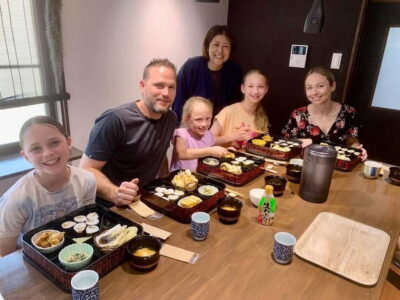
Japanese Washoku Bento Small Group Cooking Class
Read our review →
Lists this class appears in