
REVIEW · TOKYO, JAPAN
Ramen & Gyoza Cooking Class in Tokyo with Local Supermarket Visit
Come hungry, leave with a recipe. This small-group ramen and gyoza class brings you into YUCa’s home kitchen in Nishiogu, a quieter part of Tokyo that feels far removed from the city’s major sights. I like the warm, personal setting, and I like that the class includes cultural context instead of treating food as a list of steps. The optional neighborhood supermarket visit adds another useful look at daily Japanese life.
The main thing to understand is that this is not a serious chef-training course. You will take part in the preparation, but some steps are demonstrated or involve adding prepared ingredients. The kitchen has one cooking area, so the format can feel more guided than fully hands-on for some people.
What makes this class worth your morning
- You cook in YUCa’s home kitchen, giving the class a personal feel that a large culinary school cannot match.
- Ramen and gyoza are prepared together, with the timing arranged so you can work on dumplings while the noodle soup develops.
- YUCa teaches in clear English, with explanations about Japanese home cooking, food customs, and everyday life.
- The maximum group size is seven, small enough for conversation and shared participation.
- The optional supermarket visit runs from 12:30 to 1 p.m., offering practical help with Japanese ingredients and labels.
- Families, couples, solo participants, and beginners fit well, although the single kitchen means the class is partly demonstration-based.
Reaching YUCa’s kitchen in Nishiogu
The meeting point is YUCa’s Japanese Cooking at 2-chōme-34-8 Nishiogu in Arakawa City. The class starts at 10 a.m. and finishes back at the same location. Public transportation is nearby, though you should allow time to navigate Tokyo’s residential streets rather than expecting to step straight out of a station into a tourist district.
That location is part of the appeal. You are not cooking in central Tokyo surrounded by souvenir shops and sightseeing crowds. Nishiogu gives you a look at an ordinary neighborhood, and the home setting makes the visit feel more like an invitation than a packaged sightseeing stop.
You should arrive ready to remove your sightseeing hat for a few hours and focus on food. The class has a minimum booking requirement of two people and accepts no more than seven participants. That is a useful middle ground: enough people for a social morning, but not so many that the teacher disappears at the front of a large room.
More Sushi and Japanese Classes in Tokyo:
- Tokyo Tsukiji Fish Market Tour and Sushi Making Lesson
★ 5.0 · 390 reviews - Tokyo: Easy Ramen Cooking Experience in Kabukicho, Shinjuku
★ 4.6 · 321 reviews - Ramen and Sushi Cooking Class with Sake Pairing Set in Tokyo
★ 5.0 · 291 reviews
10 a.m. begins with Japanese home cooking
The first part of the morning introduces Japanese home cooking and lifestyle. This short lecture runs from 10:15 to 10:30, after the 10 a.m. meeting time. It helps place ramen and gyoza in a broader setting instead of presenting them as restaurant dishes with no connection to ordinary meals.
YUCa is the heart of the class. Her teaching style comes across as warm, energetic, and patient, and she makes a point of involving different ages and ability levels. Families have found the class workable for children as young as nine, while teenagers and grandparents can take part as well.
That does not mean every minute involves a knife, pan, or rolling pin in your hands. With one kitchen and a group of up to seven, YUCa needs to demonstrate certain parts herself. One participant found the class less hands-on than expected, especially when some ingredients involved adding a small amount of powder or liquid rather than preparing everything from scratch.
That is a fair caution. If you want a professional-style cooking lesson in which each person has an individual station, this is not that. If you want to learn the basic method, ask questions, make dumplings, assemble a bowl, and eat with new friends, the format works better.
Making ramen without turning lunch into a three-hour project
The cooking session runs from 10:30 a.m. to 12:30 p.m. The ramen is designed to be approachable, which matters when you want to repeat the recipe at home rather than admire it once and forget the method by dinner.
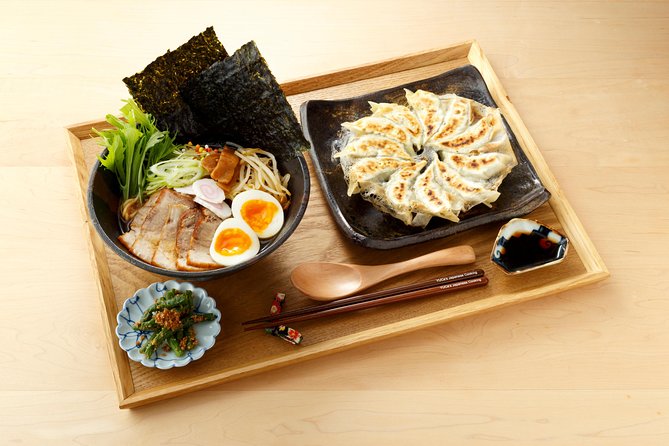
You learn how different vegetables and meat can be used in the dishes. The class centers on a noodle soup and minced pork gyoza, with attention to the ingredients and basic steps that make each dish come together. The goal is not to turn you into a ramen specialist. It is to give you a usable introduction to a familiar Japanese meal.
One practical strength is the way the cooking is timed. While the ramen ingredients wait or cook, the group works on gyoza. This gives the morning a natural rhythm and keeps children and adults involved instead of leaving everyone standing around waiting for broth.
At the end, you assemble your ramen bowl and eat what you made. That final meal is more than a reward. It lets you see how the separate ingredients, seasoning, noodles, and toppings fit together. Several people have found the finished food delicious, and one especially useful sign is how often participants say they plan to recreate it at home.
Still, keep your expectations sensible. The menu is simple ramen and gyoza, not a sprawling tasting menu. One person found the portions a little small. If you arrive very hungry, consider that the class is a food lesson with lunch included, not an all-day eating event.
Folding gyoza is the most tactile part
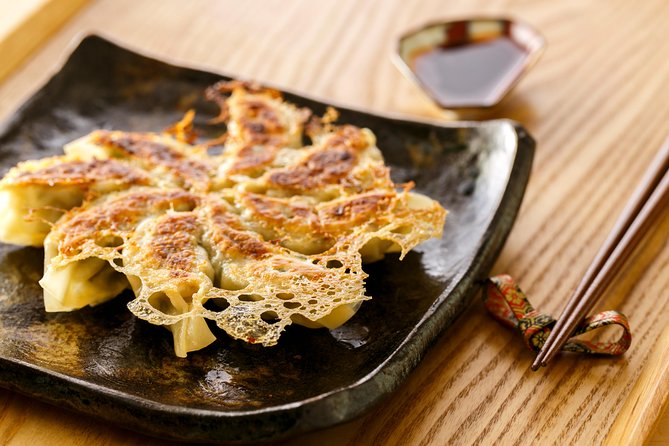
The gyoza portion is likely to provide the clearest hands-on activity. You work with the filling and wrappers, learning how to shape the dumplings by hand. For children, this can be the most enjoyable part because it feels like making something rather than simply watching a demonstration.
The dumplings also show how Japanese cooking often depends on small, repeatable techniques. A neatly folded gyoza is satisfying, but the lesson is not about producing perfect restaurant shapes. It is about learning a method you can try again in your own kitchen.
The class suits non-cooks as well as enthusiastic home cooks. You do not need to arrive with advanced knife skills or experience making dough. YUCa’s instructions are described as easy to follow, and her patient teaching style helps keep the atmosphere relaxed when a first dumpling looks more like a tiny pouch than a crescent.
Because the class is social, you also share the process with the other participants. People often attend as couples, families, or small groups, but the setting allows you to meet others from different countries. That social element is part of the value, especially if you are spending much of your Japan trip with only your own group.
A few more cooking classes around Tokyo worth a look
- Tokyo: Wagyu and 7 Japanese Dishes Cooking Class
★ 4.9 · 273 reviews - Tokyo Washoku 4-hour Cooking Class: From Market to Table
★ 5.0 · 253 reviews - Small-Group Wagyu Beef and 7 Japanese Dishes Tokyo Cooking Class
★ 5.0 · 190 reviews - Private Home Cooking in Yanaka – Local Flavors in a Warm Setting
★ 5.0 · 173 reviews
The optional supermarket tour is useful, but confirm it
From 12:30 to 1 p.m., you may join an optional local supermarket tour. This is one of the best ideas attached to the class because it moves the lesson from the kitchen to the place where Japanese households actually buy food.
A supermarket visit can help you identify ingredients, compare packaging, and ask what unfamiliar items are used for. It also gives you a chance to see a neighborhood outside the usual Tokyo route. Families have enjoyed asking about unusual products, while other participants found the explanations useful for understanding what to buy when cooking Japanese food at home.
There is an important practical warning here. The supermarket visit is optional, and it has not taken place for every booking. In one case, the participant needed to return to a hotel because a family member was ill. Other people also expected a tour and did not receive one, perhaps because of an older description or a scheduling issue.
If the supermarket is a major reason for booking, ask YUCa to confirm the current arrangement before you go. Do not assume that the cooking class automatically guarantees the extra visit. The class itself is the main product, and the supermarket stop should be treated as an added opportunity.
How personal is the home-kitchen setting?
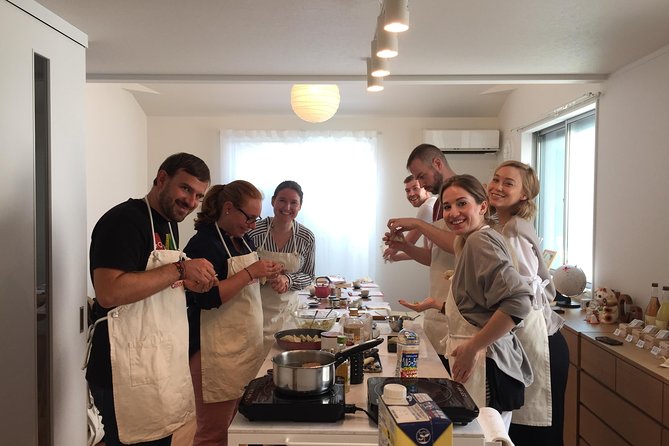
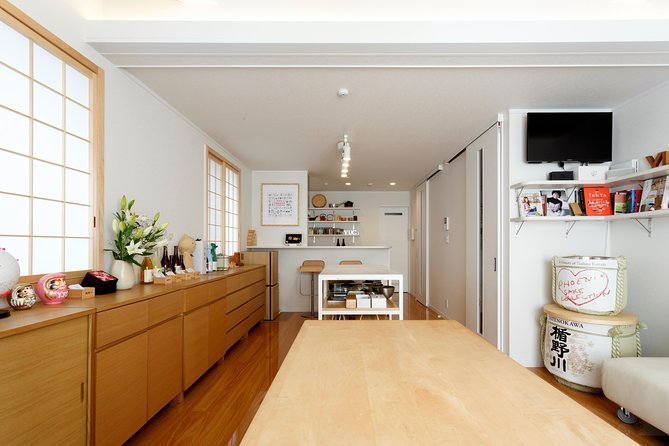
YUCa teaches in her own home and kitchen, which gives the morning a strong sense of place. You see a real domestic cooking space rather than a polished hotel classroom. That can feel more personal and more revealing, especially if you want a glimpse of everyday Japanese life.
The tradeoff is space. A home kitchen is not built like a commercial cooking studio with a separate workbench for every participant. You may spend part of the lesson watching while another person handles a task. Some people appreciate the relaxed demonstration style; others want more individual preparation time.
I would describe the class as participatory rather than fully hands-on. You are not merely seated for a food demonstration, but you also are not independently cooking every component from raw ingredients. That distinction should help you decide if the $122.70 price suits you.
Is $122.70 a fair price?
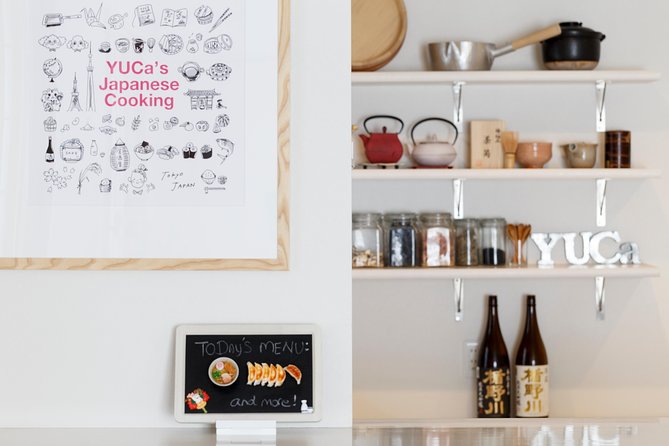
At $122.70 per person, this is not a cheap lunch. You are paying for a roughly two-and-a-half-hour activity, a local teacher, instruction, ingredients, a meal, and the chance to enter a private home in a residential Tokyo neighborhood. The maximum of seven helps justify the cost because the class remains small enough for questions and conversation.
The price makes more sense if you value cultural contact and an activity you can carry home. You leave with a basic understanding of ramen and gyoza, not just a restaurant meal that disappears in an hour. The supermarket visit, when available, adds practical value by showing you where and how to find ingredients.
The value is weaker if your only goal is to eat excellent ramen. Tokyo has plenty of restaurants where you can spend much less. It is also less suitable if you want advanced culinary training or a long list of dishes.
For families, the cost can work well because several generations can participate in one shared activity. For a couple, it offers an easy break from temples, trains, and shopping. For a solo participant, the small group and welcoming teacher help make the morning social rather than awkward.
Who should book this Tokyo class?
I would point this class toward:
- First-time visitors who want a local activity outside central Tokyo
- Families with children or teenagers
- Couples looking for a shared food experience
- Beginners who want recipes they can attempt at home
- English-speaking participants who value clear instruction
- People interested in Japanese supermarkets and home kitchens
- Anyone who prefers a small group to a large cooking school
I would hesitate if you want every ingredient prepared from scratch, an individual work station, or advanced ramen technique. I would also think twice if the supermarket visit is your main reason for booking and you cannot confirm that it will happen.
Dietary needs should be provided when booking. A vegetarian option is available, but you should say so in advance rather than hoping it can be arranged on the day.
The small details that improve the morning
The class starts at 10 a.m., so check your route carefully and leave room for Tokyo’s confusing station exits and residential lanes. The activity ends at the same meeting point, which makes it easy to continue exploring afterward, though the exact next stop is up to you.
The experience accepts mobile tickets and provides booking confirmation at the time of reservation. Cancellation is free up to 24 hours before the start time. After that, refunds and changes are not accepted. The class also requires at least two participants, so a cancellation caused by the minimum not being met would result in another date or a full refund.
One small bonus is that YUCa offers items such as aprons, tea, and sake for purchase. These are not the reason to book, but they may appeal if you want a practical souvenir connected to the morning.
Final verdict: book it for the welcome, not just the food
I would book YUCa’s ramen and gyoza class if I wanted a friendly, personal morning with food at its center. The best parts are YUCa’s warmth, the home-kitchen setting, the chance to fold gyoza, and the simple recipes you can try after returning home.
Go in knowing that the lesson mixes demonstration with participation. Confirm the optional supermarket visit if it matters to you, and do not expect a professional cooking school or giant lunch. For families, couples, beginners, and anyone curious about ordinary Tokyo life, this is a thoughtful use of a morning and a pleasant way to get beyond the standard sightseeing circuit.
FAQ
Where does the ramen and gyoza class take place?
It takes place at YUCa’s Japanese Cooking, 2-chōme-34-8 Nishiogu, Arakawa City, Tokyo 116-0011, Japan.
What time does the class start?
The meeting time is 10 a.m.
How long does the cooking experience last?
The full experience takes approximately two and a half hours, with the main cooking and tasting session running from 10:30 a.m. to 12:30 p.m. An optional supermarket tour may continue until 1 p.m.
What dishes will I make?
You will learn to prepare ramen and gyoza, including minced pork dumplings and ramen made with vegetables and meat.
Is the class vegetarian-friendly?
Yes. A vegetarian option is available, but you must advise the provider of this dietary requirement when booking.
How many people can join the class?
The maximum group size is seven participants.
Is there a minimum number of people required?
Yes. A minimum of two people per booking is required.
Is the supermarket tour included?
The supermarket tour is optional and is scheduled from 12:30 to 1 p.m. Because it has not taken place for every booking, confirm the current arrangement if it is important to you.
Does the class end at the meeting point?
Yes. The activity ends back at the original meeting point.
Can I cancel for a refund?
You can cancel at least 24 hours before the experience start time for a full refund. Cancellations or changes made less than 24 hours before the start time are not accepted for a refund.
Just added around Tokyo
- Tokyo: Sushi Cooking Class with Sake Tasting★ 4.8 · 55 reviews
- Tokyo: Sushi roll and side dish cooking experience★ 5.0 · 2 reviews
- Tokyo: Sushi Making Experience & Japanese Cooking Class★ 5.0 · 2 reviews
- Tokyo: Gyoza Making from Scratch – Ultimate Cooking Class★ 5.0 · 2 reviews
- Tokyo: Night Cooking Class: 5 Home-Cooked Japanese Dishes★ 4.9 · 13 reviews
- Tokyo: Real Ramen & Dumpling Cooking with Master Chef★ 5.0 · 10 reviews
- Tokyo: Kawaii Bento Cooking Class – Cute Character Lunchbox★ 4.9 · 55 reviews
- Tokyo: Sushi and Ramen Cooking Class with Sake Pairing Set★ 5.0 · 81 reviews
Japanese & Sushi Cooking Classes, compared.
Ramen Cooking Class at Ramen Factory in Kyoto
Read our review →
Ramen Cooking Class at a Ramen Factory with Souvenir
Read our review →
Sushi Making Osaka! Popular Sushi Class in Japan!
Read our review →
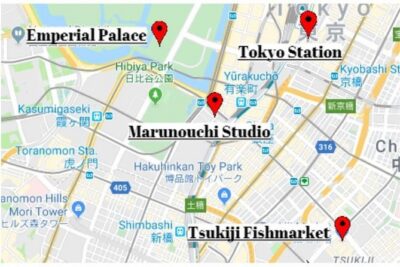
Tokyo Tsukiji Fish Market Tour and Sushi Making Lesson
Read our review →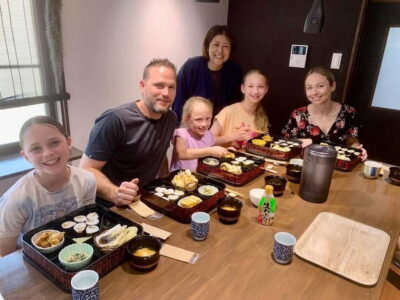
Japanese Washoku Bento Small Group Cooking Class
Read our review →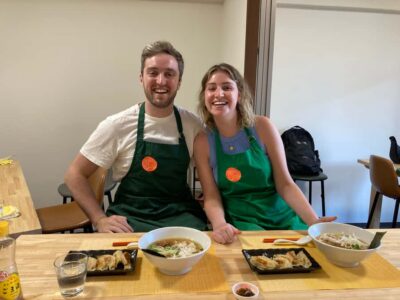
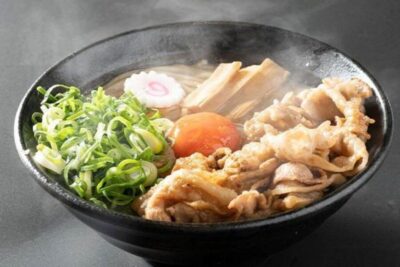
Easy Ramen Cooking Experience in Kabukicho, Shinjuku
Read our review →Lists this class appears in