REVIEW · MARRAKESH-SAFI, MOROCCO
Moroccan Cooking Class: Farm-to-Table Tagine
Leave the medina behind for lunch. This three-hour cooking class takes you from central Marrakech to a family-run farm, where you prepare Moroccan tagine with fresh ingredients, walk among olive and citrus trees, and eat beside the open fire. I like the peaceful farm setting and the fact that you do real cooking instead of simply watching a demonstration. I also like the warm, personal teaching from instructors such as Hanna and her family.
The main drawback is that this is not a city-center class. You need to meet in front of Hotel Ali and allow time for the drive out and back. The farm is not suitable for wheelchair users or pregnant women, and much of the visit takes place outdoors, so sun, heat, and uneven walking areas may affect your comfort.
Key points at a glance
- A real farm setting: Cook among olive, lemon, orange, and clementine trees rather than inside a restaurant kitchen.
- Two tagines are possible: Several sessions include both chicken and vegetarian tagines, making this especially useful for families or mixed diets.
- Hanna brings the class to life: Her patient, friendly teaching includes cooking tips, Moroccan food traditions, and a good sense of humor.
- More than a cooking lesson: You may walk through the gardens, meet horses, donkeys, sheep, and peacocks, and see a working horse farm.
- Lunch is included: Eat the tagine you prepared with bread, salads, olives, fruit, and local side dishes.
- Good value for a half-day outing: At $94 per person, the price covers transport, instruction, ingredients, the farm visit, tastings, and lunch.
From Hotel Ali to the countryside
The meeting point is in front of Hotel Ali, a central spot in Marrakech. You should arrive 15 minutes before the scheduled start. This matters because the area can be busy, and the pickup vehicle may not be immediately obvious in the crowd.
Transportation to and from the farm is included. Past pickups have been described as prompt and easy, with drivers such as Abdo helping visitors from the hotel area to the farm and, in some cases, dropping them near their riad afterward. Still, I would confirm the pickup details before the morning of your class, especially if your phone has limited mobile service.
The drive is part of the change in mood. Marrakech can be noisy and tightly packed, while the farm offers open air, trees, animals, and a slower pace. You are not signing up for a long excursion, but the transfer gives this activity a useful contrast to souks, palaces, and busy streets.
The total experience lasts about three hours. That includes the welcome, cooking, farm walk, tastings, and lunch. The timing is long enough to feel substantial, but short enough to fit into a morning or afternoon in Marrakech.
More Farm Cooking Classes in Morocco
- Marrakech: Authentic Moroccan Cooking Class in a Farm
★ 4.8 · 8 reviews - Cooking Classes Farm to Table Marrakech
★ 5.0 · 165 reviews - Organic Moroccan Cooking Class At Secret Berber Garden CT
★ 5.0 · 147 reviews
Mint tea beneath the olive trees
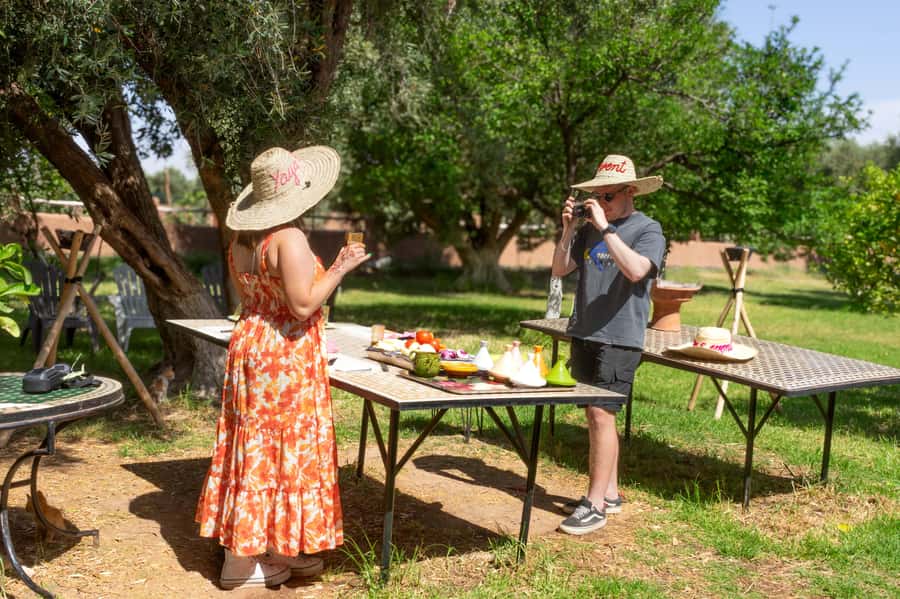
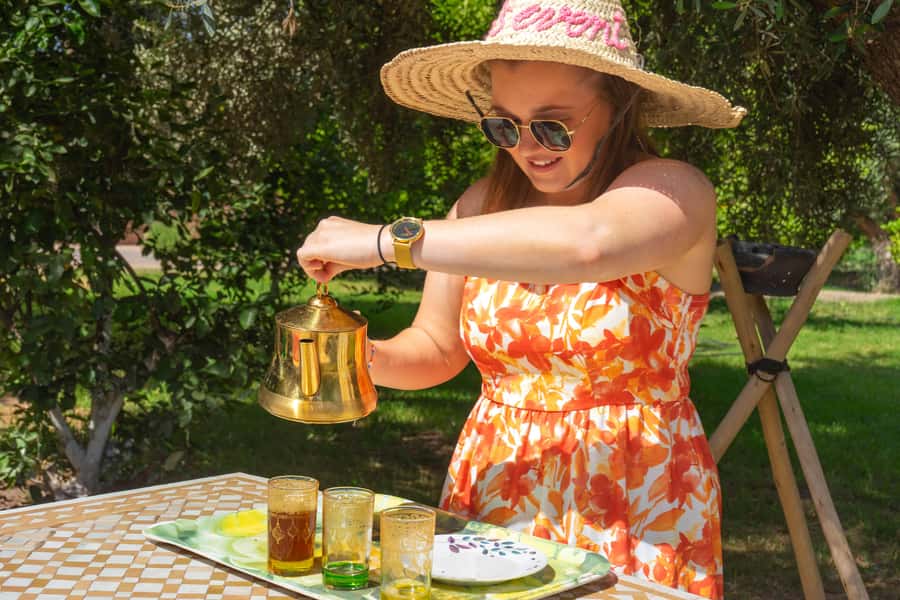
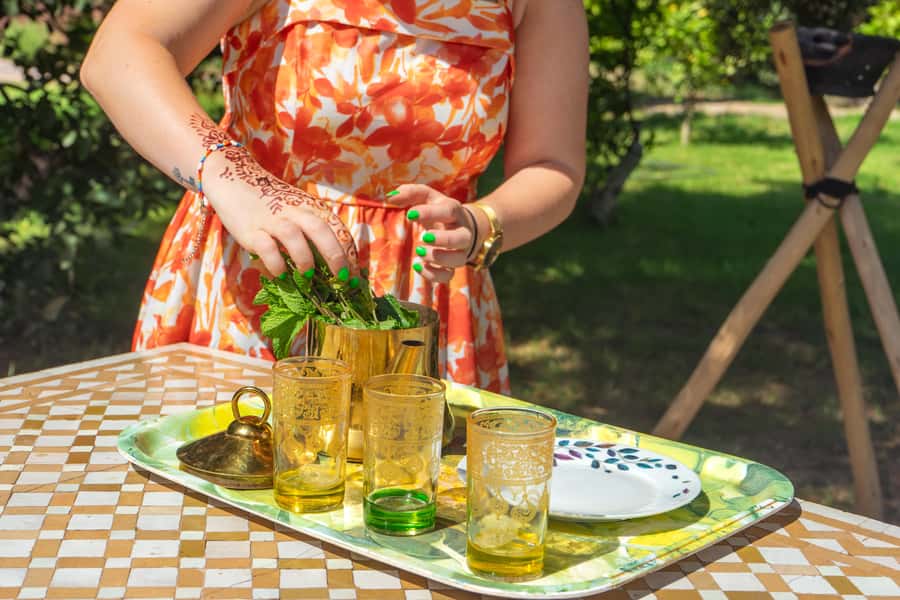
On arrival, you are welcomed with Moroccan mint tea under the olive trees. This first pause is not just a polite greeting. It gives Hanna or another local instructor time to explain the farm, introduce the ingredients, and set the tone for the class.
The setting is one of the strongest parts of the experience. The farm includes olive, lemon, orange, and clementine trees, with gardens and animals nearby. Peacocks may wander through the grounds, and the farm is also connected with racing horses. You might meet horses, donkeys, and sheep during the visit.
That rural setting gives the food a clear sense of place. You are not simply adding spices to a pot in a kitchen designed for tourists. You can see the growing areas, hear about seasonal produce, and understand how a Moroccan family connects food, farming, and daily life.
The farm is also a good break for children. Families with children from about 9 to 16 have found the staff patient and encouraging, and the animals give younger cooks something to enjoy while the tagine cooks. Children still need supervision, particularly around animals and cooking fires.
Preparing tagine from fresh ingredients
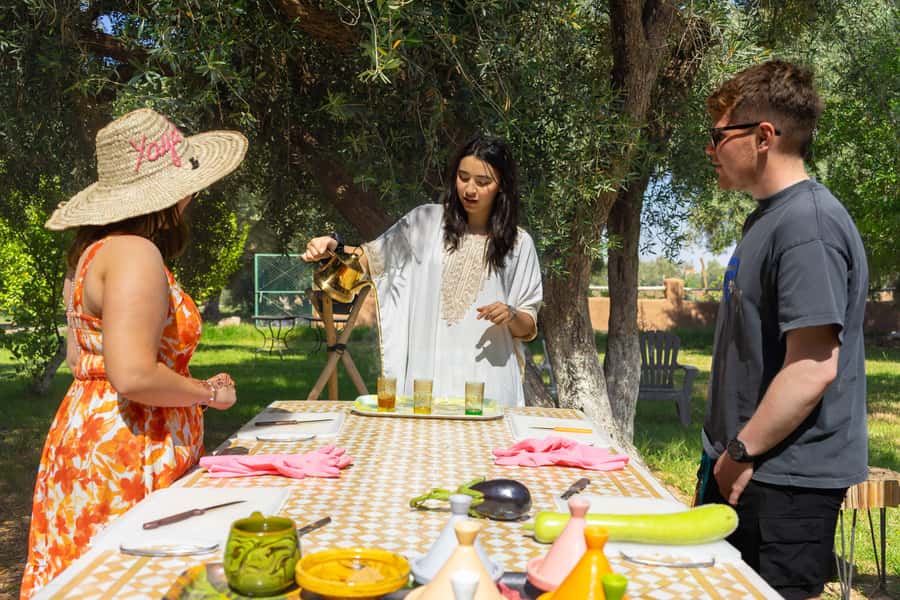
The class begins with the basic building blocks of Moroccan cooking. You select vegetables, prepare the ingredients, and work with spices before layering everything into the tagine. The instructor guides you through each stage, so you do not need prior cooking experience.
The lesson is hands-on. You should expect to chop, season, arrange, and prepare the dish rather than stand at the edge of a demonstration. Hanna has been praised for setting a comfortable pace, explaining each step clearly, and helping both adults and children take part.
Several sessions prepare two tagines, often one chicken and one vegetarian. This is a useful arrangement for a group with different tastes, and it lets you compare how the same cooking method works with different ingredients. Vegetarian needs and allergies have also been accommodated when discussed in advance.
The cooking style is simple but careful. Tagine is not about rushing ingredients into a pot. Flavor develops through the order of preparation, the spice mixture, and slow cooking over heat. You learn why the dish is assembled in layers and how fresh vegetables can carry the meal without heavy sauces.
The open-fire setup adds atmosphere, but it also means you should dress sensibly. Wear comfortable clothes and shoes that can handle a walk around the farm. Avoid anything you would worry about near smoke, soil, or cooking splashes.
A farm walk while the tagine cooks
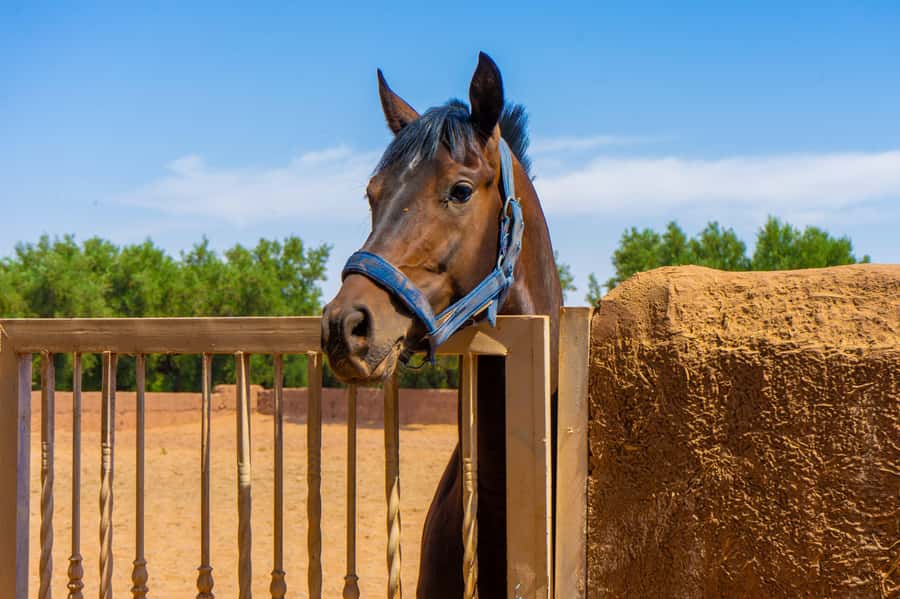
Once your dish is cooking, you have time to explore the property. This is when the class becomes more than a meal lesson. You can walk through the organic gardens, see where some of the produce grows, and learn about the seasonal crops used in the cooking.
The farm walk is not a formal sightseeing tour with a long list of monuments. Its appeal is quieter. You see working agricultural spaces, trees, livestock, and the everyday relationship between land and food. The horse farm adds another unusual feature, especially if you enjoy animals.
The animals are part of the charm, but this is still a working farm. Conditions may be sunny, dusty, or uneven underfoot. Bring a hat, sunscreen, and water. A camera is worthwhile, particularly for the gardens, trees, horses, and peacocks.
This pause also gives the tagine time to cook without making you sit at the table and wait. You can talk with the family, ask about Moroccan ingredients, and watch the farm at a relaxed pace. The experience feels less rigid than a standard class divided into exact timed stations.
More Moroccan Cooking Classes in Marrakesh:
- Marrakech: Moroccan Cooking Class with Pickup
★ 4.6 · 1,862 reviews - Marrakech: Traditional Moroccan Cooking Class & Market Visit
★ 4.8 · 1,861 reviews - Marrakesh: Moroccan Dishes Cooking Class with a Local Chef
★ 5.0 · 1,615 reviews - Marrakech: Moroccan Cooking Class with a Local Family
★ 4.9 · 668 reviews
Bread, olive oil, salads, and local sides
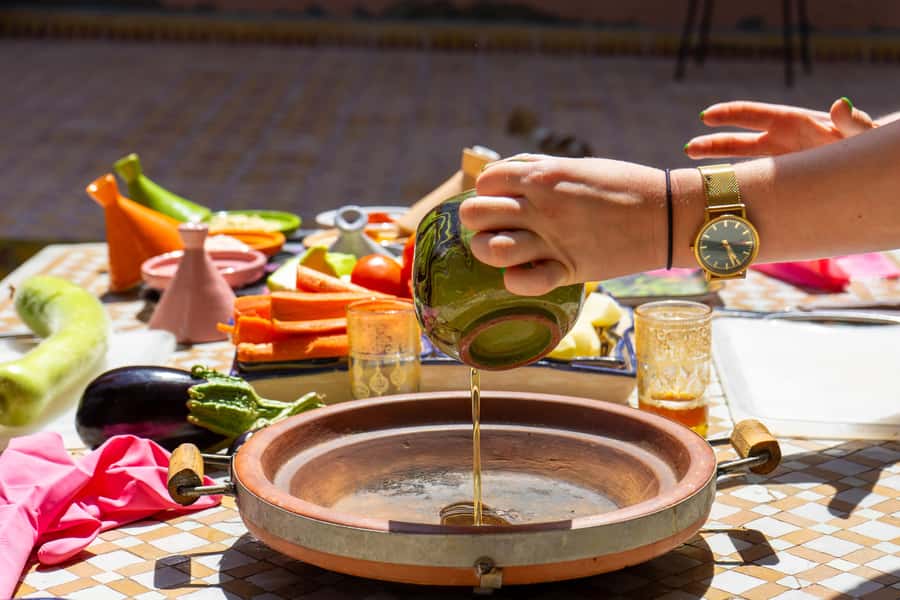
The food begins before the main dish reaches the table. You taste homemade bread with olive oil and sample local side dishes. These simple items help explain how Moroccan meals are commonly shared, with bread used to scoop food and several small accompaniments adding contrast.
Fresh salads, olives, and fruit are served with the tagine. That keeps lunch from being only one heavy dish. The meal is communal, so you sit with your group and share the food prepared during the class.
I like this format because the meal has a clear connection to the work you have just done. You prepared the tagine, watched it cook, and then eat it at the farm table. It is more satisfying than receiving a ready-made plate after a short cooking display.
The quality of the meal depends on the day’s produce and the instructor’s preparation, but the ingredients are described as fresh and organic, with vegetables grown on the property. The result is intended to be eaten soon after cooking, not packed away for later.
Eating the tagine you made
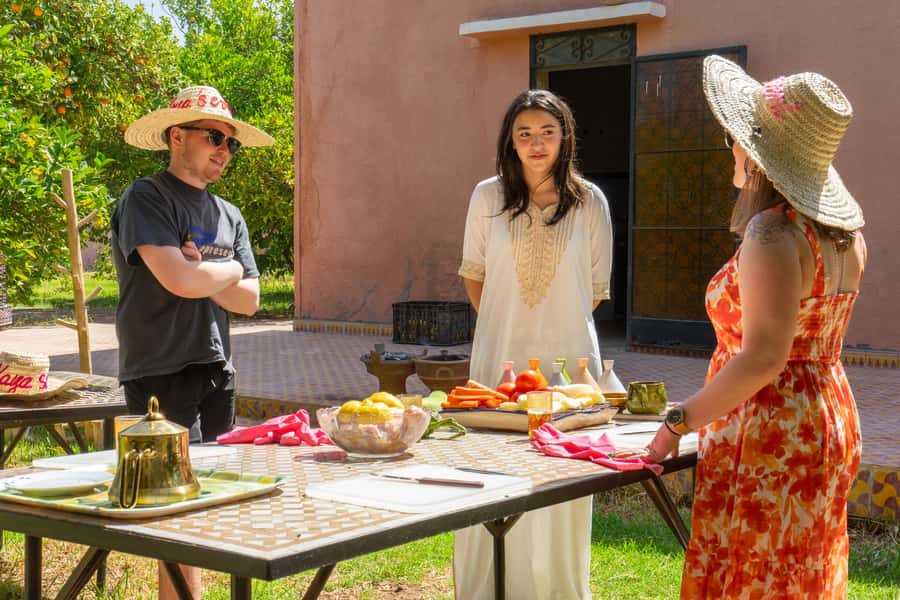
The final meal is the payoff. Your tagine is brought to the communal table with bread, side dishes, salads, olives, and fruit. Since you took part in preparing it, the meal also becomes a practical test of what you learned.
The class works particularly well for people who want recipes they can repeat at home. Hanna has provided recipes for the tagines prepared during the session, along with additional ideas in some cases. That gives you a useful souvenir that does not take up space in your suitcase.
Do not expect every homemade tagine to taste exactly the same once you return home. You may use a different cooking vessel, different vegetables, or a different heat source. Still, the method is approachable, and the class gives you a strong starting point for making the dish again.
The meal is also flexible enough for mixed groups. A meat eater can enjoy chicken tagine while a vegetarian prepares a vegetable version. If you have an allergy, tell the provider ahead of time rather than waiting until the cooking begins.
What the $94 price really covers
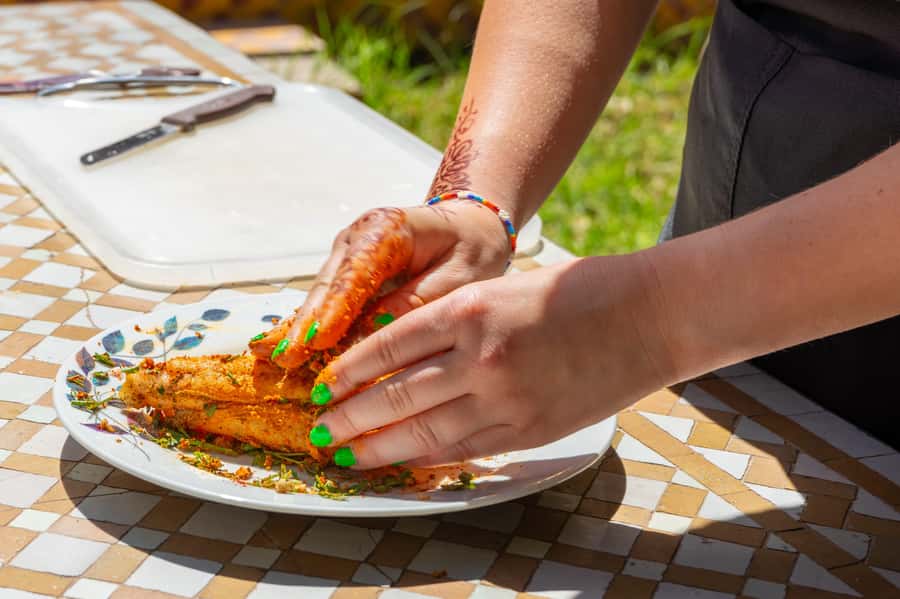
At $94 per person, this is not the cheapest way to eat lunch in Marrakech. You can find a meal in the city for far less. The value here comes from the complete package: round-trip transportation, a local instructor, fresh ingredients, hands-on instruction, a farm walk, tastings, and lunch.
You are also paying for time and access. The farm setting offers something you cannot get from a restaurant meal, and the class connects the food with the place where some of it is grown. For visitors who want a cultural activity outside the medina, that added context makes the price easier to justify.
The value is strongest for private groups, couples, and families who enjoy personal attention. Private or small-group arrangements are available, and smaller numbers can make it easier to ask questions or adjust the menu.
If you only want to taste tagine, skip the class and spend your money on a meal in town. If you want to learn a recipe, meet a local family, see rural life, and enjoy a calm half-day outside Marrakech, the cost is reasonable.
Who will enjoy this class most
I would recommend this experience to food-focused visitors, families, couples, and anyone who needs a break from the city. It suits curious cooks who want to understand Moroccan flavors through practice rather than through a lecture.
It is also a good choice if you have already spent time visiting Marrakech’s major sights and want a different view of the region. The farm, gardens, animals, and open-fire cooking provide a change of pace without requiring a full-day trip.
Children can take part, and the instructors are used to giving them patient guidance. Families should still consider the outdoor conditions and the need for comfortable walking shoes.
The class is less suitable for anyone with limited mobility, since it includes walking around a farm and is specifically not suitable for wheelchair users. It is also not recommended for pregnant women. Smoking and pets are not allowed.
Practical tips for a smoother visit
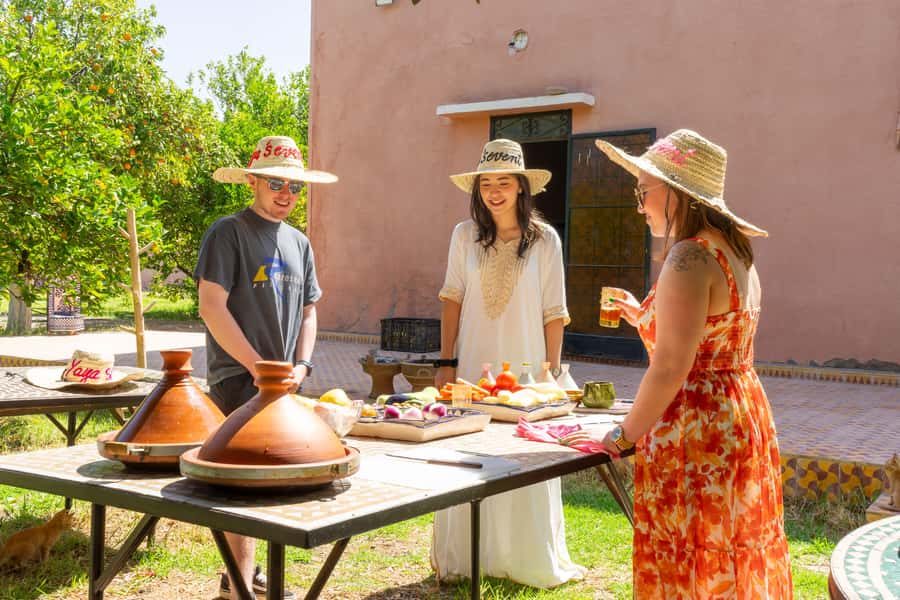
Wear light, comfortable clothing that you do not mind wearing outdoors. Shoes should be suitable for walking around gardens and farm paths, and a hat is useful even if the weather looks mild at the start.
Bring sunscreen and a water bottle. The farm offers shade beneath the trees, but you will also spend time outside while walking and cooking. A camera can capture the setting, though you should keep it out of the way during food preparation.
Arrive 15 minutes early at Hotel Ali. If you do not have reliable mobile data, make sure you know the vehicle and pickup instructions before leaving your accommodation. The meeting point is central, but the area can be confusing when several vehicles and people are moving around.
The class is offered in English and French. Hanna and the other instructors are praised for being friendly, clear, and patient, but you should still explain dietary needs before the class begins. Small groups and private arrangements are available, which can make the experience easier for families or guests with specific food requirements.
Free cancellation is available up to 24 hours before the activity, and you can reserve now and pay later. Those terms are useful if your Marrakech schedule is still changing.
Should you book the farm-to-table tagine class?
Book it if you want more than a plate of Moroccan food. You will cook from scratch, eat what you prepare, see a working farm, and spend time with local instructors in a calm setting outside Marrakech.
I would especially choose it for a family, a couple, or a small group that values personal attention. The mix of two tagines, farm animals, fresh produce, and a shared lunch gives the three hours plenty of variety.
Skip it if you dislike outdoor cooking, cannot manage uneven walking, or would rather spend your limited time inside Marrakech. For everyone else, the $94 price is fair for a personal food lesson, transport, and a full farm visit. The best souvenir may be the recipe you use at home, but the quiet afternoon under the olive trees will stay with you too.
FAQ
Where does the cooking class meet?
The meeting point is in front of Hotel Ali in Marrakech.
How long does the experience last?
The cooking class and farm visit last about three hours.
What language is the class offered in?
The experience is offered in English and French.
Is transportation included?
Yes. Transportation to and from the farm is included.
What food is included?
You prepare a Moroccan tagine and eat it for lunch with homemade bread, olive oil, local side dishes, salads, olives, and fruit.
Can I prepare a vegetarian tagine?
Yes. Sessions may include both vegetarian and chicken tagines, and vegetarian needs can be accommodated.
Can children take part?
Yes. Families with children have taken part, and the instructors provide patient guidance. Children should be supervised around the cooking area and farm animals.
What should I bring?
Bring a hat, sunscreen, water, comfortable clothing, suitable walking shoes, and a camera if you want photos.
Is the activity suitable for wheelchair users or pregnant women?
No. The activity is not suitable for wheelchair users or pregnant women.
More Farm Cooking Classes in Marrakesh
- Half-Day Thai Cooking Class at Organic Farm in Chiang Mai
★ 5.0 · 19,087 reviews - Cooking Class and Lunch at a Tuscan Farmhouse with Local Market Tour from Florence
★ 5.0 · 4,831 reviews - Chiang Mai: Authentic Cooking Class with Market & Farm Visit
★ 4.9 · 4,546 reviews - Ubud: Balinese Cooking Class at an Organic Farm
★ 5.0 · 1,786 reviews
Just added around Marrakesh
- Moroccan Food Cooking Class with a Local Chef in Marrakech★ 4.7 · 90 reviews
- Marrakech: 3-Hour Open-Air Moroccan Cooking Course★ 4.9 · 74 reviews
- Moroccan cooking class in Marrakech with berber chef★ 5.0 · 16 reviews
- Edgy 8 Dish Private, Fusion Cooking Class, Menu Plan, Market★ 4.9 · 31 reviews
- Marrakech: Moroccan Cooking Class with Local Chef★ 4.6 · 87 reviews
- Marrakesh: Private Cooking Class & Local Market Shopping★ 4.7 · 15 reviews
- Marrakech: Authentic Moroccan Cooking Class in a Farm★ 4.8 · 8 reviews
- Marrakech: Moroccan Cooking Class with Amazing Local Chef!★ 4.9 · 100 reviews
Farm & Countryside Cooking Classes, compared.
Half-Day Thai Cooking Class at Organic Farm in Chiang Mai
Read our review →
Cooking Class and Lunch at a Tuscan Farmhouse with Local Market Tour from Florence
Read our review →
Authentic Cooking Class with Market & Farm Visit
Read our review →