
REVIEW · HONSHU, JAPAN
Japanese Knife Skills & Tuna Don/Sushi Workshop in Tokyo
Sharp knives, fresh tuna, and a proper lunch. This two-hour Tokyo workshop combines Japanese knife culture with hands-on sashimi cutting and a choice of tuna zuke don or a 10-piece sushi set. I like the small group of no more than eight people, which gives you room to ask questions, and I like that the class ends with a real meal rather than a few tiny samples.
The strongest part is the practical work. You watch an expert slice sashimi, then handle the knife yourself. The lesson also covers whetstone sharpening, so you leave with a useful skill rather than only a pleasant memory. The main drawback is the price: at $127 per person, this costs more than a basic cooking class, and the two-hour schedule moves at a brisk pace.
The meeting point is easy to recognize by the samurai-style murals painted on the building. The class is offered in English and Japanese, and the included sake, miso soup, certificate, costume rental, and shop discount add value. Still, this is not a good choice for children under 12 or anyone with food allergies.
Key points before you book
- Sashimi cutting is the heart of the class: You watch a knife skills performance, then slice fresh fish yourself under guidance.
- You learn whetstone sharpening: The lesson explains how to keep a Japanese blade properly sharp, not simply how to use it.
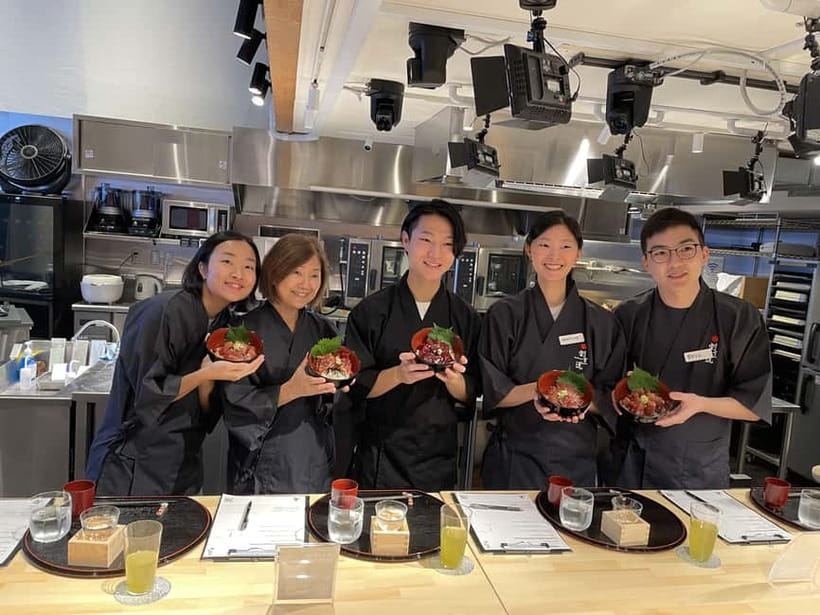
- You choose your finished dish: Prepare a tuna zuke don rice bowl or a 10-piece sushi set, depending on the class format available.
- The meal is generous: Your dish comes with miso soup, sake, and green tea, turning the lesson into a proper lunch.
- The group stays small: With a maximum of eight participants, instruction should feel more personal than in a large demonstration class.
- You receive useful extras: A participation certificate and 10 percent off purchases at the first-floor shop are included on the same day.
Why this Tokyo knife class is different
Many cooking classes focus on recipes. This one begins with the tool itself. Japanese knives are prized for their sharpness and careful construction, and the opening lesson explains how these blades are made and why different knives suit different jobs.
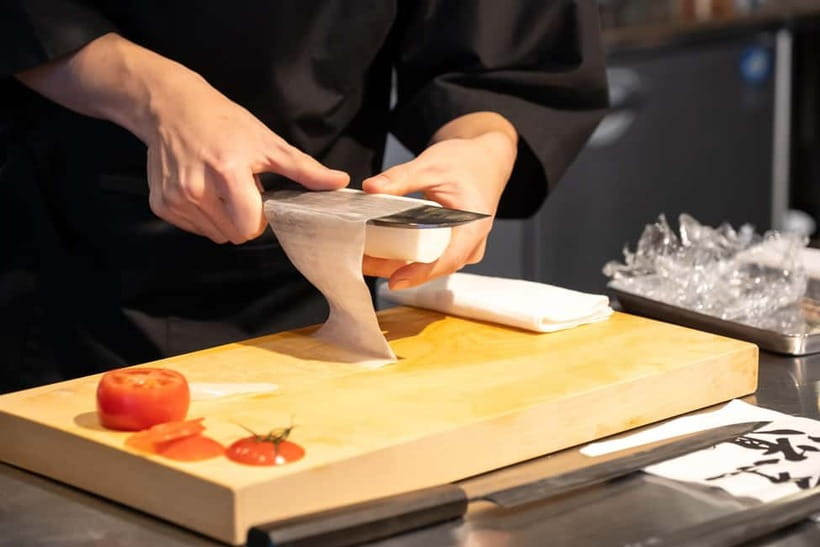
That matters because sashimi cutting is not just a matter of pressing a blade through fish. The angle, pressure, and length of the cut all affect the texture and appearance of the slice. You get a better sense of Japanese food preparation when the instructor connects the knife to the final dish.
I also appreciate the balance between watching and doing. A knife skills performance lets you see the clean movement first. Then you get your own chance to work with sashimi. That practical step is where the lesson becomes useful. You are not simply told that Japanese knives are sharp. You feel the difference in your own hand.
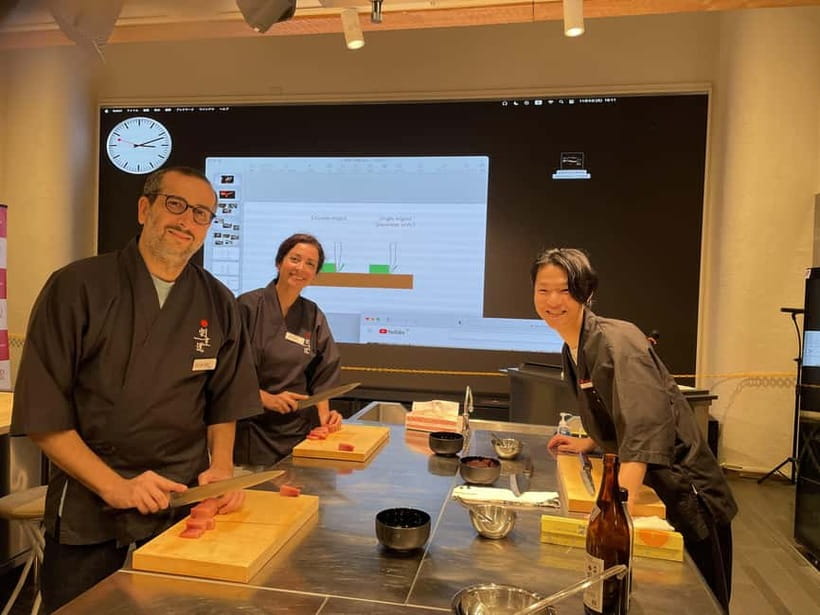
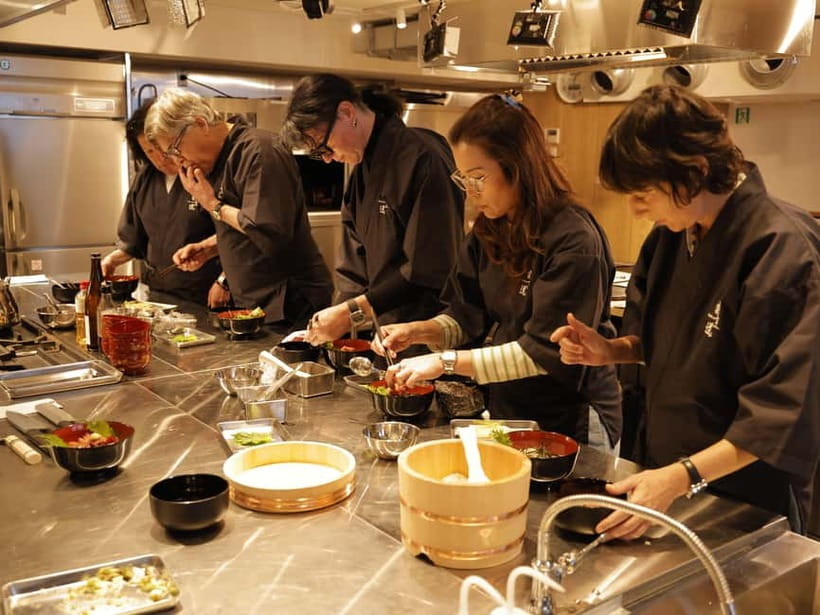
The class is held in a small group limited to eight people. That is a meaningful number here. Knife work requires close attention, and beginners may need to ask about grip, cutting direction, or how much pressure to use. A huge group would make that harder.
More Sushi and Japanese Classes in Tokyo:
- Ramen & Gyoza Cooking Class in Tokyo with Local Supermarket Visit
★ 5.0 · 823 reviews - Tokyo Tsukiji Fish Market Tour and Sushi Making Lesson
★ 5.0 · 390 reviews - Tokyo: Easy Ramen Cooking Experience in Kabukicho, Shinjuku
★ 4.6 · 321 reviews
Finding the building with samurai murals
You are responsible for getting to the meeting point, since transportation is not included. The building is marked by painted samurai-style murals, so look for that visual clue rather than relying only on a street number.
Comfortable clothing is the one clear clothing requirement. Wear something suitable for cooking, with enough freedom of movement to work at a counter. You may also receive a Kappodo costume rental during the workshop, adding a traditional touch to the session.
The class is available in English and Japanese. That makes it workable for English-speaking visitors, but the exact amount of English instruction may depend on the group and the instructor on the day. Since the subject is hands-on, watching the demonstration and following the movement of the knife will also help.
The activity lasts two hours. Arrive ready to focus, because that is enough time for an introduction, demonstrations, practice, food preparation, the meal, and the final presentation, but not enough for a slow, sprawling cooking afternoon.
Learning how Japanese knives are made
The opening section introduces Japanese knife-making and the qualities that set these blades apart. You learn why blade sharpness matters and how Japanese knives are matched to different kinds of food preparation.
This is useful context before you touch the fish. A knife can look simple, but the way it is sharpened and held changes the cut. The class treats the blade as a working tool with a specific purpose, not as a fancy souvenir.
The instructor also introduces knife sharpening techniques. The whetstone portion is especially valuable for anyone who already owns a Japanese knife or plans to buy one in Japan. You are guided through the basic process, with attention to keeping the blade at the right angle.
Do not expect to become a professional sharpener in one short class. Two hours is enough for an introduction and guided practice, not years of mastery. Still, this is one of the best reasons to choose this workshop over a recipe-only class. Sharpening is often the skill home cooks skip, even though a properly maintained knife makes food preparation safer and more controlled.
Watching the sashimi performance
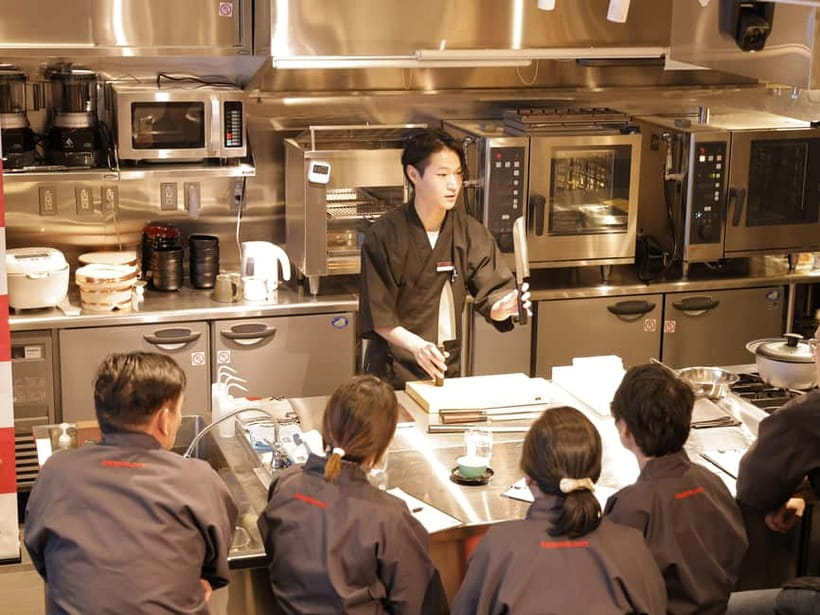
Next comes the knife skills performance. The instructor demonstrates how to slice sashimi, giving you a clear model before you begin.
This is the most visually interesting part of the class. A skilled sashimi cut looks simple because the movement is controlled. You can watch for the long, smooth action of the blade rather than a short sawing motion. The point is not speed. It is precision.
Then you take over and slice the fish yourself. The fish used may vary depending on availability, so you should not assume that every session will use exactly the same species. Tuna is central to the advertised zuke don dish, but the specific fish for sashimi practice can change.
That small uncertainty is worth keeping in mind if you have your heart set on one particular fish. The advantage is that the class reflects real Japanese cooking conditions, where ingredients depend on what is available and fresh.
The practical portion earned particularly strong praise in the available feedback. One participant singled out the chance to cut tuna for sashimi as the most interesting part of the class. Another praised the generous serving of fish and the chance to speak with an expert about sashimi cutting. Those comments point to the workshop’s main strength: it gives you a direct role in the preparation.
Same place, a different thing to cook:
- Ramen and Sushi Cooking Class with Sake Pairing Set in Tokyo
★ 5.0 · 291 reviews - Tokyo: Wagyu and 7 Japanese Dishes Cooking Class
★ 4.9 · 273 reviews - Tokyo Washoku 4-hour Cooking Class: From Market to Table
★ 5.0 · 253 reviews - Small-Group Wagyu Beef and 7 Japanese Dishes Tokyo Cooking Class
★ 5.0 · 190 reviews
Preparing zuke don or a sushi set
After the knife work, you prepare your main dish. The listed lunch is a sashimi zuke don, a rice bowl topped with marinated sashimi. Depending on the class format, you may instead prepare a 10-piece sushi set.
Zuke refers to fish that has been marinated before serving. The marinade gives the sashimi more flavor while keeping the fish at the center of the dish. In a rice bowl, the combination is simple and satisfying: seasoned fish, rice, and the clean texture of properly cut sashimi.
The sushi option gives you a different kind of practice. A 10-piece set lets you work with individual portions rather than placing the fish over a bowl of rice. If you are especially interested in sushi-making, this may be the better format for you. If you want a filling Japanese lunch with less assembly, the zuke don is the natural choice.
The available information names both options, but it does not explain how guests select between them or whether the choice is offered at every session. Check the exact format when you reserve. Either way, ingredients and tools are included, so you do not need to bring cooking equipment.
You also receive a recipe to recreate the dish at home. That makes the lesson more useful after your trip. The recipe will not replace the instructor’s guidance, but it gives you a starting point for trying the meal again with ingredients available to you.
Sitting down for a proper Japanese lunch
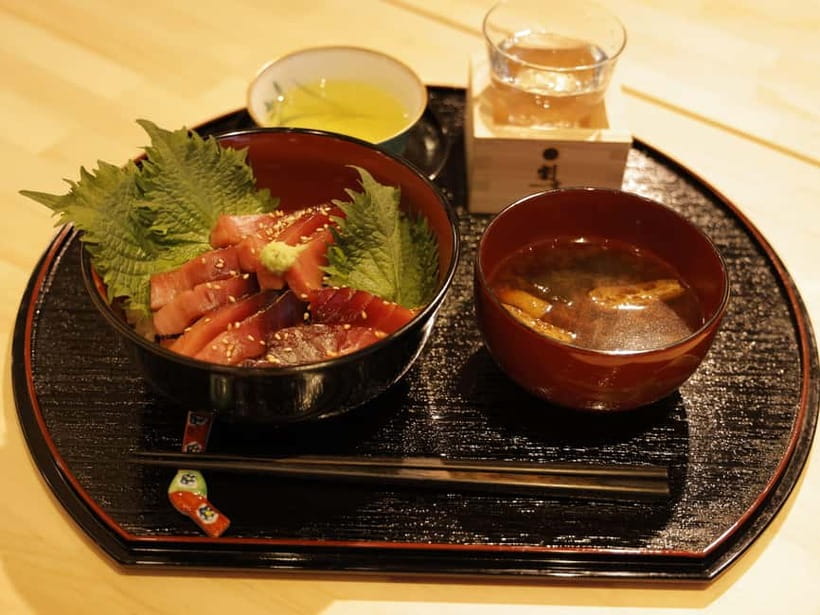
The food is not an afterthought. Your finished dish is served with miso soup, and the experience includes sake and green tea.
The meal appears to be a generous part of the class. One booking described the serving as a substantial portion of fish, soup, and sake. That is important at $127. You are paying for instruction, ingredients, tools, and a meal, not only for a demonstration.
The sake is described as an original tasting, giving you a small introduction to the drink alongside the food. If you do not drink alcohol, the listing does not explain whether a replacement is available, so ask before booking if that matters to you.
The miso soup helps round out the lunch. It also gives you a familiar example of how Japanese meals balance a main item with a warm, savory side. Green tea is included as well, making the meal feel more complete.
Food quality is another praised point. One French-language booking described the fish as first-rate and the atmosphere as warm and friendly. That matches the purpose of the class: you prepare the food yourself, then have time to enjoy it at the table.
What the $127 price really includes
At $127 per person, this is not a bargain cooking lesson. It is a compact cultural and food experience with several layers of value.
You receive:
- Knife-making instruction
- Knife sharpening guidance
- A live knife skills performance
- Sashimi practice
- A cooking class
- Ingredients and tools
- Kappodo costume rental
- Zuke don or sushi
- Miso soup
- Sake
- Green tea
- A participation certificate
- A recipe for home cooking
- Ten percent off first-floor shop purchases on the same day
The shop discount could matter if you plan to buy a Japanese knife or related item after learning about them. It does not make the class cheap, but it gives you a chance to use your new understanding before making a purchase.
The certificate is a pleasant extra, though it should not be the reason you book. The real value lies in the small-group instruction and the opportunity to practice sashimi cutting. The meal and drinks make the cost easier to justify, especially if you are already planning a food-focused activity in Tokyo.
I would compare this with the price of a good sushi meal plus a separate cooking lesson. Here, the food, instruction, and cultural explanation are combined. If you only want lunch, it is expensive. If you want a hands-on lesson and a meal in one compact session, the price is more reasonable.
Who should book this workshop
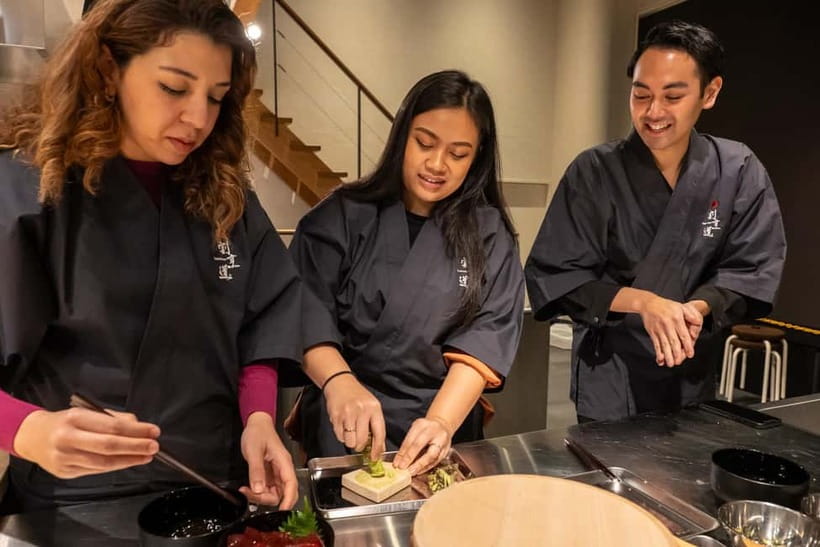
This class suits food lovers who want more than a market visit or restaurant meal. It is also a good match for home cooks who already use Japanese knives or hope to buy one and want to understand sharpening and proper handling.
Sushi fans will enjoy the chance to work with sashimi directly. The class also fits curious beginners, since you are shown the technique before trying it yourself. You do not need to arrive as a chef.
The small group is helpful for anyone who values questions and personal correction. A group of eight is still large enough for a social setting, but small enough that the activity should not feel like a stage show viewed from the back of a room.
This is not suitable for children under 12. It is also not suitable for people with food allergies, according to the activity information. Fish availability can vary, so anyone with strict dietary needs should not assume that substitutions will be possible.
The two-hour length makes it easy to fit into a Tokyo day. You can schedule it as a food-focused lunch activity, but leave enough time around it for getting to the meeting point and continuing to your next stop.
What the feedback tells you
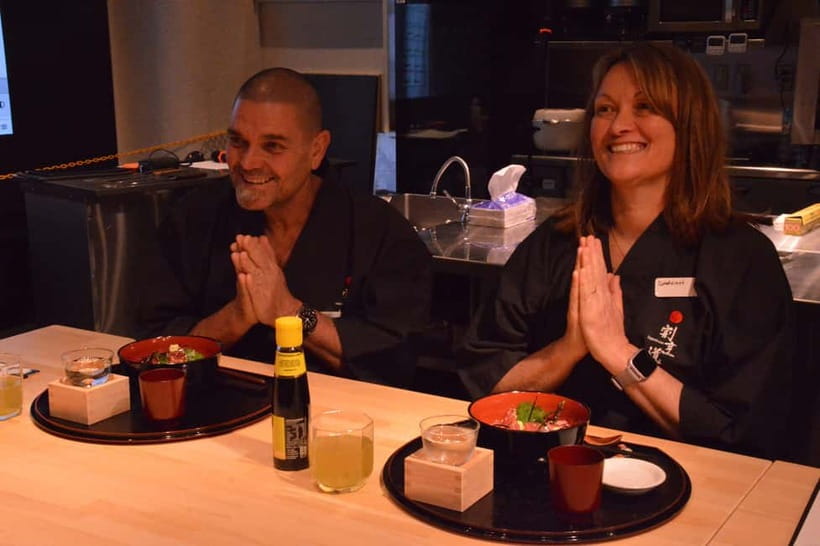
The experience has received three five-star ratings, with praise focused on the same basic strengths.
The most repeated compliment is the practical sashimi work. You are not kept at a distance from the food. You handle the tuna or other available fish and learn how the knife behaves in your own hands.
The food receives strong approval too. One participant specifically praised the generous portion of fish, soup, and sake. Another described the fish as excellent and the workshop as professional and complete.
The atmosphere also receives positive attention. The class is described as warm and friendly, which matters when you are learning a skill that can feel intimidating at first. Knife work is easier when the tone is calm and encouraging.
The feedback does not point to a specific instructor by name, so you should not expect to request one. The class is run by the Japanese Kappodo Association, with instruction in English and Japanese.
Booking details worth knowing
You can cancel up to 24 hours before the activity for a full refund. A reserve-now, pay-later option is also available, which helps if your Tokyo schedule is still changing.
The activity has set starting times, so check availability before you build the rest of your day around it. Transportation to and from the workshop is not included, and personal expenses are your responsibility.
Bring comfortable clothes suitable for cooking. The Kappodo costume rental is included, but the clothing underneath still needs to be practical.
The meeting point is identified by the samurai murals. Since the activity takes place in Tokyo and the address is not supplied here, confirm the exact meeting details when booking rather than relying only on the mural description.
Should you book the knife and sushi workshop?
I would book it if you want a hands-on food lesson with a full meal, especially if Japanese knives, sashimi, or sushi already interest you. The strongest value comes from the combination of knife culture, sharpening, guided cutting, cooking, and lunch in a small group.
I would skip it if you only want a quick sushi meal, have food allergies, or dislike handling raw fish. The $127 price also requires a real interest in the subject.
For the right person, this is a smart Tokyo splurge. You leave with a recipe, a certificate, new knife skills, and a better understanding of why Japanese food preparation places so much care on the blade.
FAQ
How long does the Japanese knife and sushi workshop last?
The workshop lasts two hours.
How much does the experience cost?
The listed price is $127 per person.
What languages are available?
Instruction is available in English and Japanese.
How many people can join the class?
The group is limited to eight participants.
What food will I prepare?
You will prepare either a tuna zuke don rice bowl or a 10-piece sushi set, depending on the class format available. Fish used in the activity can vary with availability.
Is a meal included?
Yes. The meal includes your prepared zuke don or sushi, miso soup, sake, and green tea.
Are ingredients and cooking tools provided?
Yes. Ingredients and tools are included.
What should I wear?
Wear comfortable clothes suitable for cooking. A Kappodo costume rental is included.
Is the workshop suitable for children or people with food allergies?
The activity is not suitable for children under 12 or for people with food allergies.
Just added around Tokyo
- Tokyo: Sushi Cooking Class with Sake Tasting★ 4.8 · 55 reviews
- Tokyo: Sushi roll and side dish cooking experience★ 5.0 · 2 reviews
- Tokyo: Sushi Making Experience & Japanese Cooking Class★ 5.0 · 2 reviews
- Tokyo: Gyoza Making from Scratch – Ultimate Cooking Class★ 5.0 · 2 reviews
- Tokyo: Night Cooking Class: 5 Home-Cooked Japanese Dishes★ 4.9 · 13 reviews
- Tokyo: Real Ramen & Dumpling Cooking with Master Chef★ 5.0 · 10 reviews
- Tokyo: Kawaii Bento Cooking Class – Cute Character Lunchbox★ 4.9 · 55 reviews
- Tokyo: Sushi and Ramen Cooking Class with Sake Pairing Set★ 5.0 · 81 reviews
Japanese & Sushi Cooking Classes, compared.
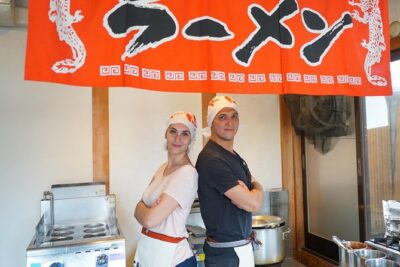
Ramen Cooking Class at Ramen Factory in Kyoto
Read our review →
Ramen & Gyoza Cooking Class in Tokyo with Local Supermarket Visit
Read our review →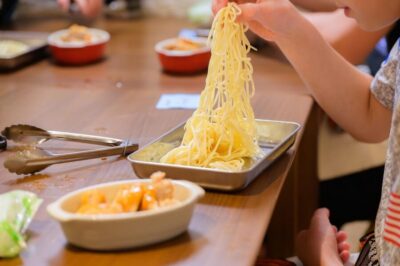
Ramen Cooking Class at a Ramen Factory with Souvenir
Read our review →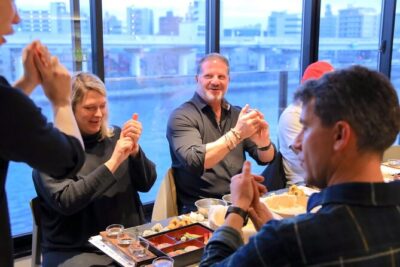
Sushi Making Osaka! Popular Sushi Class in Japan!
Read our review →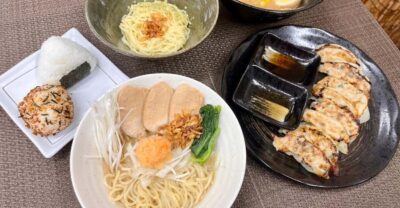
Tokyo Tsukiji Fish Market Tour and Sushi Making Lesson
Read our review →
Japanese Washoku Bento Small Group Cooking Class
Read our review →
Lists this class appears in