
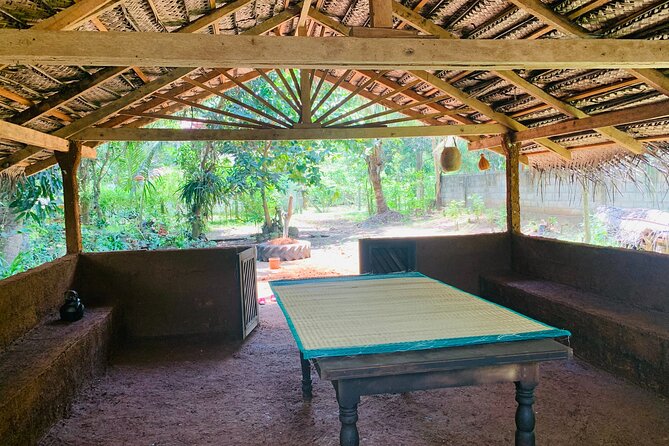
REVIEW · NORTH CENTRAL PROVINCE, SRI LANKA
Hands-On Cooking Class in Anuradhapura: Cook Like a Local
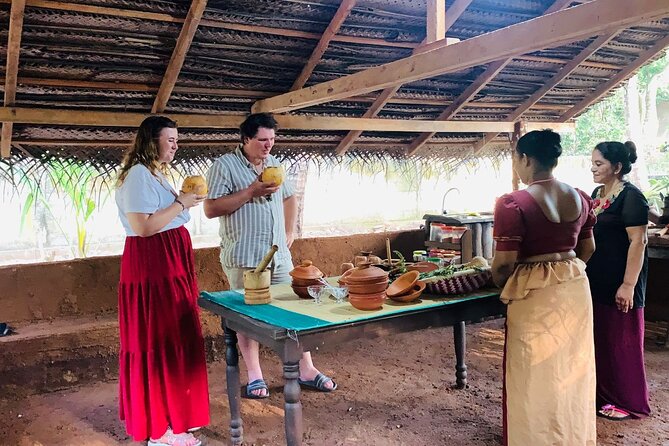
Food tells the story here. This three-hour cooking class in Anuradhapura takes you beyond restaurant meals and into a clay kitchen under a coconut-leaf shelter, where you prepare a full Sri Lankan spread with traditional tools and a wood-fired stove. I like the direct, hands-on format, and I especially like that the class connects each dish to everyday village cooking in the old Rajarata region.
The cooking is the main event, not a short demonstration followed by lunch. You grind spices on a miris gala, scrape coconut with a hiramanaya, pick a coconut from the tree, and cook dishes such as lake fish curry, ambarella curry, banana blossom mallum, pumpkin curry, and coconut sambal. The only real consideration is the rustic setting: heat, smoke, outdoor conditions, and mosquitoes are part of the experience, so bring repellent and expect practical village cooking rather than a polished studio kitchen.
You pay $40 per person for a private three-hour session led in English. That is a fair price if you value instruction, a substantial meal, cultural context, and the chance to use tools you will not find in a standard cooking school. It is less suitable if you want a quick food tasting or air-conditioned comfort.
Key Details Before You Book
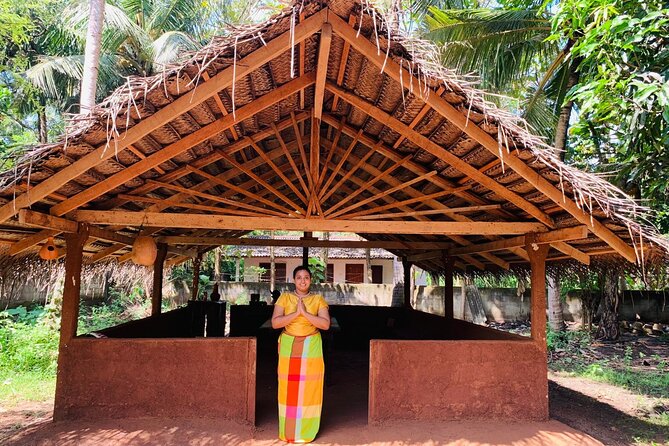
- A clay kitchen in Rajarata: Cook beneath a traditional coconut-leaf roof in a peaceful village setting rather than in a modern classroom.
- A full Sri Lankan meal: Prepare rice, several vegetable dishes, lake fish curry, coconut sambal, and a sweet finish of curd, treacle, and ripe fruit.
- Traditional tools in your hands: Grind spices on a stone, scrape coconut, and cook over a firewood stove.
- Private English-language instruction: The class is designed for a private group, giving you room to ask questions and work at your own pace.
- Three hours for $40: The price includes the cooking activities, ingredients, instruction, and the meal you make.
- Bring mosquito repellent: The open village setting is part of the charm, but insect protection is a sensible extra.
Arriving at the Clay Kitchen
The meeting point is GK Immersions, described as a provider of things to do in Anuradhapura. The activity takes place at a clay house kitchen shaded by a coconut-leaf shelter. This setting matters because the class is not simply about copying recipes. You are placed in the kind of working space where firewood, coconut, clay pots, and freshly gathered ingredients make sense together.
I like the contrast with a typical cooking school. A modern kitchen can teach technique, but this setting shows how food is shaped by available materials and local habits. The shelter also gives the class a calm, outdoorsy feel, though you should be ready for heat, smoke, and changing conditions.
You begin with a refreshing local drink before the cooking starts. That small welcome gives you time to settle in, look around, and meet the instructor before handling ingredients and tools.
A few more cooking classes around Sri Lanka worth a look
- Ella: Traditional Sri Lankan Cooking Class
★ 4.9 · 788 reviews - Organic cooking class sigiriya (kumara & family)
★ 5.0 · 650 reviews - Sri Lanka Cooking Class with Granny
★ 5.0 · 587 reviews
Picking a Coconut and Preparing the Basics
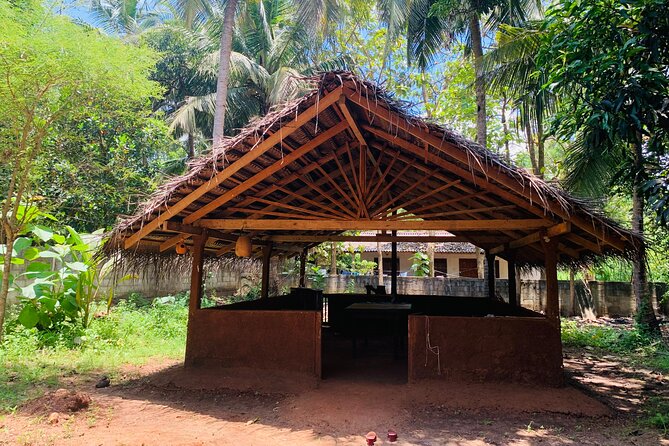
One of the more unusual parts of the class is the chance to pick your own coconut directly from the tree. The experience description does not specify how the coconut is harvested, so the important point is the connection between the ingredient and the finished meal. You see that coconut is not just a packaged kitchen item. It is central to many Sri Lankan dishes, from sambal to curries and desserts.
Next comes the preparation work. This is where the class earns its hands-on label. You do not simply watch spices being measured or coconut being opened. You take part in the small jobs that build the meal from the ground up.
The traditional tools are especially useful for understanding local cooking. A miris gala is a stone grinder used to crush spices and chilies. Grinding by hand releases a strong aroma and gives you a feel for the labor behind a spice paste. It is slower than an electric blender, but that is exactly the point. You begin to notice how texture and fragrance are made.
You also use a hiramanaya to scrape coconut. This is a familiar household skill in Sri Lanka, and it can take a little practice. It is a simple task, but it shows how common ingredients are prepared before they reach the pot.
Cooking Rice and Building a Sri Lankan Meal
Rice forms the center of the meal. You may prepare yellow rice or white rice, depending on the class plan and ingredients available. White rice is soft and plain, while yellow rice adds color and seasoning. Either way, rice gives the other dishes a base and helps balance spicy, sour, creamy, and sweet flavors.
The menu is broad for a three-hour class. It includes lake fish curry, ambarella curry, kathurumurunga mallum, coconut sambal, pumpkin curry, and banana blossom mallum. The variety is valuable because Sri Lankan meals are often built from several modest dishes rather than one large main course.
You work with fresh ingredients picked from the garden and cook in clay pots over a traditional wood-fired stove. The fire adds smoke and demands more attention than a standard burner. You may need to watch the heat closely and follow the instructor’s timing, which turns cooking into an active task rather than a relaxed demonstration.
The wood-fired stove is also one of the experience’s possible drawbacks. Smoke and heat can be tiring, especially in warm weather. Still, if you want to understand traditional village cooking, this is a useful part of the lesson rather than a decorative touch.
Ambarella, Pumpkin, and Banana Blossom
The vegetable dishes introduce ingredients that you may not often see outside Sri Lanka. Ambarella is a tropical fruit used here in a savory curry. Its tangy flavor gives the meal a sharp edge and shows how local cooks use fruit in ways that may surprise you.
Pumpkin curry offers a softer contrast. It is gently spiced, creamy, and slightly sweet. I like this kind of dish in a multi-course Sri Lankan meal because it gives your palate a break from chili and sour flavors.
Banana blossom is another highlight. The flower is prepared as a curry or mallum, producing an earthy dish with a distinct texture. It is a good example of how a Sri Lankan kitchen uses more than the familiar part of the plant. If you have never eaten banana blossom, this may be one of the most memorable dishes in the class.
Kathurumurunga mallum adds leafy greens, coconut, and spices. Mallum is generally a light preparation, so it helps keep the meal from becoming too heavy. The class description identifies the greens as soft and nutritious, but the greater value is practical: you learn how coconut and seasoning can turn simple leaves into a flavorful side dish.
Same place, a different thing to cook:
- Kandy Village Cooking Class
★ 5.0 · 536 reviews - Sea waves sri lankan cooking class
★ 5.0 · 467 reviews - Ella: Sri Lankan Cooking Class with Neranji at Homestay
★ 5.0 · 276 reviews - Cook with Wasantha
★ 5.0 · 248 reviews
Lake Fish Curry and Coconut Sambal
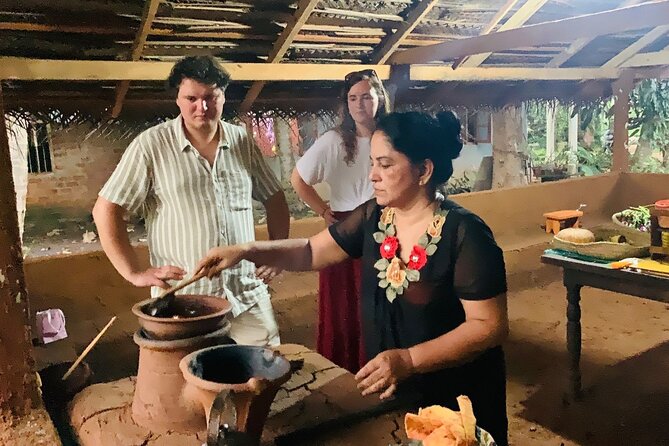
The lake fish curry brings a stronger centerpiece to the meal. Locally caught lake fish is cooked with spices and coconut milk, creating a sauce that is fragrant and creamy. The precise fish is not specified, so do not book expecting a particular species. The appeal is the local preparation and the use of ingredients associated with the waters around Rajarata.
Coconut sambal is the fiery side dish. Freshly grated coconut is mixed with red chili, lime, and onion. It is easy to underestimate a small spoonful of sambal, but this is the dish that can wake up the entire plate.
The instructor’s role matters here. The class is conducted in English, and recent feedback praised the clear explanations of which spices and vegetables to use, along with the background behind the cooking methods. That makes the experience useful for beginners who want to understand not only what goes into a dish, but why the ingredients are combined.
The Meal You Eat at the End
After the cooking, you sit down to taste what you have prepared. The meal includes rice, fish curry, several vegetable dishes, mallum, sambal, and pumpkin curry. That is a substantial spread for the price, especially because you have helped make it rather than simply receiving a plate.
The meal also lets you compare flavors side by side. The ambarella brings sourness, the pumpkin brings sweetness, the fish curry brings richness, and the sambal adds heat. Rice ties everything together. This is a better way to understand Sri Lankan food than ordering a single curry in a restaurant.
Dessert is fresh curd with treacle and ripe papaya. The curd and treacle combination is simple but satisfying, with cool tang from the curd and sweetness from the syrup. Papaya keeps the finish light.
The cooking is presented as a cultural experience, but it remains grounded in food. You get the best value if you enjoy eating what you make and asking questions while you work.
What the Three Hours Feel Like
Three hours is long enough to include preparation, cooking, explanation, and the final meal without making the session feel rushed. The class has many components, though, so expect to stay involved from beginning to end.
The private-group format is a strong advantage. You can ask about unfamiliar ingredients, repeat a technique, or spend more time with a tool without worrying about a large class moving on. If your group includes children or beginners, the private setup may also make the work less intimidating.
The instructor teaches in English. Feedback on the experience has praised the presentation of the cooking background, ingredients, tools, and methods. That suggests the class is not just a recipe exchange. You should come ready to ask questions about spice use and traditional preparation.
Bring practical clothing and mosquito repellent. The open village setting is attractive, but one recent visitor specifically found repellent useful. Wear something you can cook in comfortably, since smoke, food preparation, and a wood-fired stove are part of the session.
Who Will Get the Most from This Class
I would recommend this class to food lovers who want more than a restaurant meal. It suits people curious about village life, traditional tools, local produce, and the way several small dishes create a complete Sri Lankan table.
It also works well for visitors searching for things to do in Anuradhapura beyond the ancient city sites. The experience adds a living, everyday side of the region, with cooking methods that connect the meal to older Rajarata traditions.
Families and private groups may appreciate the format because the class is not described as a large shared session. Wheelchair accessibility is listed, which is useful for anyone who needs an accessible activity, though the information does not give details about the exact surfaces or access route to the clay kitchen.
I would be more cautious if you dislike smoke, outdoor conditions, strong spices, or hands-on kitchen work. The class is not designed for someone who wants to sit back and watch. You will be grinding, scraping, stirring, and working near a fire.
Is $40 a Good Value?
At $40 per person, the price includes a three-hour private cooking experience, an English-speaking instructor, a welcome drink, ingredients, traditional tools, and a full meal with dessert. The value is strongest when you count the cultural instruction and the food together.
A restaurant meal may cost less, but it will not show you how to grind spices on a miris gala or scrape coconut with a hiramanaya. A formal cooking school may provide more polished facilities, but this class offers a setting and cooking method that are much closer to a village kitchen.
The price also includes several dishes rather than one recipe. You learn how rice, fish, fruit, greens, coconut, and spices work together. For a private class, that is a reasonable package.
You can reserve now and pay later, and free cancellation is available up to 24 hours in advance for a full refund. These terms give you some flexibility if your Anuradhapura plans change.
Should You Book the Rajarata Cooking Class?
Book it if you want to understand Sri Lankan food through your hands, not just your fork. The strongest parts are the private instruction, the traditional tools, the wide menu, and the setting beneath the coconut-leaf shelter.
The most useful tip is simple: bring mosquito repellent and accept the rustic conditions. If you do, the smoke, clay pots, wood fire, and slower preparation become part of the lesson.
Skip it if you want a short tasting, a luxury kitchen, or a passive demonstration. For everyone else, this is one of the more personal cultural activities available in Anuradhapura, with enough food and practical instruction to justify the three hours and $40 price.
FAQ
Where does the cooking class take place?
The class takes place at the GK Immersions clay house kitchen in Anuradhapura, under a traditional coconut-leaf shelter.
How long does the cooking class last?
The experience lasts three hours.
How much does the class cost?
The listed price is $40 per person.
Is the class private?
Yes. The activity is offered for a private group.
What language does the instructor speak?
The instructor teaches in English.
What dishes will I prepare?
The menu includes rice, lake fish curry, ambarella curry, kathurumurunga mallum, coconut sambal, pumpkin curry, and banana blossom mallum. Dessert includes curd with treacle and ripe fruit.
What traditional tools will I use?
You can grind spices on a miris gala, scrape coconut with a hiramanaya, and cook over a traditional wood-fired stove.
Can I cancel the booking?
You can cancel up to 24 hours in advance for a full refund. You can also reserve now and pay later.
Just added around Sri Lanka
- cooking lesson★ 5.0 · 7 reviews
- Hands-On Cooking Class in Anuradhapura-Cook Like a Local★ 5.0 · 2 reviews
- Sri Lankan Cookery with Nilu★ 5.0 · 34 reviews
- Sri Lanka: Cooking Class★ 4.4 · 6 reviews
- Cooking Experience from Ella★ 4.9 · 2 reviews
- Sri Lankan Cooking Class in Bentota★ 5.0 · 2 reviews
- Private cooking class – Personalized classic menu★ 5.0 · 5 reviews
- Nilaveli: Sri Lankan Cooking Class with a Local Family★ 5.0 · 16 reviews
Cooking Classes, compared.

Half-Day Thai Cooking Class at Organic Farm in Chiang Mai
Read our review →

3 in 1 Cooking Class near Navona: Fettuccine, Ravioli & Tiramisu
Read our review →
Pasta & Tiramisu Cooking Class with Unlimited Wine
Read our review →
Hanoi Cooking Class: Culture, Local Market & Meaning CSR Impact
Read our review →
5 Traditional Dishes Hanoi Cooking Class with Market Trip
Read our review →
Cooking Class and Lunch at a Tuscan Farmhouse with Local Market Tour from Florence
Read our review →
Cooking Class, Market & Thai Herbs Garden Tour
Read our review →Lists this class appears in