
REVIEW · ANURADHAPURA, SRI LANKA
Hands-On Cooking Class in Anuradhapura-Cook Like a Local
Food tells the story of Rajarata. This three-hour class takes you into a peaceful village home where you can pick a coconut, grind spices, and cook over firewood, rather than simply watch a chef work. I like the direct contact with Sri Lankan kitchen traditions, and I like that the meal uses practical tools such as the miris gala and hiramanaya. The main consideration is that the experience is outdoors and weather-dependent, so a rainy day could change your plans.
You meet at GK Immersions on Nidhahas Mawatha in Anuradhapura, then return to the same place after cooking and eating. The private format suits couples, families, and small groups that want time to ask questions, though anyone expecting a polished restaurant kitchen may find the clay cooking area deliberately rustic.
Key points about this Anuradhapura cooking class
- Pick a coconut straight from the tree: You take part in the process from garden to kitchen, seeing how a common Sri Lankan ingredient becomes part of a meal.
- Use a miris gala stone grinder: Grinding spices by hand releases their smell and gives you a feel for the work behind Sri Lankan curry.
- Scrape coconut with a hiramanaya: This traditional tool turns a simple ingredient into a hands-on kitchen lesson.
- Cook over a wood-fired clay stove: Coconut-shell firewood and smoke add a distinct character to the cooking.
- Learn in a private village setting: Only your group participates, which allows a more personal pace than a large demonstration class.
- Pay $40 for about three hours: The price includes more than food. You are paying for instruction, local contact, ingredients, and a cultural activity.
Why this class adds something to an Anuradhapura visit
Anuradhapura is best known for its ancient Buddhist monuments, enormous stupas, and sacred sites. Those places deserve your time, but they can also make a day feel focused on ruins and formal history. This cooking class gives you another way to understand the area, through the food and daily skills of Rajarata.
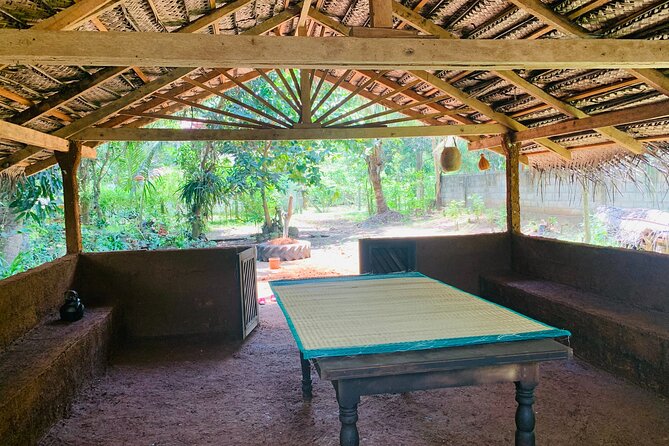
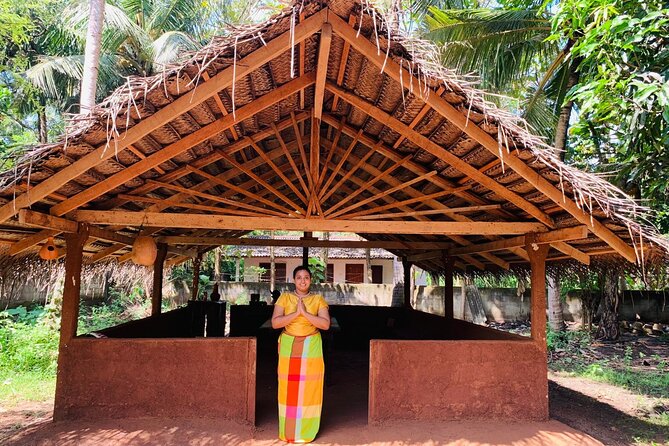
The setting matters. You are not placed in a modern teaching kitchen with rows of identical workstations. Instead, the class takes place at a village home with a clay kitchen and coconut-leaf roof. That setting helps explain why Sri Lankan cooking developed around fresh local ingredients, simple equipment, and patient cooking over heat.
I particularly like the way the class connects each task to a wider tradition. Picking a coconut is not just a photo opportunity. It shows the ingredient at its starting point. Grinding spices is not just a sensory activity. It demonstrates how much work can sit behind a bowl of curry. Scraping coconut shows another everyday skill that once belonged to nearly every Sri Lankan home kitchen.
You will also get a refreshing local drink when you arrive. It is a small touch, but a useful one after getting to the meeting point in Anuradhapura’s heat.
A few more cooking classes around Sri Lanka worth a look
- Ella: Traditional Sri Lankan Cooking Class
★ 4.9 · 788 reviews - Organic cooking class sigiriya (kumara & family)
★ 5.0 · 650 reviews - Sri Lanka Cooking Class with Granny
★ 5.0 · 587 reviews
Starting at GK Immersions on Nidhahas Mawatha
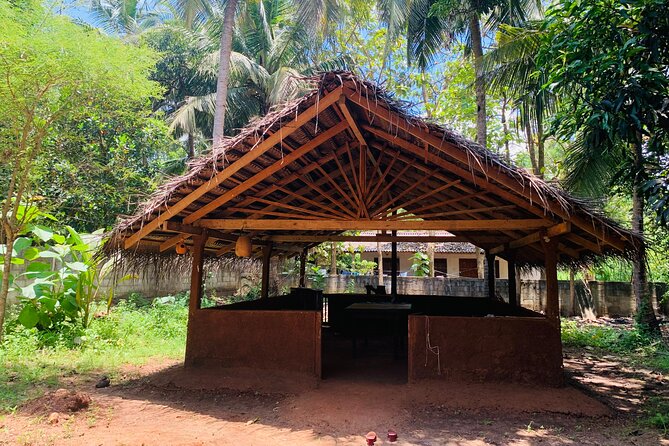
The activity begins at GK Immersions, No 214, Nidhahas Mawatha, Anuradhapura 50000. This is also where the class ends, so you do not need to arrange a separate return point.
The meeting arrangement is simple, but you should allow enough time to find the address. The experience is near public transportation, and confirmation is sent when you book. A mobile ticket is accepted, which keeps the practical side easy if you are already carrying your booking details on your phone.
Anuththara Gimhani Ilangathilaka is the experience provider. Since this is a private activity, only your own group takes part. That makes a real difference in a cooking class. You can ask about ingredients, cooking methods, and local food without waiting for a large group to catch up.
The private format also gives you room to work at a comfortable pace. If someone in your group is already comfortable in the kitchen, they can take on more tasks. If someone has never used a traditional scraper or grinder, there should be more time to learn the movement properly.
Picking a coconut from the garden
One of the most distinctive parts of the class happens before the cooking begins. You get to pick a fresh coconut from the tree and see how it moves from garden to meal.
The activity information does not specify the exact climbing method or how high the coconuts are picked, so do not assume that you will climb the tree yourself. The clear point is that you take part in selecting a fresh coconut and learn how it is used in cooking.
That simple step gives the meal a useful sense of place. Coconut is not an exotic garnish here. It is a working ingredient, tied to the garden, the kitchen, and the local diet. You can better understand why coconut milk, scraped coconut, and coconut-based cooking methods appear so often in Sri Lankan food.
This is also a good moment to slow down. The class is not designed as a race through a list of dishes. It is built around seeing and handling ingredients before they reach the cooking pot. I would expect this part to appeal most to families and food-focused visitors who enjoy learning with their hands.
Grinding spices on the miris gala
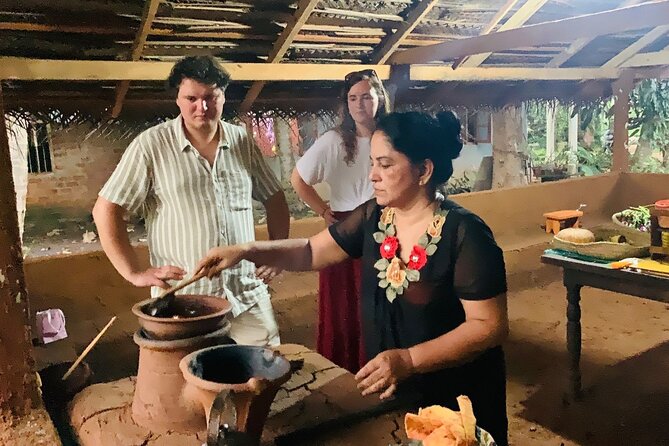
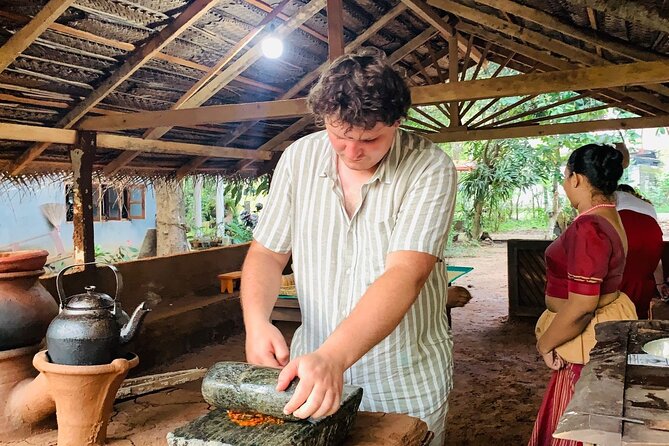
Next comes the miris gala, a traditional stone grinder. You grind your own spices and experience the strong aroma released as the ingredients are crushed.
A stone grinder changes the pace of cooking. It requires pressure, movement, and attention. That physical work helps you understand that Sri Lankan cooking is not simply a matter of adding a spoonful of powder from a packet. Flavor begins with preparation.
The smell is an important part of the lesson. Freshly ground spices can make the kitchen feel completely different, and this is likely to be one of the most memorable sensory moments of the class. You will also see how a traditional tool can still make sense in a modern cooking lesson.
I like this part because it offers useful context without turning the class into a lecture. You are learning by doing. The hands-on work gives you a better chance of remembering the technique after you leave Anuradhapura.
The drawback is that hand grinding takes effort. If you prefer a quick cooking demonstration, this may feel slow. That is exactly the point, though. The class gives you time to understand the process, not just admire a finished plate.
Same place, a different thing to cook:
- Kandy Village Cooking Class
★ 5.0 · 536 reviews - Sea waves sri lankan cooking class
★ 5.0 · 467 reviews - Ella: Sri Lankan Cooking Class with Neranji at Homestay
★ 5.0 · 276 reviews - Cook with Wasantha
★ 5.0 · 248 reviews
Scraping coconut with the hiramanaya
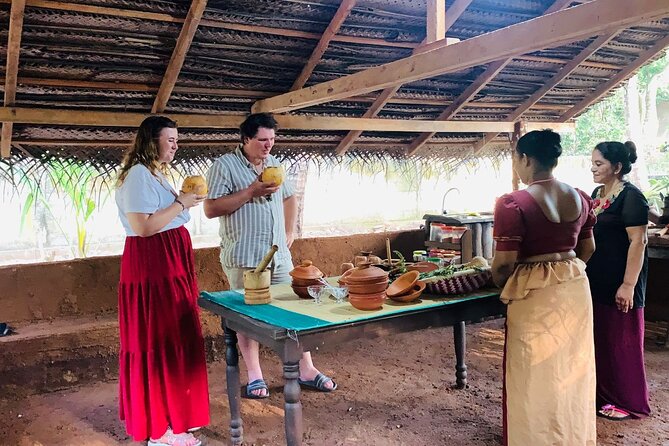
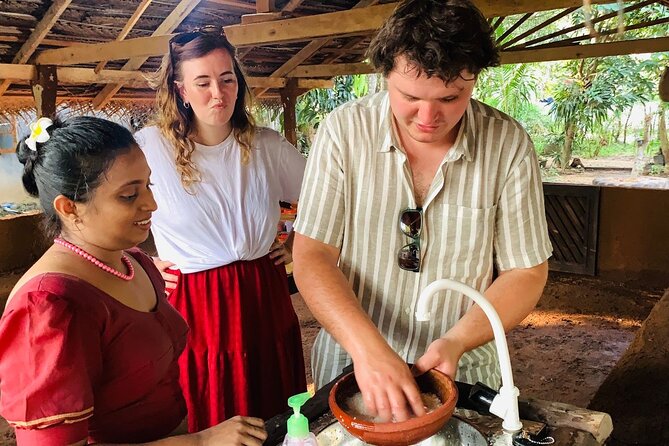
The hiramanaya is another traditional kitchen tool used during the class. You learn how to scrape coconut, a basic skill that has long been part of home cooking in Sri Lanka.
This is a small task with a surprisingly useful lesson behind it. Coconut can be used in several forms, and scraping it by hand shows how the texture is created before it is added to a dish. You get a closer look at the preparation that often disappears when food arrives already portioned and packaged.
The tool may be unfamiliar at first, so expect a short learning curve. The class is meant to be practical, and the satisfaction comes from getting the movement right. It is not complicated in theory, but traditional tools often work best when you find the right angle and pressure.
For children, this could be one of the most engaging activities, provided an adult helps with safety and technique. The supplied information does not give a minimum age or detailed safety rules, so families should confirm any concerns before booking.
Cooking with clay pots and coconut-shell firewood
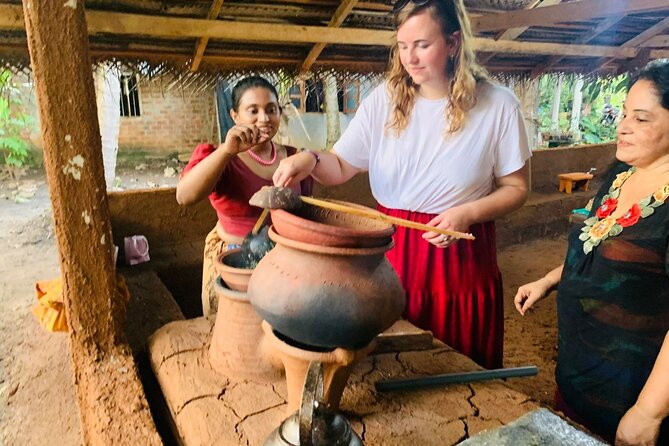
After preparing the ingredients, you cook the meal on a wood-fired stove. The kitchen uses clay pots and coconut-shell firewood, bringing you close to older cooking methods associated with Sri Lankan homes.
Cooking over a fire changes the experience in two ways. First, it asks you to pay attention to heat and timing. Second, it adds a smoky note to the food. The smoke is part of the appeal, but it also means this is not the best choice if you want a perfectly controlled indoor kitchen environment.
The clay kitchen, with its coconut-leaf roof, gives the activity a strong village character. It is not there merely for decoration. The materials help explain how local kitchens can be built around available natural resources and practical cooking needs.
You will prepare authentic Sri Lankan dishes using recipes passed down through generations. The supplied details do not name the dishes, so you should not book this expecting a specific curry, hopper, or dessert. Instead, think of the menu as a local meal shaped by the ingredients available that day.
That uncertainty is worth noting. If you have dietary restrictions or strong dislikes, ask about the planned food before you arrive. The information confirms fresh ingredients from the garden, but it does not provide a full menu or allergy policy.
From kitchen work to a generous meal
The class ends with food, and the meal is an important part of the value. You do not simply prepare a token sample and leave. The experience includes a substantial amount of food after the cooking.
That makes the class useful for visitors who want lunch or dinner built into their plans. It also gives the cooking work a clear reward. After grinding, scraping, stirring, and working with the fire, you can sit down and taste the results of the process.
The meal may also help you recognize techniques later in your Sri Lankan trip. The strongest practical benefit of this class is not just eating one good plate in Anuradhapura. It is learning to identify ingredients and preparation methods that you may encounter again in local restaurants and homes.
The class is especially suitable for anyone who wants to understand how a dish comes together. You learn about ingredients, tools, heat, and preparation in one continuous experience. The result is more useful than a short tasting session, but less formal than a professional cooking course.
Is $40 a fair price?
At $40 per person, this is not the cheapest way to eat in Anuradhapura. You could find a local meal for far less. The price needs to be judged as an activity, not just as the cost of lunch.
For about three hours, you receive a private session, a local drink, access to a village home and garden, instruction with traditional tools, cooking time, and a prepared meal. If your group values personal attention and cultural contact, that is a reasonable package.
The private format improves the value for couples or families. You are not paying for a large group spectacle. Your questions and pace are central to the session. For solo visitors, the per-person price may feel higher, especially since the activity does not list hotel pickup or transport as included.
The experience offers the best value when you treat the food as one part of the visit. You are paying to understand the work behind the meal and to take part in it. If you only want to eat Sri Lankan food, a restaurant is cheaper. If you want to learn how local cooking works, $40 is easier to justify.
Who will enjoy this most?
I would recommend this class to food lovers, families, couples, and anyone who prefers local activities to standard sightseeing. It should also suit people who enjoy photography, as the garden, clay kitchen, traditional tools, and wood fire offer plenty of visual detail.
It is a good choice after visiting Anuradhapura’s major religious sites. The class changes the rhythm of the day and gives you a quieter setting. The three-hour length is long enough to feel substantial without taking over your whole schedule.
You may want to skip it if you dislike smoke, outdoor cooking, hands-on work, or uncertain menus. The experience is designed around participation. You will not get the full benefit by standing back and waiting for a plate to appear.
Service animals are allowed, which is useful information for eligible visitors. The activity is near public transportation, but the supplied details do not say that transport is included. Plan to make your own way to No 214, Nidhahas Mawatha.
Weather and cancellation details to know
The class requires good weather. If poor weather forces a cancellation, you are offered another date or a full refund. That policy is sensible for an activity built around a garden and wood-fired kitchen.
You can cancel for a full refund up to 24 hours before the start time. Cancellations made less than 24 hours before the activity are not refunded, and changes inside that period are not accepted. The cut-off uses local time in Anuradhapura.
I would book this on a day when you have some schedule flexibility. That way, a weather change will not disrupt a tightly planned temple visit or onward journey.
Should you book the Anuradhapura cooking class?
Book it if you want to understand Sri Lankan food through real work: picking coconut, grinding spices, scraping, tending fire, and eating what you help prepare. The class has a clear sense of place, and the private setting gives it more warmth than a large demonstration.
Skip it if your priority is a cheap meal, a fixed menu, or a polished indoor kitchen. The rustic setting is the reason to go, but it also brings smoke, weather concerns, and a slower pace.
For most food-focused visitors, I think the class is a strong addition to an Anuradhapura itinerary. It gives you a memorable taste of village life and practical skills that can make the rest of your Sri Lankan meals easier to understand.
FAQ
How long does the cooking class last?
The experience lasts approximately three hours.
Where does the class begin and end?
It begins at GK Immersions, No 214, Nidhahas Mawatha, Anuradhapura 50000, Sri Lanka, and ends back at the same meeting point.
How much does the experience cost?
The listed price is $40 per person.
Is this a private activity?
Yes. Only your own group participates in the activity.
What traditional tools are used?
You use a miris gala stone grinder, a hiramanaya coconut scraper, a wood-fired stove, clay pots, and coconut-shell firewood.
What happens if the weather is poor?
The experience requires good weather. If it is canceled because of poor weather, you can receive a different date or a full refund.
Just added around Sri Lanka
- cooking lesson★ 5.0 · 7 reviews
- Sri Lankan Cookery with Nilu★ 5.0 · 34 reviews
- Sri Lanka: Cooking Class★ 4.4 · 6 reviews
- Cooking Experience from Ella★ 4.9 · 2 reviews
- Sri Lankan Cooking Class in Bentota★ 5.0 · 2 reviews
- Private cooking class – Personalized classic menu★ 5.0 · 5 reviews
- Nilaveli: Sri Lankan Cooking Class with a Local Family★ 5.0 · 16 reviews
- Mirissa: Cooking Class with Beer and Meal★ 3.3 · 4 reviews
Cooking Classes, compared.

Half-Day Thai Cooking Class at Organic Farm in Chiang Mai
Read our review →

3 in 1 Cooking Class near Navona: Fettuccine, Ravioli & Tiramisu
Read our review →
Pasta & Tiramisu Cooking Class with Unlimited Wine
Read our review →
Hanoi Cooking Class: Culture, Local Market & Meaning CSR Impact
Read our review →
5 Traditional Dishes Hanoi Cooking Class with Market Trip
Read our review →
Cooking Class and Lunch at a Tuscan Farmhouse with Local Market Tour from Florence
Read our review →
Cooking Class, Market & Thai Herbs Garden Tour
Read our review →Lists this class appears in