
REVIEW · GALLE, SRI LANKA
Cook with Wasantha
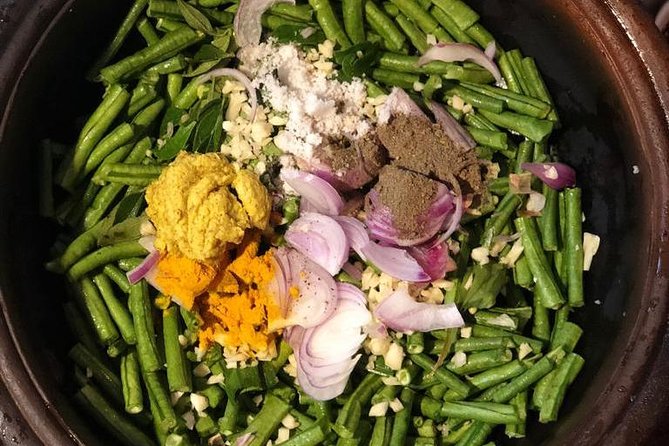
Come hungry, leave with recipes. Cook with Wasantha combines a market visit, a family kitchen, and a generous Sri Lankan meal in about four hours. Starting in Unawatuna, you ride by tuk-tuk to the Dutch Market and a fish market near Galle, choose fresh ingredients, then return to prepare five curries, rice, and coconut milk from scratch.
I especially like the small group limit of 10 people and the family setting. Wasantha, her husband Sam, and members of their family bring a personal touch that a video lesson cannot match. The $30 price also includes the market transport described by past participants, which makes this a strong value. The main caution is that the cooking may feel more like a demonstration than a fully hands-on class, especially if you want to prepare every dish yourself.
The food is the star, but the market stops give the class its sense of place. You learn how to choose vegetables, fruit, fish, spices, and other ingredients before seeing how they become a full Sri Lankan lunch. The experience has earned a 4.9 rating from 249 ratings, with 98 percent recommending it.
Key points to know
- Five curries from fresh market ingredients: Prepare four vegetable curries plus a choice of tuna or chicken curry, with rice and coconut milk.
- Two useful market visits: Shop at the Dutch Market and fish market, learning how local ingredients are selected.
- Family-run cooking experience: Wasantha, Sam, and other family members help create a warm, home-style setting.
- A filling buffet lunch: Sit down together and eat the food you helped make, Sri Lankan-style with your fingers.
- Recipes to take home: Participants have received 21 recipes and an invitation to ask questions when cooking them later.
- Small group, mixed participation: The maximum is 10 people, but the level of hands-on cooking can vary.
Starting in Unawatuna and heading toward Galle
The experience begins at Wasantha’s Sri Lanka Cuisine, at 180/A Yaddehimulla Road in Unawatuna, at 10:00 a.m. The activity also ends there, which keeps the day simple for anyone staying in Unawatuna.
The route is part of the appeal. Instead of arriving at a kitchen and finding ingredients already laid out, you go out to buy the food first. That gives you a better sense of how Sri Lankan cooking begins, with what is fresh and available that morning.
Transport by tuk-tuk is included in the experience, according to the details provided by past participants. That matters because the markets are not simply an extension of the restaurant. You are moving between Unawatuna and market areas near Galle, and the tuk-tuk ride saves you the trouble of arranging local transport yourself.
The experience is listed at about four hours. With a 10:00 a.m. start, you should expect to finish around early afternoon, though the exact timing can change with the market visit and the pace of the cooking.
Other cooking classes people book around Sri Lanka:
- Ella: Traditional Sri Lankan Cooking Class
★ 4.9 · 788 reviews - Organic cooking class sigiriya (kumara & family)
★ 5.0 · 650 reviews - Sri Lanka Cooking Class with Granny
★ 5.0 · 587 reviews
The Dutch Market: choosing food before cooking it
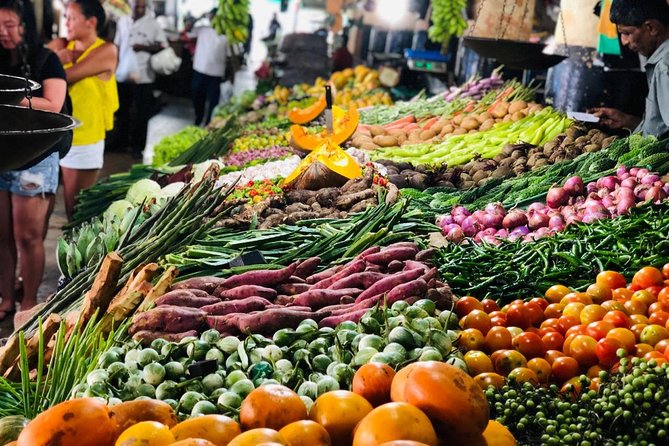
The first market stop is the Dutch Market. The name gives the stop a historical connection to Galle’s colonial past, but the useful part of the visit is practical: you are there to see and select produce for the meal.
You may choose vegetables and fruit for the curries, rather than simply watching someone else shop. This small choice gives you a clearer idea of how local meals are built. Some ingredients may be familiar, while others may be foods you do not often find at home. One participant selected ingredients that were difficult to buy in their own country, which made the final meal feel more personal.
Sam, Wasantha’s husband, has accompanied some groups to the market. He is also described as a tour guide, so this part of the morning can include more than a shopping list. You can ask about produce, local food habits, and practical travel matters in Sri Lanka.
The market visit is also where the class becomes more than a restaurant meal. You are not only eating a curry. You are seeing the ingredients in their ordinary setting, learning how they are chosen, and then watching them move from market basket to cooking pot.
The fish market and the choice of tuna or chicken
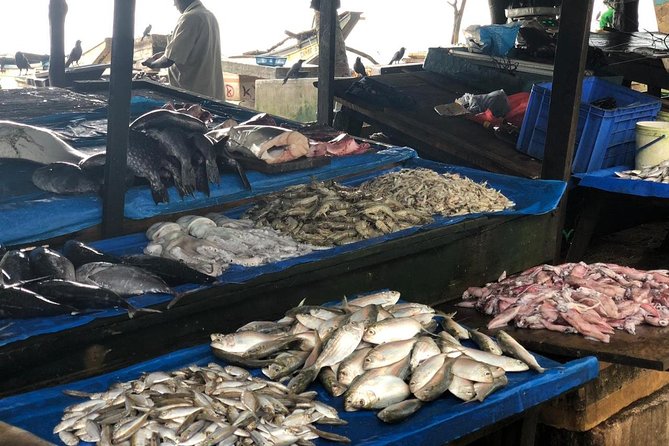
The second shopping stop is the fish market. Here, the class obtains the main ingredient for the non-vegetable curry. The standard choice is tuna or chicken, although several food combinations described by participants used tuna.
If you enjoy seafood, tuna is a particularly useful choice because it lets you see how a firm local fish works with Sri Lankan spices. If you prefer chicken, the class description gives you that option as well. The choice should be made with the host, since the day’s shopping and cooking plan may depend on availability.
The fish market adds a different rhythm to the morning. The Dutch Market focuses on fruit and vegetables, while the fish stop shows another part of the local food supply. You get a more complete picture of the meal before returning to the kitchen.
One point to keep in mind is that market commentary may vary by host and by group. Sam has been praised for offering useful information, while one less enthusiastic experience found the explanations at the markets less energetic. If you want a long, formal market lecture, this may not be the right format. The emphasis is on choosing ingredients and getting ready to cook.
Coconut milk, fluffy rice, and the basics that matter
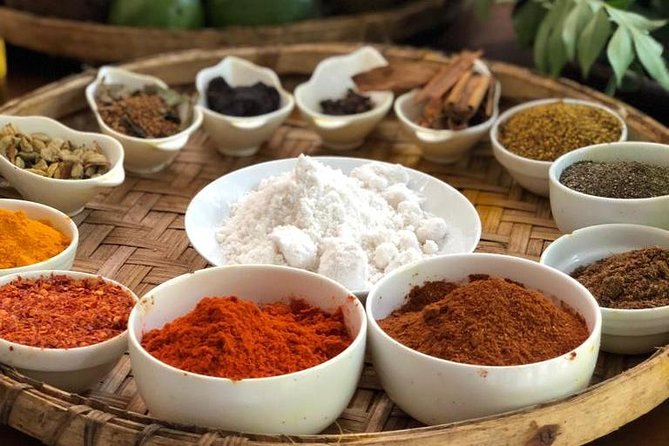
Back at Wasantha’s kitchen, the class turns to techniques that shape Sri Lankan food. You learn how to make fresh coconut milk, how to blend herbs and spices, and how to cook rice so it comes out light and fluffy.
The rice lesson may sound simple, but it is one of the most useful parts for a home cook. A curry can be excellent, yet poorly cooked rice will make the whole plate feel heavy. The class focuses on getting this everyday staple right, not just on showy recipes.
Fresh coconut milk is another valuable skill. It brings a different texture and flavor from a carton or can, and learning the process helps explain why coconut appears so often in Sri Lankan cooking. This is the kind of small technique you can reuse at home, even if you never reproduce the entire meal.
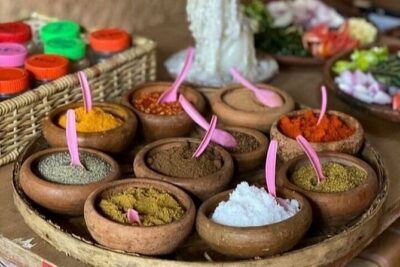
The host also shares methods for blending local herbs and spices. One memorable detail from the class is Wasantha’s ability to add spices by smell rather than by measuring. That can feel mysterious at first, but it also shows how much of traditional cooking depends on experience, balance, and adjustment rather than strict quantities.
Same place, a different thing to cook:
- Kandy Village Cooking Class
★ 5.0 · 536 reviews - Sea waves sri lankan cooking class
★ 5.0 · 467 reviews - Ella: Sri Lankan Cooking Class with Neranji at Homestay
★ 5.0 · 276 reviews - Ella : Cooking class with amazing Spice Garden Tour
★ 5.0 · 239 reviews
Five curries, several textures, and plenty of food
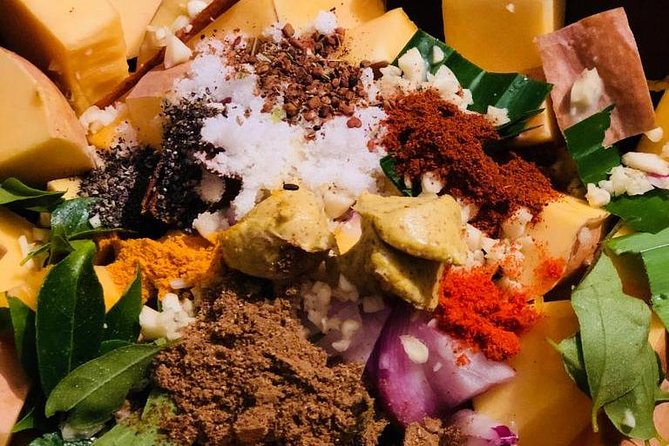
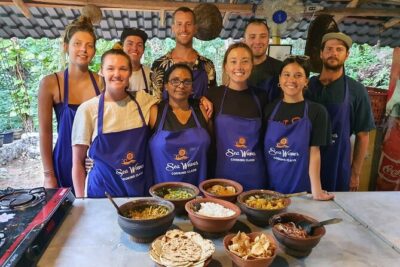
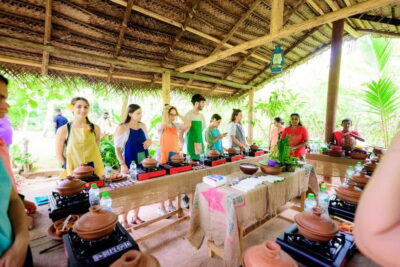
The main cooking session centers on five curries. The usual structure is four vegetable curries and a choice of tuna or chicken curry. Specific dishes have included dhal, pineapple, pumpkin, aubergine with onion, tuna ambitar, and an avocado curry described as a family secret.
The exact selection may change according to the market and the ingredients chosen by the group. That is a strength, not a weakness. You are working with fresh produce rather than following a fixed restaurant menu.
The variety also gives you a useful lesson in balance. Sri Lankan meals are not built around one large dish with a little garnish. A plate can include several curries with different colors, textures, levels of sweetness, and degrees of heat. Pineapple brings fruitiness, dhal offers a soft and comforting base, aubergine absorbs seasoning, and fish adds a firmer, savory element.
Wasantha’s cooking experience is often praised as one of the strongest parts of the class. She has decades of experience, and her instruction covers practical tips rather than only the final recipes. She has also adapted dishes for food intolerances, according to one participant, so you should tell the host about dietary needs before or at the start of the class.
A small extra may appear along the way. One group received coconut sambol in addition to the curries, while another left with 21 recipes. These details are not listed as guaranteed parts of every session, so treat them as possible additions rather than promises.
A family kitchen rather than a formal cooking school
The setting is closely tied to Wasantha’s family. Her mother, daughter, and son have all been part of the experience at different times, and her daughter Sasa has led some market and cooking sessions.
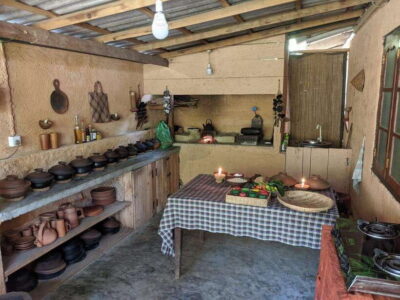
That family involvement is a major reason the class feels personal. You are not simply attending a polished demonstration designed for a large crowd. You are spending a morning around people who cook these foods as part of family life.
The tone may suit you if you like informal cultural experiences. You can ask questions, watch the family work together, and hear stories while the food is prepared. Several people found the atmosphere warm and welcoming, with one describing it as close to a home stay by lunchtime.
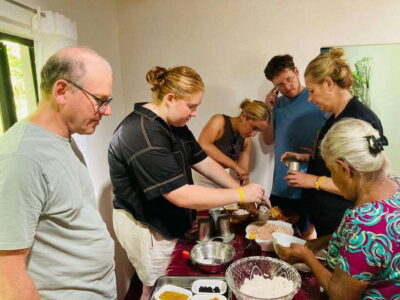
There is a tradeoff. The class does not appear to guarantee that every person will chop, stir, and cook every dish. Some participants helped prepare vegetables and fruit, then watched Wasantha handle much of the cooking. Others felt they received clear instruction and plenty of useful technique.
If your ideal class means a personal workstation and a recipe cooked entirely by you, check your expectations. This is best understood as a shared cooking demonstration with hands-on moments, rather than a formal professional kitchen course.
The buffet lunch is the payoff
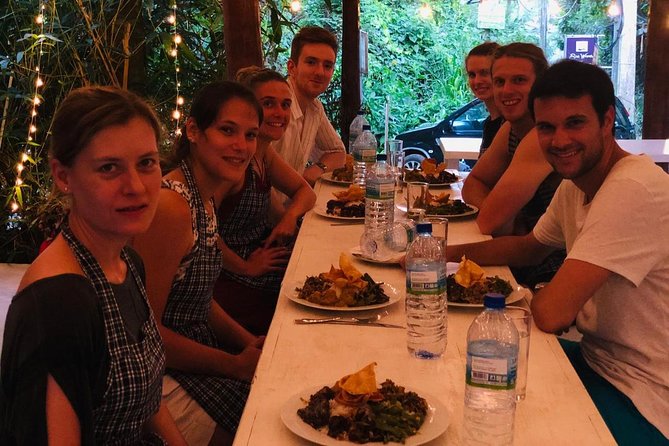
After the cooking, you sit down to eat the meal together. The food is served buffet-style, giving you the chance to sample the different curries, rice, and any additional dishes prepared during the session.
Eating what you have just helped select and prepare changes the experience. You recognize the vegetables from the market, notice how the spices have been used, and can compare the curries side by side. It is also a good time to ask final questions, since you are tasting the results rather than only watching them happen.
The local way is to eat with your fingers. That may be new for you, but it is a practical part of the meal rather than a performance. The texture of rice and curry makes more sense when eaten this way, and the host can help if you need guidance.
Lunch is described as generous. One participant found it so filling that dinner was unnecessary that evening. Plan accordingly, especially if you have a later meal reservation.
The family atmosphere continues at the table. In one case, relatives who arrived to collect someone were invited to join lunch. That kind of welcome is not a formal feature you can book in advance, but it helps explain why the experience feels different from a standard restaurant visit.
What the $30 price includes
At $30, this is a strong-value half-day experience if the market transport, cooking instruction, meal, and recipes are all useful to you. You are not paying only for lunch. The price covers a guided visit to two markets, tuk-tuk transport connected with the activity, ingredient selection, a cooking session, and a large meal.
The value is strongest for people who want practical knowledge. Fresh coconut milk, rice preparation, spice use, and several curry recipes can continue to pay off after your holiday. The recipes provided afterward make it easier to recreate the dishes at home.
The value is less clear if you mainly want a quiet meal or a highly structured cooking course. You could eat Sri Lankan food for less elsewhere, and you may find more intensive classes at a higher price. Here, you are paying for access to a family, a market routine, and techniques built over many years.
The small group limit helps protect that personal quality. Ten people is still large enough for different levels of interest, but far more manageable than a bus tour or a large hotel class.
Who should book Cook with Wasantha?
I would recommend this experience to you if you:
- Like food markets as much as restaurants.
- Want to learn Sri Lankan cooking in a family setting.
- Prefer fresh ingredients and flexible dishes over a fixed menu.
- Enjoy eating a substantial meal after a morning of activity.
- Want recipes and techniques you can try at home.
- Are comfortable with an informal class where the host may do much of the cooking.
It is also a good choice for families. One group attended with children and found the family setting part of the appeal. Children may not take part in every cooking step, but the market visit and shared lunch give them several ways to engage.
You may want to choose another class if you need intensive, individual instruction throughout. The most consistent caution is the gap between the word class and the actual format. Some people found it hands-on and educational, while others felt it was mainly a demonstration with limited participation.
The start point is near public transportation, and service animals are allowed. The activity requires good weather, and a poor-weather cancellation should result in a new date or a full refund. Free cancellation is available up to 24 hours before the start time, while cancellations or changes within 24 hours are not refunded.
Should you book this cooking experience?
Yes, if you want a friendly introduction to Sri Lankan food that includes the market, the cooking, and the meal. The combination is hard to beat for $30, especially with tuk-tuk transport and a small group.
Book it with the right expectation: you are joining Wasantha and her family for a traditional cooking session, not enrolling in a professional chef school. The best parts are the fresh ingredients, the coconut milk and rice techniques, the range of curries, and the chance to sit down with the people who prepared them.
If you value local contact and a generous lunch more than strict classroom structure, Cook with Wasantha is an easy recommendation. If hands-on work is your top priority, contact the host before booking and ask how much of the preparation you will personally handle.
FAQ
Where does Cook with Wasantha begin?
It begins at Wasantha’s Sri Lanka Cuisine, 180/A Yaddehimulla Road, Unawatuna, Sri Lanka.
What time does the experience start?
The stated start time is 10:00 a.m.
How long does the cooking experience last?
The activity lasts approximately four hours.
How many people can join?
The group is limited to a maximum of 10 participants.
What food will I learn to prepare?
You will learn to make fresh coconut milk, fluffy rice, and five curries. The meal includes four vegetable curries and a choice of tuna or chicken curry.
Does the experience include market visits?
Yes. The itinerary includes a visit to the Dutch Market and a fish market, where you learn how to choose ingredients.
What happens if I need to cancel?
You can cancel at least 24 hours before the start time for a full refund. Cancellations or changes made less than 24 hours before the start time are not refunded. If poor weather causes the activity to be canceled, you will be offered another date or a full refund.
Just added around Sri Lanka
- cooking lesson★ 5.0 · 7 reviews
- Hands-On Cooking Class in Anuradhapura-Cook Like a Local★ 5.0 · 2 reviews
- Sri Lankan Cookery with Nilu★ 5.0 · 34 reviews
- Sri Lanka: Cooking Class★ 4.4 · 6 reviews
- Cooking Experience from Ella★ 4.9 · 2 reviews
- Sri Lankan Cooking Class in Bentota★ 5.0 · 2 reviews
- Private cooking class – Personalized classic menu★ 5.0 · 5 reviews
- Nilaveli: Sri Lankan Cooking Class with a Local Family★ 5.0 · 16 reviews
Galle Cooking Classes, compared.
Lists this class appears in