
REVIEW · KOTAPOLA, SRI LANKA
Galle: Traditional Sri Lankan Cooking Class
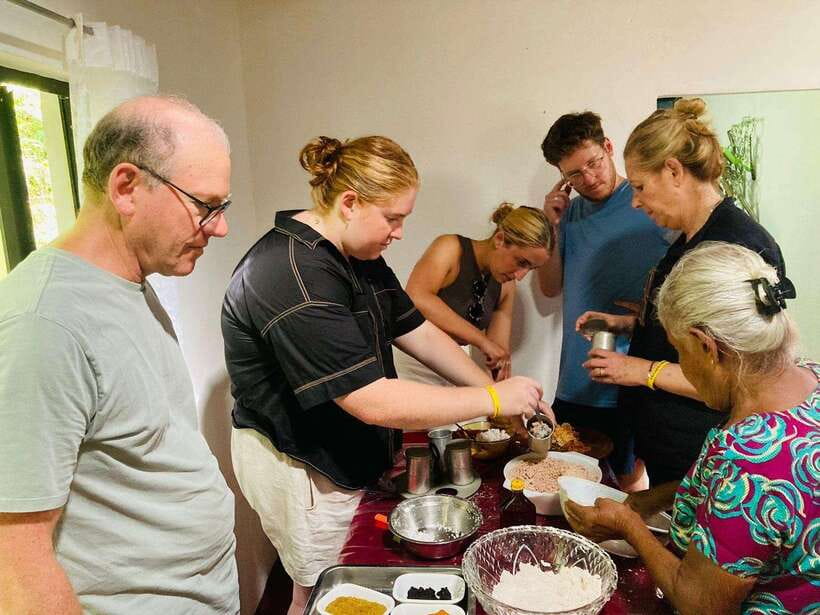
Come hungry, leave full of spice. This three-hour cooking class in Kotapola gives you a warm introduction to Sri Lankan food inside a local family kitchen, not a polished cooking studio. I especially like the chance to learn how spice mixes are made and the generous meal that follows, including dessert. The main thing to know is that this is a guided cooking experience, not a slow lesson where you prepare every dish alone from start to finish.
The hosts, including Malik, his mother, and Chef Manogi, are praised for their kindness and easy family welcome. You may be greeted with a fresh watermelon drink, then help with chopping, shopping, seasoning, and cooking before sitting down to eat. Arrive hungry, since the finished meal can include several dishes, and tell the hosts about allergies or dietary needs before the class.
Key points to know before you book
- You cook in a family kitchen: The setting feels personal and domestic rather than built for tourism.
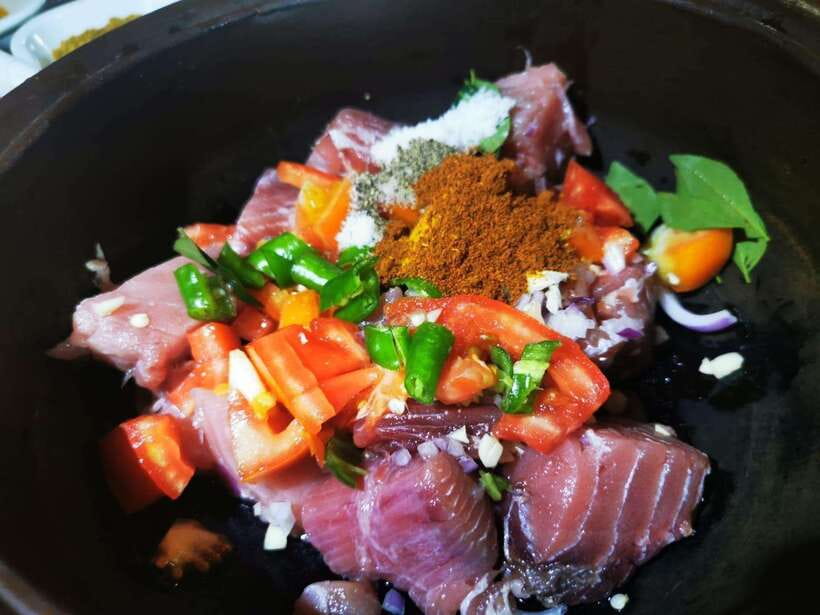
- Spice mixes are part of the lesson: You learn how Sri Lankan seasoning is put together, not just how to follow a recipe.
- Expect guided participation: You help with preparation, but the main cook handles much of the cooking.
- Eight vegan dishes are possible: A vegan menu was prepared on request for one couple, showing useful flexibility.
- The meal is included: Your class ends with the dishes you helped prepare, plus desserts.
- The price is $40 per person: For three hours, instruction, ingredients, drinks, and a full meal, that is a fair value.
Arriving in Kotapola for a local kitchen welcome
The experience takes place in Kotapola, Sri Lanka, in the wider Galle area. There is no hotel pickup or drop-off, so you need to arrange your own way there and allow time to find the meeting point.
The directions are easiest to follow through the map. If you have trouble, an English-speaking local can give directions by phone. I would save the meeting details before leaving your hotel and arrive 15 minutes early. That small buffer matters when you are heading somewhere less familiar than a major restaurant or hotel.
Once you arrive, the welcome is part of the experience. You are not simply handed an apron and sent to a work station. The family setting is central to the appeal, and the hosts are described as warm, helpful, and quick to make people feel at home. One introduction included fresh watermelon juice, a simple touch that sets the tone nicely.
You should wear comfortable clothes and shoes suitable for cooking. This is a working kitchen, so choose something you can move around in and do not mind wearing during food preparation.
A few more cooking classes around Sri Lanka worth a look
- Ella: Traditional Sri Lankan Cooking Class
★ 4.9 · 788 reviews - Organic cooking class sigiriya (kumara & family)
★ 5.0 · 650 reviews - Sri Lanka Cooking Class with Granny
★ 5.0 · 587 reviews
What the three-hour cooking session is really like
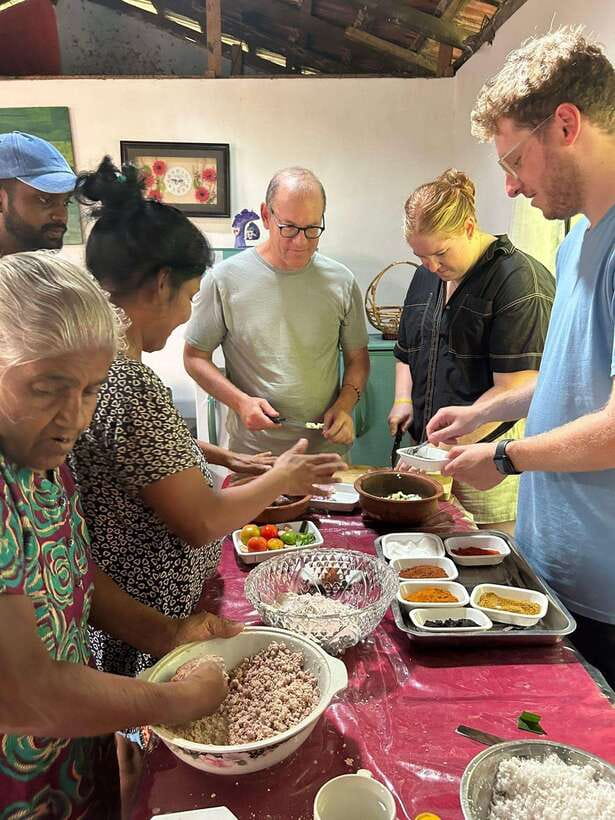
The class is designed around participation, but it is not a formal culinary school lesson. You help prepare the food while the local cook leads the process and handles the more advanced or time-sensitive work.
You may assist with cutting vegetables, adding spices, and helping with shopping or ingredient preparation. The class also explains how the ingredients are used and what they mean in Sri Lankan cooking. That makes the session useful even if your knife skills are basic. You are learning how the meal comes together, not being tested on technique.
A key point is speed. One participant noted that the food was prepared quickly and that the students mostly assisted while the chef completed the main cooking. If you want to make every dish alone, step by step, this may feel more like a demonstration with hands-on help than a full independent cooking course.
I see that as both a strength and a limitation. The pace lets you taste a broad range of food within three hours, and you avoid spending most of the session waiting for one dish to simmer. But you should not expect to personally control every pan or produce a complete Sri Lankan feast without assistance.
Learning the role of spices, vegetables, and family recipes
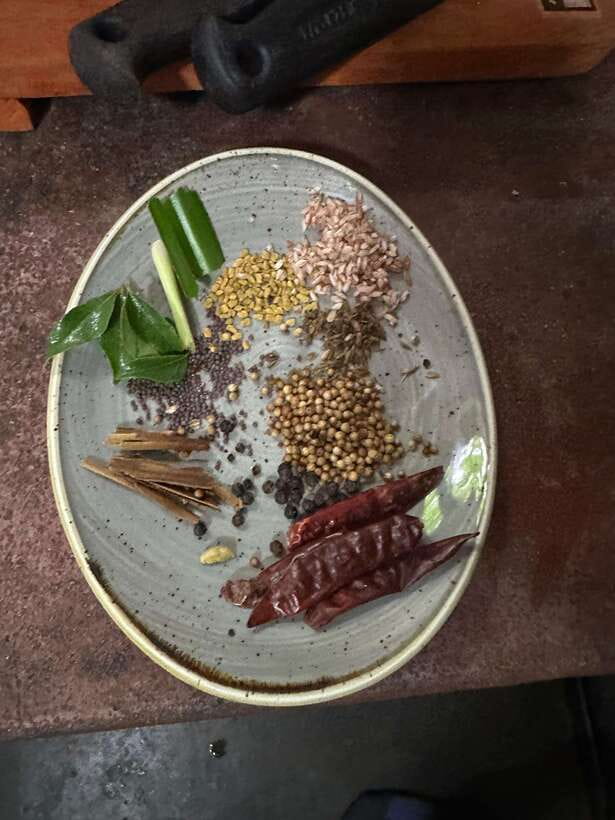
Sri Lankan food is built on careful use of spice, and this class gives you a chance to understand that balance in practical terms. You are introduced to aromatic spices, local vegetables, and the mixes used to season the dishes.
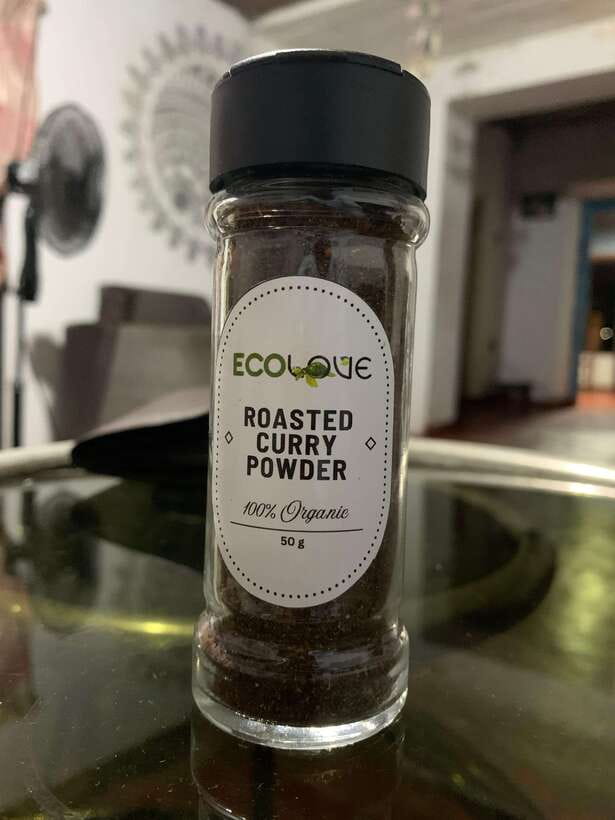
The spice-mix lesson is especially useful. Many cooking classes simply provide a bowl of prepared seasoning. Here, you can learn how the mixture is made and how it shapes the final taste. That is the sort of detail you can take home and use in your own kitchen.
The food is not treated as a list of exotic ingredients. The hosts also explain the cultural meaning and everyday use of the dishes. You get a sense of how food connects to home life in Sri Lanka, which is harder to find in a restaurant meal.
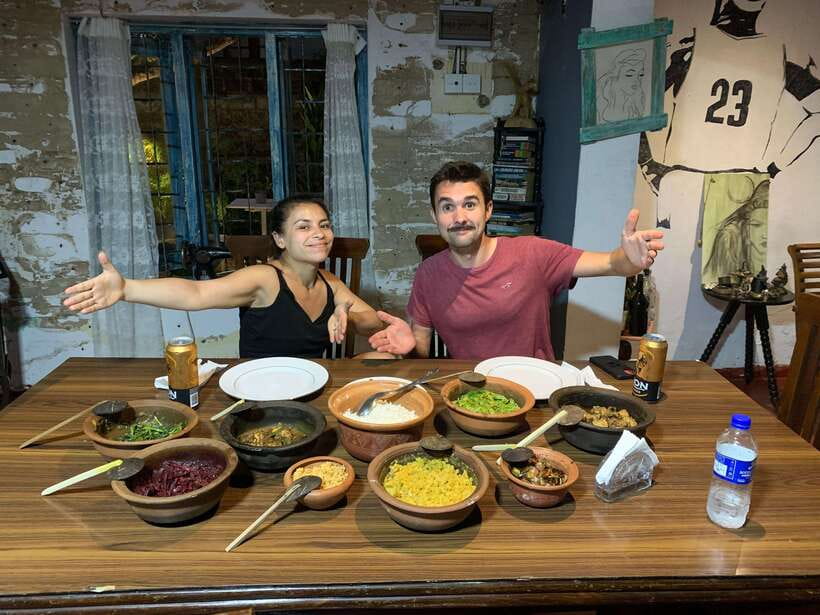
The class can also adapt to dietary needs when arranged ahead of time. A vegan menu with eight different dishes was prepared on request, all using fresh local ingredients. That is an unusually generous spread for a three-hour class, though you should still notify the hosts in advance about allergies or restrictions rather than waiting until you arrive.
The meal: why you should skip breakfast or lunch
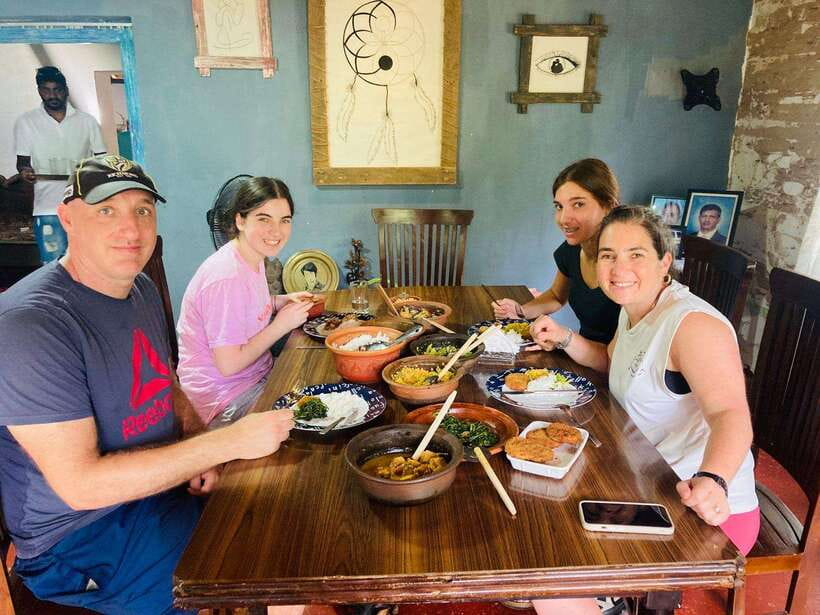
The prepared meal is one of the strongest reasons to book this activity. You do not simply taste a spoonful of each dish and leave. Lunch or dinner with the food you helped prepare is included, along with desserts.
One of the most appealing details is the quantity and variety. The vegan menu described above included eight dishes, while another meal ended with buffalo curd and treacle. That dessert pairing is a fine example of how the class can introduce you to foods you might not order on your own.
I would plan your day around the meal. Do not arrive after a large breakfast or lunch. The portions and number of dishes can be substantial, and the whole point is to sit down and enjoy the result.
The food is also part of the teaching. You can taste how the spices work together, compare the dishes, and ask questions while the meal is fresh. It turns the lesson into a social occasion rather than a practical task you rush to finish.
Same place, a different thing to cook:
- Kandy Village Cooking Class
★ 5.0 · 536 reviews - Sea waves sri lankan cooking class
★ 5.0 · 467 reviews - Ella: Sri Lankan Cooking Class with Neranji at Homestay
★ 5.0 · 276 reviews - Cook with Wasantha
★ 5.0 · 248 reviews
A family kitchen instead of a cooking studio
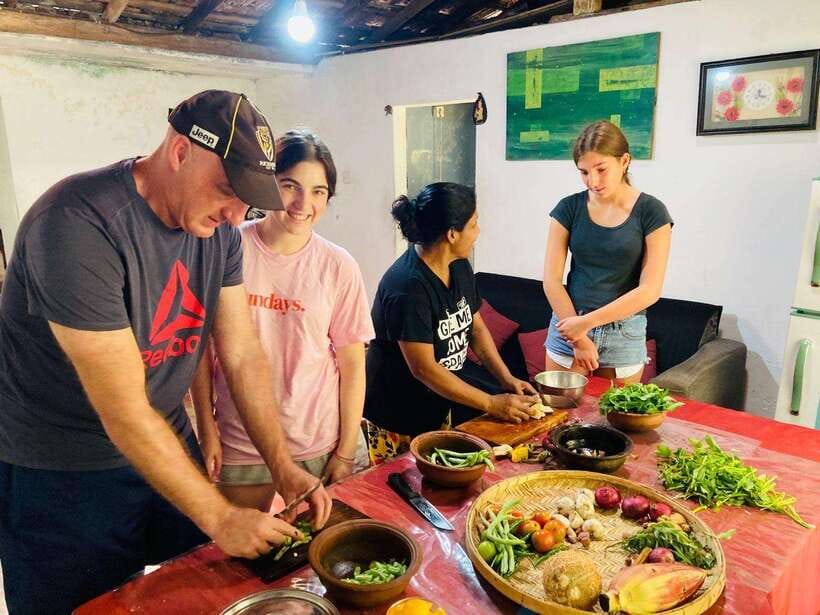
The setting may be the most memorable part of the experience. You cook in the hosts’ own home kitchen, alongside a local family. That gives the class a more personal feel than a purpose-built studio with identical counters and printed recipes.
Malik and his mother are described as welcoming and generous with their time, while Chef Manogi receives praise for her cooking and friendly manner. The emphasis is less on performance and more on sharing a normal part of Sri Lankan home life.
Of course, a home kitchen may not offer the space or order of a professional classroom. You may stand close to the cook, assist rather than lead, and follow a less rigid sequence. If you prefer a polished lesson with individual workstations, measured ingredients, and a printed recipe for every dish, this may not be your ideal format.
For me, the trade-off is worthwhile. The slight informality is exactly what makes the experience feel connected to local life. You are not just learning a menu. You are seeing how a family prepares and shares food.
Price and value at $40 per person
At $40 per person, this is not the cheapest meal you will find in Sri Lanka. But it is more than a meal. The price includes a local culinary expert, ingredients, equipment, a welcome drink, the prepared lunch or dinner, and desserts.
You are also paying for three hours of personal contact and cultural exchange. A normal restaurant dinner might introduce you to the finished food, but it will not show you how the spice blends are made or let you take part in preparation.
The private-group format adds value for couples, families, and small parties who want time to ask questions. It also makes the family setting feel more natural than a large class where the instructor must divide attention among many people.
The value is weaker if you judge the class only by the number of dishes you personally cook. Since the main cook completes much of the work, some people may prefer a longer and more technical lesson. At $40, I would book this for the food, hospitality, and cultural exchange first, and for formal cooking instruction second.
Who will enjoy this class most
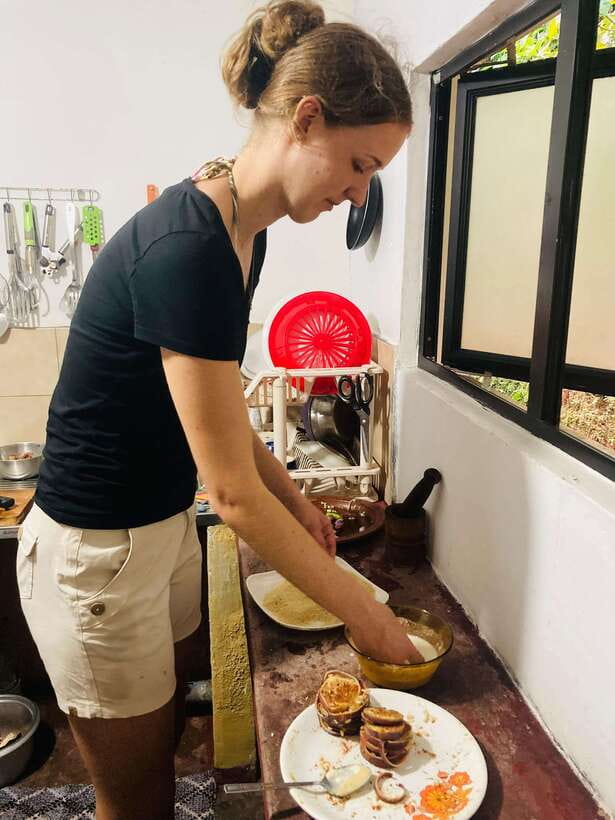
This experience suits you if you want to meet local people and understand Sri Lankan food through a home setting. It is a good choice for couples, private groups, food lovers, and anyone looking for an activity that feels different from sightseeing.
It also works well if you have limited time. Three hours gives you enough room to prepare food, learn about ingredients, eat a full meal, and enjoy conversation without taking up an entire day.
You do not need to be an experienced cook. The hosts guide the preparation, and the class includes equipment and ingredients. You can take part at a comfortable level and still learn how the meal is assembled.
It may be less suitable if you want a highly structured technical class. You will not necessarily prepare every dish from raw ingredients to finished plate by yourself. The chef’s speed and skill are part of the show, but they also mean you are an assistant in some stages.
Practical advice for a smoother visit
Tell the hosts about dietary restrictions and allergies before the session. The vegan menu shows that they can respond to requests, but advance notice is important when the class depends on fresh ingredients and a family kitchen.
Arrive 15 minutes early. Since there is no included transfer and the meeting point may require phone directions, leaving extra time will keep the first part of the class relaxed.
Use the map to find the location, and keep the phone contact available in case you need help. The stated instruction language is English, so you can ask questions about ingredients and cooking methods during the session.
Wear practical clothing and shoes. Cooking can involve standing, chopping, handling spices, and moving around the kitchen. Comfortable clothes are far more useful than anything smart or delicate.
Most of all, plan to eat. A light meal beforehand is sensible if you need it, but a full breakfast or lunch could leave you unable to enjoy the food at its best.
Should you book this cooking class?
Book it if you want a warm, food-centered encounter with Sri Lankan home life. The strongest features are the family welcome, the chance to learn spice mixes, the generous meal, and the private setting. The hosts appear to make people feel comfortable quickly, and the food is treated as both nourishment and culture.
Think twice if you want to cook every dish independently or follow a slow, technical recipe lesson. This class is guided and social. You assist with preparation, watch the main cooking, and then enjoy a substantial meal.
For most visitors who want an authentic taste of Sri Lanka beyond restaurants, $40 is a fair price. Bring an appetite, arrive early, and approach it as a shared family meal with cooking lessons built in.
FAQ
Where does the cooking class take place?
The class takes place in Kotapola, Sri Lanka, in the Galle area. You can use the map for directions, and an English-speaking local can help by phone if you have trouble finding the meeting point.
How long does the class last?
The cooking session lasts three hours.
How much does the experience cost?
The price is $40 per person.
Is hotel pickup and drop-off included?
No. Hotel pickup and drop-off are not included, so you need to arrange your own transportation to and from Kotapola.
What is included in the price?
The price includes a local culinary expert, cooking ingredients, equipment, a welcome drink, lunch or dinner with the prepared food, and desserts.
Is the class suitable for vegans?
It can be. A vegan menu with eight dishes was prepared on request. You should notify the hosts in advance about vegan needs, allergies, or other dietary restrictions.
Is the cooking class taught in English?
Yes. The listed instruction language is English.
Is the class private and wheelchair accessible?
Yes. It is offered as a private group experience and is listed as wheelchair accessible.
Just added around Sri Lanka
- cooking lesson★ 5.0 · 7 reviews
- Hands-On Cooking Class in Anuradhapura-Cook Like a Local★ 5.0 · 2 reviews
- Sri Lankan Cookery with Nilu★ 5.0 · 34 reviews
- Sri Lanka: Cooking Class★ 4.4 · 6 reviews
- Cooking Experience from Ella★ 4.9 · 2 reviews
- Sri Lankan Cooking Class in Bentota★ 5.0 · 2 reviews
- Private cooking class – Personalized classic menu★ 5.0 · 5 reviews
- Nilaveli: Sri Lankan Cooking Class with a Local Family★ 5.0 · 16 reviews
Cooking Classes, compared.

Half-Day Thai Cooking Class at Organic Farm in Chiang Mai
Read our review →

3 in 1 Cooking Class near Navona: Fettuccine, Ravioli & Tiramisu
Read our review →
Pasta & Tiramisu Cooking Class with Unlimited Wine
Read our review →
Hanoi Cooking Class: Culture, Local Market & Meaning CSR Impact
Read our review →
5 Traditional Dishes Hanoi Cooking Class with Market Trip
Read our review →
Cooking Class and Lunch at a Tuscan Farmhouse with Local Market Tour from Florence
Read our review →
Cooking Class, Market & Thai Herbs Garden Tour
Read our review →Lists this class appears in