
REVIEW · SABARAGAMUWA PROVINCE, SRI LANKA
Udawalawe: Farm to Table Cooking & Authe: Village Experience
Step back two centuries for lunch. This two-hour private experience near Udawalawe combines a reconstructed Sri Lankan village, an old gem mine, cinnamon work, garden picking, and a hands-on cooking class. I like the way it connects food with local work, rather than treating the meal as a stand-alone demonstration. I also like the small scale and friendly personal attention, especially during the cooking lesson.
The main consideration is value. At $30 per person, this is not the cheapest way to eat in Sri Lanka, and drinks with the meal may cost extra. One visitor was surprised to be charged much more than shop prices for drinks, so ask clearly what is included before ordering. The walking route lasts about 90 minutes, which also makes this a poor fit for wheelchair users.
Key points to know before you book
- The visit begins near Udawalawe Elephant Orphanage: The property is only 1.2 kilometers away, making it easy to pair with time in the Udawalawe area.
- The cooking class is the heart of the experience: You pick vegetables, grind spices, cook with local women, and eat what you help prepare.
- You see more than a kitchen: The route includes an old gem mine, a cinnamon peeling demonstration, garden work, and local mela activities.
- Expect a private group: The experience is offered with a live guide in English or Sinhala.
- The food receives the strongest praise: Coconut sambal and dhal are particular favorites, and the meal is served after you have helped make it.
- Clarify drinks at the start: A welcome drink is included, but the published details refer to both cinnamon tea and king coconut, so confirm which one is offered.
A reconstructed village near Udawalawe
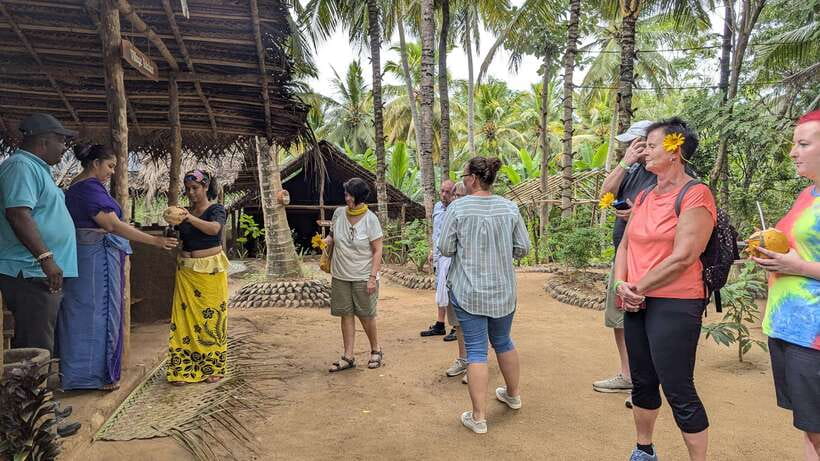
The setting is designed as a traditional Sri Lankan agricultural village from roughly 200 years ago. That gives the visit a clear theme: you are not simply watching a cooking show in a modern restaurant. You move through a place built to show how village life, farming, craft, and food once fitted together.
I would treat the reconstructed setting as an interpretive experience, not an untouched historic village. The value comes from the demonstrations and the people who explain them. The setting gives those activities a useful frame, helping you understand why a garden, spice preparation, mine, and kitchen would all matter to one rural community.
The property is close to the Udawalawe Elephant Orphanage, about 1.2 kilometers away. That makes this a practical add-on if you are already staying in or passing through the area. There is no transport included in the details provided, so you should arrange your own way to the meeting point.
The tour is private, which matters here. A cooking lesson works better when you can ask questions, handle the ingredients, and keep pace with the people teaching you. It also means the experience may feel more personal than a large group demonstration.
More Farm Cooking Classes in Sri Lanka
- Organic cooking class sigiriya (kumara & family)
★ 5.0 · 650 reviews - Kandy Village Cooking Class
★ 5.0 · 536 reviews - Organic Cooking Class sigiriya home Kitchen(Kumara & family)
★ 5.0 · 116 reviews
Cinnamon tea, king coconut, and the first taste of Sri Lanka
The welcome drink is described in two ways: cinnamon tea in the introduction and king coconut among the included items. Both fit the setting, but the difference is worth checking before you arrive.
Cinnamon tea gives you an early taste of one of Sri Lanka’s best-known spices. King coconut offers something cooler and more refreshing. Since the details do not settle the question, ask your guide which drink is included on the day. This small check also helps you avoid confusion later when drinks are offered with the meal.
The welcome is more than a quick refreshment. It gives the staff a chance to introduce the property and explain the route. You can use this moment to ask how much walking is involved, what you will cook, and which activities are scheduled during your two-hour visit.
The old gem mine and Sri Lanka’s stone trade
One stop takes you to an ancient gem mine, with a demonstration of the mining process. Sri Lanka has long been associated with colored stones, and this visit gives you a look at the physical work behind that trade.
The important point is that you are seeing a process rather than shopping for jewelry. The demonstration focuses on how miners of the past worked to uncover stones. For many people, this will be an unusual change of pace from the garden and kitchen.
I would keep your expectations measured. The supplied details do not promise that you will find or purchase a stone, and no specific mining equipment or underground conditions are described. Think of it as a short cultural stop that explains one part of local rural work.
If you are interested in crafts, trade, or the practical side of village life, this part adds useful variety. If your main reason for booking is food, it may feel less important than the cooking lesson.
Cinnamon peeling by hand
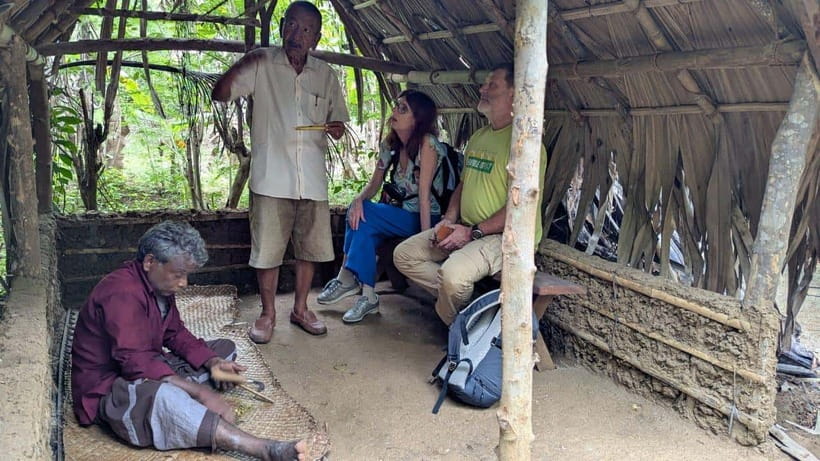
The cinnamon demonstration shows skilled artisans peeling and preparing cinnamon sticks. This is a simple activity to watch, but it helps turn a familiar kitchen spice into a real agricultural product.
Sri Lankan cinnamon is widely used in cooking and drinks, and the demonstration shows that producing it takes manual skill. You see the work behind the spice instead of encountering it only as a jar on a shelf.
The activity also connects nicely with the welcome drink. You begin by tasting cinnamon, then see how the spice is prepared. That kind of connection makes the short visit more memorable and gives you a better sense of how food traditions grow from local crops.
No promise is made that you will peel cinnamon yourself. The description presents it as a demonstration by artisans, so expect to watch and listen unless the staff invites you to take part.
Same place, a different thing to cook:
- Ella: Traditional Sri Lankan Cooking Class
★ 4.9 · 788 reviews - Sri Lanka Cooking Class with Granny
★ 5.0 · 587 reviews - Sea waves sri lankan cooking class
★ 5.0 · 467 reviews - Ella: Sri Lankan Cooking Class with Neranji at Homestay
★ 5.0 · 276 reviews
Picking vegetables from the garden
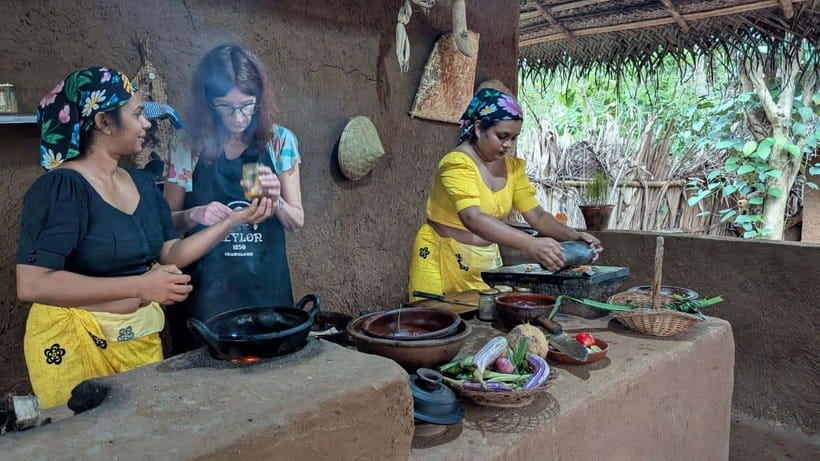
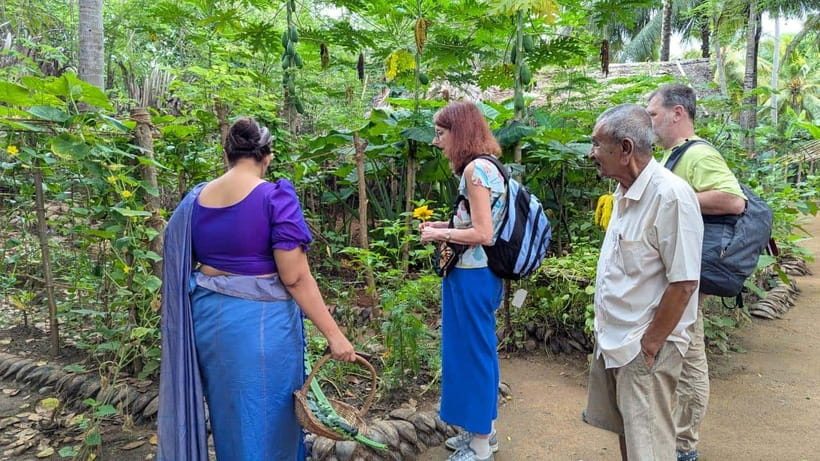
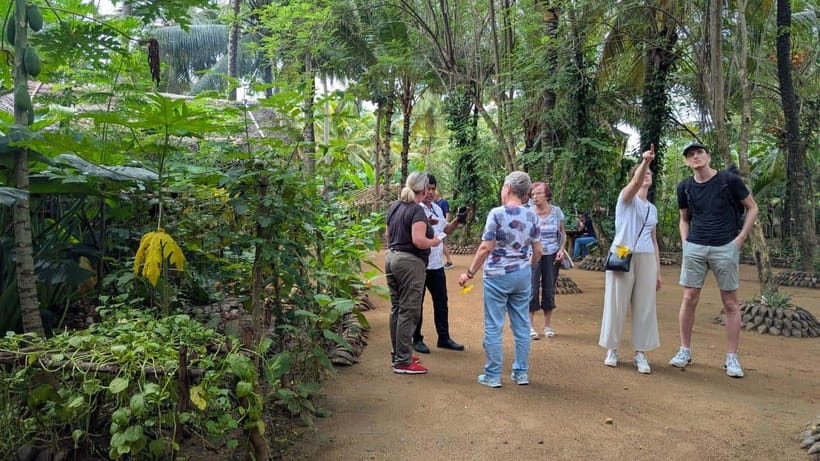
The garden is where the experience becomes active. You walk through the organic garden and pick vegetables for the cooking class. This is a strong idea because it gives you a direct role in the meal.
The garden visit also shows you that Sri Lankan cooking begins well before the stove. You can see the produce in its growing place, select what will be used, and then follow it into the kitchen. That short path from soil to plate is the clearest reason this experience earns its farm-to-table name.
The details do not identify the exact vegetables available on a particular day. You might find different produce depending on the garden and season. That uncertainty is part of the appeal, but it also means you should not arrive expecting one fixed menu.
The garden has received especially warm praise. You can expect staff to show you around and explain the fresh produce. If you enjoy plants, food, or taking part rather than sitting back, allow this portion your full attention.
The traditional kitchen and the women who teach you
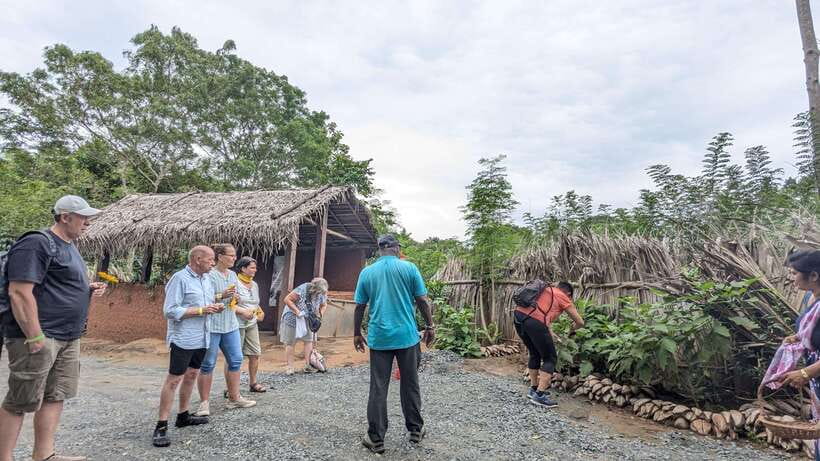
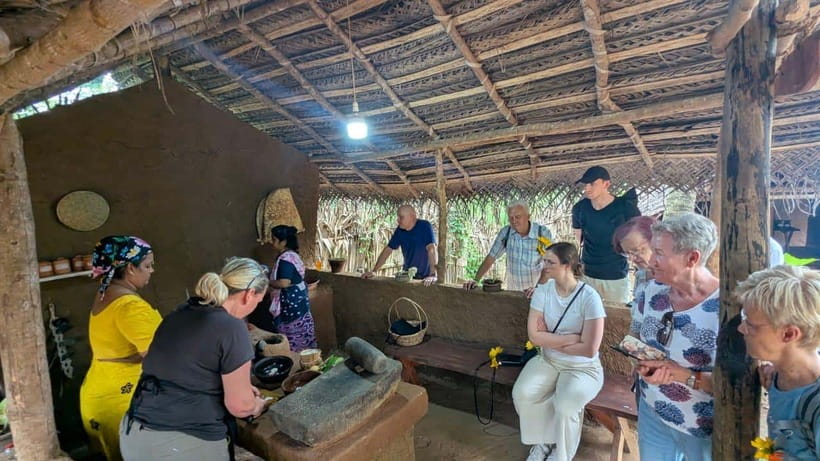
The cooking lesson is the main event. You join local women in a traditional village kitchen and learn to prepare Sri Lankan dishes using older recipes and methods. The class includes hands-on work such as grinding spices and cooking over an open flame.
That format gives you more than a recipe card. You learn how ingredients are handled, how spices are prepared, and how the meal comes together in a working village kitchen. The women are described as friendly and eager to show and explain as much as possible, which is important when the class moves quickly.
The strongest praise has focused on this section. One recent participant singled out the coconut sambal and dhal as the best they had eaten. Another described the class as informative and fun, with welcoming instruction throughout.
You should expect to participate, not simply watch a cook prepare lunch. Wear comfortable clothing and shoes for walking and kitchen work. The exact menu is not provided, so ask at the beginning if you have dietary restrictions or foods you cannot eat.
The traditional cooking method is also the part that may feel least polished. A village kitchen is meant to show older techniques, not provide the controlled conditions of a cooking school. Heat, smoke, open-fire cooking, and unfamiliar tools may be part of the experience. For most people, that is the point. If you prefer a modern kitchen with measured ingredients and a printed timetable, this may feel rough around the edges.
Eating the food you helped prepare
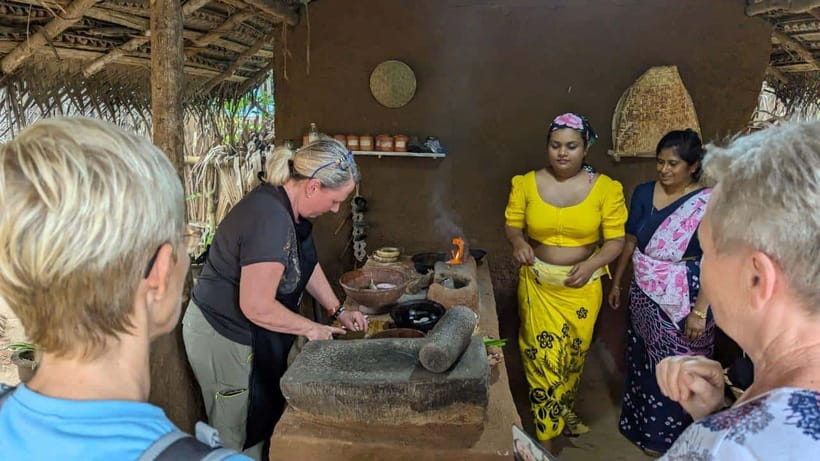
After the class, you sit down to eat the dishes you helped make. This shared meal gives the two-hour visit a proper ending and lets you judge the results for yourself.
Dhal and coconut sambal receive particular praise, but the complete menu is not specified. The meal is described as local and freshly prepared, with the dishes coming from the cooking class. That makes the food more meaningful than a standard restaurant lunch because you have followed it from garden to plate.
The communal setting adds to the sense of hospitality. You are not only eating in front of a demonstration. You are sharing the result of work done with the local women and staff.
Pay attention to the drinks policy. A welcome drink is included, but drinks served with the meal may be charged separately. One participant felt the final drink prices were far above shop prices because this had not been explained in advance. I would ask two direct questions before ordering: Is this included, and if not, what is the price?
That is a small matter, but it affects how you judge the $30 price. The food and instruction may justify the cost for you. Unexpected extras can spoil that calculation.
Melas, crafts, and the final village activities
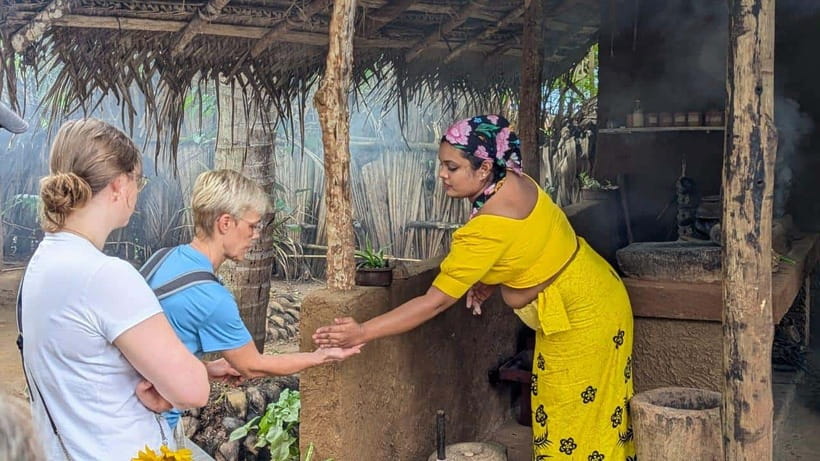
The experience also includes participation in local melas, described as traditional fairs with crafts, music, dance, and local delicacies. This is the liveliest part of the program and offers a wider look at community customs beyond food preparation.
The exact format is not explained, so you should ask what will be taking place during your visit. A mela may be a scheduled activity rather than a permanent attraction running at full scale every day. The two-hour duration is short, and the walking portion already takes about 90 minutes, so the amount of time available for fairs, crafts, and performances may vary.
Even if this section is brief, it adds a useful social side to the visit. The cooking class shows daily work, while the mela setting shows how food, craft, music, and gathering can come together for celebration.
How much time you really need
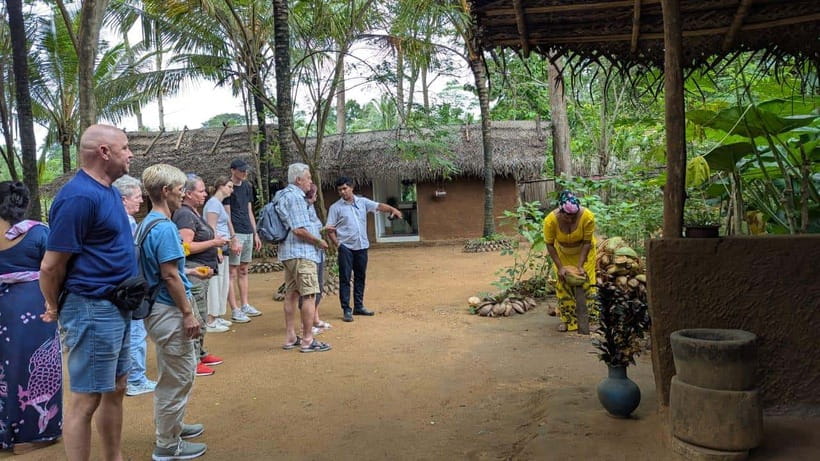
The advertised duration is two hours. At the same time, the important information says the full walking tour lasts about 90 minutes. The remaining time likely allows for the welcome, cooking, and meal, but the exact schedule is not supplied.
That makes punctuality useful. Arriving late could cut into the cooking lesson or meal, especially because several activities are packed into a short visit. You should also be ready for a fair amount of walking around the property.
The experience is not suitable for wheelchair users. Anyone with limited mobility should ask the provider for more detail before booking, since the route includes garden walking and a full circuit around the village setting.
English and Sinhala are available, and the experience is guided. A private group gives you a better chance to ask questions about ingredients, village customs, cinnamon, and mining than you would have in a large group.
Is $30 a fair price?
At $30 per person, this costs more than simply buying a Sri Lankan meal. You are paying for several parts: the guided village visit, gem mine demonstration, cinnamon presentation, garden access, hands-on cooking, prepared lunch, and cultural activities.
I think the price is fair if you want active participation and a structured cultural visit near Udawalawe. The cooking class alone receives strong praise, and the garden-to-kitchen format gives the meal a clear purpose. The private-group arrangement also adds value if you prefer personal instruction.
The price is less attractive if you mainly want lunch or a short look at village architecture. You may not have enough interest in every stop to make the full package worthwhile.
To protect the value, confirm the drink arrangements and ask what the two-hour schedule includes. The experience offers free cancellation up to 24 hours before the start, and you can reserve now and pay later, which helps if your Udawalawe plans may change.
Who should book this experience?
I would recommend it to you if you enjoy food, local crafts, gardens, and practical demonstrations. Families and couples may appreciate the mix of activities, while curious eaters will get the most from the vegetable picking and kitchen work.
It also suits anyone who wants a cultural activity close to the Udawalawe Elephant Orphanage. The nearby location makes it easy to add to a day in the area, though you should leave enough time for the full walking route.
I would think twice if you dislike heat, open-fire cooking, walking, or informal settings. It is also not suitable for wheelchair users. Those who expect a fully historic village, a fixed menu, or a polished restaurant class may find the reconstructed setting more theatrical and the format more rustic than expected.
Should you book the Udawalawe village cooking experience?
Book it if your priority is a friendly, hands-on food experience rather than a simple meal. The garden, local women’s cooking instruction, cinnamon work, and communal lunch create a fuller picture of village life, and the food appears to be the strongest part of the visit.
Before paying, confirm whether your welcome drink will be cinnamon tea or king coconut, ask about the price of meal-time drinks, and check the walking route if mobility is a concern. If you are comfortable with those details, this is a useful two-hour addition to a Udawalawe stay, particularly for anyone who wants to cook, eat, and learn rather than only look.
FAQ
Where is the experience located?
It is in Sabaragamuwa Province, Sri Lanka, about 1.2 kilometers from the Udawalawe Elephant Orphanage.
How long does the experience last?
The advertised duration is two hours. The full walking tour around the property lasts about 90 minutes.
What languages are available?
The live guide is available in English and Sinhala.
Is this a private tour?
Yes. The experience is offered for a private group.
What is included in the price?
The experience includes a welcome drink, an ancient gem mine visit and demonstration, cinnamon peeling, vegetable picking, a traditional cooking class, the meal prepared during the class, local mela activities, and the village cultural visit.
Is the meal included?
Yes. The meal featuring the dishes prepared during the cooking class is included.
Are drinks with the meal included?
The provided details do not clearly confirm that meal-time drinks are included. Ask for the price before ordering. A welcome drink is included, but it is described as both cinnamon tea and king coconut in different sections.
Is the experience suitable for wheelchair users?
No. It is specifically listed as unsuitable for wheelchair users, and the route includes about 90 minutes of walking.
Can I cancel for a full refund?
Yes. You can cancel up to 24 hours in advance for a full refund. You can also reserve now and pay later.
Just added around Sri Lanka
- cooking lesson★ 5.0 · 7 reviews
- Hands-On Cooking Class in Anuradhapura-Cook Like a Local★ 5.0 · 2 reviews
- Sri Lankan Cookery with Nilu★ 5.0 · 34 reviews
- Sri Lanka: Cooking Class★ 4.4 · 6 reviews
- Cooking Experience from Ella★ 4.9 · 2 reviews
- Sri Lankan Cooking Class in Bentota★ 5.0 · 2 reviews
- Private cooking class – Personalized classic menu★ 5.0 · 5 reviews
- Nilaveli: Sri Lankan Cooking Class with a Local Family★ 5.0 · 16 reviews
Farm & Countryside Cooking Classes, compared.

Half-Day Thai Cooking Class at Organic Farm in Chiang Mai
Read our review →
Cooking Class and Lunch at a Tuscan Farmhouse with Local Market Tour from Florence
Read our review →
Authentic Cooking Class with Market & Farm Visit
Read our review →

Hands-On Cooking Class & Farmhouse Tour on the Amalfi Coast
Read our review →Lists this class appears in