
REVIEW · HONSHU, JAPAN
Experience Authentic Japanese Home Cooking in Kyoto
Kyoto tastes different at home. This private cooking class brings you into a traditional townhouse more than 100 years old, where you learn everyday Japanese dishes rather than restaurant showpieces. I like the hands-on focus, especially making dashi from real bonito flakes and kelp, and I like that the recipes are practical enough to repeat in your own kitchen.
The lesson includes dashi-maki tamago, chicken teriyaki, simmered vegetables, and miso soup, with an English-speaking instructor guiding you through each step. The main drawback is the meeting information: one section names Subway Shijo Station, while another refers to Sanjo Keihan and Subway Sanjo Station. Confirm the exact pickup point after booking.
Key Points Before You Book
- Make dashi from scratch: Use real katsuobushi, or bonito flakes, and kombu instead of instant stock.
- Cook in a century-old townhouse: The setting gives the lesson a direct connection to ordinary Kyoto life.
- Learn useful home recipes: Dashi-maki tamago, chicken teriyaki, simmered vegetables, and miso soup are dishes you can make again.
- Practice delicate knife work: The instructor explains how Japanese ingredients are cut and prepared.
- Enjoy a private lesson: The class is designed for a private group, with English instruction and step-by-step help.
- Plan for two and a half hours: The activity is listed as lasting one day for booking purposes, but the actual cooking session takes about 2 hours and 30 minutes.
Why This Kyoto Cooking Class Feels Different
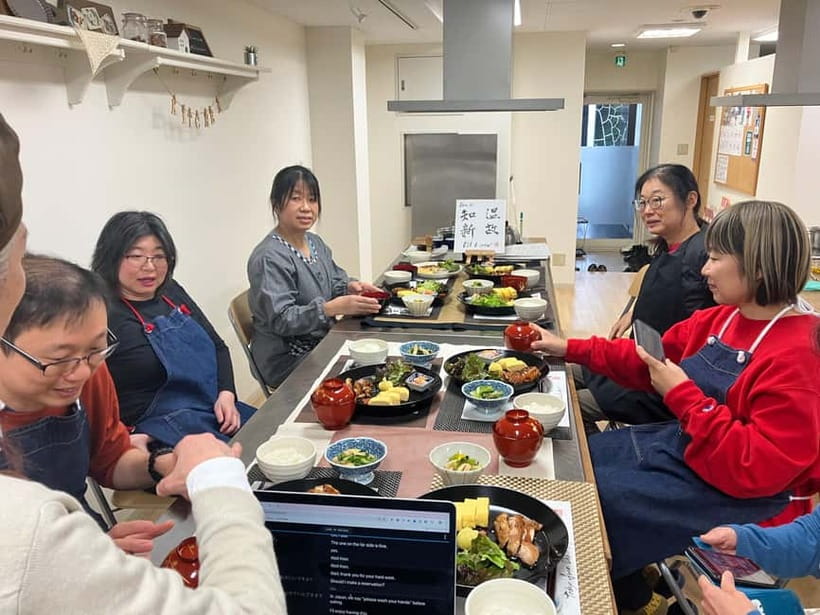
Many food activities in Kyoto are built around tasting. This one asks you to work. You make the stock, handle the ingredients, cook the dishes, arrange the plates, and sit down to eat what you prepared.
That difference matters. Japanese cuisine can look simple on the plate, but its flavor often depends on small choices: how long kombu is heated, how bonito flakes are handled, how vegetables are cut, and how seasoning is balanced. The class gives you a way to see those choices up close.
The cooking follows the home-cooking ideas associated with Katsuo Doi, one of Japan’s best-known authorities on everyday Japanese food. The aim is not elaborate restaurant cuisine. You learn warm, nourishing dishes that Japanese families might serve at home.
I especially like this approach for a first visit to Japan. You do not just eat a finished meal and move on. You learn why dashi matters, how seasonal ingredients fit into Japanese cooking, and how a few basic methods can produce several different dishes.
More Home Cooking Classes in Japan
- Private Home Cooking in Yanaka – Local Flavors in a Warm Setting
★ 5.0 · 173 reviews - Near Fushimiinari: Kyoto Home Cooking Class & Supermarket tour
★ 5.0 · 100 reviews - Japanese Home Cooking Class & Walk in Todoroki Temple Tokyo
★ 5.0 · 88 reviews
Meeting Your Instructor in Central Kyoto
The class takes place in a private home, so the instructor meets you at a station after your reservation is confirmed. The information provided names two possible station references: Subway Shijo Station, about a 10-minute walk away, and Sanjo Keihan or Subway Sanjo Station, also about a 10-minute walk from the classroom.
Because of that difference, I would confirm the station and meeting instructions before the day of the class. This is a minor planning issue, but it matters in Kyoto, where Shijo and Sanjo are separate areas and a wrong assumption can cost you time.
The location is useful for a full sightseeing day. Heian Shrine, Gion, Yasaka Shrine, and Kyoto Imperial Palace are all described as being within roughly a 15 to 20-minute walk of the class area. You can schedule the cooking lesson between visits to major sights instead of giving the activity an entire day.
The home setting is part of the appeal. You are not cooking in a large commercial studio with a stream of unrelated groups. This is a private-group lesson in an older Kyoto townhouse, giving you a closer look at the scale and feel of a traditional Japanese home.
Starting With Katsuobushi and Kombu
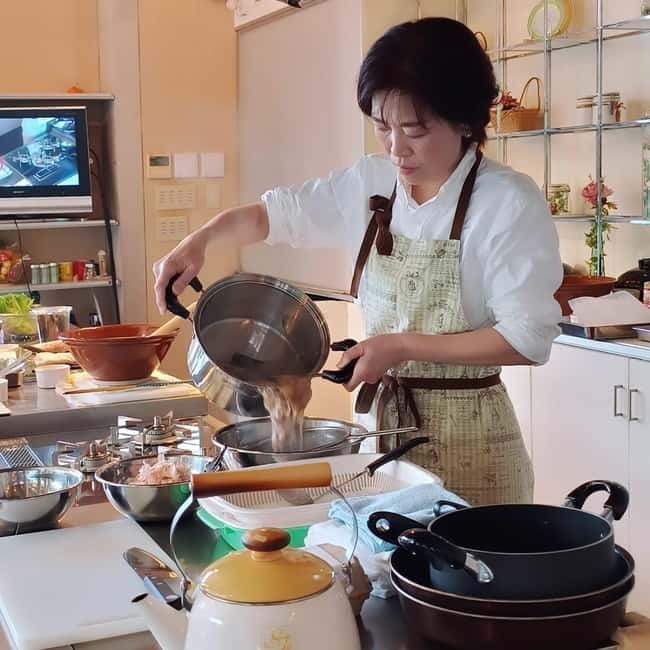
The first major task is making dashi, the basic stock used in many Japanese dishes. You work with kombu, or kelp, and katsuobushi, shaved dried bonito flakes.
This is the most important technical lesson of the class. Dashi is not just a liquid added to soup. It forms the base of miso soup, dashi-maki tamago, simmered vegetables, and many other Japanese dishes. Once you understand this stock, several parts of the menu begin to make sense.
The ingredients also explain the class’s focus on additive-free seasonings. Instead of depending on a prepared soup base, you build flavor from a few traditional ingredients. You may notice the aroma of the stock as it heats, followed by the savory taste that gives Japanese home cooking its gentle depth.
The lesson is suitable for beginners because the instructor leads you through the process step by step. At the same time, it is not only for people who rarely cook. Espen from Australia, who had spent much of his life working in kitchens, said he still picked up new tricks and techniques during the class.
That is a useful sign for experienced cooks. You may already know how to make stock, but Japanese methods for cutting, seasoning, and handling ingredients can still give you something new to take home.
Dashi-Maki Tamago, the Delicate Omelet
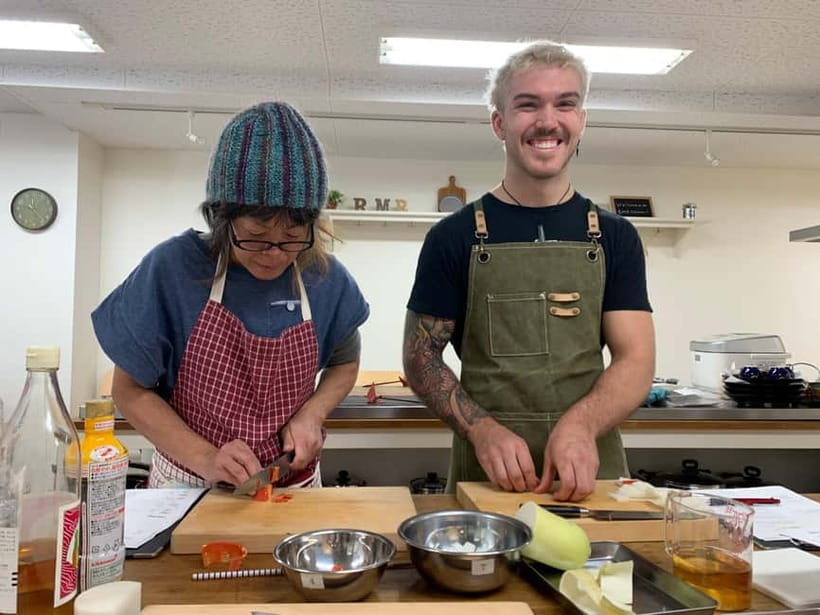
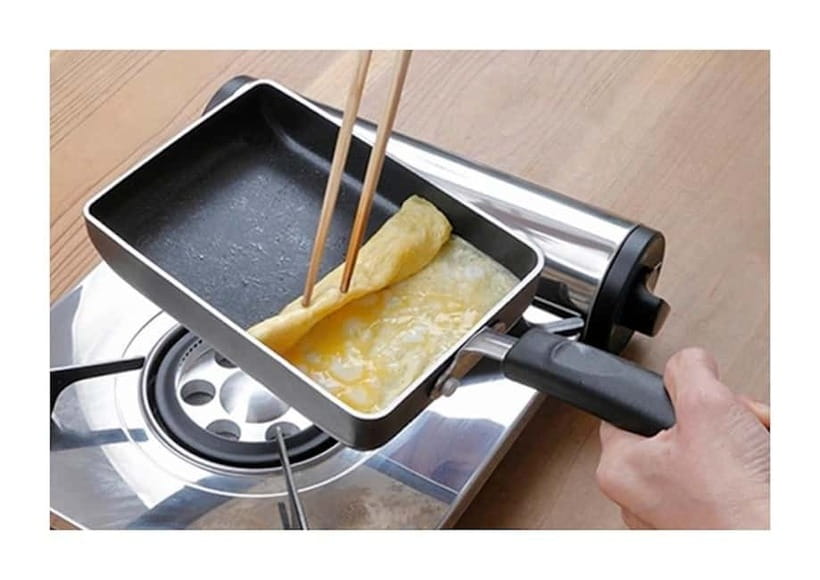
Next comes dashi-maki tamago, a Japanese rolled omelet made with the freshly prepared stock. It is a small dish, but it requires attention.
The egg must be cooked in layers and rolled carefully. The dashi gives it a softer texture and a savory flavor that differs from a standard Western omelet. This is one of the places where the class’s hands-on format helps. Watching an instructor make the omelet would be useful, but trying the rolling yourself gives you a better sense of heat, timing, and movement.
You should not expect instant perfection. The value is in learning the method and understanding what the finished texture should be. The instructor can correct your technique as you work, which is more useful than receiving a recipe with no practical guidance.
This dish also shows why the class focuses on home cooking. Dashi-maki tamago is familiar, comforting food, not a rare specialty reserved for formal meals. Once you learn the basic technique, you can adapt it at home.
More Sushi and Japanese Classes in Japan:
- Ramen Cooking Class at Ramen Factory in Kyoto
★ 5.0 · 1,937 reviews - Ramen & Gyoza Cooking Class in Tokyo with Local Supermarket Visit
★ 5.0 · 823 reviews - Kyoto: Ramen Cooking Class at a Ramen Factory with Souvenir
★ 4.9 · 532 reviews - Sushi Making Osaka! Popular Sushi Class in Japan!
★ 5.0 · 500 reviews
Simmered Vegetables and Seasonal Cooking
The class also includes simmered vegetables prepared with seasonal ingredients. This part connects the meal to one of the central ideas in Japanese cuisine: ingredients change with the time of year.
The exact vegetables are not specified, which is appropriate for a menu built around seasonality. You may find that the ingredients differ depending on when you visit. The important lesson is not memorizing one fixed recipe. It is learning how vegetables are cut, seasoned, and cooked so they absorb the broth while keeping their character.
Knife work receives special attention. Japanese knives are delicate, and the instructor teaches you how to use them properly. You learn that cutting is not only about speed. The shape and size of each piece can affect cooking time, texture, and presentation.
For a visitor, this is one of the most useful parts of the class. You can buy Japanese ingredients abroad, but a better knife alone will not improve your food if you do not know how to use it. The lesson connects the tool to the technique.
The vegetable dish also provides a health-minded counterpoint to the richer flavor of teriyaki. The class philosophy emphasizes food that is both delicious and nourishing, with seasonal produce helping create a balanced meal.
Chicken Teriyaki and Miso Soup
Chicken teriyaki brings a familiar dish into the same meal. Many people know teriyaki from Japanese restaurants outside Japan, but preparing it in a home-cooking setting gives you a chance to understand the balance of sweet and savory seasoning.
The lesson focuses on traditional flavors and additive-free seasonings. You learn how the sauce works with the chicken rather than simply buying a bottled version. This is practical for home cooks because teriyaki is easy to recognize, easy to serve, and likely to appeal to a wide range of tastes.
Miso soup completes the meal and brings the dashi back into focus. You have already made the stock, so you can taste how it functions as the base of a simple soup. The connection between the dishes is part of the lesson: one carefully made foundation can support several different preparations.
The menu is modest in size, but that is a strength. Four or five dishes give you enough variety without turning the class into a rushed cooking contest. You have time to learn the methods, ask questions, and notice how the same basic ingredients appear in different forms.
Plating the Meal in a Kyoto Home
After cooking, you plate the food and set the table before eating. This is not just decoration. Japanese meals pay attention to color, shape, balance, and the way dishes are arranged.
The townhouse setting makes this final stage feel more personal than eating at a restaurant. You are sharing a meal in the same place where the cooking lesson happened, and the food has a clear connection to the techniques you just practiced.
The activity includes the cooking experience, apron and cloth rental, ingredients, all listed menu items, and the meal itself. You do not need to bring cooking equipment or buy separate ingredients for the lesson.
A dashi soup set is not included. If you want to recreate the stock immediately at home, ask about purchasing one separately. Merchandise is also not included, so the class is primarily about skills and food rather than shopping.
What the Price Means at $122
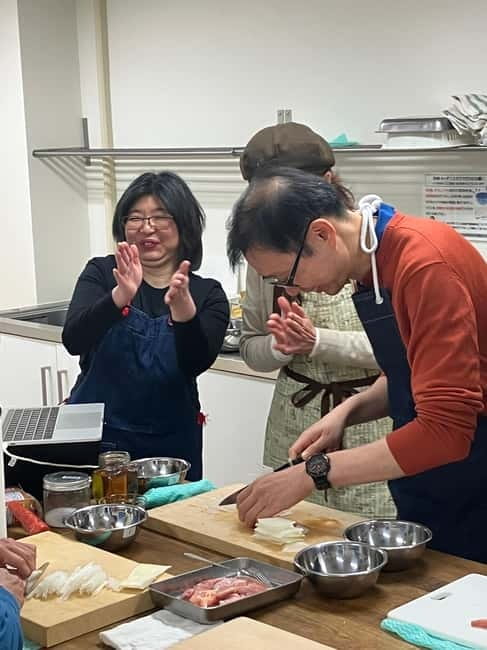
At $122 per person, this is not a cheap meal. You are paying more than you would for a casual bowl of noodles or a set lunch in Kyoto.
The value comes from the private format, the 2.5-hour instruction, the ingredients, the meal, and the access to a local home. You also leave with methods you can use again: making dashi, rolling an omelet, simmering vegetables, preparing teriyaki, and using Japanese knives.
I would consider the price fair for someone who wants a serious food experience rather than a quick demonstration. It is especially reasonable if your group values personal instruction and plans to cook Japanese food after returning home.
The value is less clear if you mainly want to eat. Kyoto has plenty of excellent restaurants, and this activity takes time and concentration. You need to be comfortable spending part of your sightseeing day in a kitchen.
The private-group format helps justify the cost. You are not placed into a large class with an impersonal pace. The instructor can respond to your questions and adjust the guidance to your cooking level.
What the English Instruction Is Like
English is listed as the teaching language. The class is intended to be accessible to people who may have little or no Japanese cooking experience.
Feedback from Espen specifically described language as no major obstacle. He used some Japanese, the instructor and company used English, and a translator had been arranged. That suggests the class can work even if your English or Japanese is not perfect, though you should still communicate any needs in advance.
Kayo is named in the feedback as an instructor who gave a strong demonstration of traditional Japanese cooking at a level accessible to different skill levels. Other feedback describes the teachers as kind, fun to talk with, and attentive to individual needs.
I would book this for a solo food enthusiast, a couple, or a small private group that wants conversation along with cooking. The private setting makes it easier to ask basic questions without feeling rushed.
Who Should Book This Experience?
You will likely enjoy this class most if you:
- Want to learn recipes you can make at home
- Care about ingredients and traditional preparation
- Enjoy hands-on activities more than passive demonstrations
- Have an interest in Japanese knives and cutting methods
- Want a home-based experience alongside Kyoto’s temples and shrines
- Prefer a private group over a large class
- Are comfortable spending about two and a half hours cooking
It is also a good choice for an experienced cook. Espen’s experience suggests that the class is not limited to beginners, particularly because Japanese cutting methods and dashi preparation may be unfamiliar.
There are a few limits. Children under six are not suitable for the activity. Men-only groups cannot participate at this location, although a separate rental kitchen may be available if you contact the provider. The class is also less suitable if you want a quick, low-cost tasting with no preparation.
Cancellation is free up to 24 hours before the activity for a full refund, and you can reserve now and pay later. Those policies help if your Kyoto schedule is still changing.
Should You Book It?
Book this cooking class if you want to understand Japanese food from the inside, not just order it at a restaurant. The strongest reasons are the handmade dashi, the practical recipes, the small private setting, and the chance to cook in a Kyoto townhouse more than 100 years old.
I would skip it only if your schedule is too tight for a 2.5-hour lesson or if $122 feels high for a meal. For everyone else, especially home cooks and food-focused visitors, this is a useful way to connect Kyoto sightseeing with everyday Japanese life.
Confirm the exact station pickup point before you go, then arrive ready to handle a knife, roll an omelet, and taste the difference a proper stock can make.
FAQ
How long does the cooking class take?
The actual class takes about 2 hours and 30 minutes. The activity may appear as one day in booking details, but the provided class information gives the cooking time as 2.5 hours.
Where does the class meet?
The meeting information names Subway Shijo Station, about a 10-minute walk from the location. The classroom information also refers to Sanjo Keihan and Subway Sanjo Station, also about a 10-minute walk away. The instructor will come to the station for pickup after your reservation is confirmed, so confirm the exact station in advance.
What dishes will I prepare?
You will make dashi, dashi-maki tamago, chicken teriyaki, simmered vegetables with seasonal ingredients, and miso soup. You will also plate the food and set the table.
Is the class taught in English?
Yes. English is listed as the class language. A translator was also arranged for one participant when needed.
Is this a private cooking class?
Yes. The group type is listed as a private group.
What is included in the price?
The price includes the cooking experience, apron and cloth rental, ingredients, all listed menu items, and the meal.
Is a dashi soup set included?
No. A dashi soup set is not included. Merchandise is also not included.
Can children attend the class?
Children under six are not permitted to participate.
Can an all-male group book this location?
No. Men-only groups cannot participate at this location. A separate rental kitchen may be available, so you should contact the provider if this applies to your group.
Just added around Japan
- Cooking Class: Make a Local Delicacy in a Japanese House★ 5.0 · 7 reviews
- Culinary Home Cooking with Grandmothers – Vegan Friendly★ 5.0 · 5 reviews
- Nagoya Super Market Tour & Home Cooking Class with a Local, Akiko★ 5.0 · 10 reviews
- Tokyo: Sushi Making Experience & Japanese Cooking Class★ 5.0 · 2 reviews
- Tokyo: Sushi Cooking Class with Sake Tasting★ 4.8 · 55 reviews
- Tokyo: Sushi roll and side dish cooking experience★ 5.0 · 2 reviews
- Tokyo: Gyoza Making from Scratch – Ultimate Cooking Class★ 5.0 · 2 reviews
- Tokyo: Night Cooking Class: 5 Home-Cooked Japanese Dishes★ 4.9 · 13 reviews
Home Cooking Classes, compared.
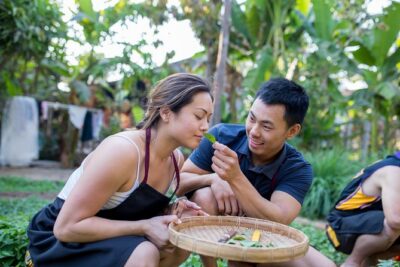
Khmer Cooking Class at a Local’s Home in Krong Siem Reap
Read our review →
Local Home Korean Cooking Class & Market Adventure in Seoul
Read our review →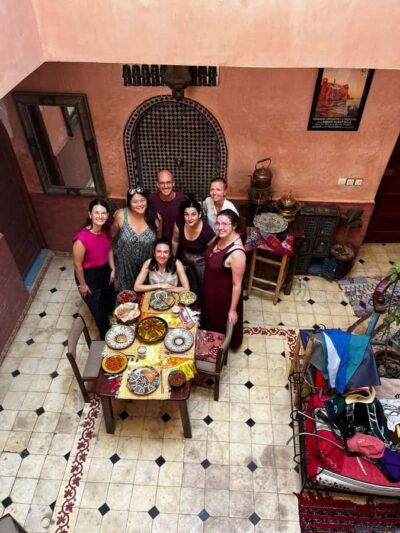
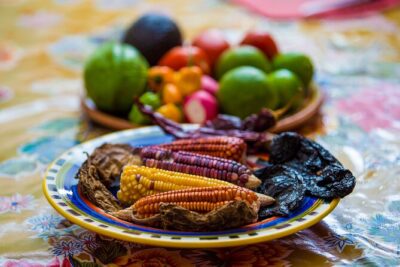
Mexican Cooking from Scratch in a Local Home in Tulum
Read our review →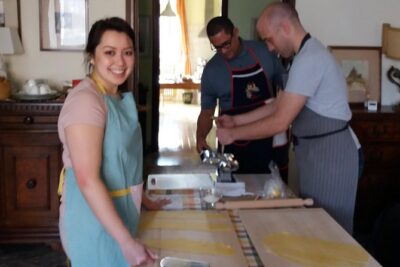
Pastamama, Home Cooking Classes at Grace’s Home
Read our review →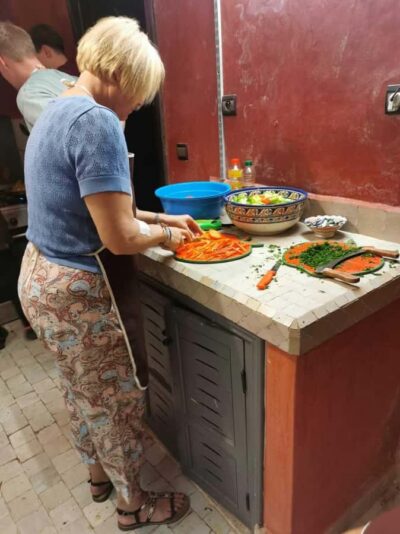
Traditional Cooking Class & meal with Local Family
Read our review →
Lists this class appears in