
REVIEW · EASTERN PROVINCE, SRI LANKA, SRI LANKA
Ella: Sri Lankan Authentic Cooking expirience
Good food is the best souvenir. This two-hour class takes you into a traditional Sri Lankan home, where you help prepare rice, coconut roti, sambal, and several curries before sitting down to eat. I like the hands-on format and the chance to learn from Ruwini, a warm English-speaking home cook. I also like that the recipes are sent by email, so the class does not end when you leave the table.
The main thing to consider is the short two-hour schedule. You prepare a large number of dishes in that time, which makes the class lively but may leave little room for slow, detailed instruction on every recipe. The setting is also a local home rather than a polished cooking studio, which is part of the charm but may not suit anyone looking for a formal demonstration.
Key points at a glance
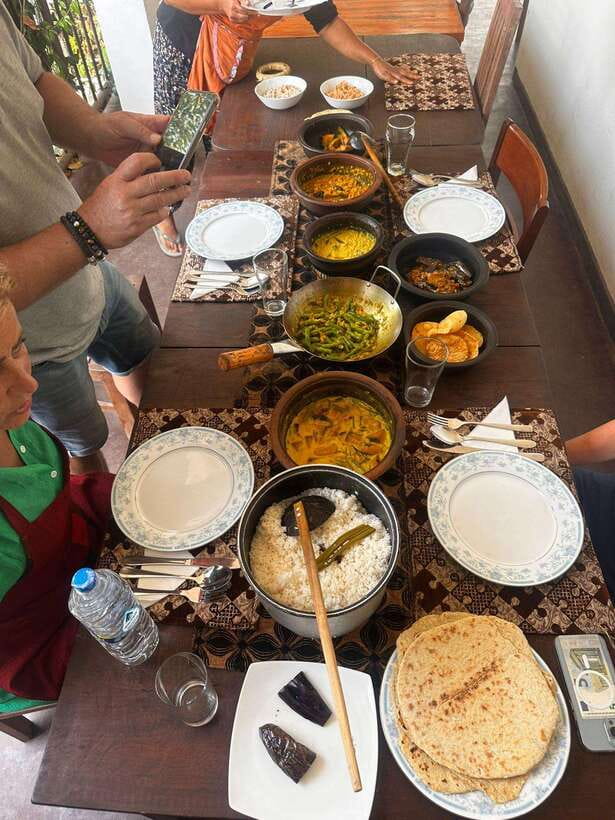
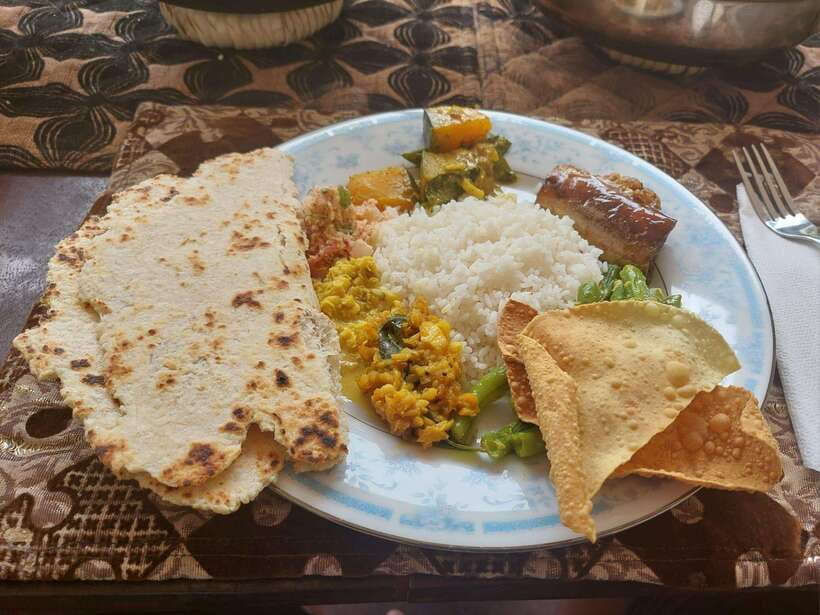
- A full Sri Lankan meal in two hours: Prepare rice, aubergine modju, dhal, pumpkin, beans, coconut sambal, coconut roti, and papadam.
- Real kitchen participation: You may crack coconuts, scrape them, make fresh coconut milk, and help build the curries.
- Ruwini leads the class: Her clear English, patience, humor, and practical cooking advice are central to the experience.
- Strong vegetarian choice: The menu is built around vegetables, lentils, coconut, and spices, with several useful ingredient substitutions explained.
- Small-group setting: Groups are limited to 10, with private sessions available by request.
- Good value at $22: The price includes instruction, ingredients, equipment, and the meal you prepare.
A Sri Lankan kitchen, not a cooking-school set
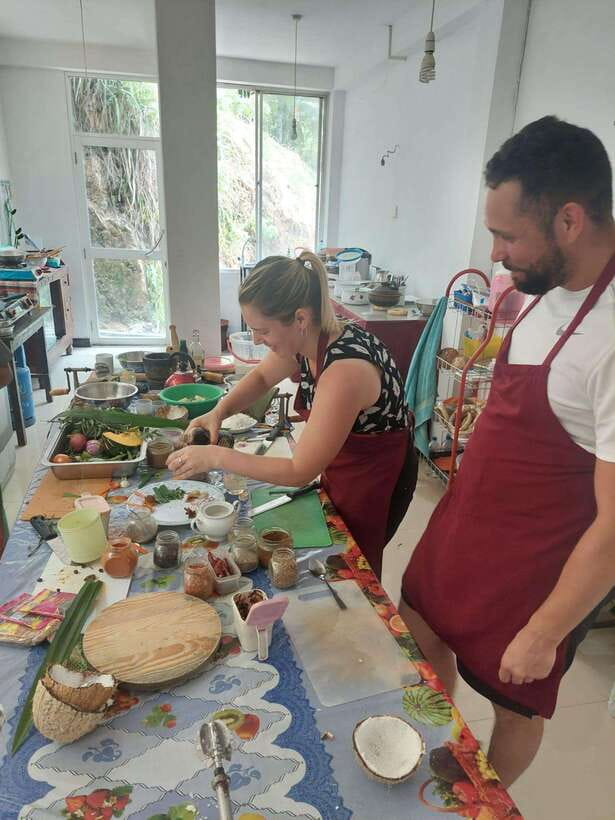
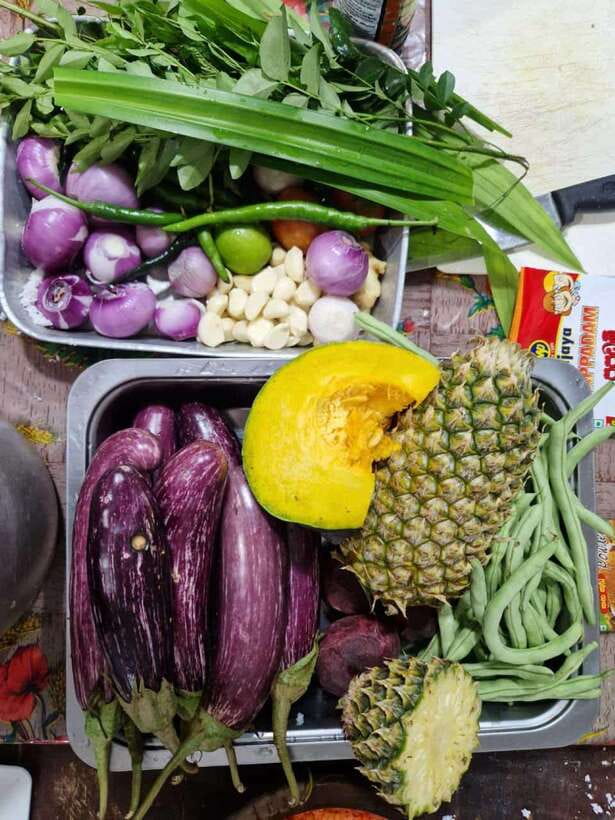
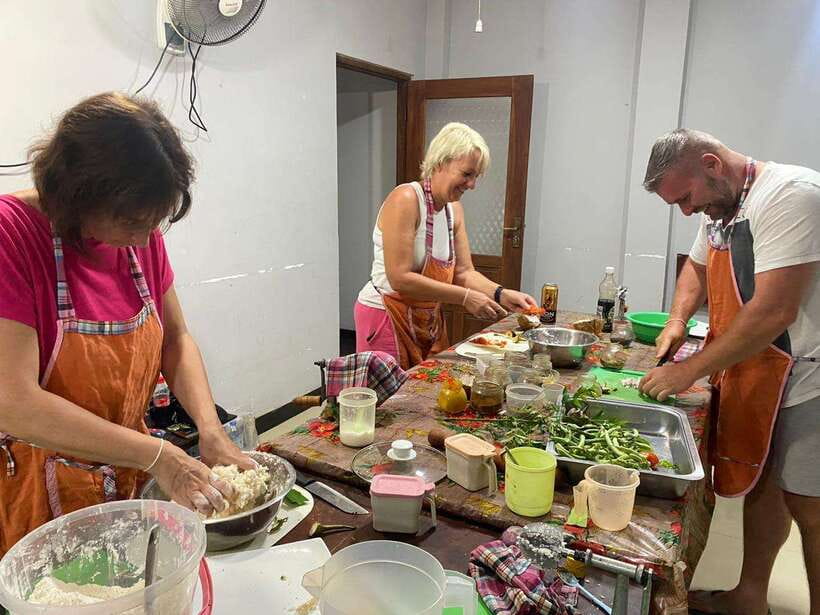
The class takes place in a traditional Sri Lankan home in the Ella area. That detail matters. You are not simply watching a chef work behind a counter while taking notes. You are expected to take part, handle ingredients, and help turn a collection of vegetables, lentils, rice, coconut, and spices into a complete meal.
Ruwini hosts the session and speaks English. The strongest praise for the class centers on her teaching style. She brings people into the work, keeps the mood light, and makes the recipes feel manageable rather than mysterious. That is useful in Sri Lankan cooking, where the ingredient list can look longer than the actual method.
The class is limited to 10 people. That is still a fairly large group for a home kitchen, but the format appears to work best when several people divide up the tasks. Smaller sessions can give you a more important role in each dish. Private sessions are available on request, and the schedule may be adjusted for those bookings.
A few more cooking classes around Sri Lanka worth a look
- Ella: Traditional Sri Lankan Cooking Class
★ 4.9 · 788 reviews - Organic cooking class sigiriya (kumara & family)
★ 5.0 · 650 reviews - Sri Lanka Cooking Class with Granny
★ 5.0 · 587 reviews
The opening lesson: spices and flavor
The class begins with a short introduction to Sri Lankan spices. This is a good place to pay attention, since the aim is not simply to copy a recipe. You learn how the flavor of a dish changes depending on the spices and vegetables used.
Sri Lankan food is often described simply as rice and curry, but this class shows why that description is too broad. The meal includes several curries with different flavor profiles, along with coconut-based sides and roti. The point is contrast: creamy dhal, sweet or earthy pumpkin, beans, eggplant, fresh coconut sambal, and the plain base of rice.
Ruwini also explains how to adjust recipes when you return home. That is one of the most useful details in the class. Some Sri Lankan ingredients may be difficult to find outside the country, so she gives substitute options and suggests ways to work with vegetables or spices available in your own kitchen.
You should ask questions early, especially if you want to understand how to control spice levels. The provided information does not promise a separate spice-free menu, so anyone with strong preferences should discuss them with the host before cooking.
Cracking coconuts and making the base ingredients
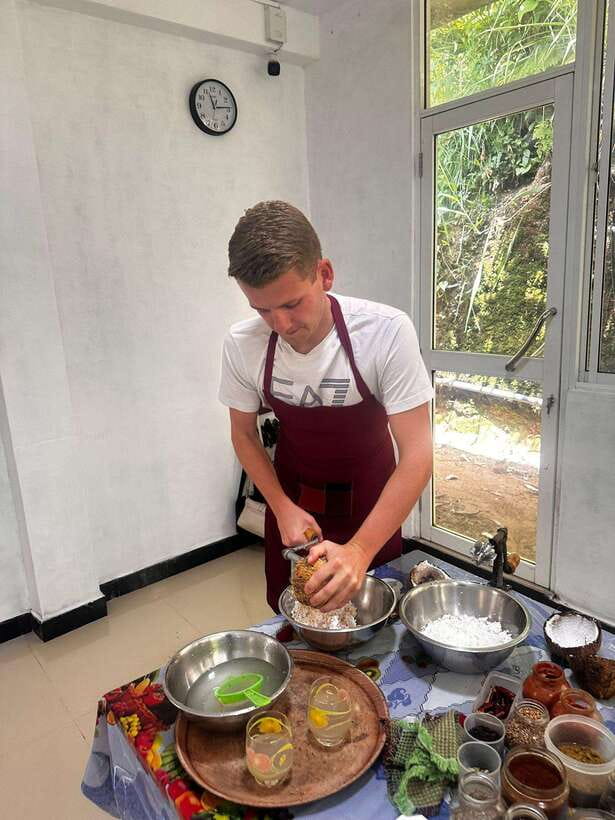
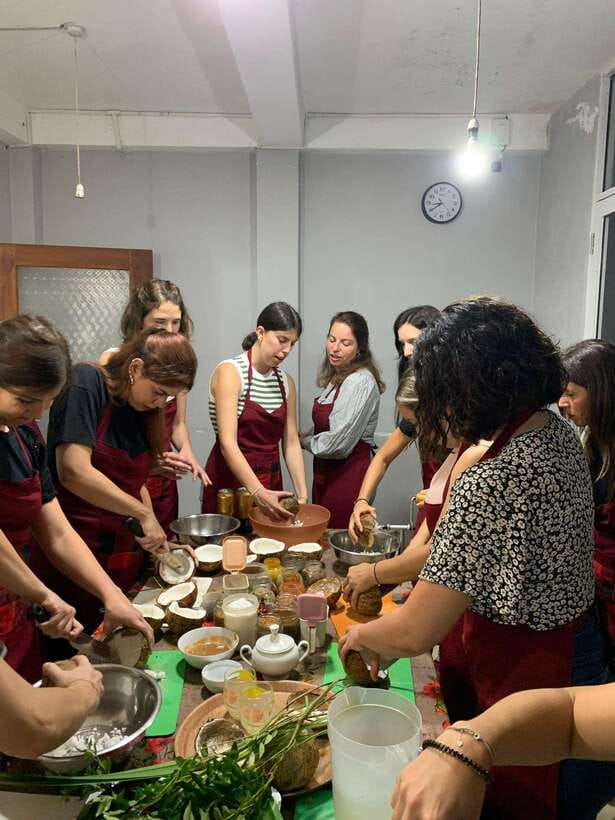
The coconut work gives the class its most memorable practical detail. You may help crack coconuts, scrape the flesh, and prepare fresh coconut milk. This takes more effort than opening a can, but it shows how central coconut is to Sri Lankan food.
Fresh coconut appears in more than one form during the meal. Coconut milk adds body to curries, while grated coconut forms the base of sambal and helps give the roti its texture. Seeing those changes in the kitchen helps you understand the food better than simply tasting the finished dishes.
This part may be less comfortable if you prefer a quick, tidy lesson. It is hands-on work, and the class asks you to participate rather than stand back. That is exactly why the activity has more value than a standard restaurant meal, but it also means you should arrive ready to work.
Building the meal, dish by dish
The menu is generous for a two-hour session. You prepare rice, aubergine modju, dhal curry, pumpkin curry, beans curry, coconut sambal, coconut roti, and papadam.
Aubergine modju is a particularly good inclusion. The dish brings a different texture and flavor to the table, and it gives you a useful example of how a single vegetable can become a strong part of a rice-and-curry meal. One participant singled out the eggplant dish as a favorite, while another remembered jackfruit curry from the class. The exact menu may vary, so do not assume every session includes jackfruit.
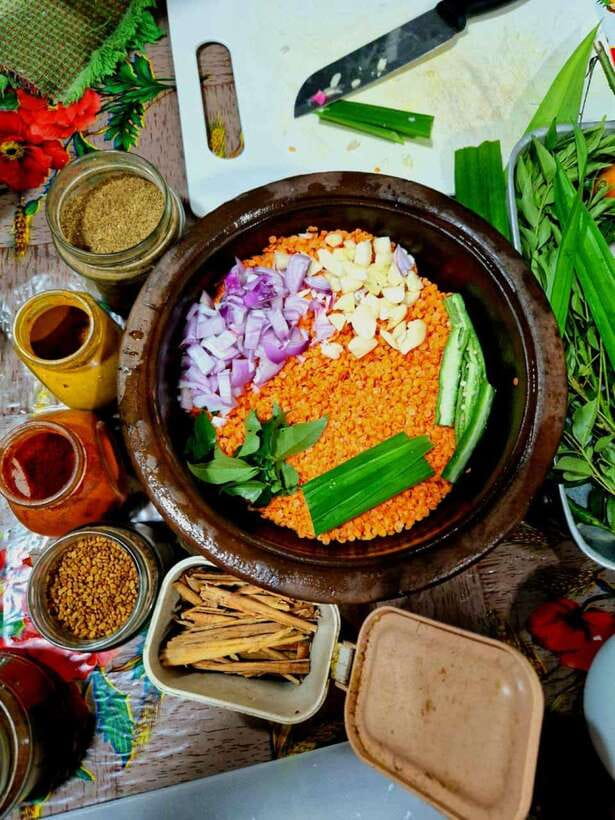
Dhal curry provides a familiar foundation for the meal. It is also one of the more useful dishes to take home, since lentils are widely available and the method can be adapted. Pumpkin and beans show how vegetables are treated as main parts of the meal, not just side dishes.
Coconut sambal brings freshness and texture. Coconut roti adds a simple bread element that you can make again without special equipment. Papadam rounds out the spread with a crisp bite.
With so many dishes, you will not receive a long private lesson on each one. Instead, you work as a team and learn the key steps across the meal. If you want detailed notes, keep your recipe email and write down questions while the cooking is underway.
Same place, a different thing to cook:
- Kandy Village Cooking Class
★ 5.0 · 536 reviews - Sea waves sri lankan cooking class
★ 5.0 · 467 reviews - Ella: Sri Lankan Cooking Class with Neranji at Homestay
★ 5.0 · 276 reviews - Cook with Wasantha
★ 5.0 · 248 reviews
The best part comes at the table
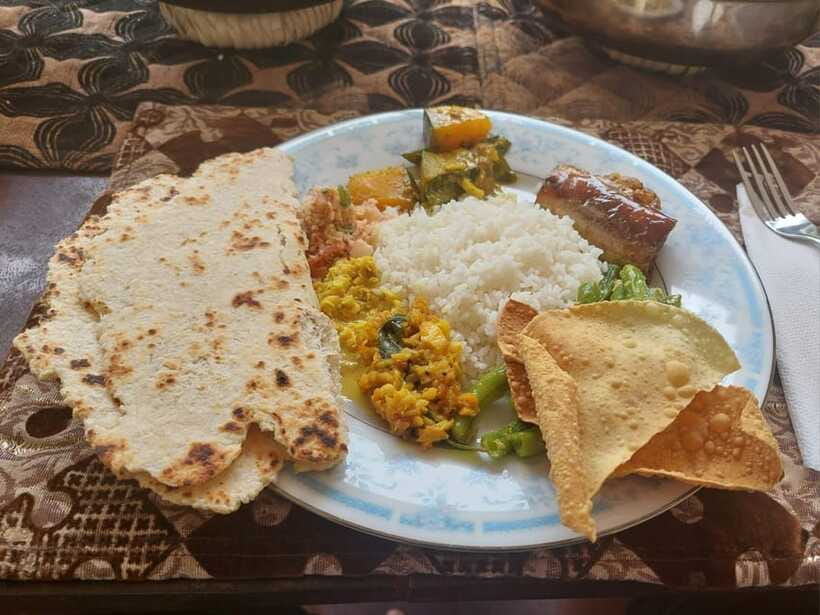
After the cooking, you sit down to eat the meal you helped prepare. This is not an afterthought. The final meal is a major part of the experience, especially after working with the ingredients yourself.
The food is served as a broad rice-and-curry spread, with several dishes to try together. You can compare the textures and flavors, and you can see how the individual recipes work as one meal. That makes the final sitting more useful than tasting one finished dish in isolation.
The meal is also social. You may share it with the other people in the group, and the cooking tasks give everyone something to talk about. The small-group limit helps keep the gathering manageable, though a full group of 10 can mean that you share responsibilities rather than making every dish from start to finish.
An upcountry black tea is available on request. If that sounds appealing, ask for it rather than assuming it will be brought automatically.
What makes the $22 price worthwhile
At $22 per person, the value is strong because the fee covers more than instruction. It includes all cooking ingredients and equipment, the meal, the spice introduction, and the recipes sent by email afterward.
You are also getting a cultural activity in a local home rather than paying only for food. A meal in a restaurant may be easier, but it will not show you how coconut becomes milk, how the curries are assembled, or how the dishes fit together.
The recipe email adds lasting value. Several people received the recipes within hours, and Ruwini also explained substitutions for ingredients that may be hard to find at home. That makes the class useful for anyone who wants to recreate the meal after returning from Sri Lanka.
The price does not include transportation to or from the cooking location. You need to arrange that separately, and the exact meeting details should be confirmed when booking. Since the activity lasts only two hours, transport time can affect the overall value if you are staying far away.
Who will enjoy this class most
I would recommend the class to anyone who wants more than a food tasting. You will get the most from it if you enjoy working with your hands, asking questions, and eating a substantial meal afterward.
It suits:
- First-time visitors to Sri Lankan cuisine
- Vegetarians looking for a meal with real variety
- Couples who want a shared activity
- Families or small groups who enjoy cooking together
- Anyone hoping to reproduce Sri Lankan dishes at home
- People who prefer local homes to formal tourist venues
It is also a good choice for food lovers who have already eaten rice and curry but want to understand the process. The class explains the ingredients and gives you practical ways to adjust them.
You may prefer another activity if you dislike group cooking, have limited time for active participation, or want a highly technical chef-led course. The large menu means the teaching is practical and fast rather than a slow masterclass in one recipe.
Dietary needs and accessibility
Tell the host about allergies or dietary restrictions in advance. The menu is strongly suited to vegetarians, but the available information does not promise that every dietary request can be handled on the day without prior notice.
The class is listed as wheelchair accessible. If you need a particular setup or have mobility concerns, it is still sensible to confirm the arrangements before arriving, since the activity takes place in a traditional home rather than a purpose-built cooking school.
The instructor language is English. Ruwini’s fluent English and patient explanations make the session suitable for people who want to ask questions while they cook.
Booking flexibility and group size
The class runs for two hours, with starting times based on availability. You can reserve now and pay later, which helps if your plans in Ella are still changing. Free cancellation is available up to 24 hours in advance for a full refund.
Groups are limited to 10 people. That limit keeps the class smaller than a mass-market food demonstration, though the quality of your hands-on role will depend partly on how many people attend.
Private sessions are possible by request, with time adjustments available. If you want more time with Ruwini, have a complicated dietary need, or are arranging a special occasion, ask about a private class before booking.
Should you book the Honey Bee Garden cooking class?
Yes, if you want an affordable, practical introduction to Sri Lankan home cooking. The best reasons to book are the generous menu, the fresh coconut work, Ruwini’s friendly teaching, and the chance to eat what you have prepared.
I would especially choose it for a couple, a small group of friends, or anyone who wants recipes they can use after the holiday. The class has earned a perfect 5.0 rating from 59 reviews, with repeated praise for the food, the welcoming host, the number of dishes, and the clear explanations.
Keep your expectations realistic. This is a busy two-hour home cooking session, not a quiet one-dish workshop. You will share tasks in a group, and you must arrange your own transport. For $22, though, the combination of instruction, a full meal, local setting, and take-home recipes makes this one of the better-value food activities in Ella.
FAQ
How long does the Sri Lankan cooking class last?
The class lasts two hours.
How much does the cooking experience cost?
The price is $22 per person.
Where does the cooking class take place?
The class takes place in a traditional Sri Lankan home in Ella, Sri Lanka.
Who teaches the cooking class?
The host is Ruwini, a local woman and experienced home cook who speaks English fluently.
What food will I prepare?
The meal includes rice, aubergine modju, beans curry, dhal curry, pumpkin curry, coconut sambal, coconut roti, and papadam. The exact dishes may vary, as some class participants also learned jackfruit curry.
Are ingredients and cooking equipment included?
Yes. The cooking ingredients and equipment are included, along with the meal you prepare.
Are recipes provided after the class?
Yes. The recipes are sent by email after the cooking class.
Is transportation included?
No. Transportation to and from the cooking class location is not included.
Can I cancel the booking?
You can cancel up to 24 hours in advance for a full refund. You can also reserve now and pay later.
Just added around Sri Lanka
- cooking lesson★ 5.0 · 7 reviews
- Hands-On Cooking Class in Anuradhapura-Cook Like a Local★ 5.0 · 2 reviews
- Sri Lankan Cookery with Nilu★ 5.0 · 34 reviews
- Sri Lanka: Cooking Class★ 4.4 · 6 reviews
- Cooking Experience from Ella★ 4.9 · 2 reviews
- Sri Lankan Cooking Class in Bentota★ 5.0 · 2 reviews
- Private cooking class – Personalized classic menu★ 5.0 · 5 reviews
- Nilaveli: Sri Lankan Cooking Class with a Local Family★ 5.0 · 16 reviews
Cooking Classes, compared.

Half-Day Thai Cooking Class at Organic Farm in Chiang Mai
Read our review →

3 in 1 Cooking Class near Navona: Fettuccine, Ravioli & Tiramisu
Read our review →
Pasta & Tiramisu Cooking Class with Unlimited Wine
Read our review →
Hanoi Cooking Class: Culture, Local Market & Meaning CSR Impact
Read our review →
5 Traditional Dishes Hanoi Cooking Class with Market Trip
Read our review →
Cooking Class and Lunch at a Tuscan Farmhouse with Local Market Tour from Florence
Read our review →
Cooking Class, Market & Thai Herbs Garden Tour
Read our review →Lists this class appears in