
REVIEW · SIGIRIYA, SRI LANKA
Sajee’s Place Cooking Class
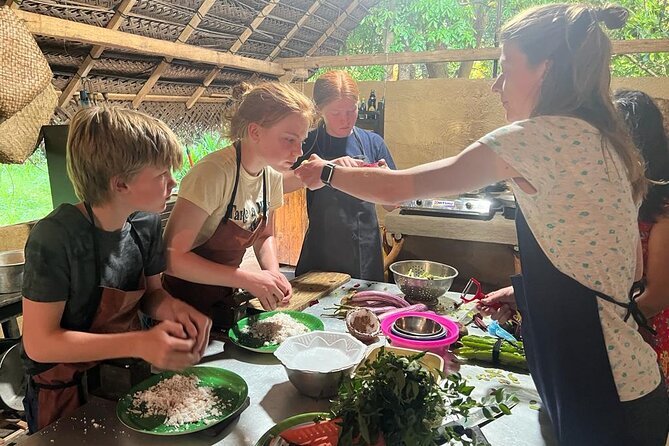
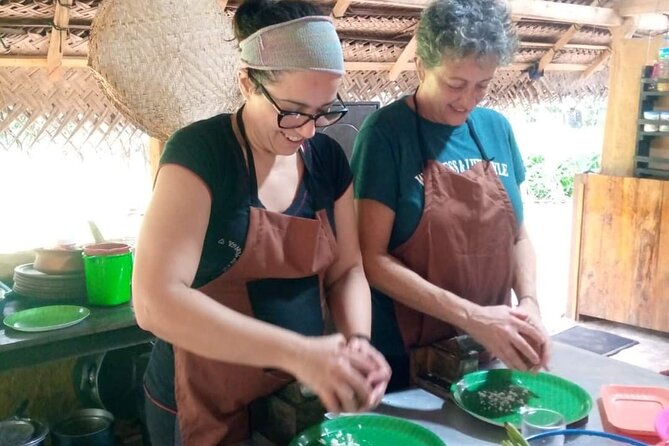
Good food makes Sri Lanka easier to understand. At Sajee’s Place Cooking Class in Sigiriya, Sajeeva and his wife, Suzy, teach you how to prepare a traditional Sri Lankan meal with spices, coconut, rice, lentils, and several curries. I like the hands-on cooking, especially the chance to make coconut milk from scratch, and I like that Sajee and Suzy explain how to repeat the recipes at home. The main consideration is that a three-hour class with several dishes can feel busy, especially if you prefer a slow, quiet cooking lesson.
The class costs $35 per person, which is fair for the amount of food and instruction included. You do not simply watch someone cook. You wash, grind, mix, season, and prepare the meal before sitting down to eat what you made. The number of dishes can also vary, so you may prepare six or seven curries rather than a fixed menu.
Key points at a glance
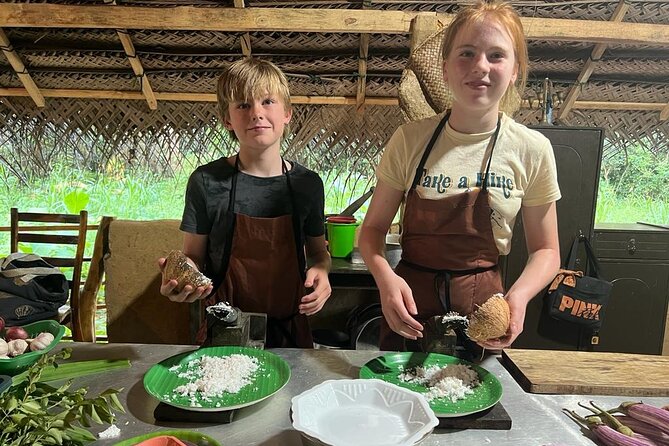
- Make coconut milk yourself: This practical step helps you understand a key part of Sri Lankan cooking.
- Prepare several curries: Past menus have included potato, carrot, lentil, pumpkin, chicken, fish, beans, and other seasonal vegetables.
- Learn the spices properly: Sajee and Suzy explain each spice’s use, origin, benefits, and flavor before you add it.
- A meal you cook yourself: The class ends with rice, curries, sambol, and other dishes served at the same place.
- Small maximum group: The class accepts up to 10 participants, allowing for hands-on work rather than a large demonstration.
- Useful for families: Children and teenagers can take part in the preparation, with examples of young people staying engaged throughout the class.
Arriving at No 92, Fourth Mile Post
Sajee’s Place Cooking Class is at No 92 Fourth Mile Post, Sigiriya 21120. The activity starts and ends at the same address, so you do not need to arrange a second pickup point after the meal.
The location is near public transportation, though the supplied information does not give a detailed transport plan or hotel pickup service. I would confirm your arrival time and directions with Sajee before setting out. The class can also be reached by WhatsApp at 0094767419738.
The setting is described as calm, and that matters for a cooking class. You are not rushing between several sites or trying to follow instructions in a crowded restaurant kitchen. Instead, the time is centered on food, conversation, and the people leading the class.
Because the class is limited to 10 participants, the experience should feel more personal than a large group demonstration. A smaller group also gives you a better chance to ask why a spice is used, how spicy a curry should be, or what you can substitute at home.
A few more cooking classes around Sri Lanka worth a look
- Ella: Traditional Sri Lankan Cooking Class
★ 4.9 · 788 reviews - Organic cooking class sigiriya (kumara & family)
★ 5.0 · 650 reviews - Sri Lanka Cooking Class with Granny
★ 5.0 · 587 reviews
Meeting Sajee and Suzy
Sajeeva, known as Sajee, leads the class with his wife, Suzy. Their friendly approach is one of the strongest parts of the experience. They do not assume that you already know how to cook South Asian food, so the instructions are designed for beginners as well as people who already enjoy cooking.
That beginner-friendly approach is useful because Sri Lankan food can look simple on the plate while involving many small decisions in the kitchen. How much spice should you use? When should the coconut milk go in? How should lentils, rice, or vegetables be prepared? Sajee and Suzy explain these steps as you work.
The class is also suited to different food preferences. The menu can include vegetarian dishes along with chicken or fish curry. Spiciness and meat preferences can be taken into account, though you should explain your needs when booking or before the cooking begins.
Do not expect a polished restaurant performance where you sit back and watch. The appeal is the opposite. You will likely have jobs to do, and the kitchen can become active once several curries are underway.
Learning Sri Lankan spices by smell and taste
The spice lesson gives the class its cultural value. Sajee and Suzy explain the different spices, where they come from, what they contribute, and how to use them. You also get to smell and taste them directly, which is far more useful than reading a list of ingredients.
Sri Lankan cooking often builds flavor in layers. A curry is not just a vegetable or piece of meat in sauce. The final taste depends on the balance of spices, coconut, salt, heat, and cooking time. This class helps you see those choices while the food is being prepared.
The instructions are meant to be repeated at home. That is important. A cooking class has less value if you leave with a pleasant memory but no idea how to prepare the food again. Here, the focus is on methods you can carry back to your own kitchen.
I would pay close attention to the demonstrations involving coconut milk. Making it yourself is a particularly useful detail, since coconut is central to many Sri Lankan dishes. It also gives you a better feel for the difference between prepared coconut products and fresh coconut milk.
Preparing six or seven curries
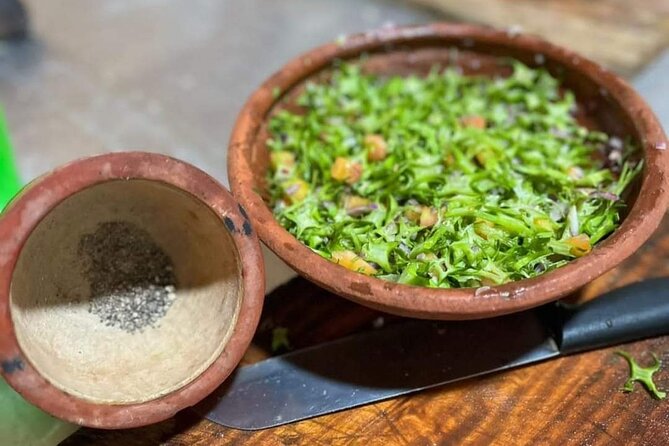
The exact menu changes with the season and the group. Dishes described from the class include seasonal vegetable curries, coconut sambol, rice, lentils, and either chicken or fish curry. Participants have also prepared potato, carrot, pumpkin, beans or a similar vegetable, and other home-style dishes.
Some classes have produced seven curries in roughly two and a half hours. That is a generous amount of cooking for a session advertised at about three hours. The variety is a major part of the value, but it also explains why the pace may be brisk.
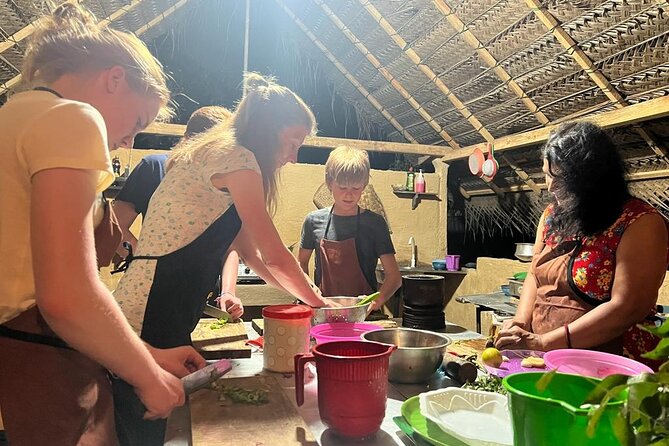
A typical session may involve several people working on different ingredients at once. You might wash rice and lentils, prepare vegetables, work with coconut, or help season one of the curries. The exact jobs will depend on the group and the menu.
The vegetarian dishes deserve special attention. One described meal included seven curries, with only one containing meat. That balance makes the class useful for vegetarians and for anyone who wants to understand the vegetable side of Sri Lankan food rather than treating vegetables as an afterthought.
Chicken or fish curry provides a chance to learn how Sri Lankan cooking handles meat or seafood, but it does not dominate the meal. If you prefer a fully vegetarian menu, or if you do not eat a particular ingredient, tell Sajee and Suzy ahead of time.
Same place, a different thing to cook:
- Kandy Village Cooking Class
★ 5.0 · 536 reviews - Sea waves sri lankan cooking class
★ 5.0 · 467 reviews - Ella: Sri Lankan Cooking Class with Neranji at Homestay
★ 5.0 · 276 reviews - Cook with Wasantha
★ 5.0 · 248 reviews
Making coconut sambol and the meal’s finishing touches
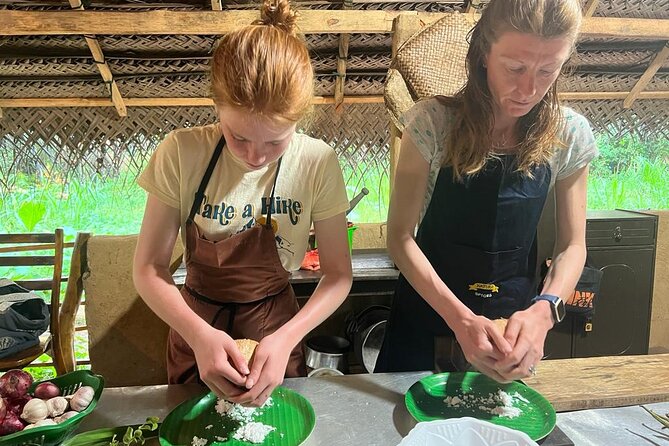
Coconut sambol is a simple but important part of the meal. It brings a fresh, sharp contrast to the warm curries and rice. Preparing it yourself helps you see how a small side dish can change the balance of a plate.
Rice and lentils are also part of the practical lesson. These foods are everyday foundations of Sri Lankan cooking, not decorative extras. Learning how they are cleaned, prepared, and paired with curries gives you a better understanding of how the finished meal works.
The class does not focus on one dramatic signature dish. Instead, you build a full rice and curry meal from several parts. That makes the experience more useful at home, since you can repeat individual curries or create a smaller meal from the same methods.
You may find that the aromas become as memorable as the final meal. Spices, coconut, vegetables, and curry bases fill the cooking area while the dishes come together. The smell gives you clues about how the food is developing, and it makes the wait for lunch or dinner part of the experience.
Sitting down to eat what you prepared
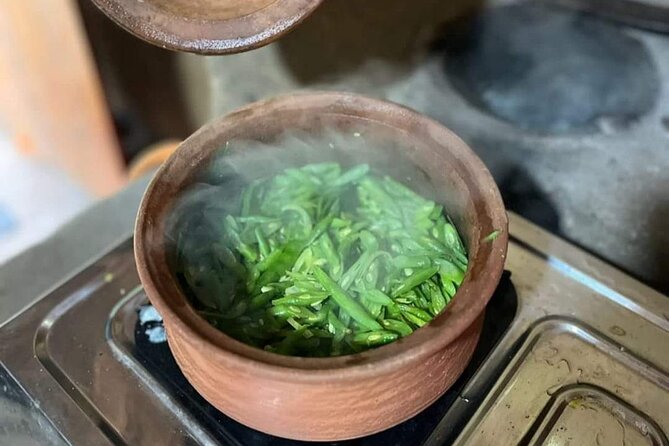
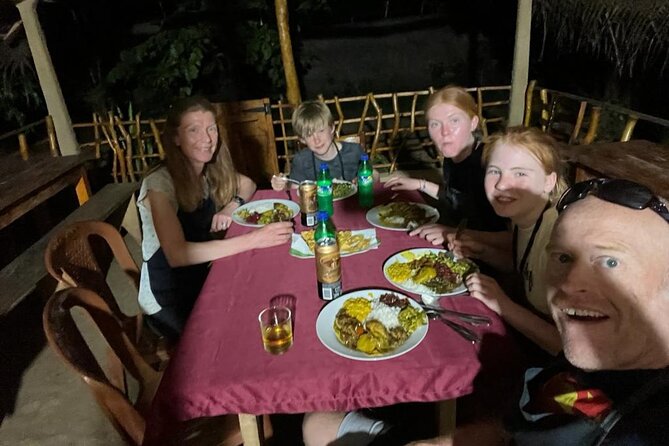
The class ends with a shared meal at the same location. This is more satisfying than being handed a plate of food prepared by someone else because you can connect each dish to the work behind it.
You can taste how the spices changed during cooking and compare the different curries side by side. A mild vegetable curry, a lentil dish, coconut sambol, and a chicken or fish curry each play a different role on the plate.
The final meal is also a chance to ask questions you could not answer while cooking. If one curry tastes different from what you expected, you can ask about the spice balance or cooking method. Those small conversations are often the most useful part of a class.
Keep your expectations practical. This is home-style Sri Lankan food, not a formal restaurant tasting menu. The attraction is generous cooking, familiar local ingredients, and a meal with several textures and flavors.
Why the $35 price makes sense
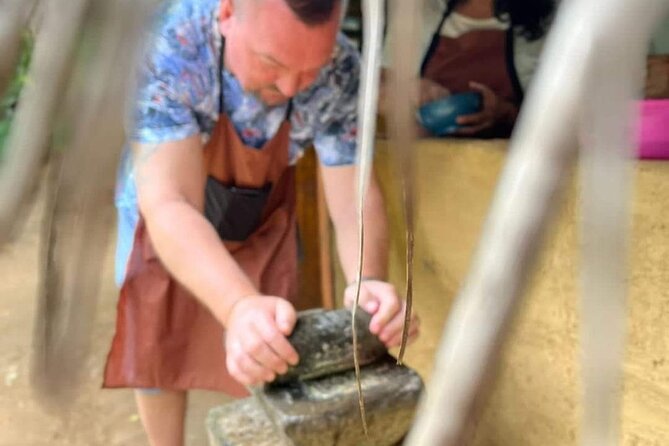
At $35 per person, the price is reasonable if you want more than a short cooking demonstration. You receive about three hours of instruction, hands-on preparation, explanations of spices, and a substantial meal.
The value improves if you count the number of dishes. Preparing six or seven curries, plus rice, sambol, lentils, or coconut milk, gives you several techniques to take home. A standard restaurant meal may cost less, but it will not teach you how to make the food.
The price is also easier to justify for families or small groups. Children and teenagers can take part, and the class is not limited to experienced cooks. Group discounts are available, so it is worth asking about the current rate if you are booking for several people.
The main limitation is that the exact menu and amount of food can vary. If you want one highly specialized dish taught in great technical detail, this may not be the right format. If you want a broad introduction to Sri Lankan home cooking, the price is stronger.
Who will enjoy this class most
I would recommend Sajee’s Place to first-time visitors who want a direct connection with Sri Lankan food. You will learn why the meal tastes the way it does instead of simply ordering a curry from a menu.
It is also a good choice for:
- Couples who want a shared activity in Sigiriya
- Families with older children or teenagers
- Vegetarians who want several vegetable curries
- Beginners who need clear, patient instructions
- Cooks who want recipes they can repeat at home
- Anyone curious about coconut milk, sambol, lentils, and spice combinations
The class is less suited to someone who wants a very short activity or a quiet meal with no participation. You should be ready to handle ingredients, follow several steps, and spend a few hours around food preparation.
Since the maximum group size is 10, the class may still feel active when full. If you want the most personal attention, ask about the group size for your chosen date.
Practical details before you book
The experience lasts approximately three hours, although the cooking portion may run closer to two and a half hours on some days. Allow extra time afterward if you have a fixed sightseeing plan in Sigiriya.
The class starts and ends at Sajee’s Place Cooking Class, No 92 Fourth Mile Post. It has a mobile ticket, and booking confirmation is provided at the time of booking.
Free cancellation is available if you cancel at least 24 hours before the start time. Cancellations within 24 hours are not refunded, and changes during that same period are not accepted. Cutoff times follow local time in Sri Lanka.
I would contact Sajee and Suzy through WhatsApp before the class to confirm the meeting time, menu preferences, and any dietary needs. This is especially useful if you want vegetarian food, less spice, or chicken instead of fish.
Should you book Sajee’s Place?
Yes, if you want to cook a full Sri Lankan meal rather than watch a chef perform. The combination of spice instruction, fresh coconut milk, several curries, and a shared meal gives you plenty for the price.
I especially like this class for families and beginners because the work is explained clearly and the food can be adjusted to suit the group. The strongest reason to book is the practical focus: you leave with methods you can use again.
Choose another activity if you want a short, highly formal lesson or a fixed menu with a slow pace. For an approachable introduction to Sri Lankan home cooking in Sigiriya, Sajee and Suzy offer a warm, hands-on experience with real value.
FAQ
Where does Sajee’s Place Cooking Class take place?
The class takes place at Sajee’s Place Cooking Class, No 92 Fourth Mile Post, Sigiriya 21120, Sri Lanka. The activity ends back at the same meeting point.
How long does the cooking class last?
The class lasts approximately three hours. Some cooking sessions have taken about two and a half hours.
How many people can join the class?
The maximum group size is 10 participants.
What food will I prepare?
The menu can include seasonal vegetable curries, coconut sambol, rice, lentils, and either chicken or fish curry. Past menus have included potato, carrot, pumpkin, beans, and other vegetables.
Can beginners and children join?
Yes. The class is designed to explain Sri Lankan cooking to beginners, and children and teenagers can take part in the preparation.
What is the cancellation policy?
You receive a full refund if you cancel at least 24 hours before the start time. Cancellations or changes made within 24 hours are not accepted for a refund.
Just added around Sri Lanka
- cooking lesson★ 5.0 · 7 reviews
- Hands-On Cooking Class in Anuradhapura-Cook Like a Local★ 5.0 · 2 reviews
- Sri Lankan Cookery with Nilu★ 5.0 · 34 reviews
- Sri Lanka: Cooking Class★ 4.4 · 6 reviews
- Cooking Experience from Ella★ 4.9 · 2 reviews
- Sri Lankan Cooking Class in Bentota★ 5.0 · 2 reviews
- Private cooking class – Personalized classic menu★ 5.0 · 5 reviews
- Nilaveli: Sri Lankan Cooking Class with a Local Family★ 5.0 · 16 reviews
Cooking Classes, compared.
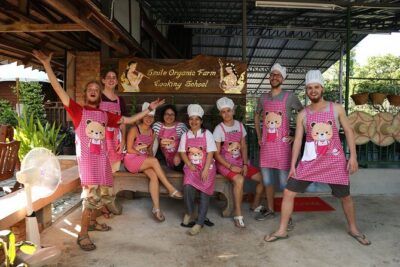
Half-Day Thai Cooking Class at Organic Farm in Chiang Mai
Read our review →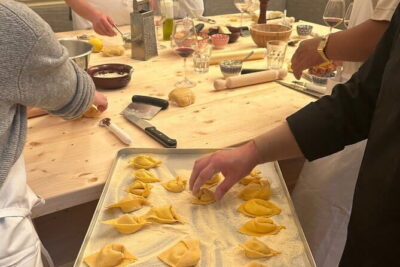
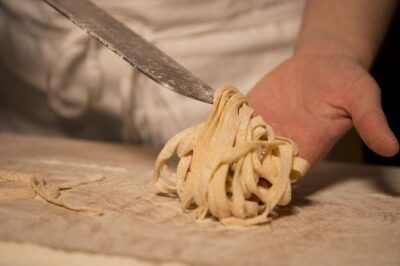
3 in 1 Cooking Class near Navona: Fettuccine, Ravioli & Tiramisu
Read our review →
Pasta & Tiramisu Cooking Class with Unlimited Wine
Read our review →
Hanoi Cooking Class: Culture, Local Market & Meaning CSR Impact
Read our review →
5 Traditional Dishes Hanoi Cooking Class with Market Trip
Read our review →
Cooking Class and Lunch at a Tuscan Farmhouse with Local Market Tour from Florence
Read our review →
Cooking Class, Market & Thai Herbs Garden Tour
Read our review →Lists this class appears in