
REVIEW · HONSHU, JAPAN
AKEMI’s SUSHiKiTCHEN: A fun sushi cooking lesson in Tokyo
Sushi tastes better when you make it yourself. AKEMI’s SUSHiKiTCHEN offers a friendly, home-based lesson where Akemi Castellano teaches four sushi styles, explains Edo sushi, and serves the meal you prepare. I especially like the relaxed setting and the care given to the rice, vinegar, seafood, and other ingredients.
The small group, limited to six people, also means you get real guidance instead of standing at the back of a crowded class. The main drawback is the fixed menu: you cannot choose which sushi varieties you will make, and the kitchen cannot accommodate food or animal allergies.
Key points to know before booking
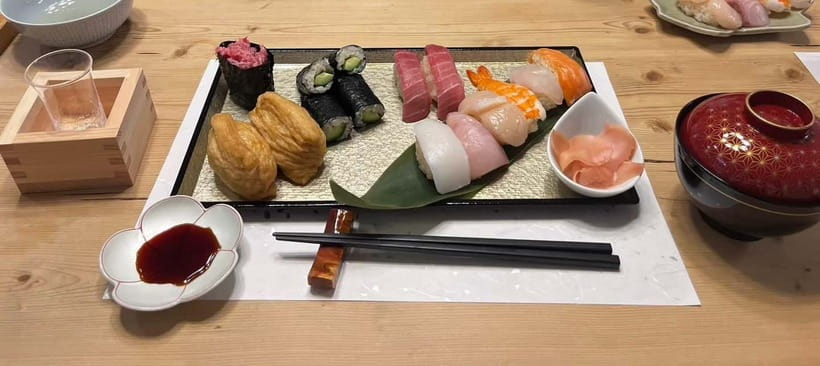
- Four sushi styles in three hours: Make Inari, Gunkan, Maki-sushi, and Nigiri from start to finish.
- A real home setting: The class takes place in Akemi’s house, with an optional meeting at the nearest train station.
- Rice comes first: You learn how vinegar rice is prepared before shaping any sushi.
- A useful cultural lesson: Akemi explains Japanese food culture and the Edo origins of sushi.
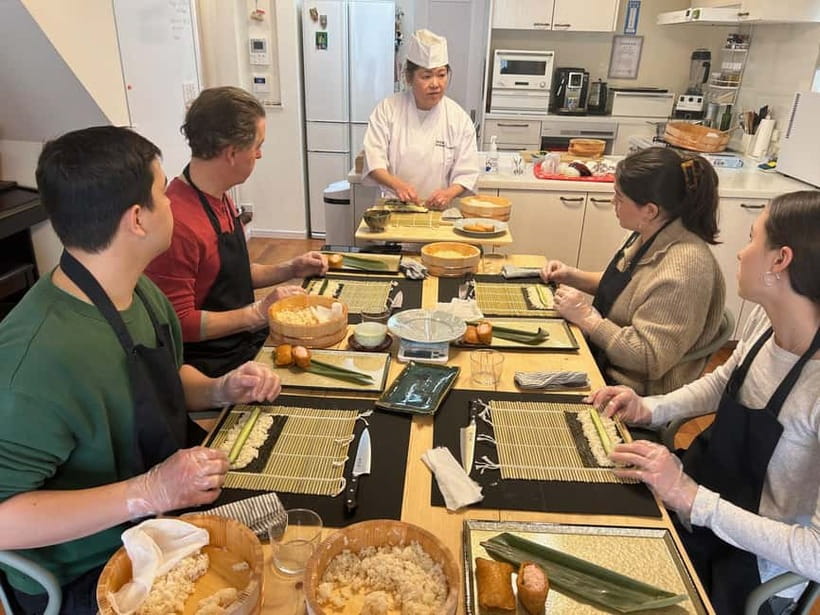
- Small and personal: Six participants is the maximum, making it easier to get help with tricky techniques.
- A complete meal: Eat your own sushi with Japanese sake and dessert, with a vegetarian option available.
Why this Tokyo sushi class feels personal
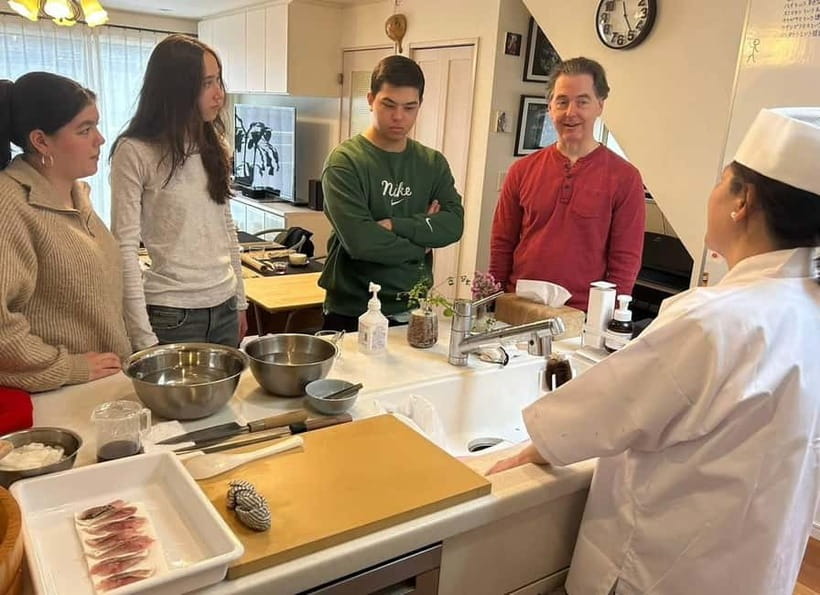
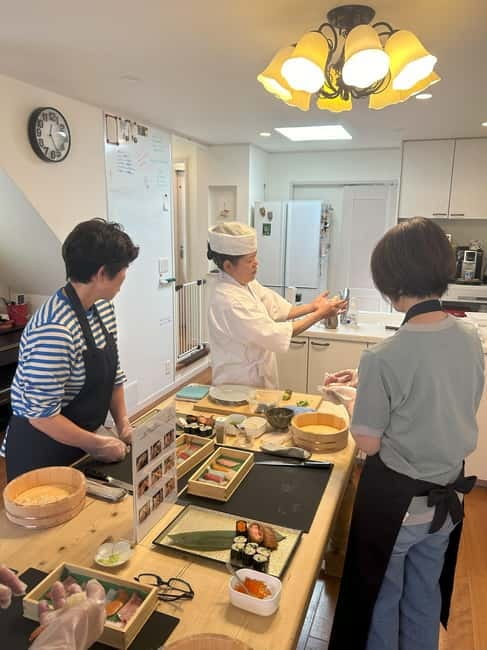
Many cooking lessons take place in polished studios built for large groups. This one happens in a Japanese home, which changes the mood right away. You are not simply following a recipe at a workbench. You are welcomed into a domestic setting and shown how sushi fits into Japanese food culture.
Akemi Castellano leads the lesson in English and Japanese. Her husband, Dan, may also help with hosting and communication. The combination gives the class a warm, family-style feel without losing the structure of a professional cooking lesson.
I like this balance. You receive clear instruction from a trained sushi chef, but the atmosphere remains relaxed. One useful detail is the option to meet at the nearest train station. If you prefer to find the house yourself, Google Maps can guide you there. From the metro, the walk has been described as about 10 minutes through a pleasant neighborhood.
The location is convenient from both Shinjuku and Shibuya, two of Tokyo’s main transport hubs. Still, allow enough time for the final walk and for finding the correct house. A home address can be less obvious than a restaurant entrance, so contacting the host in advance if you want station pickup is sensible.
More Sushi and Japanese Classes in Tokyo:
- Ramen & Gyoza Cooking Class in Tokyo with Local Supermarket Visit
★ 5.0 · 823 reviews - Tokyo Tsukiji Fish Market Tour and Sushi Making Lesson
★ 5.0 · 390 reviews - Tokyo: Easy Ramen Cooking Experience in Kabukicho, Shinjuku
★ 4.6 · 321 reviews
Starting with vinegar rice and sushi culture
The lesson begins with the foundation of the meal: sushi rice. This is more useful than it may sound. Good sushi depends on the rice’s texture, seasoning, and temperature, not just on the fish placed on top.
Akemi explains how the vinegar is prepared and mixed into the rice. You also learn about the selected rice, vinegar, seafood, and neta, the Japanese term for sushi toppings and fillings. These details help you understand why sushi is not simply raw fish with rice.
The cultural part adds welcome context. Akemi discusses Japanese food culture and the origins of Edo-style sushi. This gives the class more depth than a simple demonstration followed by a tasting. You learn why traditional nigiri developed as a compact, practical style of food and how different sushi forms use distinct shapes and fillings.
The fish preparation demonstration is another useful part of the session. You may not leave ready to work in a professional sushi counter, but you will see how the ingredients are handled before assembly. For anyone who already loves sushi, this is one of the most valuable parts of the class.
Four sushi styles, four different techniques
The set menu includes four kinds of sushi. Since the menu is fixed, you do not select your own combination. That limits choice, but it also lets Akemi build a lesson with a good range of techniques.
Inari sushi: the sweet tofu pocket
Inari uses fried tofu pockets filled with seasoned sushi rice. It is often the surprise favorite for people who mainly associate sushi with fish.
The tofu gives the piece a soft texture and a sweet, savory flavor. It also looks different from the other styles, so it is a good introduction to the wider world of sushi. If you have only eaten nigiri and rolls, Inari shows how Japanese cooks use tofu and rice to create something satisfying without raw seafood.
A vegetarian option is available, and Inari is likely to be one of the most appealing parts of that menu. You should still state your preference when booking rather than waiting until the class begins.
A few more cooking classes around Tokyo worth a look
- Ramen and Sushi Cooking Class with Sake Pairing Set in Tokyo
★ 5.0 · 291 reviews - Tokyo: Wagyu and 7 Japanese Dishes Cooking Class
★ 4.9 · 273 reviews - Tokyo Washoku 4-hour Cooking Class: From Market to Table
★ 5.0 · 253 reviews - Small-Group Wagyu Beef and 7 Japanese Dishes Tokyo Cooking Class
★ 5.0 · 190 reviews
Gunkan sushi: the battleship shape
Gunkan, sometimes called battleship sushi, is formed with a strip of seaweed around a rice base. The raised rim holds softer toppings that might slide off a flat piece of nigiri.
This is a fun shape to make because it is immediately recognizable. The seaweed must be placed neatly, and the rice needs to be firm enough to hold its form. Akemi can correct your technique as you work, which matters in a small class.
The name is easy to remember once you see the shape. It resembles a little boat or battleship, with the topping sitting inside the seaweed wall.
Maki-sushi: the rolled version
Maki-sushi is rolled sushi, made by arranging rice and fillings before rolling the seaweed into a cylinder. The challenge is applying the right pressure. Too little pressure and the roll falls apart. Too much and the filling gets squeezed out.
This is where hands-on instruction is especially useful. A written recipe cannot easily show you how the roll should feel as it comes together. You get to practice the movement, then cut the finished roll into pieces.
The result may not look perfectly uniform, and that is part of the fun. A home-cooked sushi meal does not need to pass a restaurant chef’s visual inspection. You are learning how the components work together.
Nigiri-zushi: the classic hand-pressed piece
Nigiri is the style most people picture first: a small portion of vinegar rice topped with seafood. The rice is shaped by hand, then paired with the prepared neta.
This technique is simple in appearance and harder in practice. The rice must hold together without becoming dense. The topping should sit neatly on top, and the finished piece should be easy to pick up and eat.
Akemi’s demonstration gives you a practical sense of proportion and pressure. You will also better understand why sushi chefs train for years. The ingredients may be minimal, but the handling matters.
What the meal includes after the lesson
The best part comes at the table. After preparing the sushi, you eat the lunch or dinner you have made yourself. This gives the three-hour class a satisfying finish rather than ending with a quick sample.
The meal includes Japanese sake and dessert. Matcha tea and extra drinks have also been part of the hospitality described for the class. If you are attending with children aged 10 or older, the hosts have provided nonalcoholic drinks in the past, but the stated details only specifically include sake, dessert, and a vegetarian option.
The food is not just a reward at the end. It helps you judge your own work. You can taste how the vinegar rice supports the seafood, compare the textures of the four styles, and notice which shape you found easiest to make.
I also like the social side of eating together in a private home. The setting encourages conversation and makes the meal feel less like a scheduled tasting. Akemi and Dan have been described as a welcoming team, which fits the home-based format well.
How much value do you get for $103?
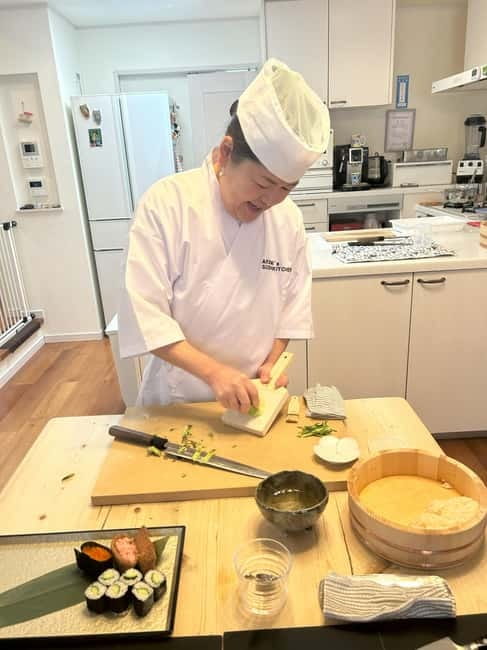
At $103 per person, this is not the cheapest way to eat sushi in Tokyo. You can buy excellent sushi for much less, especially at a standing counter or casual restaurant. The price makes more sense if you value the lesson, the cultural explanation, the small group, and the full meal.
You are paying for roughly three hours of instruction rather than a single plate. The ingredients are selected for the class, the fish preparation is demonstrated, and you learn four distinct sushi styles. You also receive lunch or dinner, sake, and dessert.
The six-person limit improves the value. In a large class, you might only watch the chef and copy the motions from a distance. Here, Akemi can offer individual help, including small corrections as you shape rice or roll seaweed.
For a first visit to Tokyo, I would compare this price with the cost of a high-end sushi meal. If your aim is simply to eat the most refined sushi possible, spend the money at a respected sushi counter instead. If you want to understand the craft and leave with a new appreciation for what is on your plate, this class earns its price more easily.
Morning lunch or afternoon dinner
You can choose a morning lesson followed by lunch or an afternoon lesson followed by dinner. The three-hour length makes either option easy to fit around a day in Tokyo, though you should avoid booking it too close to another fixed appointment.
The morning option works well if you want a substantial midday meal before sightseeing. You can then continue toward Shibuya or Shinjuku with the class behind you. The afternoon option may suit you better if you want a calmer evening plan and a home-cooked sushi dinner.
The exact starting times vary, so check availability for your date. Since the class takes place in a house rather than a major attraction, add time for the train ride, the walk, and any station meeting arrangement.
Getting there without stress
The house is easy to reach from Shinjuku and Shibuya, but you should treat the final approach as part of the planning. Several people have found it without help using Google Maps. The walk from the nearest station has taken about 10 minutes.
If you are not comfortable navigating residential streets, ask to be met at the nearest train station. This needs to be arranged in advance. It is a small point, but it can remove needless stress, especially if you are arriving with children or carrying shopping bags.
Tokyo addresses can be harder to interpret than a signposted restaurant, so save the map before leaving your hotel. Give yourself extra time rather than arriving breathless just as the rice demonstration begins.
Who should book this experience?
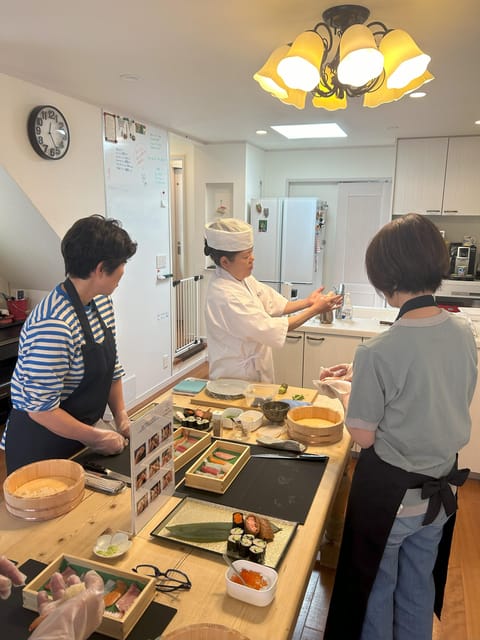
This class is best for people who enjoy food and want more than a restaurant meal. It suits couples, friends, solo visitors, and families with children aged 10 or older. The family-friendly feel is real, but the age restriction means it is not suitable for younger children.
You should also book it if sushi is already a serious interest. The discussion of Edo sushi, ingredient selection, and fish preparation adds value for anyone who wants to understand the cuisine rather than only eat it.
Vegetarians can request the vegetarian option when placing the order. The important limitation is allergies. The kitchen cannot accommodate food or animal allergies, so anyone with an allergy should contact the provider before booking and understand that the class may not be suitable.
The fixed menu is another factor. If you want to choose only cooked fillings, avoid a particular type of seafood, or design your own menu, this is probably not the right class. The set plan keeps the lesson organized, but it leaves less room for personal selection.
The strongest reasons to choose Akemi’s kitchen
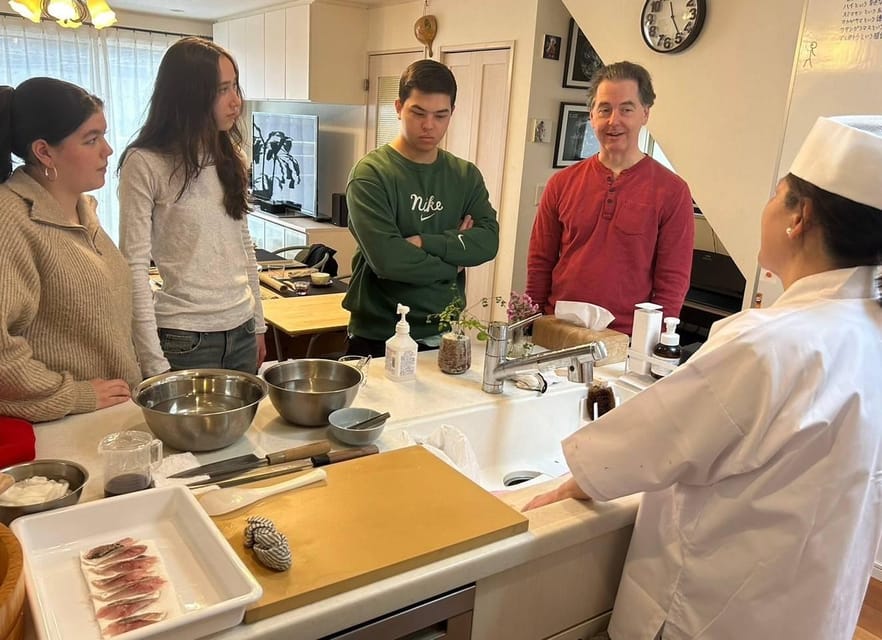
The highest praise for this experience centers on the hosts, the teaching, and the feeling of being welcomed into a Japanese family home. Those qualities are more important here than fancy equipment or a dramatic setting.
Akemi is described as patient, cheerful, professional, and good at explaining the process in English. Small personal touches also matter. One account describes a welcome drink made with sakura, followed by explanations of Edo sushi, rice preparation, and the construction of each type.
The class also appears well organized before you arrive. Communication about diets and station pickup has been clear, and Dan helps create a comfortable atmosphere. These details make a difference because home-based activities can sometimes feel vague until the meeting day.
The main caution is that the experience depends on enjoying participation. You will not simply sit back while someone else cooks. You will handle rice, seaweed, tofu pockets, and sushi toppings. That is the point, but anyone looking for a quiet meal should choose a restaurant instead.
Should you book AKEMI’s SUSHiKiTCHEN?
I would recommend it if you want a personal Tokyo food experience, especially if you have three hours to spare and already enjoy sushi. The combination of four techniques, cultural background, carefully selected ingredients, and a meal at the end gives you more than a short cooking demonstration.
Book it for the relaxed home setting, the small group, and Akemi’s clear instruction. Choose the morning or afternoon time that fits your schedule, arrange station pickup if directions worry you, and mention a vegetarian preference when booking.
Skip it if you need allergy accommodations, want complete control over the menu, or only care about eating restaurant-quality sushi. For everyone else, $103 buys a useful lesson, a generous meal, and a better understanding of why simple-looking sushi takes such care.
FAQ
How long does the sushi class last?
The experience lasts three hours. You can select a morning lesson with lunch or an afternoon lesson with dinner, subject to available starting times.
Which kinds of sushi will I make?
You will make four styles: Inari, Gunkan or battleship sushi, Maki-sushi, and traditional Nigiri-zushi.
Is the class taught in English?
Yes. Instruction is available in English and Japanese.
Can I request vegetarian sushi?
Yes. A vegetarian option is available, and you should state your preference when placing your order.
Can the kitchen accommodate food allergies?
No. The kitchen cannot accommodate food or animal allergies. Contact the provider beforehand if you have an allergy.
How do I find the house?
You can use Google Maps or a similar app, or request to meet at the nearest train station. The walk from the station is about 10 minutes.
Just added around Tokyo
- Tokyo: Sushi Cooking Class with Sake Tasting★ 4.8 · 55 reviews
- Tokyo: Sushi roll and side dish cooking experience★ 5.0 · 2 reviews
- Tokyo: Sushi Making Experience & Japanese Cooking Class★ 5.0 · 2 reviews
- Tokyo: Real Ramen & Dumpling Cooking with Master Chef★ 5.0 · 10 reviews
- Tokyo: Gyoza Making from Scratch – Ultimate Cooking Class★ 5.0 · 2 reviews
- Tokyo: Night Cooking Class: 5 Home-Cooked Japanese Dishes★ 4.9 · 13 reviews
- Tokyo: Kawaii Bento Cooking Class – Cute Character Lunchbox★ 4.9 · 55 reviews
- Tokyo: Sushi and Ramen Cooking Class with Sake Pairing Set★ 5.0 · 81 reviews
Japanese & Sushi Cooking Classes, compared.
Ramen Cooking Class at Ramen Factory in Kyoto
Read our review →
Ramen & Gyoza Cooking Class in Tokyo with Local Supermarket Visit
Read our review →
Ramen Cooking Class at a Ramen Factory with Souvenir
Read our review →
Sushi Making Osaka! Popular Sushi Class in Japan!
Read our review →
Tokyo Tsukiji Fish Market Tour and Sushi Making Lesson
Read our review →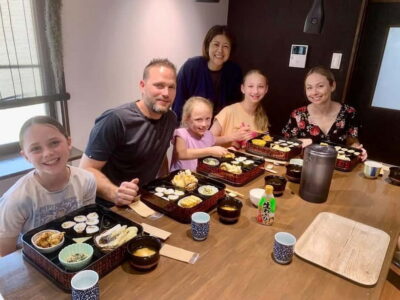
Japanese Washoku Bento Small Group Cooking Class
Read our review →
Lists this class appears in