
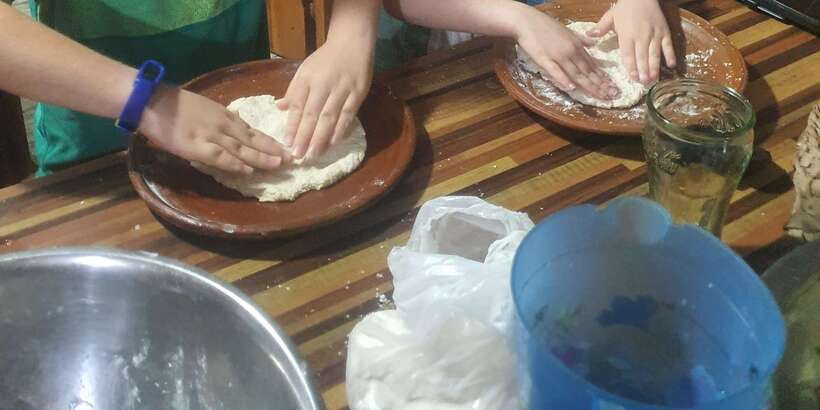
REVIEW · CENTRAL PROVINCE, SRI LANKA, SRI LANKA
Private Traditional Sri Lankan Cooking Class in Kandy
Sri Lankan food rewards curiosity. This three-hour Kandy class pairs hands-on cooking with a meal you prepare yourself, and the small group size makes it easier to ask questions and work closely with the instructor. I especially like the chance to make dishes such as lentil curry and jackfruit curry from start to finish, plus the option to request vegan, vegetarian, or gluten-free food. The main consideration is that the instructor details vary in the information provided: the class is presented with Chitra, while recent descriptions name Ranees and his wife, so confirm who will lead your session.
I also like the included hotel pickup and drop-off, which can save you the usual Kandy transport hassle. A market visit may be part of the experience, giving you a useful look at the produce behind the recipes. At $40 per person, the value is strong if you want a full meal, instruction, equipment, drinks, transport, and recipes rather than a quick demonstration.
Key points at a glance
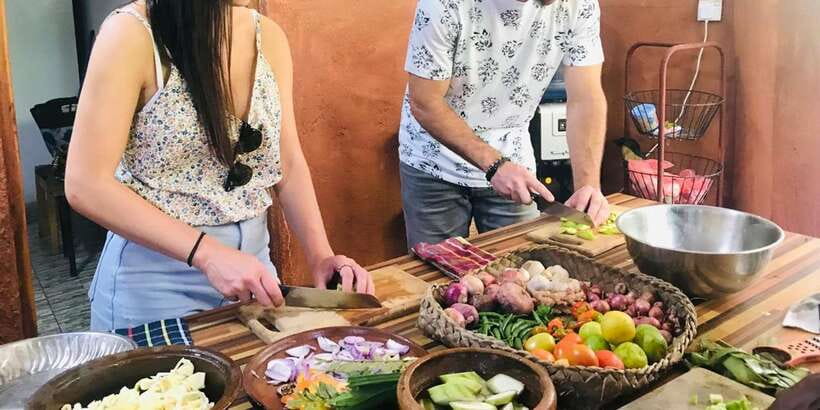
- Small group of up to four: You get room to work, ask questions, and receive personal help instead of watching from the back of a crowded room.
- Market shopping may be included: Some sessions begin by choosing produce, which connects the cooking lesson to everyday Sri Lankan food.
- Cook from start to finish: Recent session details describe dishes prepared without pre-made ingredients.
- A generous Sri Lankan menu: You may prepare jackfruit curry, chicken curry, mango chutney, lentils, and several vegetable dishes.
- Dietary requests are welcome: Vegan, vegetarian, and gluten-free meals can be arranged when requested in advance.
- Hotel transport is included: Pickup and return are provided by tuk-tuk or van, based on group size.
What makes this Kandy cooking class worth your time
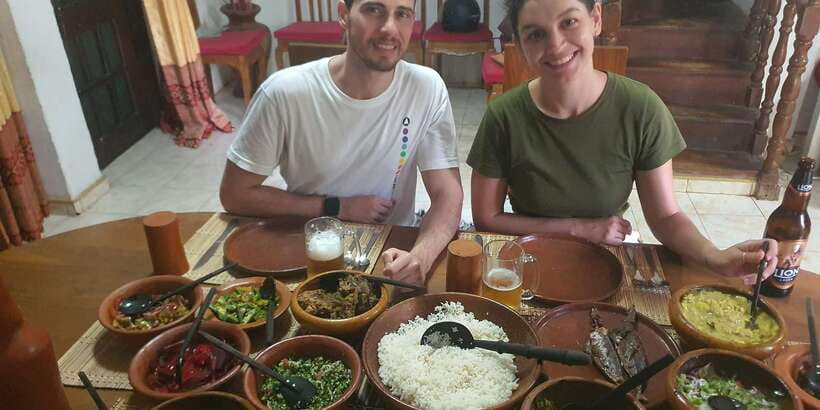
Kandy has plenty of cultural sights, but food gives you a different way to understand Sri Lanka. A cooking class takes you beyond ordering a curry in a restaurant. You learn how several dishes come together, how vegetables are handled, and how spices are used across a meal.
The class lasts three hours, which is long enough for real participation without taking up your whole day. You are not signing up for an all-day culinary course. Instead, you get a focused morning or afternoon built around cooking, eating, and conversation.
The strongest reason to book is the small size. With a limit of four participants, you should have a better chance to chop, stir, season, and ask for help. This matters for beginners, since Sri Lankan cooking can involve ingredients and methods that may be new to you. More experienced home cooks will also have space to ask why a particular vegetable is prepared in a certain way or how a curry can be adjusted at home.
The class is led by an English-speaking instructor. The main description names Chitra, an experienced Sri Lankan cooking teacher. Recent class accounts identify Ranees and his wife as the hosts, and describe them as cooks with restaurant and catering experience. Since these names do not fully match, I would confirm the host when booking. That small check can avoid confusion on the day.
More Private Cooking Classes in Sri Lanka
- Private Traditional Sri Lankan Cooking Class in Kandy with Hotel Transfers
★ 5.0 · 115 reviews - Private Cooking Class – Personalized menu with glutenfree & vegan
★ 5.0 · 99 reviews - Private Kandy Authentic Cooking Class
★ 5.0 · 65 reviews
Starting with Kandy pickup and possible market shopping
Pickup is arranged at your hotel concierge desk, and you are returned to your hotel afterward. Transport is by tuk-tuk or van, depending on how many people are attending.
That sounds like a minor detail, but it is useful in Kandy. You do not have to find an unfamiliar address or work out local transport after cooking a large meal. One session included a tuk-tuk pickup even though the hotel was outside central Kandy, making the ride part of the experience rather than just a transfer.
Some classes also include a stop at a market to choose produce for the lesson. This is one of the most appealing details because it shows you the ingredients before they are cleaned, chopped, and cooked. You may see the vegetables that later become part of the meal and gain a better sense of how local cooks shop.
The market visit is not described as a guaranteed part of every booking, so you should treat it as a possibility rather than a promise. If it matters to you, ask in advance. The same applies to the exact menu. The class offers a flexible selection, but the dishes can vary according to dietary needs and available ingredients.
Preparing a Sri Lankan meal from scratch
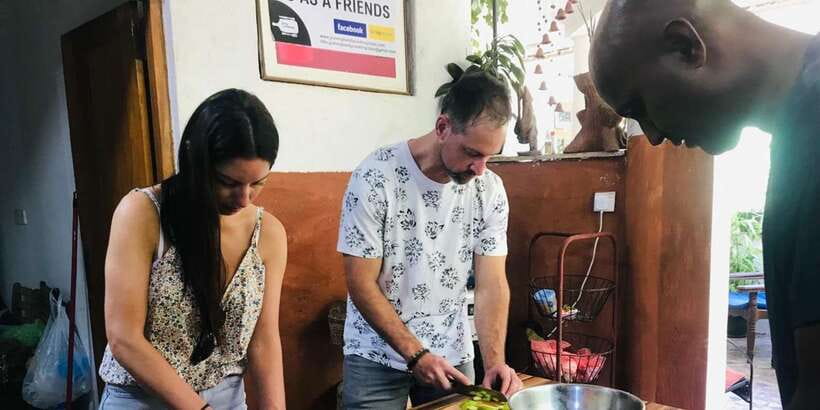
The central part of the class is practical cooking. You are not simply watching Chitra, Ranees, or another instructor prepare lunch while you sit nearby. The experience is designed around making the dishes yourself, with guidance as you go.
The menu can include lentils, jackfruit curry, chicken curry, mango chutney, and various vegetable dishes. This is a useful spread because it shows different sides of Sri Lankan cooking. Lentils offer a familiar starting point, while jackfruit introduces a plant-based dish with a different texture. Chutney adds a fresh, sharp contrast to the cooked curries.
One of the most useful details is that the food may be made from start to finish rather than relying on pre-prepared ingredients. That gives you a clearer lesson in the process. You can see how each dish develops, rather than receiving a polished final result with no idea what happened in the kitchen.
The class also covers spice blends and cooking methods. The value here is not just learning a list of ingredients. You get a sense of how the separate dishes work together as a meal and how timing matters when several items are prepared for the same table.
You can expect the instructor to adapt the pace to the group. The description specifically says the instruction suits both beginners and more experienced cooks. In a group of four, this kind of adjustment should be practical. You can ask for help with a technique, while another participant can continue at a different pace.
Jackfruit curry, lentils, chutney, and vegetables
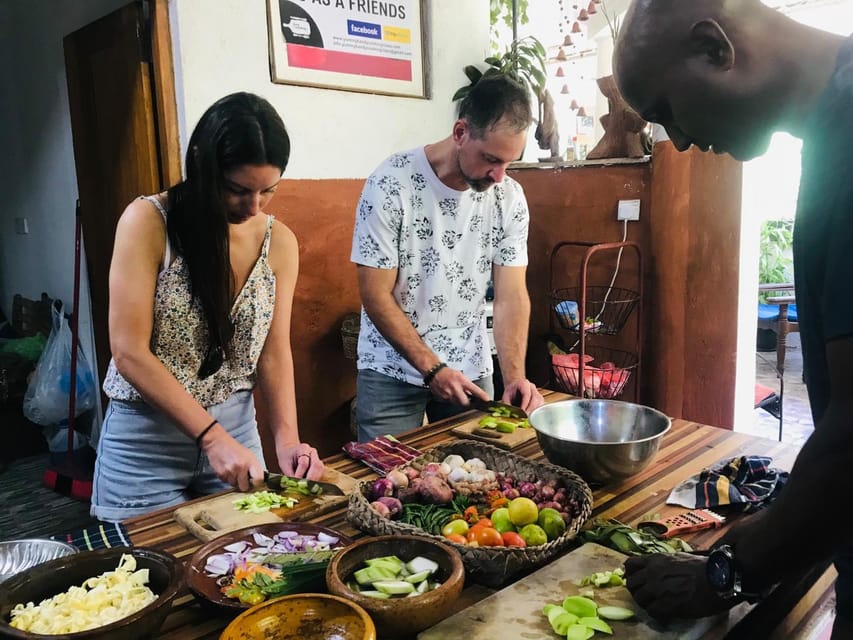
Jackfruit curry is a particularly good reason to choose this class. It is a traditional Sri Lankan dish and gives you a chance to work with a vegetable that may not appear often in your home cooking. The menu has included vegan jackfruit curry alongside meat and vegetable dishes, so the class can show how a full meal works without relying on meat.
Lentils are another useful lesson. They are affordable, adaptable, and easy to cook again after you return home. Learning the basic approach in Sri Lanka gives you something practical to take into your own kitchen.
Mango chutney adds another kind of lesson. It shows how a meal can balance cooked curries with a brighter, sweeter, or sharper side dish. The exact flavor and preparation will depend on the recipe used in your class, but the wider point is clear: Sri Lankan meals are not just one curry placed on a plate.
The vegetable dishes may be especially helpful if you eat plant-based food. One session included several vegetable preparations, and the cooking also covered new vegetables, their health benefits, and suitable preparation methods. That kind of explanation adds value beyond simply following a recipe.
Do not expect a tiny tasting menu. The portions can be generous. One meal included more food than the diners could finish, which is a pleasant problem after a morning of cooking but worth knowing if you prefer lighter lunches.
Same place, a different thing to cook:
- Ella: Traditional Sri Lankan Cooking Class
★ 4.9 · 788 reviews - Organic cooking class sigiriya (kumara & family)
★ 5.0 · 650 reviews - Sri Lanka Cooking Class with Granny
★ 5.0 · 587 reviews - Kandy Village Cooking Class
★ 5.0 · 536 reviews
Sitting down to eat what you made
After the cooking, you sit with the host and the other participants to eat the finished dishes. This shared meal is an important part of the experience because you can taste the result while the techniques are still fresh in your mind.
I like this format more than a lesson that ends as soon as the stove is turned off. You can compare the dishes, notice how the flavors work together, and ask last-minute questions. It also gives the class a friendly social side without requiring a large group.
The meal includes coffee or tea and bottled water. Lunch is included, along with the dishes prepared during the class. The result is a substantial experience for the price, especially if you value both food and instruction.
The strongest praise has focused on flavor. The food has been described as better than meals eaten in some hotels and restaurants during the same trip. That is not a guarantee that every dish will suit every palate, but it suggests that the hosts put real care into the cooking.
You should also remember that Sri Lankan food can be strongly seasoned. If you have limits around spice, salt, or particular ingredients, tell the instructor ahead of time. Dietary needs are specifically supported, but a general taste preference is also worth explaining before cooking begins.
Vegan, vegetarian, and gluten-free options
This class is a good fit if you need a particular diet, provided you communicate your needs before the session. Vegan, vegetarian, and gluten-free meals are listed as available, and one plant-based participant arranged a fully vegan meal the day before with good results.
That advance notice matters. It gives the cooking team time to plan a menu rather than making last-minute substitutions. A vegan class can include jackfruit curry, lentils, chutney, and several vegetable dishes, so you are not limited to one plate of plain vegetables.
The class also makes sense for mixed groups. One person can eat vegan food while another has chicken curry, as long as the dietary requirements are explained ahead of time. The menu has included both chicken and plant-based dishes in the same session.
If you have celiac disease or a serious allergy, ask specific questions about ingredients and kitchen preparation before booking. The experience is advertised as suitable for gluten-free diets, but the provided information does not detail separate equipment or cross-contact procedures. That is a sensible point to clarify directly.
Recipes you can use after returning home
A major advantage is that you receive the recipes and instructions for the dishes prepared in class. This turns the experience into something more useful than a pleasant meal that ends in Kandy.
Sri Lankan cooking can look difficult when you first encounter a long menu, but written recipes help break it down. You can start with one curry or chutney at home and build from there. The jackfruit dish, in particular, gives plant-based cooks something distinctive to repeat.
The recipes also help you remember details that are easy to lose after a busy holiday. You may recall the general flavor but forget how the vegetables were cut or when a spice was added. Having the instructions afterward gives you a better chance of reproducing the meal.
I would keep the recipes somewhere safe and note any changes you made during the class. If you prefer less heat or use different local ingredients at home, those notes will help you adapt the dishes without losing the basic method.
Is $40 a good price in Kandy?
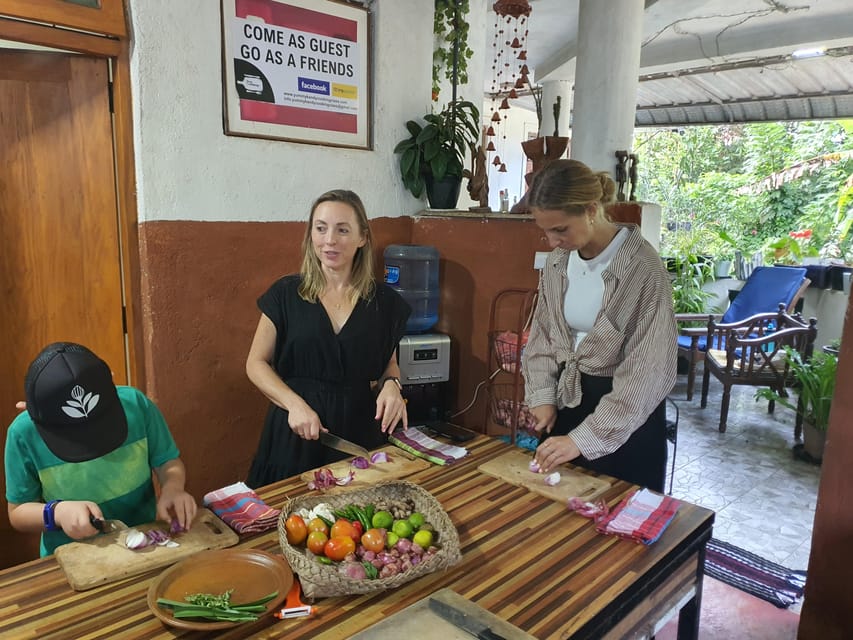
At $40 per person, this is not the cheapest way to eat lunch in Kandy. It is still a good value if you make use of the full package: three hours of teaching, food, drinks, kitchen equipment, hotel pickup and drop-off, a small group, and recipes to take home.
The group limit is especially important when judging the price. A large cooking demonstration can be cheaper, but you usually get less time handling the ingredients and less access to the instructor. Here, the maximum of four makes the fee feel closer to a private lesson.
Transport adds practical value too. A tuk-tuk or van ride removes the need to arrange your own way to the cooking location. That is helpful if your hotel is outside central Kandy or if you prefer not to navigate an unfamiliar area.
The value is less clear if you mainly want a quick lunch or a short demonstration. In that case, three hours may feel like too much time and $40 may cost more than a regular meal. Book it for the cooking, not just for the food.
Who should book this experience?
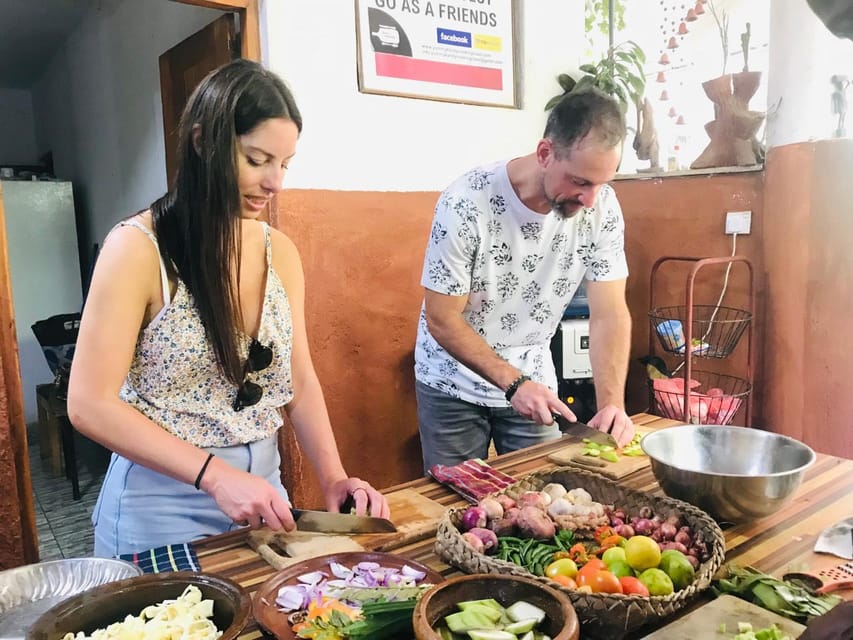
I would recommend this class to people who enjoy food, want contact with local hosts, and like bringing home a skill rather than only a souvenir. It also suits first-time cooks because the group is small and the instructor can offer personal help.
It is a strong choice for couples, families with older children, and friends traveling together, provided everyone is comfortable sharing a small kitchen space. With only four participants, the atmosphere should feel more personal than a standard group excursion.
Plant-based diners have a clear reason to consider it. The menu can be arranged around vegan or vegetarian dishes, and jackfruit curry gives the meal a distinctly Sri Lankan focus. Gluten-free diners should contact the provider before arrival to confirm the details.
I would think twice if you dislike participating in food preparation, need a completely private class, or want a fixed menu guaranteed in advance. The class is small, but it is not described as exclusively private, and the exact dishes can vary.
Babies under one year are not suitable for this activity. The experience is wheelchair accessible, but you should still confirm the transport and cooking setup with the provider if you have specific mobility needs.
Booking, cancellation, and timing tips
The class runs for three hours, with starting times based on availability. Since pickup is included, allow enough room in your day for the full activity and transport, even though the stated duration is three hours.
You can reserve now and pay later, which helps if your Kandy schedule is still changing. Cancellation is free up to 24 hours before the start time for a full refund.
I would send dietary requests at least a day ahead, especially for vegan or gluten-free cooking. Ask about the menu, the market stop, and the instructor name if those details matter to you. That simple message can make the experience fit your needs much better.
Should you book the Kandy cooking class?
Yes, if you want an active food experience rather than another restaurant meal. The combination of a group limited to four, hands-on preparation, a full lunch, hotel transport, and take-home recipes gives this class unusually good value at $40.
The best parts are the cooking from scratch, the chance to make jackfruit curry and other local dishes, and the warm, personal setting described by past participants. The main caution is to confirm the exact host, menu, market visit, and dietary arrangements before you pay.
If Sri Lankan food is one of the reasons you came to Kandy, I would make room for this class. You leave with a full stomach, a better idea of how the cuisine works, and recipes that can keep the memory alive after your holiday ends.
FAQ
How long does the Sri Lankan cooking class last?
The class lasts three hours.
How many people can join the class?
The group is limited to four participants.
Is hotel pickup included?
Yes. Pickup is arranged at your hotel concierge desk, and drop-off at your hotel is included after the class.
What type of transport is used for pickup and drop-off?
The provider uses either a tuk-tuk or a van, depending on the number of participants.
Which language is spoken during the class?
The instructor teaches in English.
Can I request vegan or gluten-free food?
Yes. Vegan, vegetarian, and gluten-free meal options are available. You should provide your dietary request in advance.
Is lunch included?
Yes. Lunch consists of the dishes prepared during the class, and coffee or tea and bottled water are also included.
Can I cancel for a full refund?
Yes. You can cancel up to 24 hours in advance for a full refund.
Just added around Sri Lanka
- cooking lesson★ 5.0 · 7 reviews
- Hands-On Cooking Class in Anuradhapura-Cook Like a Local★ 5.0 · 2 reviews
- Sri Lankan Cookery with Nilu★ 5.0 · 34 reviews
- Sri Lankan Cooking Class in Bentota★ 5.0 · 2 reviews
- Sri Lanka: Cooking Class★ 4.4 · 6 reviews
- Cooking Experience from Ella★ 4.9 · 2 reviews
- Private cooking class – Personalized classic menu★ 5.0 · 5 reviews
- Nilaveli: Sri Lankan Cooking Class with a Local Family★ 5.0 · 16 reviews
Private Cooking Classes, compared.
PRIVATE Authentic Balinese Cooking Class in Ubud at Putu’s Home
Read our review →
Pasta Making Class with Tiramisu & Wine PRIVATE OPTION
Read our review →
Private Market Tour & Cooking Class in Puerto Vallarta with Manu
Read our review →
Private Cooking Class with 5 dishes of your choice
Read our review →
Veg and Non veg : Private Cooking Class in Delhi home (7 meal)
Read our review →
PRIVATE Balinese Cooking Class in Ubud with Dewa with Transfers
Read our review →
VIP Mekong Delta Adventure Cycling & Kayaking – Private Day Trip
Read our review →
Private Home Cooking in Yanaka – Local Flavors in a Warm Setting
Read our review →Lists this class appears in