
REVIEW · KANSAI REGION, JAPAN
Authentic Japanese Cooking Experience at Izakaya restaurant
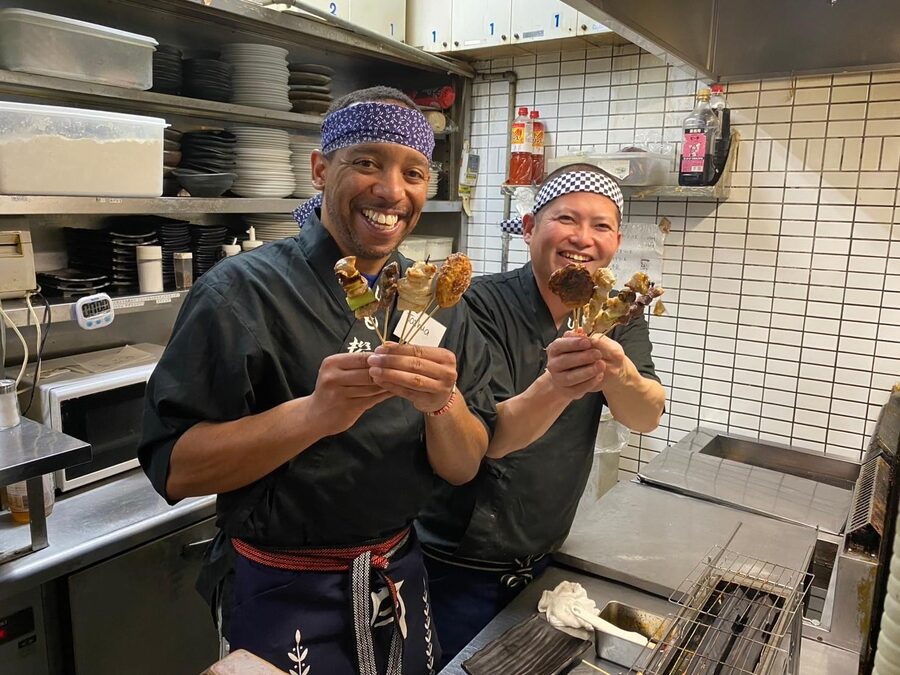
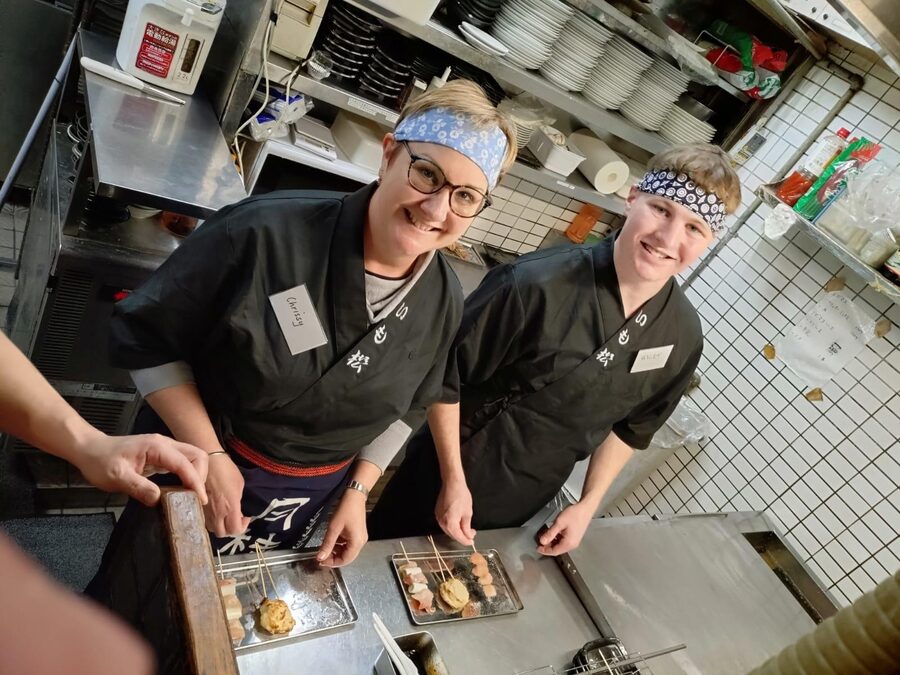
Japanese food starts with your hands. At Izakaya Factory, you spend 90 minutes preparing three classic dishes, grilling yakitori, shaping filled onigiri, and rolling dashi-maki tamago in a real izakaya setting. I like the small group of up to eight because it leaves room for help at the stove, and I like that you sit down to eat what you make.
The $139 price is not cheap for a short class, though it includes ingredients, tools, a soft drink, instruction, your meal, and a bandana souvenir. The main consideration is time: this is a compact introduction rather than a long culinary workshop, and transportation to the venue is not included.
Key points at a glance
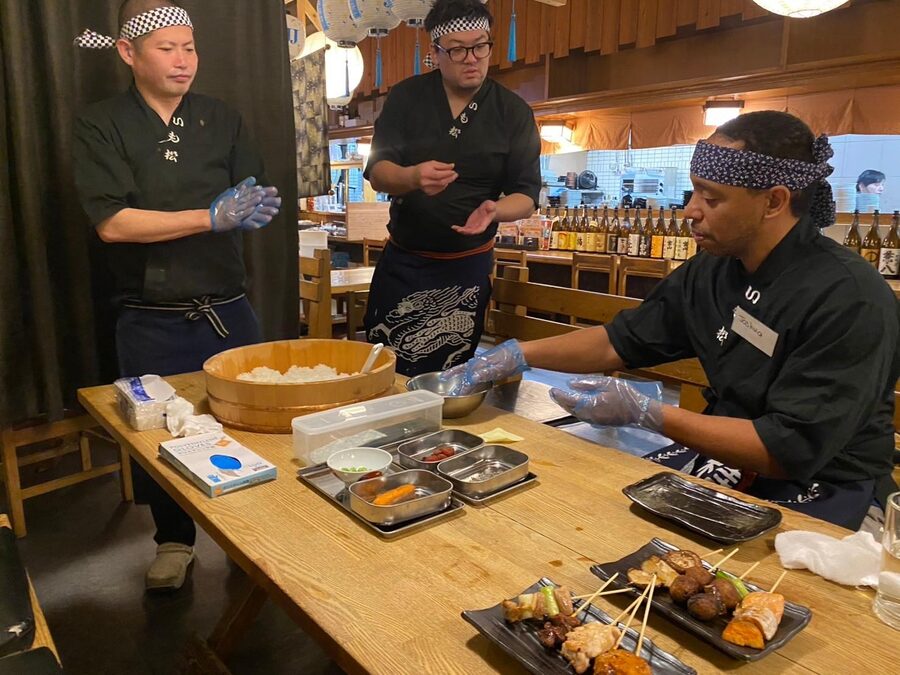
- Three useful Japanese staples: You make yakitori, filled onigiri, and dashi-maki tamago, giving the class a good mix of grilling, shaping, and pan work.
- A real izakaya setting: The class takes place at Imomatsu in Kyoto’s Kiyamachi area, not in a detached cooking school.
- A very small class: With no more than eight participants, you should have a better chance to ask questions and get help.
- Dietary options are built in: Vegetarian, vegan, and Muslim-friendly courses are available, with no pork, alcohol, or non-Halal meat in those versions.
- You eat your own work: The session ends with a meal, so you are not simply watching a demonstration.
- Convenient central location: The venue is about a five-minute walk from Keihan Sanjo Station and seven minutes from Hankyu Kawaramachi Station.
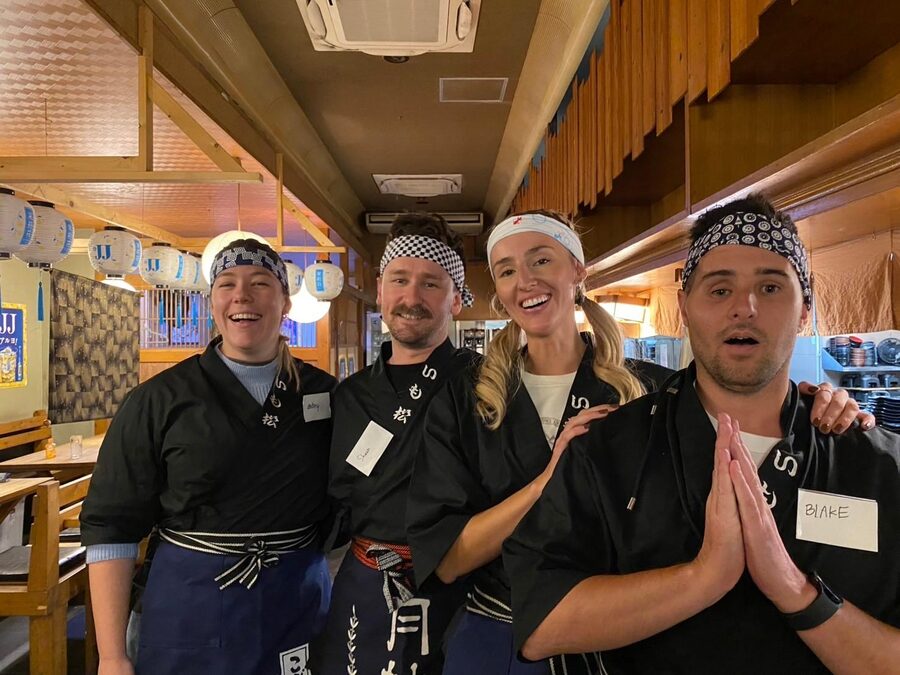
Entering Imomatsu in Kyoto’s Kiyamachi district
The meeting point is Imomatsu, in the basement of the Sixth Sightseeing Building at Zaimokucho, Nakagyo Ward, Kyoto. It is about a five-minute walk from Keihan Sanjo Station, a seven-minute walk from Hankyu Kawaramachi Station, and roughly 234 meters from Sanjo Station.
That central location matters. You can fit the class into a day of sightseeing around Sanjo, Kawaramachi, or the Kiyamachi area without arranging a separate taxi ride. I would still allow a little extra time to find the correct building and basement entrance, especially if you are navigating Kyoto for the first time.
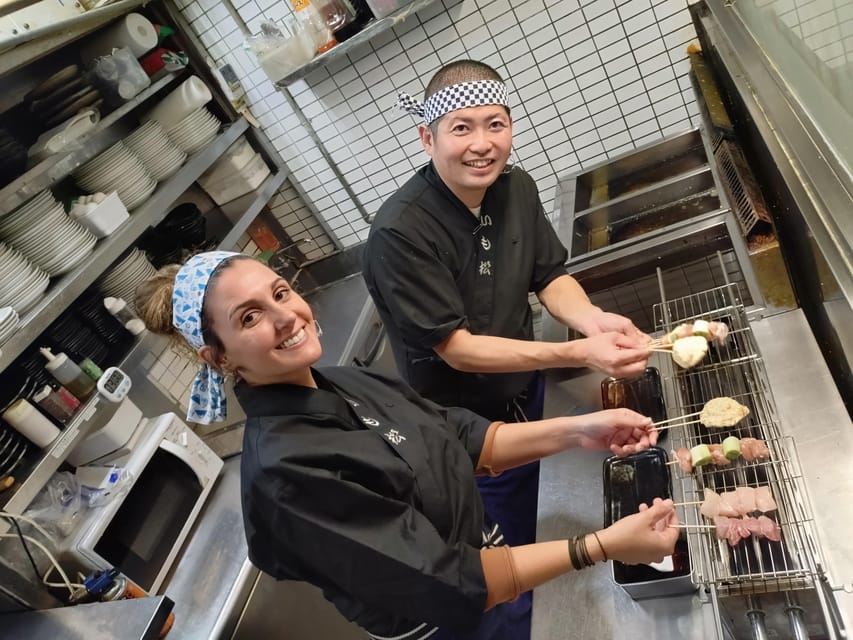
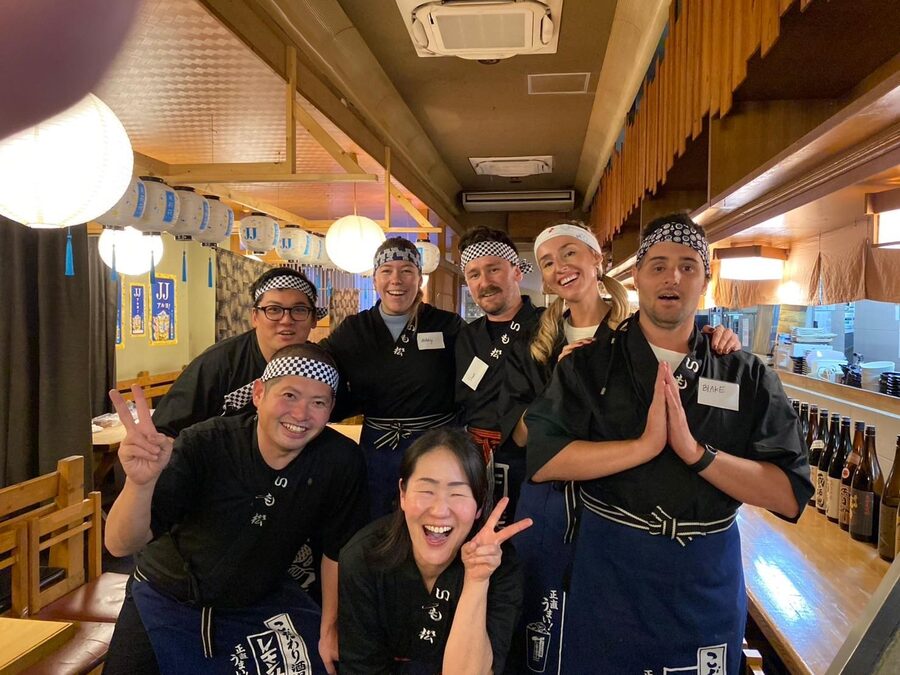
The setting is part of the appeal. An izakaya is a casual Japanese restaurant where people gather over small dishes and drinks. You are not simply learning recipes in a blank classroom. You are preparing food in a place connected to the style of eating you are learning about.
The venue is also the start and finish point. There is no second location to reach after the class, which keeps the outing easy to plan.
More Sushi and Japanese Classes in Kyoto:
- Ramen Cooking Class at Ramen Factory in Kyoto
★ 5.0 · 1,937 reviews - Kyoto: Ramen Cooking Class at a Ramen Factory with Souvenir
★ 4.9 · 532 reviews - Kyoto: Ramen, Gyoza, and Onigiri Cooking Class
★ 5.0 · 445 reviews
What the 90-minute class covers
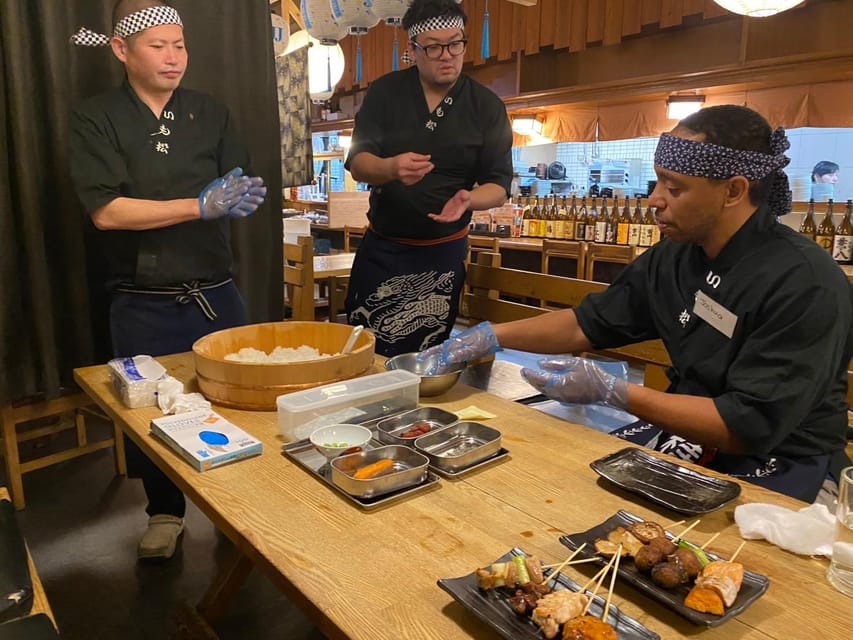
The schedule moves through three dishes. The class is short, so the focus is on practical participation rather than a long lesson about Japanese food. You should expect the instructor to guide you through each preparation, then help you cook and assemble the meal.
The experience is designed for all skill levels. If you cook often, you may appreciate the chance to work with familiar ingredients in a Japanese format. If you rarely cook, the class should feel approachable because each dish involves a clear, manageable task.
The English-speaking instructor can teach in English or Japanese. That is useful for international visitors, though the actual amount of explanation can vary depending on the group and the pace of the session.
Grilling yakitori the izakaya way
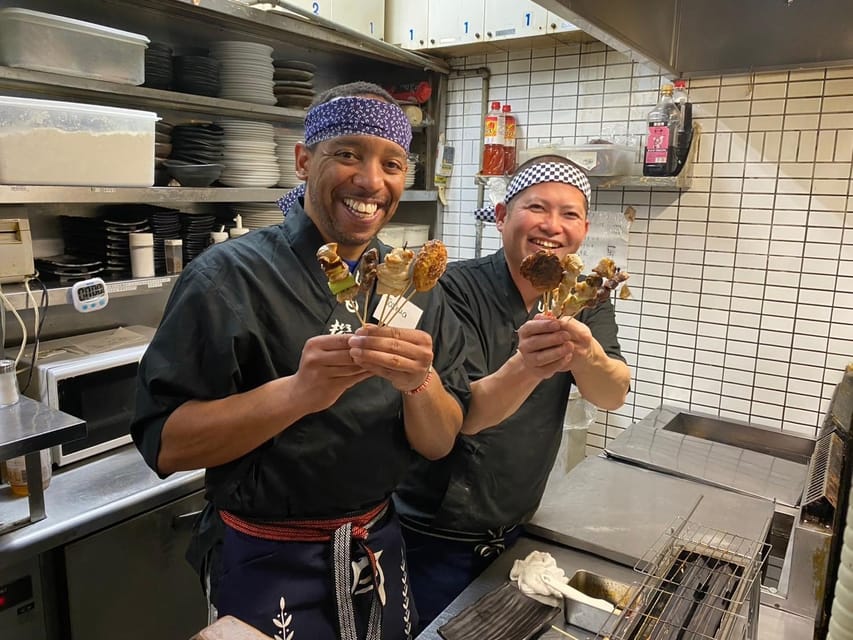
Yakitori is chicken grilled on skewers. It is one of the most recognizable foods associated with an izakaya, and grilling it gives this class a hands-on centerpiece.
You will prepare and grill skewered chicken rather than simply receiving a finished plate. That makes the lesson more useful than a standard restaurant meal because you get a sense of the care involved in arranging food on skewers and cooking it properly.
The grill work is also the part most likely to feel social. You are working with heat, timing, and presentation, while the instructor helps you avoid the common mistakes that can leave skewers undercooked or overly dry. The class description promises chicken grilled to perfection, but you should think of that as the aim of the lesson, not a guarantee that every first attempt will look restaurant-perfect.
I like yakitori as a teaching dish because it connects preparation directly to the final meal. You can see, smell, and taste the result of your work within the same short session.
Shaping filled onigiri by hand
Onigiri are Japanese rice balls, often shaped by hand and filled with savory ingredients. The technique looks simple, but getting the shape to hold together takes a little practice.
This part of the class should suit families, beginners, and anyone who enjoys a tactile cooking activity. You form the rice, add fillings, and learn how to create one of Japan’s most familiar everyday foods. The fillings are part of the pleasure, since they give you a way to compare different tastes and textures in a compact dish.
The practical value goes beyond the meal at Izakaya Factory. Onigiri is one of the more realistic dishes to recreate at home because it does not require a long cooking process or a large collection of special equipment. You may need to adapt the fillings to what is available where you live, but the basic idea is easy to carry into your own kitchen.
The shaping can also be a little messy. That is not a problem, but you should not expect every rice ball to come out perfectly even. The point is learning how the rice responds to your hands and how much filling it can hold.
More Meals Out in Kyoto:
- Pasta Making & Wine Tasting with Dinner in Frascati from Rome
★ 5.0 · 1,326 reviews - Rome: Pasta Making with Wine Tasting and Dinner in Frascati
★ 4.9 · 979 reviews - Palermo: Pizza and Gelato Cooking Class with Dinner and Wine
★ 4.9 · 951 reviews - Seville: Spanish Cooking Class with Dinner
★ 4.9 · 900 reviews
Rolling dashi-maki tamago without panic
Dashi-maki tamago is a Japanese rolled omelet made with dashi, the stock that gives many Japanese dishes their savory depth. It is fluffy, seasoned, and built in layers by folding cooked egg over itself in the pan.
This is likely the most technical dish of the three. The omelet looks neat when served, but the rolling action takes coordination. You need to judge when the egg is set enough to fold, yet still soft enough to create a tender roll.
The instructor is especially useful here. A class participant described the omelet demonstration as making the technique look easy, which is exactly the danger of watching an expert. The motion may appear simple, but your first attempt can be less tidy. I would treat this as a chance to learn the method, not as a test of restaurant-level precision.
You may also hear about a special frying pan during the lesson. The class includes cooking tools for use during the experience, but the listed inclusions do not say that a special pan comes home with you. Do not count on that as part of the souvenir.
Sitting down to eat what you prepared
After the cooking, you sit down and eat the dishes. This gives the class a satisfying finish and lets you judge the results while the instructions are still fresh.
The meal is not an extra restaurant course added on top of the class. It is the payoff for the work you just did. That distinction helps explain the price, since you are paying for instruction, ingredients, use of tools, and food.
I also like this format because it keeps the experience connected to Japanese dining culture. An izakaya meal is about several small dishes enjoyed together, rather than one oversized main course. Yakitori, onigiri, and rolled omelet give you a small but clear sample of that style.
One soft drink is included. Alcohol is not part of the listed inclusion, which is helpful for anyone who wants the izakaya atmosphere without drinking. The Muslim-friendly option also specifically excludes alcohol.
Why the group size makes a difference
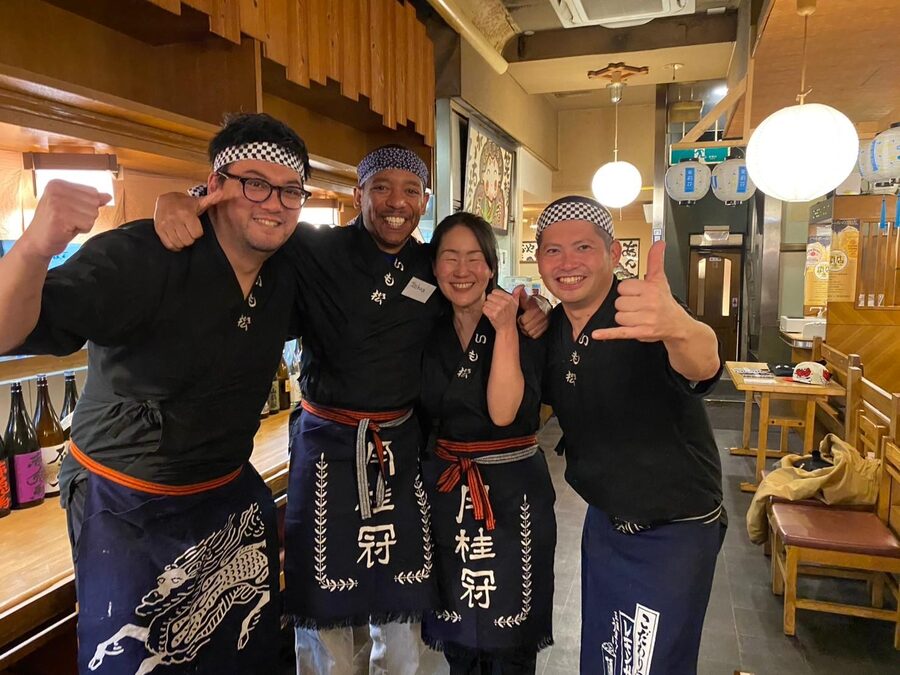
The class is limited to eight participants. That is small enough to feel more personal than a large demonstration, but not so small that you should assume a private lesson.
A small class is especially valuable for dashi-maki tamago. You may need to see the rolling movement more than once, ask when to fold, or get help correcting the shape. The same applies to onigiri, where a quick adjustment to your hand position can make the rice easier to manage.
There is also a chance that your scheduled session could have only one or two participants. That happened for one couple, giving them more one-on-one time with the instructor. It is not something I would expect or book around, but the small maximum means the experience can sometimes feel unusually personal.
The group format has one possible downside. If you prefer a quiet private lesson, you may still be sharing the space with other participants. If you enjoy cooking alongside people from different backgrounds, the shared format should add to the fun.
Dietary choices: useful, but confirm the right course
Vegetarian, vegan, and Muslim-friendly courses are available. The Muslim-friendly option uses no pork, alcohol, or non-Halal meat.
That is a meaningful strength because yakitori is normally associated with chicken, and dashi can sometimes contain fish depending on how it is prepared. The supplied information confirms that dietary courses are offered, but it does not provide the exact substitutions or ingredient list for each version.
I recommend selecting the correct dietary option when booking and stating your needs clearly. Do not assume that choosing a vegetarian or vegan course simply means removing the chicken at the table. The cooking method and ingredients may need to be adjusted from the start.
People with strict allergies should ask for ingredient details before booking. The available information confirms dietary categories, but it does not list allergen controls or kitchen separation.
Is $139 a fair price?
At $139 per person, this is a premium short activity. For 90 minutes, the price is higher than a basic cooking demonstration or casual meal.
The value comes from the combination. You get an English-speaking instructor, all ingredients, cooking tools, three dishes, a soft drink, the food you prepare, and a bandana souvenir. You also get a central Kyoto location and a class capped at eight people.
I would consider the price reasonable if you want an organized, hands-on activity and care about learning dishes you can attempt again at home. The cooking itself is the main attraction, not the souvenir. If you are mainly looking for an inexpensive lunch, the cost will feel high.
The class also saves you from having to choose dishes and order them separately at an izakaya. You receive a guided introduction to several foods in one sitting. On the other hand, you will not spend hours learning sauces, knife work, shopping, or a larger menu.
Who will get the most from this class?
I think this experience fits several kinds of visitors particularly well:
- First-time visitors to Japan who want a simple introduction to everyday Japanese food.
- Couples looking for a shared activity that ends with a meal.
- Families and beginners who prefer clear tasks rather than advanced cooking.
- Home cooks who want to learn techniques for onigiri and rolled omelet.
- Vegetarian, vegan, and Muslim visitors who need a stated dietary option.
- People staying near Sanjo or Kawaramachi who want an activity within easy walking distance.
It may be less suitable if you want a long, highly technical culinary course. It may also disappoint you if your main goal is learning a broad range of dishes, since the class focuses on three preparations in a short window.
Practical details before you go
The activity lasts 1.5 hours, and starting times depend on availability. Since the class ends where it begins, you can plan a nearby meal, shopping stop, or evening walk afterward.
Transportation is not included. You are responsible for reaching Imomatsu, but the venue is close to major stations. Keihan Sanjo and Hankyu Kawaramachi are the most useful reference points.
All cooking ingredients and tools are included. You do not need to bring equipment. A soft drink is included, as is a bandana souvenir that gives you a small reminder of the class.
Cancellation is flexible up to 24 hours before the activity for a full refund. You can also reserve now and pay later, which helps if your Kyoto schedule is still shifting.
Should you book Izakaya Factory?
Book this class if you want to cook three recognizable Japanese dishes, eat the results, and keep the outing compact. The small group, central Kyoto location, English instruction, and dietary choices make it easy to fit into a busy itinerary.
I would book it especially for the hands-on work with yakitori and dashi-maki tamago. The class gives you more than a meal, but less than a full culinary course. At $139, it is best viewed as a focused food experience with a meal included, not as a budget activity.
FAQ
Where does the cooking class take place?
It takes place at Imomatsu, in the basement of the Sixth Sightseeing Building in Zaimokucho, Nakagyo Ward, Kyoto.
How long does the experience last?
The class lasts 1.5 hours.
What dishes will I make?
You will make yakitori, filled onigiri, and dashi-maki tamago, a traditional Japanese rolled omelet.
Is the class suitable for beginners?
Yes. The experience is suitable for all skill levels.
Is the instructor available in English?
Yes. Instruction is available in English and Japanese.
How many people can join the class?
The group is limited to eight participants.
Are vegetarian options available?
Yes. Vegetarian courses are available.
Are vegan options available?
Yes. Vegan courses are available.
Is there a Muslim-friendly course?
Yes. The Muslim-friendly course uses no pork, alcohol, or non-Halal meat.
Is transportation to the venue included?
No. You are responsible for transportation to and from the venue.
What is included in the price?
The price includes all ingredients, cooking tools, one soft drink, an English-speaking instructor, and a bandana souvenir.
Can I cancel for a full refund?
Yes. You can cancel up to 24 hours in advance for a full refund.
More Drinks Tours in Kyoto
- Kyoto: Afternoon Japanese Izakaya Cooking Class
★ 4.9 · 241 reviews - Izakaya Style Cooking Class
★ 5.0 · 219 reviews - Ramen and Sushi Cooking Class with Sake Pairing Set in Tokyo
★ 5.0 · 291 reviews - Osaka Sake Tasting with Takoyaki Cooking
★ 5.0 · 156 reviews
Just added around Kyoto
- Kyoto Udon & Tempura Cooking Class with Professional Chefs★ 3.8 · 3 reviews
- Kyoto: Wagashi (Japanese sweets) Cooking near Fushimiinari★ 5.0 · 40 reviews
- Kyoto: Morning Japanese Bento Cooking Class★ 5.0 · 149 reviews
- Kyoto Home Cooking Class &Supermarket tour near Fushimiinari★ 5.0 · 31 reviews
- Kyoto: Cooking class, learning how to make authentic sushi★ 4.2 · 9 reviews
- Kyoto: Authentic Sushi Making Cooking Lesson★ 5.0 · 103 reviews
- Gyoza Cooking Class in Kyoto: Traditional Japanese Dumplings★ 5.0 · 12 reviews
- Private Plant-Based Japanese Cooking Class – Kyoto Edition★ 5.0 · 15 reviews
Japanese & Sushi Cooking Classes, compared.
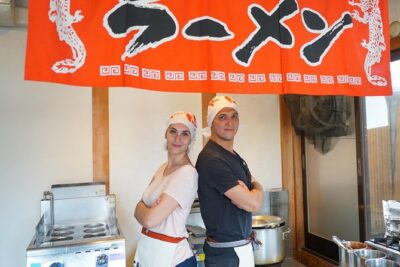
Ramen Cooking Class at Ramen Factory in Kyoto
Read our review →
Ramen & Gyoza Cooking Class in Tokyo with Local Supermarket Visit
Read our review →
Ramen Cooking Class at a Ramen Factory with Souvenir
Read our review →
Sushi Making Osaka! Popular Sushi Class in Japan!
Read our review →
Tokyo Tsukiji Fish Market Tour and Sushi Making Lesson
Read our review →
Japanese Washoku Bento Small Group Cooking Class
Read our review →
Lists this class appears in