REVIEW · ANDALUSIA, SPAIN
Seville: Spanish Cooking Class with Dinner
Come hungry, leave with recipes. This three-hour class turns dinner into a social evening inside Triana Market, where you prepare classic Spanish dishes with a professional chef. I like the hands-on format and the generous food and drinks included in the $82 price. The one thing to keep in mind is that this is a shared cooking session, not a private lesson where you personally prepare every dish from start to finish.
The English-language class suits complete beginners as well as confident home cooks. Chefs including Carlos, Carlo, Leo, David, Dom, Pedro, and others have led sessions, and the strongest part of the experience is often their personality. Some groups have been around 10 people, a comfortable size for meeting others without feeling lost. Dietary changes can be arranged if you tell the school in advance.
Key points to know before booking
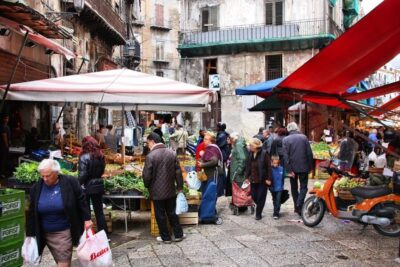
- The class takes place in Triana Market: Meet at stalls 75 to 77 on Plaza del Altozano, an atmospheric setting that connects the cooking lesson with Seville’s food culture.
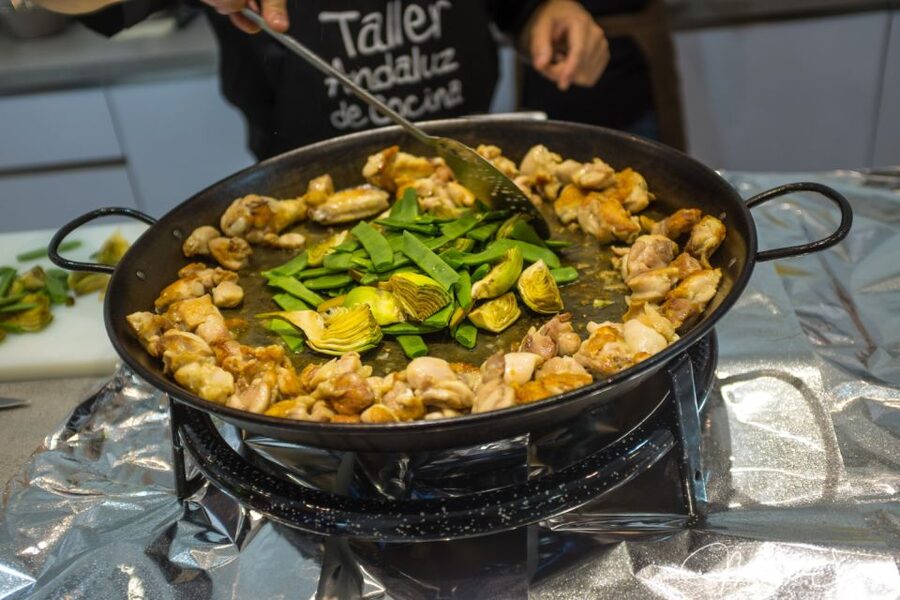
- You cook a full Spanish meal: The menu can include gazpacho or salmorejo, tapas, paella with chicken and seasonal vegetables, and lemon sorbet with Cava.
- Drinks are part of the evening: Sangria is served while you cook, followed by two additional drinks with dinner.
- The mood is social and relaxed: You work alongside people from different countries, making this a good choice for solo visitors, couples, and small groups.
- The class is practical but shared: You will take part in preparation, though some steps involve watching the chef or working as a team.
- Dietary needs can be discussed: Recipes can be adapted, but you need to advise the school ahead of time.
Starting at stalls 75 to 77 in Triana Market
The meeting point is easy to identify: stalls 75 to 77 inside Triana Market on Plaza del Altozano. That location gives the evening a useful sense of place. You are not cooking in an anonymous hotel room. You are in Triana, one of Seville’s best-known neighborhoods, surrounded by the everyday setting of a local market.
The market location also gives the class a more grounded feel than a formal restaurant dinner. You begin with ingredients, tools, and a working kitchen, then finish by eating what the group has made. If you arrive early, allow yourself a few minutes to find the stalls and get settled.
The class runs for three hours, with starting times varying by date. That length matters. You have enough time to prepare several dishes, listen to explanations, enjoy sangria, and sit down for dinner without the whole evening feeling rushed.
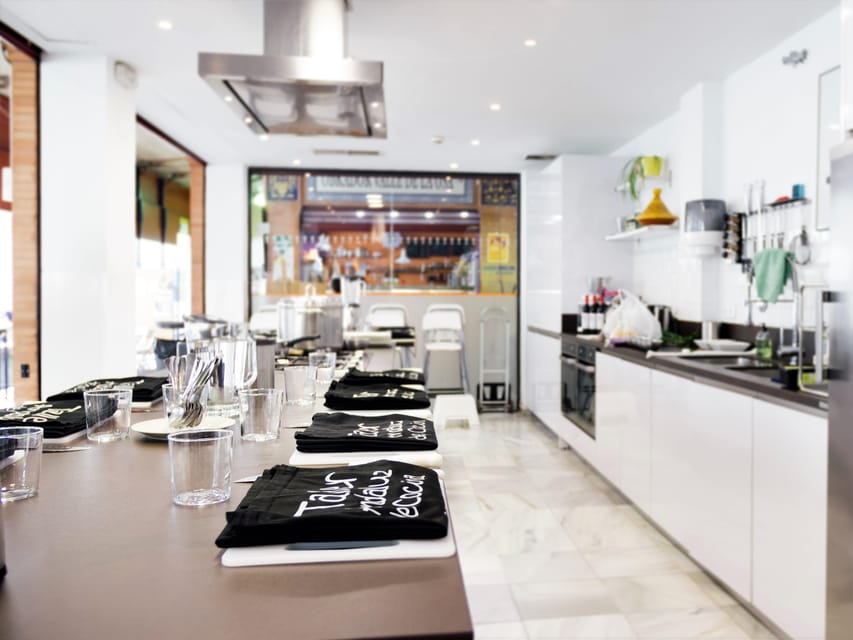
This is an indoor cooking-school setting within the market. The exact arrangement of the workstations may vary, but the activity is designed around group participation rather than individual cooking stations. A group of about 10 has been described as a comfortable size, though the number can change.
More Paella and Spanish Classes in Spain:
- Barcelona: Paella Cooking Experience & Boqueria Market Tour
★ 4.8 · 3,661 reviews - Barcelona Paella Cooking Class with Market Visit, Tapas & Sangria
★ 5.0 · 2,531 reviews - Barcelona Interactive Spanish Cooking Experience
★ 4.5 · 2,155 reviews
Sangria, introductions, and the first preparation
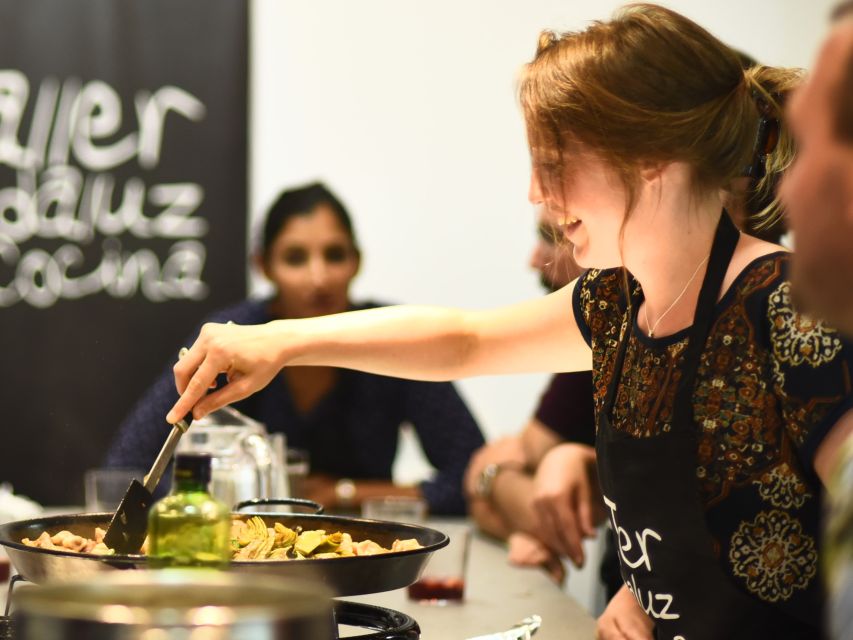
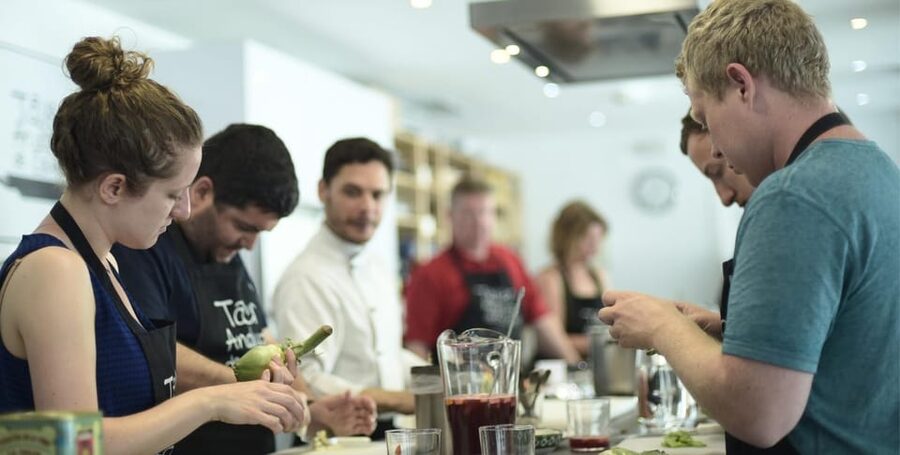
The evening begins with sangria while the chef introduces the menu and the group gets acquainted. This is a small but important part of the experience. A cooking class can feel awkward if everyone is handed a cutting board and told to work in silence. Here, the drink and shared tasks help people start talking quickly.
You may be cooking with couples, solo visitors, families, or friends from several countries. The social side is one of the main reasons to choose this class. It gives you an easy way to meet people without having to make conversation from scratch over dinner.
The teaching style seems to depend partly on which chef leads your session. Carlos and Carlo are praised for humor and energy, while Leo is described as both an entertainer and a skilled chef. David is praised for keeping everyone involved, and Dom and Pedro are noted for making first-time cooks feel at ease.
That variety is worth understanding. You are booking the cooking-school experience, not a guaranteed performance by one particular chef. Still, the consistent pattern is clear: the class is meant to feel informal, friendly, and active.
Making gazpacho or salmorejo in Seville
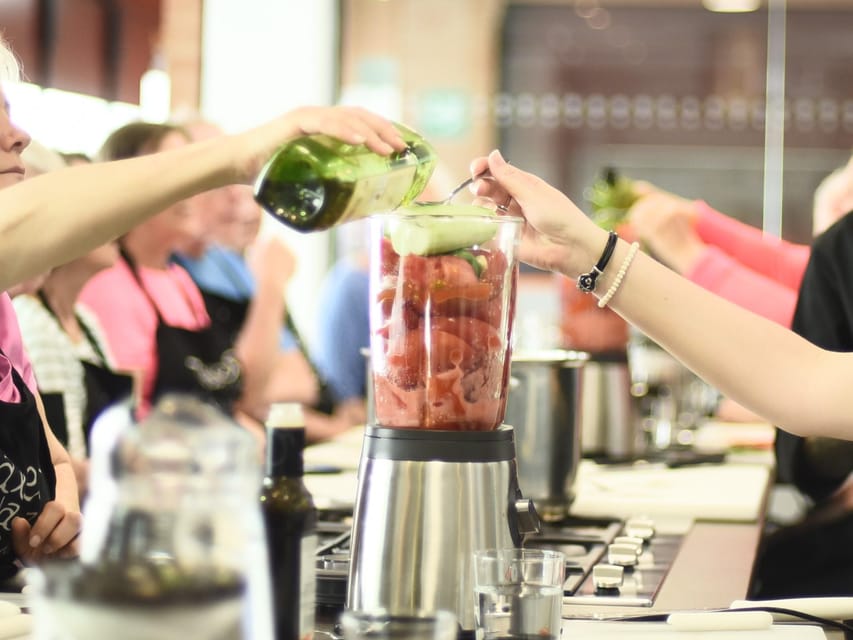
The starter introduces two famous cold soups from southern Spain. Depending on the session, you may prepare salmorejo, a thick chilled tomato soup, or gazpacho, its lighter and more pourable cousin.
This is a useful first dish because it teaches a simple Spanish approach to cooking: good ingredients, careful seasoning, and a few basic techniques can produce something memorable without a long list of complicated steps. You get to see how the chef handles texture and balance, rather than simply receiving a bowl from a restaurant kitchen.
The class is not only about copying steps. Several participants valued learning methods they could repeat at home, including preparation tips that made the recipes feel manageable. That makes the soup course more useful than a quick demonstration followed by dinner.
You should also expect some observation. One of the more practical descriptions of the class presents it as collective cooking, with each person handling smaller tasks while the chef demonstrates other stages. If you want three uninterrupted hours of personal knife work, this may feel less hands-on than expected. If you prefer a social lesson with expert guidance, the format works well.
Preparing tapas with a local flavor
The tapas portion may include spinach with chickpeas, huevos a la flamenca, or Spanish omelet. These dishes show a different side of Spanish food from the chilled soup. They are warm, filling, and based on ingredients that are easy to find and use at home.
Spinach with chickpeas is especially useful for anyone interested in vegetarian Spanish cooking. It is simple, hearty food, and the class can suggest vegetarian changes when needed. The Spanish omelet also teaches a dish that looks basic but depends on timing, texture, and confidence with the pan.
Huevos a la flamenca gives you another classic option, with eggs prepared in a traditional Spanish style. The exact dish selection may vary, so you should not book expecting every one of these tapas at the same session.
This part of the class is where participation becomes more noticeable. You may chop, stir, season, or help with a shared preparation while the chef keeps an eye on several tasks. The benefit is that you learn by doing without having to carry the full responsibility for dinner.
More Cooking Classes with a Meal in Spain:
- Pasta Making & Wine Tasting with Dinner in Frascati from Rome
★ 5.0 · 1,326 reviews - Palermo: Pizza and Gelato Cooking Class with Dinner and Wine
★ 4.9 · 951 reviews - Paris Evening Cooking Class French Dinner and Market Visit Option
★ 5.0 · 430 reviews - Paris French Cuisine Small Group Cooking Class with Lunch
★ 4.5 · 418 reviews
The paella lesson is the main event
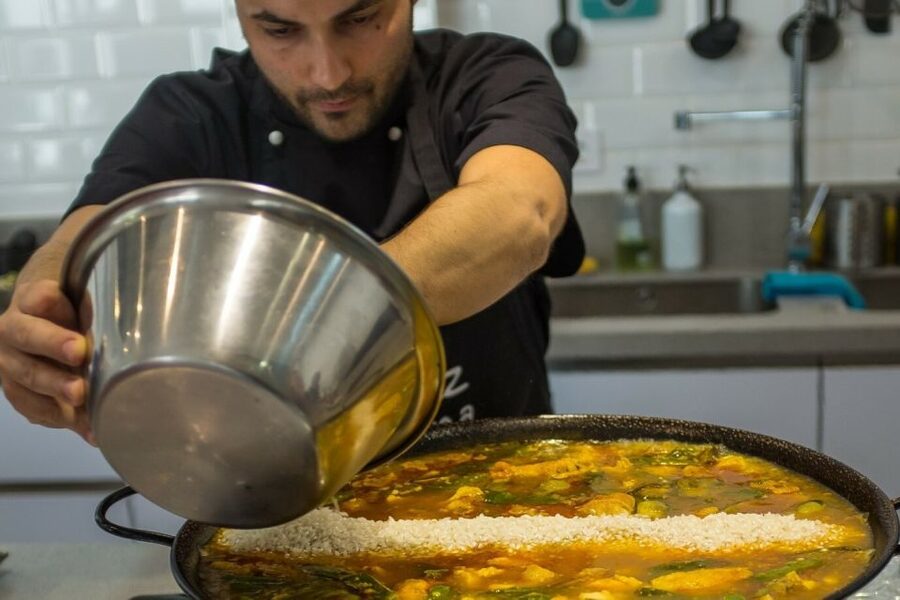
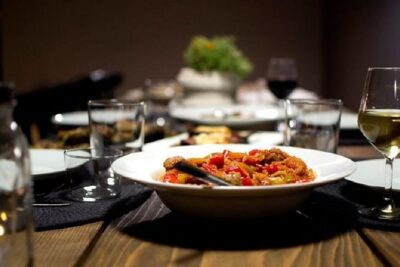
Paella is the centerpiece of the evening. The version described here uses chicken and seasonal vegetables, rather than seafood. That is useful for anyone with shellfish concerns or anyone who wants a paella that can be repeated with ingredients available in many supermarkets.
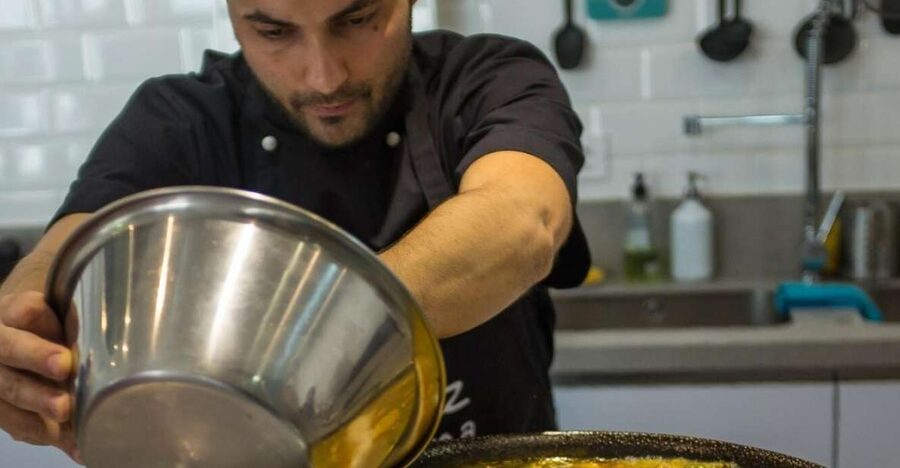
The chefs explain the process and demonstrate the techniques needed to build flavor and cook the rice properly. Some participants have learned how to prepare a whole chicken, including deboning it before it goes into the pan. That is more practical instruction than simply watching a chef stir rice.
Paella rewards attention. The order of preparation, the cooking liquid, and the timing all matter. You get a chance to see how the chef handles these stages, then taste the result at the table.
Do not expect every person to cook an entire paella independently. The dish is made as a group, and some of your time will involve watching or helping with one part of the process. The payoff is a shared pan that becomes the main course for the whole table.
The food receives some of the strongest praise. People repeatedly describe the paella as delicious, authentic, and easy enough to try at home. That combination is important. A cooking class should produce more than a pleasant meal. It should give you a method you can remember once you are back in your own kitchen.
Dessert with lemon sorbet and Cava
After the savory courses, the class finishes with lemon sorbet and Cava. It is a light ending after a meal that includes soup, tapas, and paella.
The dessert also keeps the group involved without adding a demanding final recipe. The cold sorbet and sparkling wine make a clean finish, especially after a warm and filling main course.
The menu is substantial. Several people advise arriving hungry, and that is sensible. You will be tasting during the preparation as well as eating the completed meal. This is not a small cooking demonstration followed by a token sample.
What you actually drink and eat
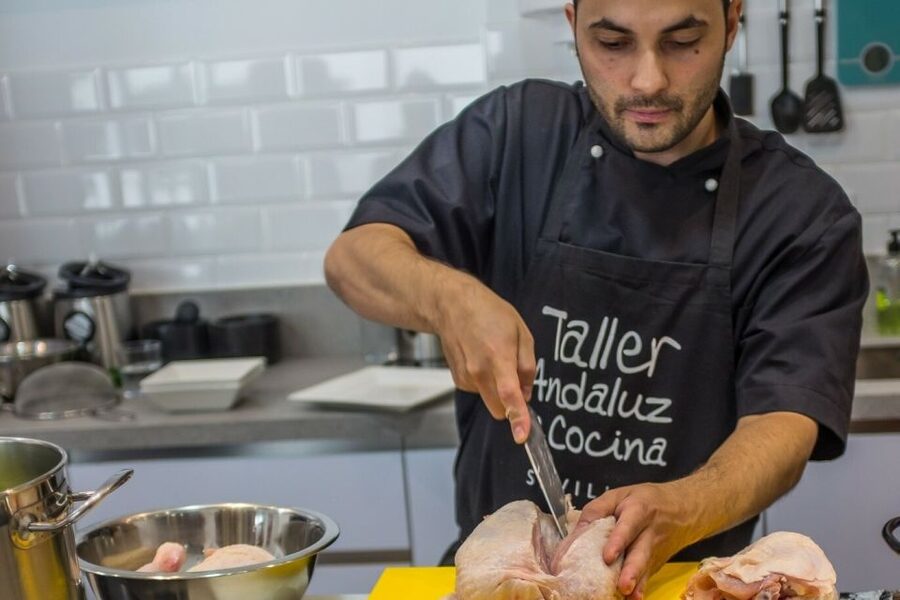
The $82 price includes all ingredients, an apron, sangria during the lesson, the complete meal, and two additional drinks with dinner. Those final drinks can be white or red wine, local beer, or soft drinks.
That makes the price easier to assess. A three-hour meal in Seville, several courses, a guided lesson, and drinks can add up quickly if purchased separately. You are also paying for instruction and the use of a professional cooking space, not just for food.
The value is strongest if you enjoy both food and social activities. If you only want a good paella dinner, a restaurant may be simpler and possibly less expensive. If you want to learn techniques, meet people, and make the meal yourself, the class offers more for the evening.
The portions appear generous, so avoid scheduling this between another large meal and a late-night food stop. You may want to keep the rest of your evening flexible rather than planning another full dinner afterward.
How hands-on is the class?
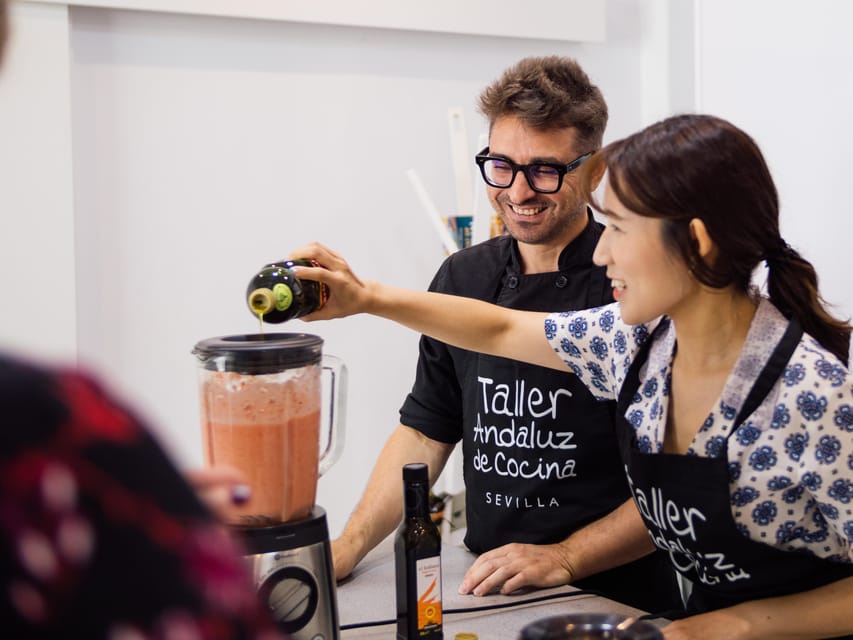
This is the most important question to ask before booking. The experience is hands-on, but it is also collaborative. You take part in preparation and learn new techniques, yet you will not necessarily control one dish from beginning to end.
That arrangement has clear advantages. Beginners can join without feeling exposed, and the chef can keep the food on track. You also get to see more than one dish being prepared, rather than spending the whole class on a single recipe.
The tradeoff is that confident cooks may want more individual practice. If you are hoping to perfect paella through repeated attempts, this is not that kind of workshop. It is closer to a guided group dinner in which cooking, explanation, tasting, and conversation share the evening.
The chef’s personality matters here. Carlos and Carlo are repeatedly praised for making people laugh, while Leo is described as interactive and energetic. Other instructors, including David, Dom, and Pedro, are praised for clear explanations and a welcoming approach. The class works best when you join in, ask questions, and accept that the evening is partly about the people around you.
Dietary needs and language
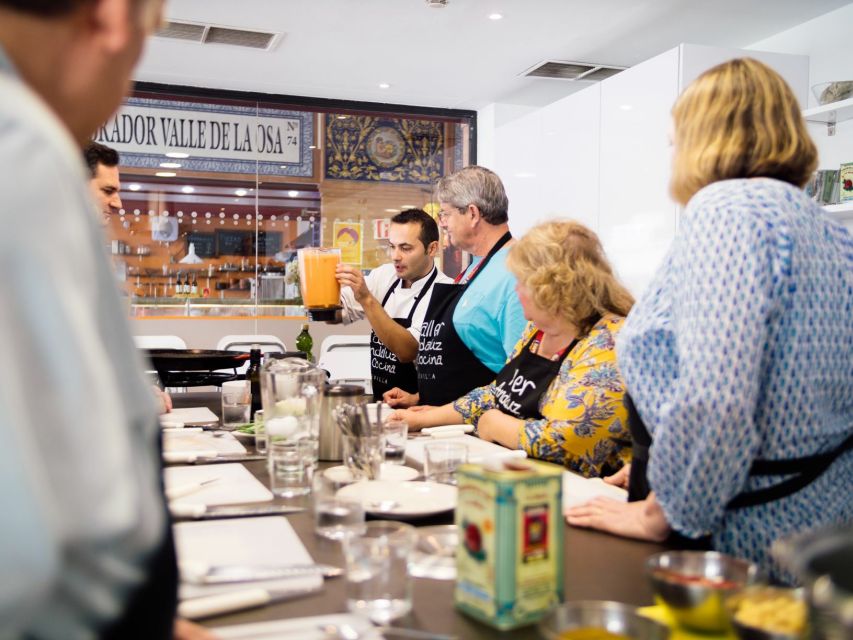
The class is taught in English. That makes it accessible to visitors who want explanations they can follow in detail, especially when the chef is discussing timing, preparation, or the reasons behind a technique.
Recipes can be adapted for dietary restrictions if you advise the school in advance. Vegetarian adjustments have been handled successfully, and one person specifically noted that the class was suitable for a gluten-free diet.
Do not wait until you arrive to mention a restriction. Send the information ahead of time so the team can plan the ingredients and menu. The published menu may change when adaptations are needed, but the school says the recipes can be adjusted.
Recipes and what you take home
A good cooking class should leave you with something you can use later. The recipes are intended to be sent by email, and some participants received them after the class. One person had not received them at the time of writing, so keep an eye on your inbox and follow up if necessary.
The recipes are especially useful because the menu is practical. Gazpacho, spinach with chickpeas, Spanish omelet, and chicken and vegetable paella are dishes you can make without needing rare equipment or exotic ingredients.
You also take home the techniques learned from the chef. That may include preparing chicken, balancing soup texture, handling rice, and organizing several dishes at once. Those small skills often matter more than a printed ingredient list.
Who will enjoy this evening most?
I would recommend the class to couples looking for a shared activity, solo visitors who want an easy social evening, and small groups who enjoy food. It also suits first-time cooks because the chefs keep the pace friendly and help with the practical work.
Teenagers can enjoy it too. The activity has enough movement, food, and conversation to hold attention better than a formal lecture. Families should remember that the class includes drinks for adults, but soft drinks are available as one of the meal options.
It is less suitable if you want a quiet dinner, a private class, or a strict professional workshop. The evening is social and sometimes lively. You will be sharing tasks, equipment, and conversation with other people.
Practical details before you go
The meeting point is stalls 75 to 77 in Triana Market on Plaza del Altozano. The class lasts three hours and is offered in English.
Wear something comfortable and expect to use an apron provided by the school. Since the evening includes a full meal, sangria, and two further drinks, arrive ready to eat but not immediately after a heavy lunch.
The activity offers free cancellation up to 24 hours before the start time, and you can reserve without paying at once. Those policies are useful if your Seville schedule is still changing.
Should you book this Seville cooking class?
Book it if you want a lively evening that combines food, instruction, and conversation. The Triana Market setting, generous menu, drinks, and practical paella lesson give the $82 price solid value for anyone who wants more than a restaurant meal.
I would be especially happy to recommend it to first-time cooking-class participants. The chefs are praised for humor, patience, and clear guidance, and the group format removes much of the pressure.
Skip it if you need a private, highly technical lesson or want complete control over every dish. For most visitors, though, this is an easy way to meet people, eat well, and bring a little of Seville’s cooking home with you.
FAQ
Where does the cooking class meet?
Meet at stalls 75 to 77 inside Triana Market on Plaza del Altozano in Seville.
How long does the experience last?
The cooking class and dinner last three hours.
What language is the class taught in?
The class is taught in English by a live chef and guide.
What food will I prepare?
The menu can include salmorejo or gazpacho, tapas such as spinach with chickpeas, huevos a la flamenca or Spanish omelet, chicken and seasonal vegetable paella, and lemon sorbet with Cava.
Are drinks included?
Yes. Sangria is served while you cook, and two additional drinks are included with the meal. These can be white or red wine, local beer, or soft drinks.
Are ingredients and cooking equipment included?
All ingredients and an apron are included as part of the experience.
Can the menu accommodate dietary restrictions?
Yes. The recipes can be adapted for dietary restrictions, but you need to advise the school in advance.
Can I cancel the booking?
You can cancel up to 24 hours before the activity for a full refund. The booking also offers a reserve now and pay later option.
More Meals Out in Spain
- Greek Cooking Class in Athens Including Rooftop Dinner with Acropolis View
★ 5.0 · 826 reviews - Tuscan Cooking Class and Dinner in Florence
★ 4.5 · 732 reviews - Greek Small-Group Athens Cooking Class & Dinner
★ 5.0 · 574 reviews - Lisbon Portuguese Cooking Class with 3-Course Dinner
★ 5.0 · 445 reviews
More Dinner Trips in Spain
- Paella Cooking Class with Professional Chef: Four Course Dinner
★ 5.0 · 561 reviews - Spanish Cooking Class and Dinner in Seville
★ 5.0 · 261 reviews - Valencia: Traditional Paella Cooking Class and Dinner
★ 4.8 · 53 reviews - Rome: Pasta Making with Wine Tasting and Dinner in Frascati
★ 4.9 · 979 reviews
Just added around Spain
- Basque Pintxos and Tapas Cooking Class in Bilbao★ 5.0 · 73 reviews
- Paella and Burnt Basque Cheesecake Cooking Class (in Bilbao)★ 5.0 · 46 reviews
- Small-group Immersive Basque Cooking Class in Bilbao with Open Bar★ 5.0 · 65 reviews
- Pintxos and Tapas Cooking Class in Bilbao★ 5.0 · 38 reviews
- Rooftop Paella Seafood Cooking Class Experience in Barcelona★ 5.0 · 59 reviews
- Private Barcelona Market Tour & Paella Cooking Class with Josh★ 5.0 · 4 reviews
- Private Authentic Paella Cooking Class in Barcelona with Josh★ 5.0 · 3 reviews
- Premium Paella & Tapas Feast: Unlimited Wine & Rambla Views★ 5.0 · 13 reviews
Cooking Classes with Lunch or Dinner, compared.
Pasta Making & Wine Tasting with Dinner in Frascati from Rome
Read our review →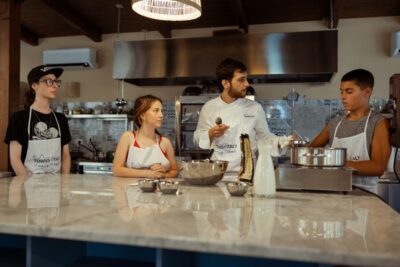
Pizza and Gelato Cooking Class with Dinner and Wine
Read our review →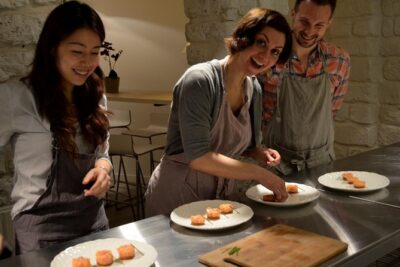
Paris Evening Cooking Class French Dinner and Market Visit Option
Read our review →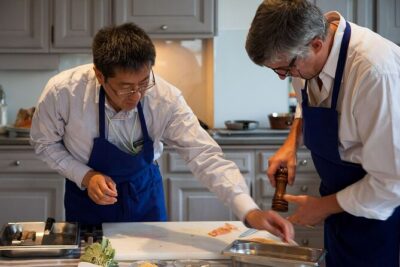
Paris French Cuisine Small Group Cooking Class with Lunch
Read our review →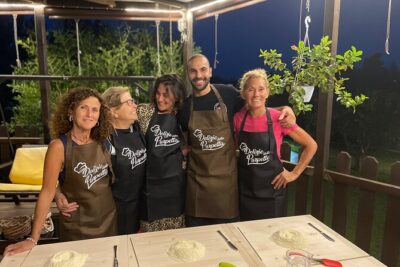
Cooking class, dinner and wine tasting near Lecce
Read our review →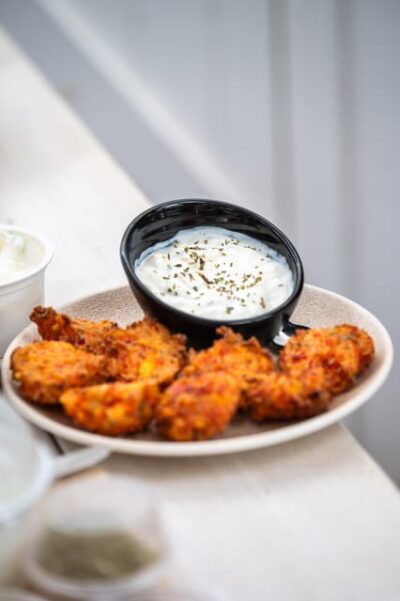
Traditional Greek cooking class and lunch or dinner with an Acropolis view
Read our review →