
REVIEW · MARRAKESH-SAFI, MOROCCO
Marrakech: Atlas Mountains Cooking Class with Berber Family
Mountain cooking beats another city meal. This full-day outing takes you from Marrakech to a High Atlas village, where you shop for ingredients, cook with a local grandmother, and eat a three-course lunch in a family home. I especially like the small groups of up to 10 and the chance to learn in a real home rather than a polished cooking studio.
I also like the human side of the day. Guides such as Ibrahim, Badr, and Ismail explain Amazigh culture, local history, and village life, while their mothers or aunts lead the cooking. The main drawback is timing: although the tour is sold as seven hours, several bookings ran closer to nine hours, with lunch often served around 2:30 to 4 p.m.
Key details before you book
- Shop for your own ingredients: Stop at a local market or vegetable shop and help choose what goes into the meal.
- Cook in a family home: Local mothers and aunts teach tagine, couscous, and traditional bread preparation.
- Expect a mountain walk: The home may require a 5 to 15 minute uphill walk on narrow paths and steps.
- Plan for a late lunch: Eat a solid breakfast, since the main meal may not arrive until midafternoon.
- Enjoy a real change of pace: The quiet Atlas villages and wide mountain views feel far removed from Marrakech.
- Allow extra time: The listed seven hours may stretch to nine, especially with pickup and mountain roads.
Leaving Marrakech for the High Atlas
Your day begins with hotel pickup in Marrakech. If you stay in a riad inside the Medina, a car cannot usually reach the door, so pickup is arranged at the nearest accessible point. That small detail matters. Confirm the meeting place before departure, and contact the operator by WhatsApp a day or two ahead if you want to avoid a last-minute scramble.
The drive takes you away from the heat and traffic of the city toward the Atlas Mountains. You pass Berber, more properly Amazigh, villages and open countryside. The views become the first major reward of the day, especially as the road climbs toward the Imlil Valley and the area around the high mountain trails.
Transport is by air-conditioned vehicle, and the group is limited to 10 people. In practice, some groups have been as small as four or six, which makes conversation much easier. Several guides, including Badr and Ibrahim, are praised for explaining the area during the drive rather than treating the transfer as dead time.
The road is winding. If you suffer from motion sickness, bring the medicine you normally use, such as Gravol if that is suitable for you. One person also found the return vehicle hotter than expected despite the air conditioning, so do not assume every ride will feel perfectly cool.
A few more cooking classes around Marrakesh worth a look
- Marrakech: Moroccan Cooking Class with Pickup
★ 4.6 · 1,862 reviews - Marrakech: Traditional Moroccan Cooking Class & Market Visit
★ 4.8 · 1,861 reviews - Marrakesh: Moroccan Dishes Cooking Class with a Local Chef
★ 5.0 · 1,615 reviews
Choosing vegetables at a local market
A stop at a local market or small vegetable shop gives the cooking class a useful beginning. You do not simply arrive at a prepared kitchen and follow instructions. You help select and sometimes weigh the vegetables that will become lunch.
That simple errand shows how much everyday Moroccan cooking depends on fresh produce and patient preparation. It also gives the guide a chance to explain ingredients and answer questions before you reach the family home. The exact market stop can feel modest, but it is one of the more authentic parts of the day.
The food is generally straightforward rather than fancy. Common dishes prepared during the class include chicken tagine, vegetable couscous, and bread baked in a wood-fired oven. Some groups prepare all three, while the precise menu may vary.
You should eat breakfast before leaving Marrakech. The market stop is not a substitute for lunch, and the meal may not be served until around 2:30, 3, or even 4 p.m. By then, you will appreciate the food all the more, but only if you are not already miserable with hunger.
Meeting women at an Ourika Valley cooperative
The day description also includes a visit with women at a cooperative in the Ourika Valley. This adds another view of local life beyond the cooking lesson, though the route details center mainly on the Imlil Valley and a family home in the Atlas Mountains.
Because the published route refers to both Ourika and Imlil, ask for the exact plan when you book. That is especially useful if you are choosing this experience for a particular village or viewpoint. The central promise remains the same: mountain scenery, local food, and time with an Amazigh family.
Walking to the family home
The vehicle does not always take you right to the cooking terrace. Depending on the home and drop-off point, you may walk uphill for 5 to 15 minutes along a narrow mountain path with steps.
That walk is manageable for many people, but it is not a flat stroll. Sarah, who brought children, specifically felt the outing was unsuitable for someone with mobility problems. The experience is not suitable for wheelchair users or people with significant mobility impairments.
Wear shoes with a firm grip. Bring a warm layer even if Marrakech is hot, because mountain temperatures can be cooler, particularly in the morning and during colder months. A sun hat, water, and camera also belong in your day bag.
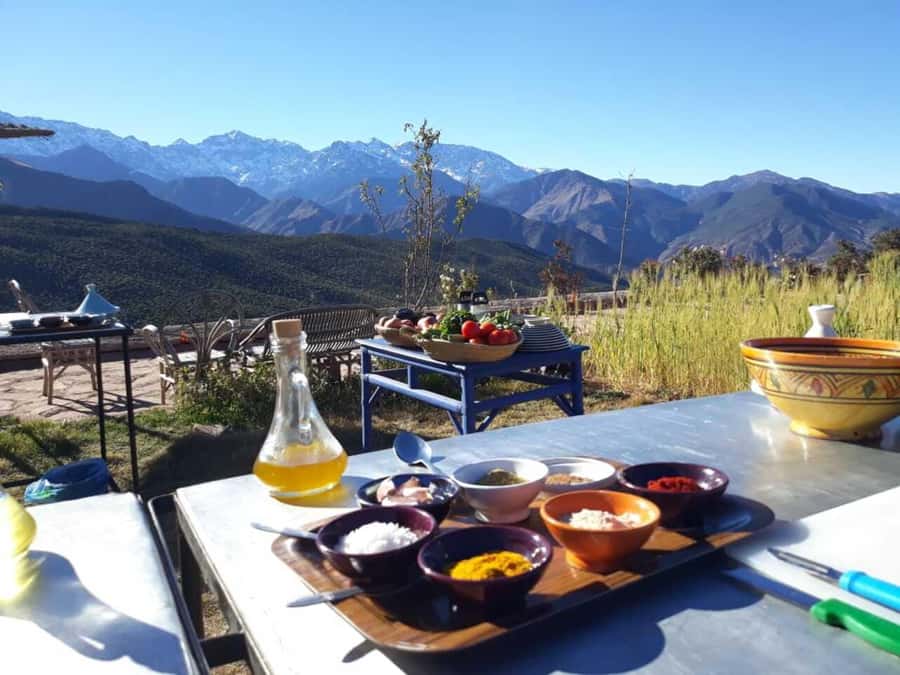
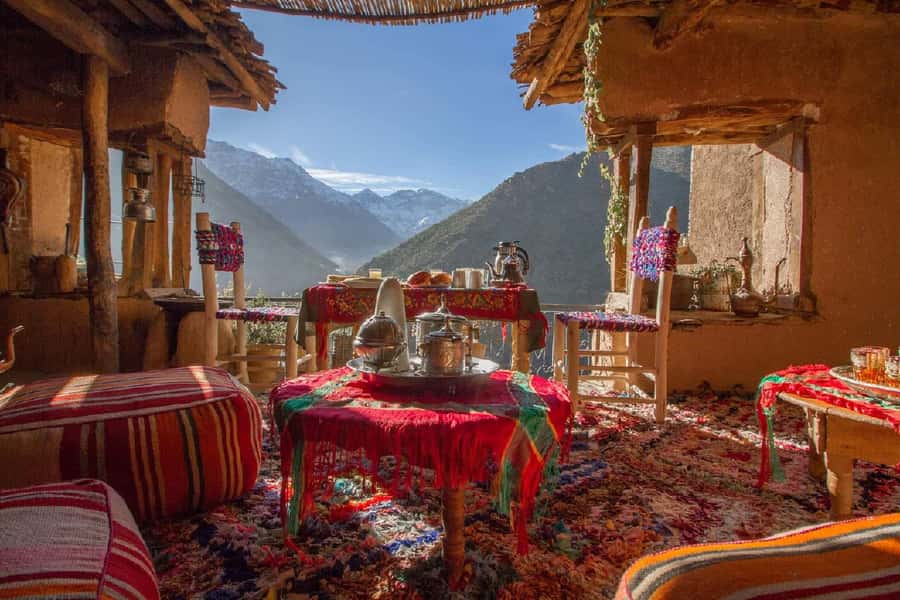
The walk is part of the setting. You enter a small cluster of homes rather than a purpose-built attraction. Several groups describe arriving at terraces with wide views toward the mountains, including views in the direction of Jebel Toubkal. The reward is a peaceful village setting, but you should know that comfort here means charm and fresh air, not hotel-style access.
Same place, a different thing to cook:
- Marrakech: Moroccan Cooking Class with a Local Family
★ 4.9 · 668 reviews - Marrakech: Moroccan Cuisine Cooking Class in Local Home
★ 4.8 · 508 reviews - Marrakech: Moroccan Cooking Workshop at La Maison Arabe
★ 5.0 · 446 reviews - Marrakech: Tajine Cooking Class in a Traditional Riad
★ 4.8 · 424 reviews
Cooking with Mama, Auntie, or Grandma
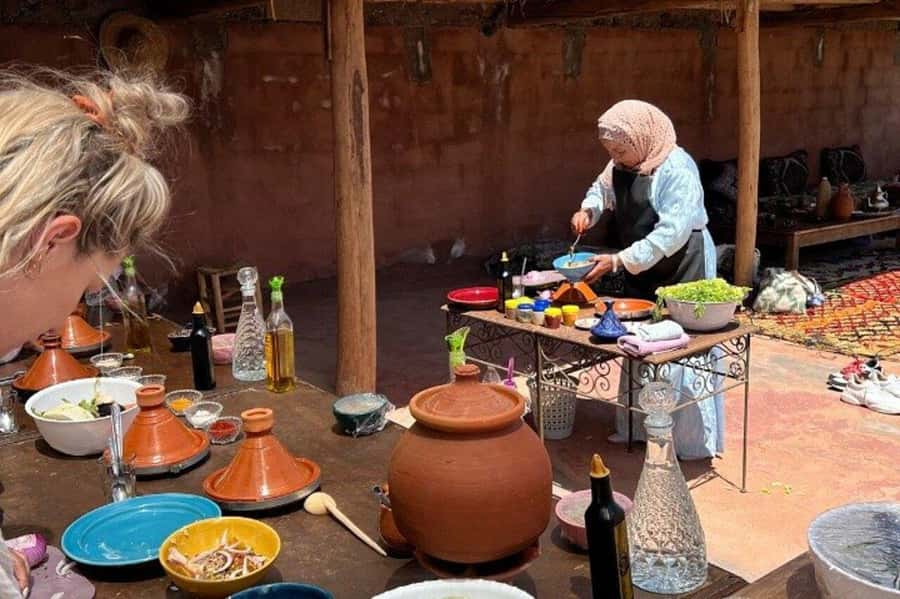
The heart of the day is the kitchen lesson. A guide such as Ibrahim, Badr, or Ismail usually helps with translation and explains local customs, while his mother, aunt, or another senior family member teaches the food preparation.
The family names and hosts can vary. One day may feature Ibrahim and his mother Yemena, another Badr and Auntie Yamna, or Ismail and his family. That variation is normal for a family-run experience. What remains consistent is the personal format: you cook alongside a woman from the household in the place where the family lives.
The lesson can include:
- Preparing a chicken tagine
- Cutting and arranging vegetables
- Making couscous
- Mixing and shaping bread
- Baking bread in a wood-fired oven
- Using fresh herbs and garden produce
- Learning the order and timing of the cooking
The cooking itself is hands-on, but do not expect a technical chef school. One person found the recipe and method fairly simple, with limited new instruction. That is a fair criticism. You are learning a home-style meal, not mastering advanced culinary technique.
Yet simplicity is part of the appeal. You see how a few fresh ingredients, a tagine pot, bread, and patience become a full meal. The class is less about collecting professional cooking tricks and more about understanding how food connects to family life and hospitality in the mountains.
The atmosphere earns the strongest praise. People describe the hosts as warm, funny, attentive, and generous. Some families serve mint or rosemary tea and cake on arrival. There may be cats around the home, a small detail that children often enjoy. One family even dressed a newlywed in traditional Amazigh bridal clothing, showing how personal the welcome can become.
Eating a three-course lunch on the terrace
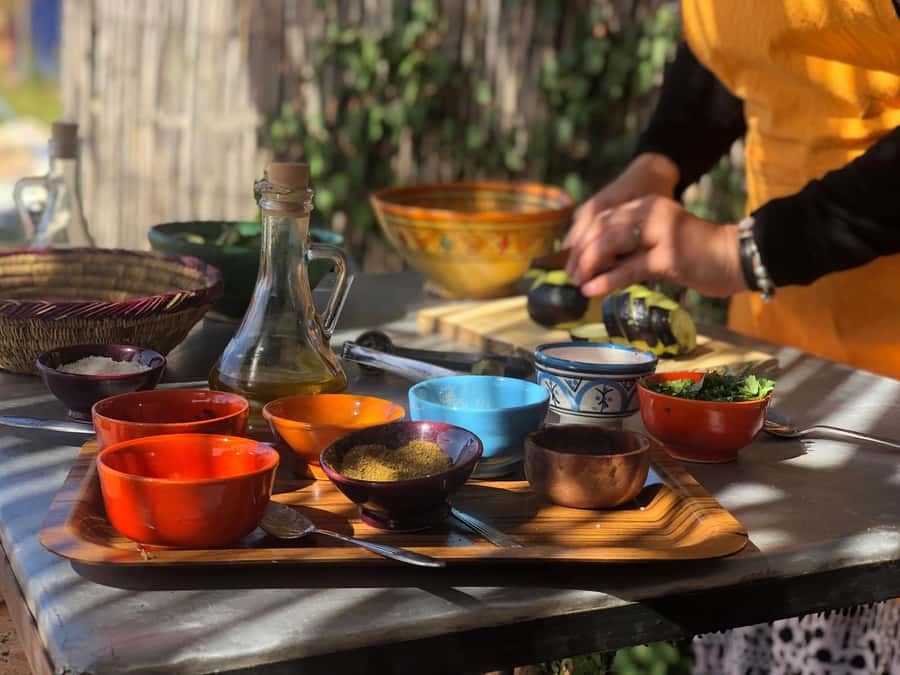
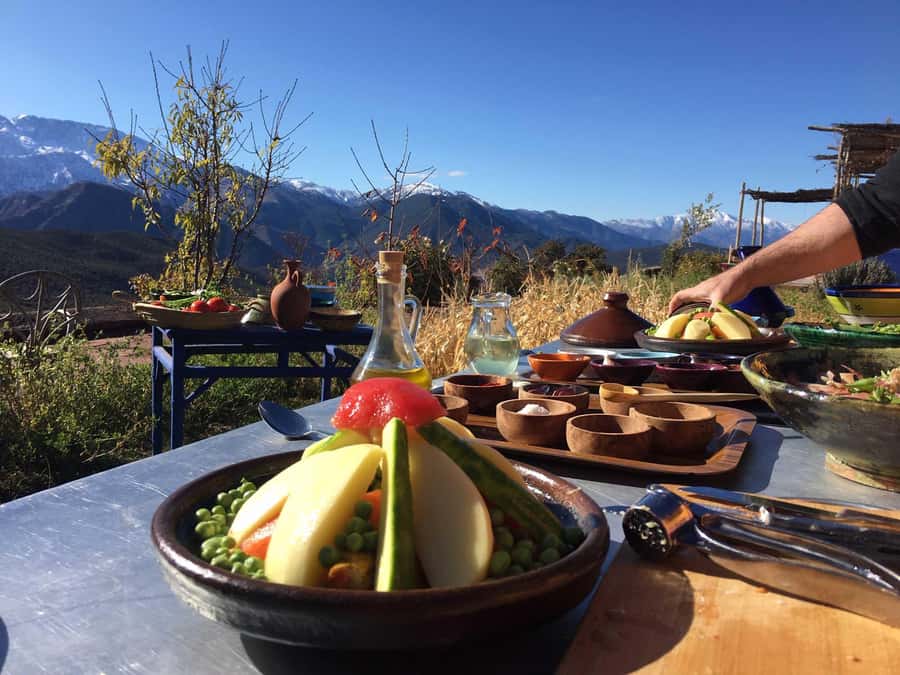
After the preparation comes the meal, usually served on the family terrace or inside the home if the weather is cold. The menu often includes tagine, couscous, and bread, creating a filling three-course lunch made from the ingredients you helped select.
The setting changes the way the meal feels. In Marrakech, you can eat excellent Moroccan food in restaurants across the city. Here, you watch it being made, share it with the family, and eat with mountain views around you. That connection is the real value.
Portions are described as plentiful, and the food receives near-unanimous praise. Fresh ingredients, home preparation, and the wood oven give the meal a different character from a restaurant version. You may also notice that the cooking takes time. The long wait is part of the process, not a sign that anything has gone wrong.
Tell the operator about allergies or dietary needs before the trip. Families have accommodated gluten-free diets and a child with a nut allergy, but you should never rely on a last-minute request. Ask clearly about what you can eat and how separate preparation will be handled.
Learning about Amazigh life from a local guide
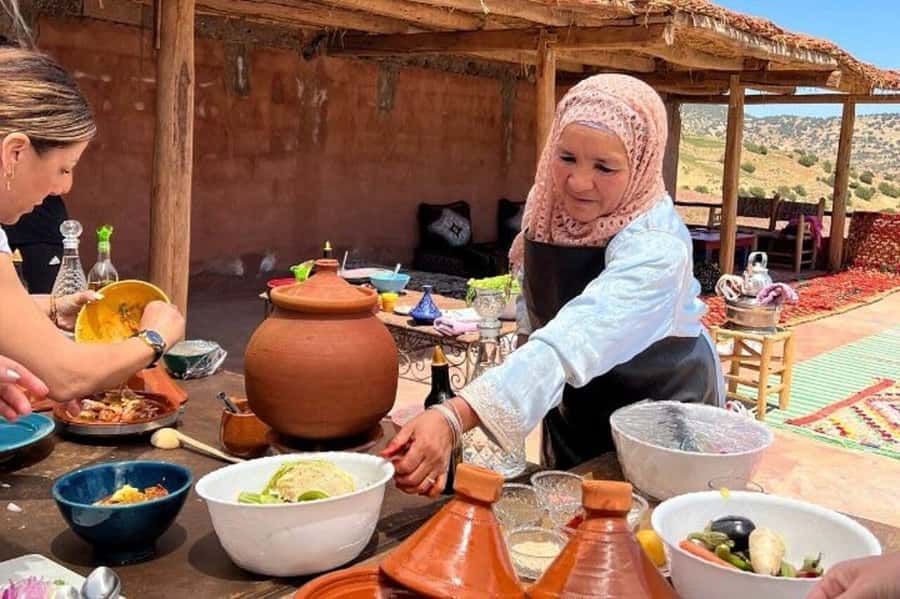
The meal is only one part of the cultural experience. Guides explain the Amazigh language, traditions, history, farming, and daily life in the mountain villages. Some also point out herbs and plants growing near the house.
This is where a local guide adds real value. Badr is praised for his energy and clear explanations, while Ibrahim is often described as open and passionate about his home area. Ismail is also noted for his humor and knowledge of the region.
The experience does not present culture as a staged performance. You sit in a family home, ask questions, and listen to stories while food cooks nearby. That can feel more meaningful than a short stop for photographs, though it also asks you to be a respectful visitor in someone’s home.
The language of the tour is English or French. If your group includes many French speakers, the guide may switch between languages, and an English speaker could miss a few comments. If English is essential for you, mention it when booking and confirm the language balance.
Is $54 a fair price?
At $54 per person, the cost is reasonable for a seven-hour day that includes hotel pickup and drop-off, an air-conditioned vehicle, a local guide, the market stop, the cooking class, tea or coffee, bottled water, and lunch.
The value is stronger if you want several experiences in one outing. You receive mountain transport, scenery, a village walk, a cultural conversation, market shopping, a cooking lesson, and a substantial meal. Booking separate transport to the Atlas Mountains and paying for a cooking class in Marrakech could easily reduce the personal feel while not necessarily saving much.
The price may feel high if you only want a recipe lesson. The techniques are home-style and basic, and the menu is not guaranteed to be elaborate. You are paying mainly for access to a family, the mountain setting, transport, and the full day of hosting.
I consider it good value for couples, families with older children, and people who want a cultural experience rather than a quick photo stop. It is less suitable if you have fixed dinner reservations, dislike long drives, or need a tightly controlled schedule.
Timing, comfort, and group size
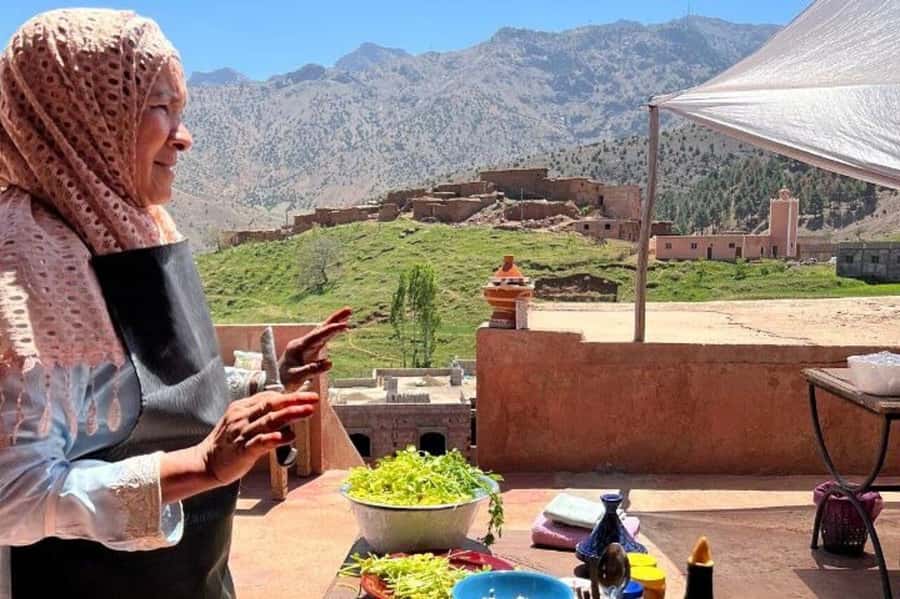
The advertised duration is seven hours, but plan on nine hours from pickup to return. Mountain roads, market shopping, the uphill walk, slow cooking, and long conversations all take time. Do not schedule an important dinner reservation immediately after the expected return.
The small-group limit of 10 is a real advantage. You have a better chance to ask questions, take part in the preparation, and speak with the guide. A group of four to six feels particularly personal, but even a full group should remain more manageable than a large coach outing.
The best clothing is practical: comfortable walking shoes, a warm layer, and sun protection. Conditions can change between Marrakech and the mountains. Bring water even though bottled water is included, especially if you are sensitive to heat.
Pets are not allowed on the experience. The family may have cats at the home, but those animals are part of the setting rather than something you bring.
Who should book this Atlas Mountains cooking day?
You should book it if you want to:
- Meet a local family in its own home
- Learn simple Moroccan dishes through hands-on preparation
- See mountain villages without committing to a long trek
- Escape Marrakech for a quieter day
- Hear about Amazigh culture from a local guide
- Eat a generous meal made with fresh ingredients
- Travel in a small group rather than on a large coach
Think twice if you have difficulty walking uphill, use a wheelchair, or become seriously carsick. You should also reconsider it if you need lunch early, require a strict return time, or prefer a formal cooking school with precise recipes and technical instruction.
Should you book it?
For most visitors who want an authentic day outside Marrakech, yes. The strongest part is not one particular dish. It is the chain of small moments: choosing vegetables, walking to the home, learning from Mama or Auntie, listening to the guide, and eating food that you helped prepare.
Book with realistic expectations. This is a family visit with cooking, not a luxury excursion or a professional culinary course. Eat breakfast, bring sensible shoes, allow nine hours, and confirm the pickup point and language. If you do that, the $54 price buys a memorable view of mountain life and a meal with a story behind it.
FAQ
How long does the Atlas Mountains cooking experience last?
The stated duration is seven hours. You should allow closer to nine hours in case the drive, cooking, and return take longer.
What is included in the price?
The price includes hotel pickup and drop-off, an air-conditioned vehicle, a local guide, the cooking class, lunch, bottled water, and coffee or tea.
What food will I learn to prepare?
The menu commonly includes chicken tagine, vegetable couscous, and traditional bread. The exact dishes may vary.
Is lunch included?
Yes. A three-course lunch is included, usually featuring food prepared during the class.
What languages are available?
The live guide speaks English and French.
How large is the group?
The group is limited to 10 participants. Some departures may be smaller.
Is hotel pickup available from a Medina riad?
Yes, but a car may not reach a riad inside the Medina. Pickup will be arranged at the nearest accessible point.
Is the experience suitable for wheelchair users?
No. The experience is not suitable for wheelchair users or people with mobility impairments because the family home may require an uphill walk on narrow paths and steps.
What should I bring?
Bring comfortable shoes, warm clothing, a sun hat, water, and a camera.
Can I cancel the booking?
You can cancel up to 24 hours in advance for a full refund. A reserve-now-and-pay-later option is also available.
Just added around Marrakesh
- Moroccan Food Cooking Class with a Local Chef in Marrakech★ 4.7 · 90 reviews
- Marrakech: 3-Hour Open-Air Moroccan Cooking Course★ 4.9 · 74 reviews
- Moroccan cooking class in Marrakech with berber chef★ 5.0 · 16 reviews
- Edgy 8 Dish Private, Fusion Cooking Class, Menu Plan, Market★ 4.9 · 31 reviews
- Marrakech: Moroccan Cooking Class with Local Chef★ 4.6 · 87 reviews
- Marrakesh: Private Cooking Class & Local Market Shopping★ 4.7 · 15 reviews
- Marrakech: Authentic Moroccan Cooking Class in a Farm★ 4.8 · 8 reviews
- Marrakech: Moroccan Cooking Class with Amazing Local Chef!★ 4.9 · 100 reviews
Cooking Classes, compared.
Half-Day Thai Cooking Class at Organic Farm in Chiang Mai
Read our review →
3 in 1 Cooking Class near Navona: Fettuccine, Ravioli & Tiramisu
Read our review →
Pasta & Tiramisu Cooking Class with Unlimited Wine
Read our review →
Hanoi Cooking Class: Culture, Local Market & Meaning CSR Impact
Read our review →
5 Traditional Dishes Hanoi Cooking Class with Market Trip
Read our review →
Cooking Class and Lunch at a Tuscan Farmhouse with Local Market Tour from Florence
Read our review →
Cooking Class, Market & Thai Herbs Garden Tour
Read our review →Lists this class appears in