
REVIEW · HONSHU, JAPAN
Fujieda: Suisha-mura Traditional Japanese Cooking Experience
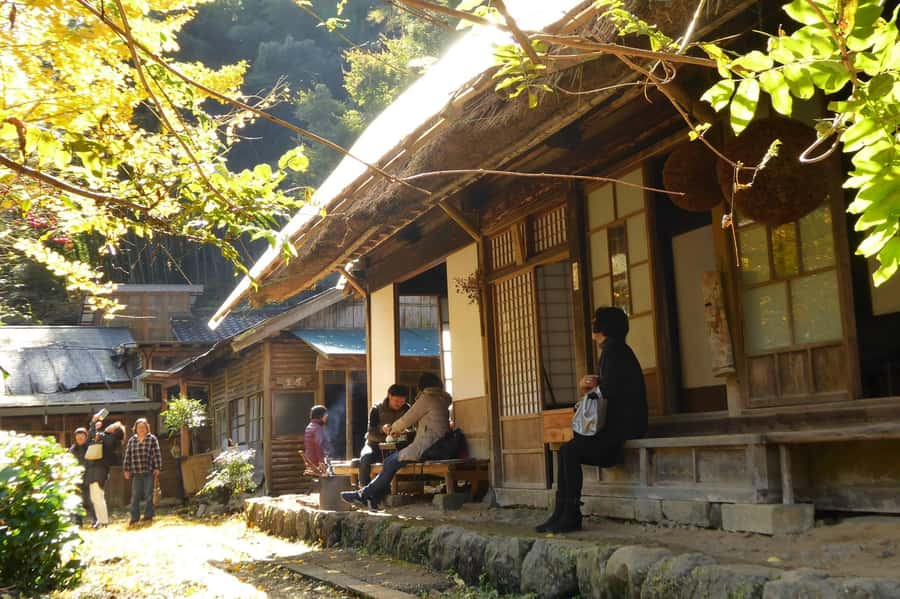
Old Japan still has a few working kitchens. At Suisha-mura, I like the crossing over the clear river and the chance to cook beside a 250-year-old thatched farmhouse. I also like that Hoshi-san guides you through practical tasks, from chopping wood to grilling yamame trout over an old-style fire.
The main drawback is access: you need a 30-minute drive from Fujieda Station, and the setting is not suitable for wheelchair users or people with mobility limits. You should also expect outdoor work, smoke, dirt, insects, and weather changes rather than a polished cooking studio.
Key points to know before booking
- Cross a suspension bridge to reach the farmhouse: The approach gives the visit a real sense of arrival, with a clear stream, mountain valley, and old waterwheel.
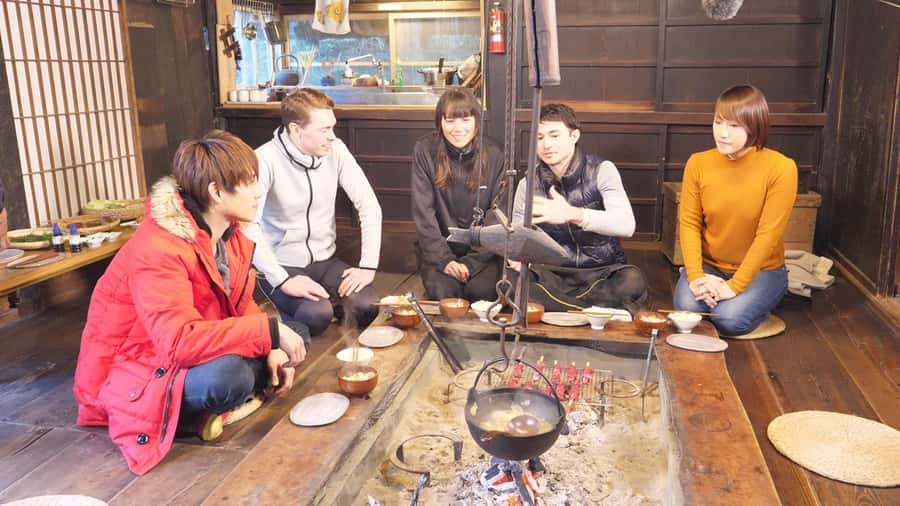
- Cook lunch with pre-electricity methods: You chop firewood, build a supervised fire, cook rice in a kamado, and prepare food over an irori hearth.
- Grill your own yamame trout: The mountain fish is salt-grilled on a stick, adding a hands-on touch to the meal.
- Learn with Hoshi-san: The host speaks English and Japanese and guides each stage of the cooking process.
- Small groups keep the work personal: The activity is limited to 10 participants and lasts about five hours.
- Bring practical clothing: Wear shoes and clothes that can handle wood, ash, smoke, mud, and food spills.
Arriving at Suisha-mura from Fujieda Station
The activity begins at about 9:30 a.m. at the north exit of JR Fujieda Station. From there, transportation takes you by car to Suisha-mura, roughly 30 minutes away, with arrival around 10 a.m. You can also make your own way to the village for a 10 a.m. start.
That short drive matters. Fujieda is on Honshu, but this experience quickly leaves the urban setting behind for a mountain valley. You are not simply entering a restaurant or a classroom. You are heading to a preserved rural site where the surroundings are part of the lesson.
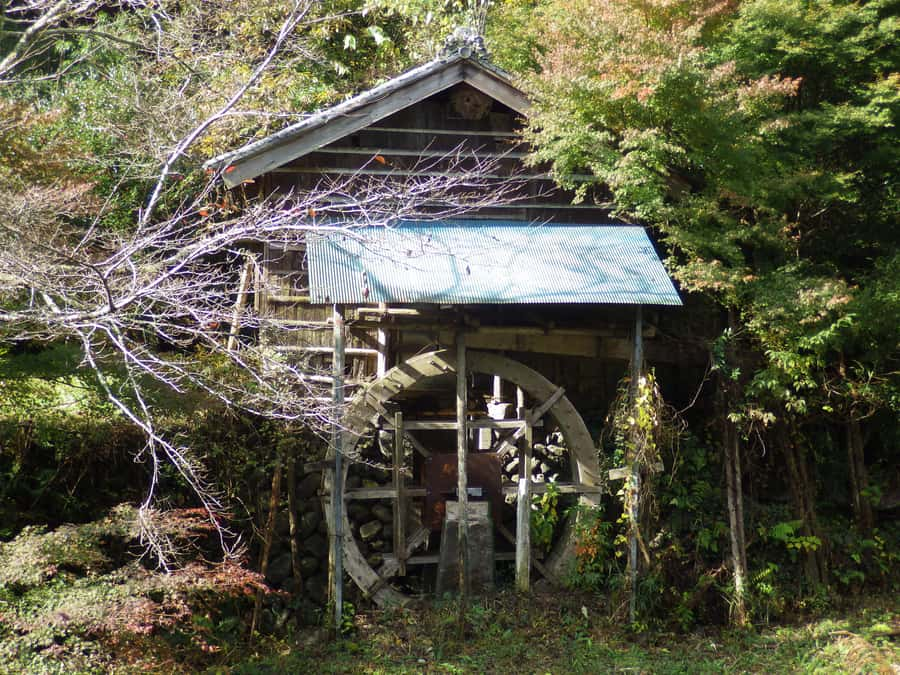
The arrival route is one of the strongest parts of the experience. You cross a suspension bridge over clear running water, then reach a traditional Japanese house with a thatched roof against the mountainside. Beside it sits the old waterwheel that gives Suisha-mura its name.
The bridge may be a small detail on paper, but it changes the mood. It makes the entrance feel like a passage into another kind of Japan. You should take care on the crossing, especially if the surface is wet, and wear shoes with a secure sole.
More Sushi and Japanese Classes in Japan:
- Ramen Cooking Class at Ramen Factory in Kyoto
★ 5.0 · 1,937 reviews - Ramen & Gyoza Cooking Class in Tokyo with Local Supermarket Visit
★ 5.0 · 823 reviews - Kyoto: Ramen Cooking Class at a Ramen Factory with Souvenir
★ 4.9 · 532 reviews
Inside the 250-year-old farmhouse
The house preserves tools and methods linked to rural Japanese life before gas and electricity became part of the kitchen. This is not a museum visit where you only look at objects behind glass. You handle materials, prepare food, and use the cooking equipment yourself.
The setting gives context to every task. A wood fire is not just an old-fashioned novelty here. It demands preparation, attention, and teamwork. Rice is not simply placed in an electric cooker. You help prepare the fuel, tend the heat, and cook it in an old-style kamado stove.
You also spend time around the irori, a central hearth built into the floor. Traditionally, this kind of hearth served as a cooking place and a social center. Here, it becomes the focus of lunch. You sit around the fire and eat food prepared through the same traditional process you have just learned.
That makes the meal feel earned without turning the activity into hard labor. The work is manageable, but you will not be standing around waiting for someone else to finish everything.
Chopping wood and building the cooking fire
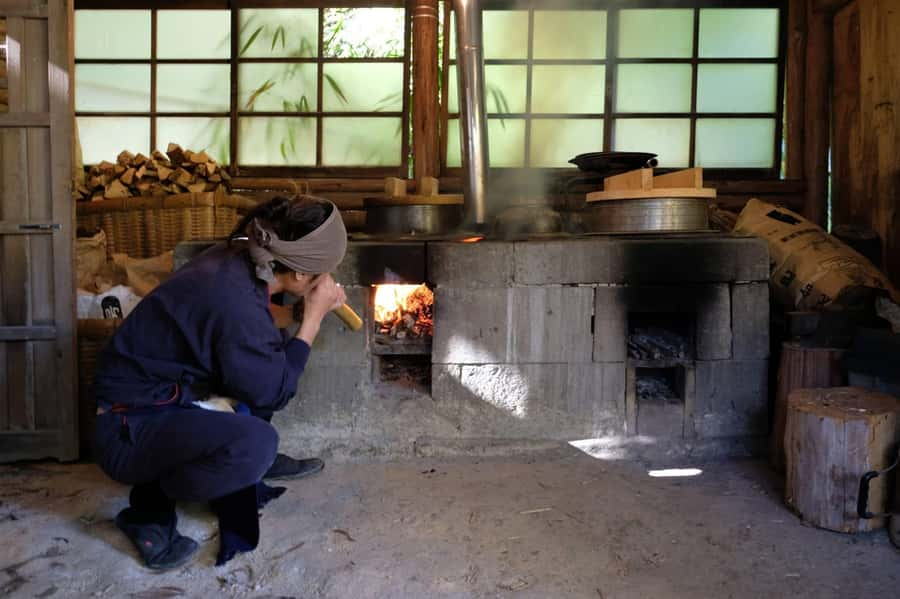
The first practical tasks include chopping firewood and preparing a fire in the central hearth. Hoshi-san provides instruction and guides you through the steps, which is important because handling wood, ash, and fire requires care.
There is a useful difference between taking part in a supervised cooking fire and making your own fire independently. The activity includes fire preparation as part of the lesson, but the rules specifically prohibit making fire outside that guided process. Follow the host’s directions rather than treating the site like an open campfire area.
Wear clothes that are easy to move in and that you would not mind getting dirty. A towel or handkerchief is useful, and water is important. The activity takes place in the countryside, not in a temperature-controlled kitchen, so warm clothing can help when the air is cool.
The wood-chopping segment is especially good for people who want a physical connection to the meal. It shows how much work sits behind a simple bowl of rice or a grilled fish. If you prefer a purely relaxed food tour, this may feel like more effort than you want.
Cooking rice in an old-style kamado
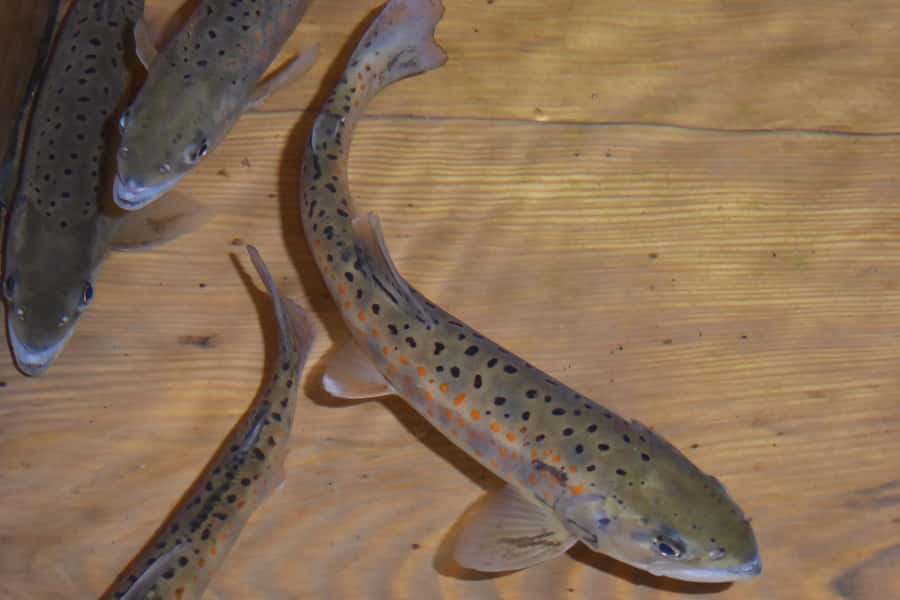
Rice is one of the simplest foods in a Japanese meal, but the method here gives it a different weight. You help cook it in a kamado, an old-fashioned stove heated by wood rather than electricity.
The point is not only to produce lunch. You get a clear lesson in how heat, fuel, timing, and patience shaped everyday cooking. The process also helps explain why the traditional house was designed around a central fire and why cooking once took more planning than pressing a button.
The supplied ingredients include rice, wood, seasonal vegetables, and salt-grilled yamame mountain trout. This keeps the activity focused. You are not expected to shop for ingredients or bring specialist equipment. The cooking tools and materials are provided.
Because the menu uses seasonal ingredients, the exact vegetables may vary. That is part of the appeal, but you should not book expecting a fixed restaurant-style menu. The meal is simple, local, and tied to the season rather than built around choice.
A few more cooking classes around Japan worth a look
- Kyoto: Ramen, Gyoza, and Onigiri Cooking Class
★ 5.0 · 445 reviews - Kyoto: Japanese Washoku Bento Small Group Cooking Class
★ 5.0 · 380 reviews - Osaka: Ramen and Gyoza Cooking Class in Dotonbori
★ 5.0 · 378 reviews - Tokyo: Easy Ramen Cooking Experience in Kabukicho, Shinjuku
★ 4.6 · 321 reviews
Catching and grilling the yamame trout
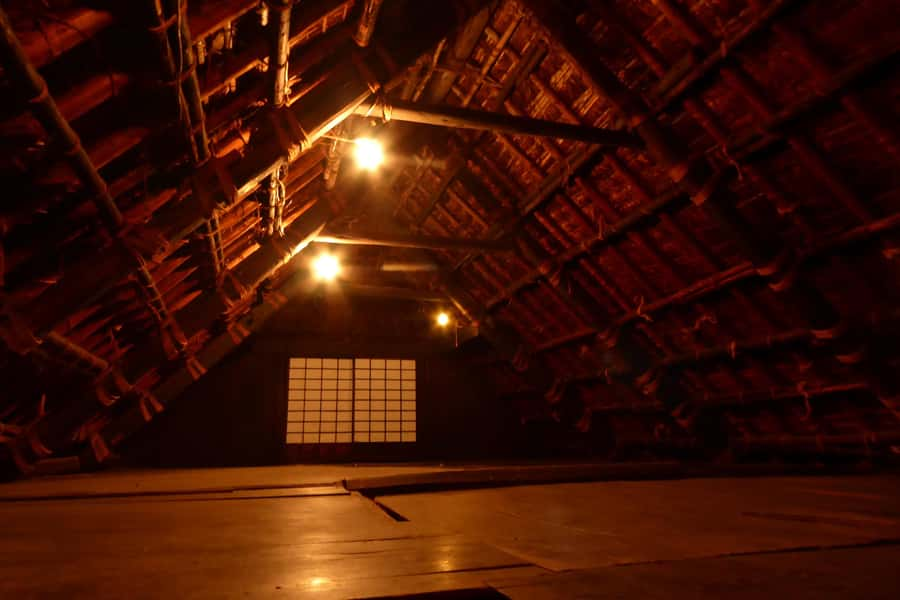
One of the most memorable parts is preparing fish for the meal. You may catch fish from the nearby river or from a barrel of water, depending on the activity arrangement. The fish provided for cooking is yamame, a mountain trout, served salt-grilled.
You grill the fish on a stick over the fire. This is a hands-on moment that makes lunch feel different from an ordinary cooking class. The method is direct and old-fashioned, and it links the food to the river valley around the house.
The river also adds a pleasant break from the cooking. One account of the experience describes playing in the water beside the house, but you should follow the host’s instructions and site rules rather than assume that river activity is always available or suitable. Bring insect repellent and sunscreen, since you will spend time outdoors.
If you dislike handling fish or are looking for a vegetarian class, this experience may not be the best match. The listed meal includes yamame, and the activity places real emphasis on preparing and grilling it.
Lunch around the irori hearth
After the work comes the reward: a traditional meal eaten around the irori. You cook the rice, prepare the seasonal vegetables, and grill the trout, then sit down in the old house to eat.
The food is likely to appeal to you if you enjoy simple meals shaped by ingredients and method. There are no claims of elaborate plating or restaurant-level variety. Instead, the pleasure comes from eating something you helped make, in the same building where the cooking techniques make sense.
The irori also changes the social side of lunch. A central hearth naturally puts people together, and a small group of no more than 10 participants makes it easier to watch, ask questions, and share the work. Hoshi-san’s English makes the process accessible to English-speaking visitors, while Japanese is also available.
This is the kind of lunch that rewards patience. If you want to eat quickly and return to sightseeing, five hours may seem long. If you enjoy learning through your hands, the pace gives each part of the meal room to develop.
What makes Hoshi-san an important part of the visit
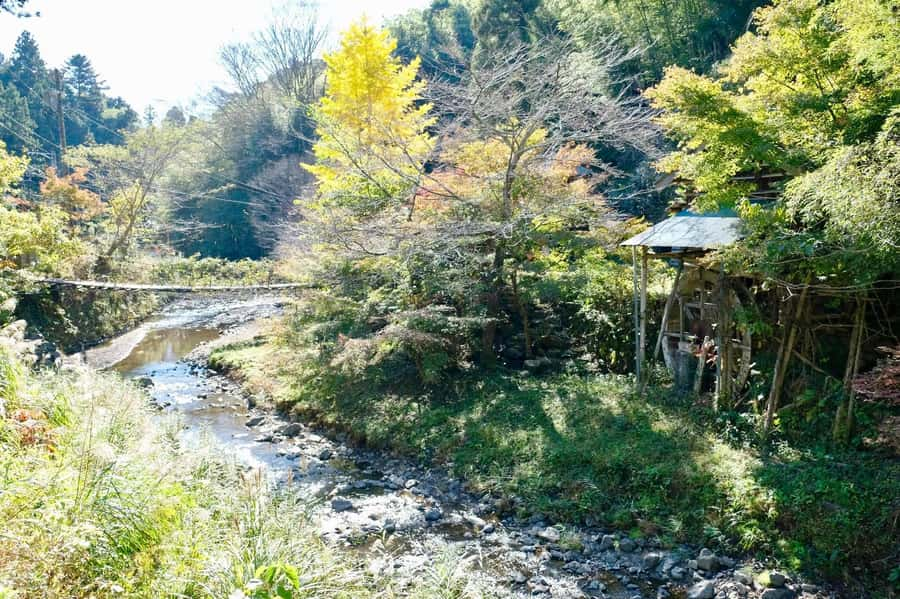
The host is a major reason this experience works. Hoshi-san is friendly, speaks excellent English, and explains each stage of the work. That matters because traditional equipment can look simple while still requiring technique.
You are not left to guess how to chop wood, use the kamado, prepare the fish, or cook around the irori. The guidance also helps bridge the cultural gap. Without explanation, an old farmhouse and waterwheel might be pleasant sights. With context, they become part of a story about daily life before modern conveniences.
The small-group format supports this style of teaching. With a maximum of 10 participants, you should have a better chance to take part rather than watch from the edge. The exact amount of hands-on work can depend on the group and the day, but the listed activities are built around participation.
Is $161 good value for five hours?
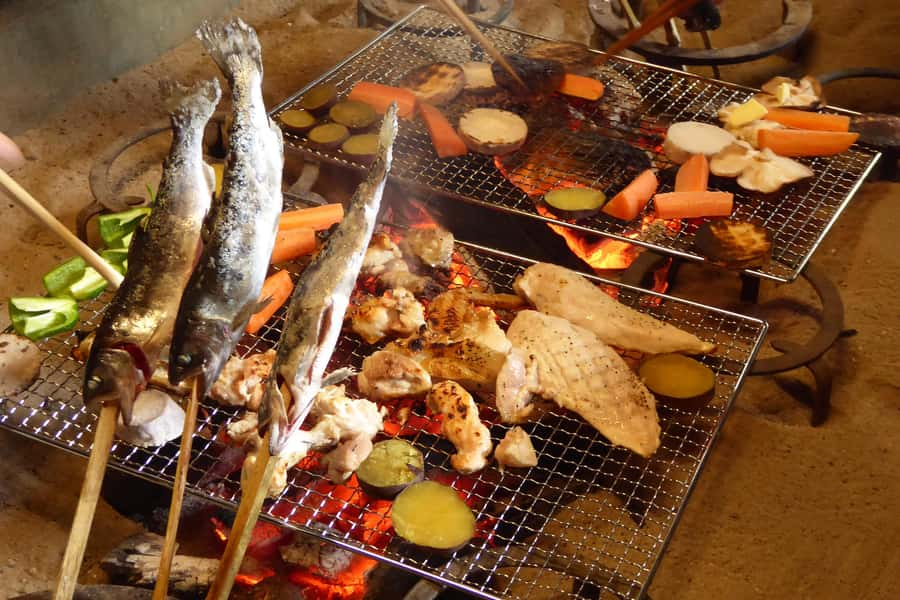
At $161 per person, this is not a cheap lunch. You are paying for about five hours, transportation from the nearest station, the house visit, instruction, cooking tools, firewood, seasonal ingredients, fish, and the meal itself.
The value depends on what you want from a food experience. If you measure the price against the cost of rice, vegetables, and trout, it will look high. If you compare it with a standard cooking class, the old house, rural setting, transport, specialist equipment, host instruction, and cultural setting make the price easier to understand.
I see the strongest value in the combination. You are not only learning a recipe. You are seeing how a traditional home worked, preparing fuel, cooking without modern appliances, and eating in the same environment. That combination is difficult to reproduce during an ordinary city visit.
Still, I would not recommend it to someone who wants maximum flexibility or a broad menu. The schedule is fixed around the morning meeting and the five-hour activity. It is also a poor value if you dislike outdoor work, cannot comfortably cross the bridge, or would rather spend the day visiting several sights.
Who will enjoy this experience most?
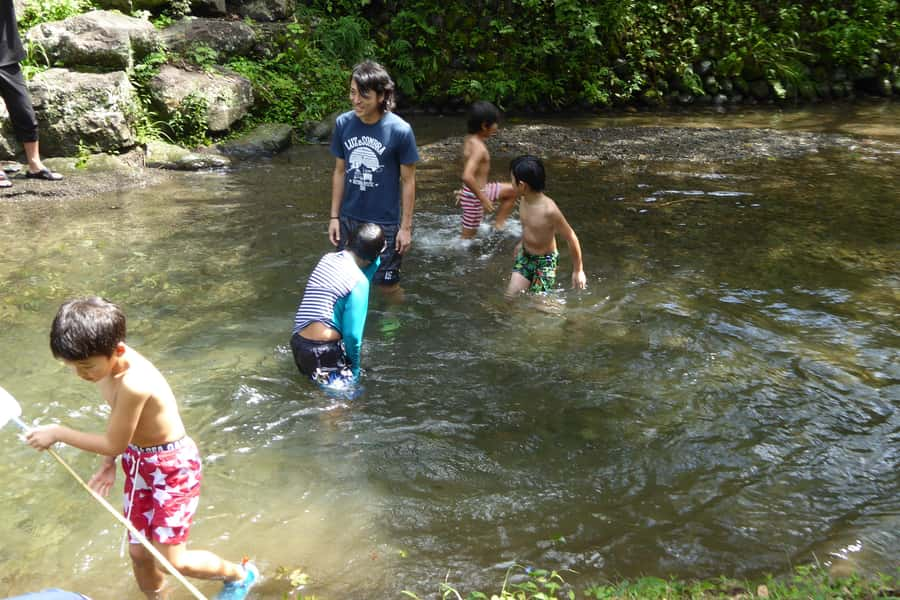
I would choose Suisha-mura if you want a slower, more practical look at rural Japan. It suits people who enjoy food, old buildings, nature, photography, and learning by doing.
It is especially good for:
- Couples or friends looking for a day away from city streets
- Families with children aged five or older who can follow safety instructions
- Visitors interested in traditional tools and cooking methods
- English-speaking visitors who want guided cultural context
- Anyone who enjoys a meal with a story behind it
You should think twice if you have limited mobility. The experience is not suitable for wheelchair users or people with mobility impairments, and the suspension bridge, mountain setting, firewood, and outdoor surfaces may be difficult for some people.
Children under five and pregnant women should not book. Smoking and littering are prohibited. You should also bring a hat, sunscreen, water, drinks, insect repellent, and warm clothing. Personal drinks beyond what is provided are not included, so plan accordingly.
Timing, cancellations, and practical planning
The usual meeting point is the north exit of JR Fujieda Station at 9:30 a.m. The activity begins at Suisha-mura around 10 a.m. If you go directly to the site, arrive for the 10 a.m. start.
The experience lasts five hours, so allow most of the day for it. The activity has English and Japanese instruction. Wi-Fi and extra drinks are not included.
You can cancel up to 24 hours before the start for a full refund. A reserve-now, pay-later option is also available, which helps if your wider Japan schedule is still changing.
The most useful preparation is simple: wear comfortable shoes, choose clothes that can get dirty, and carry a towel or handkerchief. Do not arrive dressed for a fancy lunch. Ash, smoke, wood, and outdoor conditions are part of the deal.
Should you book Suisha-mura?
Book this experience if you want a real break from modern Japan and like the idea of earning your lunch through traditional work. The suspension bridge, waterwheel, thatched house, irori, wood fire, and grilled yamame create a strong sense of place, while Hoshi-san’s English guidance keeps the process clear.
Skip it if you need step-free access, dislike fish or fire, or prefer a short cooking demonstration with little physical activity. For the right visitor, $161 buys far more than food: it buys time in a preserved rural setting and a practical lesson in how an older Japanese household cooked, gathered, and ate.
FAQ
Where does the Suisha-mura experience take place?
It takes place in Suisha-mura, a small village in a mountain valley about 30 minutes by car from downtown Fujieda. The activity is held at a 250-year-old traditional Japanese house with a thatched roof and nearby waterwheel.
How do I get to the activity?
You can meet at the north exit of JR Fujieda Station around 9:30 a.m. Transportation then takes you to Suisha-mura, arriving around 10 a.m. You can also go directly to Suisha-mura for the 10 a.m. start.
How long does the experience last?
The experience lasts about five hours.
What food will I cook?
The supplied food includes rice, seasonal barbecue vegetables, and salt-grilled yamame mountain trout. You help prepare and cook the meal using traditional methods.
Is the activity offered in English?
Yes. Instruction is available in English and Japanese. Hoshi-san guides participants through the cooking and traditional techniques.
What should I bring?
Bring comfortable shoes, warm clothing, a hat, sunscreen, water, food or drinks, insect repellent, and a towel or handkerchief. Wear clothing that can get dirty and is easy to move in.
Is the experience accessible to everyone?
No. It is not suitable for children under five, pregnant women, people with mobility impairments, or wheelchair users. Smoking and littering are not allowed, and you may not make fires outside the guided activity.
Just added around Japan
- Cooking Class: Make a Local Delicacy in a Japanese House★ 5.0 · 7 reviews
- Culinary Home Cooking with Grandmothers – Vegan Friendly★ 5.0 · 5 reviews
- Nagoya Super Market Tour & Home Cooking Class with a Local, Akiko★ 5.0 · 10 reviews
- Tokyo: Sushi Making Experience & Japanese Cooking Class★ 5.0 · 2 reviews
- Tokyo: Sushi Cooking Class with Sake Tasting★ 4.8 · 55 reviews
- Tokyo: Sushi roll and side dish cooking experience★ 5.0 · 2 reviews
- Tokyo: Gyoza Making from Scratch – Ultimate Cooking Class★ 5.0 · 2 reviews
- Tokyo: Night Cooking Class: 5 Home-Cooked Japanese Dishes★ 4.9 · 13 reviews
Japanese & Sushi Cooking Classes, compared.
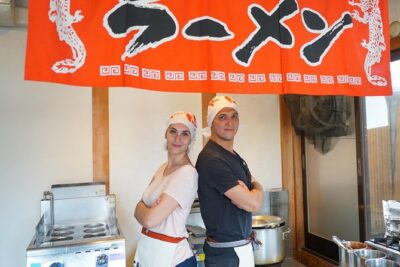
Ramen Cooking Class at Ramen Factory in Kyoto
Read our review →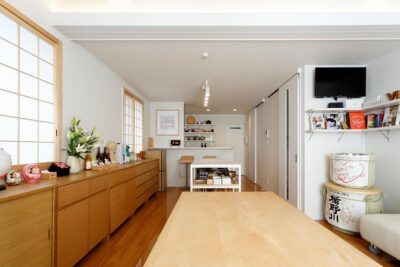
Ramen & Gyoza Cooking Class in Tokyo with Local Supermarket Visit
Read our review →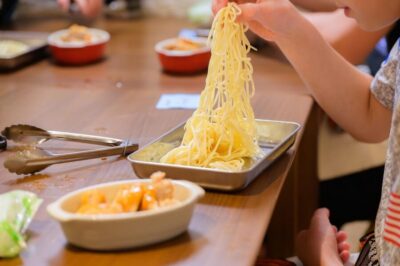
Ramen Cooking Class at a Ramen Factory with Souvenir
Read our review →
Sushi Making Osaka! Popular Sushi Class in Japan!
Read our review →
Tokyo Tsukiji Fish Market Tour and Sushi Making Lesson
Read our review →
Japanese Washoku Bento Small Group Cooking Class
Read our review →
Lists this class appears in