REVIEW · MARRAKECH, MOROCCO
Moroccan Cooking Class & Marrakech Market Visit with Chef Khmisa
Come hungry, leave with dinner skills. This three-hour Marrakech experience combines a walk through a local souk with a hands-on meal in a traditional Medina house. I especially like the fresh-market start and the chance to cook with Chef Khmisa, who has 25 years of experience in Moroccan cuisine and pastry. I also like that the class includes a starter, main course, dessert, mint tea, and the meal you help prepare.
The main consideration is the shared format. The group can reach 15 people, so individual attention may vary, especially when everyone is chopping, seasoning, and working around the kitchen. Recipe follow-up has also been uneven, so I would take notes during the class rather than depend on receiving them later.
Key points at a glance
- The souk visit comes first: You shop for fresh ingredients with Chef Khmisa before cooking, giving the meal a clear connection to Marrakech’s daily food culture.
- Chef Khmisa leads the kitchen: She has worked in hotels in Rabat and Marrakech and has specialized in Moroccan cooking and pastry for 25 years.
- Mint tea is part of the lesson: You learn about the tea ritual and get a chance to take part in the pouring.
- The meal is hands-on: The class usually involves teamwork, Moroccan spices, several starters, a main dish, and a simple dessert.
- Vegetarian and vegan options are available: Tell the hosts about allergies and dietary restrictions before the market visit.
- The price is strong value: At $39.39 per person, you receive the market walk, instruction, food, tea, and lunch in one compact experience.
Meeting at Bab Doukkala and entering the souk
The experience begins at Bab Doukkala Mosque, a useful landmark on the edge of Marrakech’s old Medina. You meet there before walking with Chef Khmisa and the local French or English-speaking guide toward a food market away from the most tourist-focused parts of Marrakech.
That opening walk matters. A cooking class can feel disconnected from place if all the ingredients are already laid out in a kitchen. Here, you see the shopping stage first. You might watch the hosts select vegetables, herbs, spices, and other groceries from market stalls, then carry those ingredients back for the meal.
The supplied details describe the market as a local souk, with stalls filled with spices and traditional products. The experience is not presented as a shopping trip with long stops at souvenir shops. Its purpose is practical: buy what the group needs, see where Moroccan cooks source food, and learn how fresh ingredients fit into the menu.
I like this part because it gives you context without turning the tour into a formal lecture. The cooking begins before anyone reaches the kitchen. It also makes the meal feel earned. You are not simply watching someone prepare a tagine from ingredients chosen in advance.
The Medina setting does bring a few practical points. Marrakech’s old streets can be confusing, so arrive at the stated meeting point rather than trying to find the house on your own. Hotel pickup and drop-off are not included, and the activity ends back at the meeting point. Plan your route to Bab Doukkala Mosque before the start time.
More Cooking Classes with a Market Tour in Marrakech
- Marrakech: Traditional Moroccan Cooking Class & Market Visit
★ 4.8 · 1,861 reviews - Marrakech: Moroccan Cooking Class with Market Visit and Meal
★ 4.9 · 347 reviews - Moroccan Cooking Class with Market Visit and Meal
★ 5.0 · 196 reviews
Mint tea and the Moroccan welcome
Back at Khmisa Workshops, you enter a traditional Moroccan house in the heart of the Medina. The class begins with mint tea, which is more than a quick drink before the cooking starts. You learn about the tea ritual, and the group may take part in the pouring itself.
This is one of the small details that gives the class a sense of place. Moroccan mint tea is closely tied to hospitality, and learning how it is prepared helps you understand why it appears so often during a visit to Morocco. Several participants considered the tea ceremony a highlight in its own right.
The welcome also gives the group time to introduce themselves and discuss the menu. That is useful in a shared class, where you may be cooking with people from several countries. The atmosphere is designed to be friendly and collaborative rather than formal.
Kawtar assists Chef Khmisa and helps with communication. She has a bachelor’s degree in hospitality and tourism, so her role is not limited to translation. She helps keep the activity moving, answers questions, and makes it easier for an international group to follow the instructions.
Cooking a Moroccan meal as a team
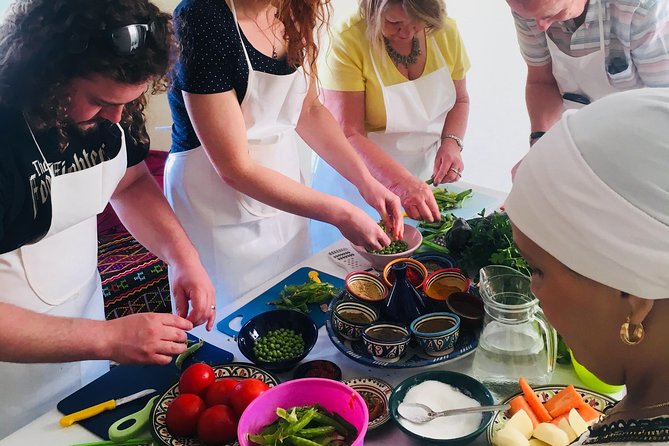
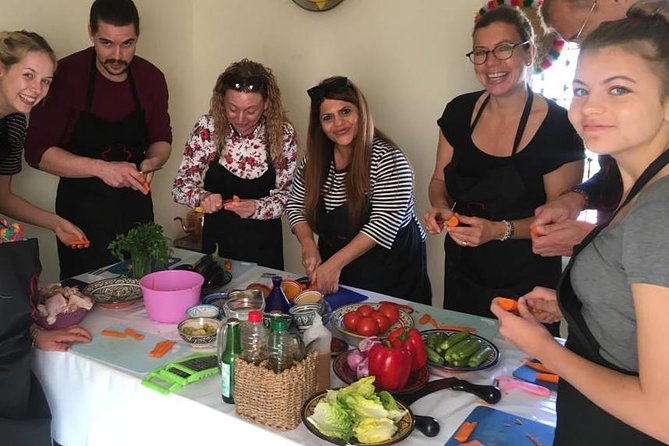
The central part of the class is practical. You help prepare the dishes rather than simply watching a demonstration. The class is built around teamwork, with everyone taking part in cutting, mixing, seasoning, and other preparation tasks.
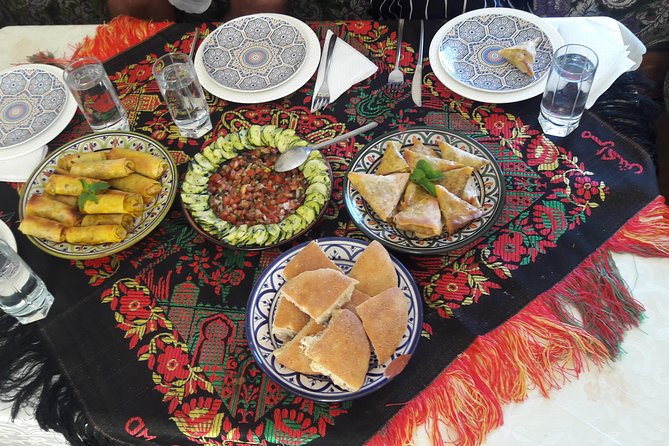
The exact menu can vary, but the meal includes a starter, a main course, and one dessert. Dishes described in the experience include chicken tagine, vegetable tagine, several appetizers, and a simple dessert. Chicken with preserved lemon received particular praise for its flavor.
You will also spend time learning how Moroccan cooks use spices, herbs, oils, and fresh produce. The value here is not just the final plate. You get a better sense of how flavor is built, how ingredients are combined, and how a traditional dish comes together step by step.
The class is well suited to people who want to cook at home after returning from Morocco. You are not expected to be a professional cook. The emphasis is on participating, following directions, and sharing the work. Several participants described the recipes as approachable and said they came away with techniques they could use in their own kitchens.
Still, a group class has limits. With up to 15 people, you may not have a long one-on-one lesson with Chef Khmisa. Some participants may be assigned a particular task while others wait for the next stage. If you want more personal instruction, ask about a private session, which is available on demand.
What you may cook and eat
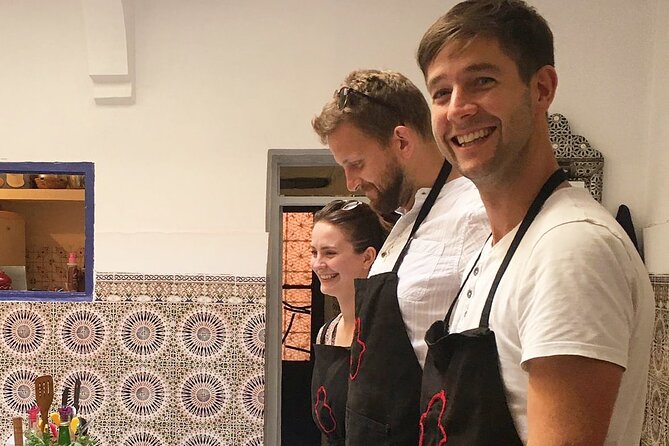
The food is the strongest reason to book this activity. You help prepare a full Moroccan meal, then sit down to eat what the group has made. Lunch is included, along with coffee or tea, so the listed price covers both the lesson and the meal.
The food described by participants includes four appetizers, chicken tagine, vegetable tagine, and a simple dessert. That is a generous spread for a three-hour class, though the exact menu is discussed with the group and may change.
The tagines are especially important because they show how Moroccan cooking balances savory, sweet, sour, and aromatic flavors. Chicken with preserved lemon is a classic example, and it was singled out as one of the best dishes served during a Morocco trip.
Vegetarians and vegans can take part. You should state your dietary needs and food allergies before heading to the market. This gives the hosts a chance to discuss the menu and buy suitable ingredients rather than trying to make last-minute changes in the kitchen.
The final meal is shared, which adds to the social side of the experience. You are not eating a restaurant dish prepared by someone else. You are tasting the result of the group’s work, including any small differences in seasoning or texture that come with a hands-on class.
More Cooking Classes with a Market Tour in Morocco
- Edgy 8 Dish Private, Fusion Cooking Class, Menu Plan, Market
★ 4.9 · 31 reviews - Marrakesh: Private Cooking Class & Local Market Shopping
★ 4.7 · 15 reviews - Marrakech: Cooking Class and Market Visit
★ 4.4 · 5 reviews - Fez: Souk Tour and Traditional Home Cooking Class
★ 4.9 · 186 reviews
The hosts and the feel of the Medina home
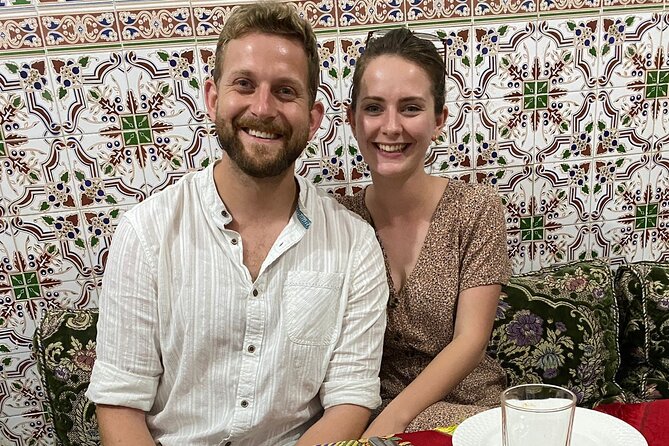
Chef Khmisa brings serious professional experience, but the setting remains personal. She has worked at well-known hotels in Rabat and Marrakech and has specialized in Moroccan cuisine and pastry for 25 years. That combination gives you a trained chef in a family-style setting.
Kawtar helps make the session accessible to an international audience. Her hospitality background is useful when the group has questions about ingredients, customs, or instructions. The two hosts work together so that the cooking does not feel rushed or difficult to follow.
The home setting is a major part of the appeal. You are cooking in a traditional Moroccan house rather than a large commercial school. That makes the experience feel closer to being welcomed into someone’s cooking space, although you should still remember that the class is organized for visitors and follows a planned structure.
The tone appears warm and social. People introduce themselves, work side by side, and eat together afterward. This suits solo visitors and couples who want an easy way to meet people during a Marrakech stay.
If you prefer quiet, private instruction, this may not be your ideal format. The class is shared, and the group size can be substantial. The tradeoff is that the social energy helps keep the class lively and makes the price more accessible.
Is $39.39 a good price?
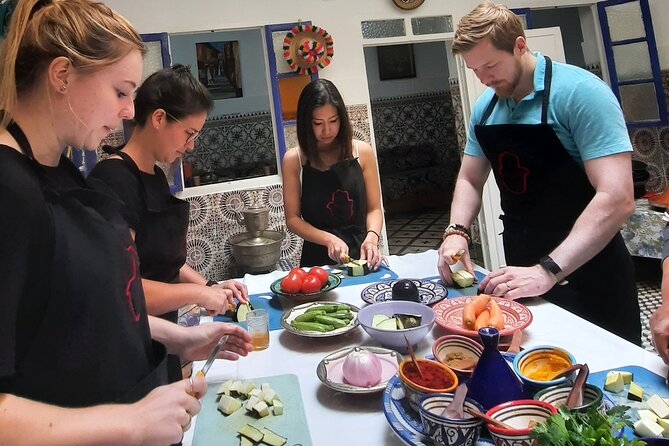
At $39.39 per person, I consider this a strong value for Marrakech. The fee covers a market visit, a local guide and chef, the cooking lesson, lunch, mint tea or coffee, and the ingredients used for the meal.
You are also paying for access to a traditional Medina home and for the practical guidance of a chef with long experience. A restaurant meal alone would not give you the market walk or the chance to prepare the food yourself.
The three-hour duration is another advantage. It is long enough for the market, tea ritual, preparation, cooking, and meal without taking up an entire day. You can fit it into a Marrakech itinerary alongside other Medina sights.
The value depends partly on your expectations. If you want a private chef, a polished professional kitchen, or a detailed recipe booklet guaranteed after the session, this may feel less complete. If you want food, conversation, local context, and a practical introduction to Moroccan cooking, the price is appealing.
Gratuities are not included, but they are optional. Hotel pickup and drop-off are also not included, so factor in your own transport to and from Bab Doukkala Mosque.
Timing, group size, and useful planning advice
The activity lasts about three hours and accepts a maximum of 15 people. Some sessions may be smaller, with examples of groups around 10 or 13 people, but you should plan for a shared class rather than a small private workshop.
Arrive early at the meeting point. Bab Doukkala Mosque is the stated start and end location, and the Medina can take time to navigate. Keep the meeting details on your phone because the experience uses a mobile ticket.
Wear something comfortable for walking and cooking. The first part takes place in the souk, and the second part involves active kitchen work. You should also tell the hosts about food allergies and restrictions before the market visit.
Take notes while Chef Khmisa explains the ingredients and methods. Some people expected recipes to be sent afterward and did not receive them. Others did leave with recipes, so the safest approach is to record the key quantities and steps yourself.
The class is recommended by 98 percent of participants and carries a 4.9 rating from more than 1,500 ratings. Those numbers point to very consistent satisfaction, especially with the food, the hosts, the market visit, and the hands-on format. They do not remove the practical limits of a shared class, but they do suggest that the main experience delivers what it promises.
Who will enjoy this Marrakech cooking class?
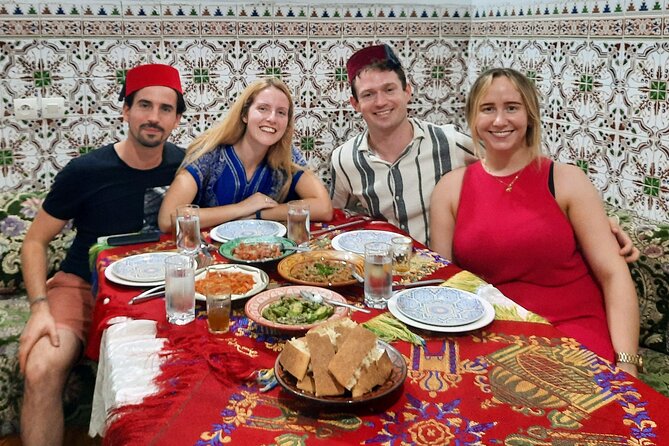
I would recommend this experience to food-focused visitors who want more than a restaurant meal. It is also a good choice for solo visitors, couples, families, and small groups who enjoy cooking together.
Families may appreciate that children can take part in simple preparation tasks, though the supplied details do not specify a minimum age. Food enthusiasts will get the most from the market visit and spice instruction. First-time visitors to Marrakech will also gain a useful introduction to Medina food culture.
You may want to skip it if you dislike group activities, have very strict dietary requirements that need extensive control, or prefer a private cooking lesson. A private session can be requested, but it is not the standard format.
Cancellation is free up to 24 hours before the start time for a full refund. Cancellations or changes made within 24 hours are not refunded, and the minimum group requirement means the provider may offer another date or a full refund if the class cannot run.
Should you book it?
I would book this class if you want a practical and social introduction to Moroccan food. The best parts are the local-market shopping, the mint tea ritual, Chef Khmisa’s long experience, and the chance to sit down to a meal you helped prepare.
Book it with two expectations in mind: the class is shared, and you should write down recipes as you go. At $39.39, it offers a lot for the time and money, especially for visitors who want to take home more than photographs of Marrakech.
FAQ
Where does the cooking class begin?
It begins at Bab Doukkala Mosque, Mosquée Bab Doukkala, in Marrakech. The activity ends back at the same meeting point.
How long does the experience last?
The cooking class and market visit last approximately three hours.
Is hotel pickup included?
No. Hotel pickup and drop-off are not included. You are responsible for reaching Bab Doukkala Mosque and returning from the meeting point.
Are vegetarian and vegan options available?
Yes. Vegetarian and vegan options are available. You should discuss allergies and dietary restrictions before the market visit.
How many people can join the class?
The shared activity has a maximum of 15 participants. Private sessions can be requested separately.
What is included in the price?
The price includes lunch, a local French or English-speaking guide and chef, coffee or tea, the market visit, and the cooking session. Gratuities are optional and not included.
More Moroccan Cooking Classes in Marrakech
- Marrakech: Moroccan Cooking Class with Pickup
★ 4.6 · 1,862 reviews - Marrakesh: Moroccan Dishes Cooking Class with a Local Chef
★ 5.0 · 1,615 reviews - Marrakech: Moroccan Cooking Class with a Local Family
★ 4.9 · 668 reviews - Marrakech: Moroccan Cuisine Cooking Class in Local Home
★ 4.8 · 508 reviews
Just added around Marrakech
- Moroccan Food Cooking Class with a Local Chef in Marrakech★ 4.7 · 90 reviews
- Moroccan cooking class in Marrakech with berber chef★ 5.0 · 16 reviews
- Marrakech: 3-Hour Open-Air Moroccan Cooking Course★ 4.9 · 74 reviews
- Edgy 8 Dish Private, Fusion Cooking Class, Menu Plan, Market★ 4.9 · 31 reviews
- Marrakech: Moroccan Cooking Class with Local Chef★ 4.6 · 87 reviews
- Marrakesh: Private Cooking Class & Local Market Shopping★ 4.7 · 15 reviews
- Marrakech: Authentic Moroccan Cooking Class in a Farm★ 4.8 · 8 reviews
- Marrakech: Moroccan Cooking Class with Amazing Local Chef!★ 4.9 · 100 reviews
Cooking Classes with a Market Tour, compared.
Hanoi Cooking Class: Culture, Local Market & Meaning CSR Impact
Read our review →
5 Traditional Dishes Hanoi Cooking Class with Market Trip
Read our review →
Cooking Class and Lunch at a Tuscan Farmhouse with Local Market Tour from Florence
Read our review →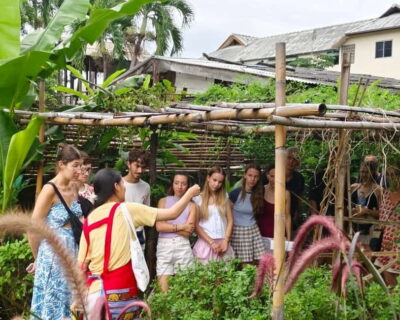
Cooking Class, Market & Thai Herbs Garden Tour
Read our review →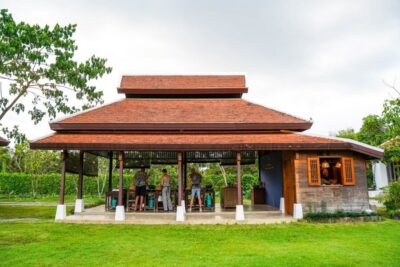
Authentic Cooking Class with Market & Farm Visit
Read our review →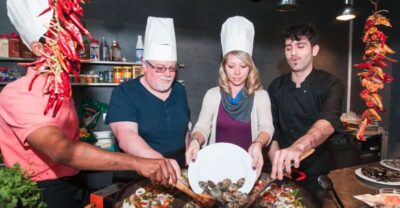
Paella Cooking Experience & Boqueria Market Tour
Read our review →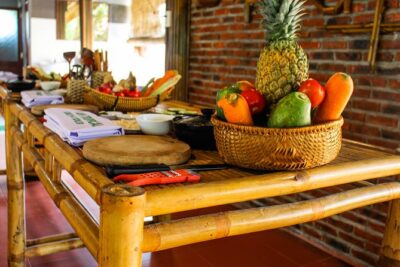
Cooking Class Hoi An:Local Market, Basket Boat, Fishing & Cooking
Read our review →