REVIEW · KYOTO, JAPAN
Private Cooking Class Udon in Kyoto Japan
Make noodles, then eat them. This Kyoto cooking class turns a simple bowl of udon into a hands-on cultural experience inside a traditional house near Nishi Honganji Temple. I like the old machiya setting and the friendly local instruction, especially from Tanaka, whose upbeat teaching and udon dance have become part of the fun.
I also like that the class works well for families. Children can mix, knead, press, stretch, and cut the dough, while adults get a useful recipe to take home. The main consideration is timing: the hands-on lesson is advertised at about one hour, but lunch afterward can keep you there for 1.5 to 2 hours. At $60.43 per person, that is fair if you value the meal and setting, but less compelling if you only want a quick cooking demonstration.
Key points to know before booking
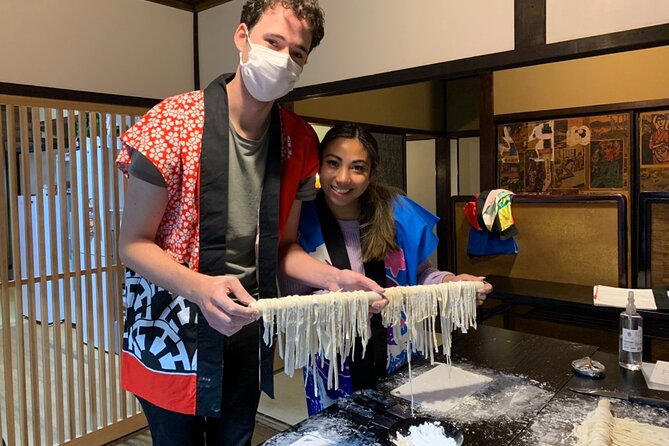
- A 120 to 130-year-old machiya: The class takes place in a beautifully restored traditional Kyoto house filled with antique furniture and old household objects.
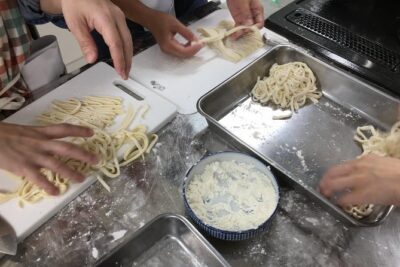
- Eight clear udon-making steps: You make saltwater, combine the dough, knead it with your feet, let it rest, stretch it, cut it, and have it boiled for lunch.
- Tanaka is a lively teacher: Her patient, cheerful approach works especially well for children and first-time cooks.
- Tempura comes with the meal: You make the noodles, while the vegetable tempura and broth are prepared for you.
- A short walk from Kyoto Station: The address is about 12 minutes on foot from the station and only 2 minutes from Nishi Honganji Temple.
- Private booking: Only your group participates, though the class may also operate with a larger reserved group, as one account described a group of 10 participants.
A historic Kyoto house near Nishi Honganji
The location is one of the strongest reasons to choose this class. You meet at 364 Momijicho in Shimogyo Ward, in the center of Kyoto, about a 12-minute walk from Kyoto Station. Nishi Honganji Temple is just 2 minutes away, so you can pair the class with a temple visit before or after lunch.
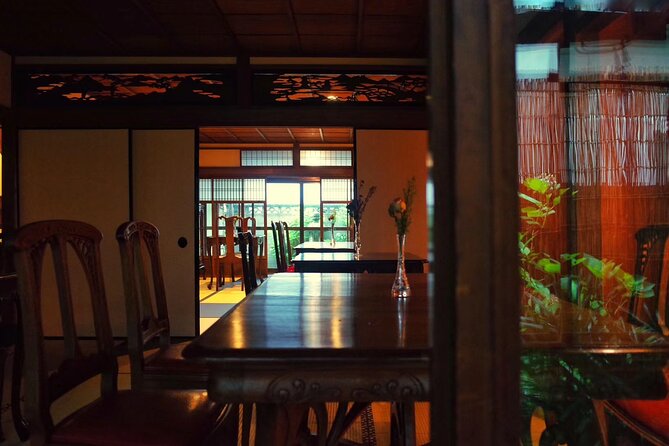
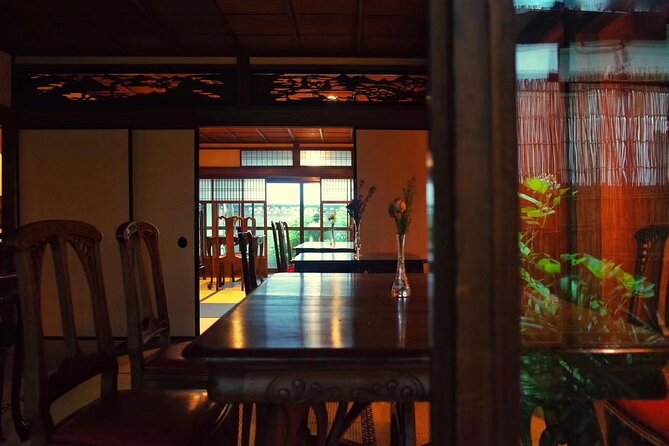
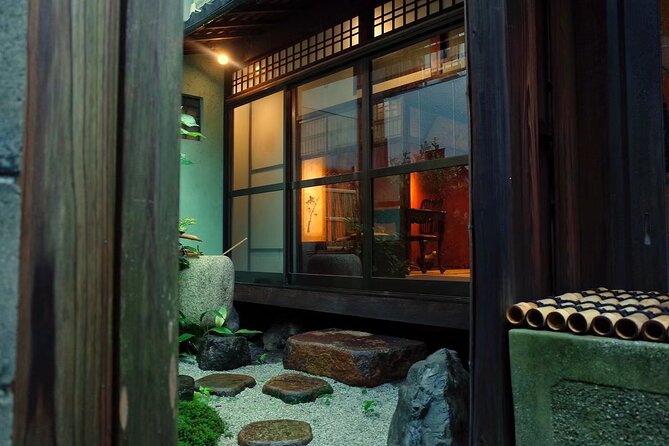
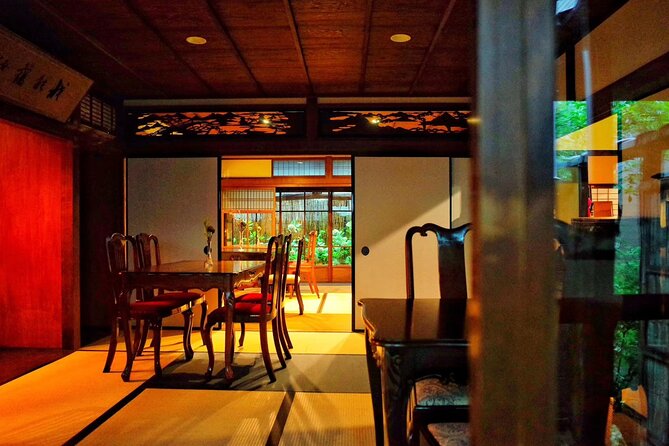
The cooking school occupies a carefully renovated Japanese house dating from roughly 120 to 130 years ago. This is not a modern studio with stainless steel counters and fluorescent lights. The room includes antique furniture and objects said to be more than 110 years old, along with traditional Japanese music.
That setting gives the lesson a sense of place. You are not only learning how flour becomes noodles. You are doing it in an old Kyoto home, with local instructors explaining aspects of Japanese food and culture along the way. The surroundings also give you something to look at while the noodles are being cooked.
The house may not suit anyone who prefers a sleek, purpose-built cooking school. The appeal here is the old wooden building, uneven character, and domestic atmosphere. Think of it as a cultural stop with cooking attached, not a professional culinary workshop.
More Private Cooking Classes in Japan
- Private Kyoto Sushi Cooking Class & Tea Ceremony with Emika
★ 5.0 · 66 reviews - Private Ramen or Gyoza Cooking Class in Kyoto with Chef Midori
★ 5.0 · 18 reviews - Private Guided Traditional Buddhist Cooking in Japan
★ 5.0 · 16 reviews
What happens at noon
The class begins at 12:00 pm, a useful time if you want lunch to follow naturally. You do not need to rush through a morning sightseeing plan, and the finished noodles become the main meal rather than a small sample.
You will be given an apron and work at a prepared table. Ingredients are measured in advance, which keeps the class moving and makes the process easier to follow. The teacher demonstrates each stage in English, with assistance from other family members when needed.
The lesson follows a straightforward sequence:
- Mix the saltwater.
- Combine the ingredients.
- Work the dough.
- Knead it with your feet.
- Let the dough rest.
- Stretch it into a sheet.
- Cut the noodles with a knife.
- Boil the noodles for the meal.
The foot-kneading step is the part children tend to enjoy most. You work the dough by stepping on it, usually with a cloth or protective covering involved. It sounds unusual because it is unusual, but it is also a traditional and practical way to develop the dough’s texture.
The class is designed so that children can take part without handling boiling water. The instructors do not have the children boil the noodles themselves, making this a good choice for families with younger children. One family specifically noted that children aged 4 and 10 could participate fully.
Tanaka’s friendly teaching style
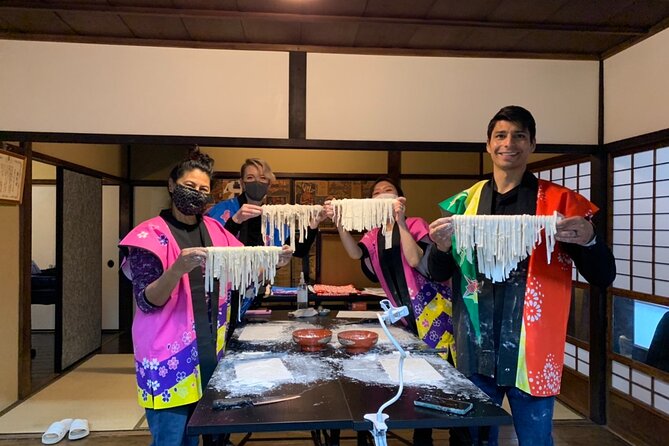
Tanaka is the instructor most often singled out by name. Her approach is energetic, patient, and encouraging, with a sense of humor that keeps the work from feeling like a strict lesson. She also teaches the udon dance, a small piece of playful choreography that gives the class a memorable Kyoto story to tell later.
The teaching is aimed at beginners. You do not need to know Japanese cooking techniques, and the steps are demonstrated clearly in English. The recipe is provided, so you can try making the noodles again at home.
That last point adds real value. Many cooking activities give you a pleasant hour and a few photographs, then disappear from daily life. Here, you leave with a method you can repeat. The process is simple enough to understand, though you should not expect your first home batch to look exactly like the class version.
The teachers are local to Kyoto and share information about udon and Japanese food culture during the lesson. One participant learned that udon originated in China, a reminder that Japanese food traditions often developed through outside influences before becoming distinctly local.
The meal you actually eat afterward
The best part of the schedule is that you eat what you make. Once the noodles are cut, you wash the flour from your hands and have time to look around the old house while the instructors finish the cooking.
The udon is boiled by the staff rather than by you. That keeps the class safe and efficient, but it also means the experience is not a complete lesson in broth-making or noodle cooking. You are learning the noodle itself, not every part of a full udon restaurant meal.
The finished lunch includes your homemade udon, dipping broth, tempura vegetables, grated ginger, and chopped green onion. The tempura is prepared for you, so you do not need to make a second dish during the class. That is a sensible choice, especially for families who want to focus on the noodle-making rather than spend the whole session cooking.
The combination sounds simple, but it gives the meal welcome variety. The fresh noodles are soft and chewy, the broth adds savory flavor, ginger brings a sharp note, and tempura supplies crunch. Several participants found the meal tasty enough to be a highlight of the experience.
You may eat in the restaurant area downstairs after the lesson. The meal is not merely a tasting portion, and the time at the table can extend the experience well beyond the advertised one-hour class. Plan on roughly 1.5 to 2 hours if you want to eat at a relaxed pace and enjoy the setting.
More Private Cooking Classes in Kyoto
- Private Plant-Based Japanese Cooking Class – Kyoto Edition
★ 5.0 · 15 reviews
Why this works well for families
This is one of the better Kyoto food activities for a mixed-age group. Children can participate in the tactile parts: mixing dough, kneading with their feet, stretching the dough, and cutting it under supervision. Adults get a cultural activity that is more substantial than a short snack stop.
The instructors are described as especially warm with children. The lesson has enough movement and novelty to hold a young child’s attention, yet it also gives teenagers something useful to learn. One family with teenage children found the hands-on work especially enjoyable.
Older adults can also take part, though the foot-kneading and standing portions may not suit everyone. A group ranging from a college graduate to an 83-year-old enjoyed the activity, but comfort will depend on individual mobility. The experience does not list special accessibility features, so you should ask the operator directly if anyone in your group has mobility needs.
Because this is a private activity, your group can work at its own pace. That is helpful with children, since you are not trying to keep up with strangers or worry about a small delay affecting the whole class. The description also says only your group participates, although one account refers to three people from a group of 10, so the exact group arrangement may depend on the booking.
A good fit for first-time cooks
You do not need cooking experience to enjoy this class. The ingredients are pre-measured, the process is broken into clear stages, and the teacher demonstrates what to do. The finished recipe is simple enough that you can make it at home.
I would choose this for someone who wants a gentle introduction to Japanese cooking rather than advanced instruction. You will not learn how to prepare tempura, make dashi from scratch, or build a complete multi-course meal. The value is in learning one traditional staple from flour to bowl.
The noodle-making process also gives you something that ordinary restaurant dining cannot. In Kyoto, you can eat excellent udon almost anywhere, but making your own gives you a better sense of the texture and labor involved. You notice the difference between dough that is merely mixed and dough that has been worked, rested, stretched, and cut.
Price, time, and what the $60.43 covers
At $60.43 per person, this is not the cheapest lunch in Kyoto. You can buy a bowl of udon for far less. The price makes more sense when you count the instruction, private setting, historic house, cultural explanation, recipe, handmade noodles, and meal with tempura.
For a one-hour lesson alone, the cost would feel high. With lunch afterward and the possibility of spending 1.5 to 2 hours at the site, it becomes a reasonable half-day-style activity, particularly for a family. You are paying for a shared experience, not just food.
The strongest value comes when at least one person in your group genuinely enjoys hands-on activities. If your group would rather visit temples, eat quickly, and move on, the lesson may feel slow. If you enjoy learning by doing, the price is easier to justify.
The class is typically booked about 16 days ahead, so it is wise to reserve before your Kyoto schedule fills up. Confirmation is sent within 48 hours, subject to availability. The mobile ticket is convenient, and the central meeting point makes it easy to include the class in a day around Kyoto Station.
What to do before and after the class
The class is close enough to Kyoto Station to fit neatly into a travel day. You might visit Nishi Honganji Temple first, then walk the short distance to the meeting point for the noon start. The temple’s location is especially convenient because it is only about 2 minutes from the cooking school.
After lunch, you can continue toward Kyoto Station or use the area as a starting point for more sightseeing. The class ends back at the meeting point, so there is no complicated transfer to arrange.
Allow extra time for finding the house. The meeting point is given as 364 Momijicho, Shimogyo Ward, Kyoto, postal code 600-8345. Since the class is in a traditional home rather than a large attraction, check your mobile ticket and directions before leaving the station.
A few practical limitations
The biggest limitation is that the activity description calls the class approximately one hour, while the full experience can last much longer once lunch is included. If you have a train reservation or timed temple visit soon afterward, leave a generous cushion.
You also make only the noodles. The tempura, dipping broth, and other meal components are prepared for you. Some people will see this as a benefit, since it keeps the class focused and family-friendly. If you want a full Japanese cooking course, you may find the scope limited.
The cancellation policy is generous up to 24 hours before the start time, with a full refund available if you cancel by then. Changes or cancellations within 24 hours are not accepted for a refund. The operator also says poor weather can lead to a new date or full refund, even though much of the activity takes place indoors.
Service animals are allowed, and the location is near public transportation. For any other accessibility concern, contact the operator before booking rather than guessing about the old house.
Should you book this Kyoto udon class?
I would book it if you want a warm, low-pressure food activity with a strong sense of place. The old machiya, local teachers, cheerful instruction, child-friendly noodle work, and generous lunch make it more memorable than a standard cooking demonstration.
Families are the clearest match, but couples, solo visitors, and groups of friends can enjoy it too. The private format helps, and the recipe gives the experience some life after you return home.
I would skip it if you only want a quick meal, advanced cooking instruction, or a full course covering broth and tempura from scratch. For everyone else, $60.43 is a fair price for an activity that combines Kyoto architecture, local culture, a hands-on lesson, and lunch you helped create.
FAQ
Where does the udon class take place?
The meeting point is 364 Momijicho, Shimogyo Ward, Kyoto, 600-8345, Japan. It is about a 12-minute walk from Kyoto Station and a 2-minute walk from Nishi Honganji Temple.
What time does the class begin?
The scheduled start time is 12:00 pm.
How long does the experience last?
The hands-on udon class takes about one hour. With the meal afterward, the full visit may last around 1.5 to 2 hours.
Do I make the entire meal?
You make the udon noodles from scratch. The tempura, broth, ginger, and green onion are prepared for you.
Is the class suitable for children?
Yes. Children can participate in the noodle-making steps, and the noodles are boiled by the staff rather than by the children. The activity has been enjoyed by children as young as 4.
Can I cancel for a full refund?
You can cancel for a full refund if you do so at least 24 hours before the local start time. Cancellations or changes made less than 24 hours before the experience are not refunded.
More Sushi and Japanese Classes in Kyoto
- Ramen Cooking Class at Ramen Factory in Kyoto
★ 5.0 · 1,937 reviews - Kyoto: Ramen Cooking Class at a Ramen Factory with Souvenir
★ 4.9 · 532 reviews - Kyoto: Ramen, Gyoza, and Onigiri Cooking Class
★ 5.0 · 445 reviews - Kyoto: Japanese Washoku Bento Small Group Cooking Class
★ 5.0 · 380 reviews
Just added around Kyoto
- Kyoto Udon & Tempura Cooking Class with Professional Chefs★ 3.8 · 3 reviews
- Kyoto: Morning Japanese Bento Cooking Class★ 5.0 · 149 reviews
- Kyoto: Wagashi (Japanese sweets) Cooking near Fushimiinari★ 5.0 · 40 reviews
- Kyoto Home Cooking Class &Supermarket tour near Fushimiinari★ 5.0 · 31 reviews
- Kyoto: Cooking class, learning how to make authentic sushi★ 4.2 · 9 reviews
- Kyoto: Authentic Sushi Making Cooking Lesson★ 5.0 · 103 reviews
- Authentic Japanese Cooking Experience at Izakaya restaurant★ 4.2 · 5 reviews
- Gyoza Cooking Class in Kyoto: Traditional Japanese Dumplings★ 5.0 · 12 reviews
Private Cooking Classes, compared.
PRIVATE Authentic Balinese Cooking Class in Ubud at Putu’s Home
Read our review →
Pasta Making Class with Tiramisu & Wine PRIVATE OPTION
Read our review →
Private Market Tour & Cooking Class in Puerto Vallarta with Manu
Read our review →
Private Cooking Class with 5 dishes of your choice
Read our review →
Veg and Non veg : Private Cooking Class in Delhi home (7 meal)
Read our review →
PRIVATE Balinese Cooking Class in Ubud with Dewa with Transfers
Read our review →
VIP Mekong Delta Adventure Cycling & Kayaking – Private Day Trip
Read our review →