
REVIEW · KYOTO, JAPAN
Kyoto Ramen and Gyoza Cooking Class with Professional Chefs
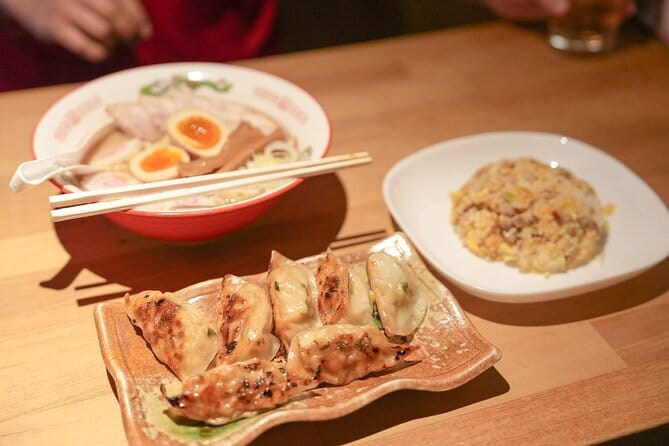
Come hungry, leave with recipes. This Kyoto cooking class turns a familiar Japanese meal into a hands-on lesson, with you kneading ramen noodles, folding gyoza, and cooking fried rice under the direction of a professional chef. I like the small maximum group of eight and the warm, personal help from hosts such as Yuki, Ayuri, Rina, and Emi.
I also like that the class serves a full meal, not just a sample, and includes two drinks. The main caution is dietary: the ramen uses pork broth, and the class cannot accommodate vegetarian, vegan, or gluten-free requests. The broth is also made from a prepared paste and water, which may disappoint serious ramen cooks expecting a long-simmered stock.
At about $86.22 per person for roughly two and a half hours, this is not the cheapest meal in Kyoto. But you are paying for food, instruction, translation, cultural context, drinks, and recipes you can use later. For families, couples, and curious eaters, it offers a friendly break from simply ordering another bowl at a restaurant.
Key points to know before booking
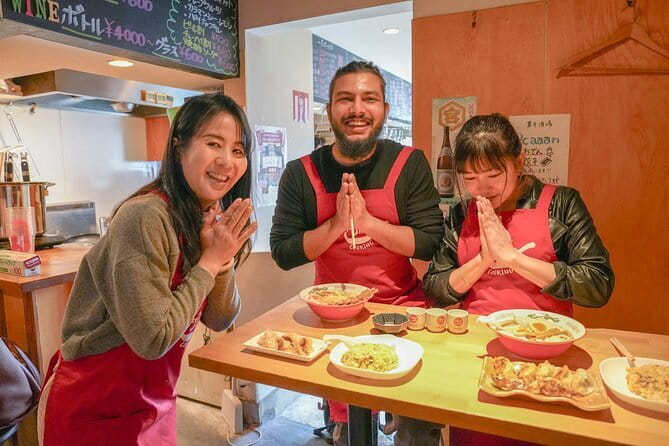
- You make three dishes: Prepare ramen, gyoza, and fried rice, then sit down to eat the complete meal.
- The noodles are made from scratch: You knead, cut, and top your own ramen noodles.
- The class is small: The maximum is eight people, and some sessions may feel almost private when fewer people book.
- Two drinks are included: Beer or sake can accompany the gyoza, with food and drinks provided for you.
- The chef works with a host or interpreter: Hosts including Yuki, Ayuri, Rina, Emi, Eri, Miu, and Shun help explain the cooking steps and local culture.
- Dietary limits matter: Pork broth is used, and vegetarian, vegan, gluten-free, and allergy-free meals cannot be guaranteed.
What the Kyoto cooking class is really like
The experience begins at 「北緯35物語」木村光佑 on Shincho in Kyoto’s Shimogyo Ward. It is near public transportation and ends at the same place, so you do not need to arrange a second meeting point after dinner.
The setting has been described as a former restaurant with a cozy kitchen. That matters. You are not sitting in a polished demonstration theater watching someone else cook. You are working in a practical food setting, with the chef preparing ingredients and keeping an eye on your progress.
The class lasts about two and a half hours. That gives enough time for several cooking steps, explanations, eating, and conversation without turning the day into a full cooking school course. The pace is relaxed but structured, and the hosts keep the group moving so that the meal comes together at roughly the same time.
You should arrive early. The class starts on time, and late arrivals cannot join, reschedule, or receive a refund. That rule may feel strict, but a cooking lesson depends on everyone beginning together. Give yourself extra time to find the meeting point, especially if you are arriving by train or navigating Kyoto’s busy central streets.
More Sushi and Japanese Classes in Kyoto:
- Ramen Cooking Class at Ramen Factory in Kyoto
★ 5.0 · 1,937 reviews - Kyoto: Ramen Cooking Class at a Ramen Factory with Souvenir
★ 4.9 · 532 reviews - Kyoto: Ramen, Gyoza, and Onigiri Cooking Class
★ 5.0 · 445 reviews
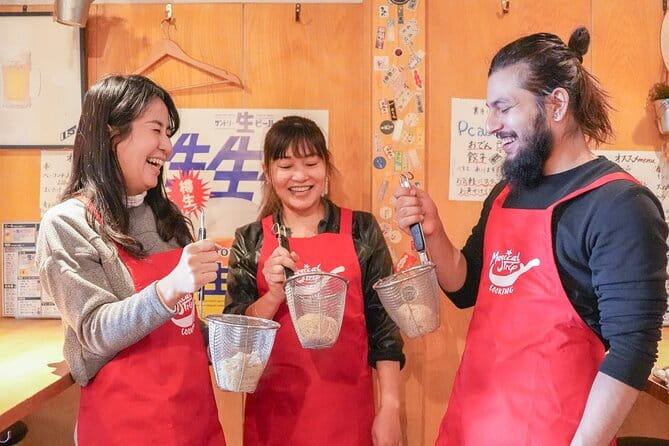
Kneading and cutting your own ramen noodles
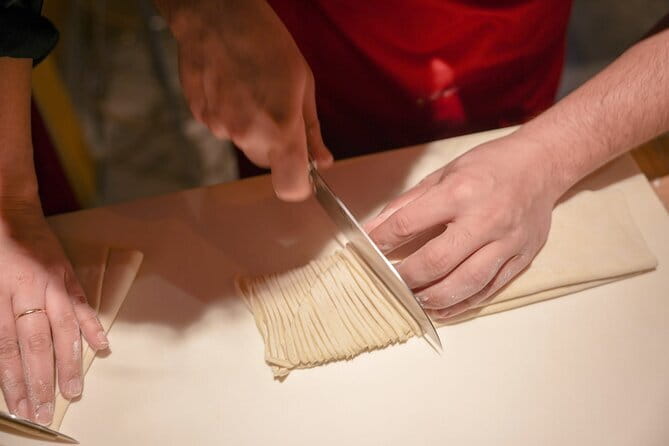
The ramen portion is the heart of the class. You make the noodles rather than simply assembling a bowl from pre-cooked ingredients. The process includes kneading the dough, cutting the noodles, and adding the toppings.
For many people, this is the most memorable part because it shows how much work sits behind an everyday Japanese lunch. Ramen looks simple when it arrives at a restaurant, but even the noodle texture depends on basic steps such as mixing, kneading, and cutting. You get to see that process at close range and take part in it.
The professional chef provides the instruction, while the host translates or clarifies the steps when needed. Yuki has received special praise for translating clearly while also explaining Japanese culture and Kyoto. Ayuri has also been singled out for sharing information generously and helping the class feel relaxed.
The class welcomes all cooking levels. You do not need experience with dough, knives, or Japanese food. The setup is designed to make the steps manageable, and the chef watches the work closely. If you are a confident home cook, you may find some parts less involved than expected. One participant felt the cooking was not quite hands-on enough, and found the recipes simpler than hoped.
That is a fair point. This is a guided cultural activity, not an advanced noodle-making course. You will learn the basic method, enjoy the process, and eat the result. You will not leave with a full professional ramen curriculum.
Folding gyoza, then pairing them with a drink
Gyoza gives the class its most social moment. You wrap your own dumplings, then cook and eat them with the rest of the meal. Folding gyoza is easy to understand but takes a little practice, so it works well for adults and children alike.
The class welcomes children aged six and above. An adult must supervise children when they handle knives or take part in steps that could be dangerous. That makes the activity suitable for a family, but it is not a drop-off children’s program.
Beer or sake is available as part of the two included drinks. This pairing helps the meal feel like a proper Japanese lunch or dinner rather than a school exercise. You can talk with the other people at your table, compare gyoza shapes, and enjoy the food as soon as it is ready.
You should think of the meal as substantial. You will eat ramen, gyoza, and fried rice, not a few small tastes. The practical advice is simple: do not arrive after a large meal. The class itself recommends planning ahead so you can enjoy what you make.
Fried rice adds a full Japanese meal
Ramen and gyoza are the headline dishes, but fried rice completes the menu. The combination gives you a better sense of a classic casual Japanese meal than ramen alone would provide.
The sequence also keeps the class varied. You move between dough preparation, dumpling folding, and cooking rice, rather than repeating one technique for two hours. The chef handles the timing and preparation, while you take part in the key steps.
Several hosts have been praised for making the instructions easy to follow. Emi and Eri helped families enjoy the class, while Miu worked as both host and translator for a family group. Shun was also praised for helping explain the chef’s instructions. The exact host may vary, but the format gives English-speaking visitors a clear bridge to the chef.
The result is a meal with plenty of food. One participant called it a large meal, and others found it among the best meals of their Japan trip. That praise reflects two things: the food itself and the satisfaction of eating something you helped prepare.
A few more cooking classes around Kyoto worth a look
- Kyoto: Japanese Washoku Bento Small Group Cooking Class
★ 5.0 · 380 reviews - Kyoto: Afternoon Japanese Izakaya Cooking Class
★ 4.9 · 241 reviews - Izakaya Style Cooking Class
★ 5.0 · 219 reviews - Gyoza Cooking Class in Kyoto: Traditional Japanese Dumplings
★ 5.0 · 210 reviews
The broth is the main point to understand
The ramen uses pork broth, even if you choose ramen without meat toppings. If you are vegetarian, vegan, or avoiding pork for religious reasons, this is not the right class.
There is another detail for ramen enthusiasts. The broth is prepared with a paste and water rather than made from a traditional stock cooked over many hours. One person considered this the only real disappointment, while still enjoying the noodle-making and the staff.
I would treat the broth as part of the class format rather than expect a restaurant-level broth workshop. The focus is on making noodles, learning the meal’s basic components, and enjoying a shared cooking experience. If your main goal is to study tonkotsu or chicken stock from the beginning, you should choose a more specialized class.
The prepared broth also helps keep the activity within two and a half hours. A true long-cooked stock would require much more time and would make the class less practical for a short visit to Kyoto.
Friendly hosts make the class work
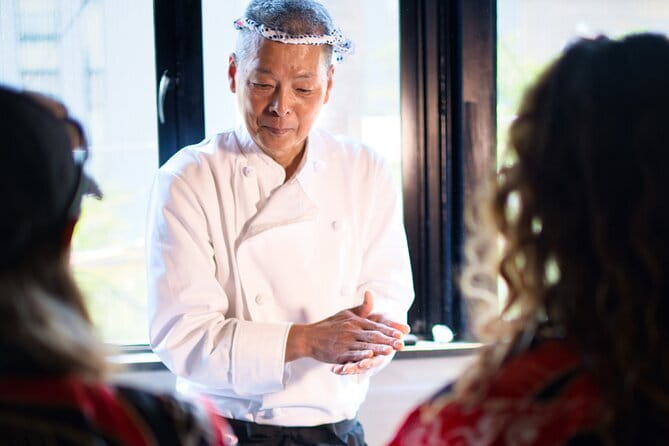
The chef teaches the technical side, but the host often shapes the mood. The strongest part of this experience is the personal attention. Rina has been praised for patience with families, while Ayuri has helped make sessions feel relaxed and informative. Yuki has been especially valued for translation and local recommendations.
Some sessions have only three or four people. When that happens, you may receive very direct help and have more time to ask questions. A few small groups have felt almost like private lessons, even though this is officially a shared group activity.
The maximum group size is eight. That is small enough for the chef to keep an eye on the work and for the host to translate without shouting across a crowded room. It also gives you a chance to meet people from other places, which adds a social side to the meal.
The class does not promise the same guide every time, so do not book only because you hope to meet one particular host. The consistent feature is the chef-led format with language support and cultural explanations.
A practical look at the price

At $86.22 per person, the price is higher than simply buying ramen and gyoza in Kyoto. You could eat those dishes more cheaply at a casual restaurant.
The value comes from what is included. You receive a full meal of ramen, gyoza, and fried rice, two drinks, hands-on instruction, help from a professional chef, translation support, and recipe guidance for home cooking. You also spend about two and a half hours doing something rather than just sitting at a table.
I think the price works best for visitors who want an activity as well as food. It is less attractive if you only want the cheapest or most refined bowl of ramen in Kyoto. The class gives you a story to take home, plus the ability to try the dishes again.
Recipes are provided, though one experienced cook found them fairly simple. That is useful for beginners and families, but advanced cooks may want more detail on broth, seasoning, and technique.
Who will enjoy this class most
This is a good fit for families with children six and older, couples looking for a shared activity, and first-time visitors who want an easy introduction to Japanese cooking.
It also suits you if you like meeting people in a small group. The food creates an easy topic of conversation, and the included beer or sake helps the meal feel informal.
You should think twice if you have strict dietary restrictions. The class cannot accommodate vegetarian, vegan, or gluten-free requests. Allergy-free meals cannot be guaranteed because food preparation takes place in kitchens outside MagicalTrip’s control. Substitutions may be attempted when possible, but you should not rely on them.
The activity is not recommended for people with mobility issues. The cooking space has several levels and is mostly upstairs, so take care on the stairs. If you need specific physical accommodations, a private tour is suggested.
Booking and cancellation details that matter
You receive confirmation at booking, and the activity has a mobile ticket. The meeting point is near public transportation, but the exact address is worth saving before you set out: 「北緯35物語」木村光佑, Shincho, Shimogyo Ward, Kyoto, 600-8001, Japan.
Free cancellation is available up to 24 hours before the start time. If you cancel later, you will not receive a refund, and changes made within 24 hours are not accepted. The activity can also be canceled because of unsafe weather.
The guide’s food and drinks are covered, so you do not need to pay for them separately. This is a small detail, but it confirms that the price is set up as one complete experience rather than a class with surprise charges at the end.
Should you book the Kyoto ramen and gyoza class?
I would book this class if you want a friendly, practical Kyoto activity with a full meal at the end. The best parts are the handmade noodles, the gyoza folding, the small group size, and the patient hosts who translate and explain the food.
I would skip it if you need vegetarian, vegan, gluten-free, or allergy-controlled food, or if you want an advanced lesson on traditional broth. I would also choose another activity if stairs and mobility are a concern.
For everyone else, the class offers good value for a food-focused afternoon or evening. You leave with a full stomach, a few new kitchen skills, and recipes that can bring a little Kyoto back to your own kitchen.
FAQ
How long does the Kyoto ramen and gyoza cooking class last?
The class lasts approximately two hours and 30 minutes.
Where does the cooking class meet?
It meets at 「北緯35物語」木村光佑, Shincho, Shimogyo Ward, Kyoto, 600-8001, Japan.
Where does the activity end?
The class ends back at the meeting point.
What food will I make?
You will make ramen, gyoza, and fried rice, then eat the meal you prepare.
Are drinks included?
Yes. Food and two drinks are included. Beer or sake can be paired with the gyoza.
Is the ramen vegetarian?
No. The ramen uses pork broth, even without meat toppings.
Can the class accommodate vegan, vegetarian, or gluten-free diets?
No. The class cannot accommodate vegetarian, vegan, or gluten-free requests.
Can the class guarantee an allergy-free meal?
No. Allergy-free meals cannot be guaranteed, though substitutions may be attempted when feasible.
How many people can join the class?
The maximum group size is eight people.
What happens if I arrive late?
The class starts on time. Late arrivals cannot join, reschedule, or receive a refund.
Are children allowed to participate?
Yes. Children aged six and above are welcome. An accompanying adult must supervise children when they handle knives or take part in potentially dangerous steps.
Is the class suitable for people with mobility issues?
The activity is not recommended for people with mobility issues. The cooking space has several levels and is mostly upstairs.
Just added around Kyoto
- Kyoto Udon & Tempura Cooking Class with Professional Chefs★ 3.8 · 3 reviews
- Kyoto: Morning Japanese Bento Cooking Class★ 5.0 · 149 reviews
- Kyoto: Wagashi (Japanese sweets) Cooking near Fushimiinari★ 5.0 · 40 reviews
- Kyoto Home Cooking Class &Supermarket tour near Fushimiinari★ 5.0 · 31 reviews
- Kyoto: Cooking class, learning how to make authentic sushi★ 4.2 · 9 reviews
- Kyoto: Authentic Sushi Making Cooking Lesson★ 5.0 · 103 reviews
- Authentic Japanese Cooking Experience at Izakaya restaurant★ 4.2 · 5 reviews
- Gyoza Cooking Class in Kyoto: Traditional Japanese Dumplings★ 5.0 · 12 reviews
Japanese & Sushi Cooking Classes, compared.
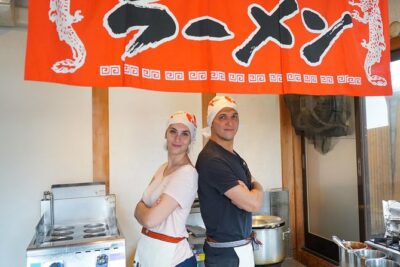
Ramen Cooking Class at Ramen Factory in Kyoto
Read our review →
Ramen & Gyoza Cooking Class in Tokyo with Local Supermarket Visit
Read our review →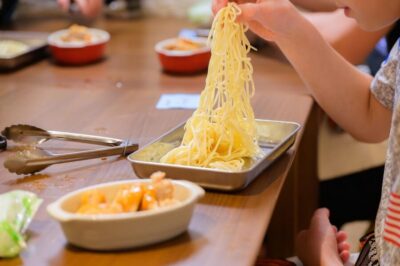
Ramen Cooking Class at a Ramen Factory with Souvenir
Read our review →
Sushi Making Osaka! Popular Sushi Class in Japan!
Read our review →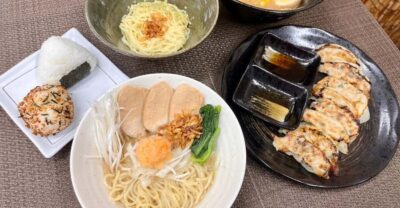
Tokyo Tsukiji Fish Market Tour and Sushi Making Lesson
Read our review →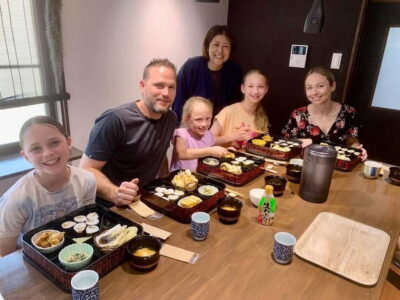
Japanese Washoku Bento Small Group Cooking Class
Read our review →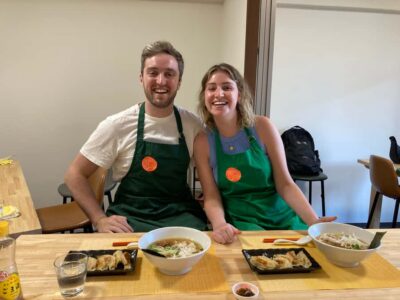
Lists this class appears in