
REVIEW · KANTO REGION, JAPAN
Narita Offering 3hour Japanese cooking experience.
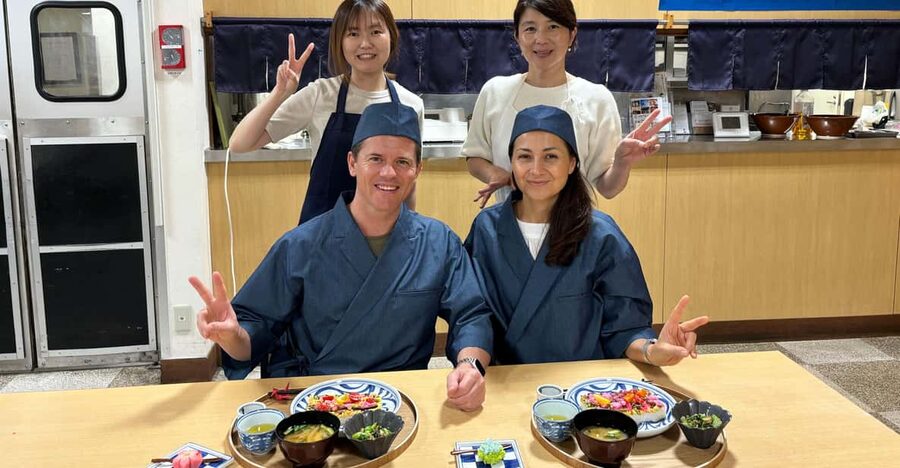
Cook near Narita before your flight. This friendly class gives you a practical taste of Japanese home cooking, with pressed sushi, miso soup, Japanese salad, and nerikiri confectionery prepared in a rented corner of the Japanese sweets shop Nagomi no Yoneya Monzenten. I like the close walk to Narita Sando and Naritasan Shinshoji Temple, and I like that the food is taught as an everyday Japanese meal rather than as a flashy restaurant performance. The main consideration is timing: at 2.5 hours, you will want to plan the class as a central part of your Narita visit, not squeeze it between several distant sights.
The class costs $98 per person. That is not a bargain cooking lesson, but the price includes several dishes, dessert, sake, instruction in English or Japanese, and a host who has taught Japanese cooking for more than ten years. The small number of published ratings is limited, but both give the experience five stars, with special praise for Satoko Hirano and Reiko, their kindness, easy teaching style, and delicious food.
Key Things to Know Before Booking
- The meeting point is inside Nagomi no Yoneya Monzenten: Walk into the Japanese sweets shop and continue toward the back, where your host will be waiting.
- You make a full Japanese meal: The class covers pressed sushi, miso soup, Japanese salad, and a traditional nerikiri sweet.
- Sake is included: After cooking, you can sample Narita’s local sake with the meal.
- The setting is part of the appeal: The shop is only about five minutes from historic Narita Sando and Naritasan Shinshoji Temple.
- Satoko Hirano teaches from family tradition: She learned seasonal cooking from her grandmother and has taught Japanese home cooking for over a decade.
- The class is accessible and flexible to book: English and Japanese are offered, wheelchair access is available, and cancellation is free up to 24 hours before the start.
A Cooking Class in the Back of a Sweets Shop
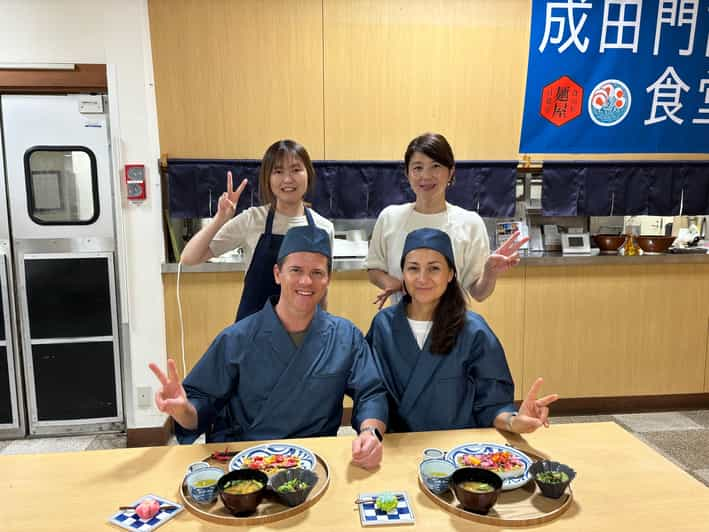
The unusual setting helps this class feel tied to Narita. You do not meet in a large commercial cooking studio. Instead, you enter Nagomi no Yoneya Monzenten, a Japanese sweets shop, and walk to the back, where the class takes place in a rented corner.
That arrangement has a practical advantage. You are already near Narita’s old approach to the temple, so the class fits naturally into a walking day. You can visit Narita Sando and Naritasan Shinshoji Temple before or after cooking without setting aside time for a long transfer.
You should still pay attention to the starting time when booking. The experience lasts 2.5 hours, and cooking classes are more enjoyable when you are not watching the clock. If your Narita visit falls between flights, leave enough room for airport transfers and any delays rather than treating the class as a last-minute airport stop.
The setting may not suit you if you expect a polished culinary school with a private kitchen. Its appeal is more personal and local. You are meeting a teacher in a working Japanese sweets shop and learning food connected to home kitchens and seasonal ingredients.
More Sushi and Japanese Classes in Japan:
- Ramen Cooking Class at Ramen Factory in Kyoto
★ 5.0 · 1,937 reviews - Ramen & Gyoza Cooking Class in Tokyo with Local Supermarket Visit
★ 5.0 · 823 reviews - Kyoto: Ramen Cooking Class at a Ramen Factory with Souvenir
★ 4.9 · 532 reviews
What You Cook: Pressed Sushi First
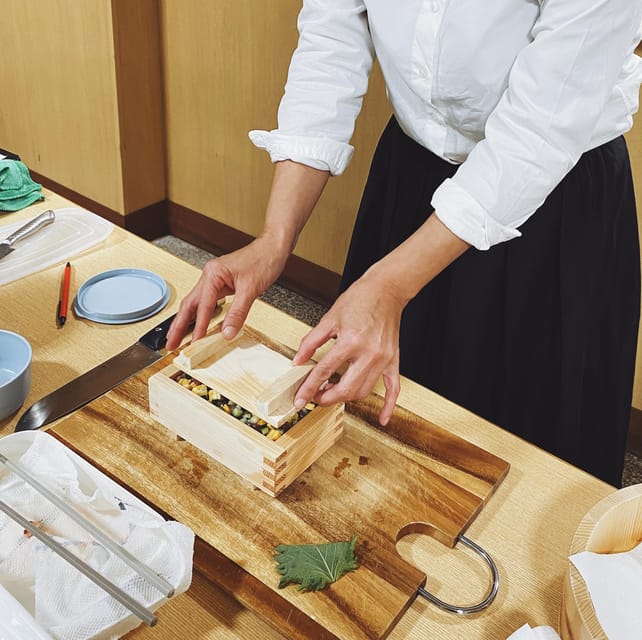
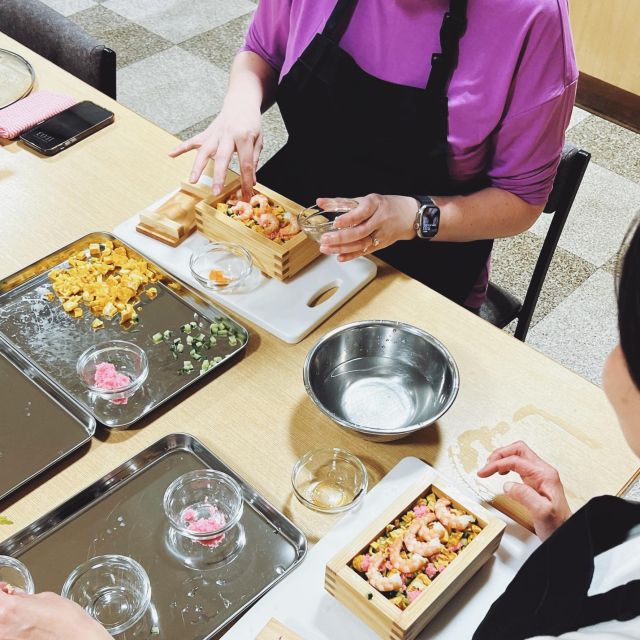
Pressed sushi is the main attraction for many people, and it offers a different lesson from the rolled sushi commonly taught outside Japan. Rather than concentrating only on knife work or rolling technique, you work with sushi rice and learn how a carefully prepared base becomes the heart of the dish.
The class takes you through the process from sushi rice onward. That matters because rice is not just a side dish in Japanese cooking. Its texture, seasoning, and preparation affect the whole meal. The teacher’s role is to help you understand the steps, not simply hand you a finished dish.
I like this approach for beginners. You do not need previous cooking experience, and the available feedback points to a class that keeps the work manageable. One five-star account describes the cooking as easy to learn, with help provided when needed. That is useful reassurance if you enjoy Japanese food but rarely cook.
Pressed sushi also gives you something specific to remember after the class. You are learning one Japanese preparation that differs from the familiar restaurant version, while also seeing how rice, soup, side dishes, and dessert fit together at the table.
Miso Soup and the Logic of Japanese Home Cooking
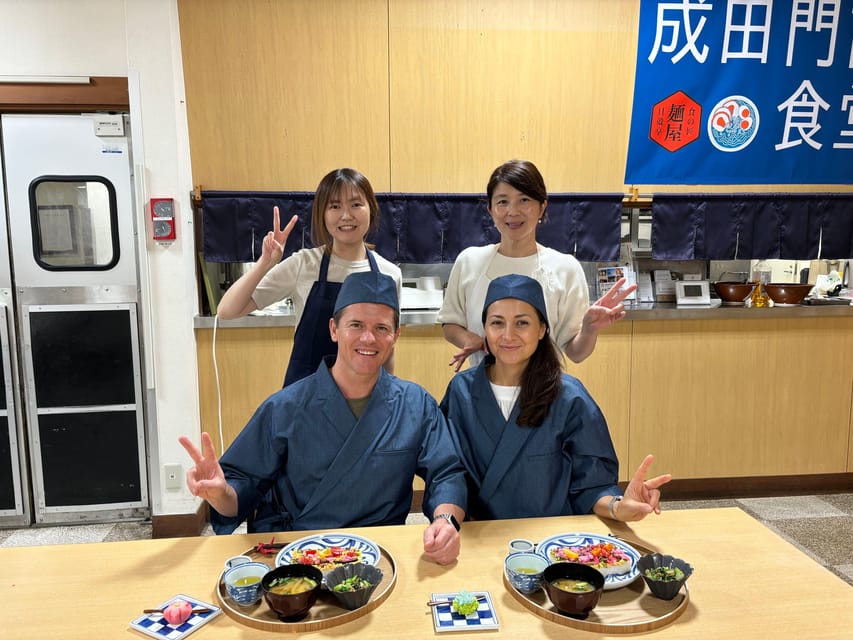
Miso soup is another important part of the lesson. The class includes instruction on soup stock, which is one of the most useful skills you can take home. Miso itself is easy to recognize, but the flavor of a good bowl depends on the stock beneath it and on how the ingredients are handled.
Satoko Hirano also explains local vegetables and seasonal ingredients. Her cooking comes from family practice in Fukushima, where her grandmother cooked daily with ingredients available at the time of year. That background gives the class a broader purpose: you are not only following a recipe, but learning why Japanese home cooking pays attention to season and simplicity.
You should not expect a long lecture on culinary theory. The useful part is practical. You can ask about the ingredients in front of you, watch how stock is built, and see how soup becomes part of a balanced meal rather than an isolated starter.
The class also includes a Japanese salad. This side dish rounds out the meal and shows how a typical table may combine rice, soup, vegetables, and a main preparation. The exact salad ingredients can vary with what is available, so the lesson connects naturally with Satoko’s interest in local produce.
Nerikiri: Dessert with a Handmade Finish
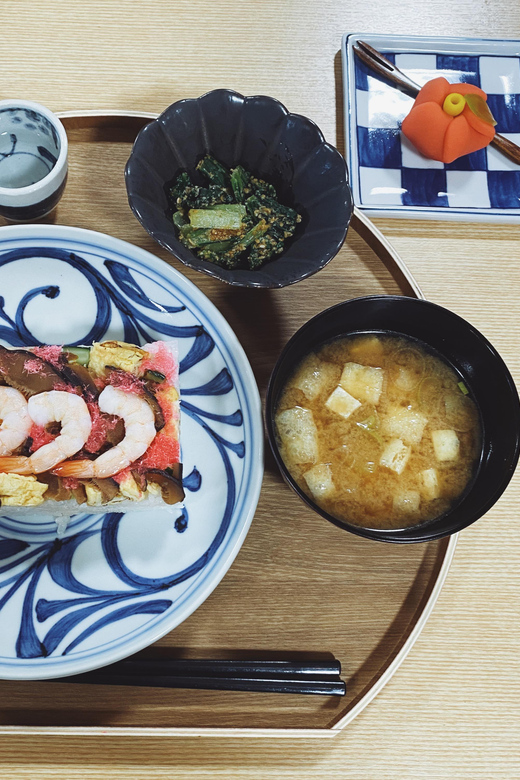
Dessert is a traditional Japanese sweet called nerikiri. These confectioneries are known for careful shaping and seasonal presentation, so making one adds a creative end to the cooking session.
Nerikiri is a good choice for this class because it connects directly with the sweets shop where the lesson is held. You are not simply ending with a standard Western dessert. You are working with a Japanese confectionery tradition in the same type of setting where sweets are part of everyday local culture.
The dessert also changes the pace of the class. After preparing rice, soup, and salad, you get a quieter task that rewards patience and neat hands. Do not expect a large dessert course. The value is in learning how a small Japanese sweet is made and seeing the care that goes into its form.
A few more cooking classes around Japan worth a look
- Kyoto: Ramen, Gyoza, and Onigiri Cooking Class
★ 5.0 · 445 reviews - Kyoto: Japanese Washoku Bento Small Group Cooking Class
★ 5.0 · 380 reviews - Osaka: Ramen and Gyoza Cooking Class in Dotonbori
★ 5.0 · 378 reviews - Tokyo: Easy Ramen Cooking Experience in Kabukicho, Shinjuku
★ 4.6 · 321 reviews
Local Sake and a Proper Meal at the End
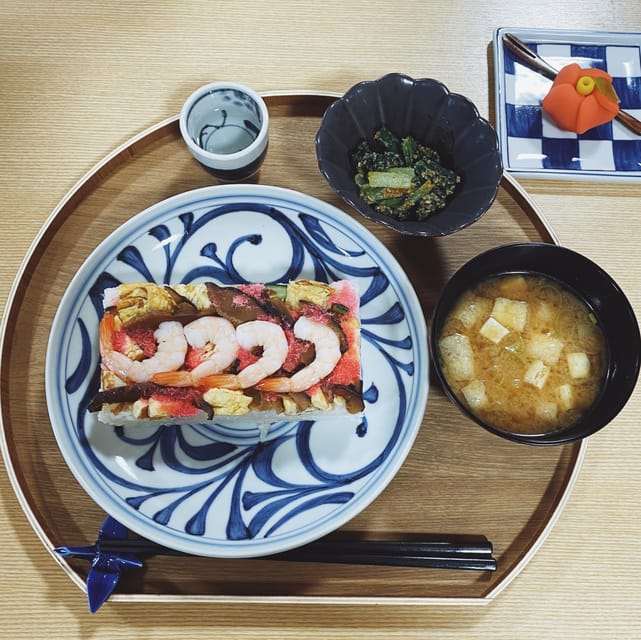
Once the cooking is finished, you can eat what you prepared and enjoy Narita’s local sake. This is an important part of the experience because the class is not only a demonstration. You make the dishes, then sit down to appreciate them as a meal.
The sake gives you a local connection without requiring a separate tasting tour. If you do not drink alcohol, the supplied information does not specify a nonalcoholic alternative, so you may want to confirm that point before booking. The meal itself includes pressed sushi, miso soup, salad, and nerikiri, with sake included as part of the experience.
The published feedback gives strong support to the food. The dishes were described as delicious, and the hosts were praised for making the experience relaxed and enjoyable. That combination matters. A cooking class can be informative yet awkward if the teaching feels stiff. Here, the available feedback points to a warm atmosphere where you can ask for help and enjoy conversation while working.
Satoko Hirano’s Personal Connection to Seasonal Food
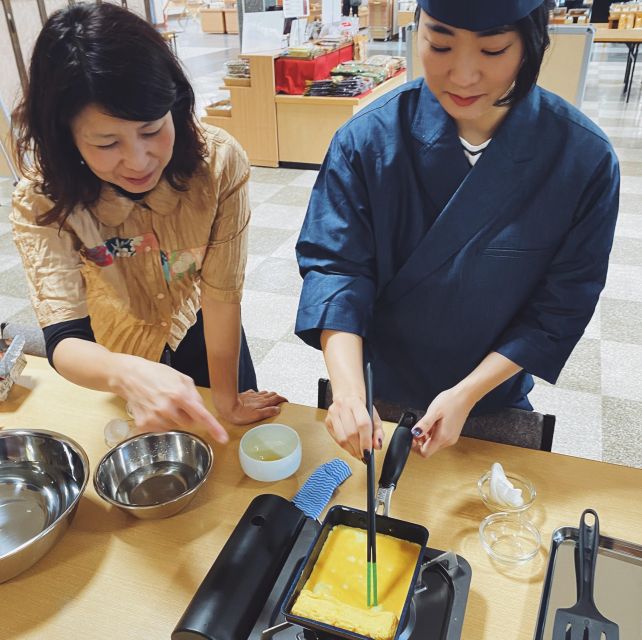
Satoko Hirano brings more than ten years of teaching experience to the class. She was born in Fukushima and now teaches Japanese cooking in Chiba, continuing a family approach shaped by her grandmother and mother.
Her childhood around her grandfather’s kimono shop also forms part of her story. Her grandmother cooked for the family every day while wearing kimono, using seasonal ingredients and traditional methods. That detail helps explain why Satoko focuses on food as part of daily life, not simply as a set of restaurant techniques.
She continues to visit nearby farmers and learn about local ingredients. For you, that means the discussion can include the produce and soup stock used in Japanese home cooking, along with the reasons seasonal food matters in Japan.
I find this more useful than a class built only around presentation. You leave with a better sense of how Japanese families think about the meal: what is available, how it is prepared, and how several modest dishes work together.
Is $98 a Fair Price?
At $98 per person, this class sits in the moderate to high range for a short cooking activity. The value depends on what you want from your Narita stop.
If you only want a quick snack or a single recipe, the price may feel high. You are paying for 2.5 hours, several dishes, a dessert, sake, the teacher’s time, and a guided introduction to Japanese home cooking. The class also includes access to a local setting close to the temple district.
I see the price as easier to justify if you value personal instruction and a complete meal. You are not just watching someone prepare food. You are involved from sushi rice through soup and side dishes, then finish with nerikiri and sake.
The location adds value for anyone already visiting Narita. Since the class is about five minutes from Narita Sando and Naritasan Shinshoji Temple, you can combine it with one of Narita’s most convenient cultural stops. You do not need to build an entirely separate day around it.
The small number of available ratings means I would avoid treating the perfect score as final proof for every kind of visitor. Still, the praise is consistent on the points that matter most here: kind hosts, clear help, approachable cooking, and tasty food.
Who Will Enjoy This Class Most?
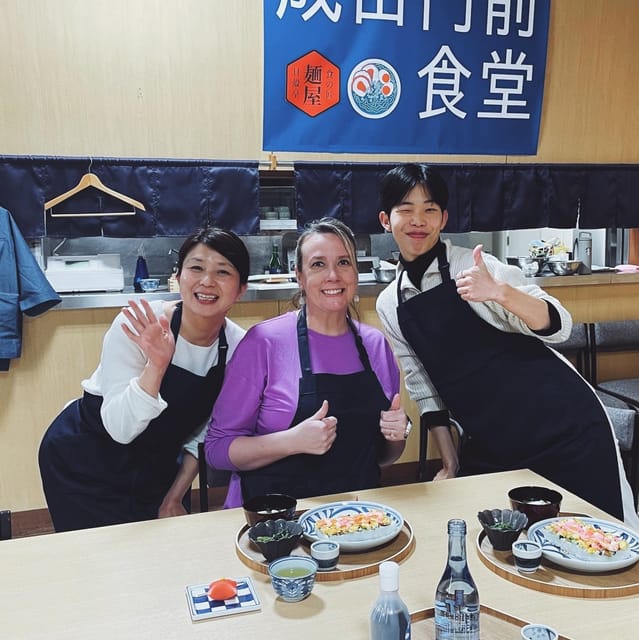
I would recommend this experience to you if you want a hands-on introduction to Japanese food without needing strong cooking skills. It suits solo visitors, couples, families, and anyone who prefers meeting a local teacher over sitting through a formal food demonstration.
It is also a good choice if you have a few hours in Narita and want to connect a temple visit with a distinctly Japanese activity. The class offers more cultural context than simply eating sushi in a restaurant.
You may want to choose something else if your main goal is advanced sushi technique, professional knife skills, or a long restaurant-style tasting. The focus here is Japanese home cooking, seasonal ingredients, basic soup stock, and a friendly meal.
The language setup is practical. The host or greeter can communicate in English or Japanese, so English-speaking visitors have a clear way to follow the lesson. Wheelchair access is also listed, though you should confirm any personal access requirements when booking.
Booking, Cancellation, and Meeting Advice
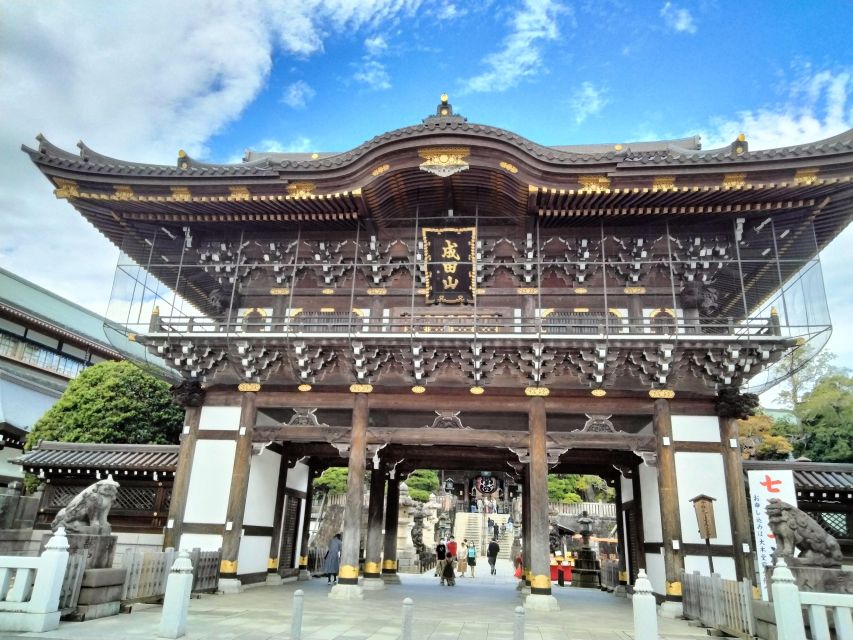
The meeting point is Nagomi no Yoneya Monzenten. When you arrive, go inside the shop and walk to the back. Your host will be waiting there, so you do not need to search for a separate building.
The class ends at the same meeting point. This makes the experience easy to pair with nearby sightseeing and avoids the uncertainty of being dropped somewhere unfamiliar.
You can reserve now and pay later, which helps if your Japan schedule is still changing. Free cancellation is available up to 24 hours before the activity for a full refund.
Most importantly, check the available start times before you commit. The duration is fixed at 2.5 hours, and the class works best when you can stay focused on the food rather than rush to your next train or airport connection.
Should You Book the Narita Cooking Experience?
Book it if you want a friendly, hands-on lesson in everyday Japanese cooking near Narita’s temple district. The combination of pressed sushi, soup stock, salad, nerikiri, local sake, and personal instruction gives you a full experience rather than a single recipe.
I especially like the human side of the class. Satoko Hirano’s family connection to seasonal cooking gives the food context, while the strong praise for Satoko and Reiko points to hosts who help beginners feel comfortable. If you have a few unhurried hours in Narita, this is a good way to make the stop more meaningful.
Skip it if you want a short activity, advanced culinary training, or a low-cost meal. For everyone else, the $98 price is reasonable when you count the food, instruction, dessert, sake, and convenient location.
FAQ
How long does the Japanese cooking experience last?
The experience lasts 2.5 hours. Starting times vary, so you should check availability when booking.
Where does the class meet?
The class meets at Nagomi no Yoneya Monzenten. Enter the store and go to the back, where the host will be waiting.
What dishes will I prepare?
You will prepare Japanese pressed sushi, miso soup, and Japanese salad. A traditional nerikiri confectionery is prepared for dessert.
Is sake included?
Yes. Narita’s local sake is included as part of the experience.
Is the class taught in English?
The host or greeter can communicate in English and Japanese.
Is the activity wheelchair accessible?
Yes, the activity is listed as wheelchair accessible.
Can I cancel for a full refund?
Yes. You can cancel up to 24 hours in advance for a full refund.
Just added around Japan
- Cooking Class: Make a Local Delicacy in a Japanese House★ 5.0 · 7 reviews
- Culinary Home Cooking with Grandmothers – Vegan Friendly★ 5.0 · 5 reviews
- Nagoya Super Market Tour & Home Cooking Class with a Local, Akiko★ 5.0 · 10 reviews
- Tokyo: Sushi Cooking Class with Sake Tasting★ 4.8 · 55 reviews
- Tokyo: Sushi roll and side dish cooking experience★ 5.0 · 2 reviews
- Tokyo: Sushi Making Experience & Japanese Cooking Class★ 5.0 · 2 reviews
- Tokyo: Gyoza Making from Scratch – Ultimate Cooking Class★ 5.0 · 2 reviews
- Tokyo: Night Cooking Class: 5 Home-Cooked Japanese Dishes★ 4.9 · 13 reviews
Japanese & Sushi Cooking Classes, compared.
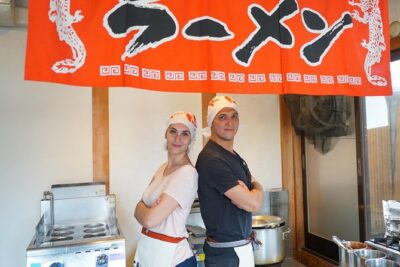
Ramen Cooking Class at Ramen Factory in Kyoto
Read our review →
Ramen & Gyoza Cooking Class in Tokyo with Local Supermarket Visit
Read our review →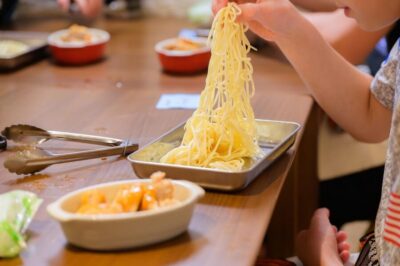
Ramen Cooking Class at a Ramen Factory with Souvenir
Read our review →
Sushi Making Osaka! Popular Sushi Class in Japan!
Read our review →
Tokyo Tsukiji Fish Market Tour and Sushi Making Lesson
Read our review →
Japanese Washoku Bento Small Group Cooking Class
Read our review →
Lists this class appears in