
REVIEW · SEOUL, SOUTH KOREA
Local Home Korean Cooking Class & Market Adventure in Seoul
Markets teach you to eat like a local. This Seoul experience pairs a guided walk through Mangwon Market with a hands-on class in a host’s home, so you see ingredients in context before cooking them. I especially like the market tasting and the relaxed, personal teaching style associated with Sarah and Junghee. The main consideration is timing: three and a half hours is a sizeable afternoon commitment, and the class may be less appealing if you prefer a quick food tour.
The $91 price is not just for recipes. It covers the market visit, street-food samples, four Korean dishes, a full Hanjeongsik-style meal with more than 10 side dishes, dessert, and a glass of makgeolli. I also like the small group limit of 10, though the home setting means this is a social cooking lesson rather than a polished restaurant demonstration.
Key points at a glance
- Mangwon Market comes first: Learn what Korean ingredients look like in daily use, sample street food, and pick up useful food vocabulary.
- Four dishes are made by hand: You might prepare bibimbap, dakgalbi, and other popular Korean dishes while learning practical cooking methods.
- The meal goes far beyond your own recipes: Your finished dishes arrive with more than 10 homemade side dishes, dessert, and makgeolli.
- The home setting changes the mood: This feels personal and informal, with conversation about Korean food, language, and everyday life.
- Small groups help beginners: The maximum group size is 10, giving the host room to correct techniques and answer questions.
- The meeting point is simple: Meet at Exit 2 of Mangwon Station, at 377-20 Mangwon-dong, Mapo-gu, and return there at the end.
Why this Seoul food experience works so well
Many cooking classes begin with ingredients already measured and waiting in bowls. This one begins earlier, at Mangwon Market. That choice gives you a useful frame for the meal: you first see Korean produce, herbs, snacks, and seasonings in a working neighborhood market, then use some of those ideas in the kitchen.
I like that order. It helps you understand that Korean food is not only about a few famous dishes such as bibimbap or Korean barbecue. It is also about small side dishes, fresh vegetables, sauces, rice, pickles, and the habit of setting many different flavors on the table at once.
The experience lasts about three hours and 30 minutes. That is long enough for a proper market walk, cooking instruction, and a sit-down meal without turning into a full-day commitment. Still, you should reserve a good part of your afternoon for it. This is not the right choice if you only want a 60-minute demonstration.
The setting is limited to a maximum of 10 people. That number matters in a home kitchen. You are more likely to get a useful correction on knife work, seasoning, or mixing than you would in a large class. It also gives the class a friendly social feel, especially if you are traveling with family, friends, or a small group of other visitors.
More Korean Cooking Classes in Seoul:
- Master Korean traditional cooking with a Kimchi chef
★ 5.0 · 385 reviews - Seoul: Korean Cooking Class at a Local Home and Market Tour
★ 5.0 · 348 reviews - Seoul: Korean Cooking at Seoul Cooking Club!
★ 5.0 · 311 reviews
Starting at Mangwon Station and entering the market
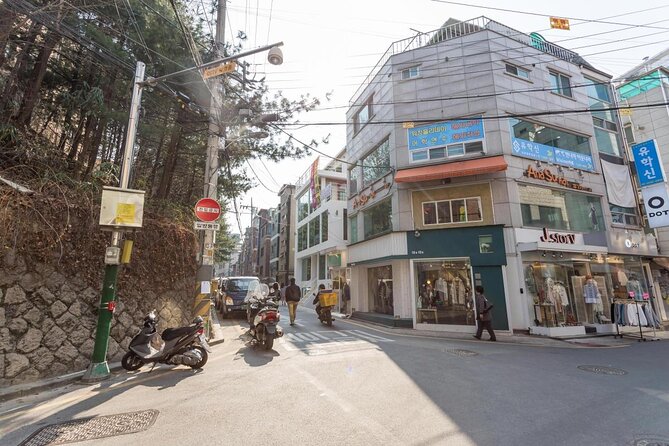
The meeting point is Mangwon Station Exit 2. You begin at 377-20 Mangwon-dong, in Seoul’s Mapo-gu district, and the activity ends back at the same meeting point.
From there, your host leads you through the local market. The point is not simply to walk past stalls while someone recites food names. You get an introduction to typical Korean ingredients, herbs, spices, produce, and ready-to-eat snacks. The exact products can change with the season, but the focus remains on helping you recognize what you will later encounter in Korean meals.
This is also the part that makes the class useful for the rest of your Seoul visit. You may learn how certain ingredients are used, how local food is described, and how to identify things you would otherwise pass without understanding. One especially memorable food lesson concerns spring onions being used instead of chives in some Korean cooking. Small details like this make the market walk more than a photo stop.
Street-food tasting is included. Korean markets are a good place to try foods in small portions, and the tasting gives you a chance to sample without ordering a full meal. A sweet kwabaeggi, a twisted Korean doughnut, is one example mentioned by class participants. A cold honeydew-flavored popsicle also made a welcome impression during hot weather.
You may be invited to order or say the name of a snack in Korean. That can feel slightly outside your comfort zone, but it is exactly the sort of low-pressure practice that helps you use a few words during the rest of your trip. The hosts also teach basic Korean phrases along the way.
The market has a practical advantage: you learn from food that is being sold and eaten locally, not from a staged display made only for class participants. The tradeoff is that markets can be busy and active. If you want a quiet, highly scripted tour, this may feel more spontaneous than expected.
Moving from market stalls to a local home
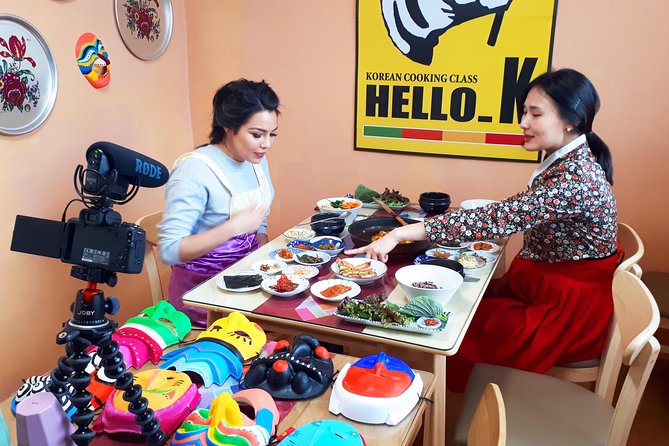
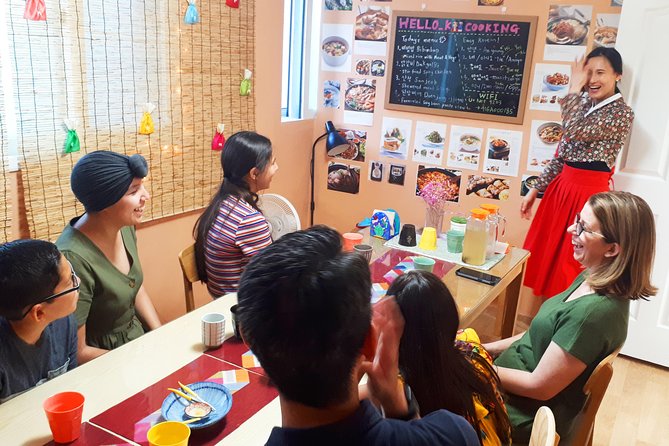
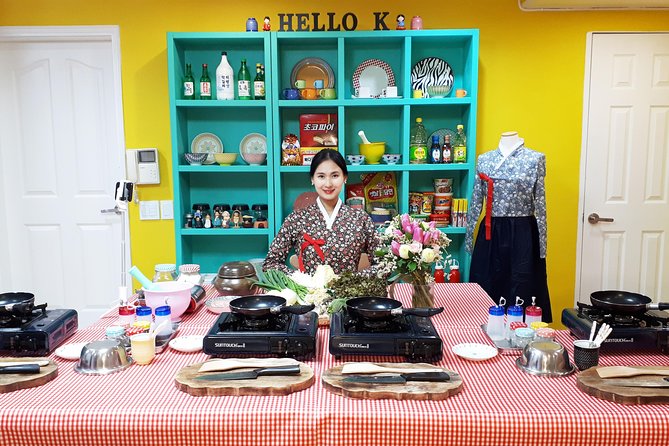
After the market walk, you head to the host’s home for the cooking portion. This is one of the experience’s defining features. You are not working in a hotel conference room or a restaurant training kitchen. You cook in a real home, with the host explaining food and family customs in a more personal setting.
The atmosphere is designed to be easygoing. Sarah is described as warm, lively, and funny, while Junghee is praised for combining clear instruction with plenty of humor. The host also shares personal stories and information about life in Seoul, so the class becomes a conversation about culture as well as a lesson in cooking.
English is a strong point. Sarah and Junghee are both described as speaking excellent English, which matters when a recipe depends on small details. You can ask why a particular ingredient is used, how a dish changes from one region of Korea to another, or what a Korean cooking term means.
This is also a good fit for people who do not cook often. The instruction is presented as approachable rather than technical, and the recipes are described as manageable enough to try at home. You will still be handling food and participating actively, so do not expect to sit back and watch the host do everything.
Cooking four Korean dishes by hand
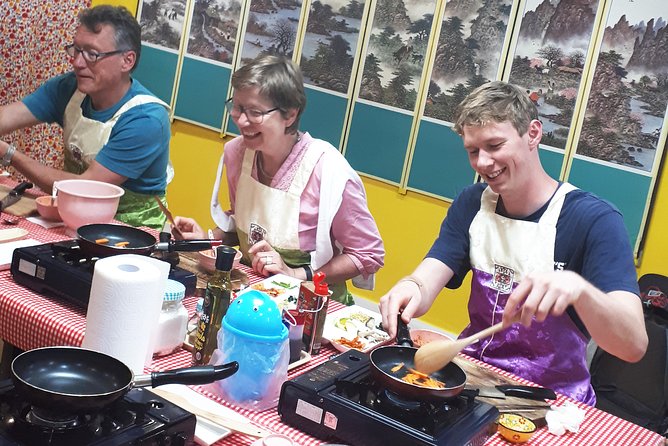
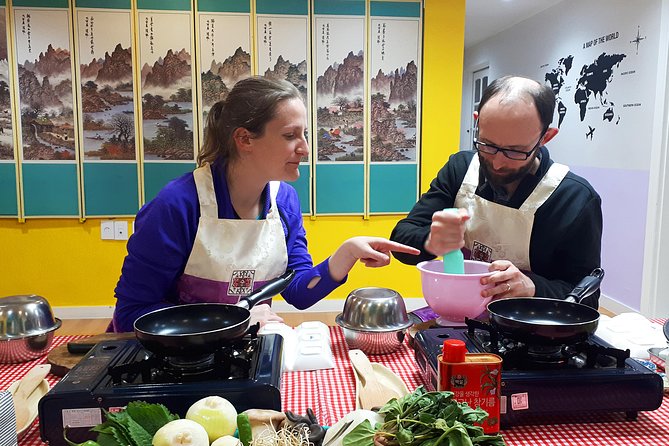
The class is fully hands-on and includes four Korean dishes. Bibimbap and dakgalbi are given as examples, though the precise menu can vary. Bibimbap introduces the idea of combining rice with vegetables, seasoning, and other toppings. Dakgalbi gives you a chance to work with a different style of Korean comfort food.
The value is in the techniques rather than in collecting four recipes. You learn how Korean dishes are assembled, how sauces are used, and how ingredients work together. The host also shares small practical tips that can make a difference when you recreate the food at home.
The instruction appears to be paced for a mixed group. Experienced cooks can ask questions and pick up regional or cultural details, while beginners can follow the steps without needing advanced skills. The hosts are also praised for making the cooking feel simple and relaxed.
There is a social side to the work. You meet people from different places, cook beside them, and eat together afterward. Families with older children have enjoyed the format, including groups with teenagers and adult children. Couples, friends on a girls’ trip, and solo participants can also fit comfortably into the class.
One useful extra is the recipes. The class sends copies afterward, which means the experience does not end when you leave the home. If you enjoy Korean food but have never known where to begin, those recipes give you a realistic starting point.
More Cooking Classes with a Market Tour in Seoul:
- Seoul: Authentic Korean Cooking Class and Market Tour
★ 5.0 · 6 reviews - Hanoi Cooking Class: Culture, Local Market & Meaning CSR Impact
★ 5.0 · 5,147 reviews - 5 Traditional Dishes Hanoi Cooking Class with Market Trip
★ 5.0 · 4,890 reviews - Cooking Class and Lunch at a Tuscan Farmhouse with Local Market Tour from Florence
★ 5.0 · 4,831 reviews
Sitting down to a Hanjeongsik-style feast
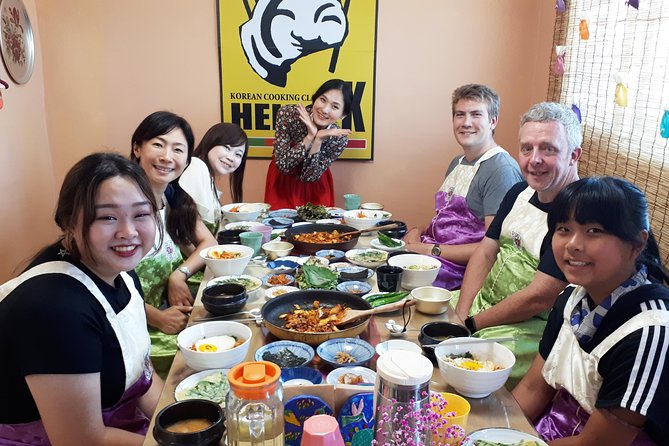
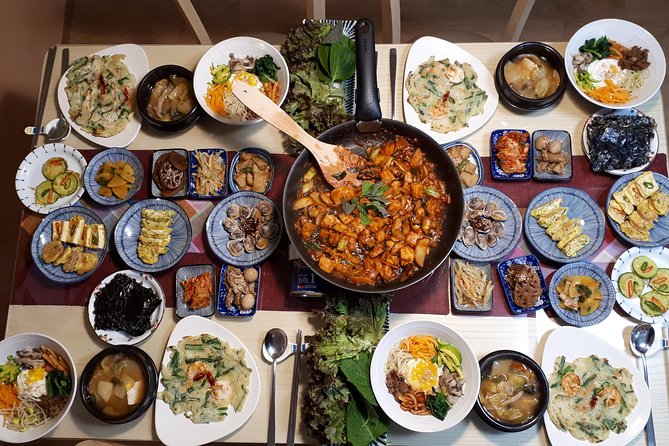
The meal is more generous than a standard cooking class tasting. After preparing your dishes, you sit down to a traditional Hanjeongsik-style dinner with more than 10 additional side dishes, dessert, and a glass of makgeolli, a Korean rice wine.
This format helps explain an important part of Korean dining. The main dish is only one piece of the meal. Side dishes add different textures, colors, temperatures, and flavors, and they turn a simple bowl of rice or a cooked entrée into a full table.
Your homemade dishes remain central, but the extra sides give you a wider sample of Korean home cooking. For someone new to Korean food, this is a practical way to compare flavors without ordering a large number of separate dishes in a restaurant.
The meal is also where the home setting pays off. You can continue talking with the host, ask about ingredients, and hear more about Korean customs. The mood is less formal than a restaurant meal and more personal than a tasting counter.
Makgeolli is included, but you should remember that it is an alcoholic drink. The supplied information does not give details about substitutions or other beverage choices, so ask the provider directly if that matters to you.
What the $91 price includes
At $91 per person, this is not the least expensive way to eat Korean food in Seoul. You can find a market snack or a restaurant meal for far less. The comparison is not quite fair, though, because this price covers several connected experiences.
You are paying for:
- A guided market visit
- Street-food samples
- Instruction in four Korean dishes
- Hands-on cooking in a local home
- A Hanjeongsik-style dinner
- More than 10 additional side dishes
- Dessert
- A glass of makgeolli
- A small-group format capped at 10 people
- Recipes to use later, according to the class experience
That makes the value strongest for anyone who wants both food and cultural context. If you already plan to book a separate market tour and a separate cooking class, this combines the two. It also replaces an evening meal, though the exact amount of food you receive will naturally depend on the day’s dishes.
The value is weaker if you are mainly looking for a cheap meal or a quick introduction. The experience asks for several hours and active participation. You should book it because you want to understand and prepare Korean food, not simply because you need lunch.
Who should book, and who should think twice
I would recommend this class to couples, families with older children, food-focused visitors, and anyone who wants an activity with real conversation. It is especially useful early in a Seoul visit, since the market walk and food vocabulary can help you make sense of later restaurant menus and market stalls.
It also suits people who normally avoid cooking classes. The tone is friendly, the recipes are presented as practical, and the hosts bring humor into the lesson. You do not need to be an expert cook to take part.
Families should note that the experience has worked well for children ranging from older teens to adults. The activity is not described as a children’s class, so very young children may not get as much from the pace or food focus.
You may want to skip it if you dislike group activities, do not want to enter a private home, or prefer a tightly timed sightseeing tour. The small group helps, but the experience still depends on conversation and shared participation.
Food restrictions should be discussed before booking. The supplied details do not specify vegetarian, vegan, allergy, or other dietary arrangements. Do not assume the menu can be changed without confirmation.
Meeting details and cancellation advice
You meet at Mangwon Station Exit 2, at 377-20 Mangwon-dong, Mapo-gu, Seoul. The activity returns to the meeting point, and the location is near public transportation.
Confirmation is provided at booking, and the ticket is mobile. The maximum group size is 10 people. You can cancel for a full refund if you do so at least 24 hours before the start time. Cancellations or changes made within 24 hours are not accepted for a refund, with cut-off times based on Seoul local time.
Should you book this Mangwon cooking class?
Book it if you want more than a recipe lesson. The best part is the progression from market ingredients to home cooking to a full Korean table. You taste, ask questions, cook, and then see how your dishes fit beside many different side dishes.
The $91 cost is fair for the amount included, particularly if you value a small group, an English-speaking host, recipes to take home, and a meal that replaces a separate restaurant visit. I would choose this for a relaxed afternoon of food and conversation, not for a fast sightseeing stop.
If the idea of learning a few Korean phrases, trying market snacks, and cooking in a local home appeals to you, this is one of the more useful food activities to add to a Seoul visit. Just allow the full three and a half hours, check dietary needs in advance, and arrive ready to participate.
FAQ
How long does the Korean cooking class and market experience last?
The activity lasts approximately three hours and 30 minutes.
Where do I meet the host?
The meeting point is Mangwon Station Exit 2, at 377-20 Mangwon-dong, Mapo-gu, Seoul, South Korea.
Where does the experience end?
The activity ends back at the meeting point.
How many people can join the class?
The maximum group size is 10 people.
What does the experience include?
It includes a guided market visit, street-food tasting, hands-on preparation of four Korean dishes, a Hanjeongsik-style meal with more than 10 side dishes, dessert, and a glass of makgeolli.
Which Korean dishes might I prepare?
Examples include bibimbap and dakgalbi. The exact selection of four dishes is not specified.
Is the experience available as a mobile ticket?
Yes. A mobile ticket is available, and booking confirmation is provided at the time of reservation.
Can I cancel for a full refund?
Yes. You can receive a full refund if you cancel at least 24 hours before the experience start time. Cancellations or changes made less than 24 hours before the start time are not accepted for a refund.
More Home Cooking Classes in Seoul
- Khmer Cooking Class at a Local’s Home in Krong Siem Reap
★ 5.0 · 2,731 reviews - Marrakech: Moroccan Cooking Class with a Local Family
★ 4.9 · 668 reviews - Mexican Cooking from Scratch in a Local Home in Tulum
★ 5.0 · 585 reviews - Pastamama, Home Cooking Classes at Grace’s Home
★ 5.0 · 521 reviews
Just added around Seoul
- Seoul: Korean Kimchi Cooking Class in the Heart of the City★ 5.0 · 3 reviews
- Seoul: Premium Korean Feast Cooking Class★ 5.0 · 3 reviews
- Seoul: Kimchi Dishes Cooking Class with Wine Pairing★ 4.7 · 38 reviews
- Seoul: Korean Cooking Class with Local Grocery Shopping★ 5.0 · 13 reviews
- Seoul: Korean Home Visit, Cooking & Cultural Experience★ 5.0 · 2 reviews
- Seoul: Cooking Class and Tour with Michelin-Trained Chef★ 5.0 · 11 reviews
- Seoul: Authentic Korean Cooking Class and Market Tour★ 5.0 · 6 reviews
- (Seoul) Korean Cooking Class with a Professional Chef★ 5.0 · 14 reviews
Cooking Classes with a Market Tour, compared.
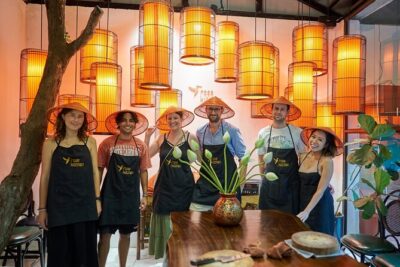
Hanoi Cooking Class: Culture, Local Market & Meaning CSR Impact
Read our review →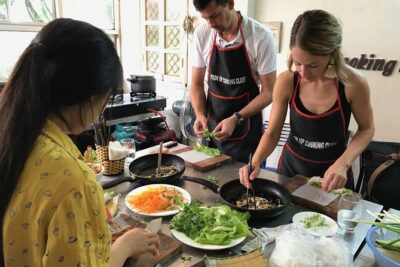
5 Traditional Dishes Hanoi Cooking Class with Market Trip
Read our review →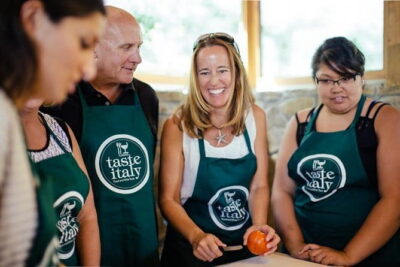
Cooking Class and Lunch at a Tuscan Farmhouse with Local Market Tour from Florence
Read our review →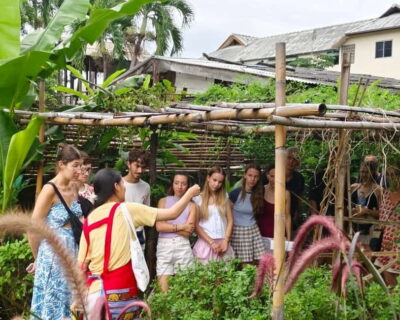
Cooking Class, Market & Thai Herbs Garden Tour
Read our review →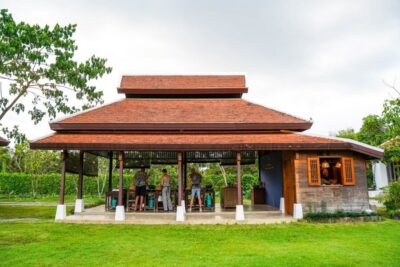
Authentic Cooking Class with Market & Farm Visit
Read our review →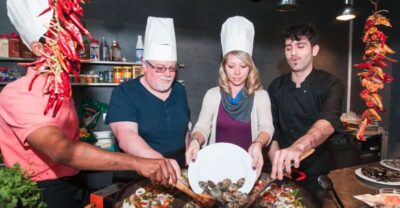
Paella Cooking Experience & Boqueria Market Tour
Read our review →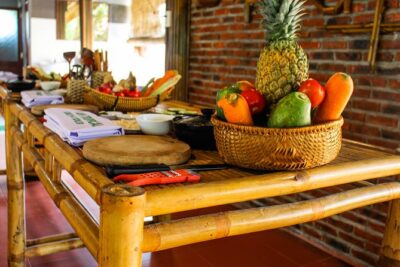
Cooking Class Hoi An:Local Market, Basket Boat, Fishing & Cooking
Read our review →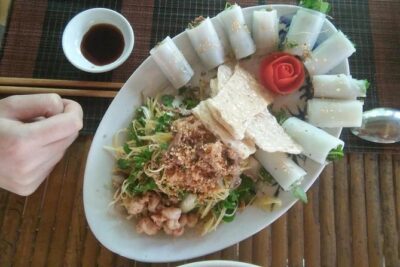
Hoi An Cooking Class(Market,BasketBoat Crabfishing&Cooking Class)
Read our review →Lists this class appears in