
REVIEW · GYEONGGI PROVINCE, SOUTH KOREA
Seoul: Korean Cooking Class at a Local Home and Market Tour
Korean food makes a great doorway into local life. This 3.5-hour experience pairs a walk through a less touristy Seoul market with hands-on cooking in a local home, giving you much more than a restaurant meal. I especially like the market visit with street-food tasting and the chance to cook four familiar Korean dishes yourself. The small group, limited to 10 people, also leaves room for questions and conversation.
The food is a major strength. You prepare bibimbap, dakgalbi, haemul-pajeon, and doenjang-jjigae, then sit down to a traditional Hanjeongsik meal with more than 10 side dishes. The main consideration is practical: you must reach Mangwon Station on your own, and the local home has no elevator.
Key points at a glance
- Mangwon Station meeting point: Meet your English or Korean-speaking guide outside exit 2, then walk to a local market.
- Four dishes in one class: Make bibimbap, stir-fried chicken, seafood and green onion pancake, and fermented soybean paste stew.
- Street food before cooking: Shop for fresh ingredients and sample local market food along the way.
- Home dining with Hanjeongsik: Eat your creations with rice, seasonal fruit, rice wine, and more than 10 side dishes.
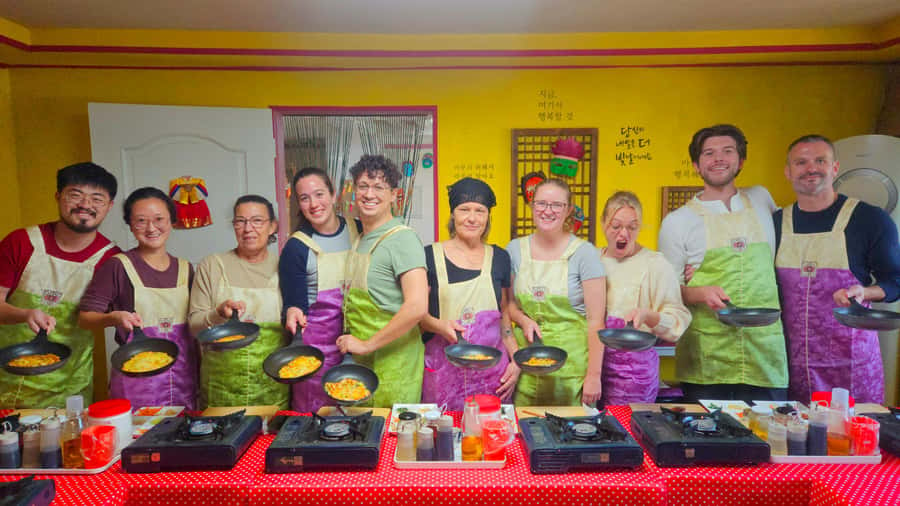
- Small, social format: Groups are limited to 10, and past sessions have been praised for friendly hosts and clear instruction.
- Extra cultural touches: Learn a few Korean phrases and try on a traditional Tal mask associated with Korean heritage festivals.
Why this Seoul class feels different
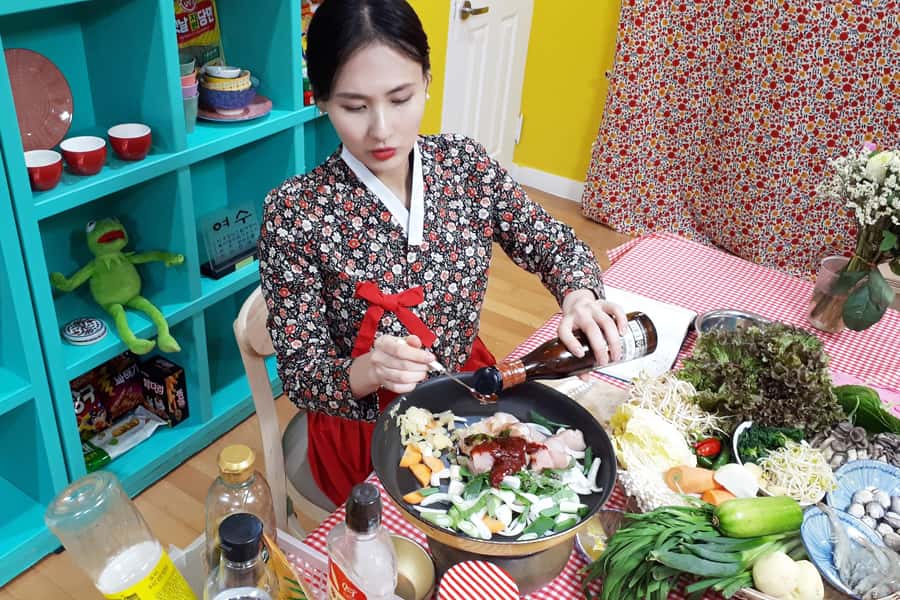
Many food activities in Seoul keep you at a restaurant table. This one begins with shopping. That simple change matters because you see the vegetables, seafood, sauces, and other ingredients before they appear in a finished dish.
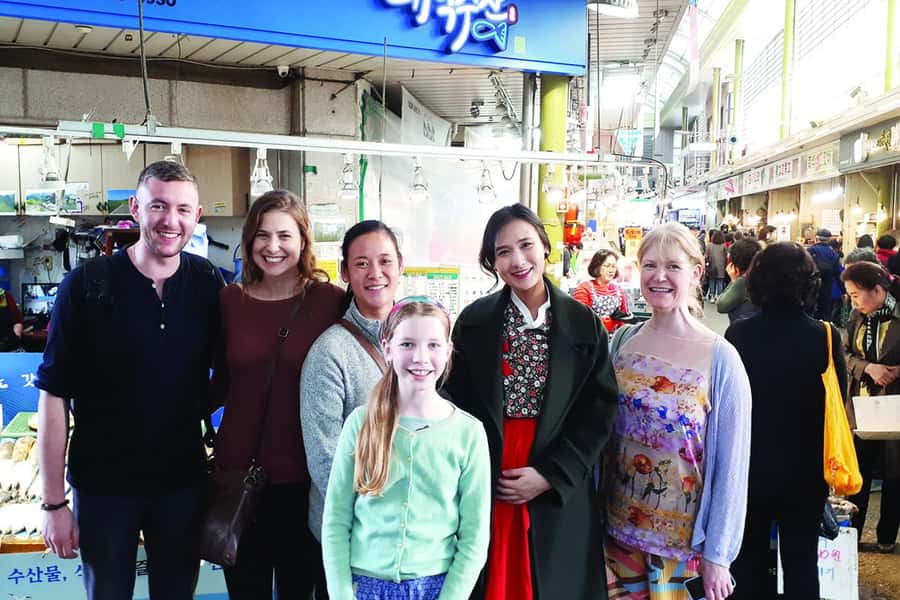
You also get a look at everyday food culture in the Mangwon and World Cup market area. The market is described as popular but less touristy, so you can expect a more local setting than the well-known sightseeing districts. The purpose is not simply to take photos. Your guide helps you identify ingredients needed for the class and explains what you are seeing.
I like this approach because Korean cooking can look mysterious when you first encounter it. A table full of small dishes, red sauces, fermented pastes, and unfamiliar produce can be hard to decode. Seeing the ingredients at the market gives you a useful frame of reference before you start cooking.
The other strong point is the home setting. You are not just following a recipe in a commercial studio. You enter a local home, have a welcome drink, learn a few Korean phrases, and share a meal prepared with your group. That makes the class feel personal and social, especially if you are traveling alone or want an activity that brings people together.
More Korean Cooking Classes in Seoul:
- Local Home Korean Cooking Class & Market Adventure in Seoul
★ 5.0 · 1,024 reviews - Master Korean traditional cooking with a Kimchi chef
★ 5.0 · 385 reviews - Seoul: Korean Cooking at Seoul Cooking Club!
★ 5.0 · 311 reviews
Starting at Mangwon Station and the local market
The meeting point is outside Mangwon Station at exit 2. There is no hotel pickup or drop-off, so you need to plan your route carefully and arrive ready to walk.
The first part of the experience takes you through the market to buy ingredients for the cooking session. Your guide points out foods and explains their role in Korean cooking. You also get to sample street food, which gives you an immediate taste of the market before you begin working in the kitchen.
This market stop is one of the best reasons to choose the experience. You get context that a cooking class alone cannot provide. A recipe may tell you to use fermented soybean paste, green onions, seafood, or vegetables, but a market walk shows how those ingredients fit into daily food shopping.
Past participants particularly enjoyed the guide’s humor and explanations during this section. Sarah and Junghee are among the hosts praised for making the walk informative without turning it into a lecture. That balance is important. You want enough information to understand Korean food, but you also want time to look around and enjoy the atmosphere.
You should keep your expectations realistic. This is a short market visit attached to a cooking class, not a full market tour. The focus is on ingredients and tasting, so do not book it expecting hours of independent browsing or a long list of food stops.
Four Korean dishes, four different cooking lessons
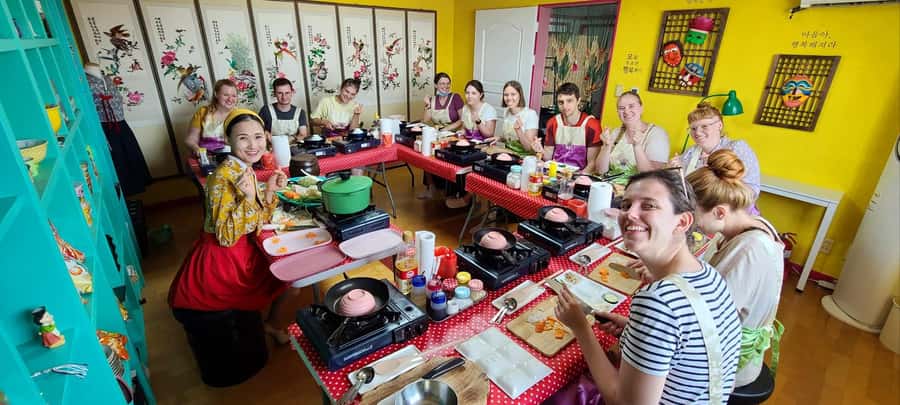
After the market, you head to the local home for the cooking portion. Each participant has a cooking space and works through the dishes with guidance from the chef-host. That setup is helpful for beginners because you are not simply watching someone else prepare everything.
The menu covers several important parts of Korean cooking:
- Bibimbap: Mixed rice with meat and vegetables. This teaches you how separate ingredients come together in one bowl and gives you a flexible dish to recreate at home.
- Dakgalbi: Stir-fried chicken with Korean flavors. It adds a hearty main dish to the meal and gives you practice with cooking meat in a pan.
- Haemul-pajeon: A seafood and green onion pancake. Flipping the pancake is one of the more playful parts of the class, and it gives you a practical lesson in texture and timing.
- Doenjang-jjigae: Fermented soybean paste stew. This introduces you to a classic Korean comfort food with a strong, savory flavor.
The variety is well judged. You are not making four versions of the same dish. Instead, you work with rice, meat, seafood, vegetables, pancakes, and stew. For someone new to Korean cooking, that range helps explain why a Korean meal often feels like a collection of contrasting textures and flavors.
The instruction appears suited to cooks at different levels. People with little or no cooking-class experience have found the steps easy to follow, while more confident home cooks can ask about ingredients and methods. Sarah, one of the hosts, is repeatedly praised for explaining each stage clearly and giving everyone a chance to participate.
You should contact the host before booking if you have food allergies or dietary restrictions. The experience includes seafood, meat, fermented soybean paste, and other ingredients, and the supplied information does not promise substitutions.
The Hanjeongsik meal is the real payoff
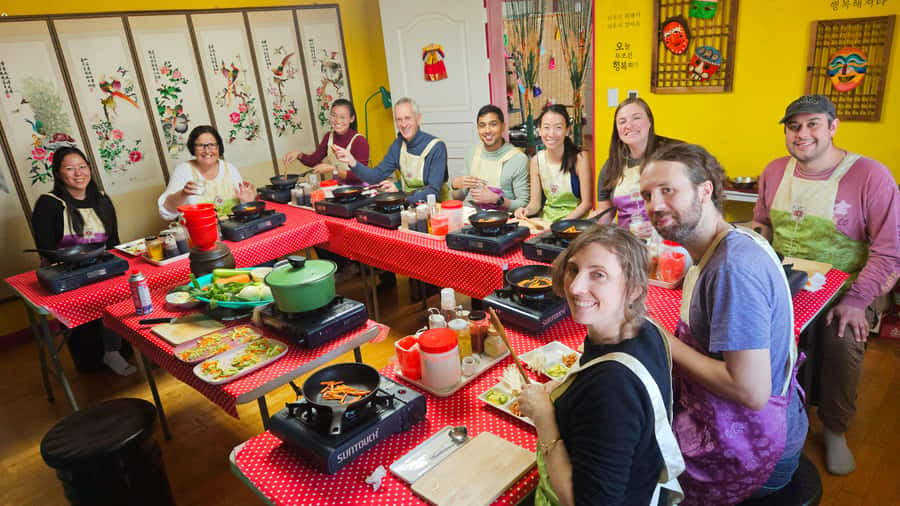
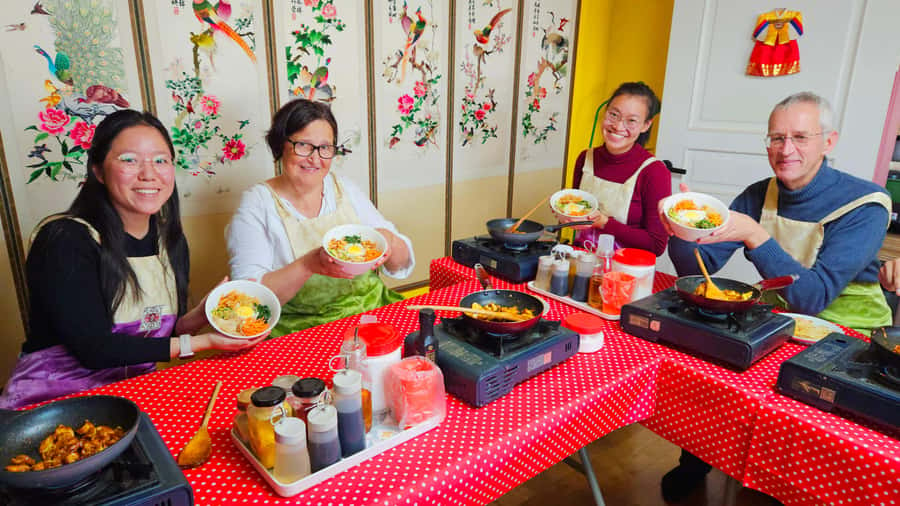
Once the cooking is finished, you sit down and eat. Your meal includes the dishes you prepared, along with rice, seasonal fruit, rice wine, and more than 10 side dishes supplied by the host.
This is where the class connects cooking with Korean dining customs. Hanjeongsik is a traditional course-style meal built around a generous spread of dishes. The small plates are not just decoration. They show how Korean meals often offer several flavors at once, from salty and spicy to fresh, fermented, sweet, and savory.
I like that the meal is not limited to the four dishes you make. You get to compare your own cooking with side dishes prepared by the local host, and you leave with a better sense of how a full Korean table works.
The meal also gives the group time to talk. Many of the strongest comments about the experience focus on the welcoming hosts, the laughter, and the relaxed conversation. That social element is a key part of the value. If you want a quiet demonstration where you simply take notes, this may feel more interactive than expected. If you enjoy meeting people over food, it is a strong fit.
Rice wine is included, along with water and a welcome tea or drink. If you do not drink alcohol, the class still includes plenty of food and nonalcoholic beverages, but you may want to tell the host in advance.
More Cooking Classes with a Market Tour in Seoul:
- Seoul: Authentic Korean Cooking Class and Market Tour
★ 5.0 · 6 reviews - Hanoi Cooking Class: Culture, Local Market & Meaning CSR Impact
★ 5.0 · 5,147 reviews - 5 Traditional Dishes Hanoi Cooking Class with Market Trip
★ 5.0 · 4,890 reviews - Cooking Class and Lunch at a Tuscan Farmhouse with Local Market Tour from Florence
★ 5.0 · 4,831 reviews
Korean phrases, a Tal mask, and small cultural details
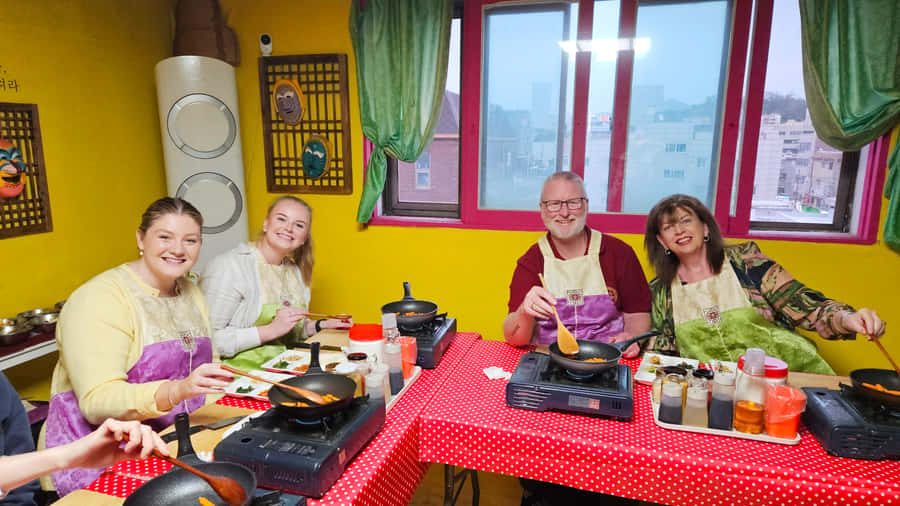
The cooking is the main event, but the extra cultural elements help broaden the experience. You learn a few Korean phrases while enjoying the welcome drink. Even a small language lesson can make your time in Korea more engaging, especially when you use a greeting or thank-you during the rest of your trip.
You also get to try on an artful Tal mask. These masks are associated with Korean heritage festivals, so the activity adds a visual connection to traditional culture without taking over the class.
These details are brief rather than a full cultural workshop. That is a good thing for a 3.5-hour activity. The day has a clear rhythm: market, cooking, eating, and a few cultural touches. Nothing needs to carry the entire experience by itself.
Photo and video service is included. That is useful because your hands may be covered in ingredients when the best moments happen. Recipes are also provided, and one past participant appreciated receiving them through WhatsApp. Another person would have preferred a small printed cookbook, so you may need to save the digital recipes carefully if you want to use them later.
The hosts make or break a home cooking class
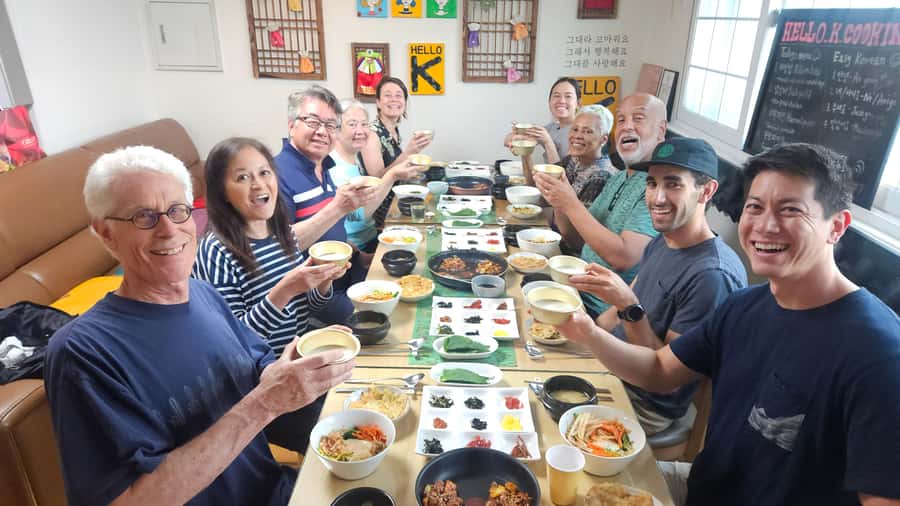
A cooking class held in someone’s home depends heavily on the host. Here, the human side receives especially strong praise. Sarah is described as energetic, organized, warm, and comfortable speaking English. Junghee is praised for being funny, welcoming, and good at making people feel included.
That matters more than polished equipment or a fancy room. A host who can explain unfamiliar ingredients, keep the group moving, and help nervous cooks is central to the experience.
The group size helps. With no more than 10 participants, the class remains small enough for personal help. Each person gets hands-on cooking time rather than standing at the back of a demonstration.
Still, a small group does not mean a private class. You will share the room and meal with other participants, and the mood depends partly on the mix of people who attend. The past feedback points to plenty of conversation and humor, but anyone seeking a completely private or quiet lesson should consider that before booking.
Is $98 a fair price?
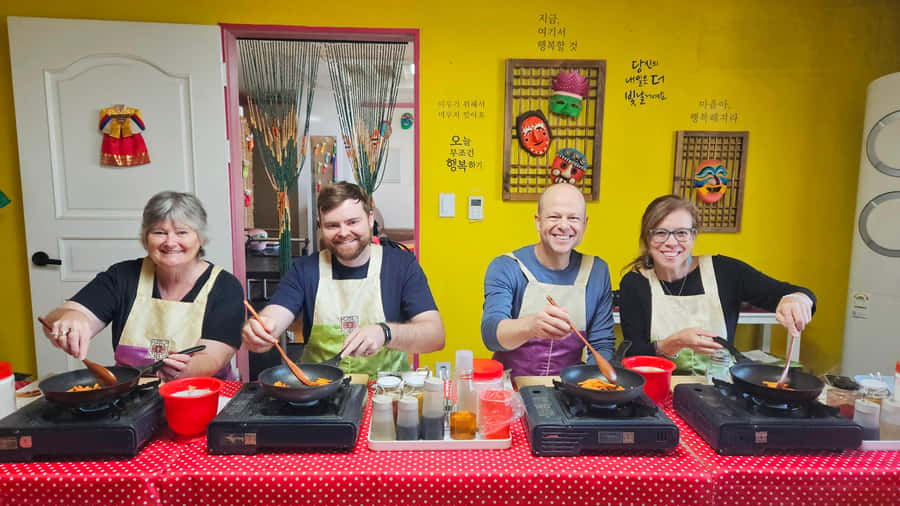
At $98 per person, this is not the cheapest food activity in Seoul. The value depends on what you want from your afternoon.
You are paying for a market visit, street-food samples, a professional cooking class, all ingredients and equipment, a full meal, side dishes, rice wine, a welcome drink, recipes, and photo or video service. You also get the time and local setting that make the class feel more personal than a standard restaurant meal.
The price looks more reasonable if you would otherwise book separate activities for market food and Korean cooking. It is also a good choice for people who value instruction and cultural context, not just a meal.
It may feel expensive if your main goal is simply to eat Korean food. Seoul has many less costly ways to do that. You should book this for the experience of learning, cooking, and sharing food in a local home.
Timing, access, and who should book
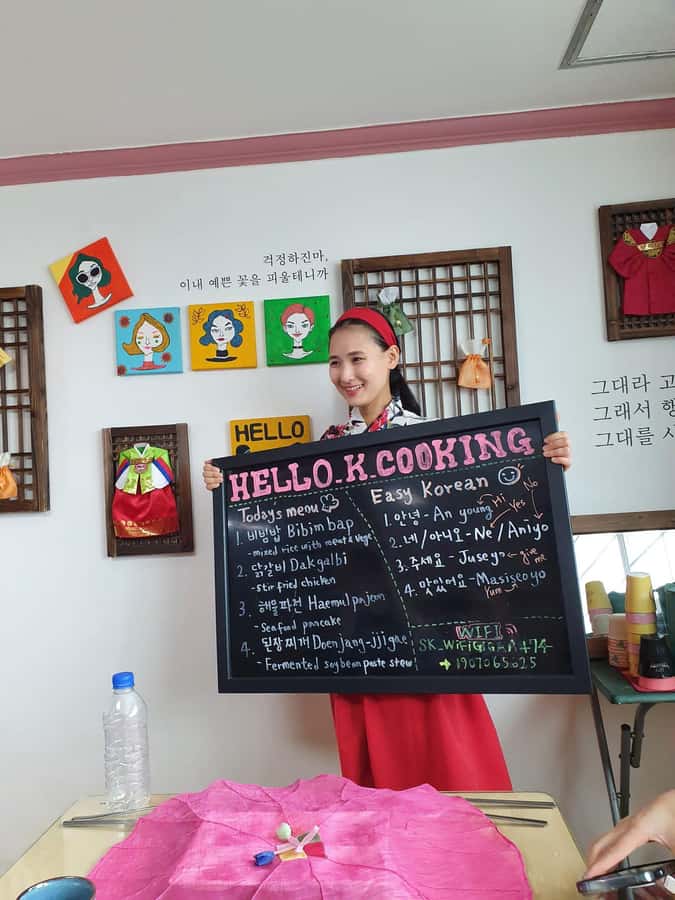
The activity lasts 3.5 hours, with starting times based on availability. That makes it easy to fit into a half-day, but you should avoid scheduling another fixed activity too tightly afterward. Market walking, cooking, and a sit-down meal all need their allotted time.
The home has no elevator, so you must be comfortable using stairs. This is an important consideration for anyone with mobility limits. The meeting point is at Mangwon Station, and you are responsible for getting there and returning afterward.
I would recommend this class to:
- First-time visitors who want food and culture in one activity
- Couples and friends who enjoy hands-on experiences
- Solo visitors looking for a friendly small-group setting
- Beginner cooks who want clear guidance
- Home cooks who want recipes they can try after returning home
- Anyone curious about Korean market ingredients and traditional meal structure
I would be more cautious if you have strict dietary restrictions, dislike group activities, or want a class centered on one specific dish. The menu is fixed around four Korean dishes, and seafood and meat are part of the plan.
Should you book the Korean cooking class?
Yes, if you want to do more than eat Korean food. The strongest part of this experience is the complete sequence: see ingredients at the market, taste street food, prepare dishes with help from a local chef, then sit down to a Hanjeongsik-style meal.
The hosts are a major reason to choose it. Sarah and Junghee are praised for warmth, humor, clear English, and making beginners feel comfortable. The small group size also gives you a better chance to cook rather than watch.
Before booking, confirm that you can manage the stairs, reach Mangwon Station independently, and eat the planned menu. If those points work for you, $98 buys a substantial half-day experience with food, instruction, recipes, and a personal look at Korean home dining.
FAQ
Where does the cooking class begin?
Meet your guide outside exit 2 of Mangwon Station in Seoul.
How long does the experience last?
The activity lasts 3.5 hours. Starting times depend on availability.
What dishes will I cook?
You will prepare bibimbap, dakgalbi, haemul-pajeon, and doenjang-jjigae.
Is the market visit included?
Yes. The experience includes a local market tour, ingredient shopping, and samples of street food.
Is the meal included after cooking?
Yes. You eat the dishes you prepare with rice, seasonal fruit, rice wine, and more than 10 side dishes provided by the local host.
Is hotel pickup available?
No. You must make your own way to and from the Mangwon Station meeting point.
Is the activity suitable for people with dietary restrictions?
You should contact the local host before booking to discuss allergies or dietary restrictions. The provided information does not guarantee ingredient substitutions.
More Home Cooking Classes in Seoul
- Khmer Cooking Class at a Local’s Home in Krong Siem Reap
★ 5.0 · 2,731 reviews - Marrakech: Moroccan Cooking Class with a Local Family
★ 4.9 · 668 reviews - Mexican Cooking from Scratch in a Local Home in Tulum
★ 5.0 · 585 reviews - Pastamama, Home Cooking Classes at Grace’s Home
★ 5.0 · 521 reviews
Just added around Seoul
- Seoul: Korean Kimchi Cooking Class in the Heart of the City★ 5.0 · 3 reviews
- Seoul: Premium Korean Feast Cooking Class★ 5.0 · 3 reviews
- Seoul: Kimchi Dishes Cooking Class with Wine Pairing★ 4.7 · 38 reviews
- Seoul: Korean Cooking Class with Local Grocery Shopping★ 5.0 · 13 reviews
- Seoul: Korean Home Visit, Cooking & Cultural Experience★ 5.0 · 2 reviews
- (Seoul) Korean Cooking Class with a Professional Chef★ 5.0 · 14 reviews
- Seoul: Cooking Class and Tour with Michelin-Trained Chef★ 5.0 · 11 reviews
- Seoul: Authentic Korean Cooking Class and Market Tour★ 5.0 · 6 reviews
Cooking Classes with a Market Tour, compared.
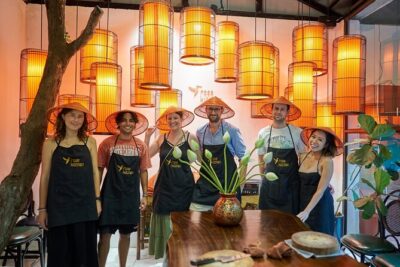
Hanoi Cooking Class: Culture, Local Market & Meaning CSR Impact
Read our review →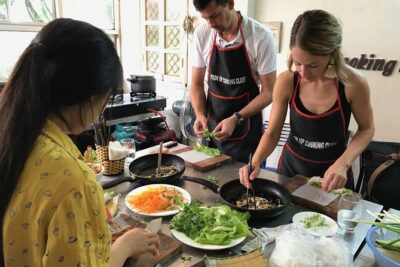
5 Traditional Dishes Hanoi Cooking Class with Market Trip
Read our review →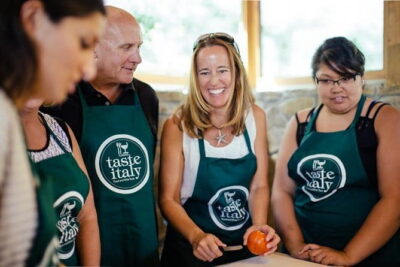
Cooking Class and Lunch at a Tuscan Farmhouse with Local Market Tour from Florence
Read our review →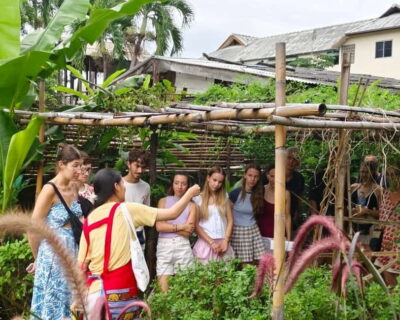
Cooking Class, Market & Thai Herbs Garden Tour
Read our review →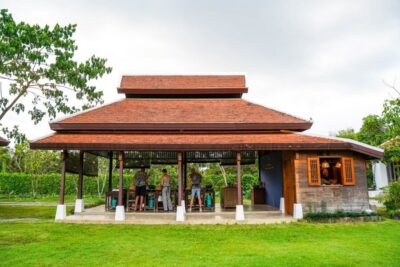
Authentic Cooking Class with Market & Farm Visit
Read our review →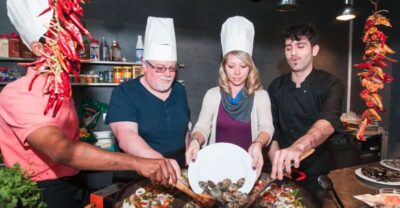
Paella Cooking Experience & Boqueria Market Tour
Read our review →
Cooking Class Hoi An:Local Market, Basket Boat, Fishing & Cooking
Read our review →
Hoi An Cooking Class(Market,BasketBoat Crabfishing&Cooking Class)
Read our review →Lists this class appears in