REVIEW · PARIS, FRANCE
Croissant Baking Class, Mastering the Art with a Pastry Chef
Paris tastes better warm from the oven. This three-hour class at Studio Pâtisserie turns one of France’s most famous pastries into a hands-on lesson, with dough to roll, butter to fold, and croissants to shape. I especially like the small maximum of eight people and the patient, good-humored teaching style praised by many participants. The main consideration is that croissant dough takes real effort, so you need to be at least 17 and comfortable kneading.
I also like that this is not just a demonstration. You work through the key steps yourself, learn why flour and butter matter, and leave with practical measurements and recipes to use at home. Chefs Leo and Maria are repeatedly praised for clear instruction and easy conversation, though you should remember that pastry results still depend on careful measuring and time once you return to your own kitchen.
The essential details at a glance
- Small class of up to eight: You get room at the worktable and a fair chance to ask for help.
- Three hours of hands-on baking: The class covers dough, butter, lamination, rolling, cutting, shaping, and baking.
- Croissants and pain au chocolat: You learn more than one classic French pastry in the same session.
- English instruction: The class is offered in English, useful for following precise measurements and technique.
- Recipes and home-baking tips: Participants have received recipes by email and advice on dimensions and metric conversions.
- Central Paris meeting point: Start and finish at Studio Pâtisserie, 85 Rue de Rome, 75017 Paris.
Arriving at 85 Rue de Rome
The class begins and ends at Studio Pâtisserie, at 85 Rue de Rome in Paris’s 17th arrondissement. The address is near public transportation, and participants have found it easy to locate. Since the activity returns to the same place, you do not need to plan a second meeting point or arrange transport across town afterward.
Allow yourself enough time to arrive calmly. This is a class built around exact steps, and rushing in at the last minute is not the best way to begin a pastry lesson. Once inside, you can expect a friendly introduction to French baking and an explanation of what you will make during the session.
The room’s small size matters. With no more than eight people, the chef can watch how you handle the dough, correct a fold, or show you how to shape a pastry more cleanly. That is a much better setup than a large demonstration where you only see the instructor’s hands from several rows away.
The class is conducted in English. Service animals are allowed, and the activity is close to public transportation. The published age requirement is 17 or older, with strength needed for kneading the dough.
More Baking Classes in France
- Paris Croissant Small-Group Baking Class with a Chef
★ 5.0 · 910 reviews - Paris: French Croissant Baking Class with a Chef
★ 4.9 · 712 reviews - Paris Macarons Small-Group Baking Class with a Chef
★ 5.0 · 316 reviews
Why laminated dough is the real lesson
Croissants are not difficult because the ingredient list is long. The challenge is handling the dough and butter correctly. This class explains the parts that make the difference: quality ingredients, accurate measurements, rolling, folding, and keeping the layers in order.
You begin by preparing the dough and learning about the role of flour and butter. The butter is not simply mixed into the dough. It becomes a separate layer that must be folded in carefully. Roll too hard, and the butter can break through. Work unevenly, and the finished pastry may bake with irregular layers.
The class teaches lamination, the process of creating those thin alternating layers of dough and butter. One detailed account describes working toward a 16-layer pastry, a useful reminder that croissant making is a technical craft rather than a quick recipe.
I appreciate that the instruction focuses on why each step matters. You are not only told to roll a rectangle or make a fold. You learn that dimensions, pressure, and even shaping affect the final texture. That gives you a better chance of repeating the method at home.
Rolling, cutting, and shaping the pastries
Once the dough is ready, you roll it into the required shapes and sizes. This is where the class becomes physical. You will work with several rectangles for the butter, lamination, final rolling, and cutting. One particularly helpful tip is to write down the dimensions as you go, since those measurements are easy to forget once you leave Paris.
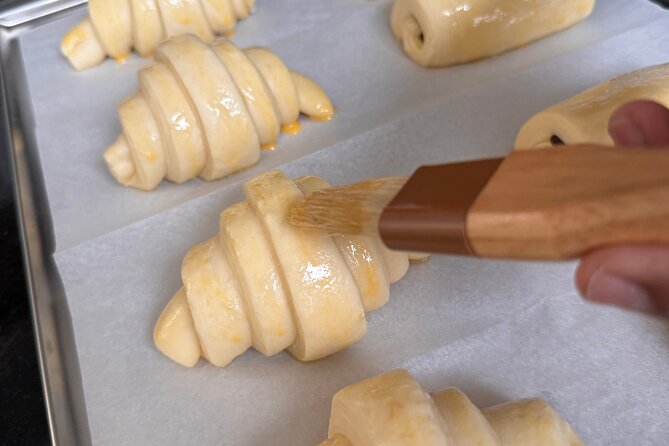
The dough is then cut into pieces for croissants and pain au chocolat. Croissants are shaped into their familiar crescents, while the pain au chocolat uses a different folding method. The contrast makes the class more useful because you see how one dough can create two familiar pastries.
The shaping stage is also where individual help matters most. A chef can show you how tightly to roll, how to place the chocolate, and how to keep the pastry from losing its form. Chef Leo is often praised for patience, humor, and step-by-step explanations. Maria is also singled out for making the class friendly and interactive.
Do not expect every pastry to look like it came from a professional bakery on your first attempt. That is part of the value. You learn what your hands need to do, and you can ask about uneven edges, loose rolls, or dough that is resisting you.
The clever use of prepared dough
A useful part of the class structure is the way the dough schedule works. One session can use dough prepared by an earlier class, allowing it to proof properly, while the dough you make can be used by the following day’s class.
This helps solve a problem common to short baking lessons: good croissant dough needs time, but most visitors do not want to wait through an overnight process in a studio. The arrangement lets you work through the method and still bake pastries during your three-hour visit.
It also gives you a more honest picture of the process. You see that croissants are not instant pastries. They depend on resting, proofing, and careful handling. The class compresses the schedule for practical reasons, but it does not pretend that baking at home will be as quick as buying one at a bakery.
More Baking Classes in Paris
- Paris: Macaron Baking Class for Families and Kids
★ 4.7 · 270 reviews - Paris: Macaron Baking Class in Central Paris
★ 5.0 · 208 reviews - Paris: Croissant Baking Class with a Chef
★ 5.0 · 201 reviews - Paris French Baking Class Baguettes and Croissants in a Bakery
★ 4.5 · 172 reviews
Baking and tasting the finished croissants
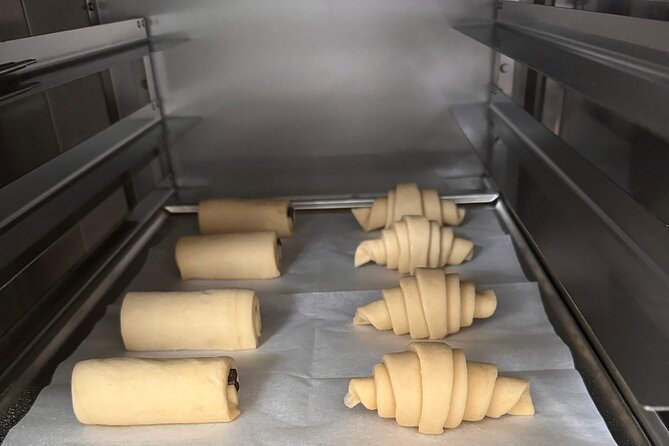
After shaping, the pastries go into the oven. This is the pleasant pause in the class, when you can compare notes with the other people at the table and ask last questions. The social side is simple and natural because everyone has been working with the same dough and dealing with the same sticky or stubborn moments.
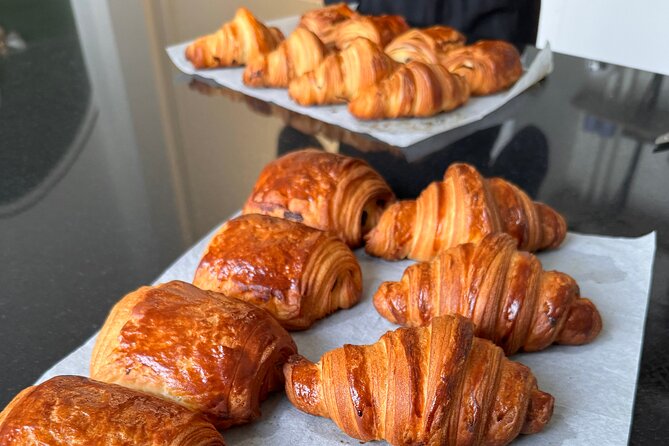
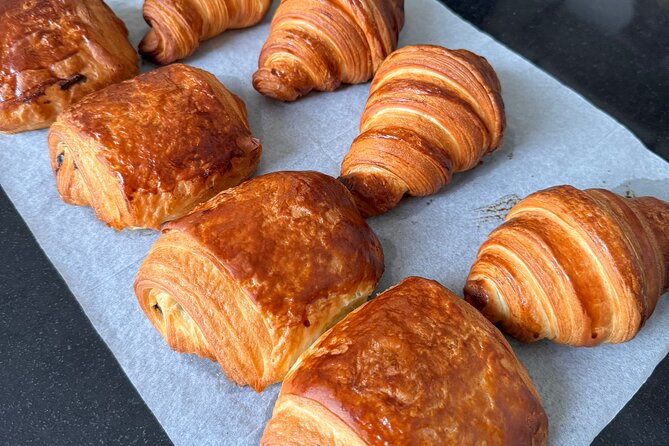
The final result is the reward: golden pastries with a buttery smell and a crisp exterior. Several class accounts describe the croissants as exceptional, magnificent, or among the best they tasted in Paris. Those are subjective judgments, of course, but the repeated praise for the flavor and the quality of the ingredients is encouraging.
The take-home amount can vary by session or description. One class account describes leaving with four croissants and four pain au chocolat per person, while another describes a batch of eight pastries at the end. It is safest to treat the baked goods as a generous bonus rather than choose the class only for a guaranteed quantity.
The best payoff is that you have made them yourself. A fresh pastry from a Paris bakery is easy to buy. Learning why it turns flaky, and then eating one you shaped at the worktable, is a different kind of souvenir.
The teaching style: warm, clear, and hands-on
The strongest praise centers on the chefs. Leo is repeatedly described as funny, patient, attentive, and easygoing. Maria is praised for being friendly and making the lesson interactive. The instructors also share advice about baking and, at times, Paris itself.
That combination suits beginners. You do not need to arrive as an experienced baker. The class is designed to guide you through each stage, and help is available when your dough does not behave as planned.
The tone sounds relaxed rather than formal. You can expect a friendly room where conversation and questions are part of the experience. This matters in a class that lasts about three hours. Detailed pastry instruction can feel tiring if the teaching is stiff or rushed, but a light touch helps the time pass quickly.
Still, the class requires attention. This is not a casual cooking show where you sit back and sample pastries. You need to listen to measurements, remember rolling directions, and put in physical effort. The easygoing mood does not remove the technical work.
What you can take home beyond the pastries
The most useful souvenir may be the recipe and the method. Participants have received recipes by email, and the instruction includes practical details about butter, flour, dough preparation, and shaping.
If you want to bake at home, prepare to convert metric measurements. A useful tip from the class experience is to use your phone for conversions between metric and US measurements for length, weight, and volume. You should also record the dimensions of the dough rectangles, since these are central to getting the layers and final shapes right.
The class can give you confidence, but it cannot remove the need for practice. Your home oven, flour, butter, room temperature, and timing may differ from the studio. Think of the lesson as a solid starting point, not a promise that your first home batch will look identical.
That is still good value for anyone who has wanted to make croissants but never known where to begin. You leave with a working process rather than a vague recipe.
Is $143.92 a fair price?
At $143.92 per person, this is not a budget activity. You can buy several croissants in Paris for much less. The price makes more sense when you count the three hours of instruction, the small group, the ingredients, the use of a professional baking space, and the pastries you make.
The maximum of eight is important here. You are paying for access to an instructor who can watch your work and answer specific questions. If the group were much larger, the fee would feel harder to justify.
I would also compare this with the cost of other Paris activities. A museum visit gives you culture, but this class gives you a skill and a social memory you can carry home. It works especially well for a couple, parent and adult child, friends, or a small family group that wants a break from sightseeing.
The value is weaker if you are looking only for a quick tasting or a cheap breakfast. You will spend three hours baking, not simply eating. For a serious pastry fan, that time is the point. For someone who does not enjoy kitchen work, the price may feel high.
Who should book this Paris pastry class?
This experience suits you if you enjoy food, like learning by doing, or want a hands-on activity between museums and monuments. It is also a good choice for a group because the small class encourages conversation without turning the lesson into a private event.
Beginners should feel comfortable booking it. The instruction is described as clear and step by step, and the chefs provide help when needed. You do not need previous croissant-making experience.
You should think twice if kneading and rolling are difficult for you. The class requires strength, and the information specifically sets the minimum age at 17. Children younger than that are not eligible, despite some interest from parents who would like to return with their children.
Book in advance if your Paris dates are fixed. The experience is booked an average of 47 days ahead, which suggests that popular time slots can fill well before arrival. Free cancellation is available up to 24 hours before the start time. Cancellations or changes made inside that window are not refunded or accepted.
The final call: book it for the skill, not just the snack
I would recommend this class if you want an active Paris memory and genuinely enjoy learning how food is made. The small group, English instruction, patient chefs, recipes, and hands-on work give the $143.92 price a reasonable basis.
Book it especially if you are traveling with a baking-minded partner, parent, adult child, or friend. Skip it if you want a short, effortless food stop, or if kneading dough for several hours sounds like work rather than fun.
For the right person, the best souvenir is not only a box of pastries. It is the ability to recognize a proper fold, shape a croissant, and try the recipe again at home.
FAQ
Where does the croissant baking class begin?
The class begins at Studio Pâtisserie, 85 Rue de Rome, 75017 Paris, France.
Where does the activity end?
The activity ends back at the same meeting point, Studio Pâtisserie.
How long does the class last?
The class lasts approximately three hours.
Is the class offered in English?
Yes. The experience is offered in English.
How many people can join the class?
The maximum class size is eight people.
What pastries will I learn to make?
The class focuses on croissants and pain au chocolat. You learn to prepare dough, laminate it with butter, roll it, cut it, and shape the pastries.
Do I need previous baking experience?
No previous baking experience is stated as a requirement. The class provides step-by-step instruction and individual help from the chef.
What is the minimum age?
Participants must be at least 17 years old. Strength is needed to knead the dough.
Can I cancel for a full refund?
Yes, if you cancel at least 24 hours before the experience start time. Cancellations or changes made less than 24 hours in advance are not refunded or accepted.
More Tiramisu and Dessert Classes in Paris
- Paris: Lemon Tart Baking Class with a Pastry Chef
★ 5.0 · 4 reviews - Eclair Baking Class with A Pastry Chef
★ 5.0 · 3 reviews
More Tiramisu and Dessert Classes in France
- Paris Cooking Class: Chocolate Éclairs and Cream Puffs
★ 5.0 · 87 reviews - Paris: 2.5-Hour French Pastry Cooking Class
★ 4.9 · 71 reviews - Paris Desserts and Pastries Small Group Cooking Class with a Chef
★ 4.5 · 49 reviews - Paris Cooking Class: French Desserts Class
★ 4.9 · 13 reviews
Just added around Paris
- Paris: Millefeuille baking class with a chef★ 5.0 · 5 reviews
- Paris: Macaron Baking Class★ 4.4 · 26 reviews
- Paris: Traditional Croissant Cooking Class With Local Baker★ 5.0 · 2 reviews
- Paris: The Soufflé Baking Class with Chef★ 4.5 · 2 reviews
- Paris: Hands-On Small Group Cooking Class★ 4.9 · 19 reviews
- Paris: Lemon Tart Baking Class with a Pastry Chef★ 5.0 · 4 reviews
- Paris Cooking Class: French Desserts Class★ 4.9 · 13 reviews
- Paris: Evening Cooking Class with Optional Market Visit★ 4.8 · 19 reviews
Tiramisu & Dessert Classes, compared.
3 in 1 Cooking Class near Navona: Fettuccine, Ravioli & Tiramisu
Read our review →
Pasta & Tiramisu Cooking Class with Unlimited Wine
Read our review →
Pasta Making Class with Wine, Limoncello, and Dessert
Read our review →
3-in-1 Fettuccine, Ravioli, and Tiramisu Cooking Class
Read our review →
Cooking Class Pasta & Tiramisu Making Unlimited Wine
Read our review →
Fettuccine & Tiramisù: Cooking Class with Wine & Limoncello
Read our review →
Florence Cooking Class The Art of Making Gelato & Authentic Pizza
Read our review →