REVIEW · ILE-DE-FRANCE, FRANCE
Paris: French Croissant Baking Class with a Chef
Butter makes Paris better. At Maison Fleuret, you spend 150 minutes learning how to shape, fold, and bake French pastries with an English-speaking chef. I like the small groups of up to eight and the hands-on format, since you work with the dough instead of watching a demonstration from the sidelines.
I also like that you leave with pastries you made yourself, often enough to cover breakfast for the next day or two. The main drawback is the $159 price, which is a serious spend for a two-and-a-half-hour activity. Still, the patient instruction, attractive left-bank setting, and practical recipe make this more than a quick pastry tasting.
Key points at a glance
- You make several French pastries: The class covers croissants, pain au chocolat, and often cinnamon rolls or chocolate snails.
- The class stays small: With no more than eight participants, the chef can watch your technique and answer questions.
- You work in pairs: This encourages teamwork, but a family of five may need one person to share with someone outside the group.
- Professional chefs lead the class: Instructors such as Felix, Guillaume, Alice, Erika, and Manel have earned praise for clear, friendly teaching.
- You take your baking home: The finished pastries are part of the value, and some people used them as breakfast during the rest of their stay.
- The location is convenient: The Maison Fleuret space is at 3 Rue des 3 Portes on the Left Bank, close to the Notre-Dame area.
Arriving at Maison Fleuret on the Left Bank
The class begins at Maison Fleuret Ateliers Parisiens, 3 Rue des 3 Portes. That puts you on the Left Bank, in an area that works well with a day around Notre-Dame, the Latin Quarter, or the Seine.
You return to the same place after class, so there is no complicated route or second meeting point to manage. Hotel pickup and drop-off are not included, and you should allow time to reach the studio on your own.
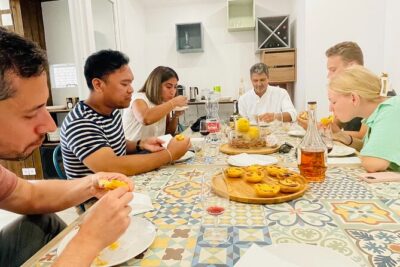
The setting is designed to feel like a traditional French home rather than a stark professional kitchen. That matters because the class is meant to be social as well as practical. You meet other people who are interested in food, compare shaping attempts, and pick up small Paris suggestions from the chef and the group.
One useful tip is to book this early in your stay if you can. A few people found that the pastries gave them breakfast for later mornings, and the chef may also offer suggestions for cafés, restaurants, pastry shops, and souvenir stores. It is a pleasant way to get food advice before you have spent several days guessing where to eat.
More Baking Classes in France
- Paris Croissant Small-Group Baking Class with a Chef
★ 5.0 · 910 reviews - Paris Macarons Small-Group Baking Class with a Chef
★ 5.0 · 316 reviews - Paris: Macaron Baking Class for Families and Kids
★ 4.7 · 270 reviews
The first lesson: why croissants take patience
Croissants look simple in a bakery case. The dough is not.
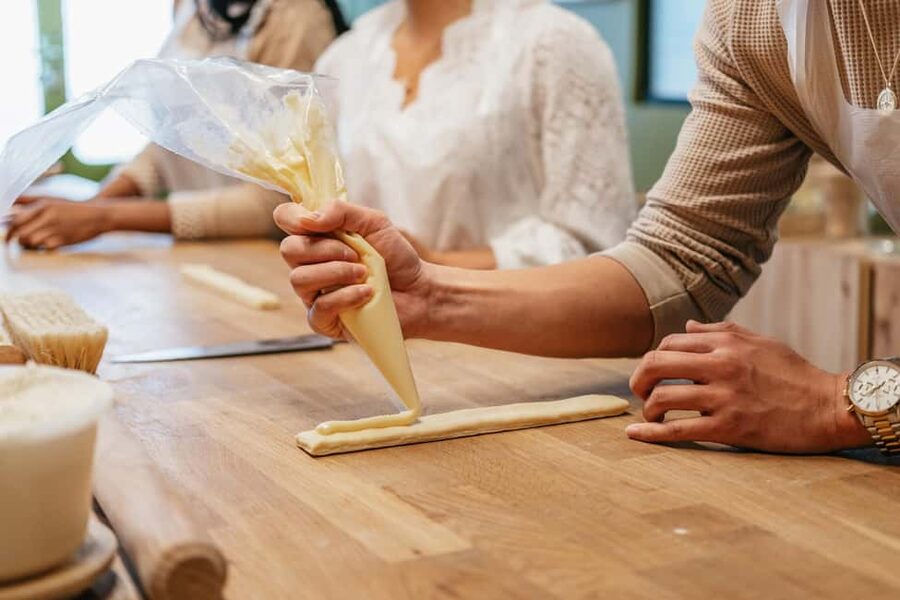
The class explains the basic idea behind laminated dough, a yeast dough layered with butter through repeated folding and rolling. The layers must stay distinct. If the butter becomes too soft, it blends into the dough. If it is too firm, it can tear the dough during rolling.
You work through the process with guidance from the chef. The lesson is not just a recipe recital. You learn how the dough should feel, how to handle it, and how careful folding creates the flaky texture people expect from a French croissant.
That practical correction is one of the strongest reasons to take the class. Home recipes can tell you measurements and timings, but they cannot easily show you when the dough is too warm, too stiff, or too thin. An instructor can point out those problems as they happen.
The chefs also explain how the croissant became popular in France, particularly among Parisians and the wider French public in the early 20th century. It is a short cultural lesson, but it gives the pastry a place in everyday French food rather than treating it as just a pretty breakfast item.
Rolling, cutting, and shaping the pastries
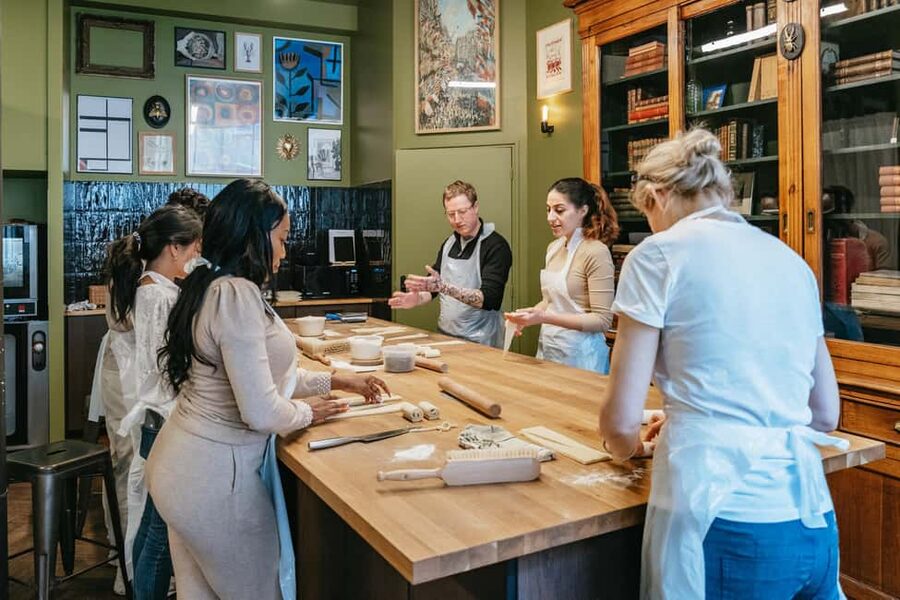
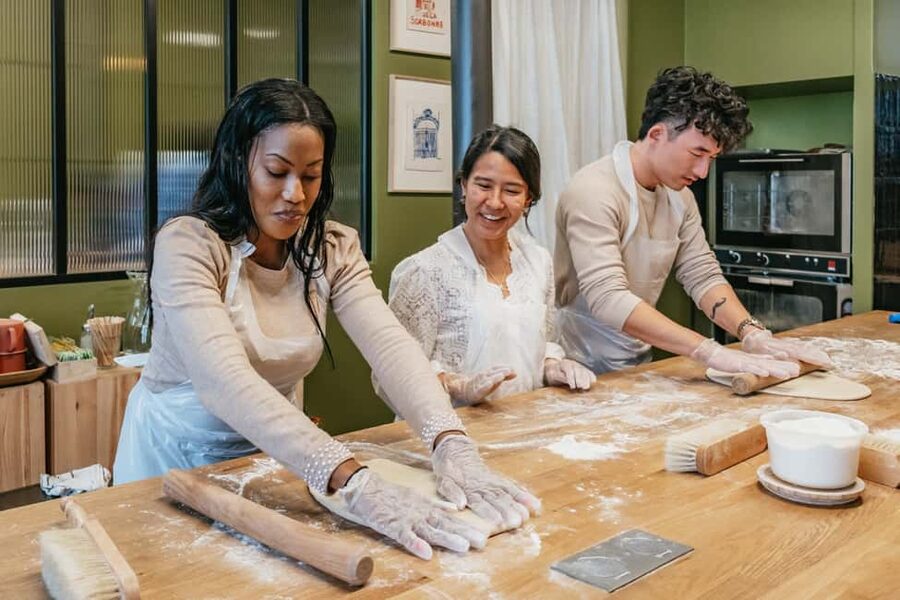
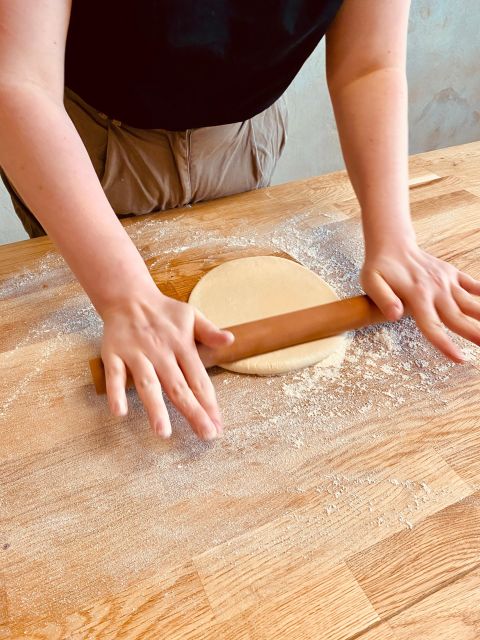
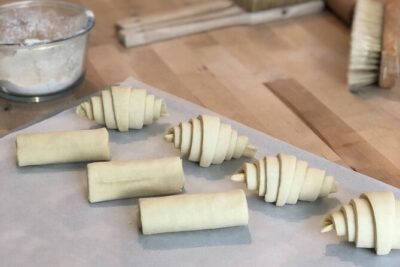
Once the dough is ready, the class becomes more active. You roll it out, cut the shapes, and form the familiar crescent. This is where the small class helps.
Instructors have included Felix, Guillaume, Ke, Selma, Ines, Lyndsey, Lauren, and Erika. Their teaching styles differ, but the strongest pattern is clear, friendly instruction. Guillaume was praised for moving step by step and checking that everyone understood. Felix was described as both serious about pastry and playful in the kitchen. Manel was especially patient with people who did not feel confident in the kitchen.
You do not need to arrive as an experienced baker. Several people with little or no baking background found the process manageable because the chef broke the work into clear stages. You are still doing real pastry work, though, so do not expect a quick craft project with no mess or concentration.
The class usually has you work in pairs. That works well for couples, friends, or a parent and child. A family of five should know that one person may need to pair with someone from another group. It is a small point, but it can matter when everyone expects to work with a family member.
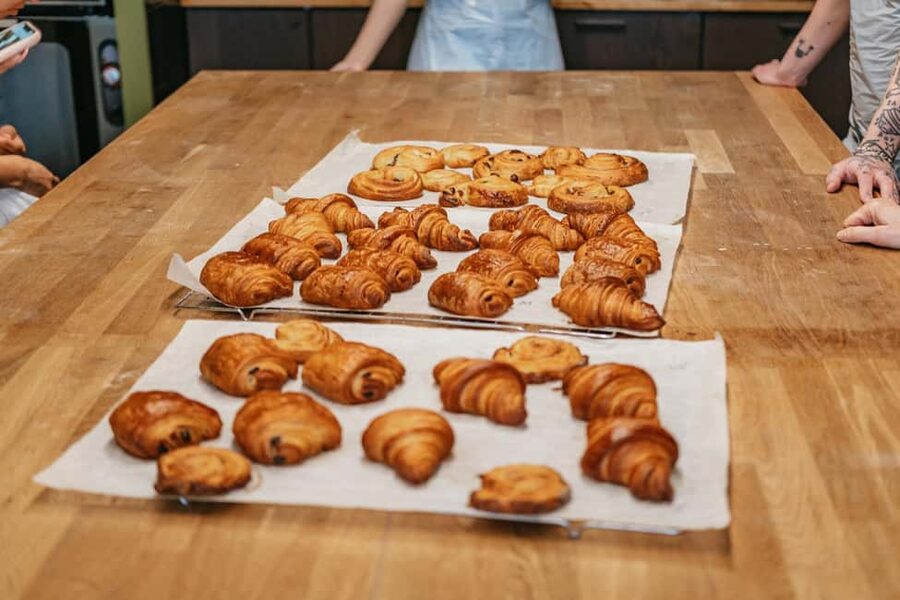
The pastry selection adds variety. Along with standard croissants, you learn to prepare pain au chocolat, and the session may include cinnamon rolls or chocolate snails. The chocolate pastries are a particular hit with children and teenagers, while the cinnamon pieces give you a different shape and flavor to practice.
Baking and eating your own work
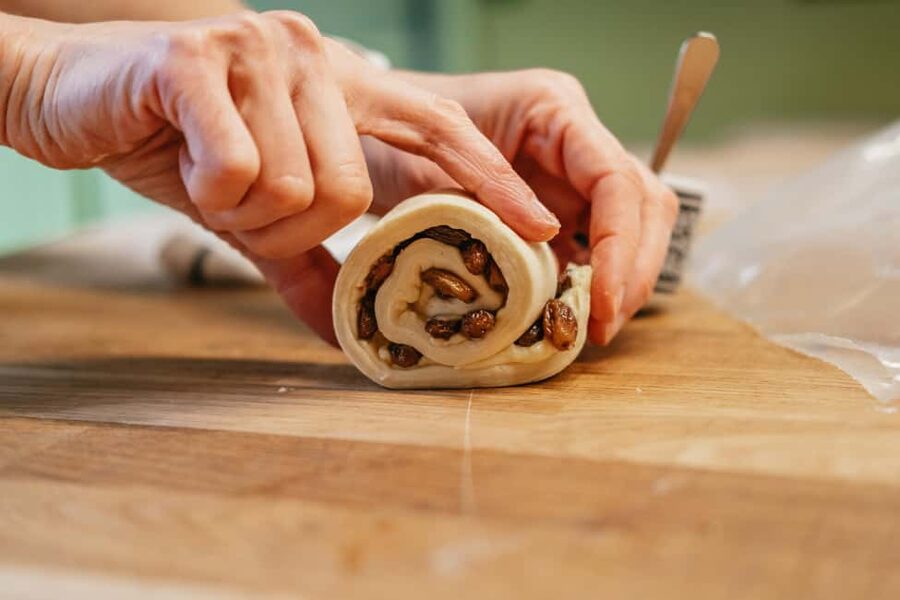
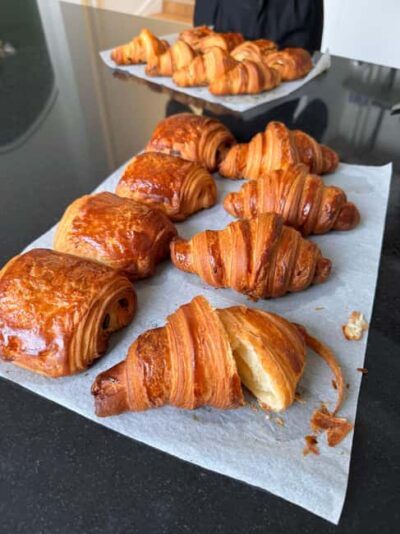
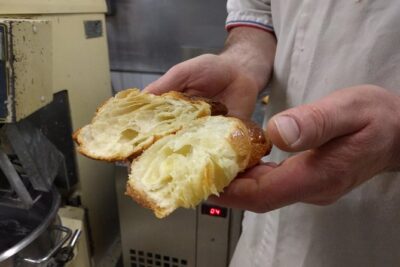
The best part comes when the pastries leave the oven. Fresh croissants are difficult to beat, especially when you shaped them yourself and can see the layers crackle as you pull them apart.
You should not count on eating only one. The quantities can be generous, and some people left with two bags of pastries. That makes the $159 fee easier to judge, especially if you use the baked goods for breakfast later rather than buying several separate bakery meals.
There is also a useful little trick in the class format. When people want to save their own pastries for later, the baker may offer a fresh pastry to taste during the session. That lets you try one warm without using up everything you plan to carry home.
The results will depend partly on your technique, but the instructors guide the process closely. You are not simply handed a box of pastries made in advance. The point is that your hands helped produce them, including the less perfect shapes.
That is worth keeping in mind if you are expecting professional bakery uniformity. You may leave with a few croissants that look slightly different from one another. That is part of the fun, and it gives you a better sense of what the chef is correcting.
More Baking Classes in Paris
- Paris: Macaron Baking Class in Central Paris
★ 5.0 · 208 reviews - Paris: Croissant Baking Class with a Chef
★ 5.0 · 201 reviews - Paris French Baking Class Baguettes and Croissants in a Bakery
★ 4.5 · 172 reviews - Croissant Baking Class, Mastering the Art with a Pastry Chef
★ 5.0 · 116 reviews
What makes the instruction valuable at home
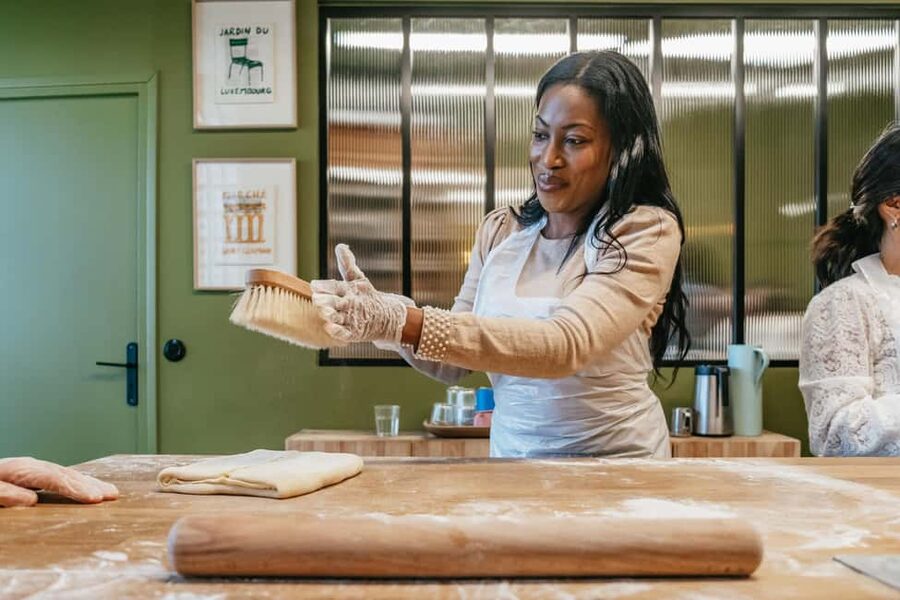
The class sends recipes afterward, so you have something to refer to when you try the process in your own kitchen. Several people left feeling ready to repeat the recipe at home, including one couple who had already struggled with croissants before taking the class.
Do pay attention to the exact recipe you receive. One person noted that the later recipe did not list quite the same ingredients used in class. That is not necessarily a deal breaker, but it is a good reason to take notes during the workshop and ask questions if the written version seems different.
The class is especially useful if you have tried croissants before and ended up with dense, greasy, or poorly layered results. A chef can explain the points that recipes often skip: how to work the butter, how thin to roll the dough, and how to keep the layers intact.
You will not become a professional pastry chef in 150 minutes. You will, however, leave with a much better sense of the technique and the confidence to try again. That is a fair result for a short Paris activity.
A good rainy morning, but not only for bad weather
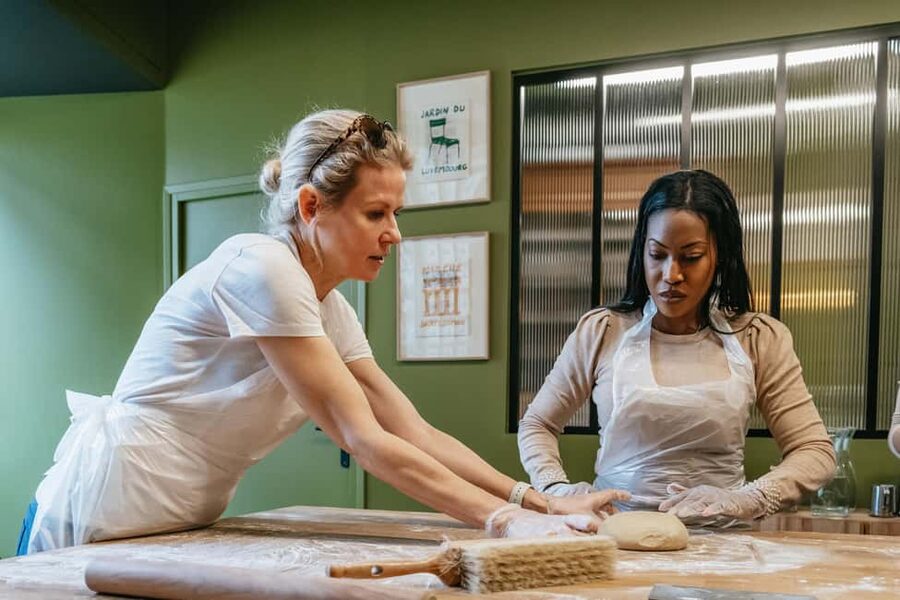
This class makes excellent use of a rainy morning. You stay indoors, work with warm dough, and finish with fresh pastries instead of spending half the day watching the forecast.
It is not limited to poor weather, though. A sunny day in Paris can be crowded with sightseeing, queues, and long walks. A cooking class gives you a break without wasting your time. It also adds a local skill to your visit, rather than giving you only another photograph of a famous building.
Families and teenagers tend to fit the format well. Children around 11 and 12 enjoyed the work, and teenagers responded well to the chocolate pastries and the relaxed teaching style. The chefs appear comfortable adapting to different ages and confidence levels.
The atmosphere is also welcoming for people who are socially shy or need a little extra patience. One parent described the chef as especially kind and supportive with a young participant who became bored and stopped baking. That does not mean every individual need can be predicted, but the class seems to have a flexible, good-humored tone.
The $159 question: is the value there?
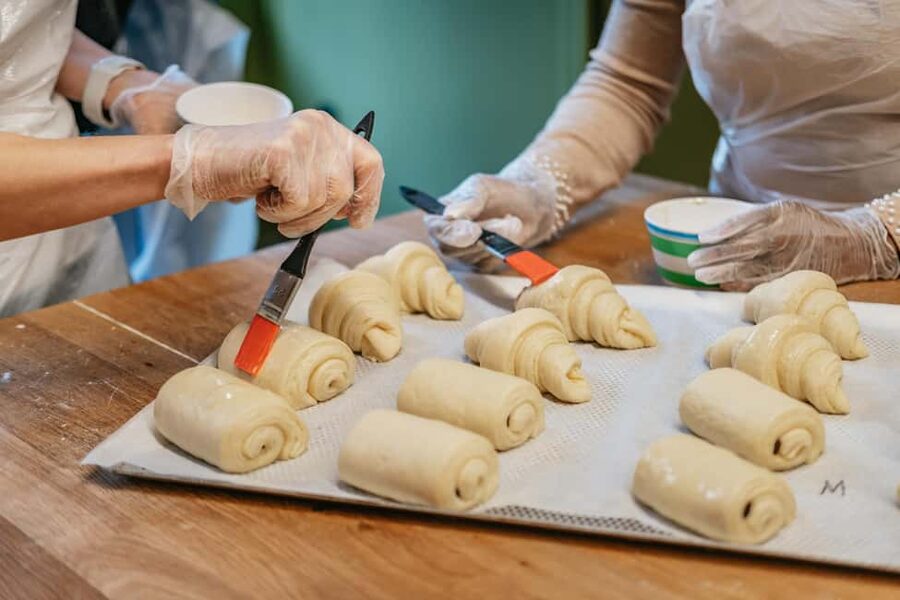
At $159 per person, this is not a cheap way to eat a croissant. You can buy an excellent pastry in Paris for a small fraction of that price.
The value comes from the full package:
- Two and a half hours of instruction
- A professional chef
- Use of the equipment
- Hands-on practice
- Several pastries to eat and take away
- A recipe for future baking
- A small group capped at eight people
- A central Left Bank setting
If you only want a taste of French pastry, skip the class and visit a bakery. If you want to understand how croissants are made and enjoy a social activity, the price is easier to justify.
The group size is important here. A large demonstration class would offer less personal help and make it harder to ask about your own dough. With eight people or fewer, the chef can move around the table and catch mistakes before they ruin the final bake.
The class also works well as a birthday gift or a shared activity for a couple. One pair traveled to Paris especially for the experience after struggling to make croissants at home. That may be more enthusiasm than most people need, but it shows the class has real appeal for serious home bakers.
Practical details before you book
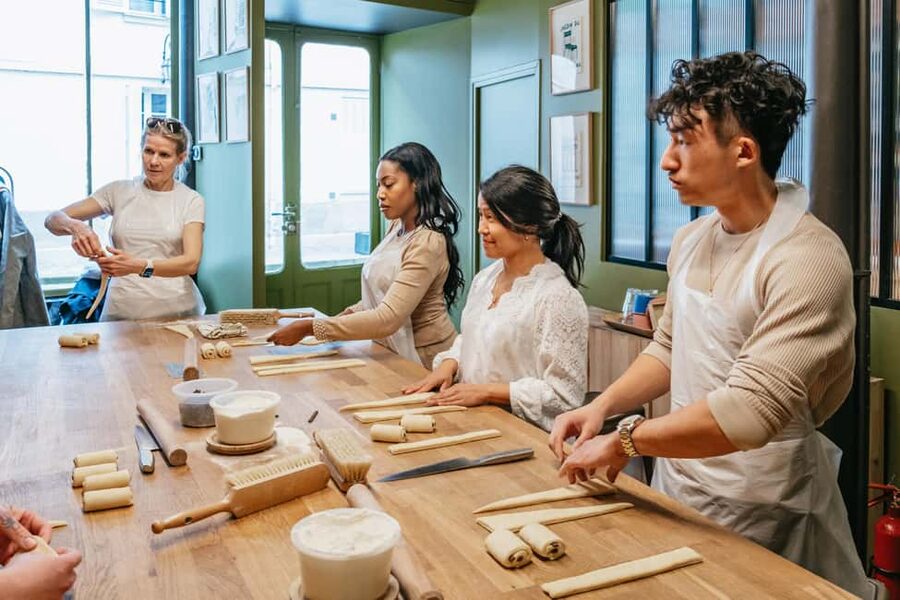
The session lasts 150 minutes, or two and a half hours. Plan to use the full time. One person noted that the class lasted the entire scheduled period, which is good news if you want proper instruction but less helpful if you have a tightly packed sightseeing schedule.
The class is taught in English. That makes it practical for English-speaking visitors, and the repeated praise for clear explanations suggests that the chef’s communication is a central part of the experience.
The space is wheelchair accessible. Hotel transport is not included, so you must make your own way to 3 Rue des 3 Portes. Since the class takes place on the Left Bank and returns to the same location, it pairs easily with nearby plans.
Free cancellation is available up to 24 hours before the start time, and you can reserve now and pay later. Check the available start times before building the rest of your day around it.
Do not assume coffee or water will always be included. One person was disappointed not to receive drinks, even though that may vary between classes. If you want breakfast coffee, arrange it before or after the session.
Who should book this Paris baking class?
I would recommend it most strongly to:
- Couples who want a shared food activity
- Families with children or teenagers
- Home bakers who want better croissant technique
- First-time bakers who prefer patient, guided instruction
- People looking for a rainy-day plan
- Anyone who wants food memories beyond restaurant meals
It is less suitable if your schedule is packed, your budget is tight, or you only want to eat a croissant without learning the method. The work is hands-on and can be messy, and you need to share tasks when working in pairs.
The class is also a good early-trip choice. You can use the pastries as breakfast, ask the chef for local food suggestions, and carry a new skill into the rest of your Paris stay.
Should you book it?
Book this class if you want to understand the work behind a proper French croissant, not just consume one. The small group, warm teaching style, and generous take-home pastries make it feel like a real activity rather than a quick food sample.
At $159, it is a splurge. But for a couple, a family, or an enthusiastic home baker, the combination of instruction, food, and useful memories can justify the cost. If you are simply searching for the cheapest breakfast in Paris, spend your money at a bakery instead.
FAQ
Where does the croissant class take place?
The class takes place at Maison Fleuret Ateliers Parisiens, 3 Rue des 3 Portes, on Paris’s Left Bank.
How long does the class last?
The cooking class lasts 150 minutes, or two and a half hours.
What pastries do you make?
You practice making French croissants and pain au chocolat. The class may also include cinnamon rolls or chocolate snails.
Is the class taught in English?
Yes. The instructor language is English.
How many people are in the class?
The class is limited to eight participants.
Do I get to take pastries home?
Yes. You take home pastries that you make during the class, and the quantity may be enough for breakfast on later mornings.
Is the class wheelchair accessible?
Yes. The activity is listed as wheelchair accessible.
Just added around Paris
- Paris: Millefeuille baking class with a chef★ 5.0 · 5 reviews
- Paris: Macaron Baking Class★ 4.4 · 26 reviews
- Paris: Traditional Croissant Cooking Class With Local Baker★ 5.0 · 2 reviews
- Paris: The Soufflé Baking Class with Chef★ 4.5 · 2 reviews
- Paris: Hands-On Small Group Cooking Class★ 4.9 · 19 reviews
- Paris: Lemon Tart Baking Class with a Pastry Chef★ 5.0 · 4 reviews
- Paris: Evening Cooking Class with Optional Market Visit★ 4.8 · 19 reviews
- Paris Cooking Class: French Desserts Class★ 4.9 · 13 reviews
Baking & Bread Classes, compared.
Paris Croissant Small-Group Baking Class with a Chef
Read our review →
Paris Macarons Small-Group Baking Class with a Chef
Read our review →