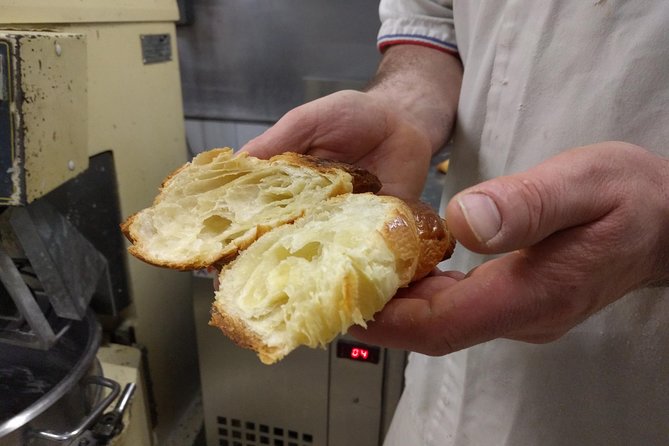
REVIEW · PARIS, FRANCE
Paris French Baking Class Baguettes and Croissants in a Bakery
Bread makes Paris easier to understand. This hands-on bakery workshop takes you behind the counter at Boulangerie Pâtisserie Le Petit Mitron in the Oberkampf Bastille area, where you learn how French bakers handle baguette dough and flaky pastry. I like the small group cap of 10, and I like that you taste the warm results instead of simply watching a demonstration.
The class also has real personality. Baker Didier brings humor, strong opinions about flour, and a clear pride in his trade. English-speaking support is provided, and past sessions have included a translator such as Luz, which makes the rapid French instruction much easier to follow. The main drawback is that the class focuses far more on baguettes than croissants, so you should not expect a full croissant course from start to finish.
Key Details Before You Book
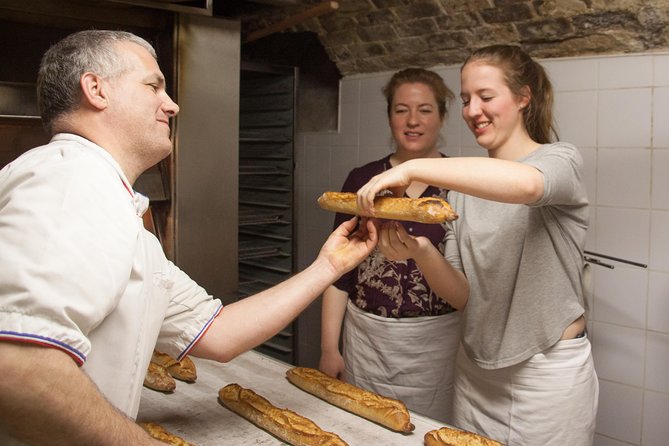
- Baking takes place inside a working Paris bakery: You are not in a generic cooking studio. The setting gives the class a practical, everyday French feel.
- Baguettes receive most of the hands-on time: You will work on shaping, scoring, and handling bread, while the croissant section focuses more on technique and demonstration.
- Didier mills his own flour: This unusual detail gives the lesson a useful look at ingredients, additives, and how flour affects the finished loaf.
- English help is part of the experience: The baker may not speak English, but an interpreter is used during the class.
- The group is limited to 10 people: That keeps the session personal and gives you a better chance to ask questions and handle the dough.
- You finish with warm baking and recipes: You taste baguettes and pastries at the bakery, take recipes home, and leave with practical advice for your own kitchen.
Arriving at Le Petit Mitron in Oberkampf
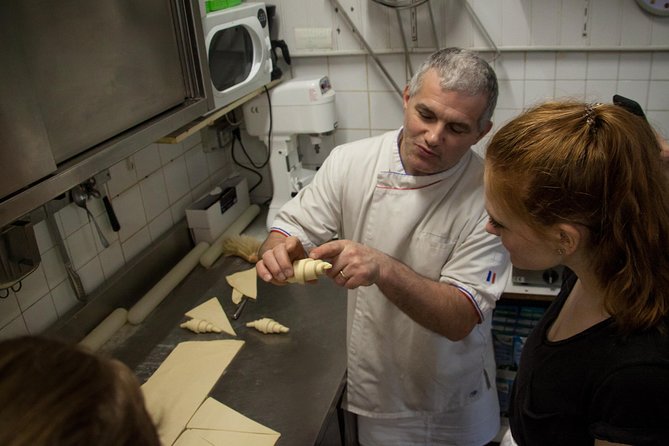
The class begins at Boulangerie Pâtisserie Le Petit Mitron, 8 Rue Oberkampf, 75011 Paris. The bakery is near public transportation, but hotel pickup and drop-off are not included, so you need to make your own way there.
Allow enough time to arrive. One late arrival worked out without drama, but a baking class runs on ovens, dough, and a tight schedule. Showing up a few minutes early gives you time to locate the bakery and settle in before the flour starts flying.
The location matters. You are entering an operating bakery rather than a polished tourist classroom. That means the atmosphere may feel more practical than luxurious. For me, that is part of the appeal. You see baking in the setting where French bread is made and sold, not separated from daily Parisian life.
The activity ends at the same meeting point. Since the class lasts about two and a half hours, you can pair it with a meal afterward, a walk through the Oberkampf neighborhood, or a simple picnic. A useful tip from the class is to find a good cheese shop and enjoy your baguette soon after the lesson.
More Baking Classes in France
- Paris Croissant Small-Group Baking Class with a Chef
★ 5.0 · 910 reviews - Paris: French Croissant Baking Class with a Chef
★ 4.9 · 712 reviews - Paris Macarons Small-Group Baking Class with a Chef
★ 5.0 · 316 reviews
Didier’s Flour, Equipment, and French Bread Lesson
The class starts with instruction, but it does not feel like a dry lecture. Didier explains ingredients, equipment, dough handling, and the background of French bread. His passion is a major part of the appeal, especially if you enjoy learning how a craft works rather than simply collecting a photograph.
One unusual feature is Didier’s flour. He mills grain on site, and the lesson includes discussion of flour quality and the additives often found in commercial products. You do not need to be an experienced baker to appreciate this. Even a beginner can see why flour type, hydration, handling, and fermentation affect the final loaf.
The history also adds useful context. You learn how baguettes and croissants developed, along with the habits and traditions surrounding French baking. It is not a formal academic history lesson. It is the sort of explanation that makes the food in front of you more meaningful.
The instruction can move quickly. If you have baked at home before, you may get more from the technical details because you will already understand terms such as folding, shaping, and lamination. Beginners can still participate, but you should expect a busy session rather than a slow, step-by-step class designed for complete novices.
The Baguette Work Takes Center Stage
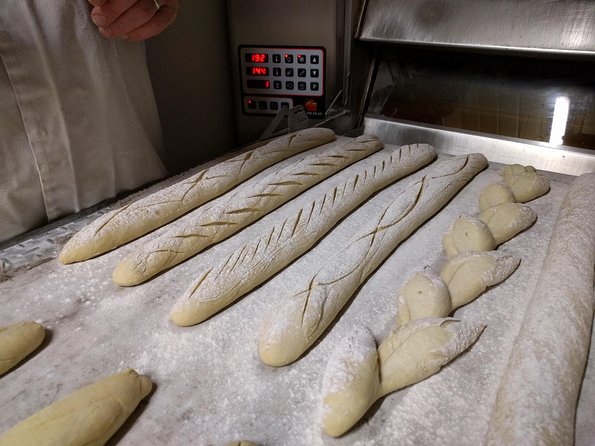
The baguette is the main event. You learn how the baker handles and shapes the dough, then get your own chance to work with it. The precise balance between gentleness and pressure is one of the useful lessons. Too much handling can damage the structure, while too little shaping can leave the loaf uneven.
The hands-on work may include rolling, shaping, scoring, and making different patterns on the bread. One especially memorable task is using the long wooden paddle to help take bread from the oven. That small moment gives you a better sense of the physical work behind a Paris bakery counter.
It is important to set realistic expectations. The class does not necessarily have you make every part of the dough from raw ingredients during the session. Some people have described the baguette work as very hands-on, while others noted that they mainly shaped prepared dough and learned the larger process. In practical terms, you should expect to work directly with bread and learn the method, but not necessarily complete a full bakery production cycle by yourself.
The payoff comes when the bread is baked. You taste baguettes and pastries while they are still warm, and you can take a baguette with you. Fresh bread straight from the oven is a much better lesson than a dry sample handed out at the end.
Croissants, Lamination, and Pain au Chocolat
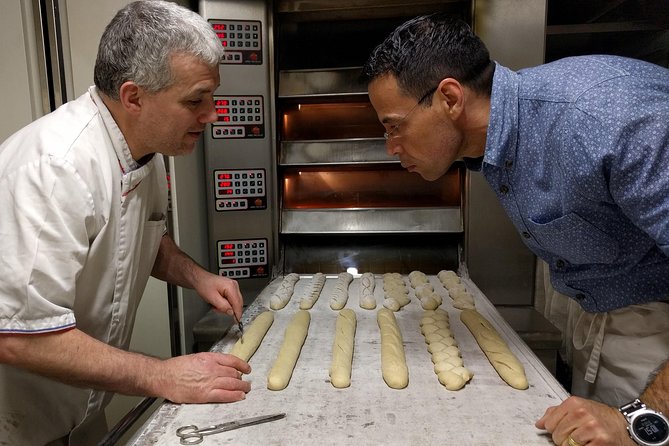
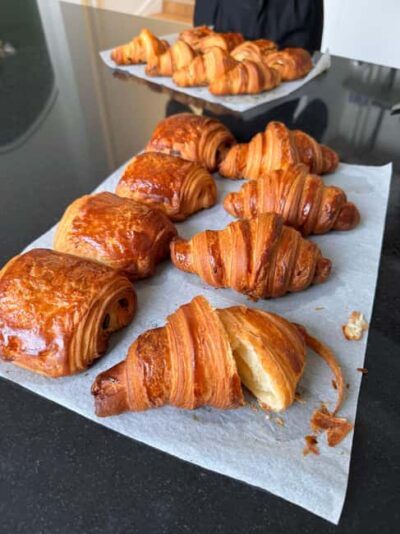
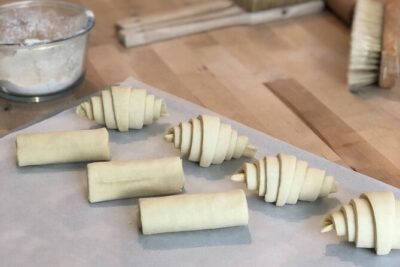
The croissant section is enjoyable, but it needs a clear explanation. You learn how croissants are made, watch the baker demonstrate the process, and roll or shape laminated dough. The class may also include pain au chocolat, which several sessions have featured alongside regular croissants.
You will not spend the full two and a half hours making croissants from start to finish. The time required for dough preparation, resting, chilling, laminating, shaping, proofing, and baking is far longer than the workshop itself. The class gives you a close look at the technique and lets you handle the dough, but the baguette portion gets most of the working time.
That is not a flaw, as long as you book it for the right reason. If your goal is to understand the difference between ordinary dough and laminated pastry, this is useful. You see why butter temperature and careful folding matter, and you get a chance to roll the pastry yourself.
The warm croissant tasting is a highlight. You get the buttery, flaky result without waiting through the entire professional production process. Recipes and tips let you try the longer version at home, where you have time to chill the dough properly between steps.
More Baking Classes in Paris
- Paris: Macaron Baking Class for Families and Kids
★ 4.7 · 270 reviews - Paris: Macaron Baking Class in Central Paris
★ 5.0 · 208 reviews - Paris: Croissant Baking Class with a Chef
★ 5.0 · 201 reviews - Croissant Baking Class, Mastering the Art with a Pastry Chef
★ 5.0 · 116 reviews
A Small Group Makes the Lesson More Personal
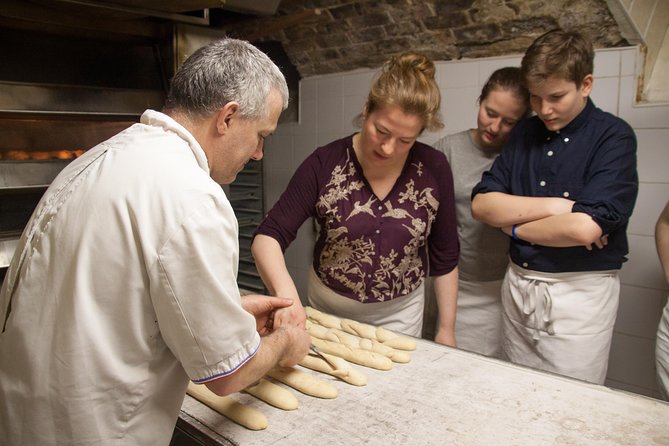
The class is capped at 10 people, and that limit makes a real difference. A large group would make it hard for everyone to shape bread, ask questions, and see the baker’s hands up close. With fewer people, the instruction can feel more like a visit to a bakery than a stage performance.
The class can be especially good for families. The minimum age is 6, and children have received individual attention during sessions. Still, two and a half hours is a long time for a young child to focus, particularly when some of the early instruction is verbal. Children who enjoy food, crafts, or practical activities are likely to get the most from it.
Minors must be accompanied by an adult. Grandparents, parents, and children can all take part, and the range of ages can add to the friendly feel. You should not expect a separate children’s program, though. Kids join the same lesson as adults and need to stay involved.
The workshop also works well for couples and solo participants. If the minimum number is not reached, the activity may be canceled and replaced with another option or refunded. That possibility matters if your Paris schedule is very tight.
English Support and the Class Atmosphere
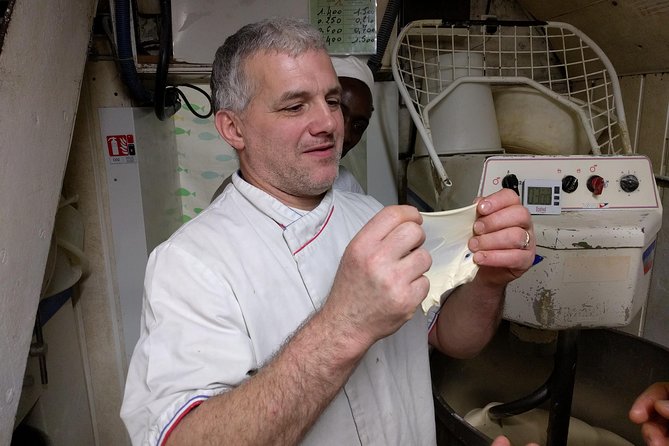
The experience is offered in English, but the baker himself may not speak English. An interpreter handles the translation, and this arrangement has worked well in many sessions. The translator does more than repeat technical terms. A good interpreter helps carry Didier’s humor, stories, and quick exchanges with the group.
That language setup can actually add charm. You get the real French baker, working in his own bakery, while still receiving explanations you can follow. The lesson may feel less polished than a class taught entirely in English, but it also feels less packaged.
The tone is friendly and energetic. Didier is often described as funny, patient, and eager to discuss each participant’s baking background. He may ask about what you make at home and offer suggestions for improving your results. Some sessions have even offered follow-up help by message if you run into trouble with the recipes later.
Still, you should be ready for information to come quickly. Bring your attention, ask questions when you need clarification, and do not worry if your first baguette shape is not perfect. The point is to learn the process, not to qualify as a Parisian master baker in one afternoon.
What You Eat and Take Home
The included food is simple but satisfying. You taste baguettes and pastries, including croissants, and some sessions include pain au chocolat. The best part is the timing: the bread comes from the oven during the workshop, so you eat it warm.
You also leave with a baguette, according to the experience details. That makes the class more than a demonstration. You have something to enjoy later, perhaps with cheese, butter, or a picnic lunch.
Recipes are included so you can repeat the work at home. The useful tips are aimed at ordinary kitchens, not only professional bakeries with large ovens and specialized tools. This matters because French baking often depends on equipment and timing that home cooks do not have.
Do not expect a large meal. This is a tasting and baking lesson, not a full food tour. If you need lunch or dinner, plan another stop before or after the class.
Is $264.95 a Fair Price?
At $264.95 per person, this is an expensive two-and-a-half-hour activity. You are paying much more than the cost of a baguette and a croissant. The value comes from the small group, the behind-the-scenes bakery setting, the live instruction, the tasting, the recipes, and the chance to work with an experienced baker.
I would consider it a fair splurge for someone who enjoys bread, cooking, or food traditions. It is also a good choice if you want a break from museums and monuments. You are buying an activity with participation and conversation, not just a meal.
The price is harder to justify if you mainly want to eat excellent pastries. Paris has plenty of bakeries where you can spend a few euros on a croissant. It is also less appealing if you expect to master croissant production in one short class.
Because the activity is often booked well ahead, with an average booking time of about 43 days, you should reserve early if it is important to your plans. Morning and afternoon options help, but availability can still be limited.
Practical Details to Know
Confirmation is normally sent when you book. If you book within two days of the activity, confirmation may arrive within 48 hours and remains subject to availability.
Free cancellation is available up to 24 hours before the start time. Changes or cancellations inside that period are not accepted for a refund. Since the class requires a minimum number of participants, the provider can also cancel and offer another date or a full refund.
The activity is not recommended for people with sensitive airborne allergies. A bakery involves flour in the air, so this warning deserves serious attention. The class is near public transportation, but no hotel transfer is included.
Who Should Book This Bakery Class?
I would recommend it to:
- Home bakers who want better baguette and croissant technique
- Families with children aged 6 and older who can focus for 2.5 hours
- Couples looking for a hands-on break from sightseeing
- Food lovers who care about flour, ingredients, and French baking traditions
- Visitors who want a small group rather than a large cooking demonstration
I would skip it if you want a full meal, a silent demonstration, or a complete croissant course. I would also think twice if flour allergies, a very tight schedule, or young children who dislike waiting could create problems.
Should You Book It?
Book this class if you want to understand French bread by handling it, tasting it warm, and hearing a passionate baker explain the work behind it. Didier’s flour milling, humor, bakery setting, and personal instruction give the session more character than a standard cooking lesson.
Just keep the focus clear: baguettes are the main lesson, while croissants and pain au chocolat receive a shorter, more guided treatment. For the right person, this is a memorable Paris splurge and a useful skill to carry home. For everyone else, the city’s bakeries offer a cheaper way to enjoy the finished product.
FAQ
Where does the baking class take place?
The class begins and ends at Boulangerie Pâtisserie Le Petit Mitron, 8 Rue Oberkampf, 75011 Paris, France.
How long does the class last?
The experience lasts approximately 2 hours and 30 minutes.
Is the class offered in English?
Yes. The activity is offered in English, and an English translator is used during sessions when the baker does not speak English.
How many people can join the class?
The class has a maximum group size of 10 travelers.
What will I learn to make?
You will learn about making French baguettes and croissants. Some sessions also include pain au chocolat.
Do I get to eat the baking?
Yes. Tasting of baguettes and pastries is included, and you can taste the bread and pastries fresh from the oven.
Are recipes included?
Yes. Recipes are included so you can try the techniques at home.
What is the minimum age?
The minimum age is 6 years old. Minors must be accompanied by an adult.
Is hotel pickup included?
No. Hotel pickup and drop-off are not included, so you must travel to the bakery yourself.
Can I cancel for a refund?
You can cancel up to 24 hours before the start time for a full refund. Cancellations or changes made less than 24 hours before the experience are not accepted.
Just added around Paris
- Paris: Millefeuille baking class with a chef★ 5.0 · 5 reviews
- Paris: Macaron Baking Class★ 4.4 · 26 reviews
- Paris: Traditional Croissant Cooking Class With Local Baker★ 5.0 · 2 reviews
- Paris: The Soufflé Baking Class with Chef★ 4.5 · 2 reviews
- Paris: Hands-On Small Group Cooking Class★ 4.9 · 19 reviews
- Paris: Lemon Tart Baking Class with a Pastry Chef★ 5.0 · 4 reviews
- Paris: Evening Cooking Class with Optional Market Visit★ 4.8 · 19 reviews
- Paris Cooking Class: French Desserts Class★ 4.9 · 13 reviews
Baking & Bread Classes, compared.
Paris Croissant Small-Group Baking Class with a Chef
Read our review →
Paris Macarons Small-Group Baking Class with a Chef
Read our review →