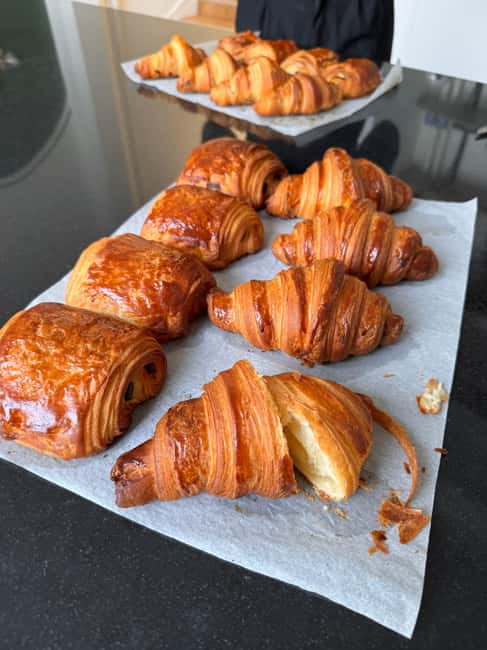
REVIEW · ILE-DE-FRANCE, FRANCE
Paris: Croissant Baking Class with a Chef
Croissants are harder than they look. This three-hour class at Studio Pâtisserie gives you hands-on instruction from pastry chefs such as Léo and Maria, rather than a quick demonstration from across the room. I like the small group of eight, which leaves room for personal help, and I like that you make enough pastries to enjoy several fresh from the oven and take more with you.
The main consideration is physical effort. Rolling and folding laminated dough takes arm strength, and the dough must rest between stages, so the pace includes waiting. That is useful for learning, but anyone hoping for nonstop action may find the rhythm slower than expected. Children under 15 are not permitted, and anyone under 17 must attend with a paying adult.
The class at a glance
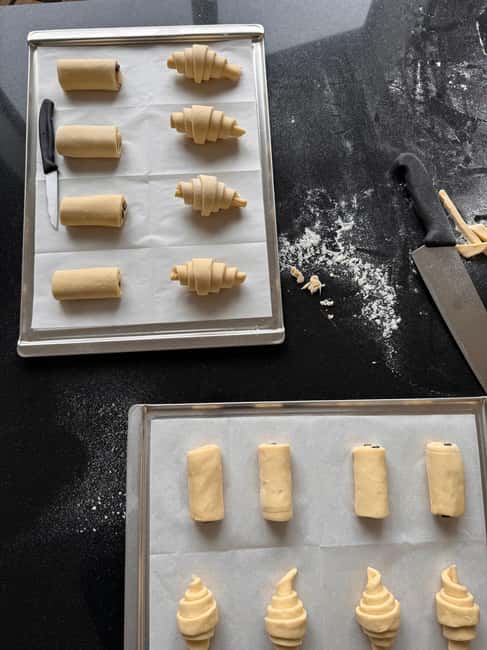
- You make real croissants from start to finish: Prepare, roll, fold, cut, shape, proof, and bake the dough yourself.
- Small groups keep the lesson personal: With no more than eight participants, the chef can check your technique and answer questions.
- Expect more than butter croissants: Past sessions have included both classic croissants and pain au chocolat, often producing four of each per person.
- The waiting time has a purpose: While dough rests and rises, the chef explains butter, proofing, texture, and flavor.
- You leave with a useful recipe: The class is designed to give you skills you can repeat at home, not just a pleasant morning in Paris.
- A bi-colour option adds a creative twist: On selected days, you can learn to work colored dough into the pastry.
Finding Studio Pâtisserie near Rome and Villiers
The meeting point is Studio Pâtisserie, identified by its gray-colored storefront. It is in the Ile-de-France region and easy to reach by public transport, with Metro Line 2 at Rome and Metro Line 3 at Villiers nearby.
That location matters because this is a practical activity to fit into a Paris day. You are not being sent far outside the city for a factory-style lesson. Check the exact starting time when booking, then allow enough time to find the storefront. A cooking class is a poor place to arrive flustered, especially when the first stage involves getting your dough right.
The venue is described as a clean, attractive bakery kitchen with professional equipment. You work at a shared station, where the chef can demonstrate each step and move around the group. The setting feels more like a working pastry studio than a large tourist classroom, which suits the subject.
More Baking Classes in France
- Paris Croissant Small-Group Baking Class with a Chef
★ 5.0 · 910 reviews - Paris: French Croissant Baking Class with a Chef
★ 4.9 · 712 reviews - Paris Macarons Small-Group Baking Class with a Chef
★ 5.0 · 316 reviews
The first stage: dough, butter, and patience
The class begins with the basic dough. You work through the early preparation under the chef’s direction, learning how the ingredients come together before the pastry reaches its famous flaky form.
This is where the class earns its price. Croissant dough is not simply bread dough with butter added at the end. The butter must be incorporated in a controlled way, and the dough has to be rolled and folded repeatedly to build layers. The chef explains why butter quality matters and how temperature affects the final result.
You also learn why resting and proofing cannot be rushed. The breaks may feel like dead time if you came expecting three straight hours of kneading, but they are part of the craft. The dough needs time to relax after rolling, and the yeast needs time to work. Those pauses also give you a chance to ask questions and understand what you are trying to achieve.
Chef Léo is often praised for keeping the mood light while still explaining the details. Chef Maria is also described as patient, funny, and clear. That combination is valuable here. Croissant making can become intimidating when a recipe uses unfamiliar terms or when the butter starts behaving badly. A relaxed instructor helps you keep going instead of treating every imperfect fold as a disaster.
Folding and rolling require real effort
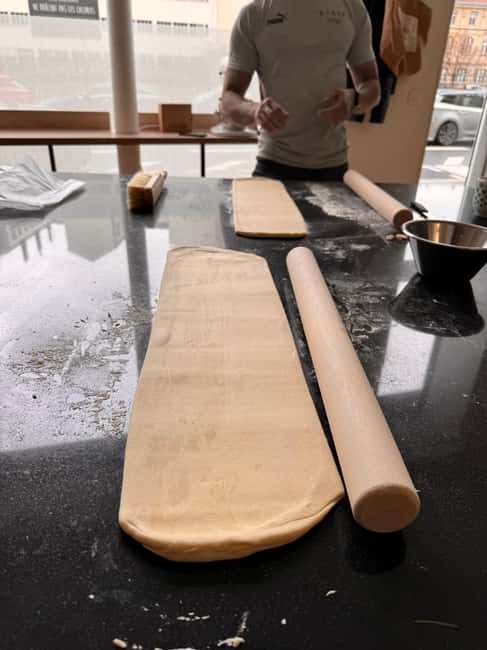
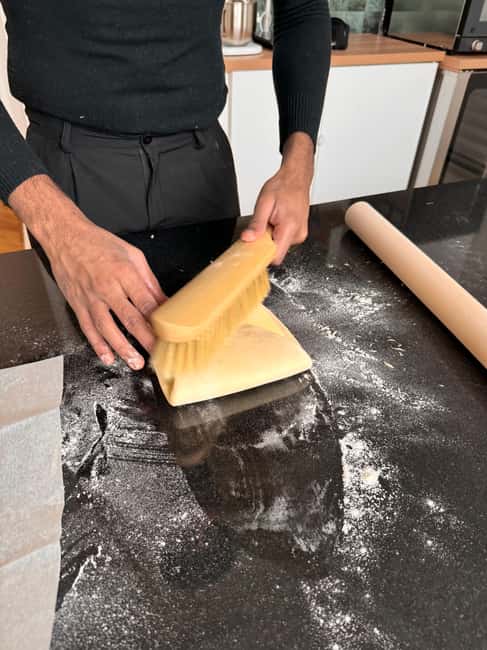
The physical part of the class should not be underestimated. You roll the dough out by hand, fold it, and repeat the process. The work takes strength, especially when the dough resists or needs to reach a precise size.
This is why the age rules are sensible. Children under 15 are not suitable for the class, while participants under 17 must be accompanied by a paying adult. The class can work well for older teenagers, adults, and families with different generations, as long as everyone understands that this is a practical baking session, not just a pastry tasting.
Your chef watches the technique closely. That personal attention is one of the strongest reasons to choose a group limited to eight. You can ask whether the dough is rolled evenly, how firmly to press during a fold, or what to do if the butter begins to break through. You are not left to copy a demonstration from several meters away.
The best approach is to listen to the small instructions. Several of the most useful tips concern the how and why of each step, not just the order of operations. If you want to remember every detail, take notes when there is a pause. One participant wished they had recorded more of the lesson, but recording rules are not provided, so ask the chef before filming.
Shaping crescents and pain au chocolat
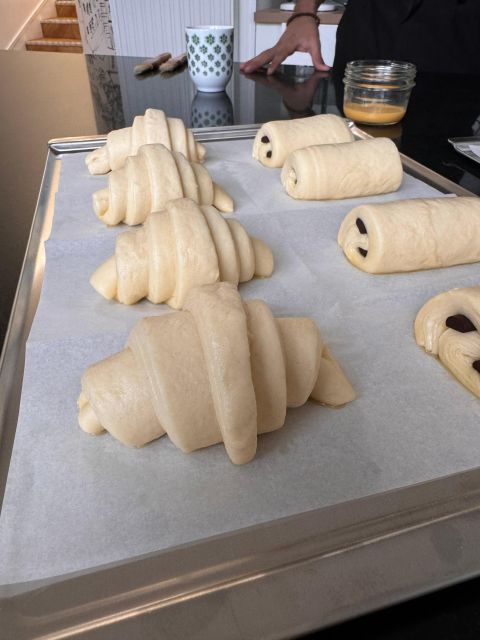
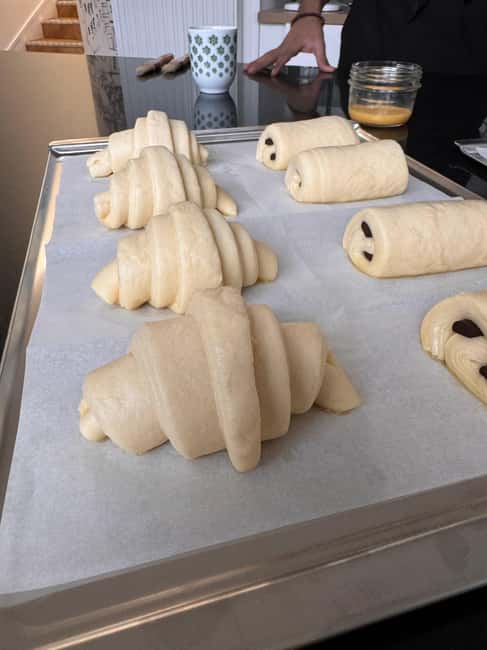
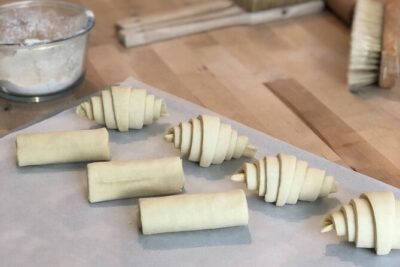
Once the dough has rested and developed its layers, you cut it into pieces and shape the pastries. For croissants, that means creating the familiar triangular forms, rolling them into crescents, and making sure the shape is even enough to bake properly.
This is the stage where the process becomes visually satisfying. A flat sheet of dough turns into recognizable French pastries. The chef checks your cuts and rolling, helping you avoid common problems such as uneven thickness or loose shaping.
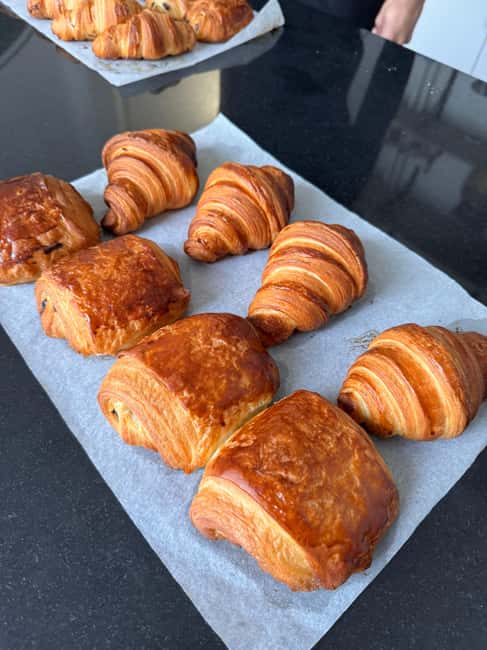
Pain au chocolat may also be part of the session. Several participants made four butter croissants and four chocolate pastries each, though the exact mix can depend on the class. That is a generous amount for a three-hour experience. You get practice with more than one shape, and you have enough to share or carry back to your hotel.
The shaping stage suits beginners because the chef can correct mistakes before the pastries go into the oven. You do not need professional baking experience. The class is built around guided practice, and the strong feedback is that complete beginners can produce attractive pastries with the chef’s help.
More Baking Classes in Paris
- Paris: Macaron Baking Class for Families and Kids
★ 4.7 · 270 reviews - Paris: Macaron Baking Class in Central Paris
★ 5.0 · 208 reviews - Paris French Baking Class Baguettes and Croissants in a Bakery
★ 4.5 · 172 reviews - Croissant Baking Class, Mastering the Art with a Pastry Chef
★ 5.0 · 116 reviews
Proofing, baking, and the best reward
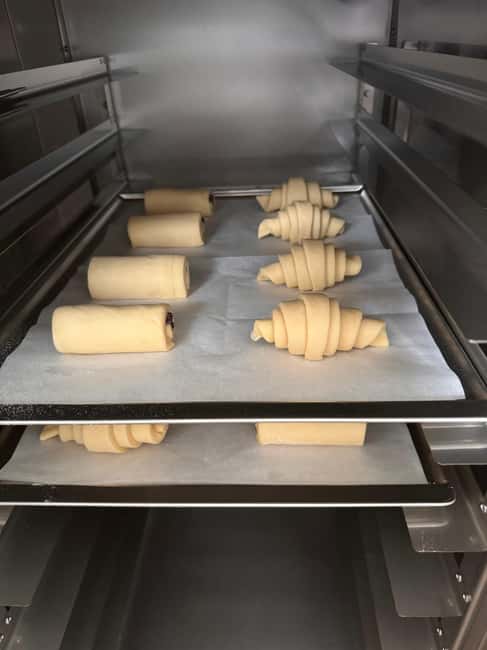
After shaping, the pastries need to proof before baking. The chef explains what to look for, including how proofing affects size, texture, and flavor. This is a useful lesson because many home bakers either under-proof or rush the process.
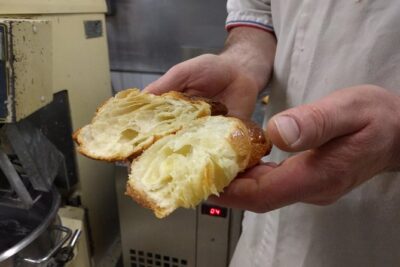
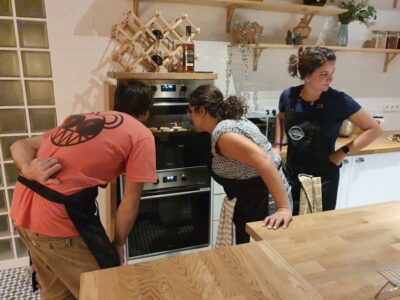
The final bake is the moment when all the earlier work becomes clear. Properly laminated croissants should have crisp outer layers, a tender interior, and a buttery aroma. The class gives you the chance to judge the result yourself rather than simply watching a pastry chef produce one.
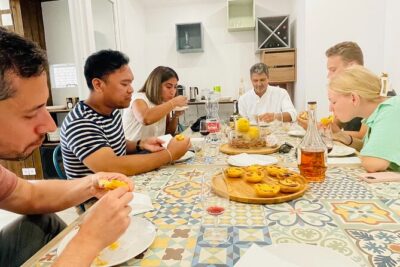
You can sample freshly baked pastries during the class, including the ones you made. Participants have described eating one warm from the oven with a drink, then taking the remaining pastries away. The amount can be substantial, often eight pastries per person, so come with an appetite and a plan for carrying them.
That take-home portion adds real value. At $140 per person, this is not a cheap breakfast. But you are paying for three hours of instruction, ingredients, professional equipment, a recipe, expert guidance, and a large batch of finished pastries. The fresh food helps balance the cost, especially if you value an activity that gives you something to enjoy later rather than a souvenir that sits on a shelf.
What makes the small group worthwhile
A small class can change the whole experience. With up to eight people, the chef can interact with each participant, check the dough, and give corrections at the worktable. That is particularly useful during rolling and shaping, when a minor error can affect the final pastry.
The atmosphere also seems to be part of the appeal. Léo is described as energetic and personable, while Maria is praised for her humor and calm teaching style. The names may vary by session, but the format is designed around a friendly chef who explains the work and keeps the room moving.
This is not an ideal choice if you want a silent, private lesson. You share the work area with other participants, and the stages of the recipe happen at the same time for the whole group. Still, a group of eight is small enough to feel personal without making the class awkward or overly formal.
The social side works well for couples, solo visitors, parent and adult-child combinations, and families with older teenagers. People arrive with different levels of baking experience, but the lesson is friendly to beginners. An experienced home baker can still learn useful points about proofing, butter, and dough handling.
The bi-colour croissant option
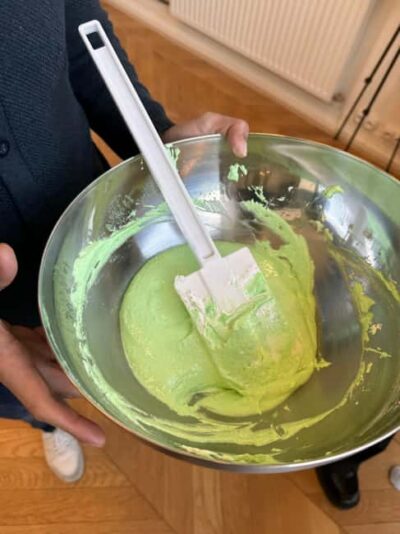
On selected days, the class may offer a bi-colour croissant option. This teaches you how to incorporate colored dough into the pastry, creating a more decorative result.
It is a good choice if you have already made standard croissants or want a more creative baking project. The technique adds visual flair, but it should not replace the basic lessons. You still need to understand lamination, shaping, and proofing before decoration becomes useful.
Check that the bi-colour option is available for your chosen date. It is not presented as part of every class. Also keep in mind that a colorful finish does not necessarily make a better-tasting croissant. The classic version is the better starting point if your main goal is to learn a dependable home method.
Is $140 a fair price?
The value depends on what you want from a Paris food experience. If you only want to eat a croissant, you can do that for far less at a bakery. If you want a polished pastry demonstration with no physical work, another format may suit you better.
For someone who wants to learn, the price is easier to justify. You receive three hours with a pastry chef, all ingredients, use of professional tools, a recipe, instruction in the science of the dough, and a large quantity of baked goods. You also gain a method you can try at home, provided you are willing to repeat the rolling and resting process.
The class is especially good value for couples or families who want a shared activity. You spend the morning working together, and the finished pastries become part of the experience. It is also a useful rainy-day plan because the activity takes place indoors and does not depend on sightseeing conditions.
I would not book it solely because the description promises unusual pastry skills. The main value is solid instruction in classic croissant making. The chef’s individual tips, humor, and corrections make the class more useful than a recipe alone.
Practical planning before you book
The activity lasts three hours, but the schedule is not three hours of constant motion. Dough must rest and proof, so the lesson naturally alternates between work and explanation. That is normal for croissant making and should be part of your expectations.
Wear something comfortable enough for rolling dough and be ready to use your arms. The class includes all necessary ingredients and professional-grade kitchen tools, so you do not need to bring baking equipment. A recipe is provided for future use.
The class is taught in English. The group limit is eight, which is worth considering if personal help matters to you. Free cancellation is available up to 24 hours in advance for a full refund, and you can reserve now and pay later, useful if your Paris plans are still shifting.
Make sure you confirm the age rules before booking. Children under 15 cannot attend, and anyone under 17 must be with a paying adult. The class is also better for people who can comfortably manage repeated rolling and folding.
Who should take this Paris pastry class?
I would recommend it to you if you enjoy food, want a practical souvenir from Paris, or prefer an activity where you make something rather than simply look at it. It suits first-time bakers because the chef guides every stage, and it suits experienced bakers who want professional tips on laminated dough.
It is a particularly good pick for a mother and daughter, a couple, or a family with an older teenager. The friendly tone keeps the class from feeling like a technical exam, while the hands-on format gives everyone a job to do.
You may want to skip it if you have limited arm strength, dislike waiting during proofing, or need a very short activity. It is also not suitable for children under 15. The class asks for patience, effort, and a willingness to follow instructions carefully.
Should you book the Studio Pâtisserie class?
Yes, if you want to learn a real Paris pastry skill and have three hours to spare. The strongest reasons are the small class size, personal help from chefs such as Léo and Maria, the generous batch of pastries, and the chance to eat your work warm from the oven.
Book it with realistic expectations. You will work hard, wait for dough to rest, and leave carrying more croissants than you may expect. At $140, it is a premium activity, but the instruction, food, recipe, and shared memory make it a fair choice for a food-focused Paris itinerary.
FAQ
How long does the croissant baking class last?
The class lasts three hours. Starting times vary, so check availability for the date you want.
Where does the class meet?
It meets at Studio Pâtisserie, a building with a gray-colored storefront. The nearest metro stations are Rome on Line 2 and Villiers on Line 3.
Is the class taught in English?
Yes. The instructor language is English.
How many people are in the group?
The class is limited to eight participants, allowing the chef to provide individual help.
What is included in the price?
The price includes chef guidance, ingredients, professional kitchen equipment and tools, a recipe to take home, pastry tasting, and explanations of croissant history and technique. Bi-colour ingredients and instruction are included if you select that option.
Will I make pain au chocolat as well as croissants?
Past sessions have included both croissants and pain au chocolat, often four of each per person. The exact pastry selection may vary by class.
Can children attend?
Children under 15 are not suitable for the class. Participants under 17 must be accompanied by a paying adult.
Can I cancel my booking?
You can cancel up to 24 hours before the activity for a full refund. You can also reserve now and pay later.
Just added around Paris
- Paris: Millefeuille baking class with a chef★ 5.0 · 5 reviews
- Paris: Macaron Baking Class★ 4.4 · 26 reviews
- Paris: Traditional Croissant Cooking Class With Local Baker★ 5.0 · 2 reviews
- Paris: The Soufflé Baking Class with Chef★ 4.5 · 2 reviews
- Paris: Hands-On Small Group Cooking Class★ 4.9 · 19 reviews
- Paris: Lemon Tart Baking Class with a Pastry Chef★ 5.0 · 4 reviews
- Paris: Evening Cooking Class with Optional Market Visit★ 4.8 · 19 reviews
- Paris Cooking Class: French Desserts Class★ 4.9 · 13 reviews
Baking & Bread Classes, compared.
Paris Croissant Small-Group Baking Class with a Chef
Read our review →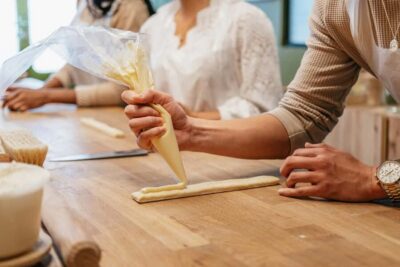
Paris Macarons Small-Group Baking Class with a Chef
Read our review →