
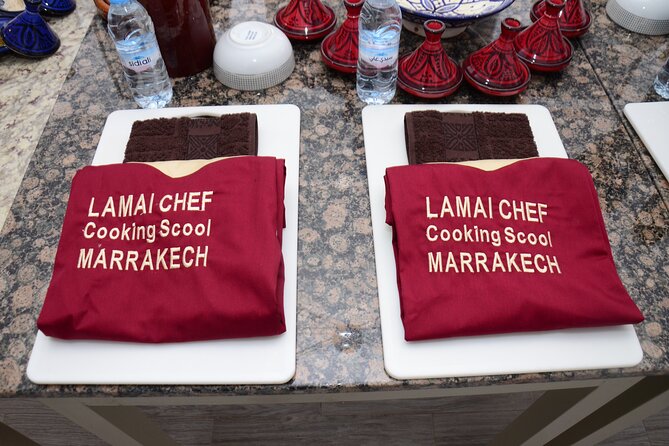
REVIEW · MARRAKECH, MOROCCO
Moroccan Cooking Workshop LAMAI CHEF
Food is the best way to meet Morocco. This 3.5-hour Marrakech workshop combines a spice lesson with hands-on cooking, so you do more than eat a tagine and guess what is in it. I especially like the mint tea and pastry welcome and the chance to prepare several dishes, including chicken tagine, salads, bread, and pancakes.
I also like the private format, since only your group takes part. The main point to weigh is the $69.52 price, which is more than a simple Moroccan meal, though it includes instruction, ingredients, tea, the food you prepare, and a graduation ceremony.
Key points about the Lamai Chef workshop
- A spice-focused introduction: Learn how Morocco’s position along old caravan routes helped shape its cooking.
- Several dishes in one class: Prepare bread, chicken tagine with preserved lemon and olives, two salads, and pancakes with honey and almonds.
- A private activity: Only your group participates, rather than joining a large shared class.
- A full meal is included: You eat the dishes prepared during the workshop for lunch or dinner.
- A relaxed cultural welcome: The theory session includes Moroccan mint tea and pastries.
- Flexible daily hours: Sessions are offered Monday through Sunday from 9:00 a.m. to 10:00 p.m., with pickup available.
Arriving at a Marrakech cooking house
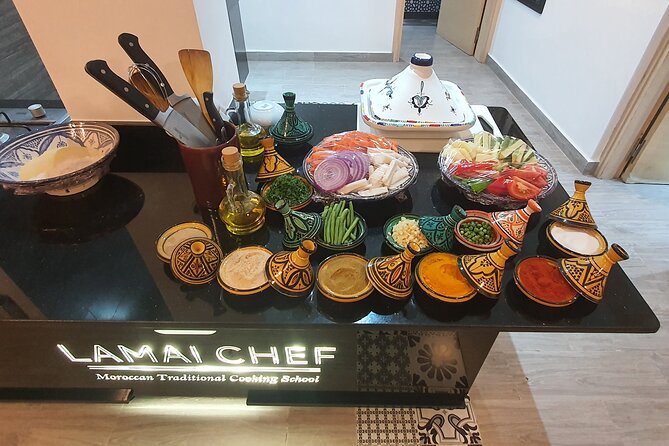
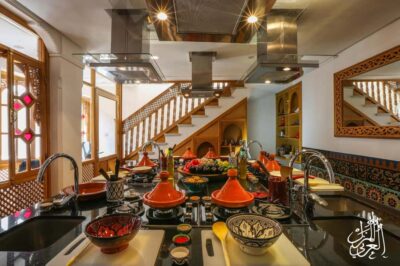
Lamai Chef operates from a residence at 177, Lot Riad de Palais, Marrakech 40150. The activity begins and ends at this meeting point, and it is near public transportation. Pickup is offered, but you should check the exact pickup arrangement when booking rather than assume it is included from every address.
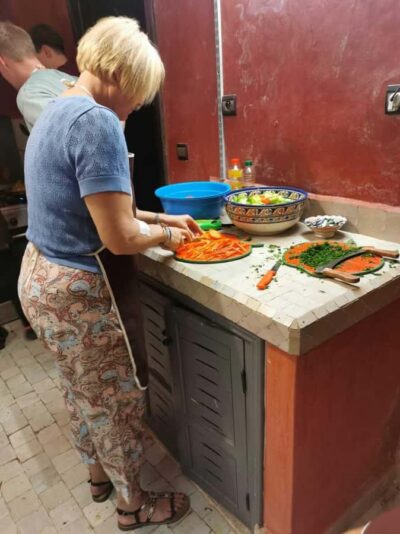
The setting matters. A cooking class in a home-style residence feels more connected to everyday Moroccan food than a formal restaurant demonstration. You are not simply watching a chef plate a finished dish. You are introduced to ingredients, take part in preparation, and then sit down to eat what your group has made.
The class lasts about three and a half hours. That is long enough to cover several recipes without turning the day into a full culinary school course. You should still leave a little space around it in your schedule, since the workshop includes teaching, preparation, eating, and a closing ceremony.
The private format is one of the strongest features. If you are traveling with family or friends, the pace can focus on your group. It is also useful if you want to ask questions without worrying about holding up a large class.
More Moroccan Cooking Classes in Marrakech:
- Marrakech: Moroccan Cooking Class with Pickup
★ 4.6 · 1,862 reviews - Marrakech: Traditional Moroccan Cooking Class & Market Visit
★ 4.8 · 1,861 reviews - Marrakesh: Moroccan Dishes Cooking Class with a Local Chef
★ 5.0 · 1,615 reviews
Starting with Moroccan spices, tea, and pastries
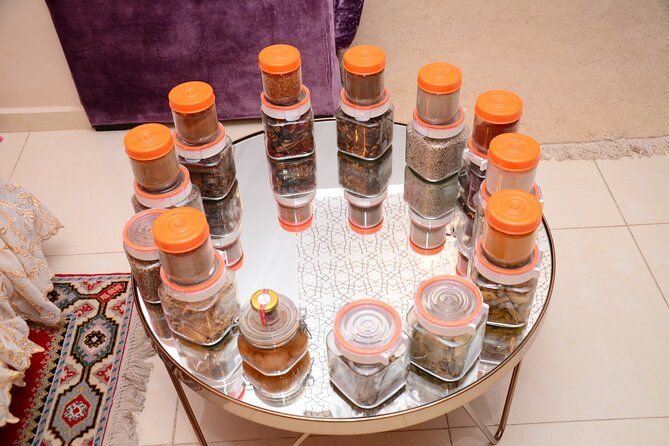
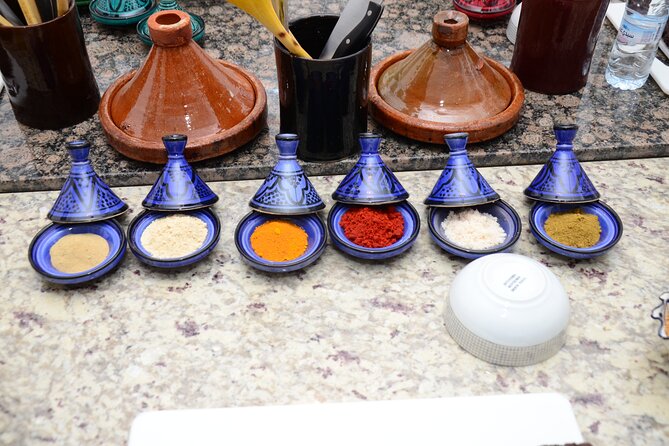
The workshop begins with an introduction to Moroccan spices. The presentation connects the country’s cooking to its location along historic caravan routes, where spices moved across North Africa and beyond. This gives you a useful frame for the dishes that follow.
You will not just hear that Moroccan cooking uses spices. You get an explanation of how they help shape flavor. That is valuable because many Moroccan dishes rely on a measured blend rather than one overpowering seasoning. The point is balance, not heat for its own sake.
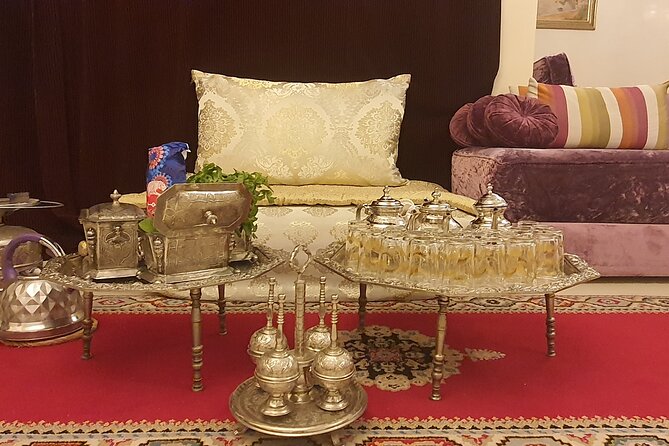
The theory session comes with a mint tea ceremony and Moroccan pastries. This is a good opening because tea is not treated as an afterthought. It gives the workshop a social rhythm and lets you settle in before the practical work begins.
If you have cooked little Moroccan food before, pay close attention here. The spice lesson helps you understand why a tagine, salad, or pastry can taste layered even when the ingredient list looks familiar. You may find this part more useful than a quick recipe handout, since it explains the role of the ingredients before you start cooking.
Preparing bread and a classic chicken tagine
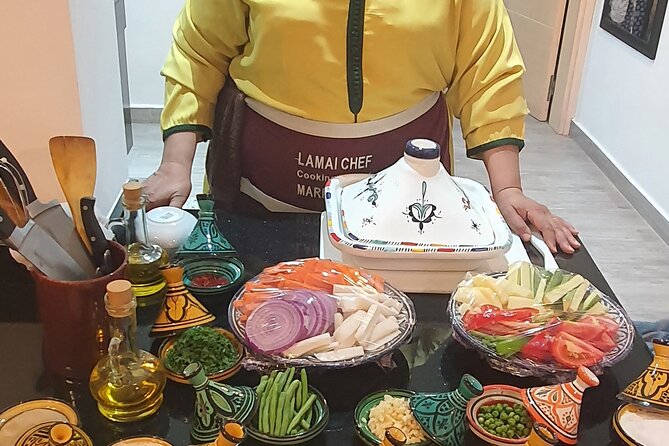
The practical section includes bread, which gives the class a basic foundation. Bread is a daily part of Moroccan meals, so learning to prepare it places the more elaborate dishes in a wider food tradition. It also breaks up the class nicely: you move from spice theory to a simple staple, then toward the main course.
The centerpiece is chicken tagine with candied lemon and olives, made with Taliouine saffron. This is the dish most closely associated with the workshop’s Moroccan focus. Preserved or candied lemon brings a sharp, fragrant note, olives add salt, and saffron contributes a delicate aroma and color.
Taliouine is known in Morocco for saffron production, so this ingredient gives the lesson a clear regional connection. The class does not merely present a generic chicken stew. It points you toward ingredients tied to Moroccan food culture.
A tagine is also a useful dish to learn because it shows how Moroccan cooking builds flavor slowly. You are working with the relationship between savory ingredients, citrus, olives, and spice. The cooking process may be especially helpful if you want to recreate the dish after returning home.
The workshop also includes a demonstration of vegetarian Berber tagine. That broadens the lesson beyond chicken and shows another side of Moroccan cooking. If someone in your group prefers vegetables or simply wants a meat-free idea, this part adds useful variety.
The information provided does not specify the exact vegetables or whether every participant prepares the Berber tagine themselves. Treat it as a demonstration rather than assume you will personally cook every step. The chicken tagine and other listed dishes are the clearer hands-on elements.
Two Moroccan salads with different styles
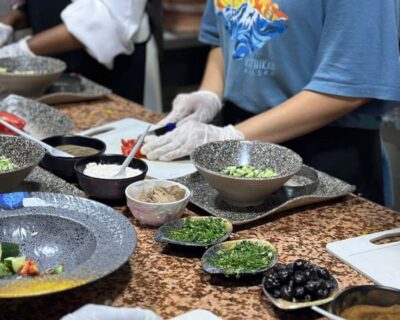
Two Moroccan salads are included, one cooked and one fresh. This is a small detail with real value because Moroccan salads are not limited to leafy greens served before a meal.
The cooked salad introduces a warmer, more seasoned style of preparation. The fresh salad offers contrast in texture and temperature. Together, they show how a Moroccan meal can include several small plates rather than one large main course.
This part also helps balance the tagine. A meal built only around a rich main dish can feel heavy, but two salads provide lighter elements and different flavors. You get a better sense of how the whole table works, not just how to make one famous recipe.
For home cooks, salads may be the easiest recipes to repeat. They usually require less time than a tagine and can fit into an ordinary weeknight meal. The workshop gives you several ideas in one sitting, though the exact recipes are not listed in the available details.
A few more cooking classes around Marrakech worth a look
- Moroccan Cooking Class & Marrakech Market Visit with Chef Khmisa
★ 5.0 · 1,504 reviews - Half-Day Cooking Class with Local Chef Laila in Marrakech
★ 5.0 · 952 reviews - Marrakech: Moroccan Cooking Class with a Local Family
★ 4.9 · 668 reviews - Marrakech: Moroccan Cuisine Cooking Class in Local Home
★ 4.8 · 508 reviews
Finishing with honey, almonds, and Moroccan hospitality
The final preparation is pancakes with honey and almonds. This sweet course gives the class a clear finish and brings in familiar Moroccan ingredients in a different form. Honey adds sweetness, while almonds provide crunch and texture.
Because the pancakes are made during the practical section, the workshop covers a broad menu: bread, a main dish, a vegetarian demonstration, two salads, and dessert. That range is one reason the price can make sense for someone who wants more than a single recipe.
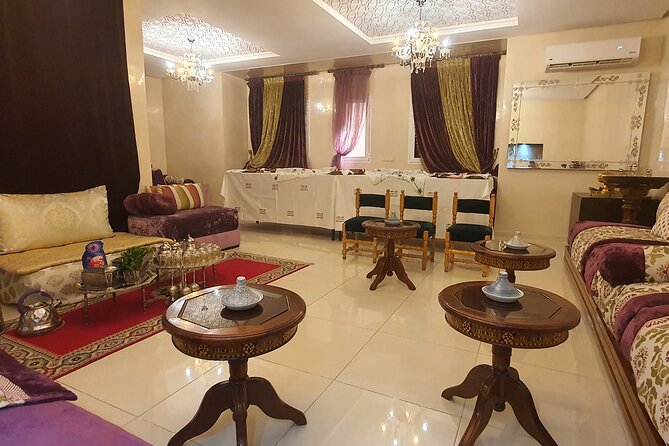
The welcome and closing also matter. The class begins with tea and pastries, ends with a meal, and includes a graduation ceremony. The certificate-style ending may feel playful, but it gives the experience a definite shape. You do not simply stop cooking and walk out.
The ceremony is not a formal culinary qualification. Think of it as a cheerful conclusion to a short cultural workshop. If you are looking for a serious professional cooking course, this is not that. If you want a memorable activity to share with family or friends, the ending adds a nice touch.
Eating what you prepare for lunch or dinner
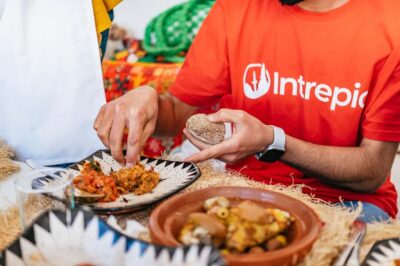
The tasting portion is built into the workshop. You eat the food prepared by your group, either as lunch or dinner depending on the session time. This is more satisfying than watching a demonstration and then receiving a separate meal that you had no part in making.
It also lets you judge the results immediately. You can see how the spice balance works, compare the fresh and cooked salads, and taste the tagine after preparing it. That connection between cooking and eating is the core value of the class.
The menu is substantial for a three-and-a-half-hour activity. You should not book it as a quick snack between sightseeing stops. The schedule includes an opening presentation, practical cooking, a meal, and the graduation ceremony, so the experience deserves a protected block of time.
The exact meal timing depends on the booking. Since the operating hours run from 9:00 a.m. to 10:00 p.m., you can potentially fit the workshop into a morning, afternoon, or evening plan. Confirm the session time and pickup details before arranging other activities.
Is $69.52 a fair price?
At $69.52 per person, this is not the cheapest way to eat in Marrakech. You can find a less expensive meal, especially if you are only comparing the cost of food.
The better comparison is a private cooking lesson plus a meal. Your fee covers the spice presentation, mint tea, Moroccan pastries, ingredients, practical instruction, the food you make, and the closing ceremony. You also get several recipes rather than one demonstration.
I think the price is strongest for couples, families, and small groups who want a shared activity. The private setup means you are paying for a more personal format, not just a seat in a large class.
The value is weaker if you mainly want to sample Moroccan dishes and have little interest in preparing them. In that case, a restaurant meal or food-focused walking activity may suit you better. This workshop earns its price through participation.
The activity is often booked about 28 days ahead. That does not mean you must reserve exactly four weeks in advance, but it is a useful sign that planning ahead is sensible, especially if your Marrakech dates are fixed.
Who will enjoy this workshop most?
I would recommend Lamai Chef to you if you enjoy food, prefer small private activities, or want a break from monuments and shopping. It works particularly well for families because the menu has several stages and the graduation ceremony gives children a clear finish, although the supplied information does not specify a minimum age.
It is also a good choice for anyone who wants practical cultural context. The spice lesson, tea ceremony, and home-style setting connect the cooking to Moroccan customs rather than treating recipes as isolated instructions.
You should think twice if you want a fast class, a professional qualification, or a highly specialized lesson focused on one dish. The program covers many elements in one session, so it favors range and shared participation over advanced technique.
The French-language review provided especially praised the clear advice, warm welcome, and professional approach. An English-language review also described the morning as fun, informative, and well organized. Those points match what the program promises: direct guidance, a welcoming tone, and a full sequence from introduction to meal.
No individual guide names are provided, so you should not expect to book a particular instructor. The provider is LAMAI CHEF, and the workshop is presented as a private activity for your group.
Practical planning for the Marrakech class
The meeting point is Lamai Chef Marrakech, 177, Lot Riad de Palais, Marrakech 40150, Morocco. The experience returns to that same point. Since public transportation is nearby, you have an alternative to pickup, but confirm the simplest route for your accommodation.
Mobile tickets are accepted, and confirmation is received at booking. Keep the booking details available on your phone so you can check the address and start time easily.
The activity operates every day from Monday through Sunday, between 9:00 a.m. and 10:00 p.m. The broad hours give you useful flexibility, but the exact starting time still matters because the cooking, tasting, and ceremony together take about three and a half hours.
Free cancellation is available when you cancel at least 24 hours before the start time. Within 24 hours, the payment is not refunded, and changes are not accepted. The provider also requires a minimum number of participants, so if the activity is canceled for that reason, you are offered another date or activity, or a full refund.
Should you book Lamai Chef?
Book this workshop if you want to learn several Moroccan dishes, eat the meal you help prepare, and share a private activity with your own group. The spice presentation, tea ceremony, chicken tagine with lemon and olives, two salads, and honey-almond pancakes give the session more substance than a short cooking demonstration.
I would be cautious only if your budget is tight or you want a simple meal without a lesson. For everyone else, the $69.52 fee is reasonable for a private, food-centered experience that combines instruction, cultural context, and dinner or lunch in one well-filled session.
FAQ
Where does the Moroccan cooking workshop begin?
It begins at Lamai Chef Marrakech, 177, Lot Riad de Palais, Marrakech 40150, Morocco.
How long does the workshop last?
The workshop lasts approximately 3 hours and 30 minutes.
What food will I prepare?
The practical session includes bread, chicken tagine with candied lemon and olives with Taliouine saffron, two Moroccan salads, and pancakes with honey and almonds. There is also a demonstration of vegetarian Berber tagine.
Is a meal included?
Yes. You eat the lunch or dinner prepared during the workshop.
Is the workshop private?
Yes. Only your group participates in this private activity.
What is the cancellation policy?
You can cancel at least 24 hours before the start time for a full refund. Cancellations or changes made within 24 hours are not accepted and are not refunded.
Just added around Marrakech
- Moroccan Food Cooking Class with a Local Chef in Marrakech★ 4.7 · 90 reviews
- Marrakech: 3-Hour Open-Air Moroccan Cooking Course★ 4.9 · 74 reviews
- Moroccan cooking class in Marrakech with berber chef★ 5.0 · 16 reviews
- Edgy 8 Dish Private, Fusion Cooking Class, Menu Plan, Market★ 4.9 · 31 reviews
- Marrakesh: Private Cooking Class & Local Market Shopping★ 4.7 · 15 reviews
- Marrakech: Moroccan Cooking Class with Local Chef★ 4.6 · 87 reviews
- Marrakech: Authentic Moroccan Cooking Class in a Farm★ 4.8 · 8 reviews
- Marrakech: Moroccan Cooking Class with Amazing Local Chef!★ 4.9 · 100 reviews
Moroccan Cooking Classes, compared.
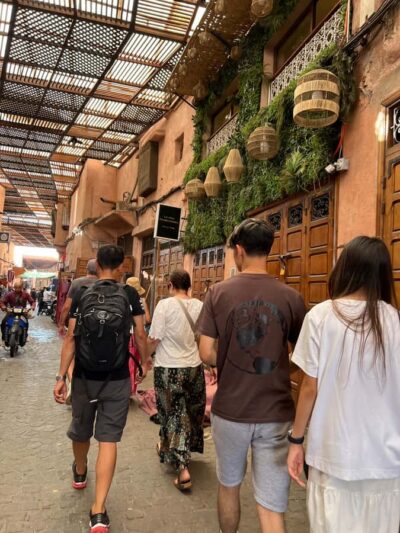
Traditional Moroccan Cooking Class & Market Visit
Read our review →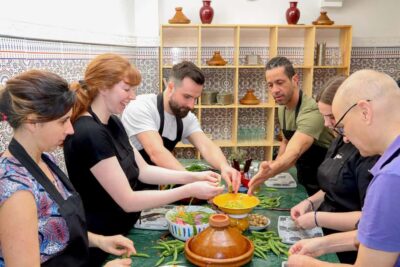
Moroccan Dishes Cooking Class with a Local Chef
Read our review →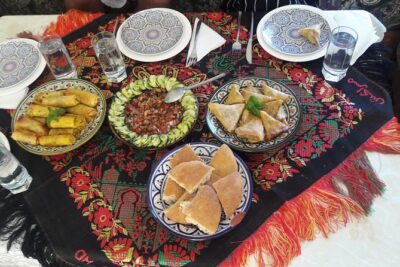
Moroccan Cooking Class & Marrakech Market Visit with Chef Khmisa
Read our review →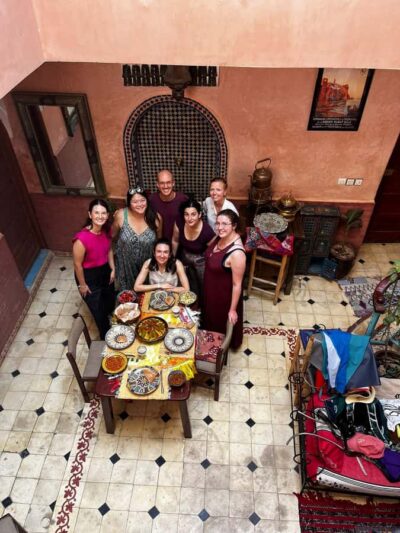
Lists this class appears in