
REVIEW · MARRAKECH, MOROCCO
Half-Day Cooking Class with Local Chef Laila in Marrakech
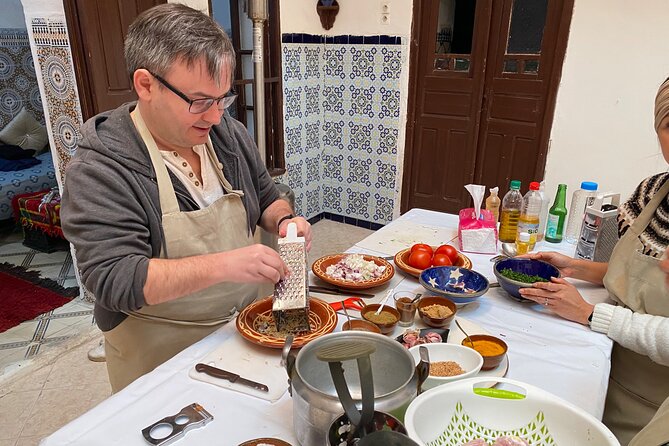
Moroccan cooking starts at the market. This half-day class with local chef Laila combines ingredient shopping, practical kitchen work, and a generous three-course meal. I like the chance to learn how to judge fresh produce and the warm, family-led setting, where Laila’s children may also help teach. The main drawback is that the market visit does not happen every time, despite being part of the advertised plan.
You can choose a morning class with lunch or an afternoon class with dinner. I also like that the menu can be adjusted for vegetarians, vegans, and food allergies. Just know that a group of up to 20 people can make the cooking feel more social than intimate, and the hands-on time may vary depending on the group.
Key points to know before booking
- Market shopping comes first: You learn how to select herbs, spices, and fresh produce, although this part may not take place on every departure.
- Chef Laila leads a family-style class: Her son Hamza and other family members sometimes teach or assist, keeping the mood friendly and relaxed.
- You prepare a full meal: Expect an appetizer or salads, a Moroccan main course, dessert, and Moroccan tea.
- Ras el hanout gets proper attention: You learn how this classic Moroccan spice mixture helps shape the flavor of the main dish.
- Food needs can be discussed: Allergies, vegetarian meals, and vegan choices are addressed before the menu is chosen.
- The price is modest: At $34.76 per person, the meal alone gives the class good value, before counting the instruction and cultural exchange.
Why this Marrakech cooking class works so well
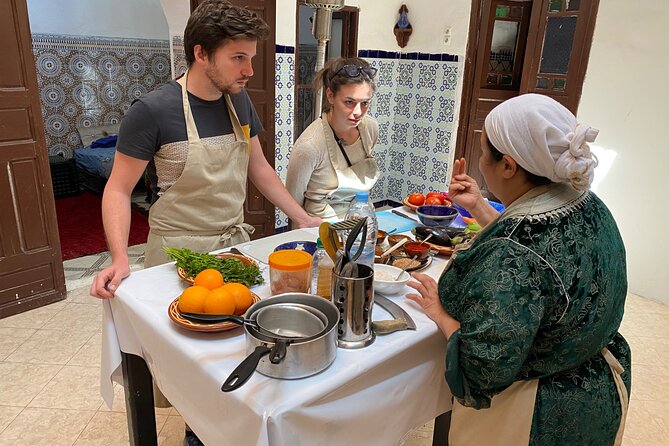
Marrakech is easy to experience through its food. You can order tagine in almost any restaurant, but a cooking class lets you see how the dish takes shape, from the market ingredients to the final shared meal. This experience gives you that process in about four and a half hours.
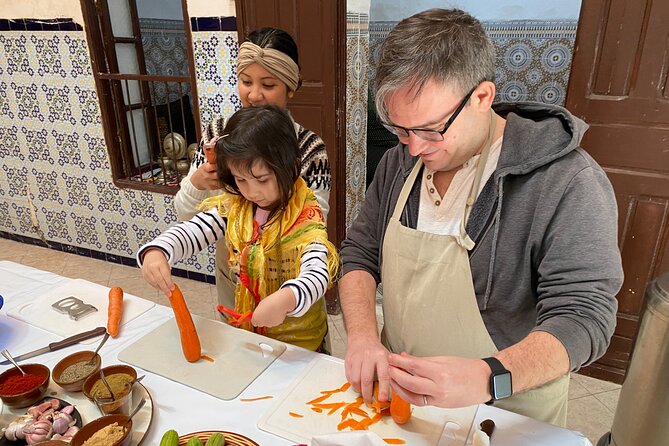
I like the balance between demonstration and participation. You are not simply seated while someone cooks for you. You help prepare ingredients, learn about Moroccan spices, and take part in making several dishes. At the same time, this is not designed as a formal professional cookery course. It is a friendly cultural activity with food at its center.
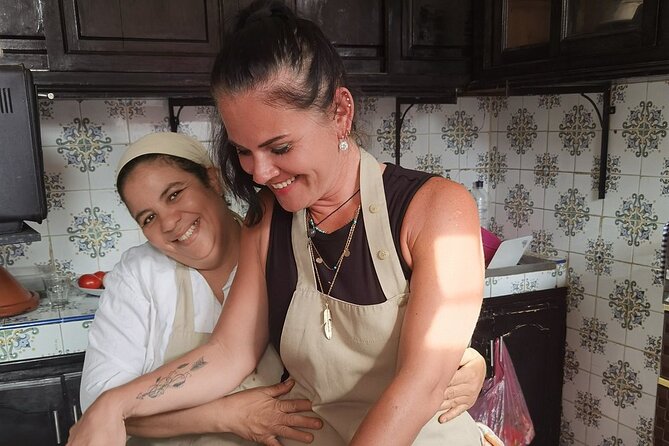
Chef Laila’s family is an important part of the experience. Laila is described as warm, funny, and attentive to the people in her class. When she is unavailable, her son Hamza has led the session, sometimes with help from his sister. His instruction has included English and French, which can be useful in a mixed group.
The family atmosphere may be the best reason to choose this class. You may see family members helping with the meal and washing dishes, and that ordinary home-life element gives the afternoon a personal touch. It feels less like a polished cooking school and more like being welcomed into a local family’s food traditions.
More Half-Day Experiences in Marrakech:
- Half-Day Thai Cooking Class at Organic Farm in Chiang Mai
★ 5.0 · 19,087 reviews - Bangkok: Tingly Thai Cooking School Half-Day Cooking Class
★ 4.9 · 1,191 reviews - Naxos: Half-Day Cooking Class at Basiliko Family Tavern
★ 5.0 · 887 reviews
Meeting Chef Laila near Riad Zitoun el Jdid
The class begins at 3 Rue Riad Zitoun el Jdid, Marrakesh 40000. You meet at the specified point, and the activity ends back there. The location is near public transportation, which makes the start and finish fairly simple to manage.
Before any shopping or cooking begins, the host checks for food allergies. This is also when the group discusses the menu. If you are vegetarian or vegan, say so clearly at the start. The menu is selected to suit the people taking part, though the exact dishes can vary.
That early conversation matters. Moroccan cooking often uses shared ingredients and long cooking times, so it is better to settle food concerns before the knives and pans come out. The class is intended for all skill levels, and no cooking experience is required.
The published maximum is 20 people. That is a fairly large class for a home-style cooking session. A bigger group can make the event lively and social, but it may also mean you spend some of the preparation time watching rather than chopping or stirring. One smaller group had eight people, which allowed plenty of social interaction and hands-on work.
The market lesson: choosing produce and spices
The market visit is meant to be the first major part of the class. With Laila, you look at fresh produce, herbs, and spices, and learn how to judge quality. This is more useful than simply being shown a list of ingredients because Moroccan food depends heavily on freshness and seasoning.
You might learn what to look for in produce, how herbs should appear, and how spices are selected for a particular dish. The experience also gives meaning to ingredients that can seem mysterious when you only see them in a finished tagine.
The market portion is not guaranteed on every class. One participant specifically found that it did not happen, even though it was included in the description. That is worth keeping in mind if shopping with the chef is the main reason you are booking. The cooking session and meal still go ahead, but the experience can feel different without this opening walk.
If the market visit is important to you, ask about it when confirming your plans. That simple question can help you set realistic expectations.
Moroccan tea and the start of the kitchen work
After the shopping portion, you head to the cooking location. The schedule includes a lesson in making Moroccan tea before the main cooking begins. Tea is not just a drink here. It is part of the welcome, the pause between activities, and the social rhythm of the meal.
The tea lesson gives the class an easy beginning. You can get comfortable with the host and the other people in the group before moving into more active preparation. It also gives you something practical to repeat at home, even if you do not have time to recreate a full tagine.
The cooking area is described as spacious enough for preparation and for sitting down to eat afterward. That separation helps. You are not trying to balance plates on a small work surface or rush away immediately after the food is ready.
A few more cooking classes around Marrakech worth a look
- Marrakech: Moroccan Cooking Class with Pickup
★ 4.6 · 1,862 reviews - Marrakech: Traditional Moroccan Cooking Class & Market Visit
★ 4.8 · 1,861 reviews - Marrakesh: Moroccan Dishes Cooking Class with a Local Chef
★ 5.0 · 1,615 reviews - Moroccan Cooking Class & Marrakech Market Visit with Chef Khmisa
★ 5.0 · 1,504 reviews
Making a Moroccan three-course meal
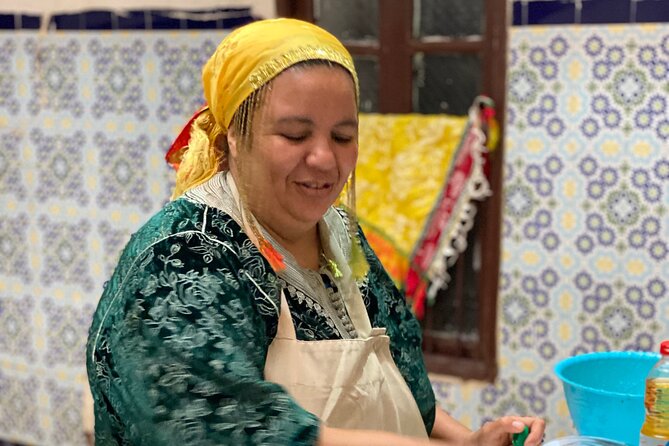
The main course begins with Moroccan spices, including ras el hanout. This is one of the most useful parts of the class because seasoning is where much of the character of Moroccan food comes from. You learn how spices are used as part of a dish rather than simply sprinkled on at the end.
The exact menu depends on the group. Dishes mentioned by people who took part include chicken tagine, vegetarian tagine, sweet chicken tagine, salads, and dessert. You may prepare more than one main dish if the group includes different dietary needs.
The appetizer course may take the form of Moroccan salads. These give you a chance to work with vegetables and seasonings before moving on to the longer-cooking main dishes. The food is prepared in stages, so you can see how several parts of the meal come together.
Dessert follows the main course preparation. Details of the dessert are not fixed, but it is included as part of the three-course meal. That variety makes the class feel like a complete introduction to Moroccan home cooking rather than a single-dish demonstration.
The work is hands-on, but you should not expect to cook every element from start to finish by yourself. In a large group, some people may chop while others watch an explanation or wait for the next task. One person found the class more focused on chopping and preparation than on cooking itself. That is a fair description of what you may receive.
Sitting down to eat what you made
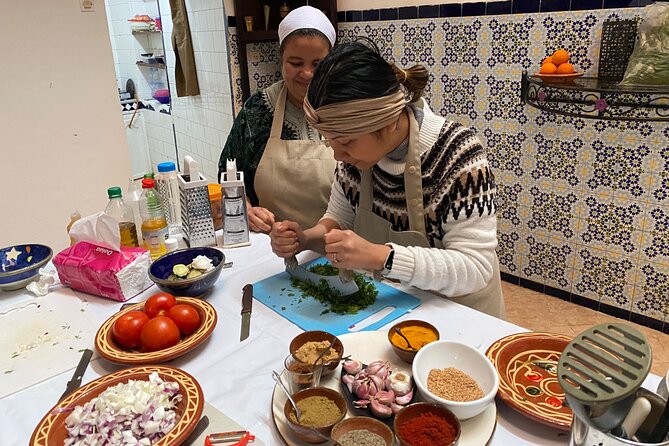
Once the dishes are ready, the group sits down for lunch or dinner. This is the payoff, but it is not only about the food. You have watched ingredients being selected, handled the preparation, and learned how the flavors are built.
The portions appear generous. You should arrive hungry, especially if you choose the afternoon class and have dinner as your main meal. Several dishes may reach the table, so this is not a light tasting.
The meal also creates time to talk with Laila, her family, and the other people in the group. Solo visitors can enjoy the social side, while couples and families have a shared activity that feels more engaging than simply booking another restaurant meal.
The food receives especially strong praise, with several people finding it better than restaurant meals they had eaten in Marrakech. That does not mean every dish will suit every palate, but it does suggest that the class delivers more than a token meal at the end.
Laila, Hamza, and the family welcome
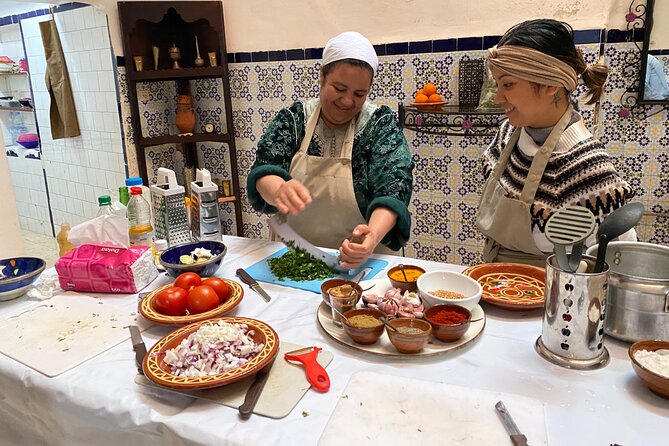
The teaching style is one of the class’s strongest features. Laila is described as patient, humorous, and good at making each person feel included. Her family members help create a relaxed mood rather than a stiff classroom.
Hamza has led classes when Laila was sick, and the change of instructor did not prevent the session from working well. He has explained ingredients and methods clearly in English and French. His sister has also helped with teaching and hosting.
This family involvement can be a real advantage if you want contact with local life. You are not only receiving a recipe lesson from an anonymous instructor. You are spending part of the day with a family that shares its kitchen, food, and routines with you.
It also means the tone may be informal. If you want exact culinary measurements, highly technical knife instruction, or a polished chef-school format, this may not be the right fit. If you want conversation, humor, and a meal prepared together, it is much better suited.
Is $34.76 good value?
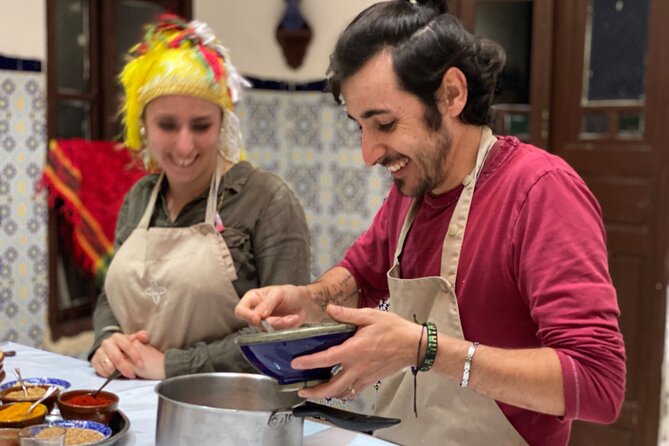
At $34.76 per person, the price is reasonable for roughly four and a half hours in Marrakech. You receive instruction, food, tea, a social activity, and potentially a market visit. A three-course lunch or dinner in a restaurant could use much of that amount without teaching you anything you can take home.
The value is strongest if you care about learning and meeting local people. The class gives you recipes, spice guidance, and preparation ideas that you can try again after returning home. One participant specifically looked forward to remaking the dishes at home, which is a good sign for anyone who wants more than a one-time meal.
The price is less compelling if you mainly want a quiet, private lesson. The group can reach 20 people, and the experience is designed as a shared activity. You may not have constant access to the cooking surface or receive individual instruction at every stage.
Still, the combination of food and hospitality makes the cost easy to justify. I would treat the market walk as a welcome extra rather than the sole reason to book, since it may not be included on every session.
Morning lunch or afternoon dinner?
You can choose between a morning session that ends with lunch and an afternoon session that ends with dinner. Both follow the same general pattern: meeting the host, discussing dietary needs, selecting or reviewing ingredients, learning about tea, preparing the dishes, and eating together.
Choose the morning option if you want your main cultural activity finished early and prefer to keep the evening free. It also works well if you plan to spend the afternoon exploring Marrakech after a substantial meal.
The afternoon option suits you if you want a slower start to the day or prefer a cooking activity that leads directly into dinner. Since the class lasts about four and a half hours, allow enough room around it rather than scheduling another fixed activity immediately afterward.
The food is plentiful, so you may not want to book a major restaurant meal right after either session.
Who should book this class?
I would recommend it for solo visitors, couples, families, and friends who like to learn by doing. It is also a good choice if you want a break from sightseeing and prefer a cultural activity with a clear practical result.
Vegetarians and vegans should find the menu adaptable, and people with allergies can raise those concerns before cooking starts. You should still explain your needs carefully and early.
This is less suitable for someone who wants a small private class or an exact guarantee of a market visit. It may also disappoint experienced cooks who expect advanced technique. The class is built around traditional Moroccan food, basic preparation, family hospitality, and a shared table.
The high 4.9 rating from 953 ratings and 98 percent recommendation rate fit the experience’s main strengths: good food, friendly teaching, and a welcoming family atmosphere. Those figures do not remove the need to consider group size or the possible absence of the market walk, but they indicate a dependable choice for a relaxed food experience in Marrakech.
Practical details before you reserve
You receive confirmation at the time of booking, and the experience uses a mobile ticket. The activity is near public transportation, begins and ends at the meeting point, and accepts a maximum of 20 people.
Free cancellation is available if you cancel at least 24 hours before the local start time. Cancellations or changes made within 24 hours are not refunded or accepted. Poor weather can also lead to a different date or a full refund because the experience requires good weather.
Ask about the market visit if it matters to you, and provide allergy or dietary information before the menu is chosen. Arrive ready to eat, participate, and spend time in a social setting rather than expecting a private chef lesson.
Should you book Chef Laila’s cooking class?
Book it if you want to understand Moroccan food through spices, preparation, and conversation, not just eat another tagine in a restaurant. The combination of tea, market knowledge, family teaching, hands-on preparation, and a full meal gives you good value for $34.76.
I would choose this class for its people and food first, and the market visit second. If you can accept a group setting and the possibility of a shortened itinerary, it is a warm, practical way to spend half a day in Marrakech.
FAQ
Where does the cooking class begin and end?
It begins at 3 Rue Riad Zitoun el Jdid, Marrakesh 40000, Morocco, and ends back at the meeting point.
How long does the experience last?
The class lasts approximately four hours and 30 minutes.
Can I choose between lunch and dinner?
Yes. You can choose a morning class with lunch or an afternoon class with dinner.
Can the menu accommodate allergies, vegetarians, and vegans?
Yes. Food allergies are checked at the start, and the menu can be adapted for vegetarian and vegan participants.
Is the market visit guaranteed?
No. The plan includes a local market visit to select produce, herbs, and spices, but it may not happen on every class.
What is the cancellation policy?
You can cancel up to 24 hours before the local start time for a full refund. Cancellations or changes made less than 24 hours before the experience are not refunded or accepted.
Just added around Marrakech
- Moroccan Food Cooking Class with a Local Chef in Marrakech★ 4.7 · 90 reviews
- Marrakech: 3-Hour Open-Air Moroccan Cooking Course★ 4.9 · 74 reviews
- Moroccan cooking class in Marrakech with berber chef★ 5.0 · 16 reviews
- Edgy 8 Dish Private, Fusion Cooking Class, Menu Plan, Market★ 4.9 · 31 reviews
- Marrakech: Moroccan Cooking Class with Local Chef★ 4.6 · 87 reviews
- Marrakesh: Private Cooking Class & Local Market Shopping★ 4.7 · 15 reviews
- Marrakech: Moroccan Cooking Class with Amazing Local Chef!★ 4.9 · 100 reviews
- Marrakech: Moroccan Cooking Class for vegetarians and vegan★ 4.9 · 156 reviews
Cooking Classes, compared.
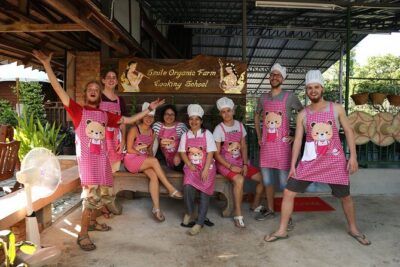
Half-Day Thai Cooking Class at Organic Farm in Chiang Mai
Read our review →
3 in 1 Cooking Class near Navona: Fettuccine, Ravioli & Tiramisu
Read our review →
Pasta & Tiramisu Cooking Class with Unlimited Wine
Read our review →
Hanoi Cooking Class: Culture, Local Market & Meaning CSR Impact
Read our review →
5 Traditional Dishes Hanoi Cooking Class with Market Trip
Read our review →
Cooking Class and Lunch at a Tuscan Farmhouse with Local Market Tour from Florence
Read our review →
Cooking Class, Market & Thai Herbs Garden Tour
Read our review →Lists this class appears in