
REVIEW · SOUTH KOREA
From Forest to Table: A Hansik Cooking Journey in Seoul
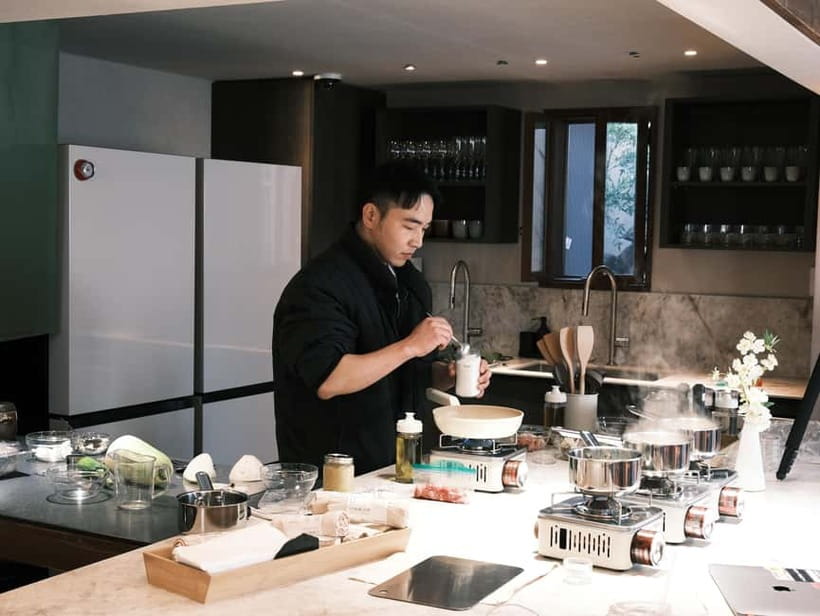
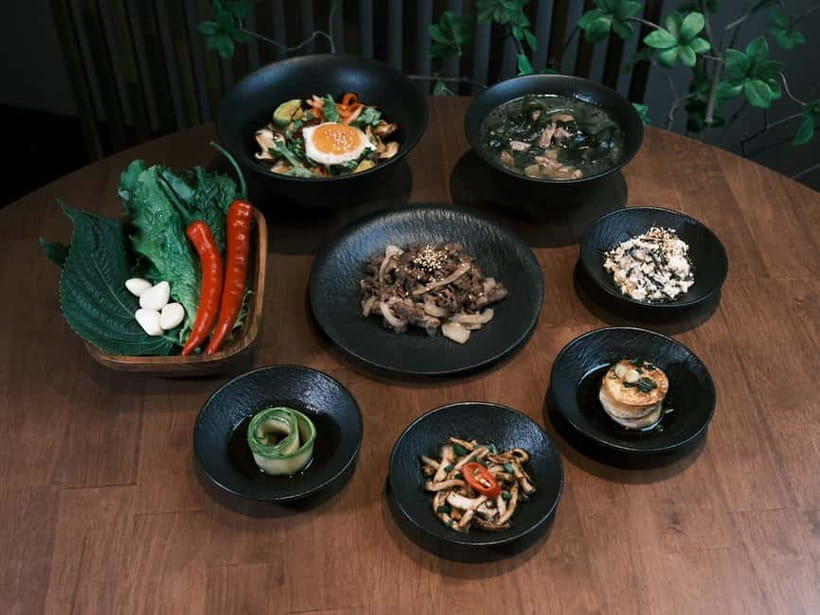
Come hungry, leave with recipes. This 210-minute Korean cooking class gives you a hands-on meal in a calm, Hanok-inspired studio, with four side dishes, bibimbap, soup, and a main dish of your choice. I like the personal menu selection and the chance to learn from Woody, a patient host who grew up cooking with his mother. I also like that he grills the samgyeopsal himself and serves it with fresh ssam vegetables. The main consideration is food restrictions: this experience is not suitable for vegans, vegetarians, people with food allergies, or children under 10.
This is more than a quick demonstration followed by a snack. You chop, season, cook, plate, and then sit down to eat what you made. The class is limited to eight people, which should give you room to ask questions and work at a sensible pace. Bring comfortable clothes, since you will be cooking for several hours, and keep in mind that transportation to the studio is not included.
What makes this Seoul cooking class special
- Choose your own main dish and soup: Each participant selects personal dishes, so the meal can reflect individual interests.
- Cook a complete Korean table: You prepare four side dishes, bibimbap, soup or stew, and a main course.
- Learn with Woody: His teaching style is calm and patient, with English guidance and practical tips about Korean ingredients and customs.
- Enjoy host-prepared samgyeopsal: Woody grills Korean pork belly and serves it with fresh vegetables for lettuce wraps.
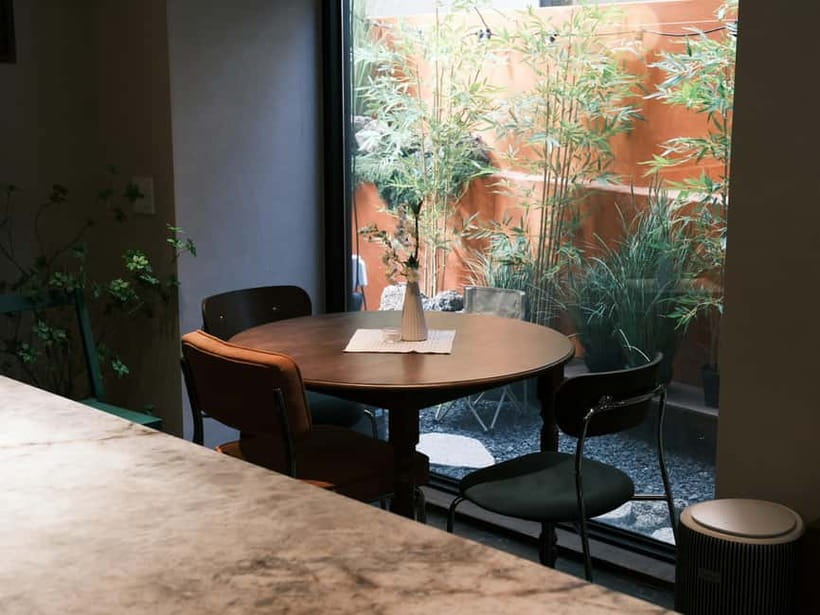
- Work in a carefully designed studio: The Hanok-inspired space has a clean, cozy feel, soft music, and a home-style setting.
- Take the class home: A digital recipe is sent afterward by photo, along with a small souvenir gift.
Entering the Hanok-inspired kitchen
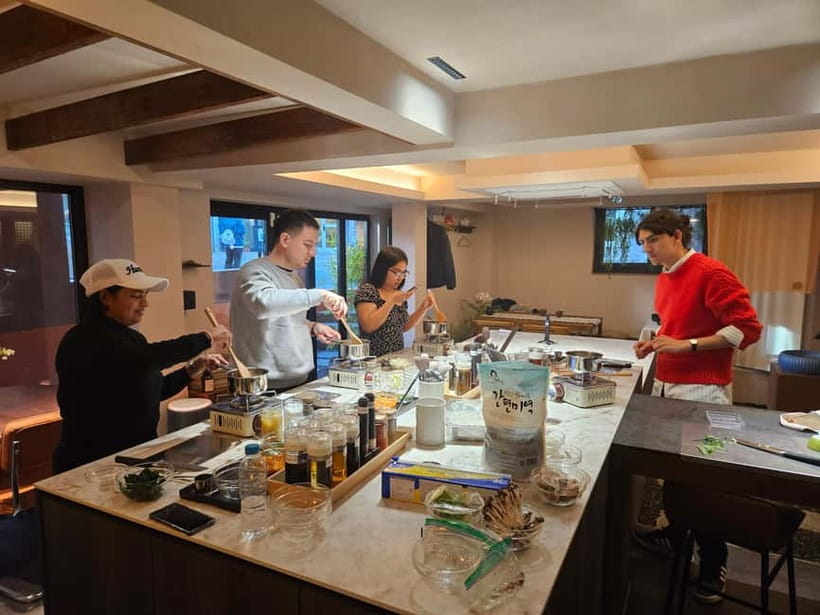
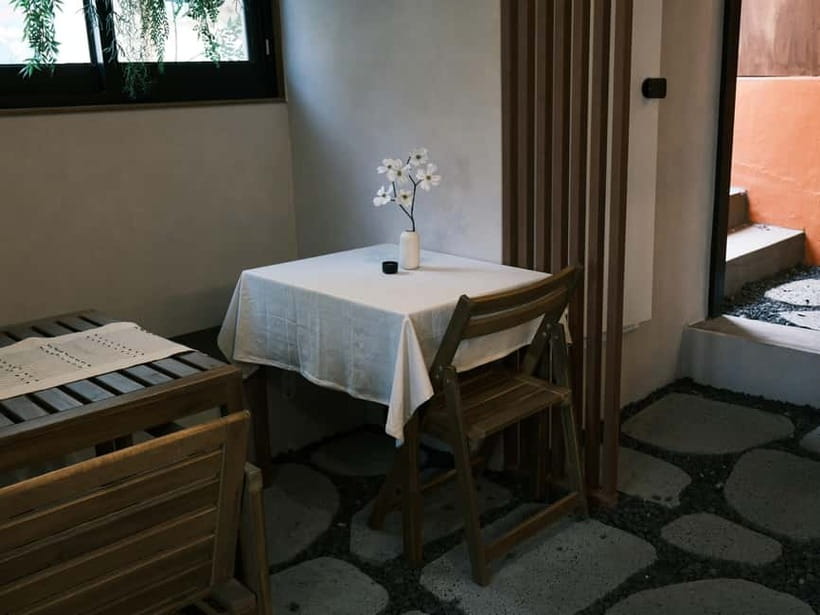
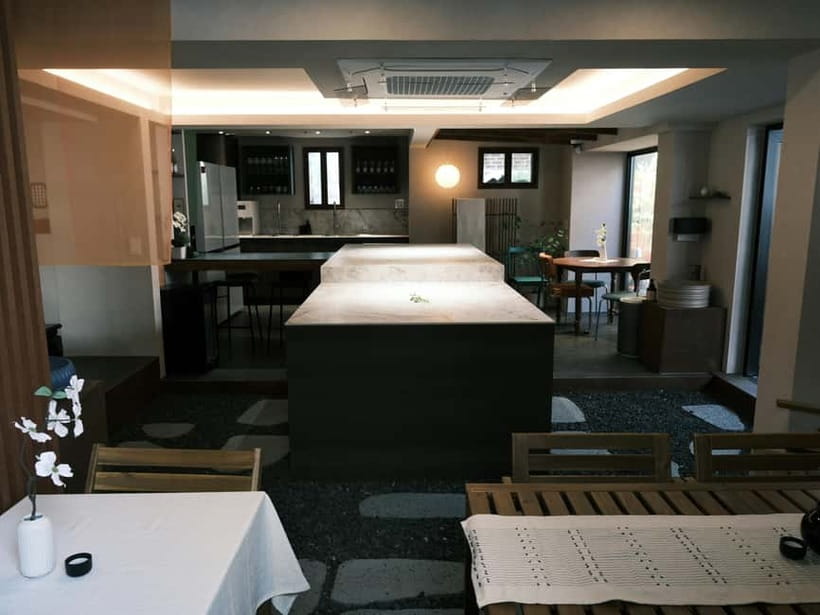
The meeting point is Soop Table, The Hansik Atelier, a cooking studio in Seoul. The setting is one of the strongest parts of the experience. It was designed by Woody and combines modern cooking equipment with Korean touches, creating a room that feels more like a welcoming home kitchen than a busy school.
That matters after a full day in Seoul. You are not being rushed through a crowded market or packed around a demonstration counter. The group size is capped at eight, and the setting is intended for conversation as well as cooking. Several participants have especially appreciated the clean, well-organized kitchen and the gentle background music.
The class begins with traditional Korean tea. This is a useful opening, not just a pleasant drink. Woody introduces Korean food culture and sets the tone before the knives and cutting boards come out. The welcome gives you a little context for the meal instead of treating Korean dishes as a list of recipes without a story.
Woody learned from his mother, who was a Korean food artisan, and later visited all six continents while exploring food and culture. That background helps explain the class style. He is not simply reciting instructions. He connects ingredients and techniques to the way Korean food is prepared at home, while also sharing local suggestions for the rest of your time in Seoul.
A few more cooking classes around Seoul worth a look
- Local Home Korean Cooking Class & Market Adventure in Seoul
★ 5.0 · 1,024 reviews - Master Korean traditional cooking with a Kimchi chef
★ 5.0 · 385 reviews - Seoul: Korean Cooking Class at a Local Home and Market Tour
★ 5.0 · 348 reviews
Cooking four side dishes from scratch
Korean meals are built around more than one large plate. The side dishes, known as banchan, bring different textures, colors, and flavors to the table. In this class, you prepare four of them, learning how several smaller dishes can turn a simple meal into a full spread.
This is one of the best reasons to book the class instead of taking a short bibimbap lesson. You get a broader picture of Korean home dining. You may notice how ingredients are seasoned differently, how a sauce changes a vegetable, or how small portions are arranged to be shared.
The instructions are designed for beginners. You do not need previous cooking experience, and the teaching is paced so that people with different skill levels can work together. One participant with culinary training attended alongside people who considered themselves complete beginners, and the class was still comfortable for the whole group.
That does not mean the session is passive. You should expect to handle ingredients and follow several steps. If you enjoy being given a task, checking your seasoning, and seeing separate preparations come together, this format will suit you. If you prefer to sit back and watch someone else cook, three and a half hours may feel long.
The ingredients are supplied, prepared, and included in the price. The tools and apron are also provided. You only need comfortable clothing and a willingness to participate.
Building your own bibimbap bowl
Bibimbap is perhaps the most playful part of the meal. You arrange prepared ingredients over rice, add the proper seasoning, and turn separate components into one colorful bowl. The dish teaches an important Korean idea: balance comes from bringing different elements together rather than making everything taste the same.
The plating is part of the lesson. You are not simply eating from a communal pot. You get to see how arrangement changes the appearance of the meal, then mix it before eating. This gives the class a satisfying before-and-after moment, particularly if you enjoy taking food photos.
The bibimbap also fits neatly into the wider meal. The banchan show the small side of Korean dining, while the bibimbap demonstrates how vegetables, rice, sauce, and toppings can make a complete dish. You leave with a better sense of how Korean meals are structured, not just how one recipe is made.
Selecting your main dish and soup
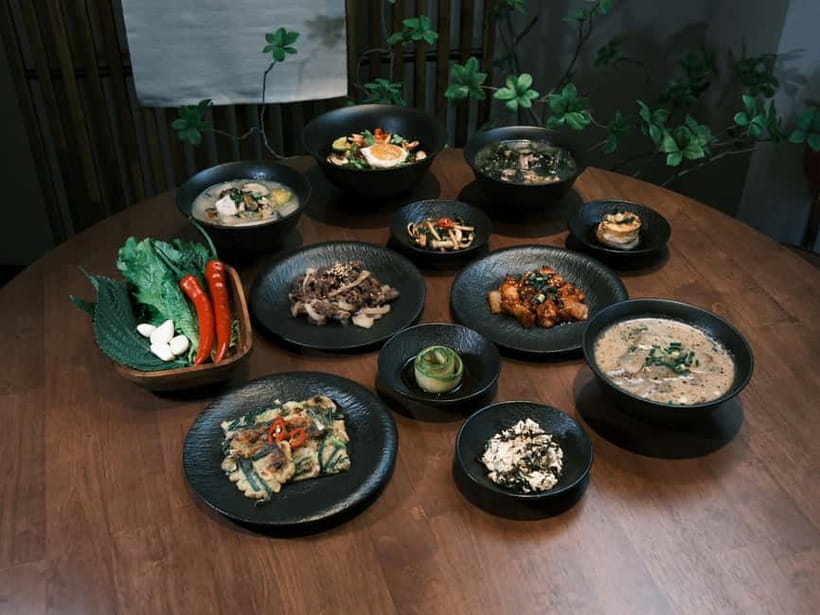
A useful feature here is personal choice. Each person selects a main dish and a soup or stew, rather than having the entire group cook one identical menu. The available choices are presented during the class, and the selection has included options such as bulgogi and dakgalbi.
This system works well for mixed groups. One person may want to focus on meat, another may prefer a different style of soup, and family members can compare dishes around the table. It also lets you choose food that matches your curiosity instead of receiving a fixed menu chosen in advance.
Bulgogi has received particular praise for its recipe and preparation. If it is among the available choices during your class, it is a good pick for anyone who wants to learn a familiar Korean dish with clear, practical instructions. The menu can vary, so you should not assume every listed dish will be offered at every session.
The soup or stew adds another lesson in Korean cooking. Brothy dishes often complete the meal by providing warmth and contrast to the side dishes and grilled meat. Because each person chooses individually, the final table may include several different bowls, giving you the chance to taste and compare.
The choice does require some attention. If you are visiting with a large family or group of friends, people may be working on different dishes at the same time. That is part of the appeal, but it can be less straightforward than a class where everyone follows one recipe together.
Same place, a different thing to cook:
- Seoul: Korean Cooking at Seoul Cooking Club!
★ 5.0 · 311 reviews - Korean Cooking at Seoul Cooking Club
★ 5.0 · 220 reviews - Seoul: Taste of Korea, Authentic Home Style Cooking Class
★ 4.9 · 166 reviews - Seoul: Royal Seoul Cooking Class in a 100-Year-Old Hanok
★ 5.0 · 96 reviews
The host-grilled samgyeopsal course
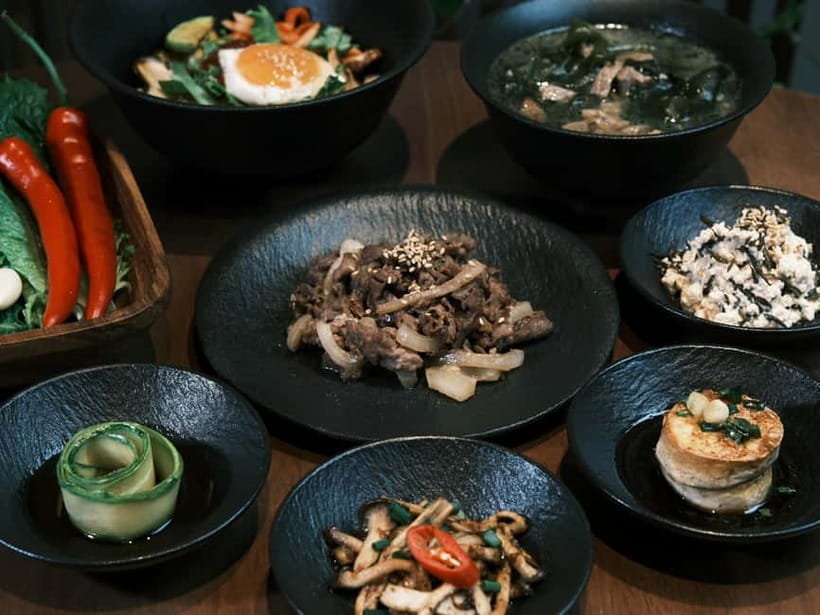
Woody personally grills samgyeopsal, or Korean pork belly, and serves it with fresh vegetables for ssam. You wrap the meat and accompaniments in lettuce, creating a bite that is both casual and distinctly Korean.
This course is prepared by the host rather than assigned to participants, which gives the class a welcome pause. You have already worked through multiple dishes, and Woody takes over the grill while you watch, talk, and get ready to eat.
The samgyeopsal also adds a social part to the meal. Korean dining often works best when food is shared and assembled at the table. The lettuce wraps make the meal interactive without adding another complicated cooking task.
This is an important point for anyone comparing prices. The class is not only a lesson in one or two recipes. It includes a full meal, several dishes you prepare yourself, host-grilled pork belly, tea, a traditional distilled drink for adults, dessert, and water. At $89 per person, the cost is higher than ordering a casual Korean meal, but the value improves if you want instruction, ingredients, a small group, and the social experience in one booking.
Sitting down to eat what you made
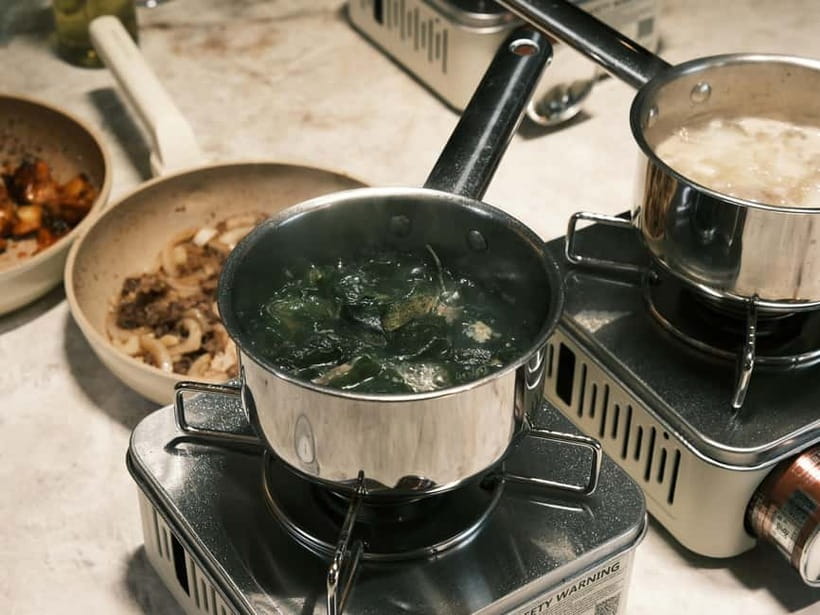
After the cooking, you sit together and eat the meal at a relaxed pace. This is where the three-and-a-half-hour schedule makes sense. The class is not trying to squeeze cooking into a short tourist stop. There is time to taste the results, ask questions, and talk with Woody.
The meal can be especially rewarding because you know how each dish was made. You have seen the ingredients before seasoning, handled the tools, and watched the separate preparations gather on the table. Even a simple side dish carries more meaning when you made it yourself.
A glass of traditional Korean distilled liquor is included for adults. Extra alcoholic drinks are not included, so you should not expect an open bar. Filtered water is available during the meal, and a simple Korean dessert finishes the experience.
The dessert may vary. Some sessions have included hotteok, a warm Korean sweet pancake, but the published description promises a simple Korean dessert rather than a guaranteed hotteok course. If dessert is a major reason for booking, ask about the current menu before you arrive.
What you take home afterward
The most practical souvenir is the digital recipe sent by photo after the class. This is better than leaving with only a full stomach and a few vague memories. You can refer back to the recipes when you want to recreate part of the meal at home.
The recipes are especially useful because the class covers several dishes, not just one signature item. You may not reproduce the whole spread every week, but a side dish, bibimbap, or soup can become a manageable way to bring Korean cooking into your own kitchen.
Woody has also helped participants find cooking tools they wanted to take home. Handmade craft items are available for purchase at the venue, but they are not included in the class price. The small souvenir gift is included and makes a thoughtful final touch.
Timing, group size, and practical limits
Plan on 210 minutes, or three and a half hours. That includes tea, the introduction, cooking, the shared meal, conversation, and dessert. You should avoid booking this immediately before a timed attraction or airport transfer.
The small group limit of eight is a major advantage. It allows Woody to move around the kitchen, check your progress, and answer questions. It also supports the relaxed mood that runs through the class. A larger group could make the individual menu choices and hands-on instruction harder to manage.
English and Korean are spoken. The class is guided in English, so it is a good fit if you want direct explanations of techniques and ingredients. Translation support in other languages is not provided.
Transportation to and from Soop Table is not included. You will need to arrange your own way to the meeting point and allow enough time to arrive ready to cook.
Cancellation is flexible up to 24 hours before the start time for a full refund. You can also reserve now and pay later, which helps if your Seoul schedule is still shifting.
Who should book this experience?
I would recommend it most strongly to food-focused visitors who want more than a restaurant meal. It suits couples, families with children aged 10 and older, and small groups of friends who enjoy making choices and comparing dishes.
It is also a good choice for people who want a calm activity. The studio, small group, and patient instruction create a slower rhythm than many city tours. You do not need to be an expert cook. You only need to be willing to work with the group and follow instructions.
Families should note that children under 10 are not accepted. Vegetarian and vegan diners should also skip this class, since the meal includes meat and the experience is not designed around plant-based substitutions. People with food allergies should not book, as the activity is specifically marked unsuitable for them.
The class is less suitable if you are looking for a fast introduction, a market tour, or a fixed menu with no decisions. It is also not the right pick if you want to take leftovers home, since food containers are not included.
Is this Seoul cooking class worth $89?
For the amount of food and instruction included, I consider $89 a fair price. You receive tea, ingredients, equipment, an apron, a full hands-on class, four side dishes, bibimbap, a chosen soup and main dish, grilled samgyeopsal, a drink for adults, dessert, a recipe record, and a small gift.
The value is strongest if you count the setting and teaching as part of the experience. You are paying for Woody’s time, the carefully prepared ingredients, a small group, and the chance to ask questions. You are also getting a meal that would take effort to order and sample piece by piece in Seoul.
It is not a bargain meal. If you only want to eat Korean food, you can spend much less at a restaurant. But if you want to understand how the meal comes together and leave with recipes you can use, the price is easier to justify.
Should you book From Forest to Table?
Book it if you want a personal Korean food experience with plenty of hands-on work, a calm studio, and a host who clearly enjoys teaching. Woody’s patient style, flexible menu, and local food guidance make this especially appealing for first-time Korean cooks and families with older children.
Skip it if you are vegan, vegetarian, managing a food allergy, or hoping for a short activity. For everyone else, arrive hungry and allow the full 210 minutes. The best part is not one dramatic dish. It is the way tea, cooking, conversation, samgyeopsal, and a shared table turn a Seoul food stop into something you can repeat at home.
FAQ
Where does the cooking class take place?
The meeting point is Soop Table, The Hansik Atelier, a Hanok-inspired cooking studio in Seoul.
How long does the experience last?
The class lasts 210 minutes, or three and a half hours.
How many people can join the class?
The group is limited to eight participants.
What languages are available?
The instructor speaks English and Korean, and the cooking class is guided in English. Translation support in other languages is not included.
What food will I prepare?
You prepare four side dishes, a soup or stew, a main dish of your choice, and a plated bibimbap. The host also grills samgyeopsal and serves it with fresh ssam vegetables.
Can I choose my own main dish?
Yes. Each participant selects a main dish and a soup or stew from the available options.
Is food and drink included?
Yes. Ingredients, a traditional welcome tea, the shared meal, grilled samgyeopsal, filtered water, a simple Korean dessert, and one glass of traditional Korean distilled liquor for adults are included. Extra alcoholic drinks are not included.
Is the class suitable for children or people with dietary restrictions?
Children under 10 are not accepted. The experience is not suitable for vegans, vegetarians, or people with food allergies.
What should I bring, and can I cancel?
Bring comfortable clothes. Transportation, food containers for leftovers, and extra alcoholic drinks are not included. You can cancel up to 24 hours in advance for a full refund, and you can reserve now and pay later.
Just added around Seoul
- Seoul: Korean Kimchi Cooking Class in the Heart of the City★ 5.0 · 3 reviews
- Seoul: Premium Korean Feast Cooking Class★ 5.0 · 3 reviews
- Seoul: Kimchi Dishes Cooking Class with Wine Pairing★ 4.7 · 38 reviews
- Seoul: Korean Cooking Class with Local Grocery Shopping★ 5.0 · 13 reviews
- Seoul: Korean Home Visit, Cooking & Cultural Experience★ 5.0 · 2 reviews
- Seoul: Cooking Class and Tour with Michelin-Trained Chef★ 5.0 · 11 reviews
- Seoul: Authentic Korean Cooking Class and Market Tour★ 5.0 · 6 reviews
- (Seoul) Korean Cooking Class with a Professional Chef★ 5.0 · 14 reviews
Cooking Classes, compared.

Half-Day Thai Cooking Class at Organic Farm in Chiang Mai
Read our review →

3 in 1 Cooking Class near Navona: Fettuccine, Ravioli & Tiramisu
Read our review →
Pasta & Tiramisu Cooking Class with Unlimited Wine
Read our review →
Hanoi Cooking Class: Culture, Local Market & Meaning CSR Impact
Read our review →
5 Traditional Dishes Hanoi Cooking Class with Market Trip
Read our review →
Cooking Class and Lunch at a Tuscan Farmhouse with Local Market Tour from Florence
Read our review →
Cooking Class, Market & Thai Herbs Garden Tour
Read our review →Lists this class appears in