
REVIEW · BALI, INDONESIA
From Ubud: Authentic Cooking Class in a Local Village
Food makes Bali easier to understand. This half-day class takes you from a local market to a family kitchen in Laplapan, with time for rice farming, temple views, and a shared Balinese meal. I especially like the hands-on format and the warm welcome from Mama Puspa and her team. The main thing to consider is timing: the morning class includes the market visit, while the shorter afternoon class does not.
At $35 per person, this is a strong value if you want more than a meal out. You get hotel transport in Ubud, ingredients, tea or coffee, instruction, lunch, and a recipe book to take home. The class can run from 210 minutes to four hours, and pickup arrangements may need extra care if your hotel sits outside the main Ubud area.
Key points to know before booking
- Choose the morning session: You visit a fresh market, learn about local produce, and may have a chance to taste unfamiliar fruits.
- Cook in a traditional village setting: Laplapan gives the class a more personal feel than a cooking school in a commercial district.
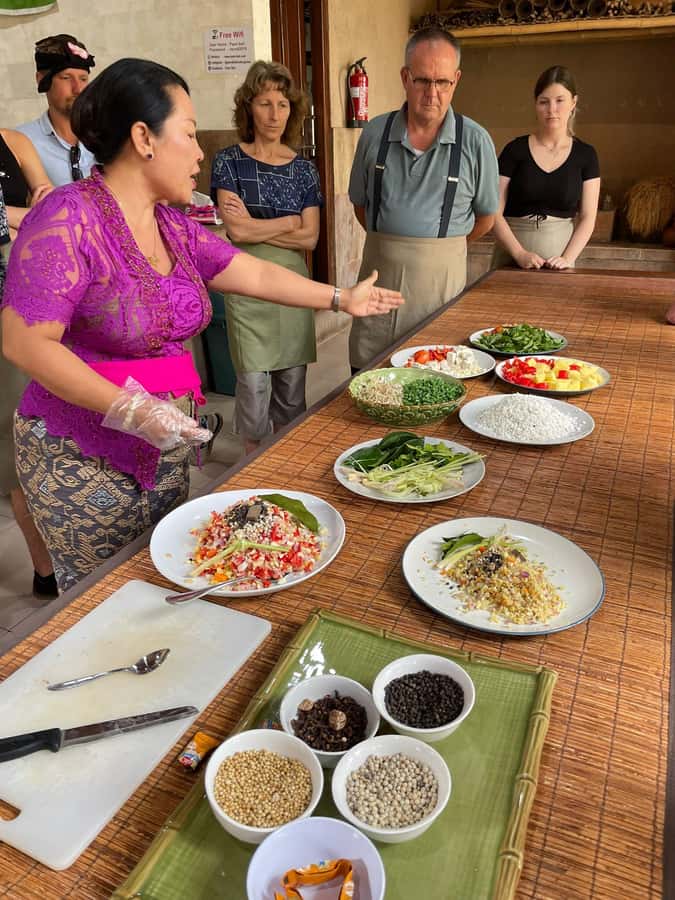
- Expect a full menu: The class prepares several starters, main dishes, and a dessert, then serves the food as a shared feast.
- Come ready to participate: You chop, pound, mix, season, and cook rather than simply watch a demonstration.
- Dietary needs can often be handled: Garlic, onion, capsicum, and gluten-free adjustments have been accommodated, but you should state your needs when booking.
- Transport is useful but not flawless: Ubud pickup and drop-off are included, though one pickup was reported as arriving earlier than expected.
Why this class feels different from a standard cooking lesson
Many cooking classes give you a recipe, a cutting board, and a quick meal. This one tries to show you where the food fits into daily Balinese life.
You begin with the ingredients, not just the finished dishes. At the market, your guide explains the vegetables, herbs, meat, spices, and other foods used in Balinese kitchens. That matters because many ingredients can look unfamiliar when you first see them in a market stall. With someone pointing out what you are seeing, the food becomes easier to recognize later in a restaurant or shop.
The setting also changes the mood. The class takes place in the traditional village of Laplapan, where you are welcomed into a family home and shown around the compound. Several people particularly enjoyed seeing the family temple and taking photographs there. This is not a polished cooking studio designed only for tourists. It feels closer to being invited into someone’s home, though the operation is clearly organized for visitors.
Mama Puspa is a major part of the appeal. She is described as funny, warm, and full of energy, with a talent for making a group feel relaxed. Her staff guide the class carefully, so you can learn without feeling lost. If you enjoy food with a strong cultural connection, this human touch is worth as much as the recipes.
More Farm Cooking Classes in Indonesia
- Ubud: Balinese Cooking Class at an Organic Farm
★ 5.0 · 1,786 reviews - Balinese Farm Cooking Class by Pemulan Bali
★ 5.0 · 410 reviews - From Ubud: Authentic Bali Farm Cooking School & Organic Farm
★ 5.0 · 122 reviews
The morning market sets the tone
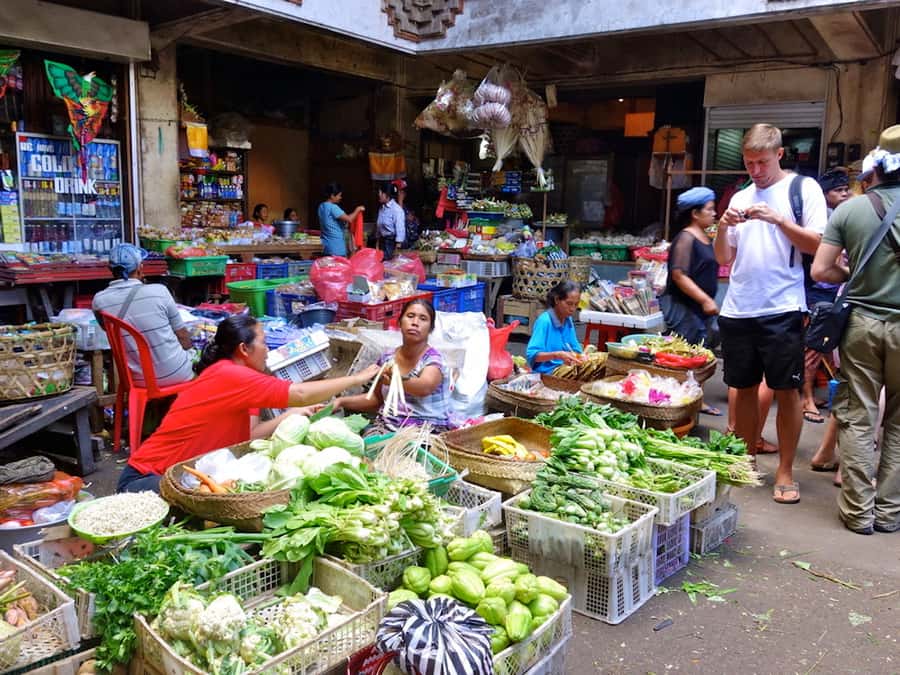
The market visit is available with the morning class only, so I would choose that option if your schedule allows. It adds a useful hour or so of context before you start cooking, and it gives you a clearer sense of how fresh ingredients move from stall to kitchen.
Your guide helps identify the produce and explains how ingredients are used. You may also get to taste local fruit. Some participants used the visit to buy spices and tea, with several noting that the prices were affordable. I would bring a little extra cash if you enjoy taking home cooking ingredients, but the class price already covers everything needed for the lesson.
The market is a working place, not a carefully staged food display. Expect a more direct look at everyday shopping in Bali. That can mean noise, movement, and plenty to take in. If markets are not your thing, the afternoon class saves time, but you lose one of the most useful cultural parts of the day.
The morning schedule also makes sense for your appetite. You visit the market, see the ingredients in their raw form, and then learn how they become a meal. By lunchtime, you have a much better understanding of what is on your plate.
Rice fields and the food behind the food
The itinerary also includes a stop at a rice plantation, where you learn how Bali’s staple crop is cultivated and prepared. The stop is brief compared with the cooking lesson, but it gives important context.
Rice is not simply a side dish in Bali. It is part of the country’s farming life, food traditions, and daily meals. Seeing where it comes from helps connect the dishes you prepare with the work behind them. You also get a chance to enjoy the surrounding views before moving on to Laplapan.
Do not expect a full farming workshop. The rice visit is there to provide a look at cultivation and local scenery, not to turn the day into an agricultural tour. I see it as a worthwhile connecting stop that gives the cooking class more meaning.
Arriving in Laplapan and entering the family compound
The village visit is what gives this class its strongest sense of place. On arrival, you receive a warm welcome, usually with Balinese tea, coffee, or a refreshing drink. The family compound and temple provide a calm setting before the practical work begins.
The kitchen and dining area have been praised for being clean, attractive, and comfortable. That is important because you spend much of the class standing, preparing food, and moving between tasks. The setting feels home-based, but the instructors keep the session on track.
You also get a chance to see a little of everyday village life rather than only visiting a market or restaurant built for sightseeing. The experience does not pretend to show every part of Balinese culture, but it gives you a direct connection to one local family and their food traditions.
If you are traveling with children or teenagers, this section of the day can help keep the experience varied. There is movement, food preparation, conversation, and a meal at the end. One family specifically found the class suitable for two teenagers, while another found it good for children more generally.
Same place, a different thing to cook:
- Ubud Cooking Class Bali with Balinese Chef
★ 5.0 · 1,609 reviews - Ubud: Cooking Class with Transfers and Optional Market Visit
★ 4.9 · 824 reviews - PRIVATE Authentic Balinese Cooking Class in Ubud at Putu’s Home
★ 5.0 · 644 reviews - Balinese Ubud cooking school (9 Dish Cooking and Market Tour)
★ 5.0 · 540 reviews
The cooking lesson: active, social, and well paced
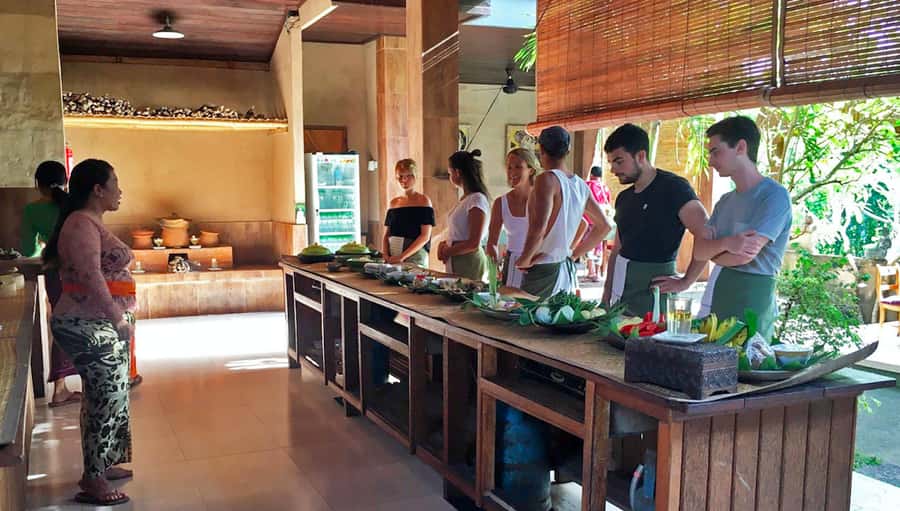
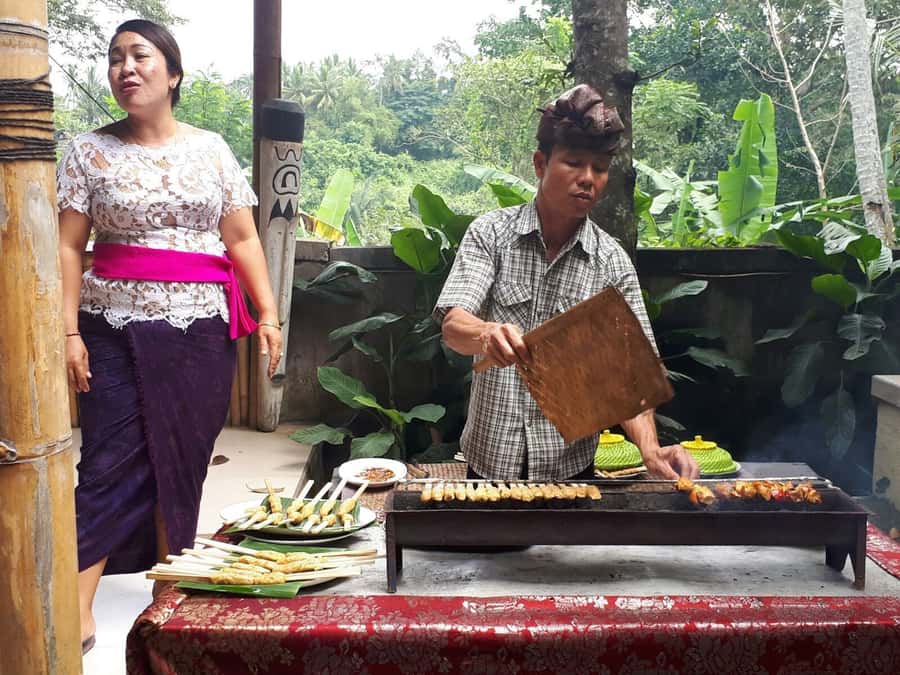
The class is designed so that you do real work. You may chop vegetables, pound spice mixtures, combine ingredients, prepare skewers, and cook at the stove. The instructors rotate tasks so one person does not end up handling only the easy jobs.
The advertised menu includes three starters, four main courses, and an authentic dessert. Several people describe preparing six dishes plus dessert, or seven dishes in total, so the exact menu may vary. Either way, this is not a single-dish lesson. You prepare enough food for a substantial meal and get a broad introduction to Balinese flavors.
I like that the food is taught as a group activity. You work alongside other participants, often in pairs, and share tasks across the menu. That makes it a good choice if you are traveling alone and want an easy social activity, but it also works well for couples, families, and groups of friends.
The pace is another strength. The instructors explain each step, then let you try it. You are not left to guess how much spice to use or when a mixture is ready. At the same time, the staff keep the class moving, so four hours does not feel like an endless demonstration.
The food is described as simple, fresh, and very tasty. That is useful to keep in mind. This is not about creating restaurant decoration or complicated fine dining. It is about learning practical methods and making dishes you can try again at home.
Dietary requirements and ingredient changes
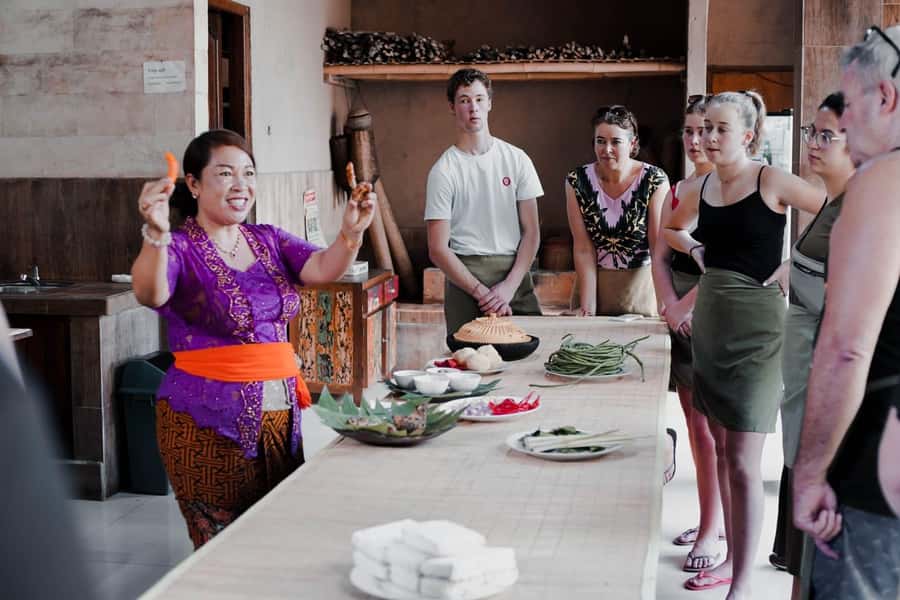
You should share allergies and dietary needs when you book. The staff have adjusted recipes for garlic, onion, capsicum, and gluten-free diets, including separate pans in at least one case to avoid cross-contamination.
The team has also suggested substitute ingredients for foods that may be hard to find outside Bali. That makes the recipe book more useful once you return home. Still, you should not assume every request can be handled automatically. Tell the operator in advance and confirm the arrangements when you arrive.
You can choose between meat and vegetarian dishes. The class is therefore suitable for a broad range of diets, though it is sensible to ask exactly which menu applies on your chosen date.
The meal at the end is part of the lesson
After the cooking, you sit down with the group and eat what you prepared. This shared meal is more than a reward for finishing the chopping. It lets you taste how the separate components work together and compare the flavors you helped create.
The meal can be surprisingly generous. People describe finishing a table of several dishes and dessert, so you should arrive hungry. The food is served as a group meal, which adds to the friendly, family-style feel of the afternoon or morning.
I also like that the meal gives you time to talk with the other cooks. A market visit can be interesting, and a cooking lesson can be useful, but sitting down together is often when the day becomes memorable.
You receive recipe notes or a small cookbook to take home. This is one of the most practical inclusions. You do not have to rely on memory after a busy class, and the notes can help you find substitutes for ingredients that are uncommon where you live.
Transport, timing, and group size
Pickup and drop-off are included for hotels in the Ubud area. Transport makes this easier than arranging your own way to a village outside the central town, and the driver may be able to answer questions about Bali along the route. One driver, Wayan Arianta, was praised for his helpful explanations about the island.
The transport record is very good overall, with 88 percent of participants giving it a perfect score. Still, you should confirm your pickup time and be ready a little early. One person reported that the driver arrived before the expected time and called repeatedly while they were returning from another activity. Clear communication would have avoided that small problem.
Pickup from outside Ubud is possible for an additional fee if requested at booking. Do not assume it is included if you are staying in another part of Bali.
The group can include up to 15 participants. That is small enough for plenty of instruction, though the feel may change depending on the day. One group had seven adults and two children, while another group nearby had around 15 adults. If you prefer a quieter class, ask about the expected group size, but do not count on a private lesson.
Plan on 210 minutes to four hours, depending on the session and the market visit. The morning class takes longer because it includes the market. The afternoon option is shorter and skips that stop.
Is $35 good value?
I think $35 is a very fair price for what is included. You are not paying only for instruction. The price covers hotel transport in Ubud, a market visit with the morning option, the rice plantation stop, welcome drinks, ingredients, the cooking class, lunch, and recipes to take home.
The value is strongest if you want a half-day activity with several parts. A simple cooking lesson might cost less, but it would not give you the same look at the market, village setting, family temple, and rice production.
The class also saves you from buying a long list of ingredients for one meal. You get to use fresh local produce without ending the day with half a cupboard of spices you cannot carry home.
The main limitation is that this is a popular, structured activity. You will not be cooking entirely on your own, and the dishes are selected for the group rather than tailored to your personal tastes. For $35, though, the balance of food, culture, transport, and instruction is hard to fault.
Who should book this class?
I would recommend it most strongly if you:
- Want to learn how Balinese food is prepared rather than only eat it
- Enjoy hands-on activities and do not mind sharing tasks
- Are curious about local markets and village life
- Want a social activity while traveling alone
- Are traveling with family members who enjoy food
- Need vegetarian or certain allergy-friendly adjustments
- Want recipes you can recreate at home
It may be less suitable if you dislike group activities, have limited time, or want an advanced chef-level course. The class focuses on approachable home cooking, not technical restaurant training. The morning option also takes a good part of the day, especially once hotel transfers are included.
Should you book the Laplapan cooking class?
Yes, I would book it, especially the morning session. The market visit adds useful context, the village setting feels personal, and the meal gives you a satisfying finish. Mama Puspa and her team provide the kind of warmth that can turn a standard cooking lesson into a memorable cultural outing.
Choose the afternoon class if you mainly want the kitchen experience and need a shorter schedule. Choose the morning class if you want the full food-to-table story, from market ingredients and rice cultivation to a shared Balinese feast.
At $35, with transport and lunch included, this is one of the better-value ways to spend half a day near Ubud. Just confirm your pickup time, mention dietary needs early, and arrive ready to chop.
FAQ
Is hotel pickup included?
Yes. Free pickup and drop-off are included for hotels in the Ubud area. Pickup from other areas may be available for an additional fee if requested during booking.
What is the difference between the morning and afternoon classes?
The morning class includes the fresh market visit. The afternoon class is shorter and does not include the market tour.
How long does the experience last?
The listed duration is between 210 minutes and four hours. The exact length depends on the starting time and whether you join the morning class with the market visit.
Can I choose vegetarian dishes?
Yes. You can choose between meat and vegetarian dishes.
Can the class accommodate food allergies?
The staff have accommodated garlic, onion, capsicum, and gluten-free requirements, including recipe changes and separate cooking pans in some cases. Tell the operator about your needs when booking.
What do I take home after the class?
You receive recipes or a recipe book covering the dishes prepared during the class. A certificate is also included.
Just added around Indonesia
- Pure Bali Village Experience, Cooking & Jamu Class+VIP Transfer★ 5.0 · 16 reviews
- Spice Garden, Jamu & Cooking Class in Bali Village★ 5.0 · 5 reviews
- The Authentic Balinese Cooking Experience★ 5.0 · 4 reviews
- Seminyak : cooking class traditional food bali★ 5.0 · 5 reviews
- Seminyak: Vegetarian Cooking Class★ 5.0 · 3 reviews
- Quad ride, waterfalls & aunthentic cooking class in munduk★ 4.9 · 53 reviews
- Pure Bali Village Experience Cooking & Jamu Class, Transfer★ 4.8 · 5 reviews
- Ubud: Organic Farm Harvest, Bali Cooking Class by Pemulan★ 4.8 · 12 reviews
Farm & Countryside Cooking Classes, compared.
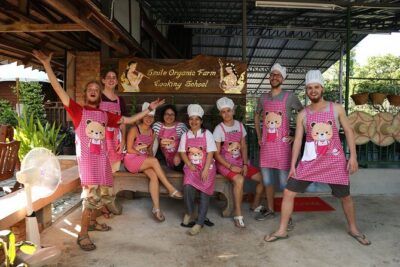
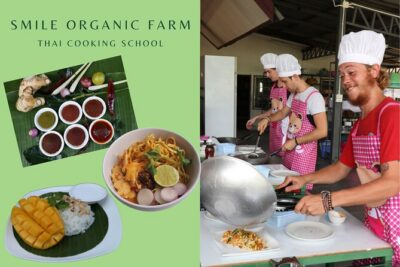
Half-Day Thai Cooking Class at Organic Farm in Chiang Mai
Read our review →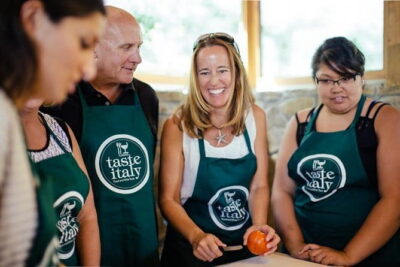
Cooking Class and Lunch at a Tuscan Farmhouse with Local Market Tour from Florence
Read our review →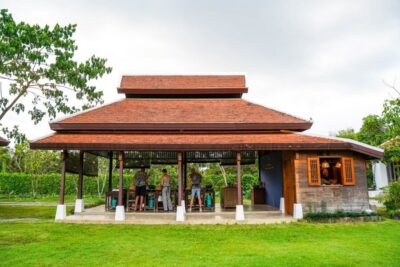
Authentic Cooking Class with Market & Farm Visit
Read our review →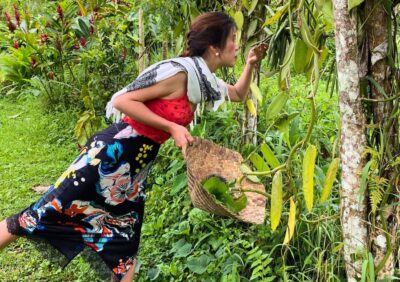
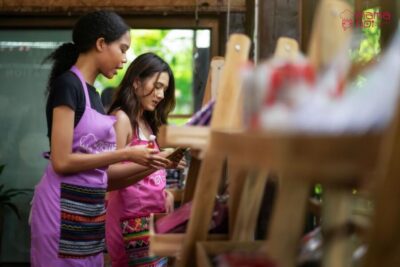

Hands-On Cooking Class & Farmhouse Tour on the Amalfi Coast
Read our review →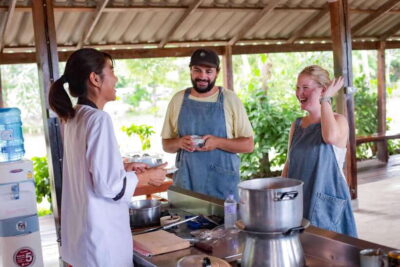
Lists this class appears in