
REVIEW · BALI, INDONESIA
Seminyak: Vegetarian Cooking Class
Start with a market, then cook Bali. This Seminyak class pairs a guided local market visit with hands-on vegetarian cooking, and I like the way the chef explains not just what to buy, but how each ingredient fits the dish. I also like the small-group format, since you can ask for help without competing for the chef’s attention. The main drawback is the stated one-hour duration, which sounds short for a market visit, cooking lesson, and sit-down meal.
You’ll learn useful techniques, eat what you prepare, and take home a recipe book plus a certificate. The all-vegan dishes praised by Rebecca from Australia sound especially appealing for plant-based eaters, while Martine highlighted the generous portions. Still, confirm the exact start time and schedule before booking, since the published plan packs several activities into a very brief slot.
Key Points Before You Book
- The market visit comes first: Walk with the chef from stall to stall and learn how to identify the herbs, spices, vegetables, and fruit used in Balinese cooking.
- Vegetarian food is the focus: The dishes are described as vegan in one detailed review, making this a useful choice for people avoiding meat, fish, eggs, and dairy.
- The group is kept small: You should have a better chance to receive direct help while chopping, mixing, and cooking.
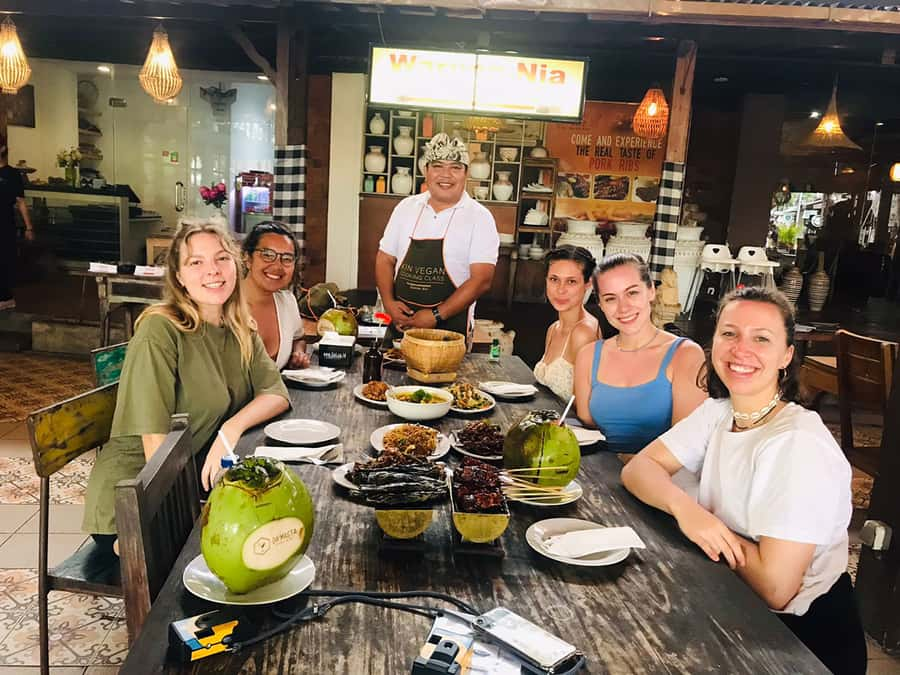
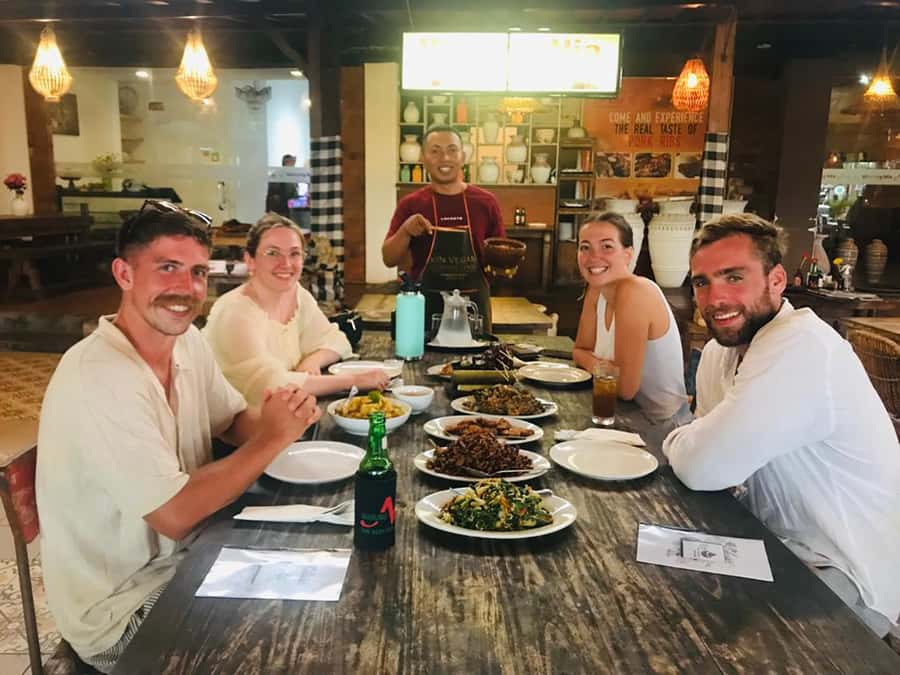
- You eat your own work: After preparing the dishes, you sit down for a meal with the other cooks.
- You leave with practical souvenirs: The recipe book helps you repeat the dishes at home, and a certificate of completion is included.
- The timing deserves attention: The advertised duration is one hour, so ask how the market portion and cooking meal fit into that schedule.
Why This Seminyak Cooking Class Is Worth Your Time
Balinese food is built from fresh produce, fragrant herbs, spices, and careful preparation. A cooking class gives you more than a plate of food. It helps you understand what you are tasting when you eat at a warung, hotel restaurant, or family-run café later in your trip.
I like this activity because it connects the market to the kitchen. You do not simply arrive at a cooking venue and find bowls of ingredients already measured out. Instead, you begin by seeing the produce and learning how your chef selects it. That link makes the cooking feel more meaningful.
The class is also a good fit for you if you want something educational without signing up for a full day. It is presented as easy and fun, so you do not need professional cooking skills. You can take part as a solo participant, a couple, or part of a small group.
The food is vegetarian, and one detailed account describes every dish as vegan. That makes the class particularly useful if you follow a plant-based diet. Still, you should explain your dietary needs to the provider when booking, since the supplied details do not list the exact recipes or confirm how every dietary request is handled.
More Vegetarian Cooking Classes in Indonesia:
- Oaxacan Vegetarian Cooking Class
★ 5.0 · 235 reviews - Marrakech: Moroccan Cooking Class for vegetarians and vegan
★ 4.9 · 156 reviews - Hoi An: Vegetarian Cooking Class w Local Family and transfer
★ 4.9 · 145 reviews
Starting at the Local Market
The first part takes place at a nearby local market. You meet the chef at the designated meeting point, then walk with the chef from stall to stall to find the ingredients needed for the class.
This is where the class gains its local character. The chef explains which herbs, spices, vegetables, and fruit belong in each dish. You also learn how to recognize ingredients that may be easy to find outside Indonesia, especially at an Asian grocery store.
That last point has real value. Many cooking classes give you a recipe that depends on ingredients you cannot locate once you return home. Here, the chef helps separate the distinctly local items from those you can reasonably buy abroad. Your recipe book should become much more useful as a result.
The market section also gives you a chance to ask practical questions. You can learn how Balinese cooks use particular spices, which vegetables are common, and what kinds of produce are selected for cooking. The chef is also described as helping identify fresh fish, meats, vegetables, herbs, spices, and fruits. Since this is a vegetarian class, the fish and meat references appear to describe the wider market rather than the dishes you will prepare.
One point needs clarification: the activity is listed as lasting one hour. A market visit, ingredient selection, cooking lesson, meal, and tea service would normally require careful scheduling. I would confirm whether the one-hour figure refers to the complete activity or only the cooking portion.
Moving From Market Stall to Cooking Bench
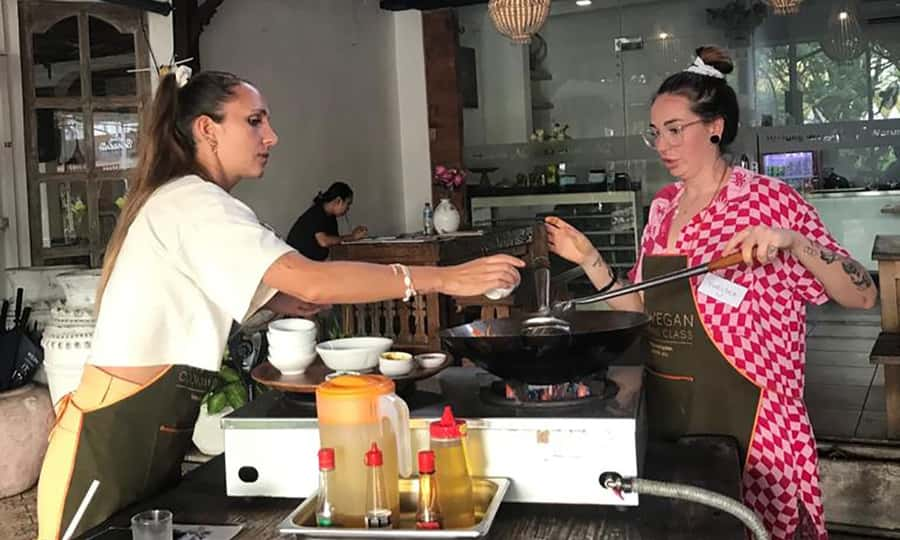
After the market visit, you return to the cooking venue with the ingredients selected earlier. The chef then guides you through preparing the dishes.
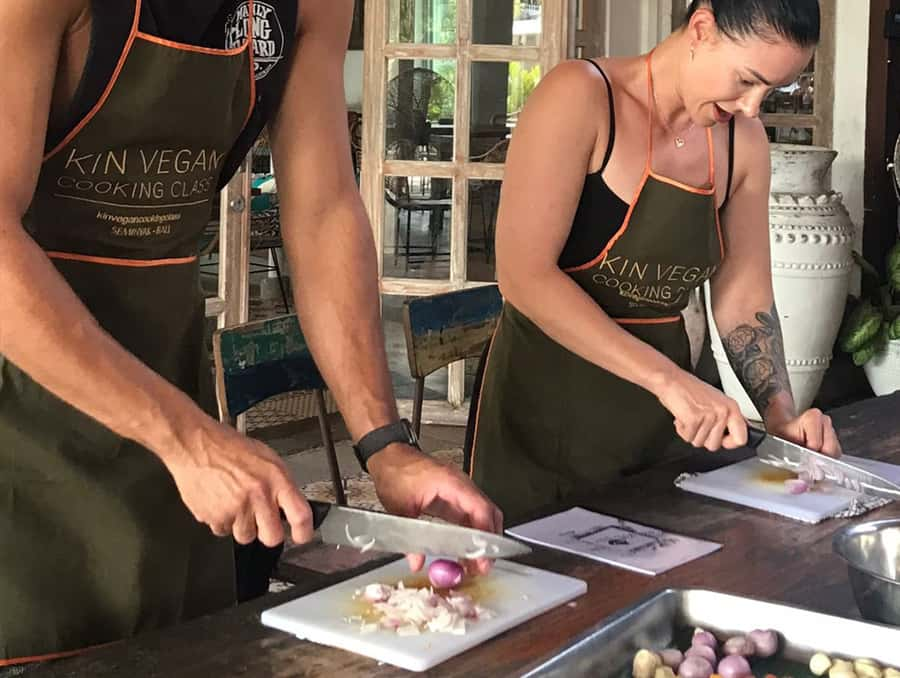
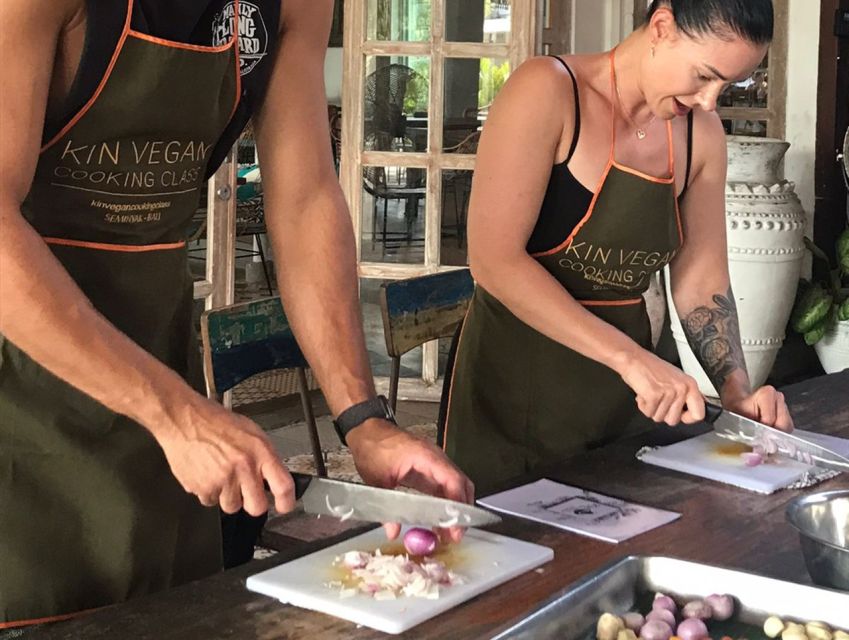
The small-group setup matters here. Cooking lessons can become frustrating when too many people crowd around one work surface or wait for assistance. This class is designed to avoid that problem, giving you a better chance to receive help with preparation and cooking techniques.
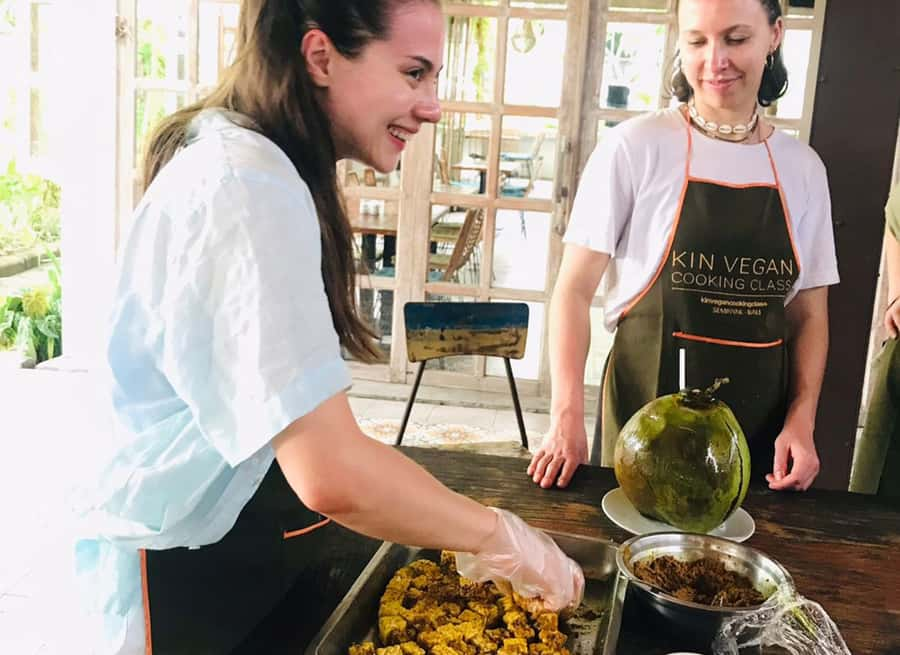
You should expect to take an active role rather than simply watch a demonstration. The class includes preparing the ingredients, using practical methods, and working alongside the other cooks. The supplied details do not name the exact dishes, so you should not book expecting a particular recipe unless the provider confirms the menu before the class.
The chef also offers cultural context. That can include explaining how the ingredients fit into Balinese cooking and how popular Indonesian dishes relate to the local food tradition. The focus is not just on following steps. You are learning why particular ingredients belong together.
I especially like the promise of help with ingredients that can be found at home. A recipe is only useful if you can repeat it. Knowing which items to look for in an Asian grocery store gives you a much better chance of recreating the meal after your Bali trip.
The Vegetarian Menu and What You Eat
The food is the heart of this activity, and the strongest praise focuses on both flavor and quantity. Martine from Australia described the food as fantastic and plentiful. Rebecca also praised the dishes as some of the best she had eaten and planned to try the recipes at home.
Those comments suggest that the class is not merely a token vegetarian option. You should expect a proper meal made from the ingredients prepared during the lesson. After cooking, you sit down and enjoy the results with your fellow participants.
Rebecca described the food as vegan, which is helpful if you avoid all animal products. The general information, however, uses the broader term vegetarian. If you are strictly vegan, ask the provider to confirm the menu and cooking arrangements before you arrive.
The meal also gives you a chance to judge your own work. Some cooking classes rush everyone out after the final step. Here, the plan includes time to sit and eat, along with afternoon tea. That makes the activity feel more complete, though again, the advertised one-hour length is worth checking.
Do not expect a long restaurant-style meal. This is still a class, and the meal follows your preparation work. Its appeal lies in eating food you helped make, not in receiving a multi-course dining service.
A few more cooking classes around Indonesia worth a look
- Ubud: Balinese Cooking Class at an Organic Farm
★ 5.0 · 1,786 reviews - Ubud Cooking Class Bali with Balinese Chef
★ 5.0 · 1,609 reviews - From Ubud: Authentic Cooking Class in a Local Village
★ 4.9 · 1,325 reviews - Ubud: Cooking Class with Transfers and Optional Market Visit
★ 4.9 · 824 reviews
The Chef’s Role Makes the Difference
The chef is described as a native Balinese instructor who speaks English. That combination is important. You receive direct guidance in a language you can follow, while also learning from someone connected to the local food culture.
Rebecca’s description of the chef as relaxed and humorous gives you a useful sense of the teaching style. A calm instructor can make a big difference if you are not confident with kitchen work. You can focus on learning rather than worrying about making a mistake in front of the group.
The chef’s market guidance is just as important as the cooking instruction. You are not only told what to do with an ingredient. You learn how to find it, select it, and recognize where it may be available at home.
No chef’s name is provided, so you cannot request a particular instructor. The provider is Anika Group, and English is the stated language for the activity.
What You Take Home Besides Lunch
The recipe book is the most useful souvenir. Food memories fade, but a written recipe gives you a way to bring part of the class into your own kitchen.
You also receive a certificate of completion. It will not turn you into a professional cook, of course, but it is a pleasant reminder of the activity and may appeal to children or groups who enjoy collecting certificates from hands-on experiences.
All ingredients are included, so you do not need to budget extra for the food used during the class. Afternoon tea is included as well. Hotel pickup and drop-off are not included, which means you must arrange your own way to the meeting point.
The meeting instructions are simple: come to the stated meeting point. You should arrive at least five minutes early. Comfortable clothing and comfortable shoes are sensible choices, especially because the activity includes walking through a market and working in a kitchen.
Price, Timing, and Practical Value at $47
At $47 per person, this is not the cheapest way to eat in Bali. A local meal can cost far less. The price makes more sense when you count the market visit, chef instruction, ingredients, afternoon tea, prepared meal, recipe book, and certificate.
For you, the value depends on what you want from the activity. If you only want lunch, skip the class and eat out. If you want to understand Balinese ingredients and learn dishes you can recreate at home, the price is more reasonable.
The small-group setting also improves the value. Personal help is one of the main reasons to pay for a class instead of watching a free cooking video. You can ask questions as you work and receive guidance when a technique feels unclear.
The one-hour duration creates the biggest question. A short class can be convenient if your Seminyak schedule is tight, but the published plan includes several stages. Confirm the actual length before booking, especially if you have another tour, airport transfer, or restaurant reservation afterward.
You can reserve now and pay later, which helps if you are still arranging your Bali schedule. You can also cancel up to 24 hours in advance for a full refund. Those terms make it easier to hold a place without locking in your plans too early.
Who Should Book This Class?
I would recommend this activity to you if you enjoy food, local markets, and hands-on lessons. It is especially suitable for vegetarians and vegans, provided you confirm the exact menu if your dietary needs are strict.
It also suits couples and small groups who want a shared activity with a practical result. You will not just take photographs. You will learn techniques, eat the food, and leave with recipes.
This can work well for first-time visitors who want a gentle introduction to Balinese cuisine. You do not need prior cooking experience, and the format is presented as easy and enjoyable.
The class is not suitable for children under two or under three according to the supplied age restrictions, which are listed twice in slightly different ways. It is also not suitable for people over 70. That upper age rule is unusual, so if it affects someone in your party, confirm it directly with Anika Group before booking.
The activity is listed as wheelchair accessible. That is useful, but the market portion may involve surfaces and movement that are not described in detail. If you use a wheelchair, contact the provider before arrival to confirm how the route and venue work in practice.
A Few Limits to Keep in Mind
The exact menu is not provided. That means you cannot judge in advance whether the dishes match your favorite foods or dietary restrictions.
The duration is also unclear in practical terms. The full program includes the market, cooking, meal, and afternoon tea, but the listed duration is one hour. Ask for a clear timetable.
There is no hotel transport. You need to reach the meeting point independently, and you should arrive five minutes early. Comfortable shoes matter because the activity begins with a market visit rather than going straight to a chair.
The class also has a broad cultural and culinary scope. It covers Balinese vegetarian food plus some popular Indonesian dishes, but it may not provide a detailed lesson on one single regional specialty. If you want an advanced or highly technical cooking course, this may feel too light.
Should You Book the Seminyak Vegetarian Cooking Class?
Book it if you want a friendly, practical introduction to Balinese vegetarian cooking. The market visit, small-group instruction, generous meal, recipe book, and vegan-friendly feedback give this $47 activity a solid case.
I would be most cautious about the one-hour schedule and the missing menu details. Confirm those two points before paying, especially if you have strict dietary needs or a packed day.
For a relaxed food lesson that lets you shop, cook, eat, and take the recipes home, this is a good choice. It offers more lasting value than another restaurant meal, as long as the short advertised duration matches what you expect.
FAQ
How much does the Seminyak vegetarian cooking class cost?
The price is $47 per person. All ingredients, the cooking class, afternoon tea, a certificate, and a recipe book are included.
How long does the activity last?
The stated duration is one hour. Since the program includes a local market visit, cooking, a meal, and afternoon tea, confirm the exact schedule before booking.
Is hotel pickup and drop-off included?
No. You need to make your own way to the meeting point.
What language is the class conducted in?
The live guide speaks English.
Can I cancel the booking for a refund?
Yes. You can cancel up to 24 hours in advance for a full refund. You can also reserve now and pay later.
Is the class wheelchair accessible?
Yes, the activity is listed as wheelchair accessible. Arrive five minutes early, and contact the provider ahead of time if you need specific assistance with the market route or venue.
Just added around Indonesia
- Pure Bali Village Experience, Cooking & Jamu Class+VIP Transfer★ 5.0 · 16 reviews
- Spice Garden, Jamu & Cooking Class in Bali Village★ 5.0 · 5 reviews
- The Authentic Balinese Cooking Experience★ 5.0 · 4 reviews
- Seminyak : cooking class traditional food bali★ 5.0 · 5 reviews
- Quad ride, waterfalls & aunthentic cooking class in munduk★ 4.9 · 53 reviews
- Pure Bali Village Experience Cooking & Jamu Class, Transfer★ 4.8 · 5 reviews
- Ubud: Organic Farm Harvest, Bali Cooking Class by Pemulan★ 4.8 · 12 reviews
- packages cooking class and romantic dinner in a local home★ 5.0 · 4 reviews
Vegan & Vegetarian Cooking Classes, compared.
Moroccan Cooking Class for vegetarians and vegan
Read our review →
Vegetarian Cooking Class w Local Family and transfer
Read our review →
Jaipur Market Tour & Vegetarian Rajasthani Home Cooking Class
Read our review →
Ramen & Dumpling Cooking in Tokyo with Chef/Vegan possible
Read our review →Private Cooking Class – Personalized menu with glutenfree & vegan
Read our review →
Hoi An/Da Nang: Vegetarian Cooking Class & Basket Boat Ride
Read our review →Lists this class appears in