REVIEW · BALI, INDONESIA
Ubud: Cooking Class with Transfers and Optional Market Visit
Cook Bali, then eat what you made. This hands-on Ubud cooking class brings you into local food traditions through spice grinding, satay, curry, sambal, and dessert. I like the warm family-run setting and the chance to learn from local chefs such as Eri and Made. The main catch is that the market visit is available only on the morning option.
The class is also a good cultural visit, not just a recipe lesson. You may hear about Balinese family life, Hindu offerings, architecture, rice growing, and the meaning behind everyday dishes. At $21 per person, including transport from Ubud Center, instruction, and a full meal, the value is excellent, though pickup beyond the stated area costs extra.
The format suits curious eaters, couples, families, and solo visitors who enjoy meeting people over food. You work as a group, so you may not prepare every dish alone, but the small class size, limited to 10 people, gives you a fair chance to chop, mix, cook, and ask questions.
Key points at a glance
- Morning market visit: Walk through a local market with your guide and learn about herbs, spices, produce, and ingredients used in Balinese cooking.
- A family-style setting: Several sessions take place in or near a traditional local compound, giving the class a personal feel beyond a standard restaurant lesson.
- Around 10 dishes in some sessions: Past menus have included soup, satay, tempeh, sambal, pancakes, curries, and other Balinese favorites.
- Culture alongside cooking: You may learn about Hindu offerings, family customs, architecture, rice growing, and the role of food in daily life.
- A complete meal afterward: Sit down with the group and eat what you prepared, often served buffet-style.
- Strong value at $21: Hotel pickup and drop-off within Ubud Center, a guide, class, and meal are included in the morning or afternoon options.
Starting with an Ubud market and local ingredients
Choose the morning option if you want the fullest version of the experience. After pickup from your hotel in Ubud Center, you meet the guide and head to a local market.
This is not simply a quick photo stop. Your guide explains the ingredients as you move through the stalls, pointing out vegetables, fruits, herbs, spices, and other produce used in Balinese kitchens. You get a better sense of how the food is bought before it reaches the cooking table.
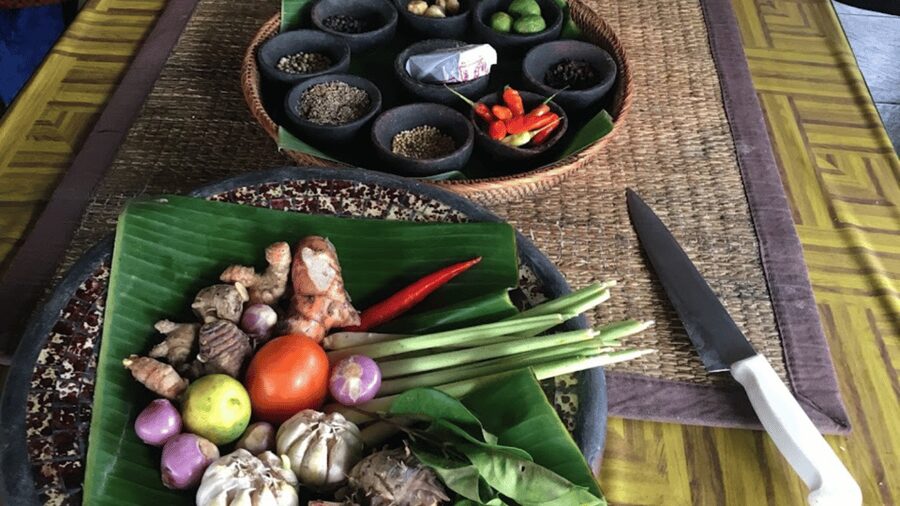
The market also helps you understand why Balinese food has such strong aromas and layered flavors. Instead of seeing a spice paste as an anonymous orange mixture, you can learn about the individual ingredients that give it heat, fragrance, color, and depth.
I would choose the morning option if you have never visited a traditional Balinese market. It gives the dishes more meaning later, especially when you recognize the ingredients being chopped and ground in class.
There is one practical limitation: the market tour is not part of the afternoon option. If you book later in the day, you go directly to the cooking venue. That may suit you if you prefer a shorter outing or want to keep your morning free, but you miss one of the best cultural parts of the program.
More Cooking Classes with a Market Tour in Indonesia
- Balinese Ubud cooking school (9 Dish Cooking and Market Tour)
★ 5.0 · 540 reviews - Ubud: Balinese Cooking Class and Market Tour
★ 4.8 · 531 reviews - Balinese Cooking class with traditional morning market visit
★ 5.0 · 161 reviews
Arriving at a leafy cooking school
After the market, or directly after pickup for the afternoon class, you continue to the cooking school. The setting is described as green and tropical, with several sessions taking place in a rural outdoor kitchen or a local family compound.
That setting matters. You are not sitting in a polished demonstration kitchen watching a chef do all the work. You may see traditional cooking equipment, open-air preparation areas, local architecture, and the ordinary setting in which food and family life meet.
Some classes include a welcome drink and local fruit before cooking begins. A few sessions have also included making a canang, the small Hindu offering basket made from woven leaves and flowers. The host explains its cultural meaning, so this becomes more than a decorative craft.
You may also hear about rice growing, household customs, family structure, and Balinese religious practice. The exact introduction can depend on the guide and the group, but the class regularly goes beyond recipes.
For me, this is the part that gives the experience its character. You are not only learning how to make food. You are getting a brief look at how food connects with offerings, celebrations, hospitality, and home life in Bali.
Cooking with Eri, Made, and the local team
The chefs are central to the quality of the experience. Eri is praised for being calm, kind, and clear, while Made is noted for easy-to-follow explanations and a friendly teaching style. Other instructors and helpers may lead your session, but the repeated strength is patient guidance.
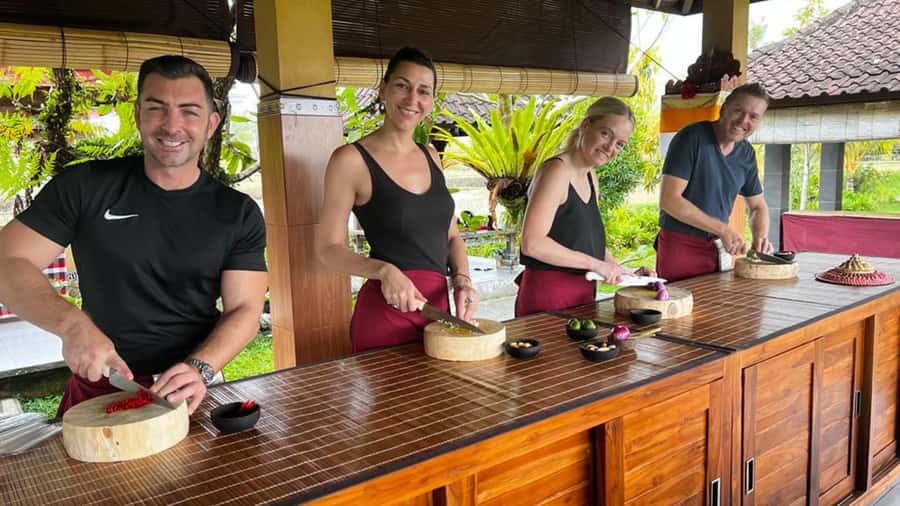
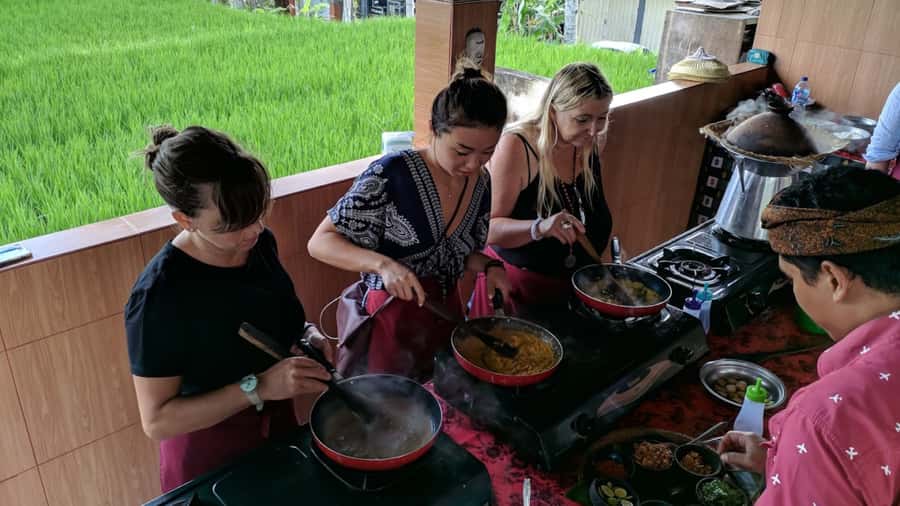
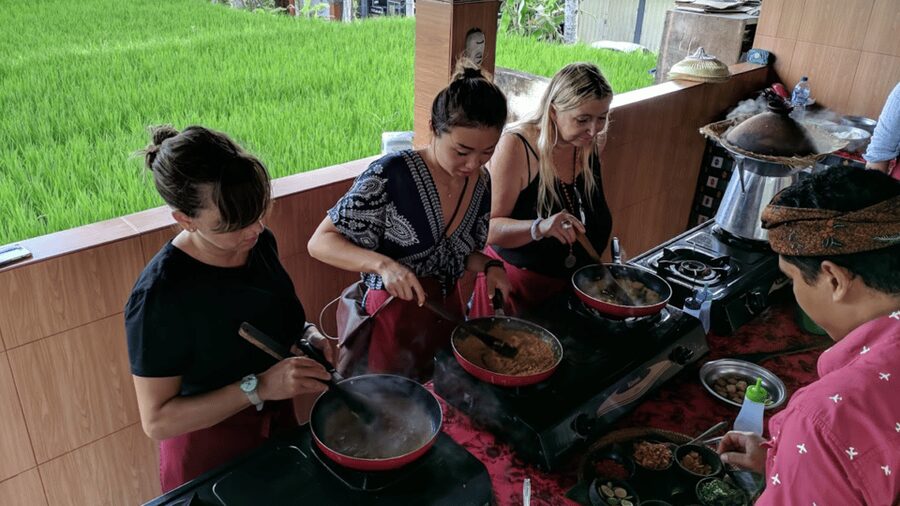
The class is designed to keep you active. You may chop vegetables, prepare spice mixtures, shape satay, stir sauces, cook rice-based dishes, and help finish desserts. The group shares some jobs, but the instructor explains the steps so you can follow the full process even when another person is holding the knife or pan.
This team approach works well for first-time cooks. You do not need advanced kitchen skills, and the pace is generally organized so there is little idle time. Guides explain what is happening before moving to the next task, which helps when several dishes are being prepared at once.
The small-group limit of 10 people is important. A class of five to seven gives you more direct time with the chef, while a full group may feel busier. Even then, the format is meant to involve everyone rather than leave you watching from the edge.
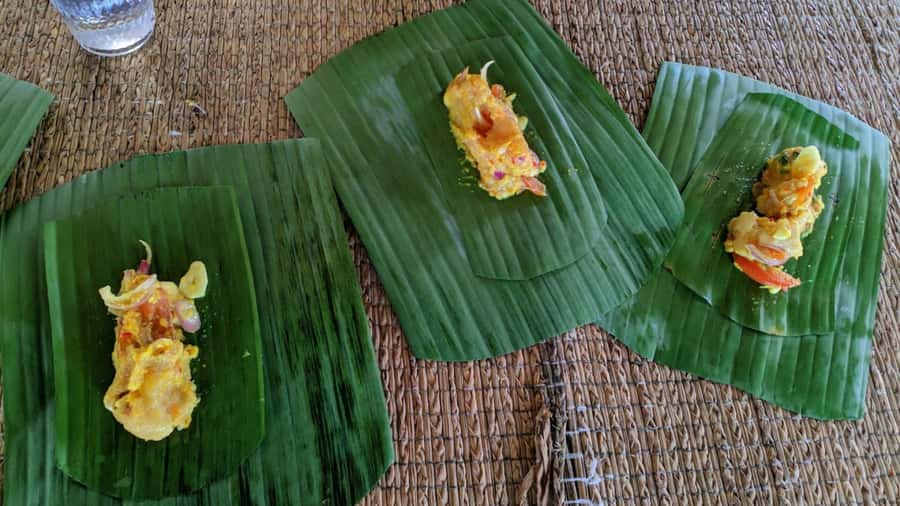
Some previous classes prepared about 10 dishes. Menus can include Balinese curry, satay, soup, sambal, sweet tempeh, rice dishes, vegetables, and pancakes or other desserts. The precise menu is not specified in advance here, so you should think of the class as a broad introduction to Balinese cooking rather than a fixed masterclass in one dish.
Learning the spice paste and cooking methods
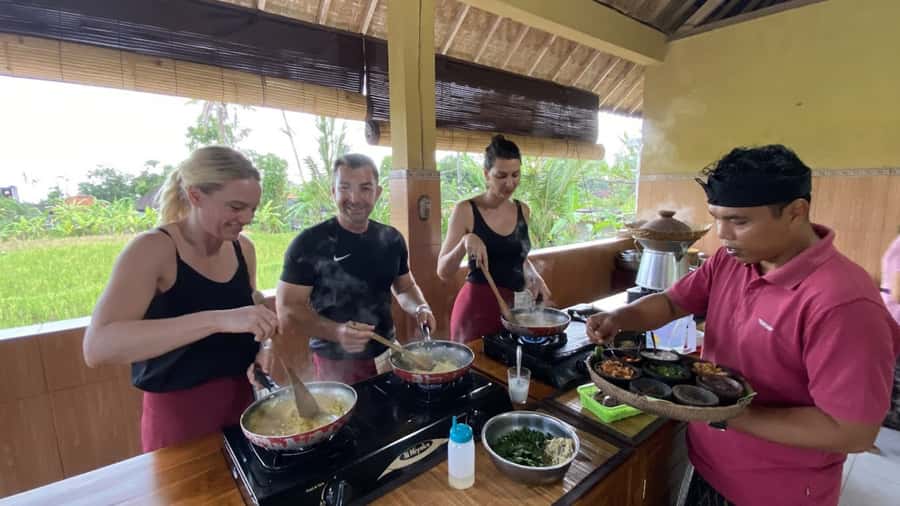
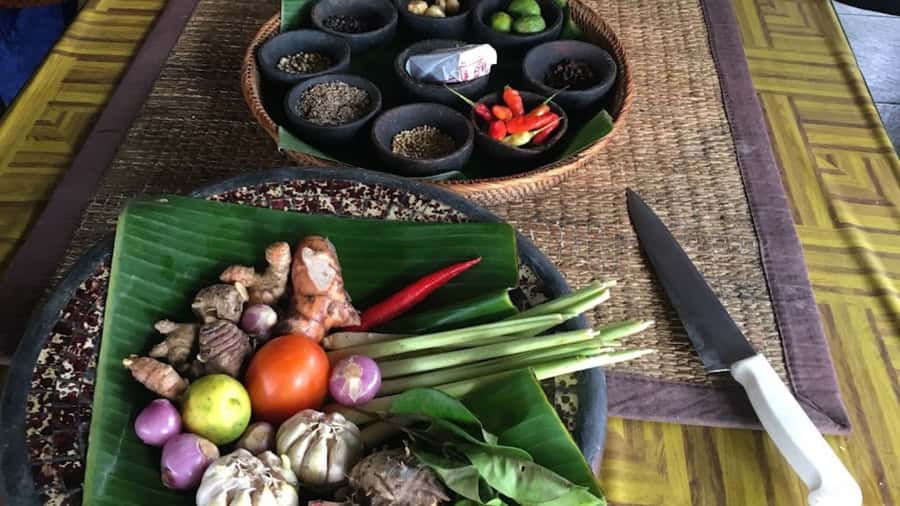
The most useful skill is learning how several separate ingredients become a single Balinese flavor base. You may work with fresh herbs, chilies, garlic, shallots, roots, and spices, then grind or mix them into a paste for different dishes.
This is where the class earns its place in your itinerary. A restaurant meal lets you taste the result. Here, you see the work behind it and learn how much preparation goes into a plate that may look simple.
Traditional techniques are part of the lesson. Guides may show how to grind ingredients, cook rice, prepare vegetables, or handle local equipment. The emphasis is not on restaurant speed. It is on understanding the sequence and learning why a particular ingredient is used.
The class also gives you a better way to judge flavors. You can compare the heat of sambal, the sweetness of tempeh, the fragrance of a curry, and the smoky character of satay while remembering how each was prepared.
Dietary needs are handled well according to the available information. Vegetarian alternatives are offered, and substitutions have been made for people who do not eat fish or have allergies and intolerances. Still, tell the operator about your needs when booking or before the class begins. The more notice you give, the easier it is for the kitchen to prepare suitable ingredients.
More Cooking Classes with a Market Tour in Ubud
- PRIVATE Ubud Market Tour & Balinese Cooking Class with Putu
★ 5.0 · 125 reviews - Jambangan bali cooking class with morning market tour
★ 5.0 · 35 reviews - Balinese cooking class/Go shopping at the market, cook, eat
★ 5.0 · 12 reviews
Sitting down to a Balinese feast
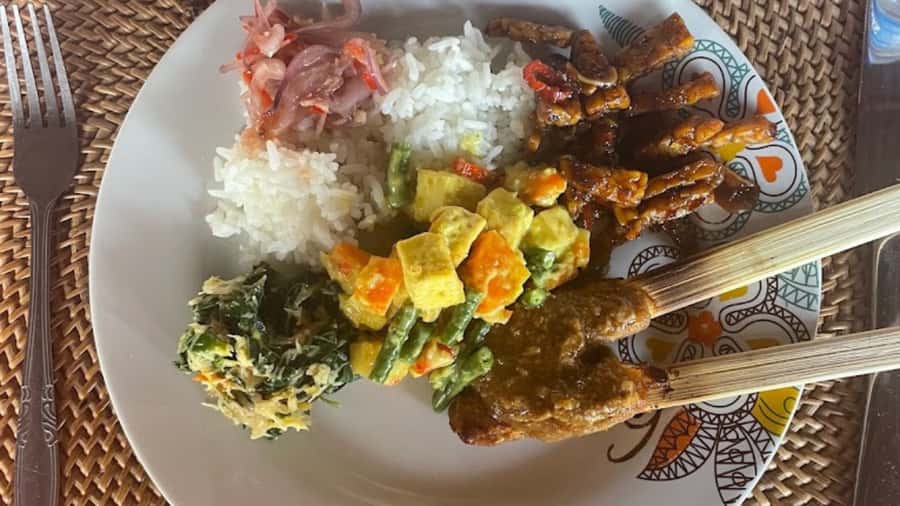
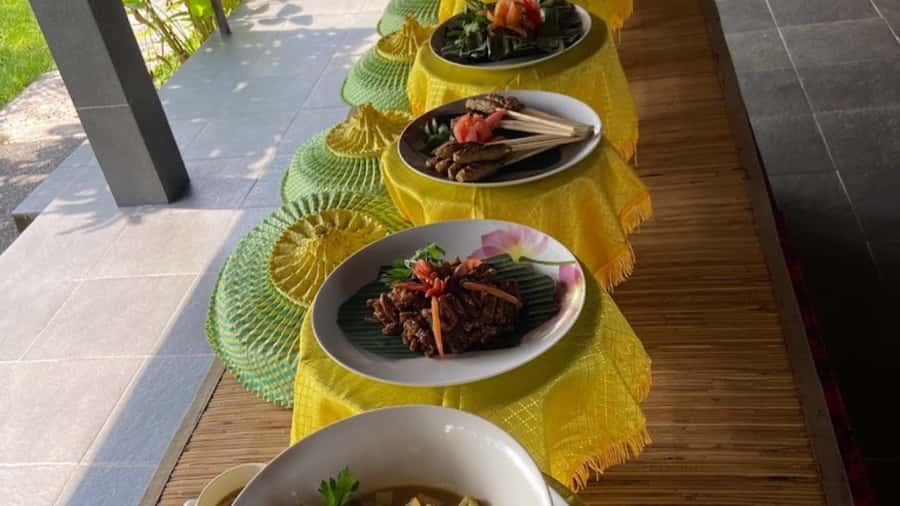
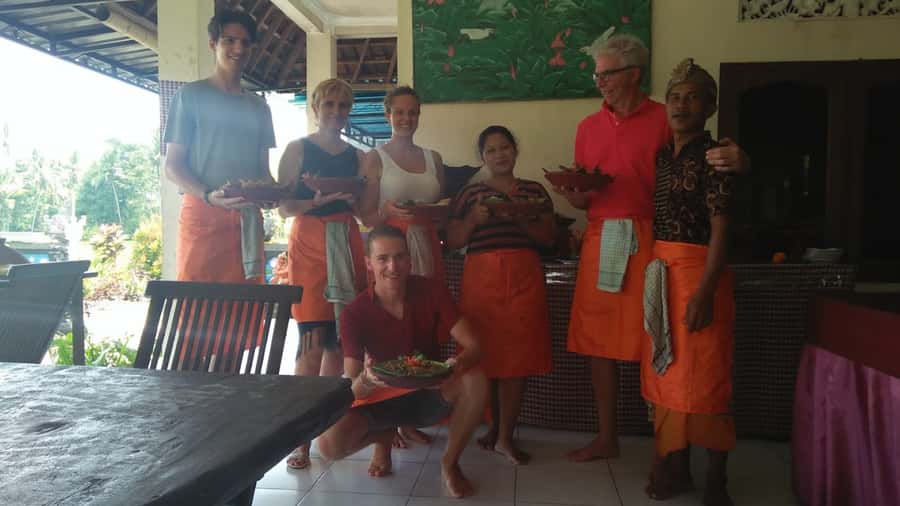
When the cooking ends, you sit with the other participants and eat the food prepared during the class. Some sessions serve the dishes buffet-style, which lets you sample a broad range rather than receive only one plate.
This shared meal is a strong finish. You have worked together, so the food feels like a group achievement. It also gives you time to talk with people from other countries without the forced feeling of a formal social activity.
Come hungry. The range can be surprisingly large, especially when the class prepares around 10 dishes. Pancakes have been a favorite with children, while tempeh, soup, satay, and sambal have been especially memorable for adults.
You receive a certificate of completion, and some sessions also provide a small recipe book. The recipe book is more useful than the certificate if you want to repeat the meal at home. It gives you a starting point for recreating the spice mixtures and dishes after Bali.
Do not expect every home kitchen to reproduce the same ingredients exactly. Some herbs and produce may be easier to find in Southeast Asia than elsewhere. Still, the method and flavor ideas travel well, especially for sambal, satay, tempeh, and curry.
How the transfers and timing work
The advertised duration is two to three hours. That makes this easy to fit into a day of sightseeing, particularly if you choose the afternoon class after visiting Ubud’s temples, galleries, or rice fields.
Hotel pickup and drop-off are included for the morning or afternoon option when your accommodation is in Ubud Center. You should wait in the hotel lobby. If you are staying in the Sebali or Keliki area, there is an additional charge of 50,000 Indonesian rupiah per person.
If you arrange your own transport, some previous participants have reached the venue by scooter and found parking available. The exact meeting details matter because the stated meeting point is a parking field, used to reduce traffic problems at night. Confirm the pickup point and time clearly, especially for an evening booking.
The market option is morning only. The afternoon class skips that visit, and the evening format is a direct cooking experience. That is not a flaw, but you should choose based on your priority: local market context in the morning, or a simpler schedule later in the day.
The tour is conducted in English, with an English-speaking guide and English audio guide listed. The guides are also praised for clear explanations, so you should be able to follow the practical steps and cultural background without needing specialist cooking vocabulary.
What the $21 price really gives you
At $21 per person, this is unusually good value for a three-hour activity in Ubud. You are paying for transport within Ubud Center, the market visit when selecting the morning option, a cooking class, a guide, and the meal you prepare.
The meal alone could make the price reasonable, but the class adds more. You get local instruction, hands-on work, a cultural introduction, and the chance to meet other people in a small group.
The price is especially attractive for families. Children can take part in simple tasks, and the group format gives them something more active than a standard sightseeing stop. Teenagers have also enjoyed the class because the food preparation is social and practical.
The main cost question is transport. The included pickup is limited to Ubud Center, and Sebali or Keliki adds 50,000 rupiah per person. Personal expenses are not included, so allow for any extra transport or purchases you make independently.
The free cancellation policy allows a full refund when you cancel at least 24 hours before the activity. You can also reserve now and pay later, which helps if your Ubud schedule is still changing.
Who will enjoy this class most
I would recommend it to you if you want a taste of Bali that involves more than looking at temples and taking photographs. It works especially well for:
- First-time visitors to Bali: You get food, family life, religion, and local ingredients in one compact activity.
- Couples and solo visitors: The shared meal makes it easy to meet people without committing to a full-day group tour.
- Families with older children and teenagers: The work is practical, the food is approachable, and the setting adds variety.
- Vegetarians and people with some dietary restrictions: Alternatives are available, though you should state your needs early.
- People who enjoy cooking: You will get real preparation time rather than only a chef demonstration.
It may be less suitable if you want a private lesson with your own dedicated chef. The class is collaborative, and some tasks are shared. It may also disappoint you if your main goal is a long market tour, since that part is only available in the morning and the activity lasts two to three hours.
Should you book the Ubud cooking class?
Yes, I would book it if you have a free morning or evening in Ubud and want a practical cultural experience at a low price. The strongest reasons are the friendly local teaching, the fresh ingredients, the shared feast, and the chance to learn how Balinese food connects with daily life and tradition.
Choose the morning option if the market matters to you. Choose the afternoon or evening class if you mainly want to cook and eat without rearranging your morning.
Before booking, check your hotel location, tell the operator about dietary needs, and confirm the meeting point if you are not using pickup. If you enjoy food but do not need a private lesson, this is one of the easiest ways to spend three hours in Ubud well.
FAQ
How long does the Ubud cooking class last?
The activity lasts approximately two to three hours, depending on the selected option and the flow of the class.
Is the market visit included in every class?
No. The market visit is included with the morning option only. Afternoon and evening options go directly to the cooking experience.
Is hotel pickup included?
Hotel pickup and drop-off are included for the morning or afternoon options when you stay in Ubud Center. You should wait in your hotel lobby.
Is there an extra charge for some pickup areas?
Yes. Pickup from the Sebali or Keliki area costs an additional 50,000 Indonesian rupiah per person.
How many people are in the cooking class?
The class is a small group limited to 10 participants.
What language is the class conducted in?
The live guide and audio guide are available in English.
Is a meal included?
Yes. You eat the dishes prepared during the cooking class as part of the experience.
Can dietary requirements be accommodated?
Vegetarian alternatives and some substitutions for allergies, intolerances, and people who do not eat fish are available. Tell the operator about your requirements in advance.
Just added around Ubud
- The Authentic Balinese Cooking Experience★ 5.0 · 4 reviews
- Ubud: Organic Farm Harvest, Bali Cooking Class by Pemulan★ 4.8 · 12 reviews
- packages cooking class and romantic dinner in a local home★ 5.0 · 4 reviews
- Jambangan bali cooking class with morning market tour★ 5.0 · 35 reviews
- Ubud: Balinese Cooking Class with Hotel Transfers★ 4.8 · 17 reviews
- Bali: Cooking Class with Monkey Forest and Art Village Tour★ 5.0 · 2 reviews
- Balinese cooking class/Go shopping at the market, cook, eat★ 5.0 · 12 reviews
- PRIVATE Ubud Market Tour & Balinese Cooking Class with Putu★ 5.0 · 125 reviews
Cooking Classes with a Market Tour, compared.
Hanoi Cooking Class: Culture, Local Market & Meaning CSR Impact
Read our review →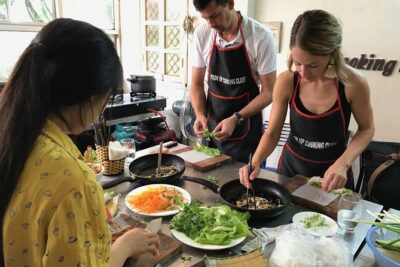
5 Traditional Dishes Hanoi Cooking Class with Market Trip
Read our review →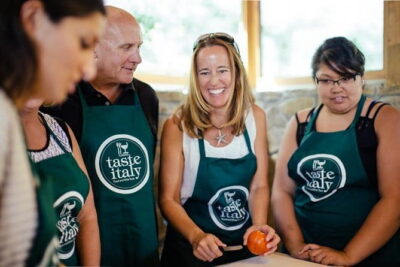
Cooking Class and Lunch at a Tuscan Farmhouse with Local Market Tour from Florence
Read our review →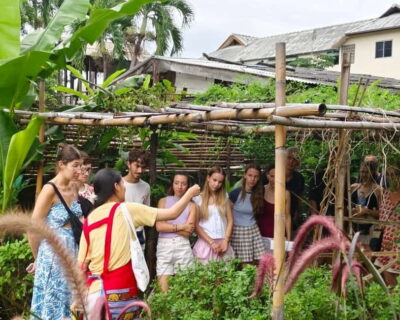
Cooking Class, Market & Thai Herbs Garden Tour
Read our review →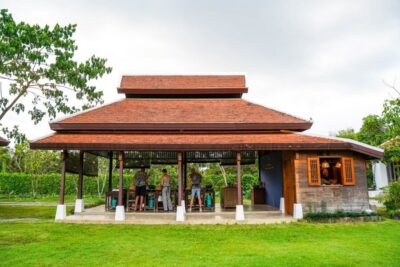
Authentic Cooking Class with Market & Farm Visit
Read our review →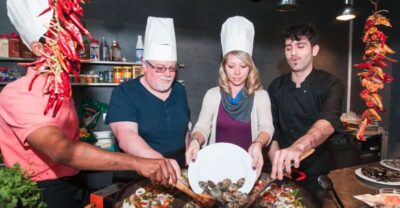
Paella Cooking Experience & Boqueria Market Tour
Read our review →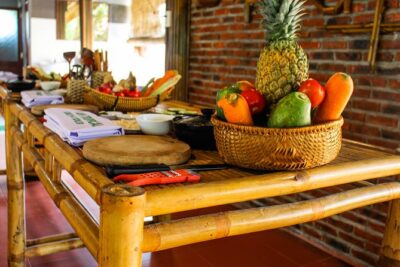
Cooking Class Hoi An:Local Market, Basket Boat, Fishing & Cooking
Read our review →