
REVIEW · SOUTH KOREA
Seoul: Experience Korean Cooking in Modern Hanok Kitchen
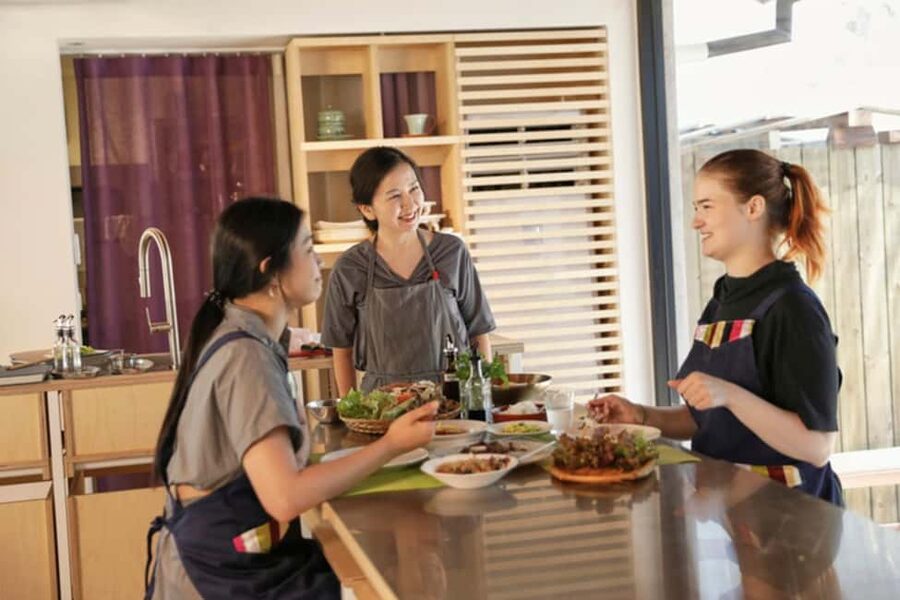
Bibimbap starts the lesson. This two-hour class in a modern Hanok studio lets you cook two Korean dishes yourself, then sit down to taste the result. I like the individual cooking stations and the clear, step-by-step teaching, while the main drawback is the $84 price for only two hours.
I also like that the lesson covers more than recipes. You learn how Korean home meals come together, how sauces shape a dish, and why shared food matters. The class is in Bukchon, a fine place to pair with a neighborhood walk, but you need to arrive on time because late arrivals are responsible for missed participation.
Quick takeaways from the Seoul cooking class
- Each person cooks independently: You receive ingredients and prepare your own two dishes at your own station, rather than simply watching a chef work.
- The menu covers Korean favorites: Depending on the class, you might prepare bibimbap, jeyuk-bokkeum, japchae, or bulgogi.
- Bibimbap teaches balance: Rice, cooked seasonal vegetables, a fried egg, and seasoning come together in one adaptable bowl.
- Dietary needs can be handled: Tell the provider about allergies or restrictions ahead of time. One participant who forgot to mention a meat-free diet received tofu instead.
- The setting adds local character: The studio is a recently renovated hanok in Bukchon, at 137-11 Bukchon-ro, Jongno-gu.
- The class is English-speaking: A professional chef leads the lesson, and private or customized classes can be requested.
What happens during the two hours

The class begins at O’ngo Food Communications, at 137-11 Bukchon-ro in Seoul’s Jongno-gu district. The studio is a modern take on a traditional hanok, so you get a Korean architectural setting without giving up the practical comforts of a working kitchen.
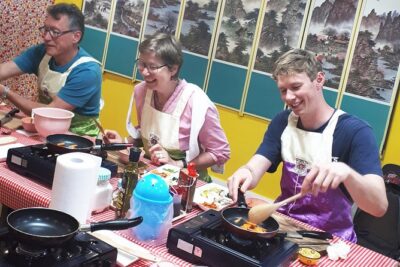
The lesson is designed around doing, not just observing. The chef first demonstrates ingredient preparation and the cooking process, then you repeat the steps at your own station. This order matters. You can watch the technique once, ask questions, and then work through the recipe without trying to memorize everything at the same time.
You prepare two Korean dishes during the class. The exact pair can vary, but the choices include four of Korea’s best-known foods: bibimbap, jeyuk-bokkeum, japchae, and bulgogi. Since the format is hands-on, the class is especially useful if you want recipes you can make again at home.
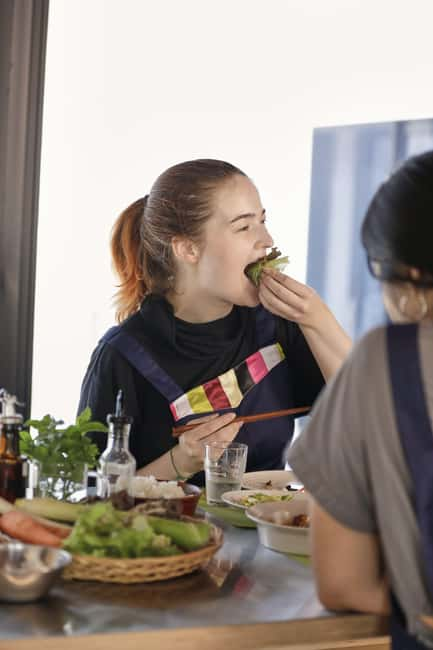
The final part is the payoff: you taste the food you prepared. This is not a restaurant meal where someone else handles the difficult parts. You see the ingredients, make the choices, cook the dishes, and then find out how the flavors work together.
Two hours is long enough for a proper lesson but short enough to fit into a full Seoul day. I would still avoid scheduling anything immediately afterward. You need time to find the meeting point, settle in, and finish the meal without watching the clock.
More Korean Cooking Classes in Seoul:
- Local Home Korean Cooking Class & Market Adventure in Seoul
★ 5.0 · 1,024 reviews - Master Korean traditional cooking with a Kimchi chef
★ 5.0 · 385 reviews - Seoul: Korean Cooking Class at a Local Home and Market Tour
★ 5.0 · 348 reviews
Bibimbap shows how Korean meals come together
Bibimbap is the most useful dish for understanding the logic of Korean home cooking. A bowl of rice receives cooked seasonal vegetables and a sunny-side-up egg, creating a meal with different colors, textures, and flavors in one serving.
The dish is also forgiving. You are not dealing with one delicate sauce or a narrow cooking window. Instead, you learn how several simple ingredients can be prepared separately and brought together at the end.
That makes bibimbap a good introduction for beginners. You can see the role of each component, and the finished bowl gives you a clear sense of proportion. The class describes it as a healthy and nutrient-packed meal, but the bigger lesson is practical: Korean cooking often depends on thoughtful preparation of several modest ingredients.
I would choose bibimbap if you want the dish most closely associated with the class. One participant specifically hoped to make it and found it especially satisfying when paired with another dish.
Bulgogi brings simple technique and big flavor
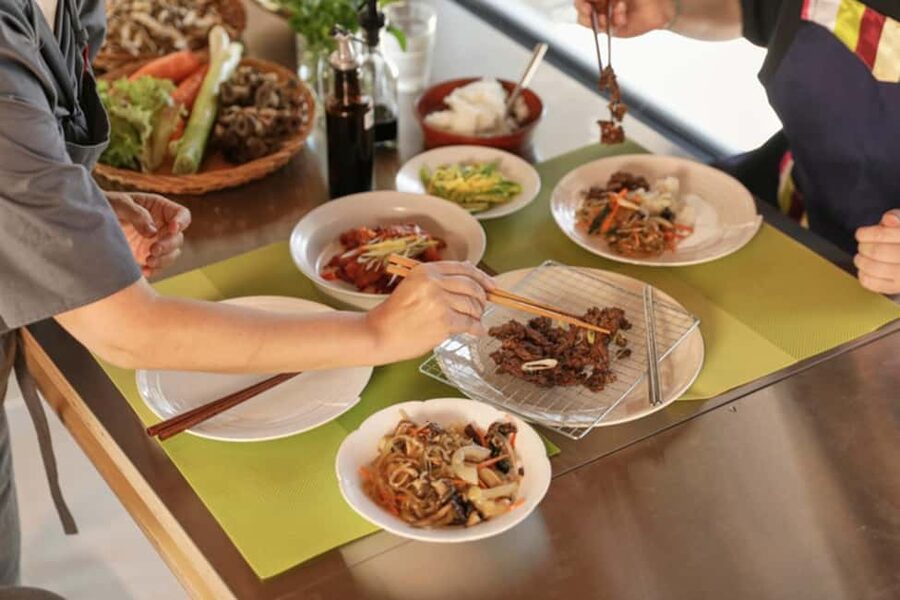
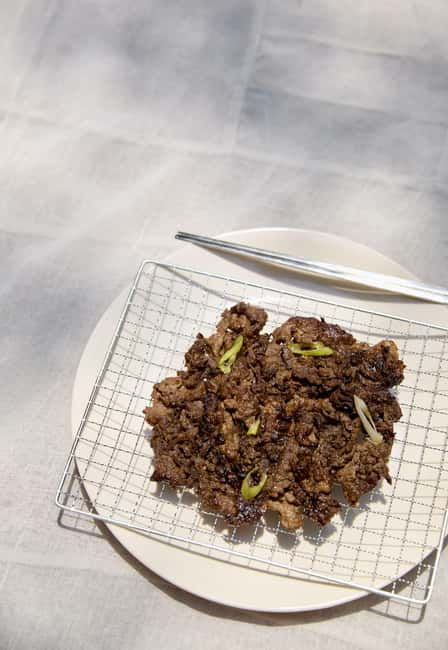
Bulgogi uses thinly sliced beef marinated with soy sauce, sesame, and garlic. It is one of Korea’s best-known dishes, and its familiar sweet-savory profile makes it an easy choice if you are new to Korean food.
The appeal of the class version is that it removes much of the mystery. You see how the marinade is assembled and how the beef is cooked, rather than receiving a finished plate with no clue how to recreate it.
A participant who prepared bulgogi described the process as simple and low-stress. That is useful information if you are nervous about cooking in front of other people. The chef demonstrates the preparation first, and the recipe is structured so you can follow along.
Bulgogi is also one of the better choices for taking the class home with you. The ingredients are familiar enough to find outside Korea, and the method does not require advanced culinary skills. If you want a recipe you are likely to repeat, this may be the strongest option.
Jeyuk-bokkeum adds gochujang heat
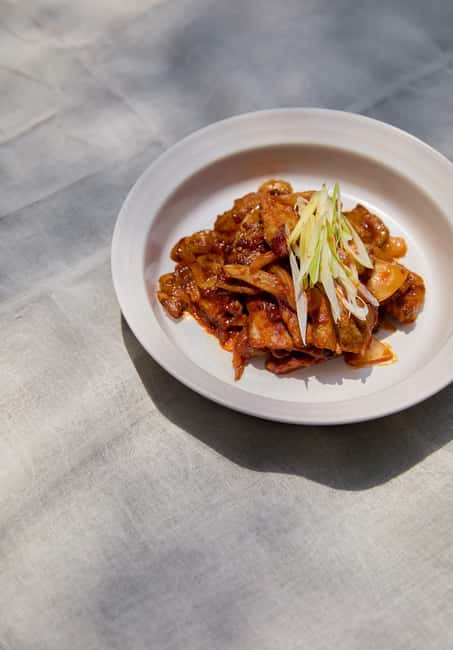
Jeyuk-bokkeum is a spicy pork barbecue seasoned with gochujang, Korea’s fermented red chili paste. It is a more forceful dish than bibimbap or japchae, with heat and a deep savory taste from the marinade.
This is the dish most often requested for the class, making it a good pick if you want to work with a central Korean seasoning. Gochujang is not just hot. It also brings sweetness, fermentation, and depth, so the lesson gives you a useful introduction to one of Korea’s key pantry ingredients.
The main point to clarify before cooking is your comfort with spice and your dietary needs. The provider asks you to report allergies or restrictions, and customized classes are available by request. Do not wait until the chef is handing out ingredients if you need a change.
A few more cooking classes around Seoul worth a look
- Seoul: Korean Cooking at Seoul Cooking Club!
★ 5.0 · 311 reviews - Korean Cooking at Seoul Cooking Club
★ 5.0 · 220 reviews - Seoul: Taste of Korea, Authentic Home Style Cooking Class
★ 4.9 · 166 reviews - Seoul: Royal Seoul Cooking Class in a 100-Year-Old Hanok
★ 5.0 · 96 reviews
Japchae offers a non-spicy alternative
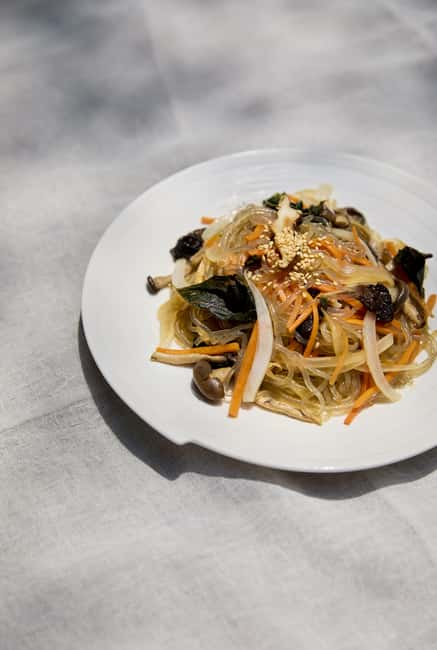
Japchae is made with glass noodles and a variety of cooked vegetables. It is non-spicy, so it gives the class a gentler flavor profile than jeyuk-bokkeum.
The dish is often associated with royal Korean cuisine, and its appeal comes from texture as much as seasoning. The slippery noodles and separate vegetable components make it a useful lesson in handling several ingredients without turning the dish into a muddle.
I would consider japchae if you do not enjoy chili or if you want something that works well for a mixed group. It also adds variety if your second dish is bibimbap. You get one rice-based bowl and one noodle dish, rather than two recipes with similar textures.
The trade-off is that you may not prepare every dish listed. The class includes two dishes, so check the available menu when booking if one particular recipe is your main reason for going.
A chef-led lesson with room for questions
The English-language class is led by a professional chef, and the teaching style appears to be one of the strongest parts of the experience. The chef demonstrates first, then allows each participant to work through the process.
That format is more useful than a fast demonstration followed by a finished meal. You can see the cut, sauce, and cooking stages in order. You also have a natural chance to ask about ingredients and Korean food customs while the recipe is in front of you.
Jia is specifically praised for explaining things with patience and humor. One German participant described a small class of three with close attention from the chef. That sort of group can make a real difference, although the information does not promise that every session will have the same number of people.
The class also includes discussion of Korean food culture and the way home meals are prepared. I like this part because it puts the recipes in context. You are not just copying a dish. You are learning why several small dishes and flavors can form a complete Korean meal.
The modern hanok setting is part of the appeal
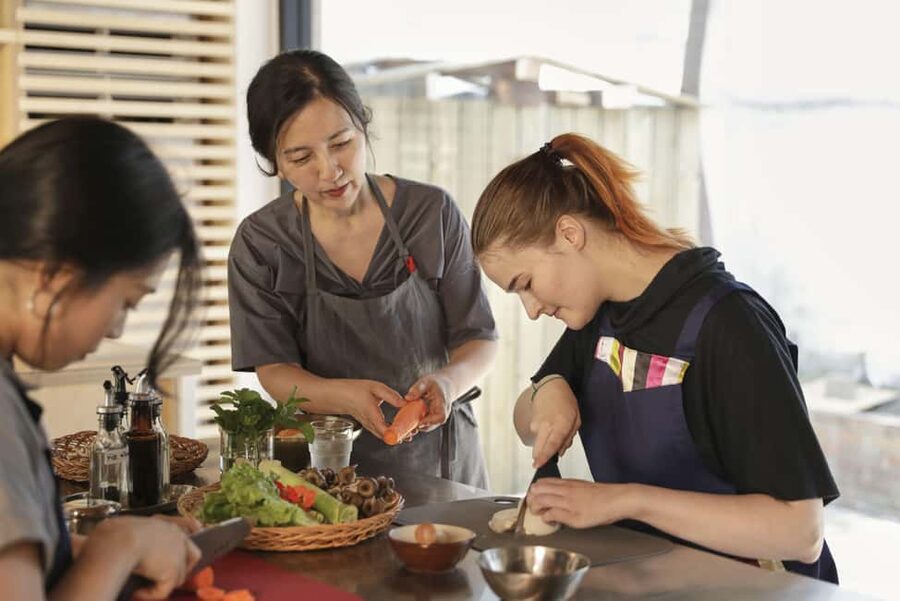
The studio in Bukchon gives the cooking lesson a stronger sense of place than a generic kitchen classroom. It is a recently renovated modern hanok, combining traditional Korean design with a space set up for instruction.
Bukchon is already one of Seoul’s most interesting areas for walking, so the class fits neatly into a day in Jongno-gu. You can plan a neighborhood stroll around the lesson, but keep the class appointment as the fixed point. The meeting address is O’ngo Food Communications, 137-11 Bukchon-ro.
Do not assume that finding the neighborhood means finding the studio instantly. Seoul addresses can take attention, especially in a hilly area with narrow streets. Give yourself extra time and use the exact address when planning your route.
Late arrival has a clear downside. If you miss part of the class, you are responsible for missed participation. Since the lesson depends on watching the opening demonstration, arriving after the cooking begins could leave you trying to catch up.
Dietary flexibility needs advance notice
The menu can be adapted for dietary restrictions and allergies, but you must tell the provider about them. This is practical advice, not a minor footnote. Korean sauces and marinades can contain ingredients that matter to people avoiding meat, seafood, gluten, or particular allergens.
There is a good example of why speaking up helps. One participant forgot to mention that she did not eat meat, and the chef prepared tofu for her in about ten minutes. She found the substitute excellent, but advance notice would have made the process easier for everyone.
The safest approach is to send your restrictions before the class, even if you think the dish looks adaptable. If your needs are complex, request a private or customized class rather than relying on a last-minute change.
The information confirms dietary customization, but it does not list every possible substitution or ingredient. Ask specific questions if you need strict avoidance rather than a general meat-free option.
Is $84 a fair price?
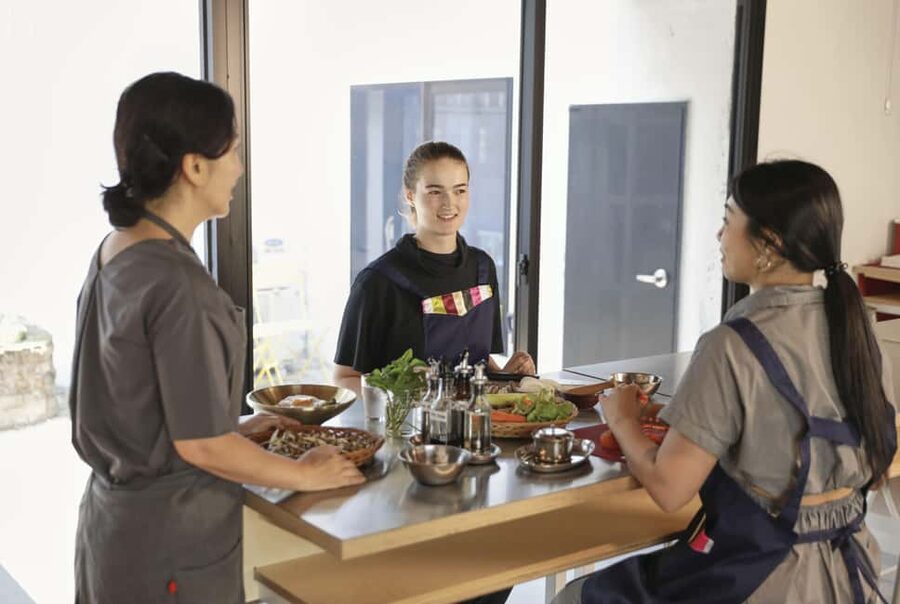
At $84 per person, this is not a budget lunch with a quick cooking demonstration. You are paying for two hours of instruction, ingredients, a professional chef, your own prepared dishes, and the chance to cook at an individual station.
I think the value depends on what you want from Seoul. If you only want to eat Korean food, restaurants will give you more food for less money. If you want a practical skill, cultural explanation, and a meal you helped create, the calculation is different.
The strongest value comes from the recipes you can repeat. One participant said the dishes were easy to recreate at home and had already made them several times. That turns the class into more than a single meal. You leave with methods for bibimbap, bulgogi, or another dish, plus a better feel for Korean seasoning.
The price also makes more sense for couples, families, and small groups who want a shared activity. It is less compelling if you dislike cooking, have a packed schedule, or are mainly looking for a large meal.
Who will enjoy this class most
I would recommend it to first-time visitors who want a structured introduction to Korean food. You do not need advanced cooking skills, and the chef demonstrates the steps before you try them.
It suits people who prefer active experiences to sightseeing from the sidelines. You handle the ingredients, cook your own portion, and eat the result. That makes the class a good choice for a rainy afternoon or for anyone who wants a break from museums and palaces.
Families and small groups should also consider it, provided every participant is comfortable with a two-hour kitchen session. The individual stations mean nobody has to stand back while one person does all the work.
Food-focused visitors will get the most from it, especially if they want to understand gochujang, Korean marinades, glass noodles, or the structure of a rice bowl. It is also useful for vegetarians if they arrange the substitution in advance.
I would hesitate to recommend it to someone who wants a long market tour, a full meal with many courses, or a class entirely devoted to one rare regional specialty. This is a compact, practical introduction to famous Korean dishes.
Booking advice for a smoother class
Choose the class as a planned stop in Bukchon rather than a last-minute add-on. The address is specific, late participation is not protected, and the opening demonstration sets up everything that follows.
Tell O’ngo Food Communications about allergies and dietary restrictions before arrival. If you want a private or customized lesson, request it in advance instead of assuming the standard session can be changed on the spot.
The class is conducted in English. That makes the instructions accessible to English-speaking visitors, and the cultural explanations are an important part of the lesson rather than an extra feature.
You can cancel up to 24 hours before the activity for a full refund, and the reserve-now, pay-later option keeps your plans flexible. Check the available start times because the class lasts two hours and the schedule can shape the rest of your Bukchon visit.
Should you book the Korean cooking class?
Book it if you want to learn by doing. The individual stations, chef demonstration, two dishes, and food-culture discussion make this a useful activity rather than a simple tasting.
I especially like it for bibimbap and bulgogi fans, people seeking a non-spicy japchae option, and anyone who wants recipes to repeat at home. Jia’s patient teaching and the successful tofu substitution are encouraging signs for beginners and people with dietary needs.
Skip it if $84 feels high for a short class, or if you would rather spend your Seoul hours eating in restaurants. For everyone else, the modern Bukchon hanok setting and practical instruction give the price a reasonable purpose.
FAQ
Where does the Korean cooking class meet?
It meets at O’ngo Food Communications, 137-11 Bukchon-ro, Jongno-gu, Seoul.
How long does the class last?
The class lasts two hours.
What language is the class taught in?
The class is conducted in English with a live English-speaking guide.
How many dishes will I prepare?
Each participant prepares and tastes two Korean dishes.
Which dishes might be included?
Possible dishes include bibimbap, jeyuk-bokkeum, japchae, and bulgogi. The available pair can vary.
Do I cook my own food?
Yes. Each participant receives ingredients and cooks at an individual cooking station.
Is bibimbap part of the class?
Bibimbap is one of the dishes offered. It includes rice, cooked seasonal vegetables, and a sunny-side-up fried egg.
Can dietary restrictions or allergies be accommodated?
Yes, but you must tell the provider about dietary restrictions or allergies. Private and customized classes can also be requested.
What is the price?
The price is $84 per person.
Can I cancel the booking?
You can cancel up to 24 hours in advance for a full refund. You can also reserve now and pay later.
Just added around Seoul
- Seoul: Korean Kimchi Cooking Class in the Heart of the City★ 5.0 · 3 reviews
- Seoul: Premium Korean Feast Cooking Class★ 5.0 · 3 reviews
- Seoul: Kimchi Dishes Cooking Class with Wine Pairing★ 4.7 · 38 reviews
- Seoul: Korean Cooking Class with Local Grocery Shopping★ 5.0 · 13 reviews
- Seoul: Korean Home Visit, Cooking & Cultural Experience★ 5.0 · 2 reviews
- Seoul: Authentic Korean Cooking Class and Market Tour★ 5.0 · 6 reviews
- (Seoul) Korean Cooking Class with a Professional Chef★ 5.0 · 14 reviews
- Seoul: Cooking Class and Tour with Michelin-Trained Chef★ 5.0 · 11 reviews
Korean Cooking Classes, compared.
Local Home Korean Cooking Class & Market Adventure in Seoul
Read our review →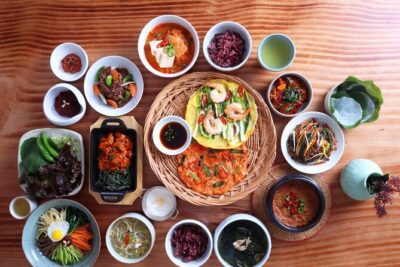
Master Korean traditional cooking with a Kimchi chef
Read our review →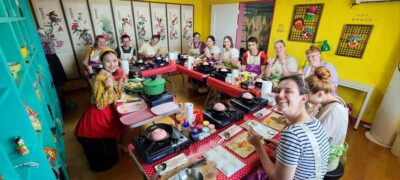
Korean Cooking Class at a Local Home and Market Tour
Read our review →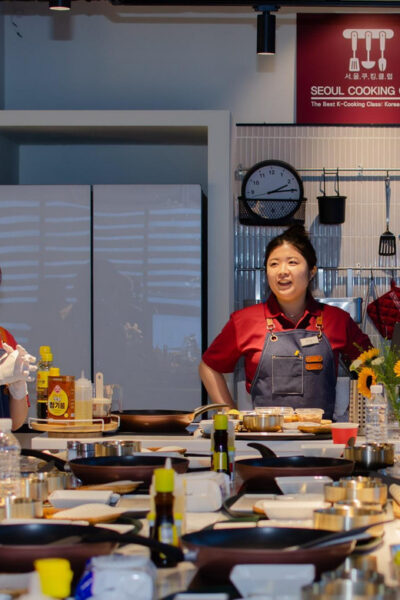
Busan Tailored Korean cooking class (Vegan OK)with market tour
Read our review →
Small-Group Traditional Korean Food Cooking Class
Read our review →Lists this class appears in