REVIEW · MARRAKECH, MOROCCO
Cooking Classes Farm to Table Marrakech
Moroccan cooking starts in the market. This half-day experience pairs a walk through Marrakech’s old medina with hands-on cooking at a peaceful farm, so you learn not only how to make tajine but also where the ingredients come from. I especially like the small group size, capped at 12 people, and the chance to prepare food yourself instead of simply watching a chef work. The main consideration is that the class requires good weather and may include a drive from the market to the farm, so the exact pickup details are worth confirming.
I also like the way the experience connects food with everyday Moroccan life. You shop for vegetables, meat, herbs, fruit, and spices before cooking, and the session includes Moroccan tea and sweets in a garden setting. At $75.60 per person, it is not the cheapest meal in Marrakech, but it offers several hours of instruction, market time, a generous shared feast, and recipes you can use later.
Key points at a glance
- Shop in a real local market: Help select fresh vegetables, meat, poultry, herbs, fruit, and spices before cooking.
- Cook in an outdoor farm kitchen: Leave the medina behind for a quieter setting among trees and garden plants.
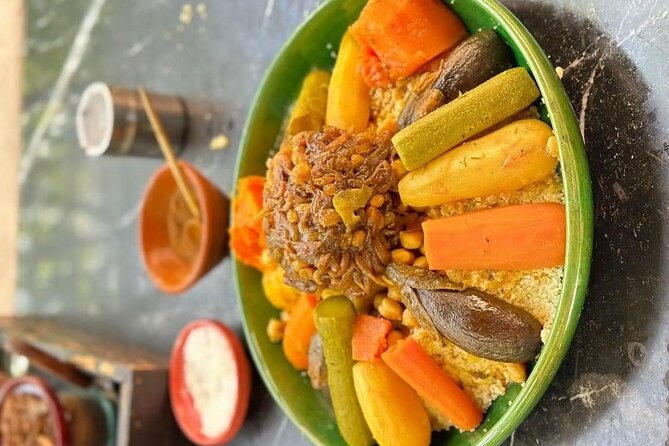
- Prepare more than tajine: Depending on the session, you may make couscous, bread, meatballs, and several Moroccan salads.
- Learn from Chef Abdel and his team: Abdel is praised for clear instruction, humor, and strong English, while Fathima helps keep the kitchen running.
- Keep the group personal: No more than 12 people take part, which gives you a better chance to ask questions.
- Plan half a day: The experience lasts about five hours, leaving the rest of your day open for Marrakech.
Starting at Koutoubia and entering the medina market
The experience begins at Koutoubia in central Marrakech, at the edge of the old medina. This is a sensible meeting point because it is easy to identify and close to public transportation. Pickup is offered, but the published meeting point is Koutoubia, so confirm the arrangements before setting out from your accommodation.
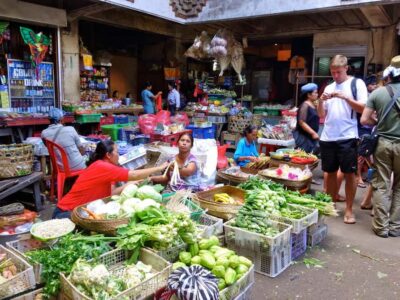
From there, your guide leads you through the medina’s narrow lanes toward a local market. This first section gives the class a useful purpose. You are not simply handed premeasured ingredients at a cooking school. You see the produce, proteins, herbs, and spices that shape Moroccan home cooking, then help choose what will go into your meal.
The market visit is also a cultural lesson. You can take photos and short videos as you walk, though the usual courtesy applies: ask before photographing people, especially vendors. The pace appears to be relaxed enough for questions and pictures, but remember that this is a working market, not a staged food display.
The experience is strongest here because ingredients become easier to understand when you see them in context. Preserved lemons, spice blends such as ras el hanout, fresh herbs, vegetables, and different cuts of meat are not just names on a recipe sheet. You get a practical look at how they are bought and used.
One small point to keep in mind is that the market can be the least calm part of the day. The medina’s lanes are busy, and the shopping portion may feel less polished than a purpose-built food tour. That is part of its value, but it may not suit you if you prefer a quiet, highly structured start.
More Farm Cooking Classes in Morocco
- Organic Moroccan Cooking Class At Secret Berber Garden CT
★ 5.0 · 147 reviews - Authentic Moroccan Cooking Class in a Farm in Marrakech
★ 5.0 · 64 reviews - Moroccan Cooking Class: Farm-to-Table Tagine
★ 5.0 · 50 reviews
From the city to a farm cooking setting
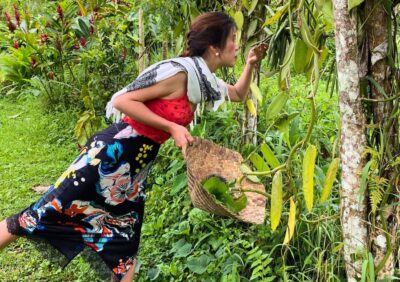
After shopping, the group returns to the farm cooking site. The change of setting is a major part of the experience. Instead of cooking in a city classroom, you prepare food outdoors among trees and vegetation, with a garden setting that several participants found peaceful and inviting.
The farm is also where the social side of the class begins. You are welcomed with Moroccan tea and sweets before the cooking starts. This pause matters. It gives you time to settle in, meet the rest of the group, and take in the setting before handling knives, spices, and hot cookware.
The outdoor kitchen uses traditional cooking methods, including charcoal according to the supplied accounts. That adds atmosphere and helps explain why Moroccan food develops its particular flavor and texture. At the same time, cooking outdoors can mean conditions are less controlled than in a modern indoor kitchen. Weather is important, and the activity can be canceled if conditions are poor.
The setting offers a welcome break from the medina. You still get a strong connection with Marrakech, but the class does not leave you in the middle of traffic and tiled courtyards for the entire day. If you have spent several days walking through the city, the farm provides a slower change of pace without turning the experience into a passive sightseeing stop.
Learning Moroccan tajine with your own hands
The central activity is making your own tajine. You wear a provided apron, prepare ingredients, and work at your station while the chef explains the methods. The emphasis is on participation, not demonstration. You should expect to chop, season, assemble, and cook rather than watch someone else do everything.
The class is particularly useful if tajine has already become a familiar restaurant dish during your trip. You can begin to connect the finished meal with the preparation behind it: how spices are combined, how ingredients are layered, and how slow cooking brings everything together.
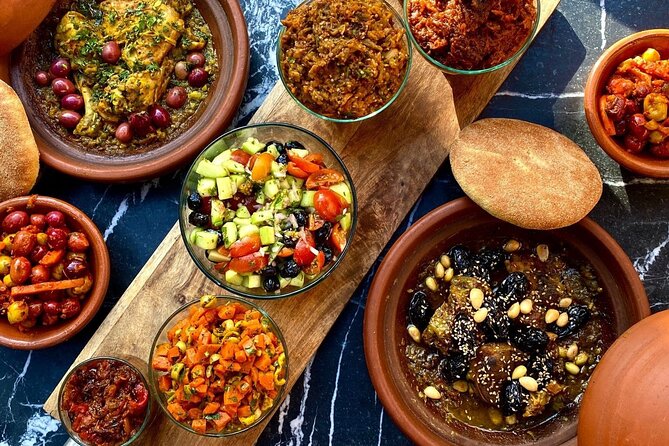
The exact menu can vary. The central promise is tajine, but accounts of the class describe sessions that also included couscous, fresh bread, meatballs, and as many as six or nine Moroccan salads. Some participants selected sweet or savory tajine options, including beef, chicken, lamb, or vegetable versions. These extras appear to depend on the day, group, or chosen package, so do not assume every dish is guaranteed in every session.
That variation can be a benefit. A fixed menu gives you predictability, while a choice of dishes lets you cook something that suits your taste. If you have dietary preferences, ask before booking or at the start of the class, since the available choices are not fully specified.
Chef Abdel receives repeated praise for his teaching style. He is described as entertaining, patient, organized, and fluent in English. Those qualities matter in a cooking class. Good food alone is not enough if instructions are rushed or unclear, while a friendly teacher can make unfamiliar methods feel manageable.
Fathima is also singled out for her work behind the scenes. A cooking session involving several dishes, tea, shopping, and a group of up to 12 people needs coordination. Her support helps the class move along without turning the preparation into a scramble.
More than one dish, and a generous final meal
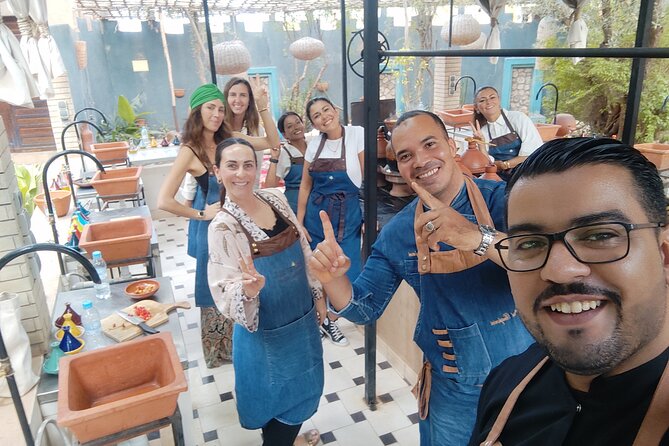
The food is the obvious reward, but the amount of cooking described here makes the price easier to assess. This is not just a short lesson followed by a small tasting. You may prepare several salads alongside your tajine, and some sessions include couscous, bread, or meatballs.
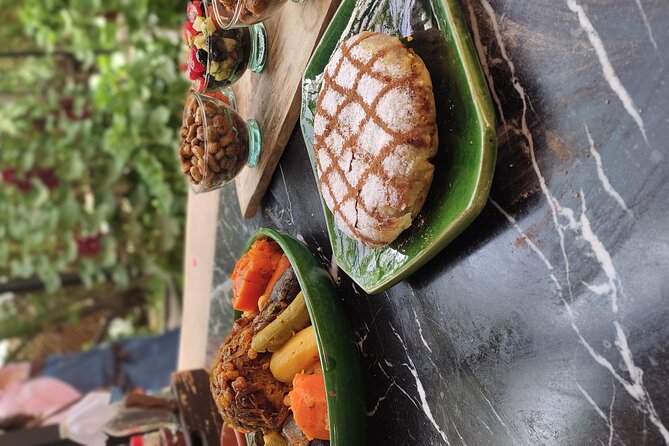
The salads are particularly useful for anyone who wants to recreate a Moroccan meal at home. They show that the cuisine is not limited to one pot of slow-cooked meat and vegetables. A table of small salads, bread, couscous, and tajine gives you a better picture of how a full meal comes together.
The final meal is served in the farm setting. Portions are described as generous, which is useful to know if you are scheduling the class around lunch. Tea and sweets are also part of the welcome, adding a simple Moroccan touch before or around the main meal.
I would not book this activity expecting a restaurant-level presentation. Its appeal is the work behind the food and the chance to eat what you prepared. The finished dishes may vary slightly from group to group, especially when several people cook different versions of tajine.
The class appears suitable for families as well. One group included six children and teenagers between the ages of 8 and 15, and everyone took part successfully. Still, the experience is hands-on and involves food preparation, so parents should decide how much independence their children can manage in a group kitchen.
More Farm Cooking Classes in Marrakech:
- Marrakech: Authentic Moroccan Cooking Class in a Farm
★ 4.8 · 8 reviews - Half-Day Thai Cooking Class at Organic Farm in Chiang Mai
★ 5.0 · 19,087 reviews - Cooking Class and Lunch at a Tuscan Farmhouse with Local Market Tour from Florence
★ 5.0 · 4,831 reviews - Chiang Mai: Authentic Cooking Class with Market & Farm Visit
★ 4.9 · 4,546 reviews
What the five-hour schedule means for your day
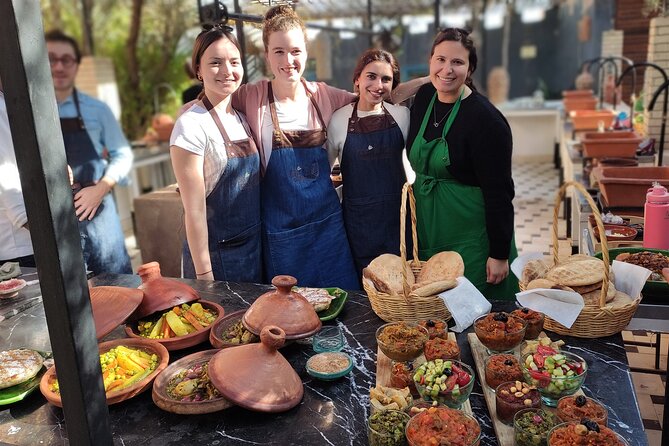
At about five hours, this is a half-day commitment rather than an all-day excursion. That makes it easy to pair with other Marrakech plans, provided you leave enough time for the market, transport, cooking, and the shared meal.
The day is likely to feel fuller than the duration suggests because it includes several different phases:
- Meeting at Koutoubia and joining the group
- Walking through the medina to the market
- Choosing fresh ingredients
- Traveling to the farm cooking site
- Having tea and sweets
- Seeing the farm and outdoor kitchen
- Preparing tajine and possible additional dishes
- Eating the meal you helped make
- Returning to the meeting point
The return to the meeting point is included in the stated arrangement. Since the activity starts in the medina and then moves to the farm, avoid booking a tightly timed attraction immediately afterward. The schedule may depend on market shopping, cooking times, and the size of the group.
A maximum of 12 people is a useful middle ground. You get the energy of a shared class without the scale of a large coach group. The smaller format also gives you a better chance to ask about spices, preparation, and Moroccan food customs.
Is $75.60 a fair price?
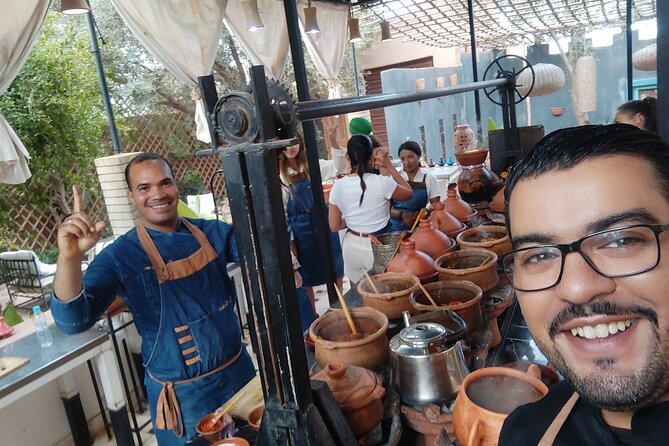
At $75.60 per person, the experience costs more than simply ordering tajine at a Marrakech restaurant. That comparison is not quite fair, because you are paying for a half-day activity that includes market shopping, transport to the farm, instruction, ingredients, tea, sweets, and a substantial meal.
The value is strongest if you want to learn a method you can repeat at home. You are also paying for access to a local market and a farm setting, two parts of the day that would be difficult to arrange independently without local contacts.
The price is less attractive if you mainly want a quick meal or a short cooking demonstration. It is also worth checking whether any private-class upgrade or special menu costs extra. One account describes paying more for a private class, while the standard experience is designed for a shared group of up to 12.
Group discounts are available, which may help families or larger parties. Since the experience is often booked well ahead, with an average booking lead time of about 37 days, reserve early if your Marrakech dates are fixed.
Who will enjoy this cooking class most?
I would recommend it most strongly to you if you enjoy food markets, practical lessons, and meeting a small group of people. It is also a good choice if you want an activity that feels different from visiting palaces, gardens, and souks all day.
Food lovers who already enjoy Moroccan cuisine will get plenty from the class. The market visit adds context, while the instruction helps you understand ingredients such as preserved lemons and ras el hanout. You do not need to be an experienced cook. The class is designed around guided preparation.
Families can consider it too, especially with older children and teenagers. The earlier account of children aged 8 to 15 suggests that a mixed-age group can take part, though parents should remain involved during preparation.
You may want to skip it if you dislike group activities, cannot spend about five hours on a cooking day, or want a strictly predictable menu. The farm setting is outdoors, the weather can affect the schedule, and the final dishes may change with the ingredients and group choices.
Practical details before you book
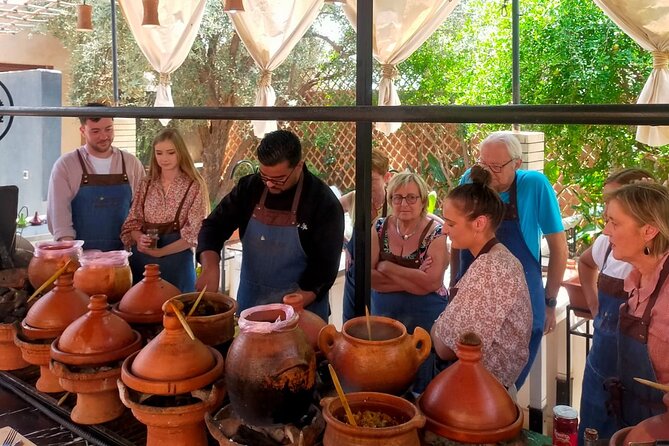
Confirmation is provided when you book. The activity is near public transportation, and it ends back at the meeting point. Because pickup is offered but Koutoubia is also given as the start point, confirm where you should wait and how the transfer to the farm works.
Wear comfortable clothing suitable for cooking and walking through the medina. An apron is provided, but practical clothes and shoes will make the day easier. You should also be ready for outdoor conditions at the farm.
Free cancellation is available up to 24 hours before the start time for a full refund. Changes or cancellations made less than 24 hours ahead are not accepted for a refund. The activity needs good weather and a minimum number of participants. If the operator cancels for either reason, you can choose another date or experience, or receive a full refund.
Should you book Farm to Table Marrakech?
I would book this class if you want Moroccan food to become more than something you order at dinner. The market visit, farm setting, charcoal cooking, and hands-on tajine preparation give the day a clear sense of place. Chef Abdel’s teaching, the support from Fathima, and the chance to prepare several dishes add real value.
The main cautions are simple: confirm the pickup details, allow the full five hours, and remember that weather or minimum group numbers can affect the schedule. If those conditions suit you, this is a strong choice for a food-focused half-day in Marrakech, especially for families, couples, and anyone who wants recipes and memories to take home.
FAQ
Where does the cooking class start?
The stated meeting point is Koutoubia, Marrakech 40000, Morocco. Pickup is also offered, so confirm the exact arrangement when booking.
Where does the activity end?
The experience ends back at the meeting point.
How long does the class last?
The activity lasts approximately five hours.
How many people can join the class?
The maximum group size is 12 people.
What food will I cook?
The main dish is a traditional Moroccan tajine. Depending on the session, you may also prepare couscous, salads, fresh bread, or meatballs, with possible choices such as chicken, beef, lamb, vegetable, sweet, or savory tajine.
Is tea included?
Moroccan tea and sweets are served at the farm before the cooking begins.
Is the class suitable for children?
The experience has accommodated children and teenagers aged 8 to 15. The supplied information does not give a formal minimum age, so confirm the details if you are booking for younger children.
What is the cancellation policy?
You can cancel up to 24 hours before the start time for a full refund. If the operator cancels because of poor weather or an insufficient number of participants, you can choose another date or experience, or receive a full refund.
Just added around Marrakech
- Moroccan Food Cooking Class with a Local Chef in Marrakech★ 4.7 · 90 reviews
- Marrakech: 3-Hour Open-Air Moroccan Cooking Course★ 4.9 · 74 reviews
- Moroccan cooking class in Marrakech with berber chef★ 5.0 · 16 reviews
- Edgy 8 Dish Private, Fusion Cooking Class, Menu Plan, Market★ 4.9 · 31 reviews
- Marrakesh: Private Cooking Class & Local Market Shopping★ 4.7 · 15 reviews
- Marrakech: Moroccan Cooking Class with Local Chef★ 4.6 · 87 reviews
- Marrakech: Authentic Moroccan Cooking Class in a Farm★ 4.8 · 8 reviews
- Marrakech: Moroccan Cooking Class with Amazing Local Chef!★ 4.9 · 100 reviews
Farm & Countryside Cooking Classes, compared.
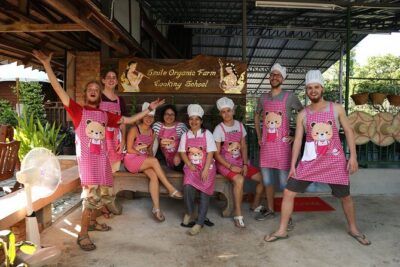
Half-Day Thai Cooking Class at Organic Farm in Chiang Mai
Read our review →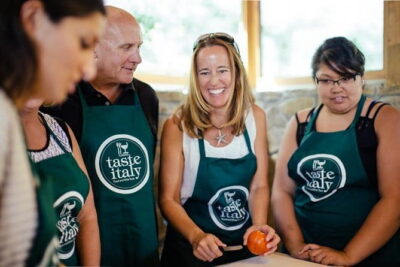
Cooking Class and Lunch at a Tuscan Farmhouse with Local Market Tour from Florence
Read our review →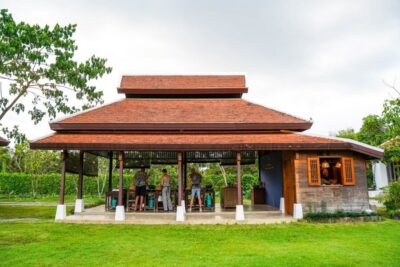
Authentic Cooking Class with Market & Farm Visit
Read our review →