
REVIEW · CAPE TOWN, SOUTH AFRICA
Cape Malay/Creole Cooking Class and Local Shopping in Salt River
Taste Cape Town beyond the usual stops. This small-group experience pairs a walk through Salt River with a hands-on Cape Malay cooking class, giving you two things I especially like: local shopping and a meal prepared in a real home. You are not simply shown a finished dish. You help make it, learn where the ingredients fit into Cape Town’s story, and then sit down to eat it.
I also like the flexible level of participation. You can cook from scratch or focus on selected tasks, such as rolling rotis and making onion and tomato sambal. The main consideration is the walk and the physical effort: you should be comfortable on your feet, and the experience may feel rushed if you want a long, leisurely meal.
Key points about the Salt River cooking experience

- Starts at Fargo Trading: Meet at one of Cape Town’s old spice shops, at Comalta House on Malta Road.
- Includes a Salt River walk: Shop for ingredients while seeing street art and learning about local African immigrant communities.
- Covers Cape Malay heritage: The cooking class connects food with the spice trade, the slave trade, and Cape Muslim identity.
- Hands-on but flexible: Roll traditional rotis, prepare sambal, or take on more of the meal if you have the time and energy.
- Ends with a three-course meal: Eat at a home in Woodstock with local home cooks.
- Small group format: A maximum of 10 people keeps the class personal and easier to follow.
Why this Salt River experience feels different
Cape Town has plenty of food tours, but this one takes a more personal route. You begin with ingredients, not a restaurant table. You walk through Salt River, visit local businesses, notice public art, and then use what you have found in a home kitchen.
That order matters. Food becomes a way to understand people and place, rather than a separate activity added to a sightseeing day. The class introduces you to Cape Malay and Creole cooking while also explaining how spices, migration, forced movement, and community life shaped Cape Town.
I like that the experience does not require prior cooking skill. If you are confident in the kitchen, you can take on more of the preparation. If you are less sure, you can focus on a few traditional tasks and still learn plenty.
The advertised duration is about three to four hours. The main activities take roughly 10 minutes at the spice shop, 50 minutes walking and shopping, and two hours cooking and eating. Some time is also allowed for transfers between locations, so do not expect every minute to be spent with a rolling pin in your hand.
A few more cooking classes around South Africa worth a look
- Cape Town: Malay Cooking Class and Lunch in Bo-Kaap
★ 4.8 · 515 reviews - Authentic African Cuisine Cooking Experience
★ 5.0 · 236 reviews - Cape Town: Cape Malay Cooking Class in Bo-Kaap
★ 4.8 · 120 reviews
Starting with spices at Fargo Trading
Your meeting point is Fargo Trading at Comalta House, 3 Malta Road, Salt River. The shop sets a useful tone for the morning because spices are not treated as decoration. They are central to the cooking and to the story you are about to hear.
You begin here at 11:00 am. The first stop is short, around 10 minutes, but it gives you a clear starting point before the walk. From there, the class moves into the neighborhood to shop for the ingredients needed for the meal.
The location also gives you an early practical detail: this is not a tour that begins at a large downtown attraction. You need to make your way to Salt River. The meeting point is near public transportation, but check your route and allow enough time to arrive before 11:00 am.
Fargo Trading is described as one of Cape Town’s oldest and most underrated spice shops. That makes it more than a pickup point. It helps frame the class around the everyday food trade that supports home cooking, rather than around a polished demonstration kitchen.
Walking through Salt River for ingredients and art
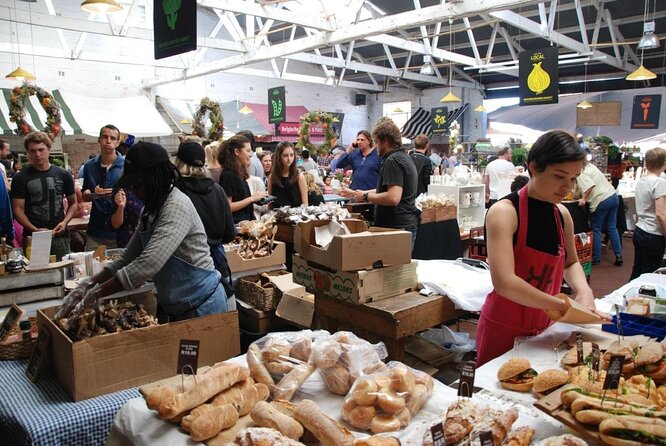
After Fargo Trading, you spend about 50 minutes walking through Salt River and shopping for ingredients. This is the part that gives the cooking class its sense of place.
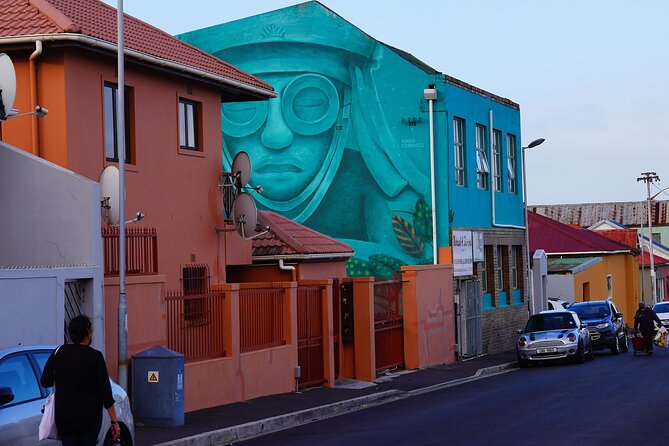
You will see colorful streets and public art connected with the Salt River Heritage Society and the International Public Art Festival. The art adds visual interest, but the real value is the chance to see the neighborhood while learning how local businesses serve different communities.
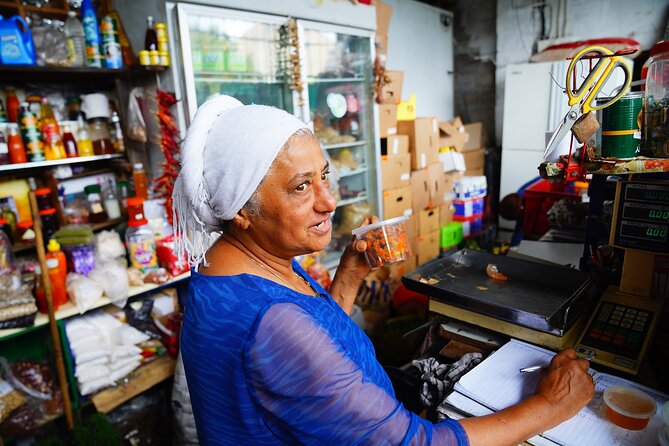
The walk also introduces African immigrant communities that run grocery shops, along with Cape Malay and Creole food vendors. That detail is important. Salt River is not presented as a backdrop for a cooking lesson. It is part of the lesson.
I would keep your attention on both the shopping and the surroundings. You may be looking for specific ingredients, but the guide’s explanation of the stores and food businesses is likely to be just as useful as the items you buy.
The physical demands are modest but real. The experience notes that you should have a strong level of physical fitness, and the walking portion lasts close to an hour. Wear comfortable shoes and be ready to remain on your feet while moving between shops and the home kitchen.
This is also where the experience may not suit everyone. If you want a seated class with ingredients already measured, this will feel less convenient. If you enjoy seeing how food connects with ordinary neighborhoods, the walking section adds much-needed context.
Cooking Cape Malay food from scratch

The class takes place at a home in Woodstock, at 33B Ormskirk Street. The cooking and meal portion lasts about two hours, which gives you enough time to take part without turning the day into a full kitchen course.
The default activities include rolling traditional rotis and preparing onion and tomato sambal. These are useful choices for a short class. They give you direct work to do, and they introduce techniques and flavors that you can understand with your hands, not only through a speech.
You may also cook more of the meal from scratch. The level of involvement depends on your time and energy. That flexibility is one of the strongest features for mixed groups, especially if one person loves cooking and another prefers watching, tasting, and asking questions.
The class does not require previous knowledge. You do not need to arrive knowing how Cape Malay dishes should look or how spices should be balanced. The point is to learn through preparation, guidance, and conversation.
At the same time, you should keep your expectations realistic. This is a three to four hour cultural food experience, not a professional cooking course. You will learn selected elements of the meal and take part in the preparation, but the supplied details do not promise a recipe book, a private lesson, or extensive instruction in every dish.
Same place, a different thing to cook:
- Cape Town: Bo-Kapp Walking Tour and Malay Cooking Class
★ 4.7 · 105 reviews - Cape Town: Authentic African Cuisine Cooking Experience
★ 4.9 · 31 reviews - Private Cape Malay Cooking Class in Cape Town with a Local Family
★ 5.0 · 24 reviews - GQ: City Walking Tour & African Cuisine Cooking Class
★ 4.6 · 11 reviews
The story behind Cape Malay and Creole cooking
The food is only one part of the experience. While cooking, you learn about the socio-cultural identity of Cape Town’s Cape Muslim community and the development of Cape Malay and Creole culture.
The discussion includes the spice trade and the slave trade in South Africa. That subject gives the meal a serious historical setting. Cape Malay cooking cannot be understood through flavor alone. Ingredients and techniques are tied to movement, community, religion, and the difficult history of people brought to the Cape.
This makes the class especially useful if you want food history presented through ordinary actions. Rolling dough and mixing sambal may seem simple, but they become ways to talk about how cooking traditions survive and change.
The experience also describes Cape Muslim culture as one of the world’s most diverse Creole communities. That is a broad subject for a short class, so you should expect an introduction rather than an exhaustive history lesson. Still, the setting helps the information feel connected to a meal rather than detached from daily life.
I appreciate that the class links food to identity without requiring you to be an expert. You can ask questions, take part at your own pace, and understand the meal as part of a living community tradition.
Sharing a three-course meal in Woodstock
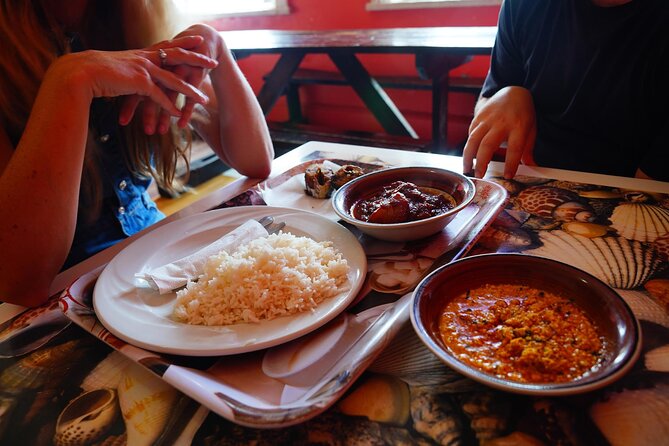
After the cooking, you share a three-course Cape Malay and Creole meal at the home on Ormskirk Street. Welcome drinks and snacks are included, so the food begins before the main meal is served.
The home setting is central to the experience. You are not only watching a local cook prepare food for you. You are helping create a meal and then eating it with home cooks from Salt River and Woodstock who are known in their communities for cooking and baking.
That shared table is likely to be the most memorable part for people who value conversation and personal contact. It also gives the cooking a clear purpose. You are not making practice dishes that disappear into containers. The class leads directly to lunch.
The end location has safe street parking and is suitable for an Uber pickup. That is useful because the experience does not return you to Fargo Trading. Plan your day around finishing in Woodstock, not Salt River.
The final meal may not suit someone with strict timing. The full experience takes several hours, and the walking, cooking, and meal are connected. If you have a museum booking or airport transfer soon afterward, leave plenty of space.
Nadia, street art, and the personal side of the tour
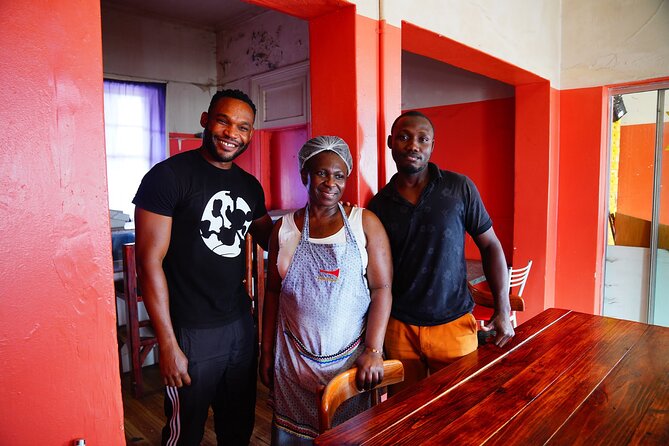
Nadia receives especially warm praise for being lovely and for making the experience a good choice for anyone interested in a different part of Cape Town and street art. If Nadia is your guide, her personal approach should add to the sense that this is a hosted neighborhood experience rather than a standard sightseeing circuit.
The street art is another highly praised feature. You do not need to be an art specialist to enjoy it. The murals and public works break up the shopping walk and give you something to notice between food stops.
I would put the art in its proper place, though. It is part of the setting, not the whole purpose of the outing. The strongest reason to book is the combination of neighborhood walking, food preparation, and cultural explanation.
The experience has a maximum of 10 people. That is small enough for easier conversation and practical help in the kitchen, while still allowing a little social energy around the table. Since only a small number of public ratings are available, I would treat the perfect score as encouraging but not as a guarantee that every class will feel identical.
Is the $74.12 price good value?

At $74.12 per person, this is more expensive than buying lunch on your own, but lunch is not what you are paying for. The price covers a guided neighborhood walk, local ingredient shopping, a cooking class, welcome drinks and snacks, a three-course meal, and time with local home cooks.
The value is strongest if you would otherwise pay for several separate activities: a food tour, a cultural walking tour, and a cooking lesson. This combines all three in one morning and early afternoon.
The value is weaker if you mainly want a recipe-focused class. The itinerary gives you a flexible introduction to selected cooking tasks, not a long technical course. You are also paying for conversation and context, which may matter less to someone who only wants to learn how to make a particular dish.
Because the experience is often booked about 26 days ahead, it is sensible to reserve early if the time suits your schedule. The small maximum can limit last-minute availability.
Who will enjoy this most?
I would recommend this experience to you if you enjoy food with a story attached. It suits people who want to see a less familiar part of Cape Town, appreciate street art, and are happy to spend part of the day walking before sitting down to cook.
It is also a good fit for couples, friends, and families with older children who can manage the walking and take part in a shared meal. The flexible cooking level means you do not all need the same kitchen skills.
You may want to choose something else if you need step-free certainty, dislike group meals, or have a tight schedule. The supplied information does not provide detailed accessibility arrangements, and the physical fitness note suggests that the walk should be taken seriously.
A mobile ticket makes entry and confirmation easy, but the important planning details are the start and end points. Begin at Fargo Trading in Salt River and finish at the Woodstock home. An Uber is suitable for pickup at the end, and public transportation is available near the meeting point.
Booking, weather, and cancellation details
Confirmation is provided when you book. Free cancellation is available if you cancel at least 24 hours before the 11:00 am start time. Changes made inside that 24-hour window are not accepted, and the payment is not refunded for a late cancellation.
Good weather is required. If poor weather causes cancellation, you can choose another date or receive a full refund. The experience also needs a minimum number of bookings, and if that minimum is not reached, you will be offered another date or experience, or a full refund.
These rules are worth noting because the walk is an important part of the morning. Check the forecast before you leave, wear shoes suited to walking, and avoid placing an important afternoon appointment too close to the scheduled finish.
Should you book this Salt River cooking class?
Book it if you want Cape Town food presented through people, neighborhoods, and history rather than through a restaurant menu alone. The strongest parts are the spice-shop beginning, the Salt River walk, the street art, the flexible hands-on cooking, and the shared three-course meal.
I would be especially keen to book if Nadia is leading and you have room in your schedule for a relaxed morning with no need to rush away afterward. Skip it if you want a purely technical cooking lesson or a short, seated activity.
For the right person, $74.12 is fair value. You get food, instruction, a neighborhood introduction, and a personal connection in one compact experience.
FAQ
Where does the Cape Malay cooking experience begin?
It begins at Fargo Trading, Comalta House, 3 Malta Road, Salt River, Cape Town, at 11:00 am.
Where does the experience end?
It ends at 33B Ormskirk Street in Woodstock, Cape Town. The home has safe street parking and is suitable for an Uber pickup.
How long does the experience last?
It lasts approximately three to four hours. The listed activities include about 10 minutes at Fargo Trading, 50 minutes walking and shopping, and two hours cooking and eating.
Do I need cooking experience?
No. The experience requires no prior cooking knowledge, and your level of participation can be adjusted according to your time and energy.
What will I prepare?
By default, you will roll traditional rotis and prepare onion and tomato sambal. You may also take part in more of the meal preparation.
Is food included?
Yes. The experience includes welcome drinks and snacks, followed by a three-course Cape Malay and Creole meal.
How many people can join?
The maximum group size is 10 people.
Can I cancel for a refund?
Yes, if you cancel at least 24 hours before the local start time. Cancellations made less than 24 hours before the start are not refunded.
Just added around South Africa
- Private Cape Malay Cooking Class in Cape Town with a Local Family★ 5.0 · 24 reviews
- Langa Township and Bokaap Cooking Class Half Day Tour★ 5.0 · 4 reviews
- South African Cooking in Cape Town with Local Chef Richard★ 4.5 · 10 reviews
- Cape Town Shore Excursion| South African Cooking & Port Transfers★ 5.0 · 3 reviews
- Private Authentic Cape Malay Cooking Class in Manenberg with Locals★ 5.0 · 5 reviews
- South African Cooking Class in Cape Town with a Local Family★ 5.0 · 2 reviews
- Johannesburg: Pan-African Cooking & Dinning Experience★ 4.5 · 6 reviews
- GQ: City Walking Tour & African Cuisine Cooking Class★ 4.6 · 11 reviews
Cooking Classes, compared.

Half-Day Thai Cooking Class at Organic Farm in Chiang Mai
Read our review →

3 in 1 Cooking Class near Navona: Fettuccine, Ravioli & Tiramisu
Read our review →
Pasta & Tiramisu Cooking Class with Unlimited Wine
Read our review →
Hanoi Cooking Class: Culture, Local Market & Meaning CSR Impact
Read our review →
5 Traditional Dishes Hanoi Cooking Class with Market Trip
Read our review →
Cooking Class and Lunch at a Tuscan Farmhouse with Local Market Tour from Florence
Read our review →
Cooking Class, Market & Thai Herbs Garden Tour
Read our review →Lists this class appears in