
REVIEW · GYEONGGI PROVINCE, SOUTH KOREA
(Seoul) Korean Cooking Class with a Professional Chef
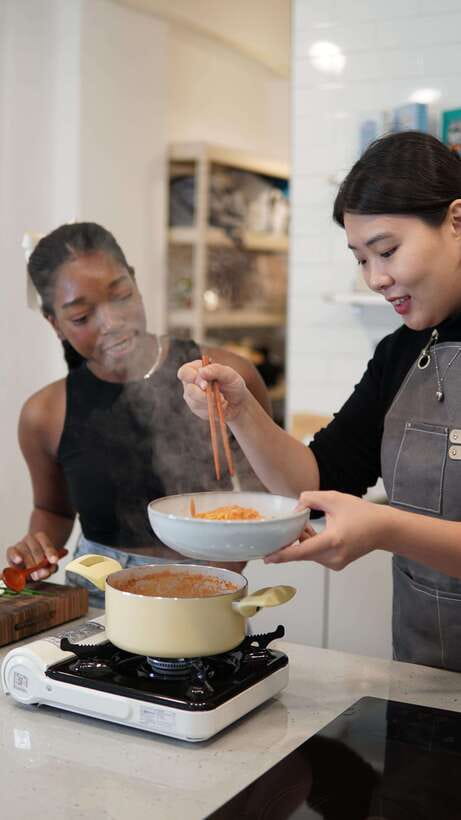
Korean food is best learned at the stove. This small cooking class in Gyeonggi Province gives you your own station, direct guidance from chef Da-ye, and a meal you prepare yourself. I like the maximum three-person group, which keeps the lesson personal, and I like that you leave with recipes and photos instead of only a full stomach. The main consideration is the fixed weekly menu, since you cannot simply choose any Korean dish on any day.
Da-ye brings hotel culinary training, restaurant menu consulting, and 12 years of teaching Korean food to people from different countries. The class costs $105 per person and lasts 2.5 hours, including cooking and eating. That is not a bargain cooking lesson, but the small group, full meal, drinks, takeaway food, recipes, and personal instruction make it easier to see the value.
What makes this Korean cooking class worth your time
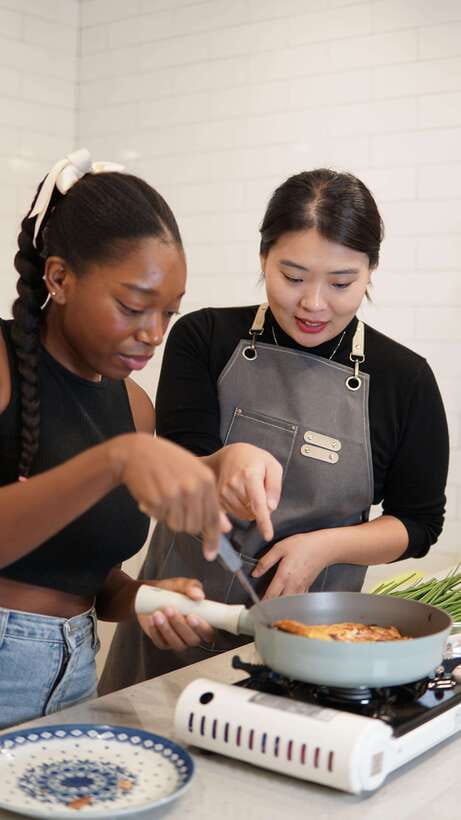
- A true three-person maximum: You cook at your own station rather than watching a large demonstration from the back of a room.
- A different menu each day: Choose Korean home cooking, street food, or a vegan menu according to the day of your booking.
- Chef Da-ye teaches with broad experience: Her background includes hotel culinary arts in South Korea, work in the United Kingdom, menu consulting, and 12 years of teaching.
- You eat what you cook: Complimentary rice, kimchi, and drinks turn the lesson into a complete meal.
- Useful take-home material: Recipe cards, photos, and videos help you repeat the dishes at home.
- A practical cultural exchange: Da-ye adds the home-cooking tips and small techniques that rarely appear in a restaurant meal.
Cooking Korean food with Da-ye in a tiny group
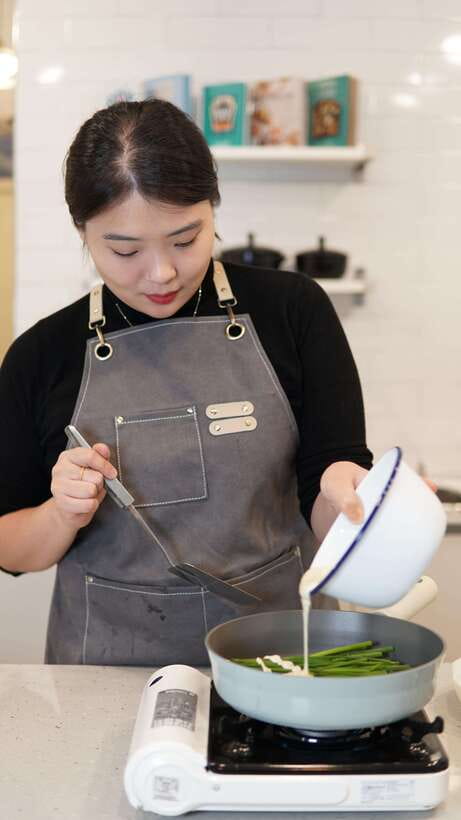
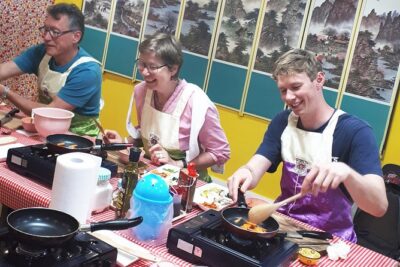
This is not a crowded class where you watch a chef chop vegetables and hope to catch the important parts. At Ricely Cooking Studio, you work at your own station and prepare the selected dishes under Da-ye’s direction.
That setup matters. With no more than three participants, you have room to ask questions, check your technique, and keep up with the pace. If you are new to Korean cooking, you can get help before a small mistake becomes a large one. If you already cook, you have a better chance to ask about substitutions, preparation habits, and the logic behind each dish.
Da-ye’s background gives the class useful range. She studied hotel culinary arts in South Korea, later moved to the United Kingdom, and worked with different European cuisines and restaurant owners interested in Korean, vegetarian, and vegan food. She also owns Nosh, a British brunch cafe in Seoul. Her teaching experience includes children and adults from many countries, though this particular activity is for people aged 18 and older.
The relaxed format is one of the strongest reasons to book. You are not rushed through a formal performance. You learn, cook, talk, and then sit down to eat. One attendee described the private class as a highlight of the trip and left with a full belly, leftovers, and enough instruction to recreate the food at home. That is a good picture of what this experience aims to provide.
More Korean Cooking Classes in Seoul:
- Local Home Korean Cooking Class & Market Adventure in Seoul
★ 5.0 · 1,024 reviews - Master Korean traditional cooking with a Kimchi chef
★ 5.0 · 385 reviews - Seoul: Korean Cooking Class at a Local Home and Market Tour
★ 5.0 · 348 reviews
Pick your menu by day
The schedule is the first thing you should check before booking. The menus are set by day, so your preferred dish may require some planning.
Monday and Tuesday: three Korean home-cooked dishes
The Monday and Tuesday menu includes beef bulgogi, seafood pa-jeon, and pork kimchi jjigae.
Beef bulgogi is a familiar introduction to Korean cooking, with marinated beef as the central dish. Seafood pa-jeon is a spring onion pancake with seafood, giving you practice with a dish that depends on texture and pan cooking. Pork kimchi jjigae brings a hearty stew to the table.
This combination gives you three different cooking tasks and three different finished dishes. You get a grilled or pan-cooked main, a savory pancake, and a hot stew. If you want a broad introduction to everyday Korean food, this is likely the most balanced choice.
Wednesday: Korean street food and bunsik
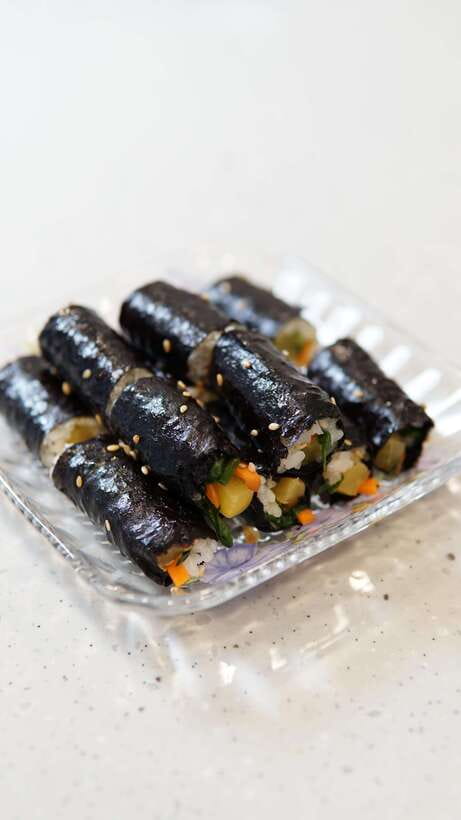
Wednesday focuses on bunsik, the casual Korean food often associated with quick meals and snacks. The menu includes tteok-bokki, Korean fried chicken called dakgangjeong, and mini kimbap.
Tteok-bokki brings chewy rice cakes and a familiar spicy profile. Dakgangjeong gives the class a crisp fried chicken dish with a sweet and savory character. Mini kimbap adds a compact roll that is fun to assemble and easy to recognize once you see how it comes together.
This is the menu I would choose if you are more interested in Korean snack culture than a traditional home meal. It also offers plenty of variety, though people who prefer stews and vegetable dishes may find the Monday and Tuesday menu more satisfying.
A few more cooking classes around Seoul worth a look
- Seoul: Korean Cooking at Seoul Cooking Club!
★ 5.0 · 311 reviews - Korean Cooking at Seoul Cooking Club
★ 5.0 · 220 reviews - Seoul: Taste of Korea, Authentic Home Style Cooking Class
★ 4.9 · 166 reviews - Seoul: Royal Seoul Cooking Class in a 100-Year-Old Hanok
★ 5.0 · 96 reviews
Thursday: dakgalbi, kimchi jeon, and doenjang jjigae
Thursday’s home-cooking menu includes dakgalbi, kimchi jeon, and doenjang jjigae.
Dakgalbi is a Korean chicken dish, while kimchi jeon is a savory kimchi pancake. Doenjang jjigae is a stew made with fermented soybean paste. Together, these dishes give you strong Korean flavors and more practice with both pancakes and stew.
This is a good choice if you want to learn about fermented ingredients. The menu also has a different balance from the beef bulgogi class, so returning participants can book a second session without repeating the same meal.
Friday: vegan Korean home cooking
Friday is the vegan menu, with bibimbap, japchae, and doenjang jjigae.
Bibimbap gives you a colorful mixed rice dish. Japchae introduces Korean glass noodles, and doenjang jjigae provides a warm stew made with soybean paste. This is not an afterthought for people avoiding meat. It is a full three-dish Korean meal built around vegetables, noodles, rice, and fermented flavor.
If you are vegan or simply want a plant-based class, Friday is the obvious booking day. The information provided does not list every ingredient or explain how all dietary needs are handled, so you should raise any allergy or religious food concern before booking.
What the 2.5-hour class actually includes
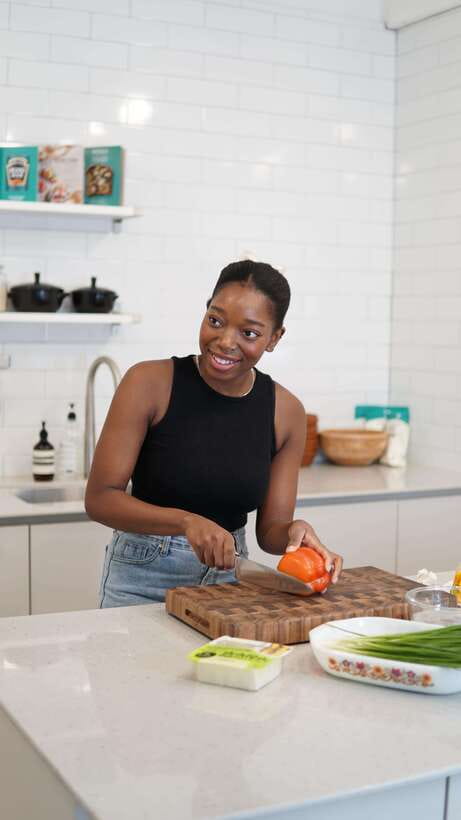
The stated duration includes both the teaching time and the time you spend eating what you prepare. That is useful to know because 2.5 hours is not all hands-on cooking.
Expect the session to move through several stages. You begin with a welcome coffee or another drink, then receive instruction for the selected menu. You prepare and cook at your own station while Da-ye shares Korean home-cooking tips. Once the food is ready, you sit down and eat with complimentary rice, kimchi, and drinks.
The meal is not a small tasting plate. The class is designed around a complete meal, and one private-class participant had enough food left to take back to the hotel. The exact amount will vary, but you should not book this expecting only a few bites between demonstrations.
The eating time is part of the experience rather than an inconvenience. You can ask follow-up questions while trying the finished dishes, compare the different preparations, and talk with Da-ye about Korean food. The class therefore works as both a lesson and a meal.
Why the small group changes the experience

Three people is a useful limit for cooking instruction. You are close enough to see what Da-ye is doing, and you can receive help without waiting behind a large group.
The private-class feedback also points to the social side of the format. A small group allows for relaxed conversation, and Da-ye has been praised for being gracious, friendly, and passionate about Korean food and culture. She has also offered suggestions for things to do around Seoul, which can be a welcome bonus when you are building the rest of your visit.
There is a firm rule here: only paid participants who are actively taking the cooking lesson may be in the studio while class is in progress. Friends and family cannot sit in as spectators, and there is no waiting area for them. If someone in your party wants to watch but not cook, this is not the right arrangement.
The age limit is also clear. The class is not suitable for children under 18. That makes it better for adult couples, solo visitors, friends, and small groups of adults who want a hands-on activity.
Recipes, photos, videos, and leftovers
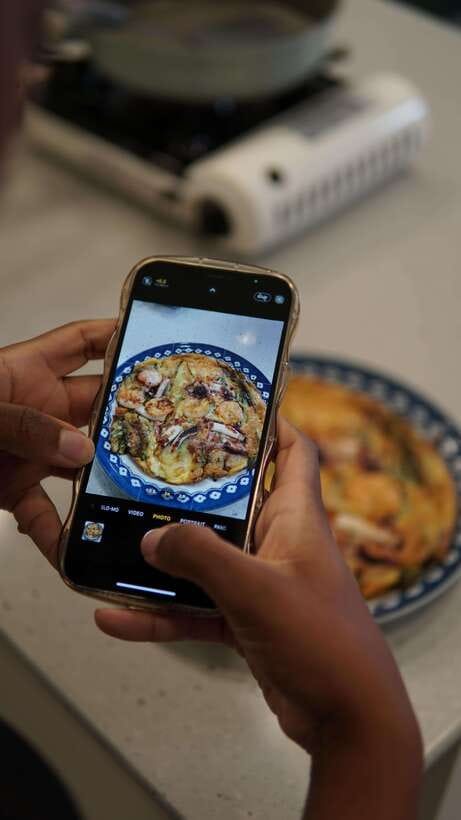
The most useful part of the take-home package is the recipe cards. A good cooking class should help you repeat the meal, and these cards give you a practical reference after you return home.
Photos and videos are also included. They help you remember the techniques and the dishes, particularly if you want to share the experience or cook from the recipes later. One participant specifically valued leaving with recipe cards and enough food to enjoy later at the hotel.
Do not treat these extras as a replacement for paying attention in class. The value comes from combining them with Da-ye’s live explanations and home-cooking tips. You can follow a recipe, but a teacher can show you the small choices that make the process easier.
Is $105 per person good value?
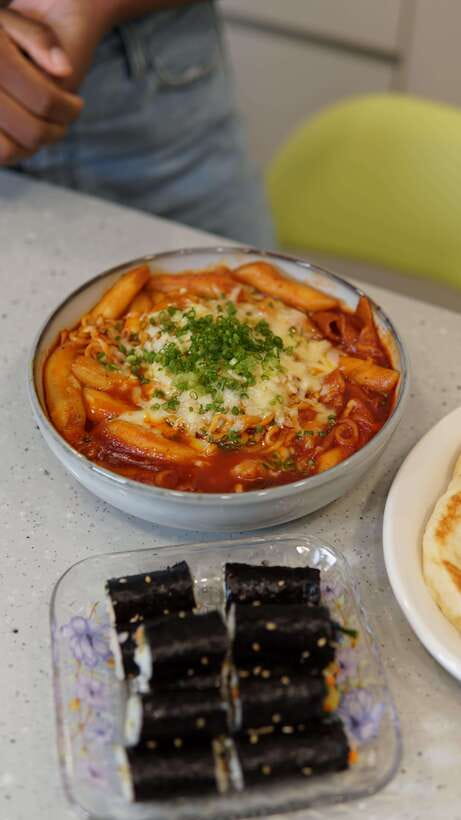
At $105 per person, this class costs more than a large demonstration or a simple market snack tour. You are paying for a small group, a professional instructor, a welcome drink, cooking at your own station, a three-dish menu, a sit-down meal, rice, kimchi, drinks, recipes, photos, and videos.
The three-person limit is the key to the price. If you only want to taste Korean food, you can spend far less elsewhere. If you want direct instruction and a chance to ask questions throughout the process, the cost makes more sense.
The full meal also improves the value. You are not paying for a short lesson followed by another restaurant bill. You cook and eat several dishes in one session, and you may have leftovers. For someone interested in Korean food, that combination is more useful than a quick activity built around one recipe.
I would consider it good value for an adult who wants to take a piece of Korean cooking home. I would be less likely to recommend it to someone with little interest in cooking or someone who wants the cheapest possible way to eat in Seoul.
Who should book this class?
I would recommend it most strongly to:
- Adults who want hands-on instruction rather than a food demonstration
- Solo visitors who enjoy meeting a host in a small setting
- Couples or friends who want a calm indoor activity
- People who want Korean recipes they can make after returning home
- Vegan participants who can book the Friday menu
- Anyone curious about Korean home cooking, street food, and fermented flavors
The class is less suitable for children, spectators, or people who cannot commit to the menu assigned to a particular day. It may also be a poor fit if you need a highly specific allergy-free meal and cannot confirm the ingredients in advance.
The English instruction is a major help for international visitors. Da-ye has taught people from many countries and has experience with different food habits, cultures, and religions. Still, you should communicate any dietary restriction before the lesson rather than assuming the scheduled menu can be changed.
Booking details that matter
The activity is in Gyeonggi Province, South Korea, rather than simply being described as a central Seoul class. Check the meeting details and allow enough time to reach the studio, since the supplied information does not give a transport route or exact neighborhood.
You can cancel up to 24 hours before the activity for a full refund. A reserve-now, pay-later option is also available, which helps if your Seoul schedule is still changing. Starting times depend on availability, so check the date and time before you commit to a menu.
The overall rating is 5 from 14 reviews, and the praise is consistent around the same points: Da-ye’s teaching, the intimate setting, the quality of the food, the take-home recipes, and the generous amount of food. Those are the areas I would use to judge the experience, rather than expecting a sightseeing tour or a broad introduction to Seoul.
My verdict on Ricely Cooking Studio
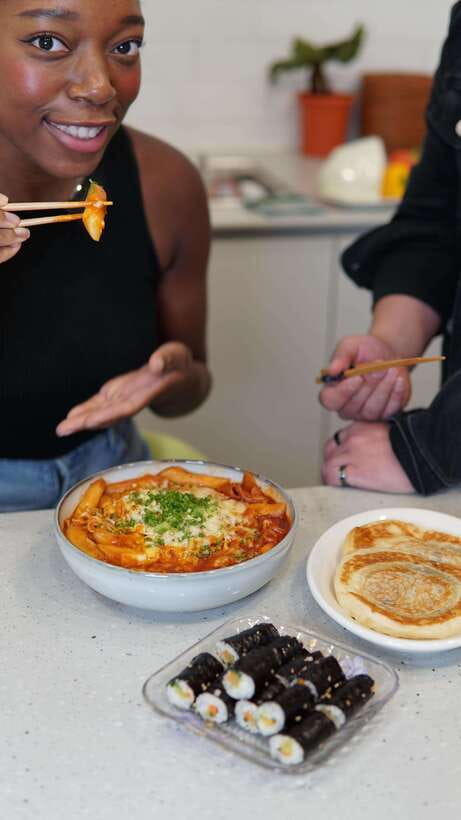
I would book this class if I wanted a personal, useful introduction to Korean food. Da-ye’s experience, the three-person limit, and the chance to cook three dishes give the session more substance than a simple tasting stop.
Choose your day carefully. Monday and Tuesday offer a broad home meal, Wednesday is best for street food, Thursday brings chicken, kimchi, and soybean-paste flavors, and Friday is designed for vegan Korean cooking. If the menu matches your interests and you are happy to spend $105 for instruction plus a full meal and take-home materials, this is a strong choice.
I would skip it only if you are under 18, want to bring a nonparticipating companion, or prefer a cheap and casual food stop. For an adult who wants to learn, eat well, and recreate Korean dishes later, Ricely Cooking Studio earns its place in a Seoul itinerary.
FAQ
Where does the Korean cooking class take place?
The class takes place at Ricely Cooking Studio in Gyeonggi Province, South Korea.
How long does the cooking class last?
The class lasts 2.5 hours. This includes both the teaching and the time spent eating the meal you prepare.
How many people can join the class?
The class is limited to three participants, making it a small-group lesson.
Is the class taught in English?
Yes. English instruction is provided.
What food is included with the meal?
The class includes complimentary drinks, rice, and kimchi, along with the dishes you cook.
Can I bring a friend or family member who is not taking the class?
No. Only paid participants who are actively taking the lesson may be in the cooking studio while class is in progress. There is no waiting area for spectators.
Which day offers vegan Korean cooking?
The vegan Korean home-cooking class is offered on Friday. The menu includes bibimbap, japchae, and doenjang jjigae.
Just added around Seoul
- Seoul: Korean Kimchi Cooking Class in the Heart of the City★ 5.0 · 3 reviews
- Seoul: Premium Korean Feast Cooking Class★ 5.0 · 3 reviews
- Seoul: Kimchi Dishes Cooking Class with Wine Pairing★ 4.7 · 38 reviews
- Seoul: Korean Cooking Class with Local Grocery Shopping★ 5.0 · 13 reviews
- Seoul: Korean Home Visit, Cooking & Cultural Experience★ 5.0 · 2 reviews
- Seoul: Cooking Class and Tour with Michelin-Trained Chef★ 5.0 · 11 reviews
- Seoul: Authentic Korean Cooking Class and Market Tour★ 5.0 · 6 reviews
- Seoul: Royal Seoul Cooking Class in a 100-Year-Old Hanok★ 5.0 · 96 reviews
Korean Cooking Classes, compared.
Local Home Korean Cooking Class & Market Adventure in Seoul
Read our review →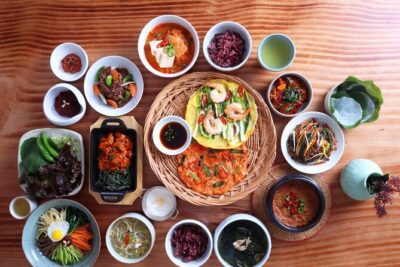
Master Korean traditional cooking with a Kimchi chef
Read our review →
Korean Cooking Class at a Local Home and Market Tour
Read our review →
Busan Tailored Korean cooking class (Vegan OK)with market tour
Read our review →
Small-Group Traditional Korean Food Cooking Class
Read our review →Lists this class appears in