REVIEW · BALI, INDONESIA
Bali: Balinese Cooking Class and Market Tour
Food is the fastest way to meet Bali. This five-hour Seminyak experience combines a local market visit with hands-on cooking, morning tea, lunch, a cookbook, and a certificate. I especially like the chance to handle fresh spices and produce before cooking, and I like that the class ends with a shared meal rather than a quick demonstration. The main concern is consistency: one detailed account found the market visit brief and the cooking heavily assisted.
The price is $40 per person, which is fair if you take part in preparing several dishes and use the cookbook at home. You get hotel pickup, but no return transfer, so you need to plan your way back. The class is offered in English and Indonesian, with an audio guide in both languages.
Key points at a glance
- The market visit comes first: Practice bargaining while looking at produce, fruit, and spices used in Balinese cooking.
- Five hours includes food from start to finish: Morning tea with a Balinese cake, cooking, and a group lunch are included.
- You receive useful take-home items: The cookbook gives the class value after your Bali trip, while the certificate makes a nice souvenir.
- Hands-on participation varies: The chef aims to give everyone a turn, but some tasks may be completed by assistants.
- Pickup is included, drop-off is not: Wait in your hotel lobby 10 minutes early, and remember that the driver waits only five minutes after the scheduled time.
- The class suits food lovers and curious beginners: You do not need advanced cooking skills, but you should be comfortable in a group setting.
Starting with a Seminyak market visit
The day begins with pickup and a visit to a local market. This is the part that gives the class its cultural footing. Instead of meeting the ingredients only after they have been cleaned and arranged in a cooking school, you see the raw materials in the setting where people buy them.
You can expect to look at tropical produce, locally grown fruit, and fragrant spices. The market also gives you a chance to practice haggling, an everyday skill that can feel awkward at first. Having a guide beside you helps explain what you are looking at and how the ingredients fit into Balinese food.
This visit is not just shopping for lunch. It helps you understand why Balinese cooking has such a strong mix of fresh produce, herbs, spice pastes, and aromatics. Even if you forget a cooking technique later, you will likely remember the smell of the spices and the way the ingredients were presented.
Still, keep your expectations measured. The market portion may be shorter and more commercial than you hope. One participant described visiting only two stalls, with prices that appeared to vary according to a shopper’s appearance. That is a serious concern if you want a slow, local market walk with plenty of time to browse.
I would treat this part as an introduction to ingredients rather than a full market tour. You may enjoy it most if you stay curious, ask questions, and focus on learning what goes into the food rather than expecting a long shopping expedition.
More Cooking Classes with a Market Tour in Indonesia
- Ubud: Cooking Class with Transfers and Optional Market Visit
★ 4.9 · 824 reviews - Balinese Ubud cooking school (9 Dish Cooking and Market Tour)
★ 5.0 · 540 reviews - Ubud: Balinese Cooking Class and Market Tour
★ 4.8 · 531 reviews
Morning tea and a gentle introduction to Balinese food
Morning tea with a Balinese cake is included before the main cooking session. This small detail matters because a five-hour food activity can feel long if you arrive hungry and have to wait for lunch.
The cake also gives you an early taste of local flavors. You will have something to eat while the chef explains the day and the ingredients. Since the exact cake and menu are not specified, you should not book this expecting a particular dessert or a fixed list of dishes.
The class is designed for beginners. The chef demonstrates techniques and guides the group through the preparation. English and Indonesian are available, and an audio guide is included in both languages. That makes the session easier to follow for mixed-language groups, though the quality of a cooking class still depends on how much individual attention your group receives.
I like the practical structure here. You are not simply watching a chef prepare a finished meal. You get a chance to see the process, handle ingredients, and connect the market visit with the food on your plate.
Cooking several Balinese dishes with the group
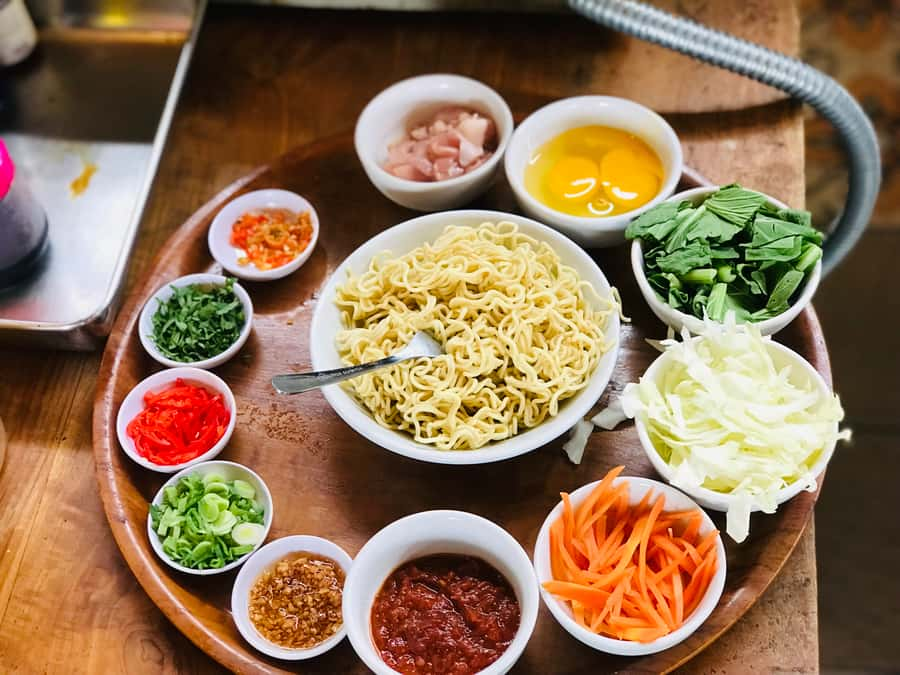
The central part of the experience is the cooking class. The dishes are described as popular Balinese specialties, but the available information does not name the menu. That means you should check the current menu if you have strong preferences or dietary restrictions.
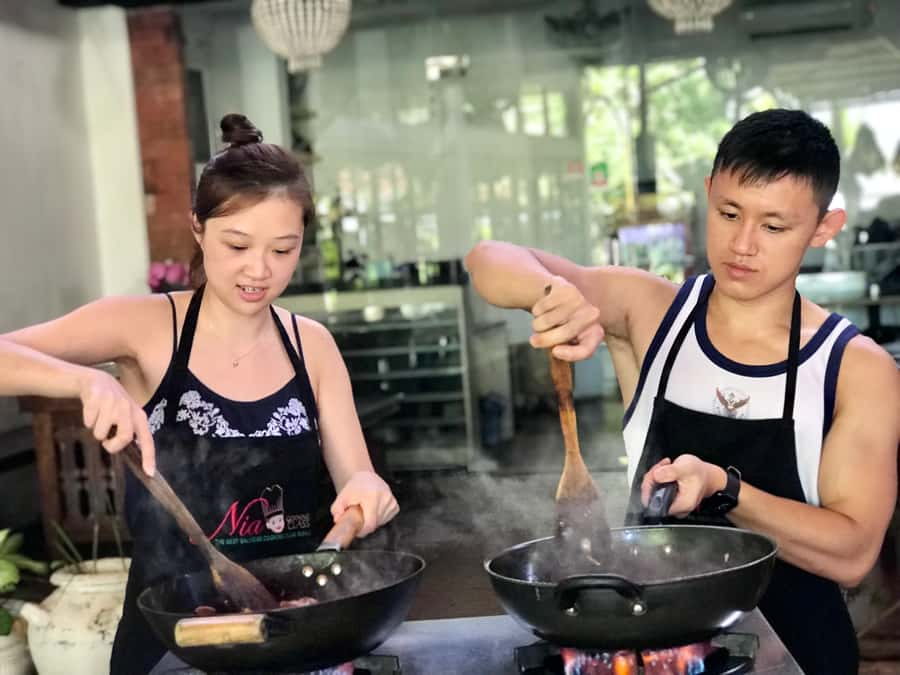
A good class works because the chef breaks unfamiliar tasks into small steps. You might be shown how to prepare spices, chop ingredients, combine flavors, or use a local cooking method. The goal is not to turn you into a professional cook in one morning. It is to give you enough understanding to try the dishes again with the cookbook.
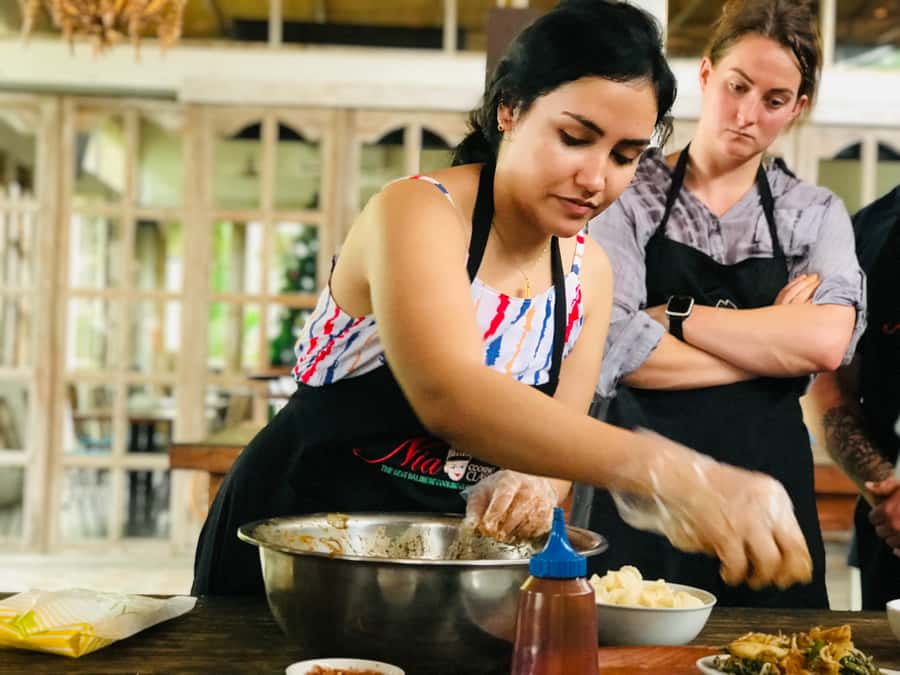
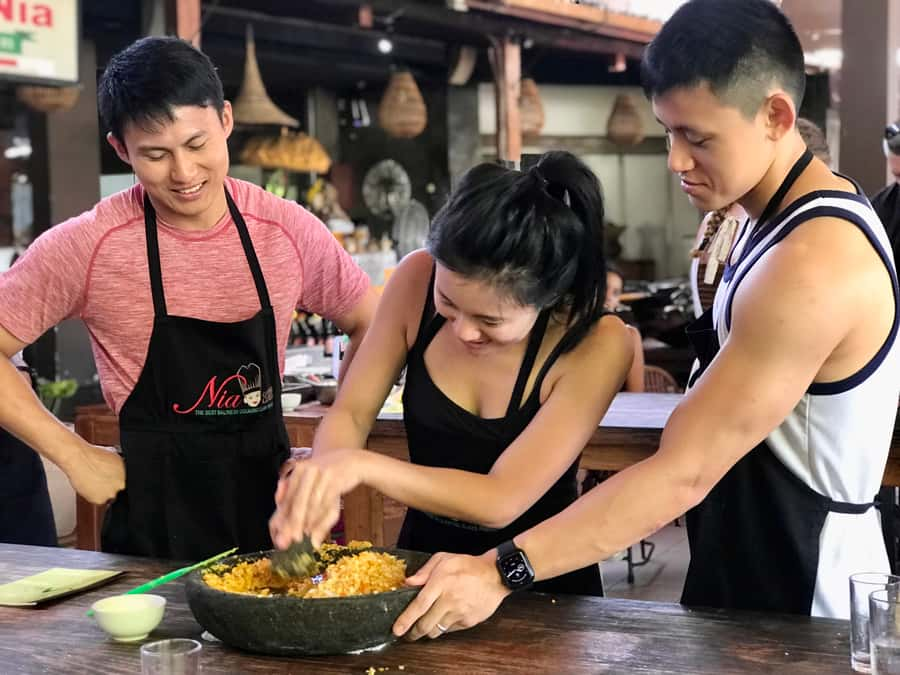
The group format can be a plus. Cooking alongside other people creates a relaxed social atmosphere, and the shared meal gives everyone something to talk about. A recent participant described the chef as making sure each person had a chance to cook. Another person who attended the class for a second time praised its organization and enjoyed taking home the recipe book.
There is a caution here. A detailed negative account described a production-line format in which the participant mainly chopped garlic while assistants handled much of the actual work. That does not match the more positive accounts, which praised the chef’s demonstrations and guidance, but it shows that your level of participation may depend on group size, staffing, and the station you are assigned.
If hands-on practice is your top priority, ask at the beginning how tasks will be divided. Try to take part in more than one stage of preparation. A class can still be enjoyable when assistants help, but you should know whether you are signing up for an instructional workshop or a social food activity with some cooking.
Eating what you helped prepare
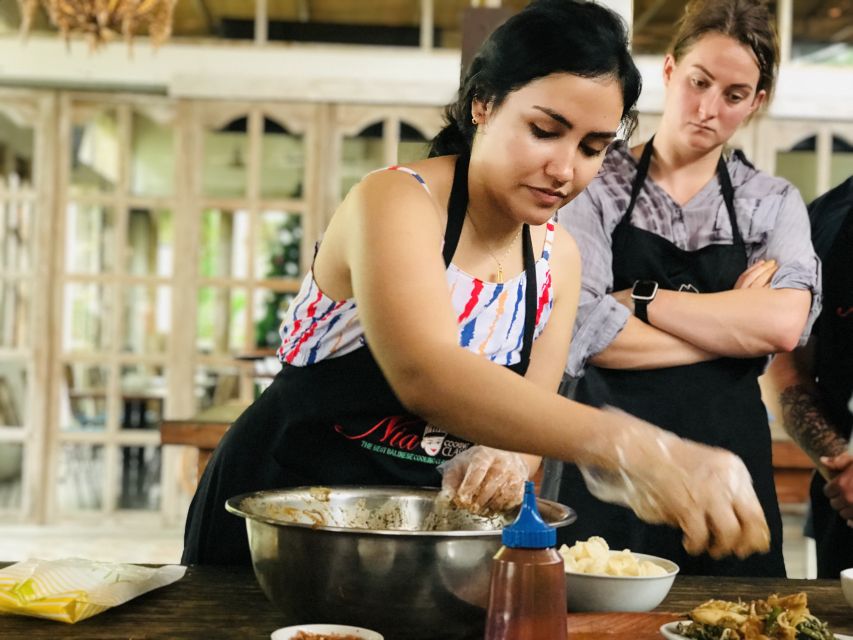
Lunch is included, and eating together is the natural payoff after the cooking session. You get to taste the food prepared by the group and compare the results with the chef’s examples.
Several positive accounts praised the food and the amount prepared. One person described making many dishes, with some items served as snacks during the session. That is useful because it suggests the experience is not limited to one simple recipe.
The meal also gives you a chance to notice how the ingredients change during cooking. The market’s raw spices and produce now appear as finished Balinese dishes. For someone who enjoys food but does not always know how a dish is made, that connection is the most useful part of the day.
However, one participant said the final meal included a large amount of food that did not match the dishes they had prepared. If you care about tasting exactly what you cooked, ask the chef to identify the group’s dishes before eating. That simple step can help you understand which parts of lunch came from your own work.
The group meal is best viewed as part of the social experience. You are eating with the people from your class, not receiving a private chef’s tasting menu. That keeps the price reasonable, but it also means the presentation and menu may vary.
More Balinese Cooking Classes in Indonesia:
- Ubud: Balinese Cooking Class at an Organic Farm
★ 5.0 · 1,786 reviews - Ubud Cooking Class Bali with Balinese Chef
★ 5.0 · 1,609 reviews - PRIVATE Authentic Balinese Cooking Class in Ubud at Putu’s Home
★ 5.0 · 644 reviews - Seminyak: Balinese Cooking Class & Market Tour
★ 4.9 · 458 reviews
The cookbook and certificate add value
The cookbook is one of the strongest practical features. A meal disappears quickly, but recipes give you a way to recreate part of the experience at home. The cookbook also helps solve a common problem with cooking classes: remembering what you did after a busy morning of chopping, tasting, and listening.
The certificate is a pleasant extra. It will not change your cooking skills, but it makes a fun souvenir and gives the activity a clear finish. For families, couples, or friends, it can be a small reminder of the day.
At $40, the package includes more than a class alone. You receive pickup, the market visit, morning tea, lunch, the cookbook, and the certificate. The value is good if you use several of those elements. If you only want a quiet, advanced cooking lesson, the price may feel less attractive because part of your time is spent at the market and in group activities.
What the $40 price really covers
The cost is moderate for a five-hour activity with food and transportation at the beginning. You are paying for a complete half-day plan, not just an hour of instruction.
The value is strongest for first-time visitors to Bali who want an easy way to connect food, shopping, and local customs. It also works well when you want a planned morning that ends with lunch, rather than arranging separate activities.
The price does not include drop-off. That matters in Seminyak, where traffic and distance can make an unplanned return trip irritating. Before booking, check where the class ends and decide whether you will use a taxi, ride service, or another arrangement. The provided details confirm pickup but do not give a return transfer.
The booking terms are flexible. You can cancel up to 24 hours before the activity for a full refund, and you can reserve without paying immediately. Those conditions help if your Bali schedule is still changing.
Pickup, timing, and accessibility
The total duration is five hours, with starting times based on availability. You should be ready in your hotel lobby 10 minutes before pickup. Drivers wait no longer than five minutes after the scheduled time, so this is not the morning to arrive casually with coffee in hand.
Pickup details can matter as much as the cooking. If your accommodation is difficult for a driver to reach, confirm the meeting point in advance. The information provided says pickup is included, but it does not specify every hotel area covered.
The activity is listed as wheelchair accessible. That is useful, though a market visit can still involve narrow passages or uneven surfaces. If you use a wheelchair, contact the provider before booking to confirm the current route and cooking setup.
The age restrictions are presented inconsistently, listing several limits for very young children and also restrictions for people over 70 and over 95. Since the information overlaps, confirm the applicable age rule when booking. Babies under one year and children under four are not suitable according to the listed restrictions.
The teaching style and group atmosphere
The chef is the key to the experience. Positive feedback repeatedly points to clear explanations, friendly instruction, good organization, and a fun atmosphere. One participant said the chef made sure everyone in the group had a chance to cook. Another praised the atmosphere, food, instructions, and overall care.
That is encouraging if you are a beginner or feel unsure in a kitchen. You will not be left to guess what to do next. The English and Indonesian language options also make the class workable for international groups.
The group setting has trade-offs. You may need to share workstations or wait for a turn. Some participants may be more eager to cook than others. If you prefer personal attention, ask about group size before confirming, since no group size is provided here.
You should also be alert to sales pressure after the activity. One participant reported receiving repeated WhatsApp promotions for clothing shops and other businesses. That does not define the cooking class itself, but you may prefer not to share marketing consent or may want to mute messages afterward.
Who should book this cooking class?
I would recommend it to you if you want three things in one morning: a taste of local food, a short introduction to market shopping, and a social cooking session. It is especially suitable for beginners, couples, friends, and solo visitors who like meeting other people through food.
You will probably appreciate the class if you want practical memories rather than a lecture. You can taste a Balinese cake, see the ingredients, help prepare food, eat lunch, and take recipes home.
I would be more cautious if you are a serious home cook looking for detailed technique. The class may provide useful instruction, but the hands-on time can vary, and some tasks may be completed by assistants. I would also hesitate if your main goal is a long, independent market visit, since the market portion may be limited.
Final verdict: a good-value cultural morning with one clear caveat
The Nia Balinese Cooking Class offers a solid half-day plan at $40. The strongest features are the friendly teaching, the chance to connect market ingredients with finished dishes, the included lunch, and the cookbook you can use later.
The weak point is the possibility of a commercial, highly managed format. Ask how much of the cooking you will personally do, confirm the current menu, and make your own plan for getting back after the class. If you can accept those limits, I think this is a worthwhile choice for learning basic Balinese food traditions in a friendly group setting.
FAQ
How long does the Balinese cooking class and market tour last?
The activity lasts five hours.
What is included in the $40 price?
The package includes pickup, the market tour, morning tea with a Balinese cake, lunch, a certificate, and a cookbook.
Is hotel drop-off included?
No. Pickup is included, but drop-off is not.
What languages are available?
The instructor and audio guide are available in English and Indonesian.
When should I wait for pickup?
You should wait in your hotel lobby 10 minutes before the scheduled pickup time. The driver will wait no longer than five minutes after that time.
Can I cancel the activity?
Yes. You can cancel up to 24 hours in advance for a full refund. You can also reserve now and pay later.
Just added around Indonesia
- Pure Bali Village Experience, Cooking & Jamu Class+VIP Transfer★ 5.0 · 16 reviews
- Spice Garden, Jamu & Cooking Class in Bali Village★ 5.0 · 5 reviews
- The Authentic Balinese Cooking Experience★ 5.0 · 4 reviews
- Seminyak : cooking class traditional food bali★ 5.0 · 5 reviews
- Seminyak: Vegetarian Cooking Class★ 5.0 · 3 reviews
- Quad ride, waterfalls & aunthentic cooking class in munduk★ 4.9 · 53 reviews
- Pure Bali Village Experience Cooking & Jamu Class, Transfer★ 4.8 · 5 reviews
- Ubud: Organic Farm Harvest, Bali Cooking Class by Pemulan★ 4.8 · 12 reviews
Cooking Classes with a Market Tour, compared.

Hanoi Cooking Class: Culture, Local Market & Meaning CSR Impact
Read our review →
5 Traditional Dishes Hanoi Cooking Class with Market Trip
Read our review →
Cooking Class and Lunch at a Tuscan Farmhouse with Local Market Tour from Florence
Read our review →
Cooking Class, Market & Thai Herbs Garden Tour
Read our review →
Authentic Cooking Class with Market & Farm Visit
Read our review →
Paella Cooking Experience & Boqueria Market Tour
Read our review →
Cooking Class Hoi An:Local Market, Basket Boat, Fishing & Cooking
Read our review →