REVIEW · BALI, INDONESIA
Ubud: Balinese Cooking Class and Market Tour
Start with a market, then cook lunch. This four-hour Ubud experience combines a local market visit, rice-paddy stop, and hands-on class in a family-run setting. I like the chance to taste unfamiliar fruit before cooking, and I like that you prepare nine Balinese dishes yourself rather than simply watching a chef work. The main drawback is that the market and rice-field visits are offered only with the morning class, while the afternoon option focuses on cooking and making a Balinese canang offering.
The small-group limit of 14 keeps the class personal, although the amount of food preparation can feel busy when the group is full. At $23 per person, including Ubud-area pickup, a guide, the class, meal, and recipe PDF, this is one of the better-value food activities in Ubud. You should still check the pickup zone carefully, since transport outside Ubud is not included.
Key points to know before booking
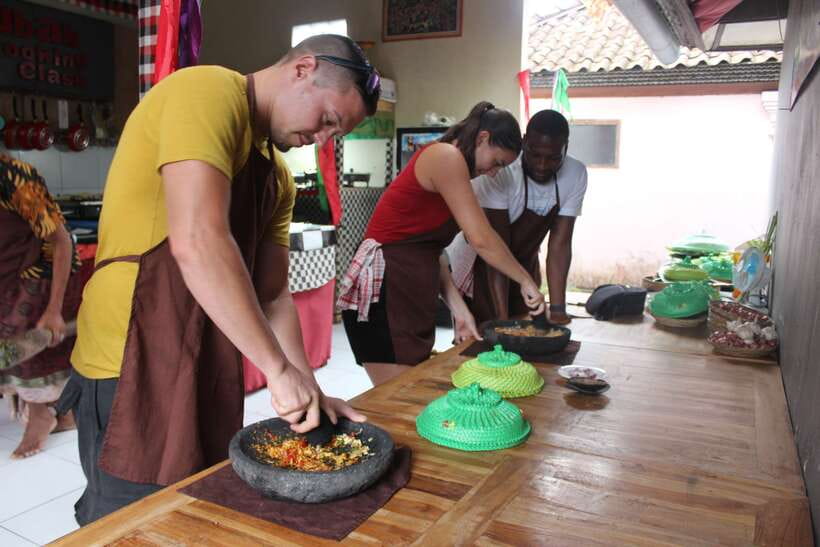
- Nine dishes from start to finish: You help prepare sauces, main dishes, and dessert, then sit down to eat what you made.
- A real local market: The morning visit takes you beyond a tourist food display, with close quarters, dirt floors, flies, and the ordinary sights of daily trade.
- Rice paddies add context: You learn why rice matters so much in Balinese life before heading to the cooking school.
- Family-run atmosphere: Hosts and instructors such as Putu, Wayan, Butu, and Tata are praised for being friendly, patient, and good at including the whole group.
- Morning and afternoon options differ: Only the morning class includes the market and rice-field stops. Afternoon participants make a canang offering and eat dinner together.
- Strong value for the price: At $23, the meal alone would be useful, but the transport, instruction, market tour, and recipe file make the package especially appealing.
Why this cooking class works so well in Ubud
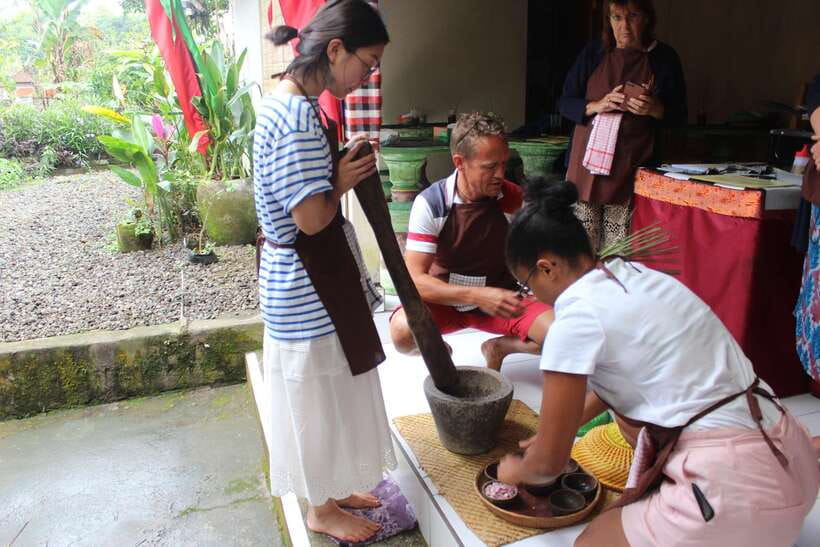
Ubud is famous for galleries, temples, rice fields, and yoga studios, but food gives you a more direct way into Balinese daily life. This class connects the ingredients to the people who sell them, then shows you how they become a shared meal.
I especially like the order of the morning program. You first see produce at a local market, then visit rice paddies, and only after that begin cooking. That sequence gives the dishes a setting. You are not just chopping ingredients in a classroom. You get a little sense of where Balinese food comes from and why rice, spices, vegetables, fruit, and offerings matter.
The class is also designed for participation. You do not sit at the back while a chef performs every step. You prepare food with guidance, and the instructors assist when needed. That balance is useful if you want to learn but do not want the pressure of producing a perfect dish on your own.
More Cooking Classes with a Market Tour in Indonesia
- Ubud: Cooking Class with Transfers and Optional Market Visit
★ 4.9 · 824 reviews - Balinese Ubud cooking school (9 Dish Cooking and Market Tour)
★ 5.0 · 540 reviews - Balinese Cooking class with traditional morning market visit
★ 5.0 · 161 reviews
The morning market shows everyday Bali
The morning class begins with a visit to a traditional local market. This is not a polished market arranged for sightseeing. You might find narrow passages, dirt floors, flies, tight quarters, and the less tidy side of food shopping. That is precisely what makes the stop worthwhile for many people, though it will not suit everyone.
Your guide explains how people buy and sell ingredients and points out unfamiliar fruit, vegetables, and food products. Some participants are offered tastes of local fruit and snacks, which makes the visit more than a walk through market stalls. If you are from Europe or North America, you may see produce that is completely new to you.
The guides are an important part of this stop. Putu has been praised for explaining fruit and market customs clearly, including comparisons that help you understand unfamiliar flavors. Tata is also noted for friendly guiding and clear English. A good guide turns a quick market visit into a useful lesson instead of a confusing rush through crowded aisles.
You should wear practical shoes and bring a camera if you want photographs. The market can be wet or messy underfoot, and you should expect a working food market rather than a scenic shopping center. Bring cash as well, since it is listed among the recommended items, even though the activity itself covers the main costs.
Rice paddies explain the importance of rice
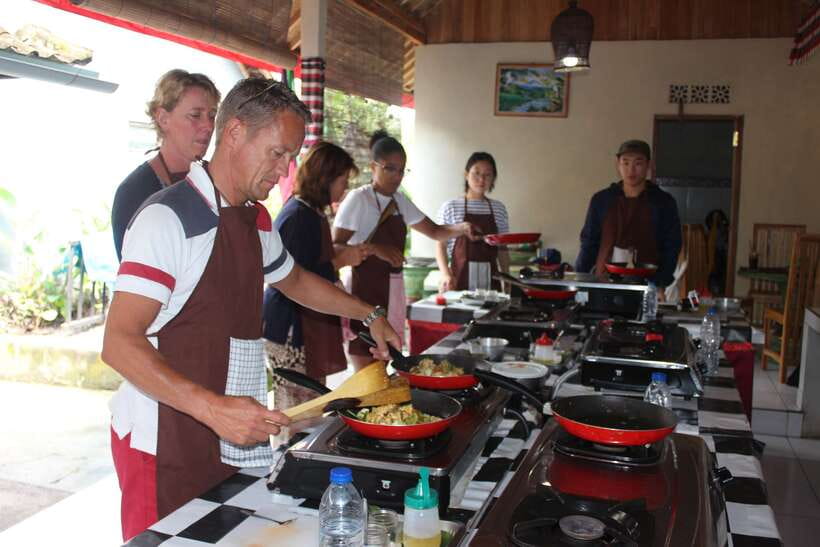
After the market, the morning program includes a visit to local rice paddies. This is a short but valuable addition because rice is more than a side dish in Bali. It is closely tied to food, farming, household life, and religious practice.
A guide such as Putu may explain how rice is grown and why it matters to Balinese people. One guide described having a rice field herself, which gives this part a personal connection rather than a purely general explanation.
Do not expect a long hike or a full agricultural tour. The information provided describes a visit, not a detailed farm workshop. Still, the stop gives you a better sense of the countryside before you sit down to cook, and it helps connect the ingredients on your table with the fields outside Ubud.
The rice-field visit is available only with the morning option. This is the biggest reason I would choose the morning class if your schedule allows. The afternoon session has its own cultural activity, but it does not include these outdoor stops.
Cooking nine Balinese dishes by hand
The heart of the experience is the cooking class. A Balinese chef guides you step by step through the preparation of nine signature dishes. The exact menu is not specified in the available details, so you should book this for the cooking format and variety rather than for one particular recipe.
The food can include sauces, main dishes, and dessert, according to the description of the class. You work through several preparations and then combine the results into a large shared meal. Because each person takes part, you get a better sense of how the flavors are built.
The instructors are repeatedly praised for being patient, funny, and encouraging. Wayan is singled out as a particularly engaging chef, and Butu is described as friendly and inclusive during an afternoon class. The teaching style appears to be hands-on without being stressful. If you make a mistake, help is available, but the staff still lets you do the work.
That balance matters. Some cooking classes turn into demonstrations with a few token tasks for participants. Here, the stated aim is that the food is made by your own hands, and the class format supports that. You can expect preparation, explanation, assistance, and a final meal with the group.
The quantity is another strong point. Nine dishes can produce a substantial feast, not just a small tasting plate. You may find the pace active, especially with a full group of up to 14 people, but the shared meal gives the work a clear reward.
More Cooking Classes with a Market Tour in Ubud
- PRIVATE Ubud Market Tour & Balinese Cooking Class with Putu
★ 5.0 · 125 reviews - Jambangan bali cooking class with morning market tour
★ 5.0 · 35 reviews - Balinese cooking class/Go shopping at the market, cook, eat
★ 5.0 · 12 reviews
The shared meal is part of the lesson
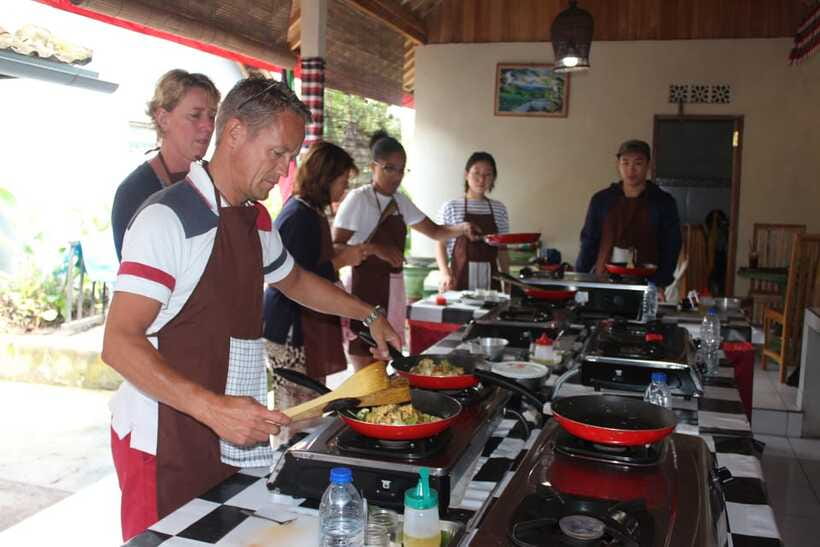
At the end, you eat the food prepared during the class. This sounds simple, but it changes the experience. You can taste how the ingredients, sauces, spices, and cooking methods came together, then compare results with the other people at your table.
The meal also creates an easy social finish. Several class descriptions highlight the friendly atmosphere, shared laughter, and welcoming staff. You do not need to arrive with a group of friends. Solo participants can join in, and the cooking itself gives everyone something to talk about.
The food is described as delicious and generous, with vegetarian and vegan options available. One participant also received a non-spicy menu because of allergies. You should still tell the provider about dietary needs in advance, since the supplied information does not explain the full allergy procedure or list every possible substitution.
The class can also accommodate different levels of cooking confidence. If you are an experienced home cook, you will probably enjoy the variety and the chance to learn local methods. If you rarely cook, the guided format keeps the activity approachable.
Afternoon class: cooking, canang, and dinner
The afternoon option is different, not simply a later start. It does not include the traditional market or rice-paddy visit. Instead, you learn to make a Balinese canang offering before cooking and eating dinner together.
A canang is a small Balinese Hindu offering. Making one adds a cultural element that the morning group does not receive. If you are more interested in household ritual and the meaning behind Balinese offerings than in visiting a market, the afternoon schedule may suit you better.
The afternoon class can also be quieter if fewer people book it. One small group had only four participants, making the work especially hands-on. Group size varies, though, so you should not assume every afternoon class will be that small.
The important booking tip is simple: choose the morning class for the full food and countryside program, or choose the afternoon class if the canang activity and dinner appeal more to you. Do not book an afternoon start expecting to add the market later.
Pickup, group size, and the four-hour schedule
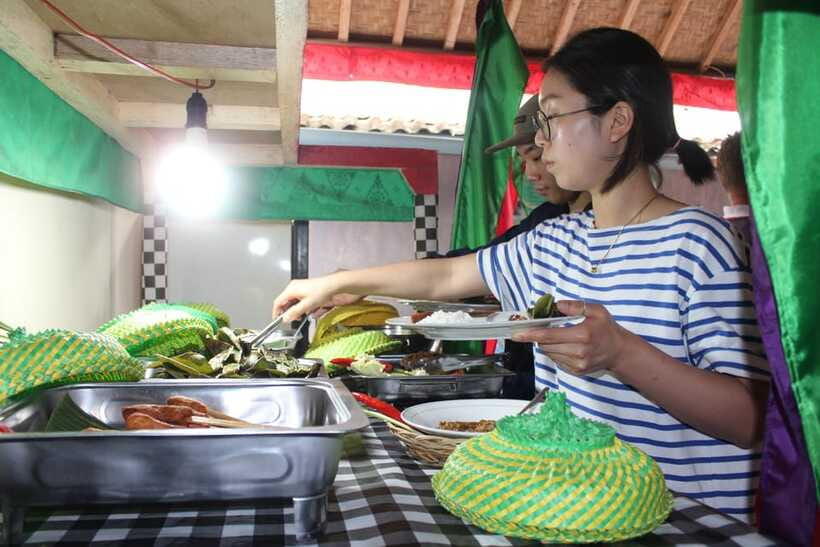
Hotel pickup and return transport are included for accommodations in the Ubud area. If you stay outside that zone, you may be able to meet the shuttle near Ubud Palace or go directly to the class, but transport from outside Ubud is not included.
Communication appears to be an important part of the operation. Drivers are described as arriving on time and keeping in touch before pickup. Some people staying outside the normal collection area were still helped with meeting arrangements, but you should treat that as a possible courtesy, not a guaranteed inclusion.
The activity lasts about four hours. That is enough time for the market and rice paddies, cooking, and the final meal in the morning program. The schedule can feel full, particularly because nine dishes take real preparation, but the pace is part of the fun.
The group limit is 14 people. That is small enough for instruction, though a full group will be less personal than a class of four or six. If you want maximum time at the chopping board, ask about the expected group size before booking.
English is the listed tour language. The guides and instructors are praised for clear communication, humor, and their ability to include different people in the group.
The value at $23 per person
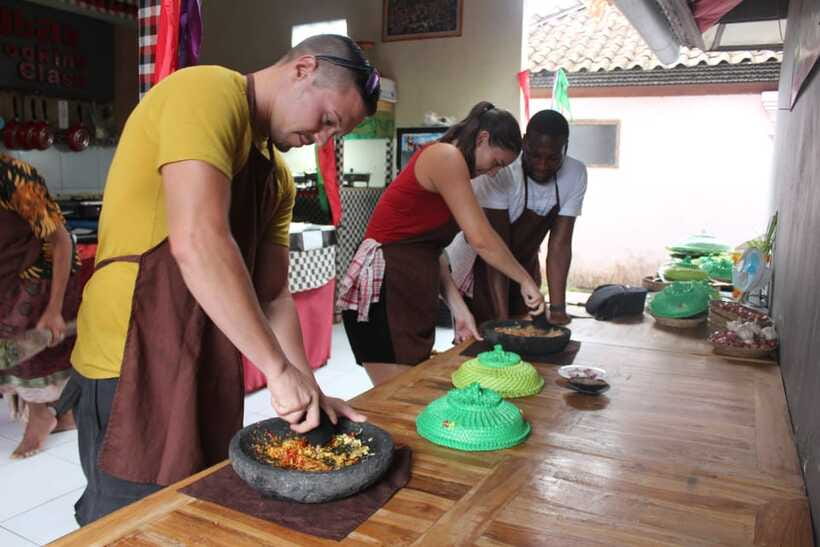
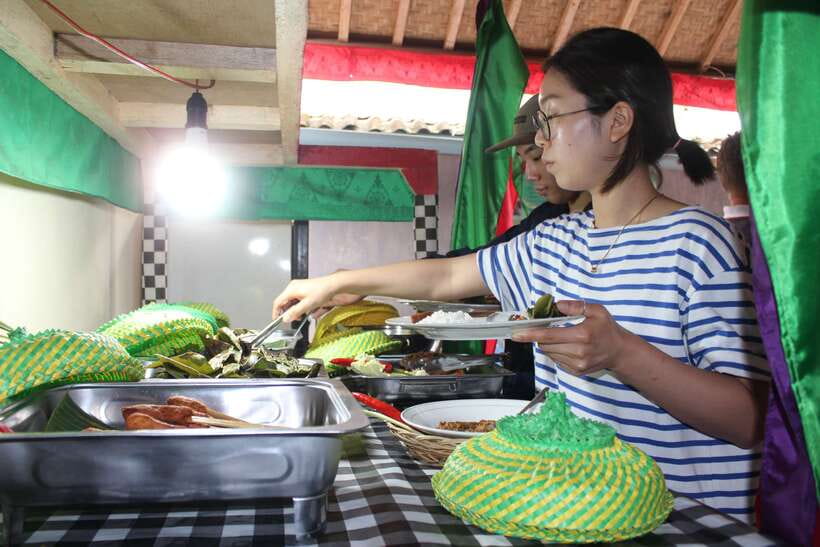
The price is one of the strongest reasons to consider this activity. For $23, you receive a guided market tour, a rice-paddy visit on the morning schedule, transportation within Ubud, a four-hour cooking experience, nine dishes, a welcome drink, the meal, and a PDF copy of the recipes.
The recipe file gives the experience value after you leave Bali. You can try to recreate the dishes at home for lunch or dinner, although the exact success will depend on finding comparable ingredients. The class is therefore more useful than a meal that ends when you leave the table.
The price also compares well with the amount of food involved. You prepare and eat a broad selection instead of paying for one plate in a restaurant. The class gives you an activity, a cultural introduction, and lunch or dinner in one package.
Beer is available at an additional reasonable cost, according to one description of the class. That is not part of the listed price, so bring cash if you want drinks beyond the included welcome beverage.
Free cancellation is available up to 24 hours before the start time, and you can reserve now and pay later. Those terms help if your Ubud schedule is still changing, but you should still confirm the start time and pickup details when selecting a date.
Who should choose this experience?
I would recommend this class to you if you want a practical introduction to Balinese food and prefer doing rather than watching. It suits couples, families with older children, solo participants, and small groups of friends.
Children under six are not permitted. Older children and teenagers can enjoy it, especially if they are happy to handle food preparation and sit through a four-hour program. One family with a 16-year-old found the format enjoyable and useful for cooking at home.
You should also choose it if you value local context. The market is not polished, and the food preparation takes place in a family-style setting rather than a luxury culinary studio. That may be exactly what you want, but it is worth knowing before you arrive.
I would hesitate if you need wheelchair access, since the activity is not suitable for wheelchair users. I would also think twice if you dislike crowded markets, raw food environments, or group cooking.
Should you book the Ubud cooking class?
Yes, if you want strong value and an active cultural experience. Choose the morning class for the best all-around program, since it adds the local market and rice paddies before the nine-dish cooking session.
Choose the afternoon class if you prefer a later schedule, want to make a canang offering, or like the idea of dinner rather than lunch. Either option gives you guided cooking, a shared meal, friendly instruction, and recipes to take home.
The market may feel rough around the edges, and a full group may limit personal attention. Those are fair tradeoffs for a $23 experience that offers real food preparation, local guides, transport within Ubud, and a meal you helped make yourself.
FAQ
How long does the Ubud cooking class and market tour last?
The activity lasts four hours. Check availability for the exact starting time.
Is hotel pickup included?
Pickup and drop-off are included for hotels and accommodations in the Ubud area. Transport outside Ubud is not included.
Can I join if I stay outside Ubud?
You may meet the shuttle at the front of Ubud Palace or go directly to the cooking class. The listed free shuttle service applies only to the Ubud area.
Does every class include the market tour?
No. The traditional market visit is available only with the morning class. The morning option also includes a rice-paddy visit.
What happens in the afternoon class?
The afternoon class includes the cooking session, preparation of a Balinese canang offering, and dinner together. It does not include the market or rice-paddy visit.
How many dishes will I prepare?
You will prepare nine Balinese signature dishes with guidance from a Balinese chef.
Is the activity suitable for young children or wheelchair users?
The activity is not suitable for children under six or for wheelchair users.
More Balinese Cooking Classes in Ubud
- Ubud Cooking Class Bali with Balinese Chef
★ 5.0 · 1,609 reviews - PRIVATE Authentic Balinese Cooking Class in Ubud at Putu’s Home
★ 5.0 · 644 reviews - Balinese Farm Cooking Class by Pemulan Bali
★ 5.0 · 410 reviews - Balinese Authentic Cooking Class in Ubud
★ 5.0 · 239 reviews
Just added around Ubud
- The Authentic Balinese Cooking Experience★ 5.0 · 4 reviews
- Ubud: Organic Farm Harvest, Bali Cooking Class by Pemulan★ 4.8 · 12 reviews
- packages cooking class and romantic dinner in a local home★ 5.0 · 4 reviews
- Jambangan bali cooking class with morning market tour★ 5.0 · 35 reviews
- Ubud: Balinese Cooking Class with Hotel Transfers★ 4.8 · 17 reviews
- Bali: Cooking Class with Monkey Forest and Art Village Tour★ 5.0 · 2 reviews
- Balinese cooking class/Go shopping at the market, cook, eat★ 5.0 · 12 reviews
- PRIVATE Ubud Market Tour & Balinese Cooking Class with Putu★ 5.0 · 125 reviews
Cooking Classes with a Market Tour, compared.
Hanoi Cooking Class: Culture, Local Market & Meaning CSR Impact
Read our review →
5 Traditional Dishes Hanoi Cooking Class with Market Trip
Read our review →
Cooking Class and Lunch at a Tuscan Farmhouse with Local Market Tour from Florence
Read our review →
Cooking Class, Market & Thai Herbs Garden Tour
Read our review →
Authentic Cooking Class with Market & Farm Visit
Read our review →
Paella Cooking Experience & Boqueria Market Tour
Read our review →
Cooking Class Hoi An:Local Market, Basket Boat, Fishing & Cooking
Read our review →