REVIEW · MARRAKESH-SAFI, MOROCCO
Edgy 8 Dish Private, Fusion Cooking Class, Menu Plan, Market
Marrakech tastes better when you cook it yourself. This private six-hour class at House of Fusion Marrakech gives you real control, from planning an eight-dish menu to buying ingredients in the souk and preparing lunch. I especially like the personal menu planning and the chance to use Arabic at the market. The main consideration is time: eight dishes made by a small private group can take the full day.
The class also goes well beyond a standard tagine lesson. You learn how mint tea is properly made, how Moroccan spices work in different dishes, and how to turn tomato peelings into tomato salt. At $112 per person, it is not a cheap cooking demonstration, but the private format, market visit, full meal, recipes, certificate, and spice-shopping stop give serious food lovers plenty for the money.
Key details at a glance
- You choose the menu: Work with Edwina to plan eight Moroccan fusion dishes around your tastes and interests.
- The market visit is hands-on: Write your shopping list in Arabic, then select mint, fish, chicken, vegetables, nuts, herbs, and other produce.
- The tea lesson is unusually detailed: Learn how tea is washed, infused, aerated with sugar, and served as part of Moroccan hospitality.
- You do the cooking: This is not a watch-and-eat class. You chop, grate, stir, mix, slice, and taste throughout the session.
- The private setting changes the pace: You get direct guidance and freedom to try less traditional combinations, though eight dishes may take several hours.
- You leave with useful extras: Recipes and a certificate are emailed after class, and you make tomato salt to take home.
Why this class feels different from a standard cooking lesson
Many Moroccan cooking classes follow a fixed script. You make a tagine, perhaps a salad, drink mint tea, and go home. That can be enjoyable, but this experience takes a more personal route.
Your morning begins at House of Fusion Marrakech at 08:50, with coffee and a discussion about what you want to cook. Edwina helps shape the menu, but you have genuine input. You might stay close to Moroccan classics, or take the more adventurous route with fusion dishes that use familiar local ingredients in less expected ways.
That freedom is the heart of the experience. If you want traditional Moroccan food, the class can follow that path. If you already know your way around a kitchen, you can ask for more unusual combinations and a wider range of techniques. The class is designed for people who want to understand how food works, not simply copy a prepared recipe.
The private format matters here. You are not trying to keep up with a large group, and Edwina can adapt the menu to your preferences. A solo participant can receive very direct attention. A private pair or small party can make choices together without having to accept a menu chosen for strangers.
There is one tradeoff. Freedom takes time. Eight dishes require serious preparation, especially when you are shopping for ingredients, learning techniques, making tea, and stopping for explanations. One participant found that cooking all eight dishes with only two people took longer than expected. Plan for a full six hours, and do not schedule a rushed afternoon activity afterward.
More Cooking Classes with a Market Tour in Marrakech
- Marrakech: Traditional Moroccan Cooking Class & Market Visit
★ 4.8 · 1,861 reviews - Marrakech: Moroccan Cooking Class with Market Visit and Meal
★ 4.9 · 347 reviews - Marrakesh: Private Cooking Class & Local Market Shopping
★ 4.7 · 15 reviews
Starting with coffee and an Arabic shopping list
The first stage is calm and practical. You sit down over coffee and decide what the meal should include. This is where you can explain likes, dislikes, cooking experience, and how far you want to move from traditional Moroccan food.
Then comes a memorable detail: the shopping list is written in Arabic. You do not need to arrive with Arabic skills. The point is to learn useful words and carry them into the market, where the list becomes part of the experience rather than a classroom exercise.
I like this approach because it gives the market visit a purpose. You are not just walking through the souk looking at colorful displays. You know what you need, and you have a reason to ask questions and compare produce.
The shopping list may include small aubergines for blistering, oranges for zest, onions, chicken, fish, nuts, herbs, and vegetables. The precise list depends on your menu, which means the market stop changes from one class to another.
Choosing mint at the market entrance
The herb tea seller is the first stop. This is one of the most distinctive parts of the morning because the tea lesson begins before you return to the kitchen.
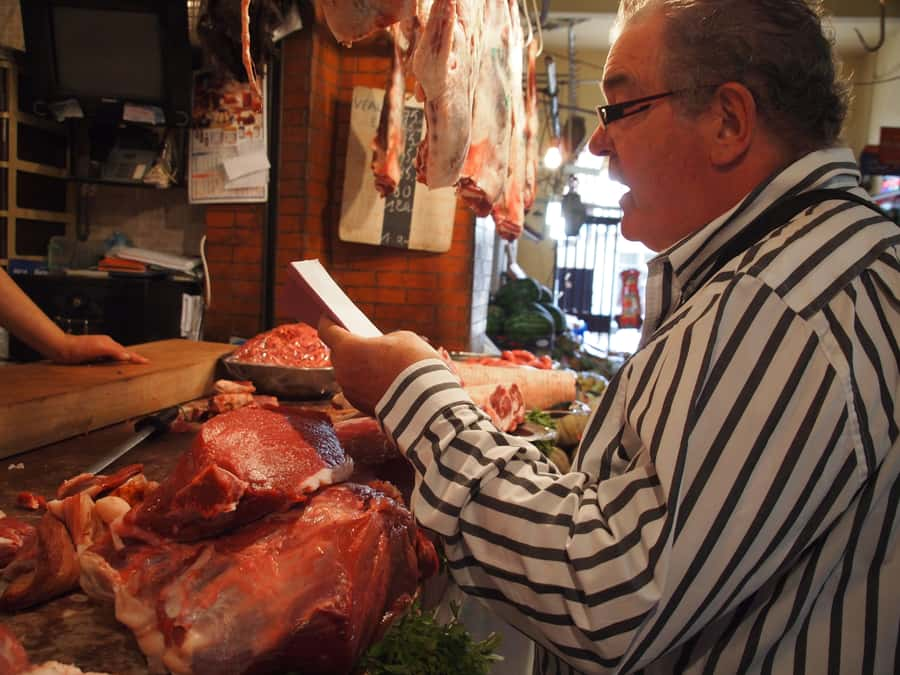
You select mint by handling the bundles and releasing their scent. The method described for the class is wonderfully physical: slap the mint against your arm to release the aroma, then choose the variety you prefer. It sounds simple, but it makes you pay attention to freshness and fragrance in a way that browsing a supermarket shelf does not.
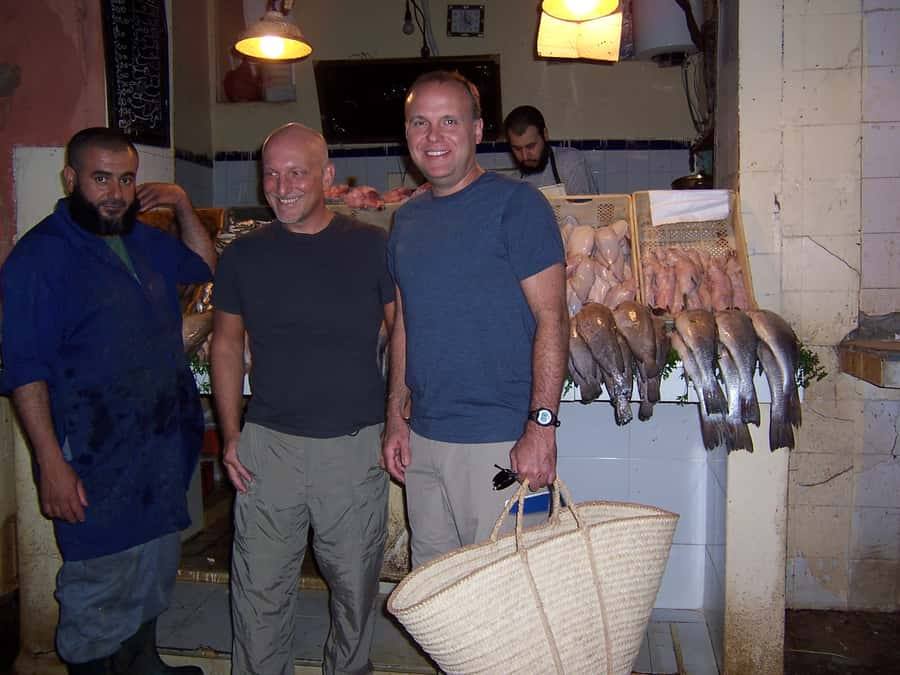
After the mint, you continue through the market for the rest of the menu. You may choose fish, chicken, nuts, vegetables, and herbs from the traders inside the souk and the sellers outside with their barrows.
This is useful preparation for the cooking itself. You see what the ingredients look like before trimming or seasoning them, and you learn to select produce for a specific purpose. A firm aubergine is not chosen in the same way as an orange intended for zest. That small distinction is part of becoming a better cook.
The market can also be the most unpredictable part of the day. You are working in a real trading environment rather than a staged food hall, and the shopping depends on what is available and what suits the menu. That is a strength if you want local contact and practical food skills, but less ideal if you prefer a polished, quick-moving excursion.
Learning Moroccan mint tea properly
Back at House of Fusion Marrakech, you put on an apron and begin preparing the meal. The tea lesson is woven into the work rather than treated as a quick welcome drink.
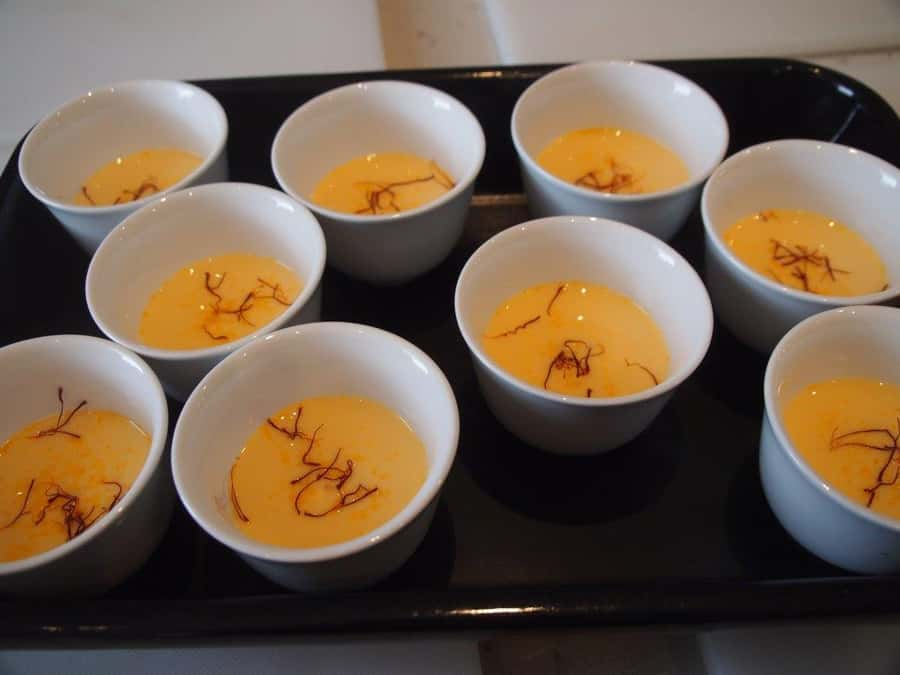
You learn about washing the tea three times, and about the difference between sugar used to aerate and infuse the tea and sugar used to hide poor-quality tea. The class presents properly made tea as clear, fragrant, and balanced rather than simply sweet.
You also learn about the ceremony itself. Pouring, mixing, and serving are not random steps. They are part of the social ritual that makes mint tea important in Morocco.
This section gives the class cultural value as well as culinary value. You can repeat the recipes at home, but the tea lesson also changes how you understand a drink you are likely to encounter throughout Morocco.
Pay attention here, even if you came mainly for the food. The tea may be the simplest item you prepare, yet it carries some of the most useful instruction about Moroccan taste and hospitality.
More Cooking Classes with a Market Tour in Morocco
- Marrakech: Cooking Class and Market Visit
★ 4.4 · 5 reviews - Moroccan Cooking Class & Marrakech Market Visit with Chef Khmisa
★ 5.0 · 1,504 reviews - Moroccan Cooking Class with Market Visit and Meal
★ 5.0 · 196 reviews - Fez: Souk Tour and Traditional Home Cooking Class
★ 4.9 · 186 reviews
Eight dishes, many techniques, and plenty of participation
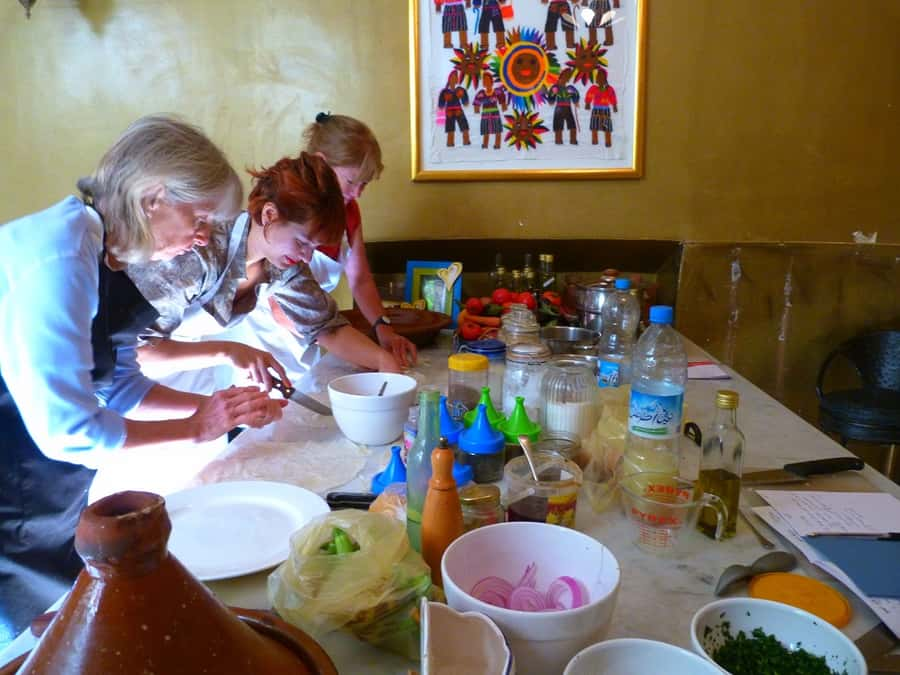
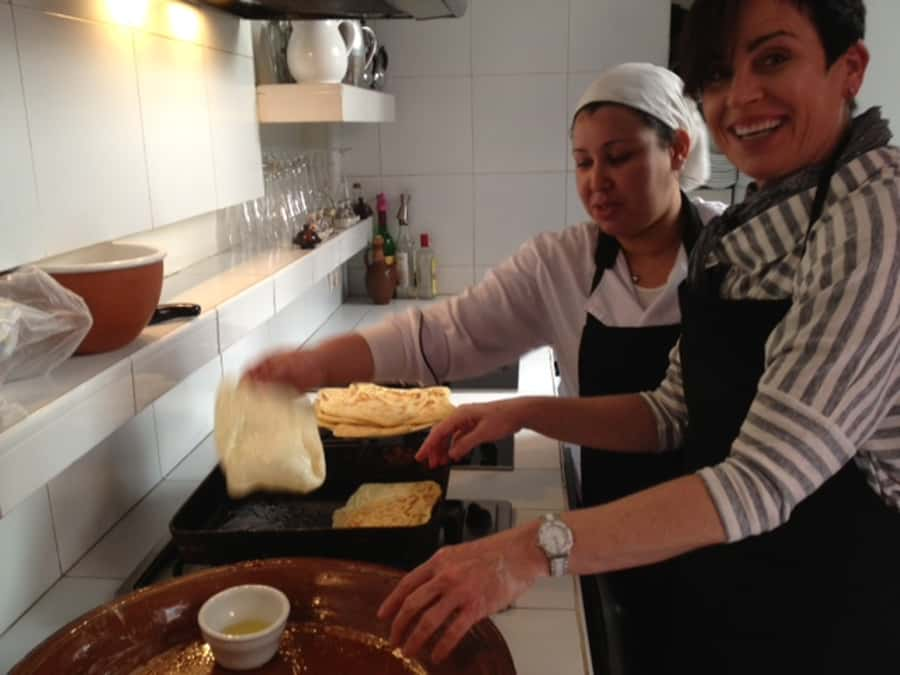
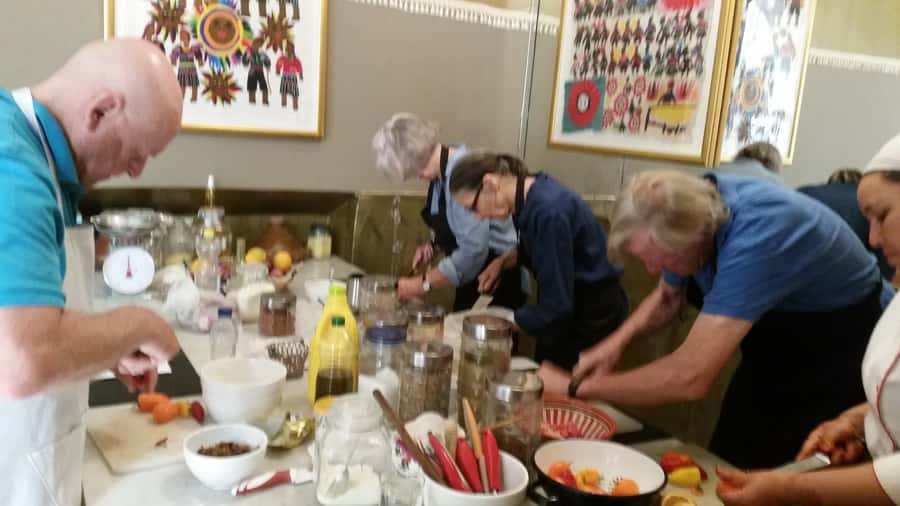
The kitchen work is fully hands-on. You chop herbs, slice vegetables, grate ingredients, shake sauces, stir mixtures, and adjust flavors with tasting spoons close at hand.
That last detail matters. The class is not just about following measurements. You taste as you go and learn how spices, salt, herbs, citrus, and other ingredients affect one another. Edwina’s role is part instructor and part guide, helping you understand how to use local ingredients rather than merely telling you what to do.
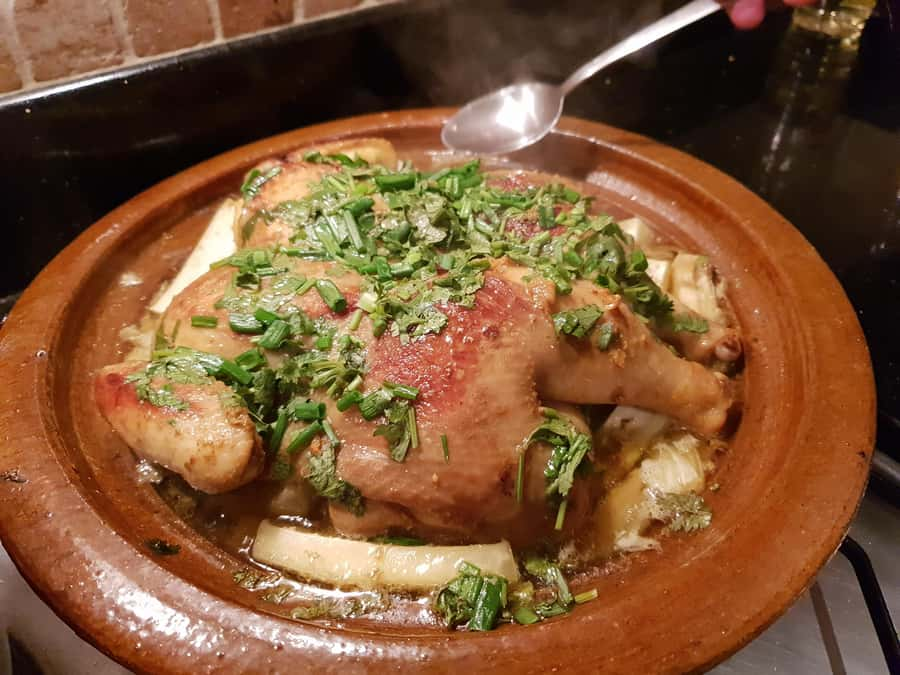
The dishes are Moroccan fusion, so traditional methods provide the base while the menu can move in a more creative direction. You may work with familiar Moroccan seasonings and utensils, but combine ingredients or techniques in ways that feel less expected.
This is especially suitable if you already enjoy cooking. You can ask why a spice is added at a certain stage, how a texture is achieved, or how a dish could be adapted at home. Beginners can also take part, but the eight-dish format may feel busy if you want a slow, highly structured first lesson.
A professional kitchen adds to the setting. One participant particularly valued the chance to work in a proper kitchen while doing the preparation personally. Chef Hesna provides important support, and Rosie assists during the day, so you are not left to manage eight dishes without help.
Still, do not expect a quiet demonstration. You will have ingredients to prepare, techniques to remember, and several dishes progressing at once. That is part of the appeal, but it requires attention.
The value of Edwina’s personal teaching style
Edwina is central to the experience. Her strength is flexibility. She can guide you toward classic Moroccan dishes or help you take a more adventurous route.
That makes the class more useful than a fixed menu for anyone with specific interests. You can focus on spice combinations, vegetables, seafood, chicken, tea, or cooking methods. You can also explain what you do not eat before the class and shape the menu accordingly.
The personal attention has been praised by people who took the class alone as well as by those who wanted a private session. One solo participant received a menu built around personal preferences and also picked up Arabic words along the way.
Edwina’s help continues after the meal. She can offer restaurant advice, which is valuable in Marrakech, where a menu can look impressive but not always tell you how a dish will taste. Her guidance can help you make better choices during the rest of your stay.
The class also benefits from a warm, informal atmosphere. You are not simply paying for a set of recipes. You are spending a long day with a host who can respond to your questions and adjust the focus as your interests become clearer.
Lunch, tomato salt, and the final spice stop
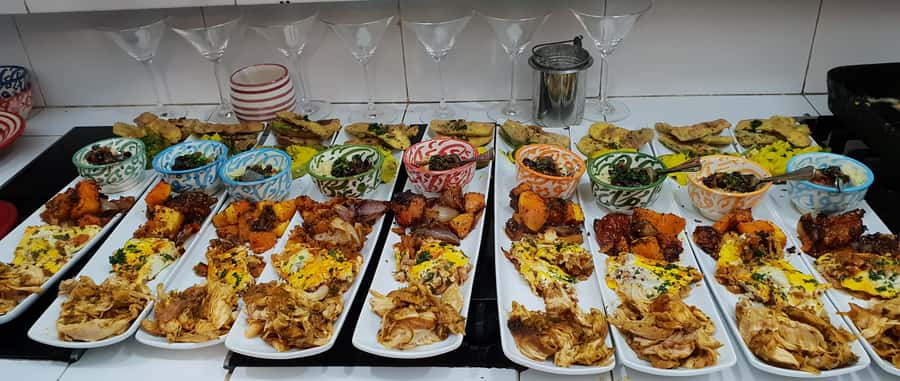
After the preparation, you sit down to eat the eight-dish meal you helped make. That meal is the main reward, but it also gives you a chance to assess the techniques in finished form.
You can taste how the spices work together and notice which methods made the biggest difference. For a serious home cook, this is when the day’s lessons become practical. You are not just collecting information. You are testing the results at the table.
The tomato salt is another nice touch. You make it from tomato peelings and salt from salt pans visited on the provider’s excursions, then take some home. It turns kitchen waste into a useful seasoning and gives you a small project to repeat in your own kitchen.
The day finishes with a visit to a spice trader. This is a good time to buy because you have just spent hours learning how Moroccan spices are used. Instead of purchasing a random collection of colorful powders, you can choose spices with a clearer idea of what you will cook and how much you need.
Freshness is part of the appeal. One participant described the spices as the freshest they had bought. Keep in mind that the class includes the chance to choose spices, but it does not list wine as included. Bottled water and coffee are provided.
Is $112 per person good value?
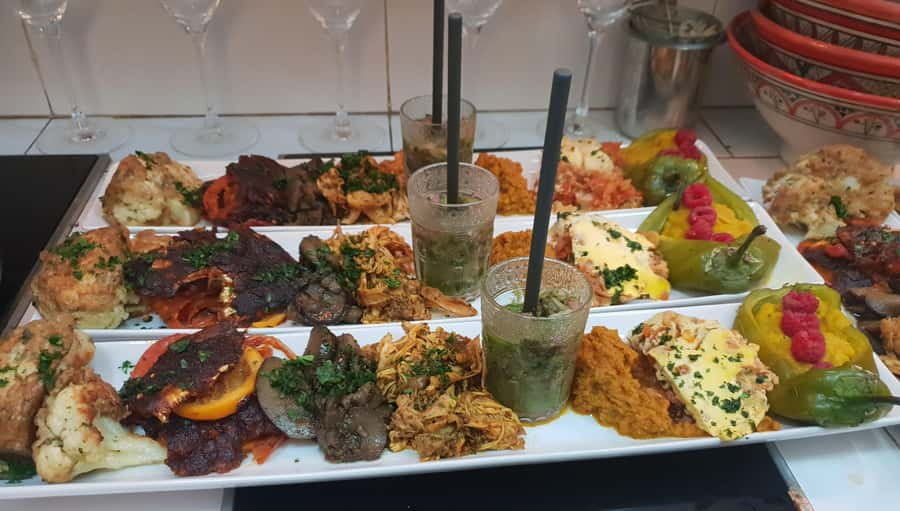
At $112 per person, this costs more than a short group cooking demonstration. The comparison is not quite fair, though, because you are paying for a private six-hour experience with menu planning, market shopping, ingredients, instruction, lunch, recipes, a certificate, coffee, bottled water, and the spice stop.
The private format is the biggest value factor. If you are traveling alone, or if your group wants a menu built around its own preferences, the extra cost can make sense. You receive more direct help and more freedom than you would in a large class.
The market visit also adds value because it connects the kitchen to everyday food buying in Marrakech. You learn how to choose ingredients, not just how to cook them once they have already been selected.
I would consider the price reasonable for food enthusiasts, especially people who plan to use the recipes at home. It is less compelling if you want a cheap introduction to Moroccan cuisine or a quick activity between sightseeing stops.
Free cancellation up to 24 hours before the start and the option to reserve now and pay later make planning easier. You must book at least 24 hours ahead, so this is not a last-minute activity. Wear closed-toe shoes and bring a hair tie. Open-toed shoes are not allowed.
Who should book the House of Fusion class?
I would recommend this class to you if you:
- Enjoy cooking and want to make most of the food yourself.
- Prefer a private lesson over a large group.
- Want to choose your own menu.
- Like Moroccan food but also want creative combinations.
- Care about spices, herbs, tea, and ingredient selection.
- Want recipes and techniques you can use after Morocco.
- Appreciate local market contact more than a polished sightseeing tour.
It may not suit you if you want a short, relaxed demonstration with little participation. It is also not the best choice if your schedule is tightly packed, since eight dishes and a market visit can fill the six-hour period.
The class works particularly well as a major food day in Marrakech. Give it the morning and early afternoon, arrive ready to work, and leave room for the meal to take its proper place.
FAQ
Where does the cooking class take place?
The class takes place at House of Fusion Marrakech, at Derb Jdid 81, Marrakech.
How long is the experience?
The experience lasts six hours and begins at 08:50 according to the stated schedule. You should check availability for the current starting time.
Is the cooking class private?
Yes. It is offered as a private group experience, so the menu and pace can be shaped around your party.
Can I choose the dishes?
Yes. You discuss and plan the menu with Edwina before writing the shopping list. The class is designed around eight Moroccan fusion dishes, and you can choose between more traditional or more adventurous ideas.
What is included in the price?
The price includes all ingredients, tuition, recipes, a certificate, bottled water, and coffee. Wine is not included.
What should I bring and what footwear is required?
Bring a hair tie. Open-toed shoes are not allowed, so wear closed-toe footwear.
Should you book it?
Book this experience if you want to understand Moroccan food from the market to the finished plate. The strongest reasons are the private menu planning, Arabic shopping list, hands-on market visit, detailed tea lesson, and freedom to explore beyond standard tagine recipes.
I would skip it only if you want a quick class or need to keep your day tightly scheduled. For a food-focused visitor willing to spend $112 and six hours, House of Fusion Marrakech offers a personal, practical way to take a piece of Moroccan cooking home with you.
More Cooking Classes with a Market Tour in Marrakesh
- Hanoi Cooking Class: Culture, Local Market & Meaning CSR Impact
★ 5.0 · 5,147 reviews - 5 Traditional Dishes Hanoi Cooking Class with Market Trip
★ 5.0 · 4,890 reviews - Cooking Class and Lunch at a Tuscan Farmhouse with Local Market Tour from Florence
★ 5.0 · 4,831 reviews - Chiang Mai: Cooking Class, Market & Thai Herbs Garden Tour
★ 4.9 · 4,824 reviews
More Private Cooking Classes in Morocco
- Tangier Food Cooking Class and Private City Tour
★ 5.0 · 73 reviews - Tangier Private Cooking Class With a Local Family
★ 4.5 · 49 reviews - Private Casablanca Market Tour and Cooking Class with Chamsi
★ 5.0 · 33 reviews - Private Market Tour & Cooking Class in Casablanca with Transfers
★ 5.0 · 20 reviews
Just added around Marrakesh
- Moroccan Food Cooking Class with a Local Chef in Marrakech★ 4.7 · 90 reviews
- Marrakech: 3-Hour Open-Air Moroccan Cooking Course★ 4.9 · 74 reviews
- Moroccan cooking class in Marrakech with berber chef★ 5.0 · 16 reviews
- Marrakesh: Private Cooking Class & Local Market Shopping★ 4.7 · 15 reviews
- Marrakech: Moroccan Cooking Class with Local Chef★ 4.6 · 87 reviews
- Marrakech: Authentic Moroccan Cooking Class in a Farm★ 4.8 · 8 reviews
- Marrakech: Moroccan Cooking Class with Amazing Local Chef!★ 4.9 · 100 reviews
- Marrakech: Moroccan Cooking Class for vegetarians and vegan★ 4.9 · 156 reviews
Cooking Classes with a Market Tour, compared.

Hanoi Cooking Class: Culture, Local Market & Meaning CSR Impact
Read our review →
5 Traditional Dishes Hanoi Cooking Class with Market Trip
Read our review →
Cooking Class and Lunch at a Tuscan Farmhouse with Local Market Tour from Florence
Read our review →
Cooking Class, Market & Thai Herbs Garden Tour
Read our review →
Authentic Cooking Class with Market & Farm Visit
Read our review →
Paella Cooking Experience & Boqueria Market Tour
Read our review →
Cooking Class Hoi An:Local Market, Basket Boat, Fishing & Cooking
Read our review →