REVIEW · BALI, INDONESIA
Ubud: Authentic Traditional Balinese Village Cooking Class
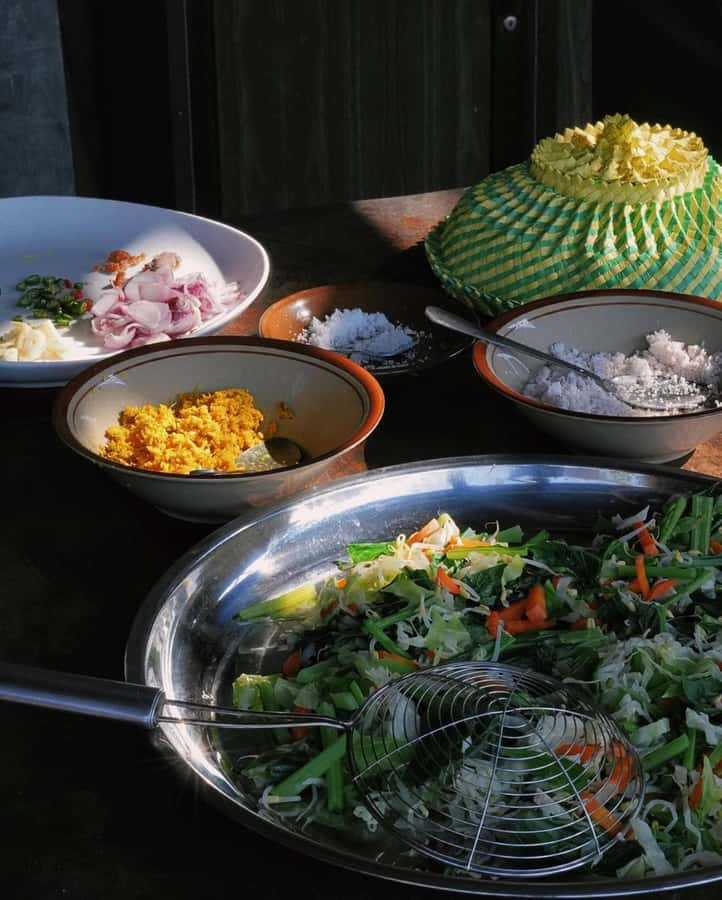
A family kitchen can teach Bali best. This private cooking experience takes you beyond Ubud’s cafés to Delodsema Village, where about 60 families live and local hosts welcome you into their home, garden, and open-air kitchen. I like the use of fresh ingredients grown by the family and the chance to see a small traditional village rather than only a polished cooking school. I also like that the meal ends with food you helped prepare, not just a demonstration.
The main consideration is transport. Pickup from Ubud or Tegallalang may be available only if you choose that option, and the meeting point is at the Bali Coconut Oil sign in Delodsema Village. The experience is advertised as lasting two hours to 150 minutes, so I would allow up to two and a half hours, especially if the village and rice terrace visits are included.
The warmest part of the experience comes from the hosts. Puti, her husband, Kadek, Sangayu, and other family members are described as patient and welcoming, with good English and a relaxed teaching style. Coffee made from beans grown in the garden, fresh coconut water, a family lunch, and a short offering ritual give the class a personal feel that a standard restaurant lesson cannot easily match.
Key points at a glance
- A small village setting: Delodsema is home to only about 60 families, giving the visit a quiet, local character.
- Ingredients from the family garden: You learn about spices, herbs, trees, and produce before using them in the kitchen.
- Hands-on Balinese dishes: You may prepare spice paste, chicken satay, curry, and vegetarian alternatives such as tofu wrapped in banana leaf.
- An open-air family kitchen: The cooking takes place in a covered outdoor space with equipment and ingredients supplied.
- More than a cooking lesson: The visit can include a temple, a family home and garden, an offering ritual, and Taro rice terraces.
- Good value at $30: The price includes the private class, lunch, drinks, ingredients, equipment, and recipe PDF.
Arriving in Delodsema Village
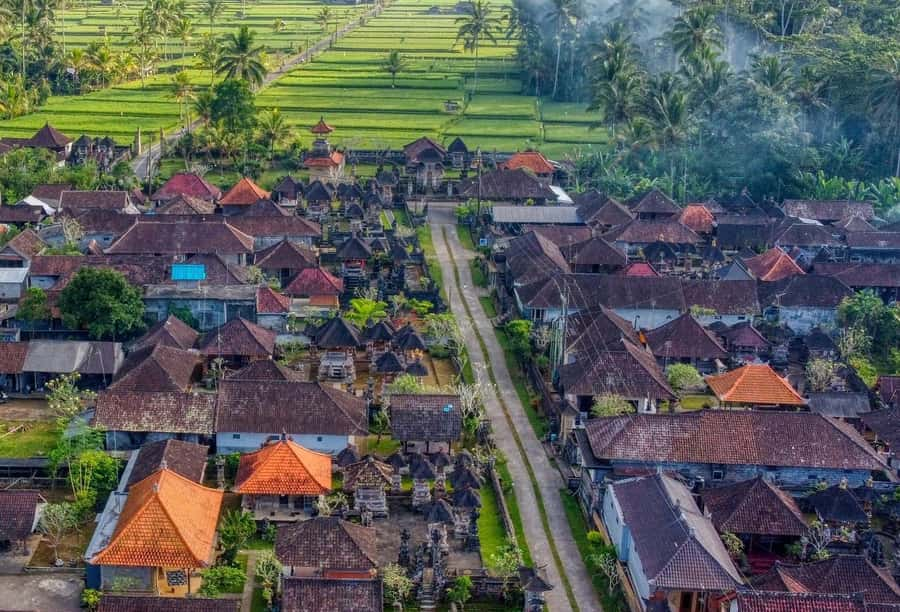
The class begins at Delodsema Village, not in central Ubud. That matters because the setting is part of the experience. You are not simply walking into a cooking studio with Balinese decorations. You are entering a working village where the hosts live and prepare food for their own family.
Look for the Bali Coconut Oil sign after arriving. This is the stated meeting point, and it is worth keeping the directions handy because a village meeting spot is less obvious than a hotel lobby or restaurant entrance.
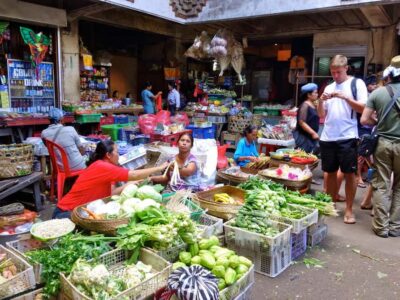
If you select the pickup option, transportation from your Ubud-area or Tegallalang-area hotel is available. The pickup option may also include a visit to a traditional market. If transportation is not included in your booking choice, you will need to arrange your own way to the village.
I would confirm the pickup details and exact starting time before setting out. The experience has flexible start times based on availability, and the total schedule can include more than the kitchen session alone.
More Farm Cooking Classes in Indonesia
- Ubud: Balinese Cooking Class at an Organic Farm
★ 5.0 · 1,786 reviews - From Ubud: Authentic Cooking Class in a Local Village
★ 4.9 · 1,325 reviews - Balinese Farm Cooking Class by Pemulan Bali
★ 5.0 · 410 reviews
A welcome drink and a walk through the garden
Your welcome begins with the family, usually over Balinese tea or coffee. Several hosts serve coffee made from beans grown in their own garden, while fresh coconut water may also be opened for you. These small touches matter because they connect the meal to the place where you are standing.
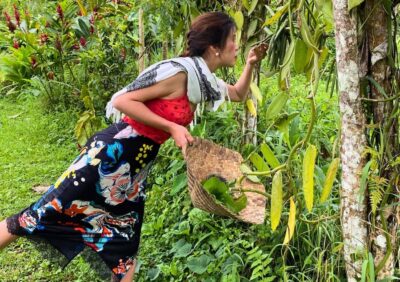
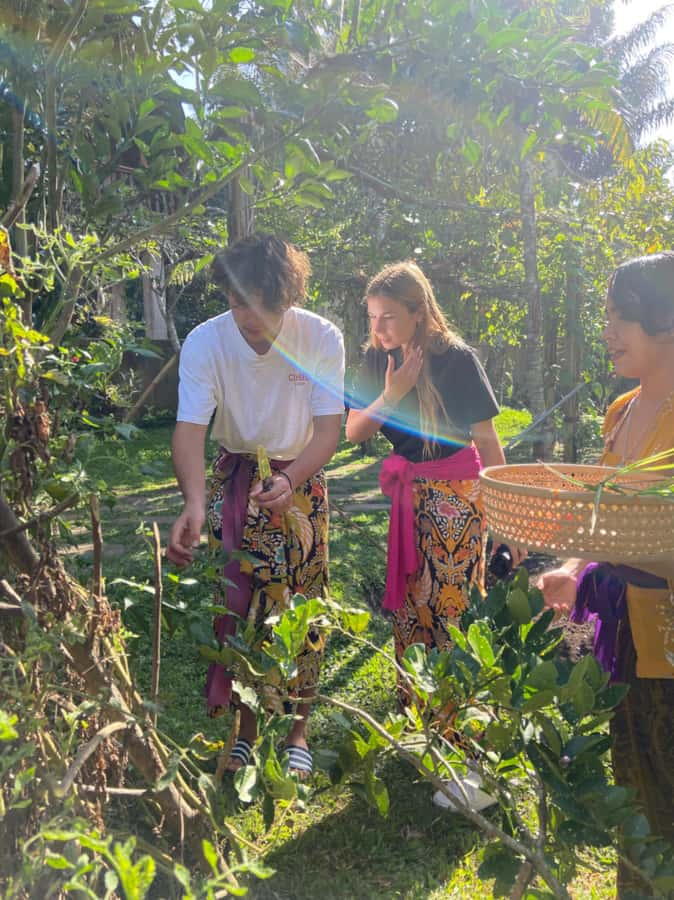
Before cooking, you visit the family’s organic farm and garden. The host explains local spices, herbs, and other ingredients, including where they grow and how they are used in Balinese food. This is one of the strongest parts of the experience for anyone who wants to understand the flavor base rather than simply copy a recipe.
You might handle ingredients while walking through the garden, then carry them back to the kitchen for preparation. The connection is direct: you see the plant, hear how it is used, and then taste it in the finished food.
This also gives the class a useful lesson in self-sufficiency. The family grows much of what goes into the meal, and the cooking supports a local household and community. You get a clearer picture of everyday food production than you would from buying a spice mix at a market.
Cooking in a covered outdoor kitchen
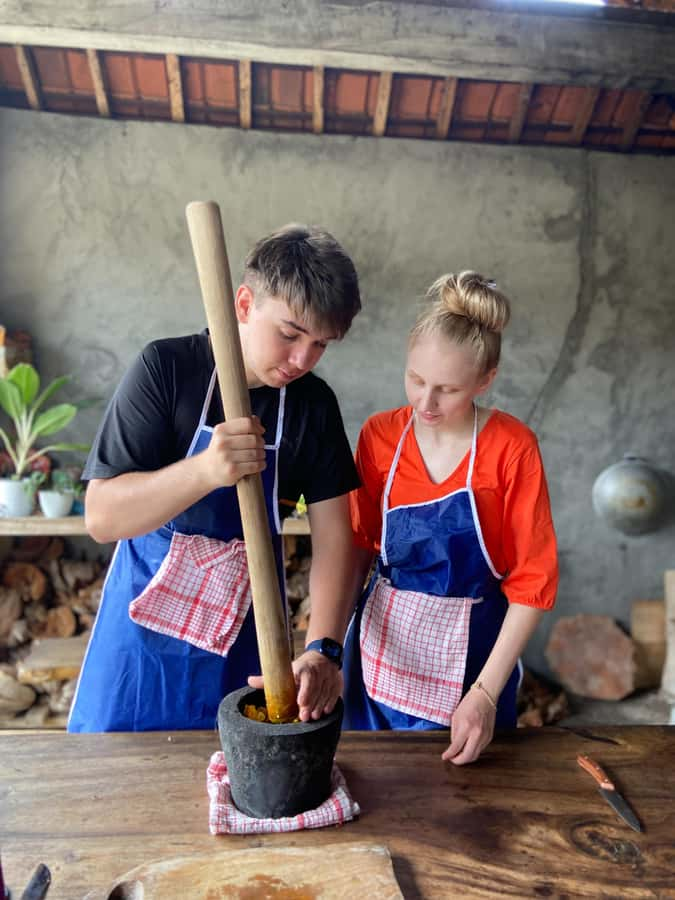
The cooking takes place in a large, covered outdoor kitchen. That provides shade and shelter while keeping the lesson connected to village life. The equipment, ingredients, and cooking tools are included, so you do not need to bring anything beyond a willingness to work with your hands.
The hosts demonstrate each stage, then help you repeat it. This is a participatory class, but it is not presented as a professional culinary course. Some preparation may already be done, which keeps the lesson within its short time frame. You are still involved in key tasks, including making a spice paste, preparing chicken satay, and cooking the food.
I like this balance. A completely unprepared meal could take too long for a two-hour class, while a demonstration with no participation would feel thin. Here, you get to handle the important steps without spending the whole day chopping onions.
The hosts explain the ingredients and work methods in English. The class is private, so your questions and pace should receive more attention than they would in a large group. That works especially well for couples and families, though a solo visitor can also get more direct instruction.
What you may cook and eat
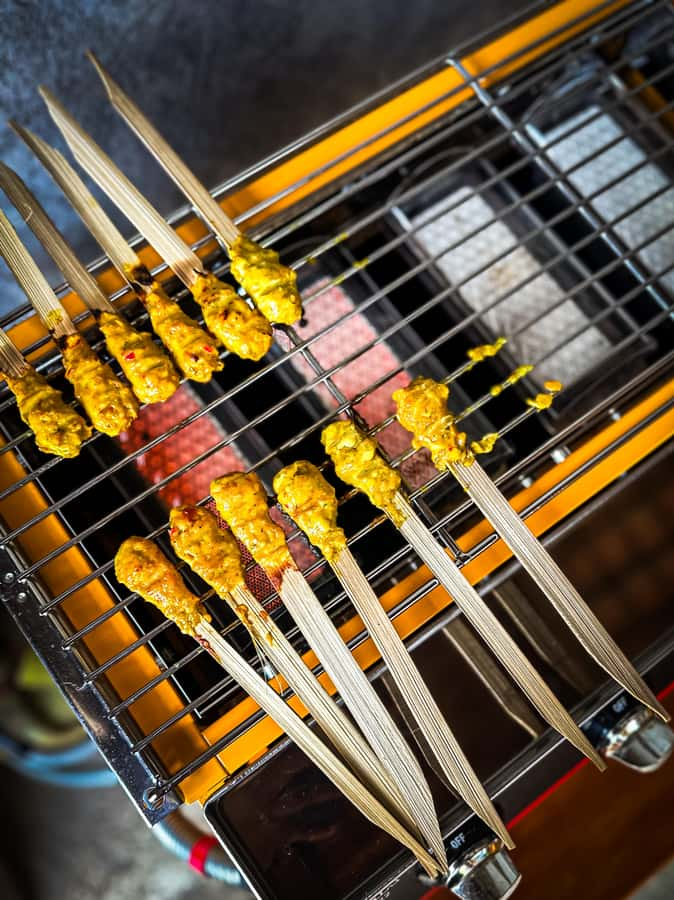
The exact menu should be confirmed when you book, but the experience includes a range of Balinese dishes. The food preparation can include a spice paste, chicken satay, and curry. You then eat the dishes you helped make as lunch with the family.
The spice paste is especially useful because Balinese cooking depends on layered seasoning rather than a single bottled sauce. Grinding or combining the ingredients helps you understand how the flavor is built. You can also ask about the role of the herbs and spices you saw in the garden.
Vegetarians are accommodated. One family class replaced the chicken satay with tofu wrapped in banana leaf. If you have dietary needs, tell the host in advance so the meal can be planned properly. The supplied information confirms vegetarian flexibility, but it does not promise every possible dietary adjustment.
Lunch may be arranged on the ground in the local style, with an explanation of how to eat like a local. This is a cultural detail rather than a theatrical performance. It gives you a small window into how meals are shared in a Balinese household.
The meal is included in the $30 price, along with tea, coffee, ingredients, cooking equipment, and a PDF of the recipes. The recipe file is useful after you return home, though you should remember that some ingredients may be easier to find in Bali than elsewhere.
More Balinese Cooking Classes in Indonesia:
- Ubud Cooking Class Bali with Balinese Chef
★ 5.0 · 1,609 reviews - PRIVATE Authentic Balinese Cooking Class in Ubud at Putu’s Home
★ 5.0 · 644 reviews - Balinese Ubud cooking school (9 Dish Cooking and Market Tour)
★ 5.0 · 540 reviews - Ubud: Balinese Cooking Class and Market Tour
★ 4.8 · 531 reviews
A temple visit and a glimpse of family life
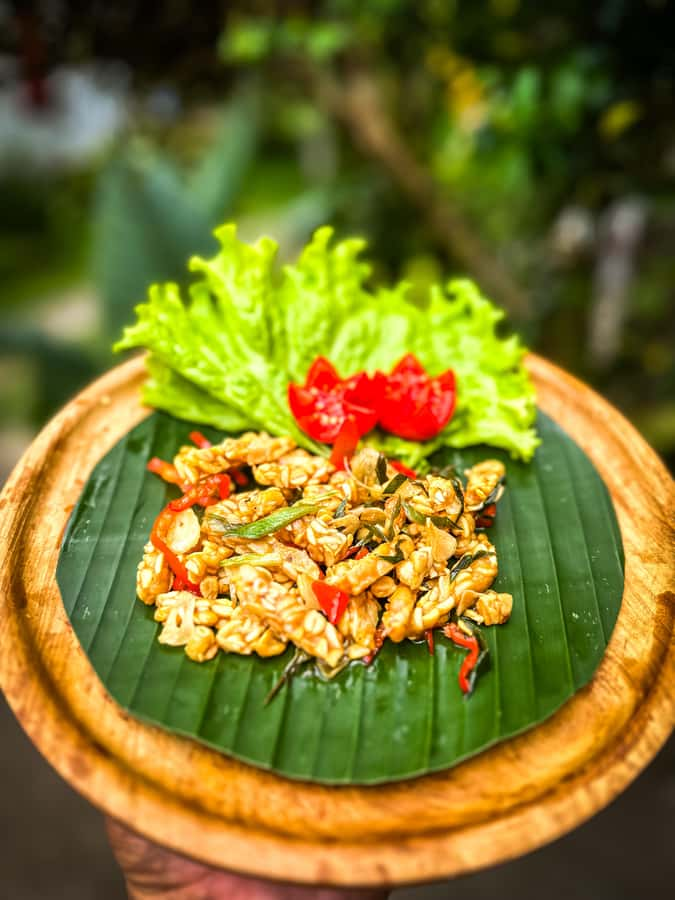
The village portion can include a visit to a temple and a look at the traditional layout of Delodsema. These stops help place the cooking in its cultural setting. Food in Bali is closely tied to family life, community, and religious practice, so the class has more meaning when you see the spaces around the kitchen.
You may also help prepare or participate in an offering ritual before the meal. One family described this as a particularly memorable part of the visit, and it offers a respectful look at a daily Balinese practice.
Take your cues from the hosts during this part. Follow their instructions, keep a respectful tone, and ask before taking close-up photographs of people or religious objects. The activity is presented as an invitation into family life, not as a staged show.
A short tour of the family home and garden may also be included. This is a simple but valuable addition. It shows where the food comes from and lets you see the household behind the cooking lesson.
Taro rice terraces and local irrigation
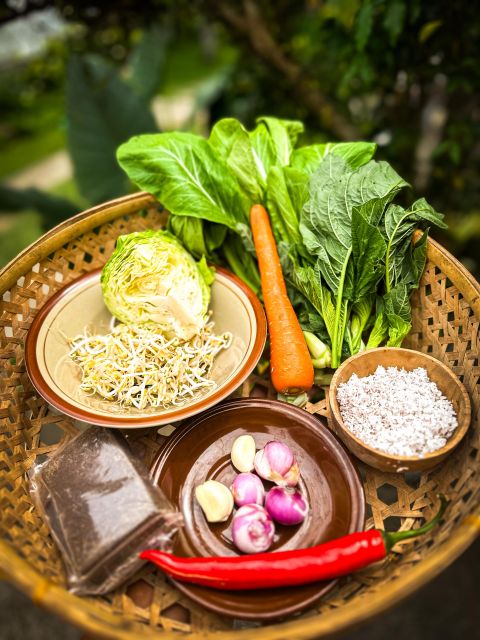
The itinerary can continue to Taro Village, where you enjoy fresh air among rice terraces and learn about the local irrigation system. Depending on the season and conditions, you might see or join local work such as planting rice or harvesting it.
This section is less predictable than the kitchen class. Planting and harvesting depend on the agricultural calendar, so you should not book the experience expecting guaranteed hands-on farm work. Think of it as an optional look at rice cultivation and water management, with the possibility of seeing seasonal activity.
The terrace visit also changes the rhythm of the morning or afternoon. After concentrating on food preparation, you have time to look at the wider village setting and understand how farming supports daily life.
If you are mainly interested in cooking, the garden and kitchen are the core of the experience. If you want a broader village visit, the temple and rice terrace stops make the price more attractive.
Why the private format matters
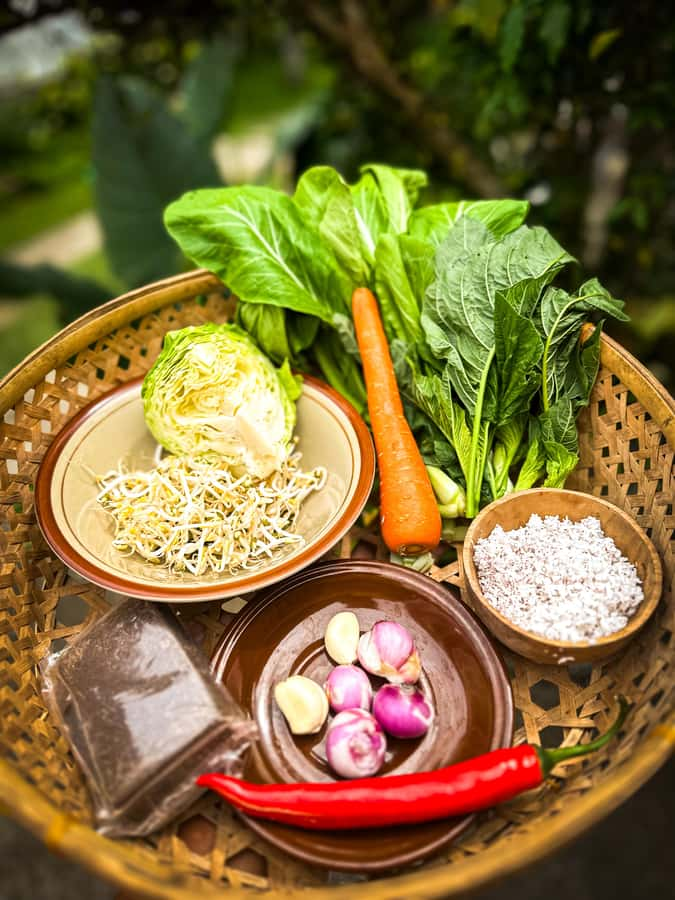
The private-group format is one of the clearest advantages. You can ask about unfamiliar ingredients, cooking methods, Balinese customs, and substitutions without worrying about holding up a large class.
Families should find this format comfortable because the hosts can adjust explanations and tasks to different ages, although the supplied details do not list a specific minimum age. Couples may appreciate the calm setting and the chance to share a meal with the hosts.
The class also suits people who want a personal connection without signing up for a full-day tour. At two hours to 150 minutes, it fits more easily into an Ubud schedule than a long farm excursion.
The tradeoff is that a private class can feel less social if you hoped to meet a large group of other visitors. The focus here is the host family and your own small group, not a lively communal class with many participants.
Clean, careful, and relaxed
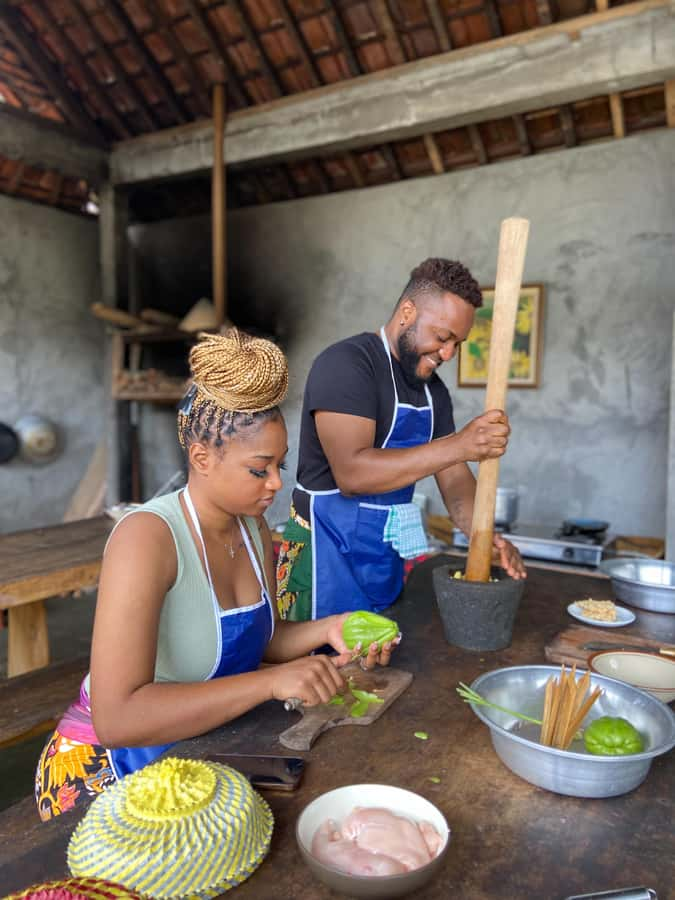
Food hygiene matters in a hands-on class. The hosts received praise for keeping the outdoor kitchen clean and organized, and for handling the vegetarian meal separately when needed. Safety and health are listed as priorities.
That does not mean the setting feels formal. The atmosphere is family-style and relaxed, with guests cooking beside the hosts rather than sitting in a restaurant classroom. You should expect an active session, not a polished demonstration where you remain seated.
The covered kitchen is practical, but this is still an outdoor village environment. Wear comfortable clothing and shoes suitable for walking around a garden and village. The supplied information does not specify accessibility arrangements, so anyone with mobility concerns should ask about the paths, kitchen setup, and rice terrace visit before booking.
Hosts may take photos and short videos during the class and send them afterward. This is a thoughtful keepsake, but if you prefer not to be photographed, say so at the start.
Is $30 per person good value?
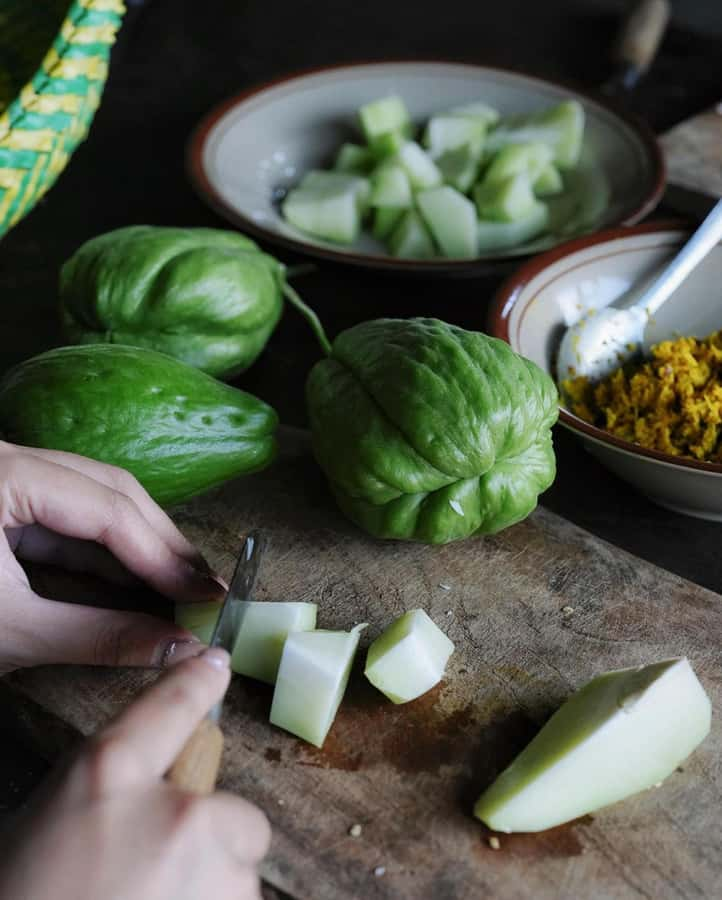
At $30 per person, the experience offers strong value if you use most of its included elements. You receive a private cooking lesson, ingredients, equipment, drinks, lunch, garden access, recipes, and the chance to visit parts of a traditional village.
The value improves if the temple, family-home tour, offering ritual, and Taro rice terrace visit all fit into your schedule. Pickup is not automatically part of the base arrangement, so add transportation costs when comparing it with classes in central Ubud.
The price is also reasonable for a private experience rather than a large group lesson. You are paying for time with a family, not only for a plate of food and a printed recipe.
I would not choose this class solely for advanced cooking training. The session is short, some preparation may already be complete, and the focus is cultural connection as much as technique. Choose it for the combination of food, garden, family, and village setting.
Who should book this experience?
You should consider booking if you want:
- A private class with direct help from the hosts
- Food made from ingredients grown by the family
- A traditional village setting away from central Ubud
- A short activity that includes lunch
- A gentle introduction to Balinese customs and offerings
- A vegetarian-friendly cooking option
- A recipe PDF to use at home
- A possible temple, garden, and rice terrace visit
I would be more cautious if you need guaranteed hotel transportation, a fixed menu, a fully professional cooking-school format, or a strict promise of rice planting or harvesting. Confirm those details before paying.
The strongest praise centers on the hosts. Puti, her husband, Kadek, and Sangayu are described as warm, patient, and clear in English. That human contact is the reason this experience feels more personal than a standard kitchen lesson.
Should you book the Delodsema cooking class?
I would book it if you want to connect Balinese food with the family and land that produce it. For $30, the combination of garden visit, hands-on cooking, private instruction, lunch, village sights, and recipes is hard to fault.
Just plan carefully. Check whether pickup is included, allow up to 150 minutes, and treat the rice-farm activities as seasonal rather than guaranteed. If those points suit your plans, this is a particularly good choice for couples, families, and food-focused visitors who want a small-scale experience with genuine local contact.
FAQ
Where does the cooking class take place?
The class takes place in Delodsema Traditional Village in Bali. The meeting point is near the Bali Coconut Oil sign after you arrive in the village.
How long does the experience last?
The stated duration is two hours to 150 minutes. Check the available starting times when booking and allow up to two and a half hours if the additional village and rice terrace visits are included.
How much does the experience cost?
The price is $30 per person. The included items are the private cooking class, cooking equipment, ingredients, drinks, lunch, cooking instruction, and a PDF of the recipes.
Is transportation from Ubud included?
Transportation from the Ubud Central or Tegallalang area is included only if you select the pickup option. Pickup may also include a visit to a traditional market.
What language does the instructor speak?
The instructor teaches in English. English is the listed language for the experience.
Is this a private activity?
Yes. The activity is offered for a private group rather than as a shared group class.
Can vegetarians take part?
Yes. A vegetarian option can replace the chicken satay with tofu in a banana leaf. Tell the host about your dietary preference in advance.
What food and drinks are included?
The experience includes the meal you prepare, along with Balinese tea and coffee. Fresh coconut water may also be served during the welcome.
Can I cancel the booking?
You can cancel up to 24 hours in advance for a full refund. The experience also offers a reserve-now-and-pay-later option, subject to the booking conditions.
Just added around Indonesia
- Pure Bali Village Experience, Cooking & Jamu Class+VIP Transfer★ 5.0 · 16 reviews
- Spice Garden, Jamu & Cooking Class in Bali Village★ 5.0 · 5 reviews
- The Authentic Balinese Cooking Experience★ 5.0 · 4 reviews
- Seminyak : cooking class traditional food bali★ 5.0 · 5 reviews
- Seminyak: Vegetarian Cooking Class★ 5.0 · 3 reviews
- Quad ride, waterfalls & aunthentic cooking class in munduk★ 4.9 · 53 reviews
- Pure Bali Village Experience Cooking & Jamu Class, Transfer★ 4.8 · 5 reviews
- Ubud: Organic Farm Harvest, Bali Cooking Class by Pemulan★ 4.8 · 12 reviews
Farm & Countryside Cooking Classes, compared.

Half-Day Thai Cooking Class at Organic Farm in Chiang Mai
Read our review →
Cooking Class and Lunch at a Tuscan Farmhouse with Local Market Tour from Florence
Read our review →
Authentic Cooking Class with Market & Farm Visit
Read our review →